GROW / FREE GUIDE
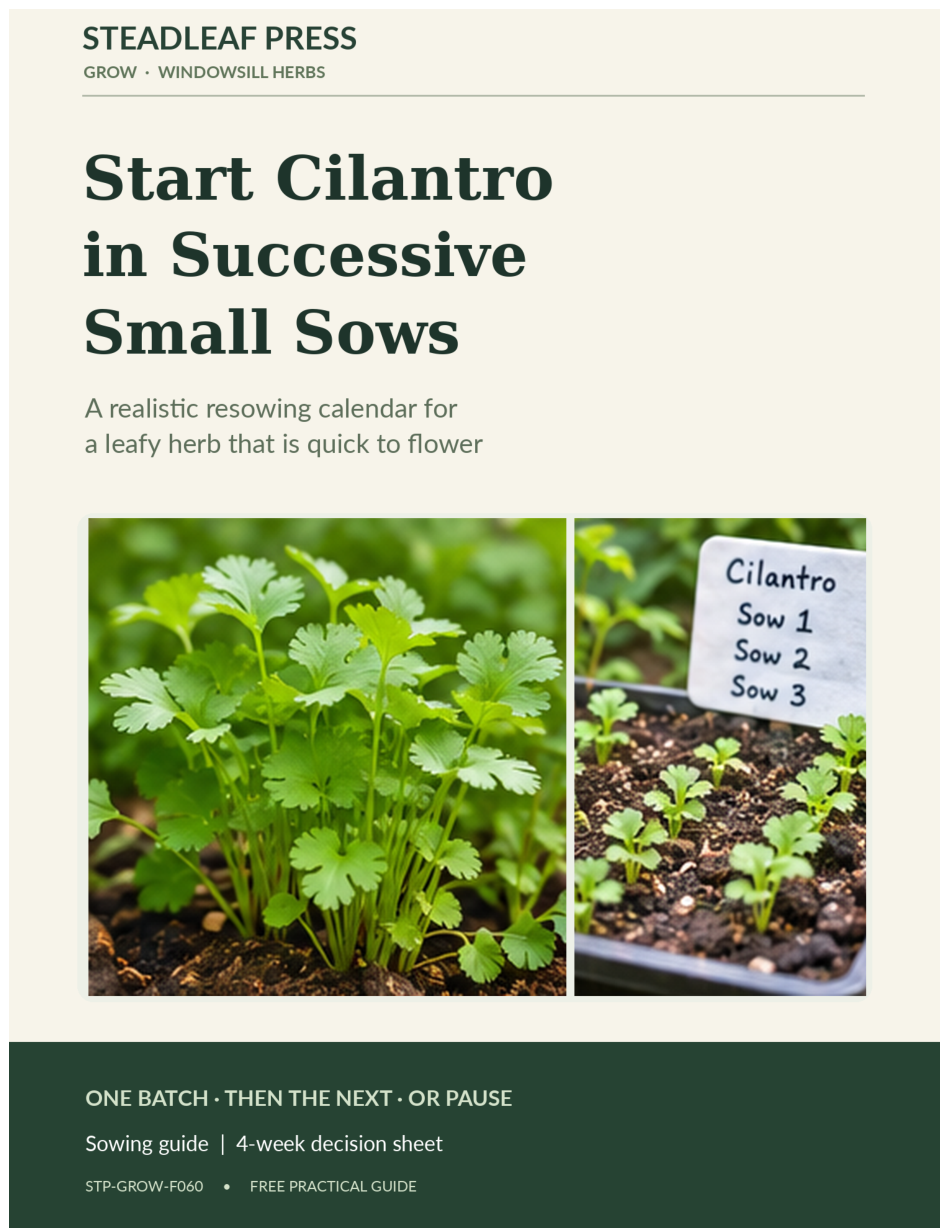
Start Cilantro in Successive Small Sows
A realistic resowing calendar for a leafy herb that is quick to flower
Download the complete free guide
Start small sowings of cilantro in separate manageable batches, observe actual growth stages and decide when to resow or pause without promising a fixed harvest.
Includes complete illustrated instructions and any printable worksheets or templates.
Download free PDFRead the complete free guide online
The instructional text is below. For exact-size patterns, illustrations and printable records, use the complete free PDF above.
STEADLEAF PRESS / GROW
A realistic resowing calendar for a leafy herb that is quick to flower
One cilantro pot is not an all-season leaf supply. Cilantro (also called coriander; Coriandrum sativum) is an annual herb. Its leaves are harvested as cilantro, while its mature seeds are coriander spice. It often shifts from leaf growth to flowers when days are long or weather is warm. Repeated small sowings can supply fresh leaves over a suitable growing period, but sowing more seeds during a heat wave will not stop bolting.
Use this guide to plan one manageable rotation of containers or short growing rows, decide when to pause it, and record what actually happens. The blank calendar is deliberately not pre-filled with local frost dates. Garden climate, balcony temperatures, season, variety and available light matter more than a date printed in a generic guide.
Your first decision: Do you want fresh leaves, or do you want to let some plants flower and make coriander seed? The steps here optimize for leaves. A bolting plant is not automatically a failure; it is simply changing to a different crop.
STP-GROW-F060 · FREE GUIDE 2
STEADLEAF PRESS / GROW
1. Decide whether this is a good sowing window
AI-generated editorial illustration of cilantro leaves, not a documented garden.
What you see What it means for a leaf-focused sowing Decision
Spring or autumn conditions Cilantro often has more time to form SOW: start a small batch and note the date. that remain reasonably cool leaves before flowering.
Warm days with some relief in A new batch may bolt sooner. ADAPT: use a suitable cooler position or light the afternoons afternoon shade; watch the result.
Prolonged peak-summer heat or Many new batches may flower before PAUSE: do not spend seeds automatically; plan a hot, enclosed balcony giving much leaf harvest. to restart after temperatures moderate.
A bright windowsill in a cool Short-term indoor leaf production is TRY ONE: record growth and avoid promising a room possible with sufficient actual light. permanent indoor crop.
Dim glass or warm indoor air More sowing will not fix unsuitable light REASSESS: find a better position before starting with weak, stretched plants and temperature. the next batch.
Oregon State University Extension describes heat and day length as drivers of cilantro flowering, and recommends cool-period planting rather than continuing through peak heat. The Royal Horticultural Society (RHS) also warns that indoor coriander may become pale in weak light and bolt when too hot or dry. Neither source promises that a slow-bolting seed variety can cancel a bad season. OSU Extension · RHS coriander guide.
Set up only what you can maintain
Use two or three labelled containers, or two or three short marked patches in a suitable bed. This is a tracking example, not a requirement to buy three pots. A single container can work if you reserve one corner or wait to replace an older sowing. A larger family may want more plants; a person who cooks with a few leaves occasionally may want fewer. The value is staggered ages, not the number of pots.
Use containers that drain freely, fresh suitable seed-growing medium, readable labels and a tray that is emptied after excess water drains. Sow into the position where plants will grow if practical: cilantro has a
STP-GROW-F060 · FREE GUIDE 3
STEADLEAF PRESS / GROW
taproot and does not respond as well to being moved repeatedly. Avoid leaving a new seedling in waterlogged mix.
The seed packet is your local instruction Check the packet's sowing depth, mature spacing, container suitability, date range and whether the variety is selected for leaves. As a general starting reference, University of Wisconsin Extension gives ¼–½ in (about 6–13 mm) sowing depth; the RHS describes thinning indoor pot seedlings to about 5 cm (2 in) for short-term leaves. Those are different growing contexts; follow your packet and the room you actually have, not an invented universal pot-density rule. Wisconsin Extension · RHS.
STP-GROW-F060 · FREE GUIDE 4
STEADLEAF PRESS / GROW
2. Your small-sowing rotation
The simplest useful pattern is Batch A, then Batch B, then Batch C, each started while older leaves are developing. Wisconsin and Maryland Extension describe sowing every 2–3 weeks for leaf harvest; Illinois Extension gives 3–4 weeks, and the RHS suggests small batches about monthly. These are practical starting intervals, not competing promises. Choose an interval that matches your seed use, growth and weather.
AI-generated editorial illustration of staggered cilantro sowings; packet instructions and actual conditions take priority.
Cycle When to start it What to record What to decide next
A — first First suitable local mild-weather Sowing date, seed lot, Did seedlings emerge? Was the window position, pot/row location too hot or too dim?
B — follow-up Around 2–3 weeks later if conditions Same facts plus what Is a newer batch really needed, or is still suit cilantro happened to A A still producing enough?
C — Another suitable interval later Whether A has started Continue only if the next batch can replacement flowering and B has usable develop before excessive heat or leaves cold.
Pause and When prolonged heat or inadequate Why you stopped and what Restart with one batch when resume light makes batches unproductive changed conditions improve.
A two-week interval can create too many plants for a household that rarely uses cilantro. A four-week interval may create a gap if older plants flower early. The best schedule is not the one with the most rows filled in; it is the one that gives useful leaves without wasted seed or attention.
Example sequence — illustrative, not a harvest guarantee • Week 0: sow A; label it and record the place and weather.
• Week 2 or 3: inspect A. Start B only if the local growing window remains suitable and you still expect to use more leaves.
• Week 4 to 6: check whether A has genuine usable leaves and whether B needs thinning. Start C if conditions and kitchen demand justify it.
• Later: harvest each batch according to its actual development. Retire bolted plants when you no longer want them, or let a suitable plant flower for seed.
STP-GROW-F060 · FREE GUIDE 5
STEADLEAF PRESS / GROW
Do not assume A will be harvestable on Week 4: Wisconsin Extension lists leaf harvest over a broad 45– 80 day range, and the RHS notes that indoor seed germination alone can take 2–3 weeks. Those examples are deliberately not combined into a fixed timetable. Seed, temperature, light and intended harvest size all affect the result. Wisconsin Extension · RHS.
STP-GROW-F060 · FREE GUIDE 6
STEADLEAF PRESS / GROW
3. Sow one batch carefully
Prepare. Fill a clean, draining pot or prepared bed with suitable medium. Check the container drains and can stand securely. A decorative outer pot is fine only if excess water can be removed. Label it A, B or C, including the date. In small spaces, labels stop you from treating every seedling as though it is the same age.
Sow. Place only enough seed for a small usable batch, following the seed packet's depth and recommended spacing. If you sow extra for uncertain germination, thin appropriately when seedlings are large enough to handle. Do not use dense supermarket herb pots as the default planting rate for a longer-lived container crop. RHS notes that such store pots often have overcrowded seedlings and are intended for short-term picking.
Water gently. Moisten the growing mix without washing seeds out or leaving the pot standing in water. Keep new seedbeds evenly moist as they germinate; do not treat young seedlings as established, drought-tolerant herbs. After emergence, check moisture below the surface rather than watering on autopilot. Wisconsin Extension advises keeping cilantro evenly moist during growth; standing water and poor drainage are not the same as even moisture.
Observe. Give the plants suitable light for the season. In cooler outdoor weather, they generally use substantial light; during warm weather light afternoon shade may help. Indoors, a windowsill must actually be bright enough; a bright-looking room can be too dim at leaf level. If plants stretch weakly, correct the growing conditions before sowing more. Keep electrical grow lights and cords clear of watering and follow the manufacturer's directions if you use them.
Thin without overpromising. Check your seed packet; different growing systems use different spacings. Thin or snip excess seedlings rather than repeatedly digging and replanting the whole batch. The aim is plants with room to grow, not the maximum possible green carpet. If you planted specifically as microgreens, that is a different short-term harvest method and should not be confused with a longer-lived leaf pot.
A quick setup record
Batch Date and variety Container or row Actual light and exposure Soil and watering check
A
B
C
Do not infer a germination failure too soon. Track the packet's expected window and the growing conditions. RHS describes a two-to-three-week indoor germination period, but cold or unsuitable conditions and differences among seed lots can change the outcome. Do not declare success or failure from an arbitrary three-day deadline.
STP-GROW-F060 · FREE GUIDE 7
STEADLEAF PRESS / GROW
4. Keep leaves coming without fighting the plant
Cilantro produces leafy growth before its flower stalk appears. Bolting is a transition to flowering and seed production. In hot, long days, that transition can arrive sooner. You may see the plant elongate and make finer, feathery leaves as the flowering stem rises. This is a signal to make your next harvest decision, not a diagnosis that you watered incorrectly.
Observation Next useful action What not to assume
Healthy plant with several Pick lightly and leave enough foliage to keep the Do not strip a small young plant to bare usable outer leaves plant growing. stems.
Strong growth but you Let it grow, freeze a suitable surplus if desired, or A full harvest basket is not the objective. seldom cook with cilantro sow fewer seeds next time.
Flower stalk begins Take remaining desirable leaves, remove a flower Removing flowers does not reverse the stalk for a limited extension, or let flowers develop. plant's whole life cycle.
Older batch bolts before the Record the gap and reconsider timing and weather. Don't assume faster resowing during next one is ready peak heat will solve it.
Persistent wilting or Check drainage and root conditions; hold extra Do not assume all wilt means thirst or all yellowing while the mix is watering and seek local advice if decline continues. yellowing means a nutrient shortage. wet
Wisconsin Extension recommends picking leaves as plants develop, and Maryland Extension describes light picking before full size. Cut leaves with clean tools; avoid exposing bare soil or damaging the crown while harvesting. A leafy harvest should not be scheduled merely because the calendar says “Week 6.” Wisconsin Extension · Maryland Extension.
A bolting plant still offers options If you would enjoy coriander seed, allow a suitable plant to flower and mature seed heads. Maryland Extension describes collecting mature heads once they turn brown. Keep any saved seed clean, properly dry and correctly labelled; do not present seed saving as guaranteed genetic fidelity for every variety or as appropriate for plants exposed to unsuitable treatments.
If you only want leaves, retire the plant after useful picking and compost it if appropriate. You have not failed the project. The replacement batch exists precisely because cilantro's leaf phase is limited.
Food handling
Harvest only from an identified culinary plant and follow product labels, including any pesticide harvest restriction. Keep tools and hands clean. Rinse harvested fresh leaves in running water before food use; washing reduces surface contamination but does not make unsafe produce sterile. Separate gardening tasks from food preparation. This is a practical kitchen-herb guide, not advice to eat unidentified plants.
STP-GROW-F060 · FREE GUIDE 8
STEADLEAF PRESS / GROW
5. Your four-week decision sheet
Fill this sheet for one suitable sowing window. If weather makes it unsuitable, write PAUSE rather than sowing simply because a square is empty. The four weeks are a record structure, not a promise of cilantro harvest in four weeks.
Week Current growing conditions Batch A observation Batch B / next sow decision Leaves used or reason for waiting
1
2
3
4
Three decisions worth writing down Sow? Is the weather or indoor environment still favorable, and will you actually need the next leaves?
Harvest? Is the plant developed enough to spare leaves without severely weakening itself?
Pause? Are heat, light, space, cold weather, or household needs telling you to reduce or stop sowing?
Use these plain-language codes in the margin: S = sow a small batch, H = harvest, W = wait and inspect, P = pause, F = allow to flower. There is no automatic requirement to mark S every other week.
If you want to extend the record
Actual sow date and First emergence First useful leaf Flower-stem What I would change next batch observed picking appearance time
These observations make next year's plan specific to your growing place. Repeated experience at one windowsill is more useful than copying a regional planting date from another continent.
STP-GROW-F060 · FREE GUIDE 9
STEADLEAF PRESS / GROW
6. Troubleshoot the rotation, not just a leaf
Problem: “Every new batch flowers almost immediately.” Reconsider the season, temperature and day length before buying a different variety. Move toward a cooler growing window or a suitable position with some afternoon shade. “Slow bolting” means a relative tendency, not immunity from long hot days. Wisconsin and OSU Extension agree that peak summer is a poor bet for repeated leaf-focused sowing.
Problem: “There is a long gap between batches.” Compare actual emergence, first picking and flowering dates. Your sowing interval may be too long for the conditions, or the newer batch may have started late. Adjust only for the next suitable window; avoid prescribing a universal week count. Keep realistic kitchen demand in view.
Problem: “My indoor plants are pale and stretched.” The light may be inadequate, especially as seasons change. Record direct light at leaf height rather than relying on the room's brightness. RHS notes that indoor plants can become pale in low light. A larger seed order will not cure a poor growing location.
Problem: “I water every morning but seedlings fail.” Check the mix, pot drainage, heat and seedbed condition. Soil that remains waterlogged is not helpfully “moist.” Move away from a rigid timetable. If there is a persistent disease or pest problem, seek local Extension or horticultural advice; this guide is not a disease-diagnosis key.
Problem: “The first batch is too crowded.” Thin according to the growing format and seed guidance rather than pulling the whole root system apart. Plan a smaller next sowing. A store-bought herb pot's many crowded shoots are not the ideal example of a longer-term home container.
Problem: “There are more leaves than I can use.” Sow less or less often. A successful rotation should fit the kitchen, not create a wasteful glut. You can stop with one batch; the system is intentionally flexible.
Finish with one improvement Write what you learned as a sentence, such as “Batches germinate slowly in this early spring window” or “I need fewer plants in each pot.” Change one variable next time—date, amount, light or watering—so you can tell what helped.
STP-GROW-F060 · FREE GUIDE 10
STEADLEAF PRESS / GROW
Sources, limits and practical notes
1. Royal Horticultural Society: How to Grow Coriander. Source for indoor pot sowing, seed emergence, indoor light limitation, thinning, successive small batches and the annual life cycle. The RHS's UK seasonal examples are not imported as universal calendars.
2. University of Wisconsin Division of Extension: Cilantro / Coriander. Source for 2–3-week succession option, direct sowing, seed depth reference, moisture, leaf harvest and bolting tendency. Field-row spacing is not prescribed as mandatory in a small indoor pot.
3. University of Maryland Extension: Cilantro/Coriander. Supports container viability, afternoon shade under warmer conditions, succession sowing and small leaf harvests.
4. Oregon State University Extension: How to Grow Cilantro for Leaves—or Coriander Seeds. Explains day-length and temperature effects, early and late season sowing, and why peak heat may make new leaf crops unproductive; reviewed in 2025.
5. University of Illinois Extension: Cilantro. Describes a slightly longer 3–4-week sowing alternative, leaf-oriented varieties, bolting and direct sowing.
6. RHS: Successional Sowing. General explanation of staggered small sowings to avoid harvest gaps and waste.
Scope: This is a small-space leaf-crop planning guide, not a guarantee of yield, germination date, frost survival, disease identification or year-round production. Local climate, light and variety always take priority. The plant names and source links are for correctly identified culinary cilantro, not instructions to forage or eat unknown plants. The tables and rotation are original Steadleaf Press teaching aids, not reported observations from actual home gardeners. The original reviewed manuscript contained no photographs; the finished reader adds clearly identified original AI-generated editorial illustrations for orientation, not as evidence of field observations.
Sources checked 3 November 2026. Steadleaf Press / GROW / STP-GROW-F060 / G05 Windowsill Herbs.