MAKE · FREE GUIDE
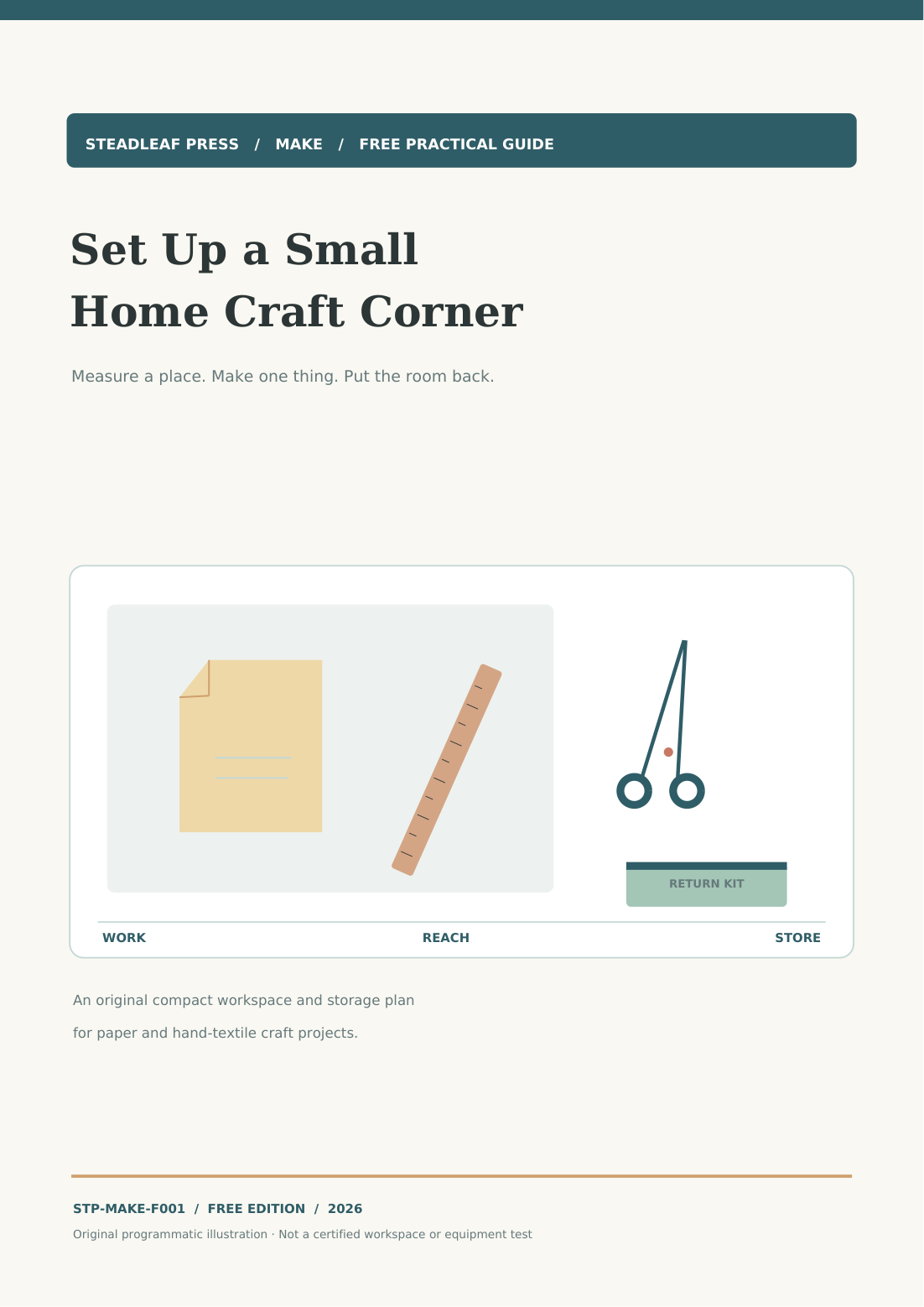
Set Up a Small Home Craft Corner
Plan one compact home craft workspace: measure usable width and depth, organize a safe tool-return zone, check lighting and supplies, then reset the room with a printable worksheet.
View free guideExplore complete guides and future book ideas for growing, making and mending at home.
AVAILABLE NOW
A personalized four-page printable workbook built from one measured garden bed: layout, materials, relative planting calendar and reference notes.
US$24.99
Build my garden plan →Prefer to start free? Browse the published guide library.
Longer Grow, Make and Mend books are being evaluated. We will list them here only when a complete, reviewed edition is ready for sale.
NOW AVAILABLE / FREE
150 original, complete free Make guides.
Plan one compact home craft workspace: measure usable width and depth, organize a safe tool-return zone, check lighting and supplies, then reset the room with a printable worksheet.
View free guide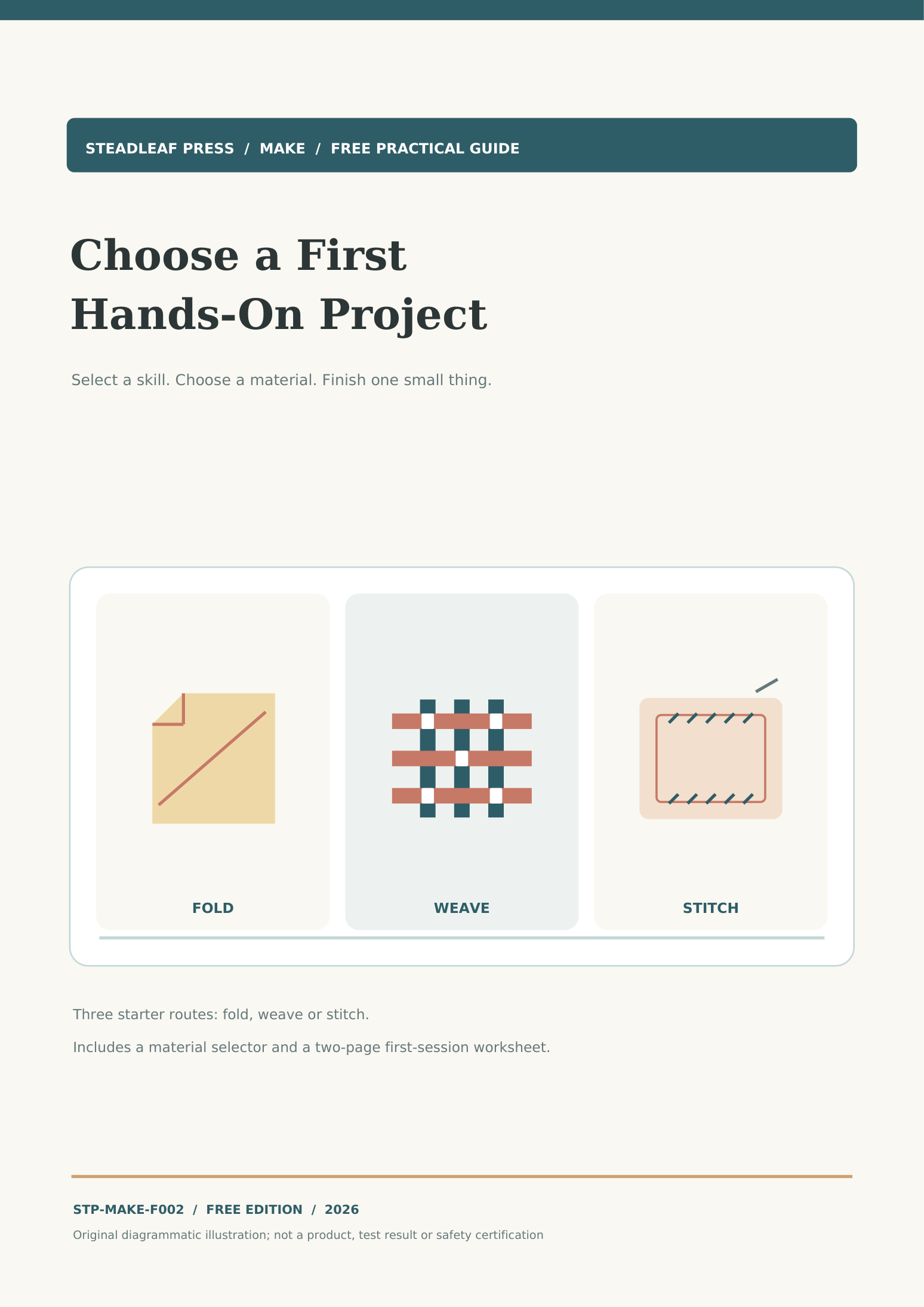
Choose a first paper or hand-textile craft through three clear beginner examples, a skill-and-material selection framework and a free printable two-page worksheet.
View free guide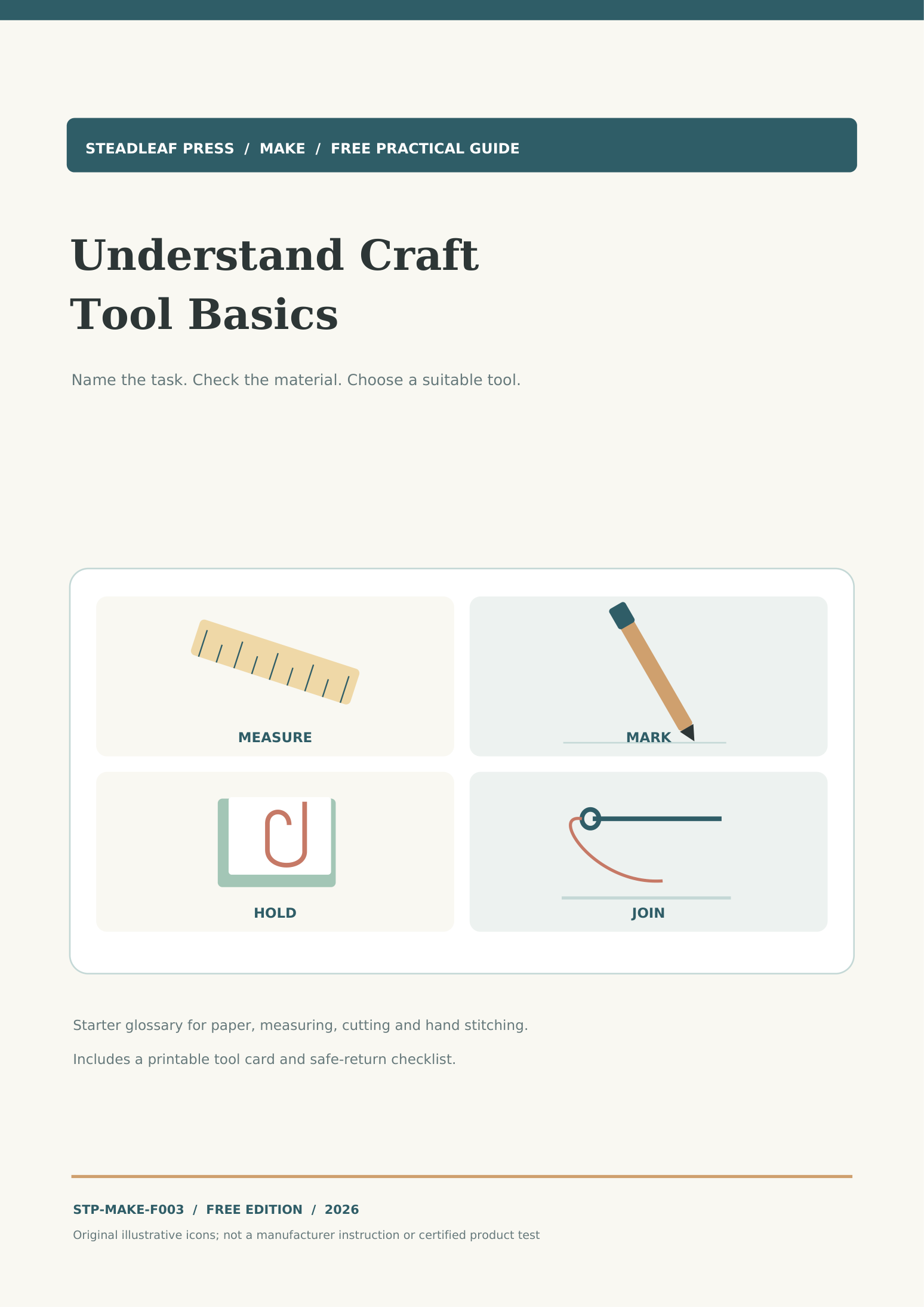
A plain-language guide to recognising paper and hand-sewing tools, checking material fit and safety labels, and using a printable tool-to-task and safe-return checklist.
View free guide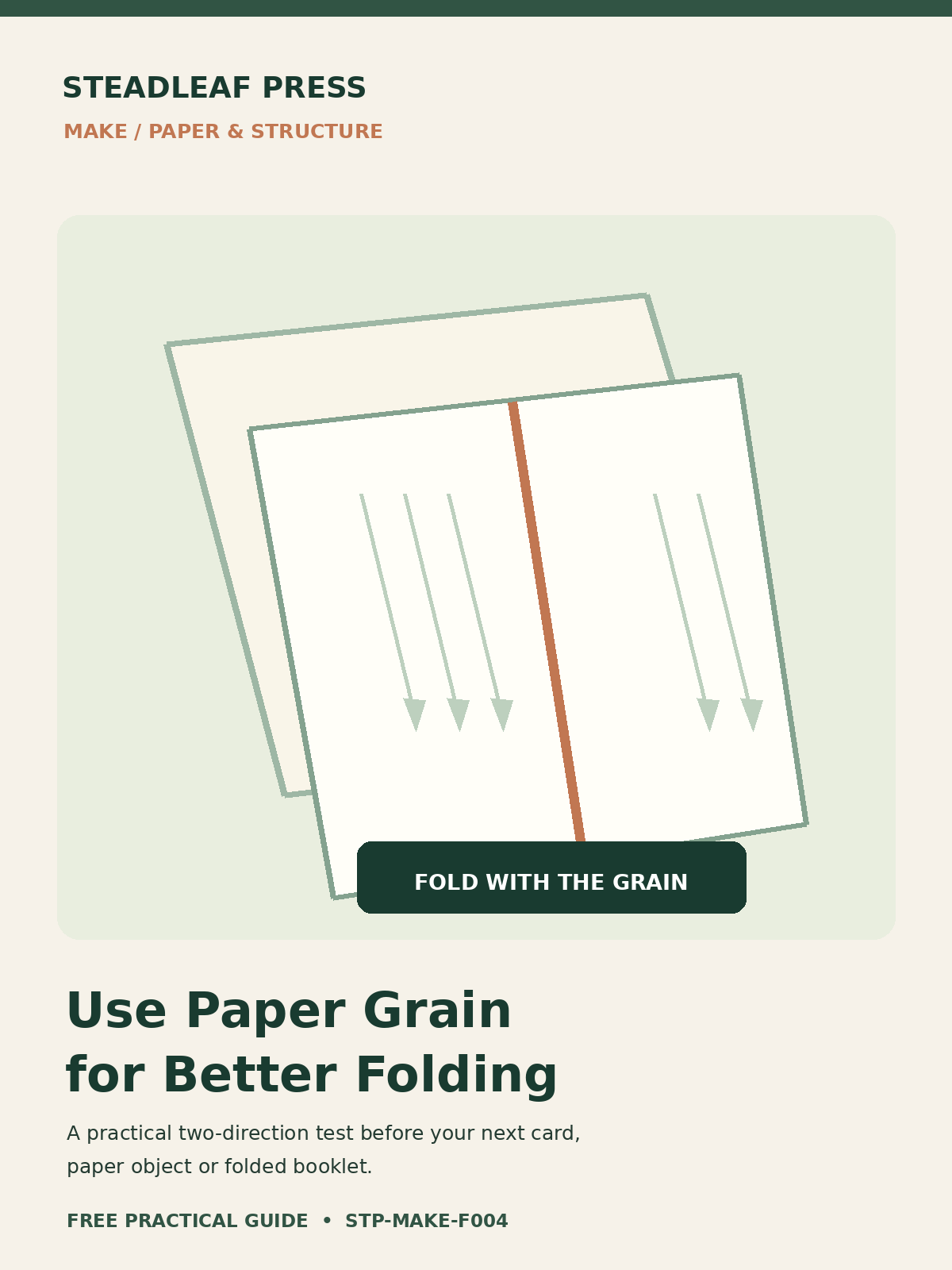
Learn how paper grain affects a fold, compare two directions on inexpensive offcuts and use a printable decision log to choose a smoother crease for cards, booklets and folded paper objects.
View free guide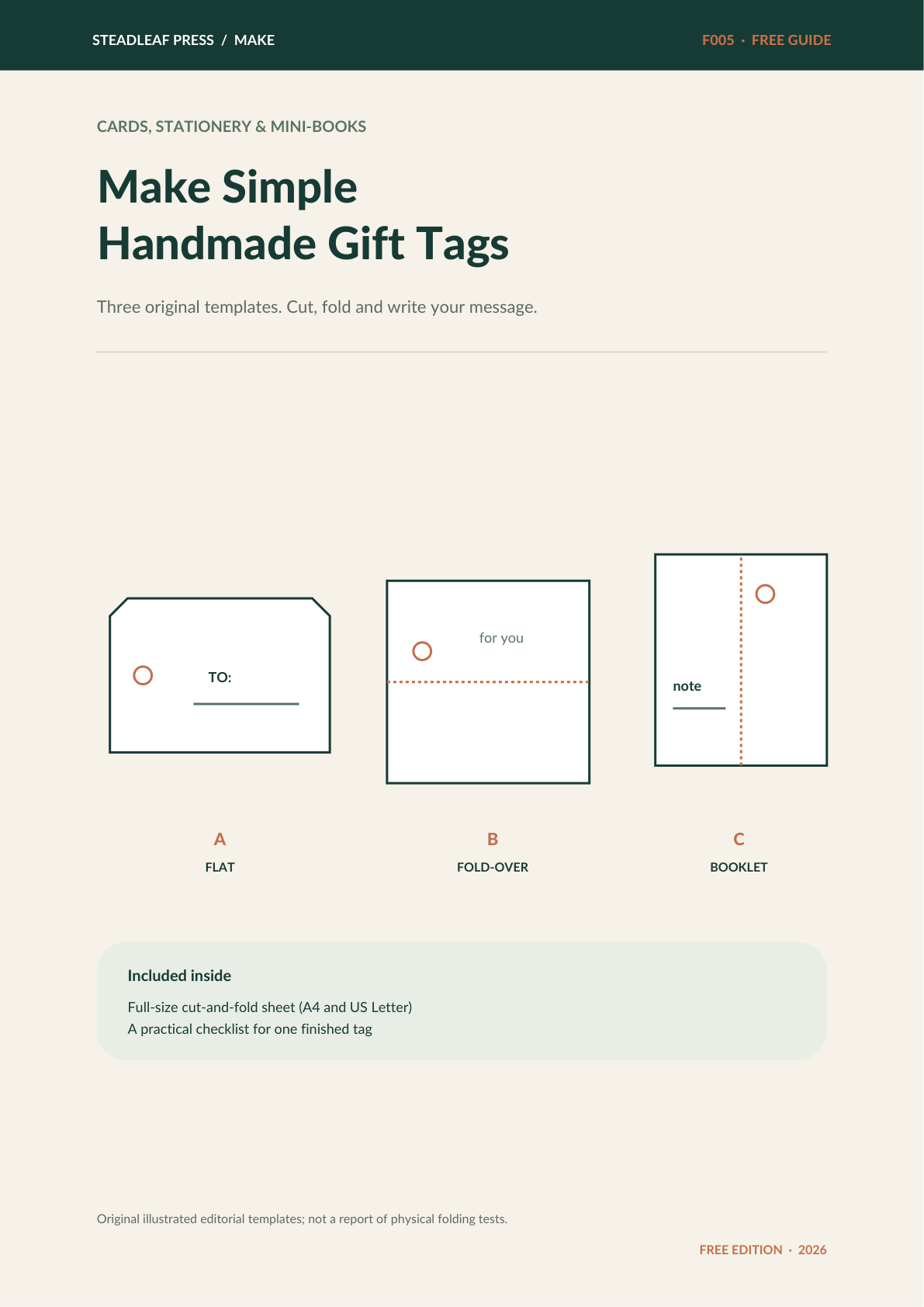
Create a flat gift tag, a folded private-message tag and a miniature booklet tag with full-size printable A4 and US Letter pattern sheets and a finishing checklist.
View free guide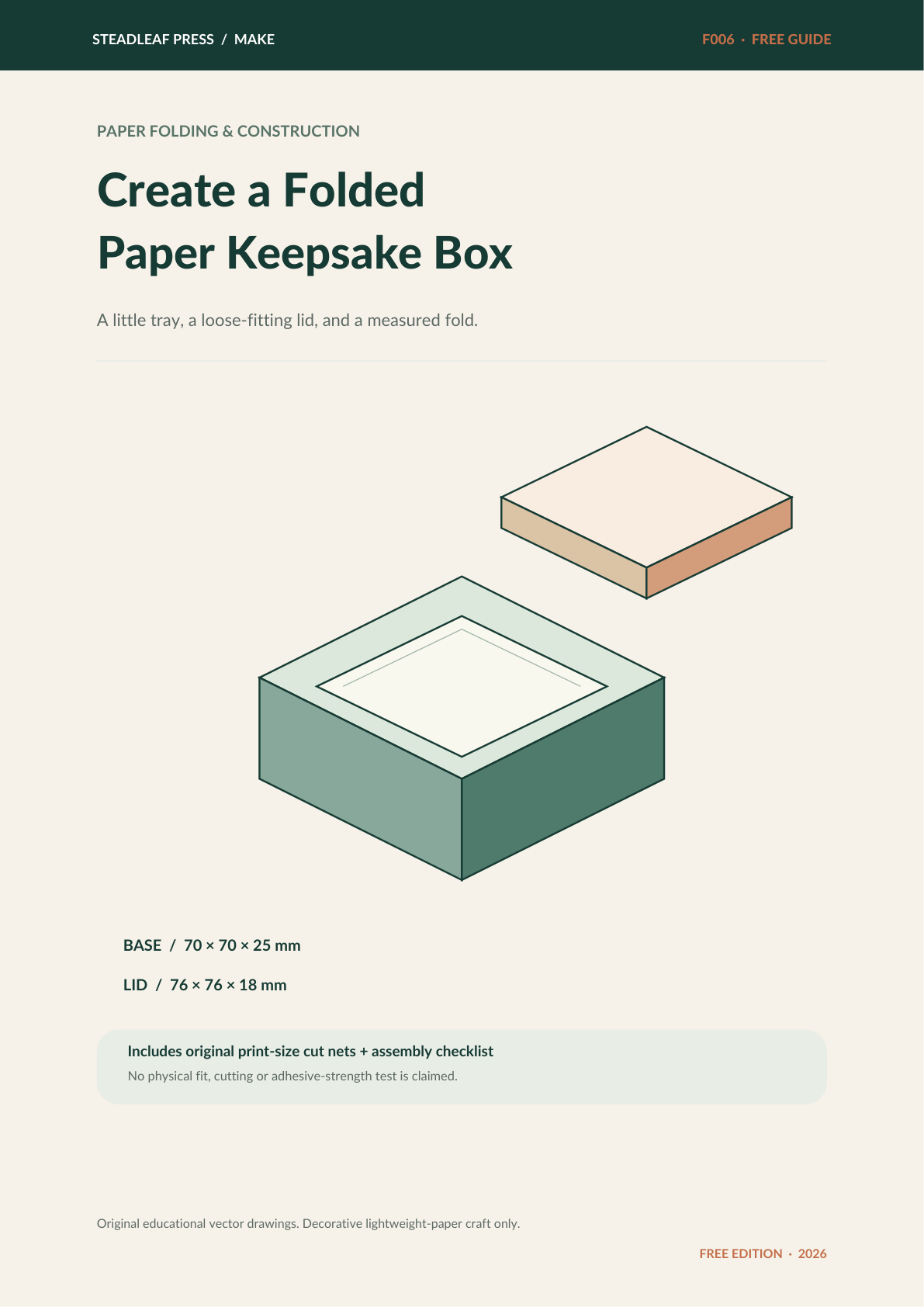
Make a small folded-paper keepsake tray and removable lid with original full-size A4/Letter base and lid cutting nets, detailed assembly guidance, 50 mm print-scale bars and a printable checklist.
View free guide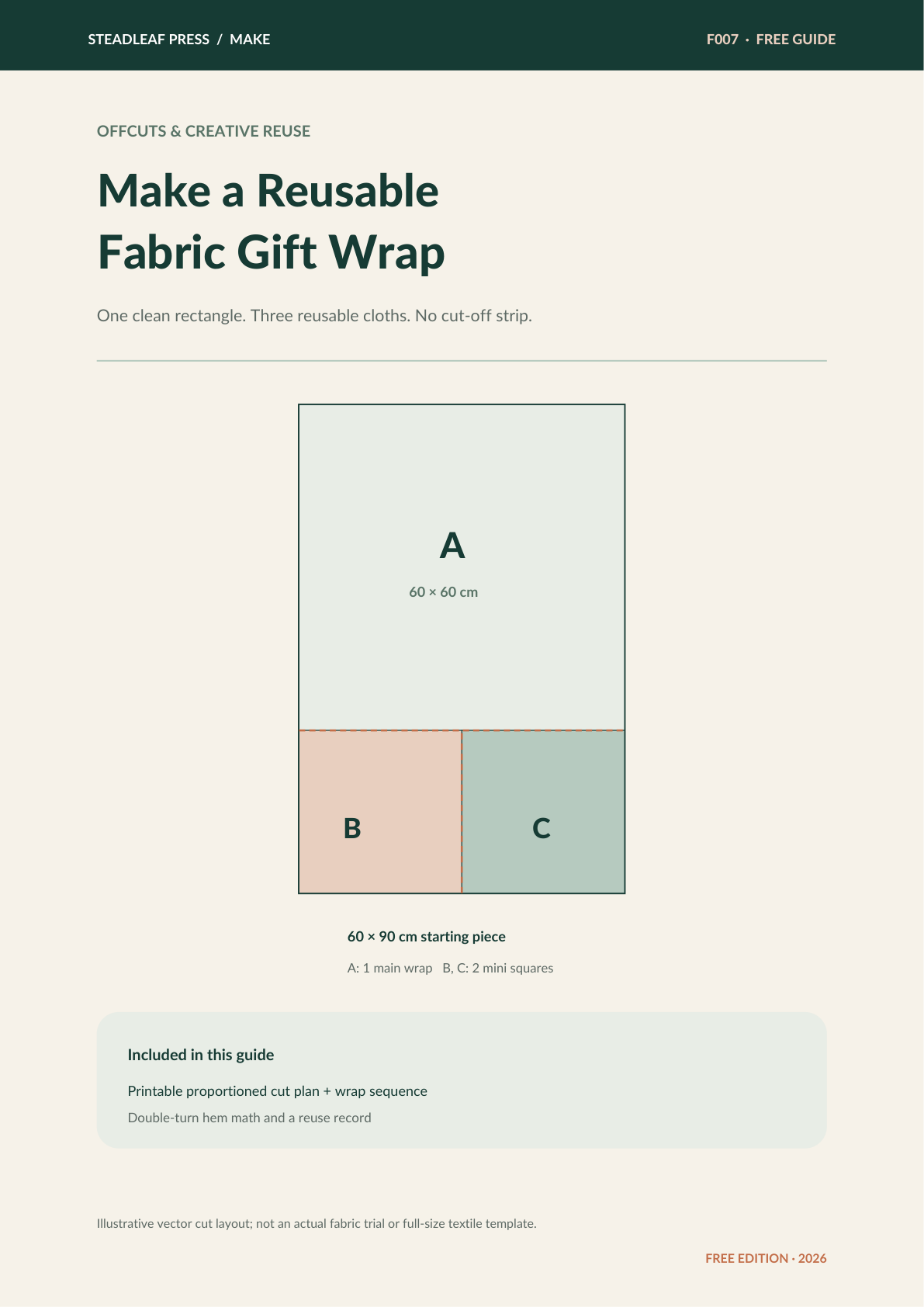
A practical original reusable fabric gift-wrap guide: no-cut route, measured zero-offcut 60 × 90 cm layout, hand-sewn edge finish, safe on-table wrapping, and printable 1:5 cut-plan and reuse record.
View free guide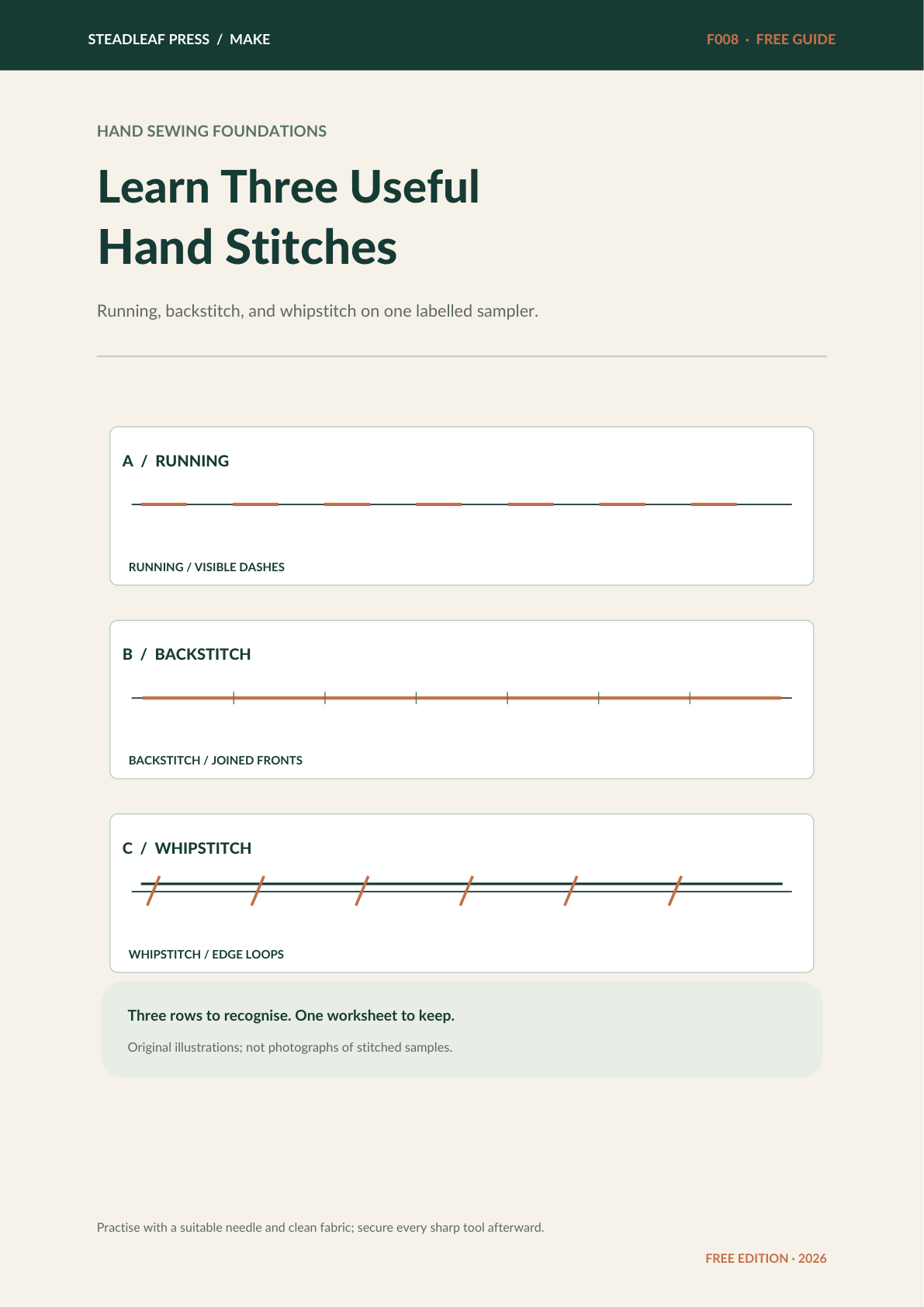
A free beginner hand-stitching guide with safe needle and thread setup, step-by-step running, back and whip stitch paths and an original printable two-page sampler.
View free guide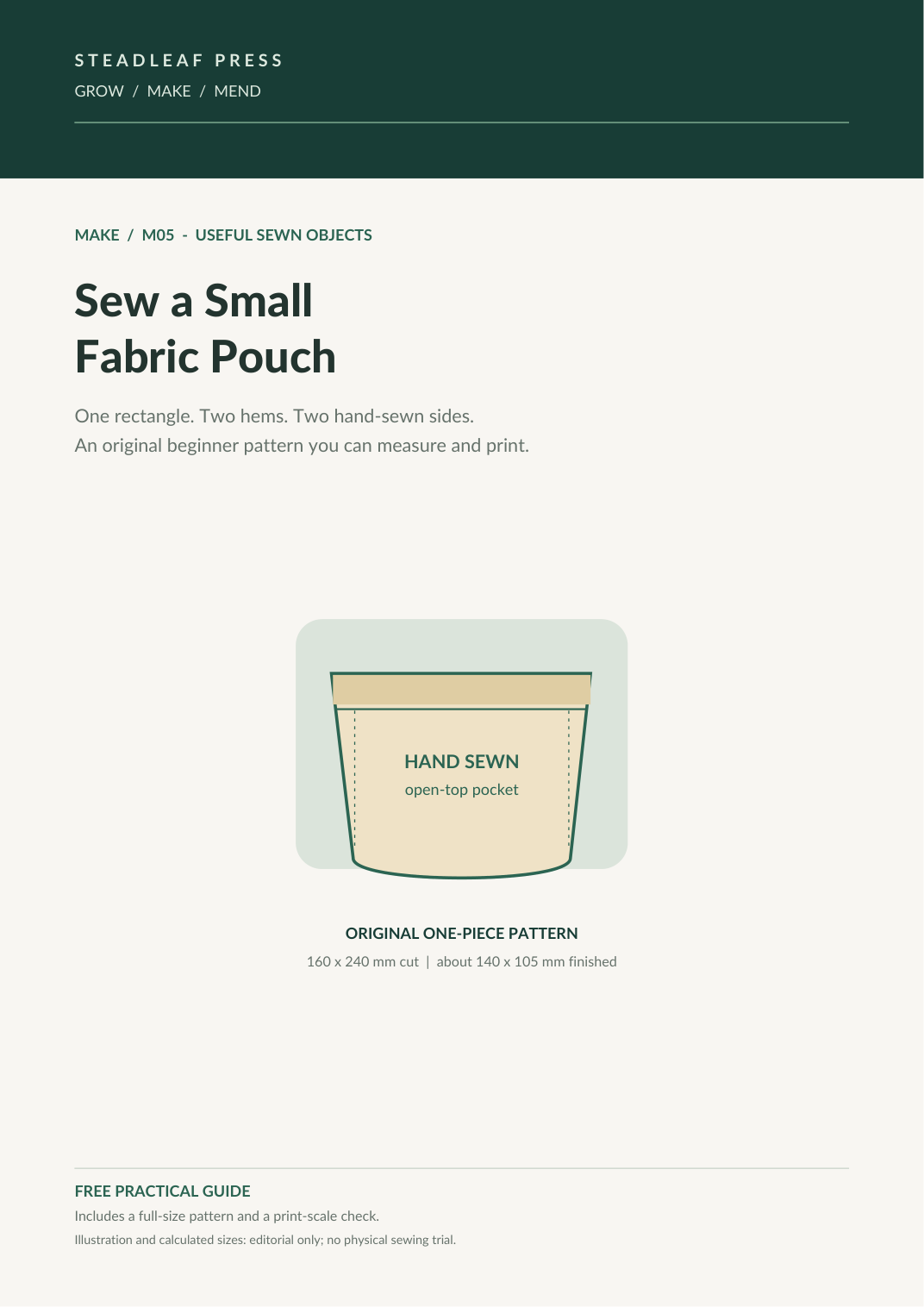
Make a lightweight open-top fabric pouch using a measured one-piece pattern, two side seams and a printable cutting template.
View free guide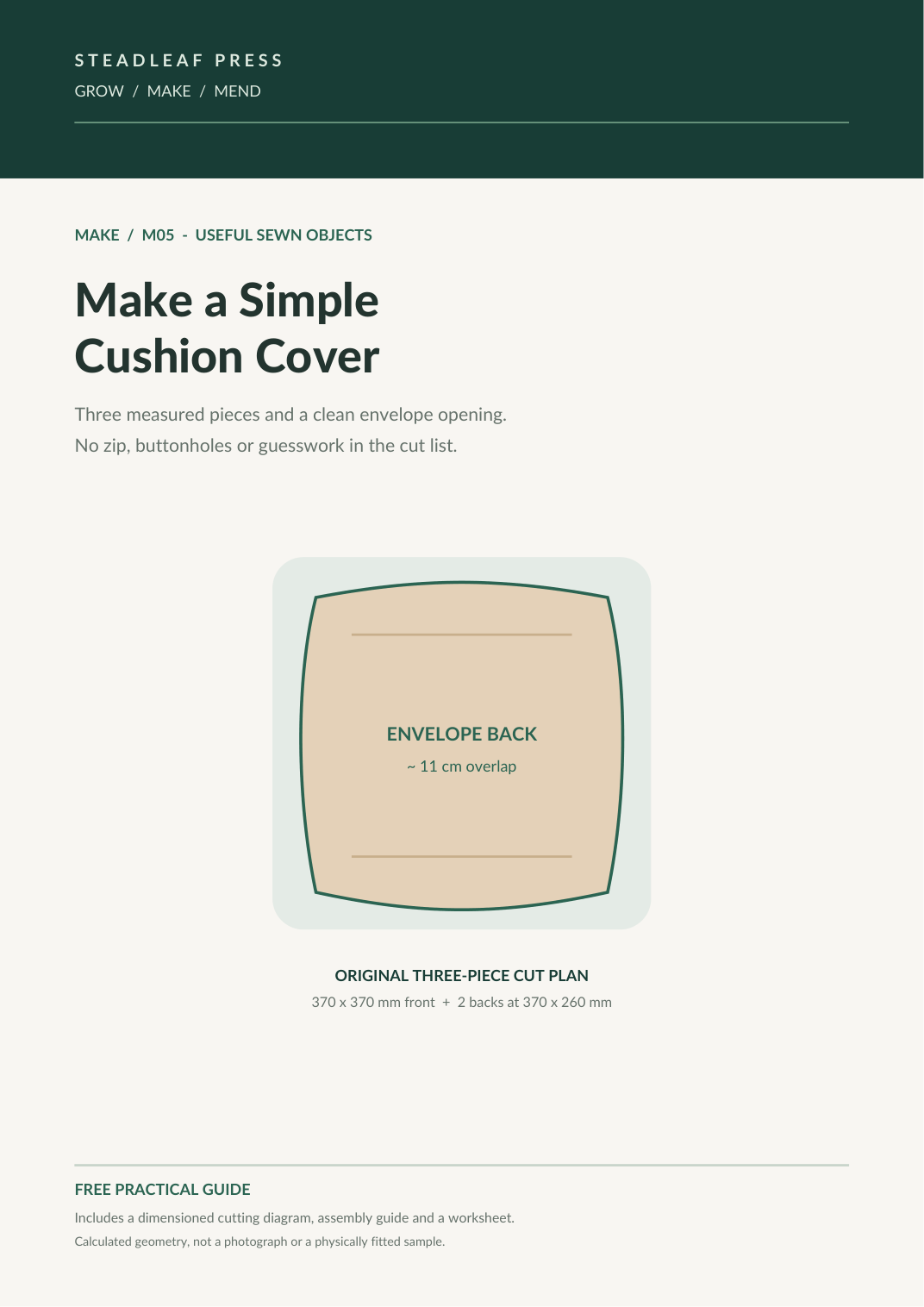
Make a 35 cm decorative envelope-back cushion cover using three measured fabric pieces, a cut diagram and clear assembly instructions.
View free guide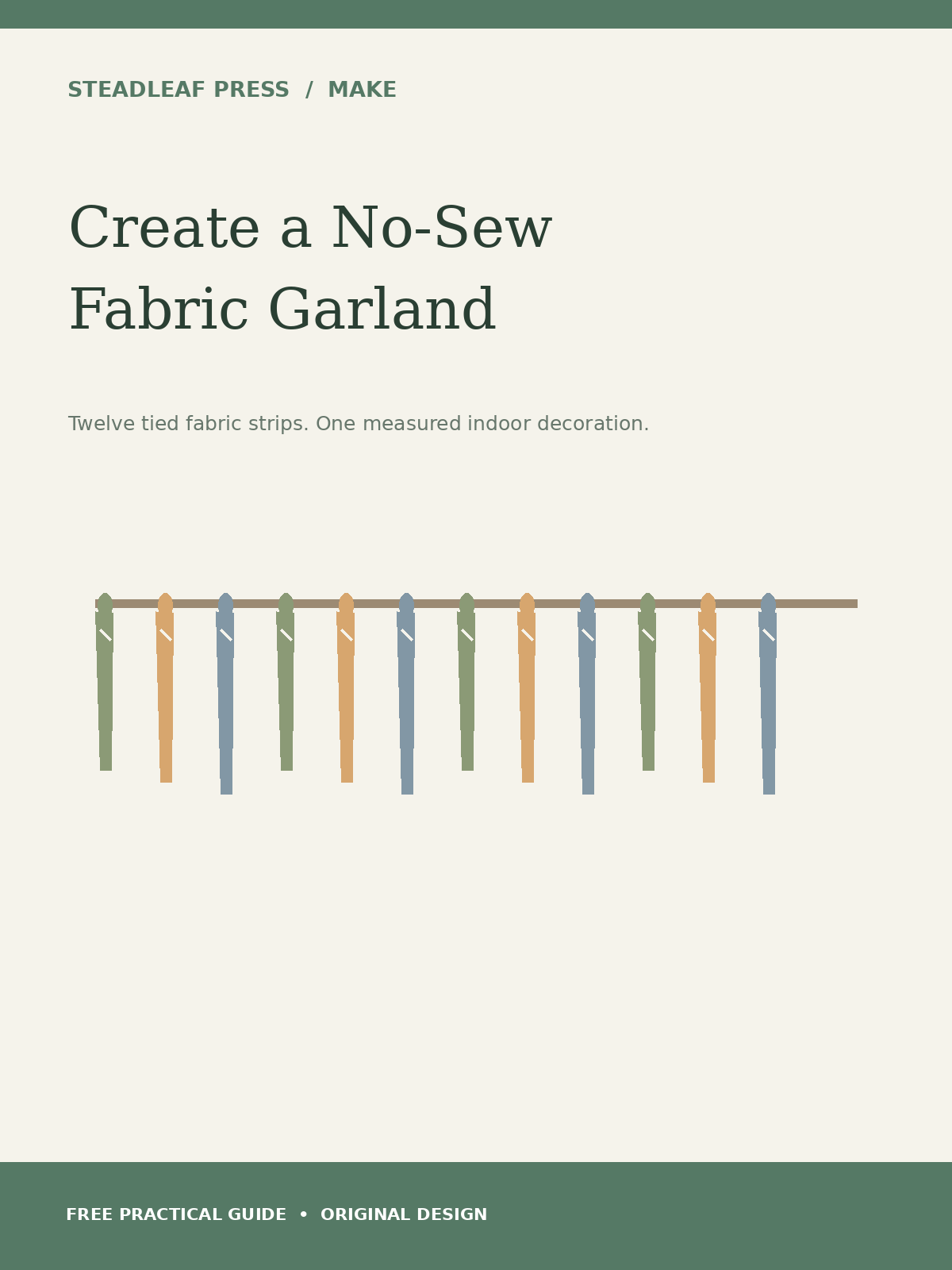
Create a decorative 150 cm fabric-and-cord garland using twelve knotted strips, printed layout marks and simple spacing rules.
View free guide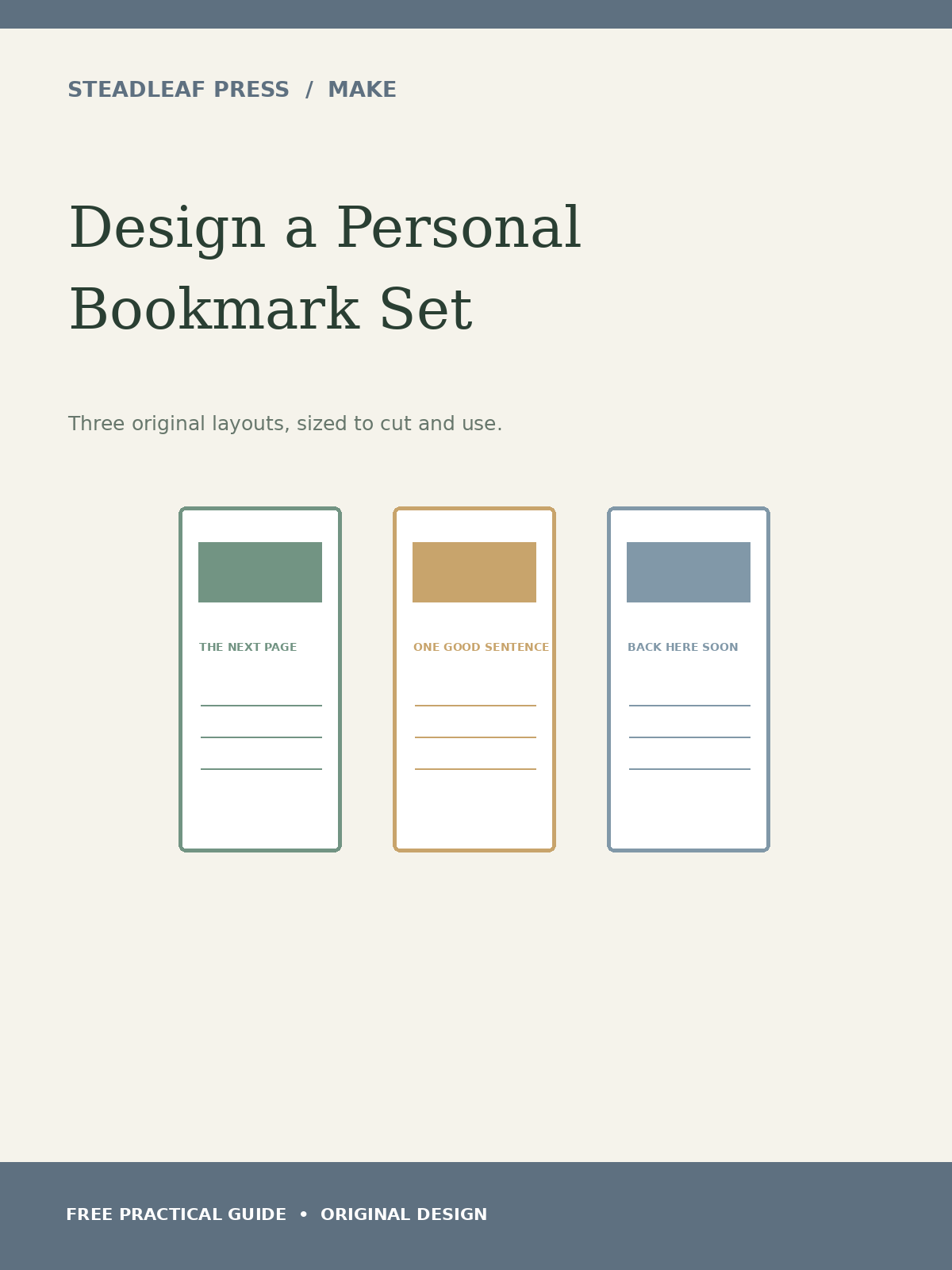
Print and personalize three original bookmarks using an A4 or Letter cutting layout, basic paper supplies and reading prompts.
View free guide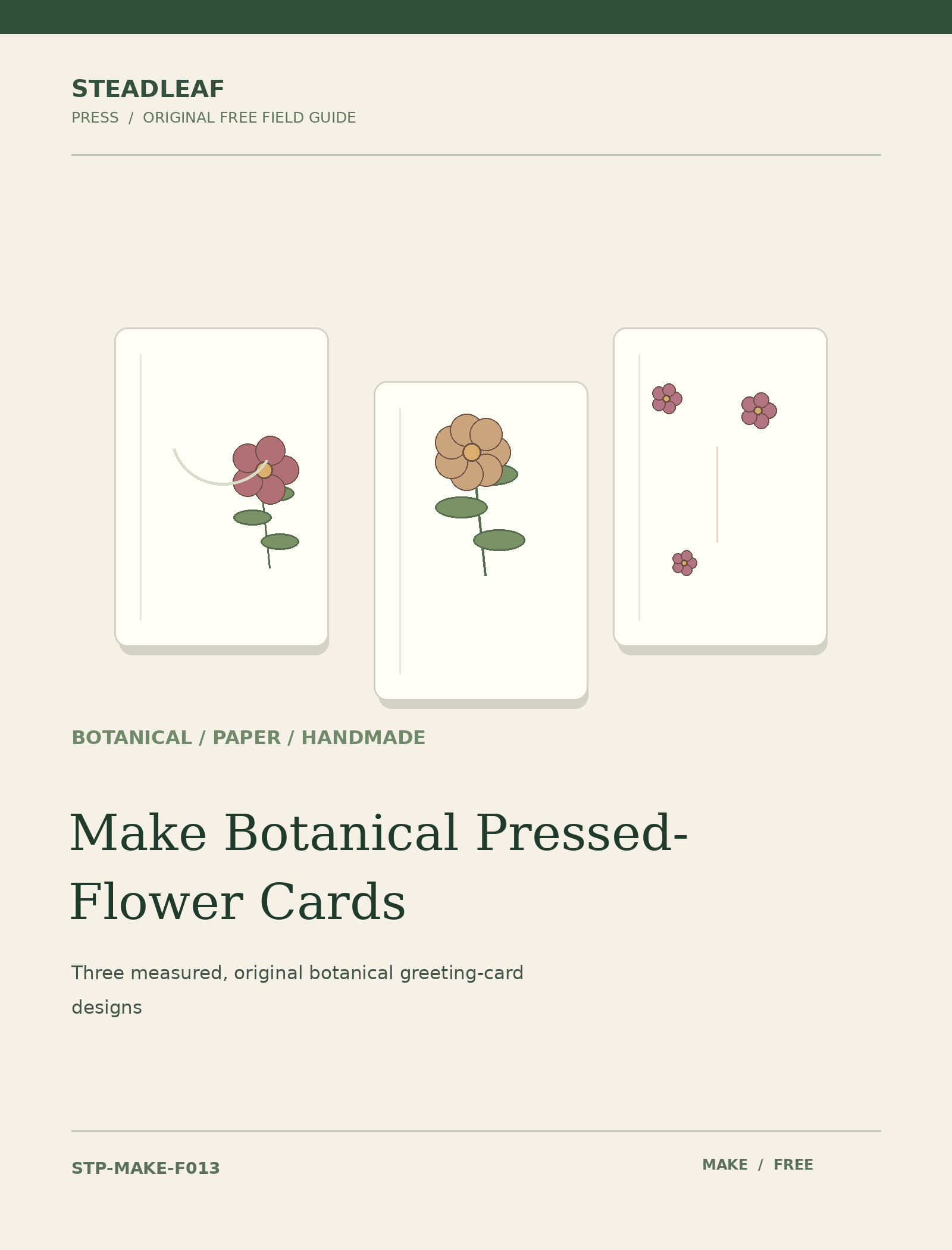
Create three paper greeting cards with fully dried, responsibly sourced pressed flowers, a full-size fold-and-cut template and readable assembly instructions.
View free guide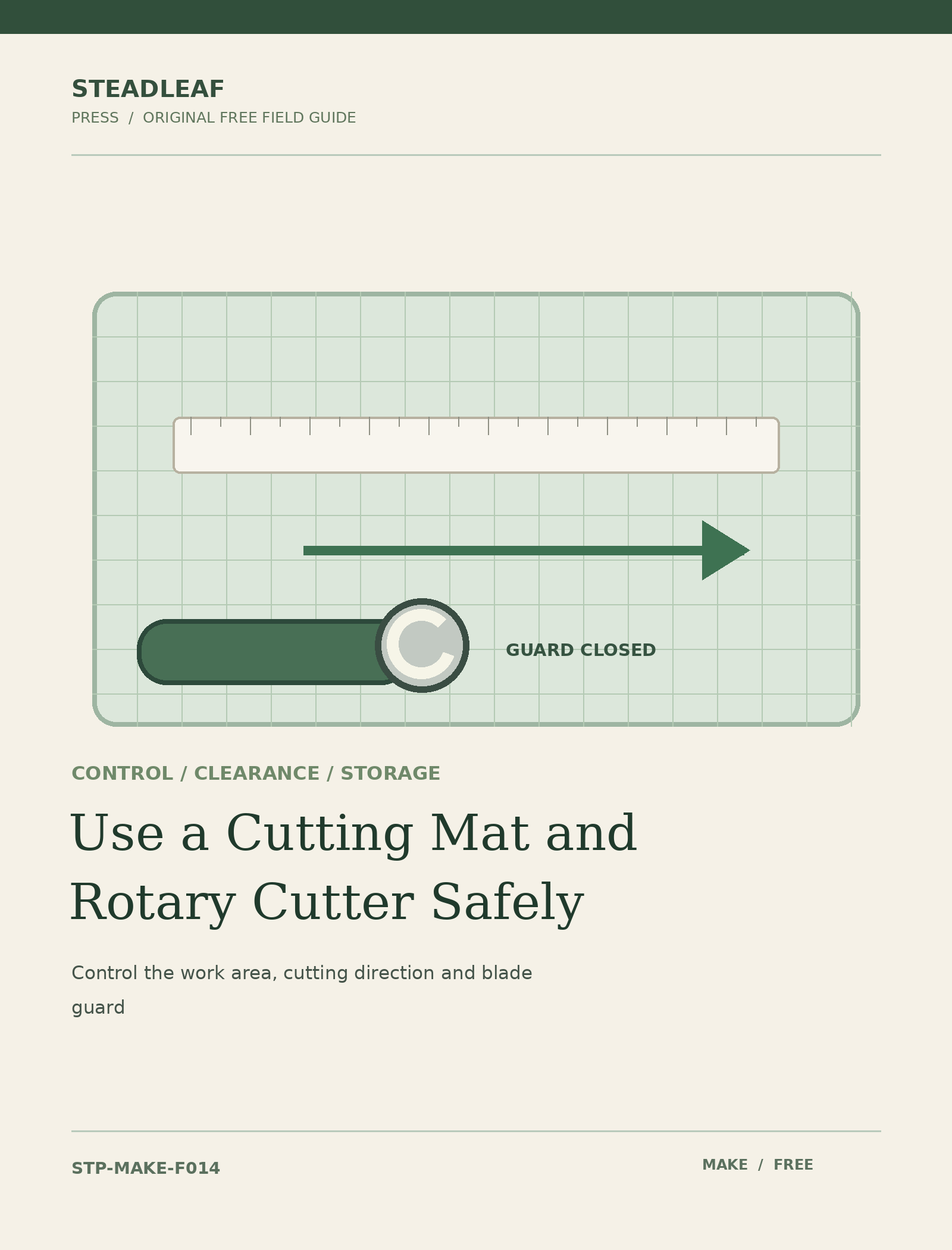
A practical adult rotary-cutter safety guide covering mat and ruler setup, cutting direction, guarding and a printable stop-or-ready checklist.
View free guide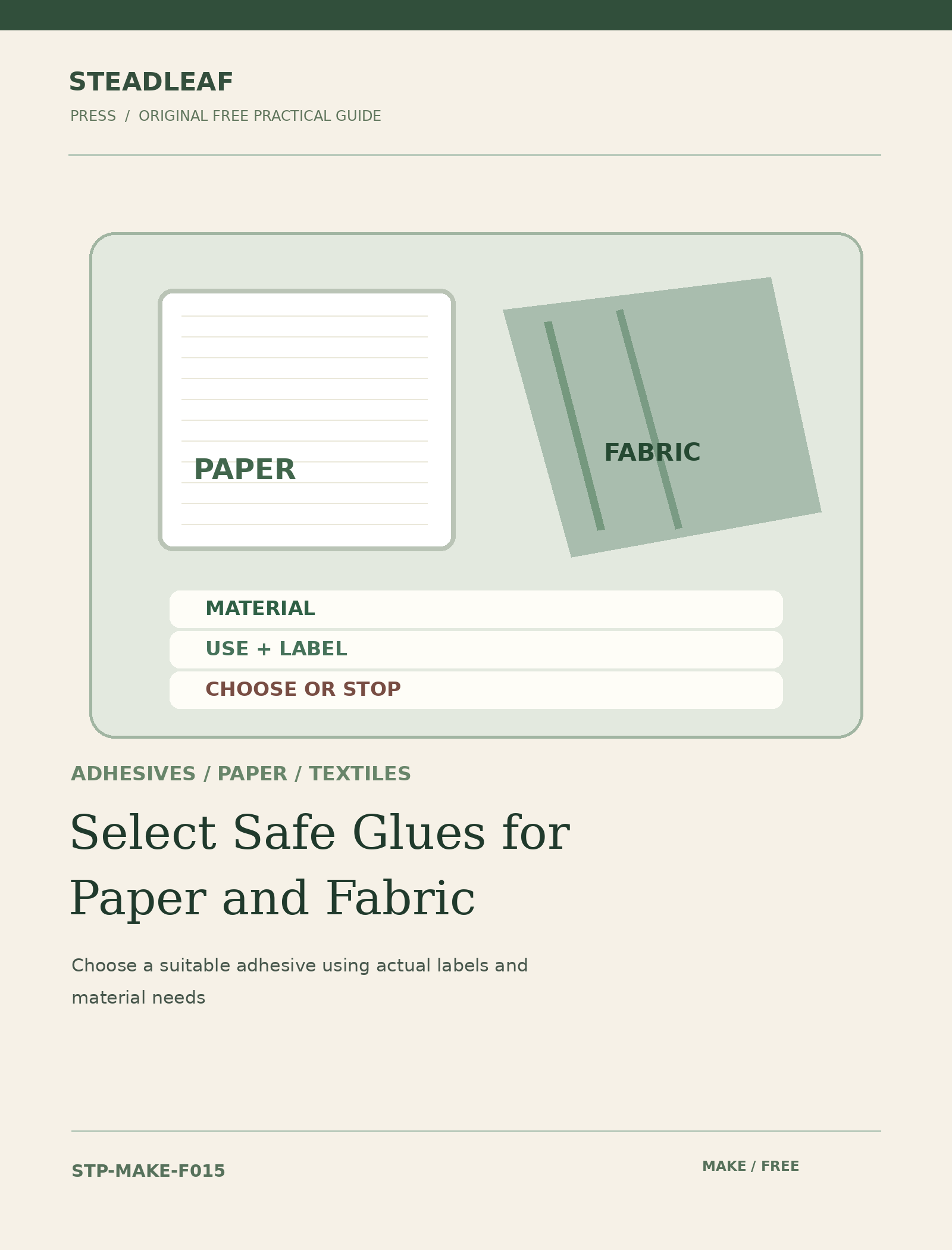
Learn how to choose a suitable glue for ordinary paper crafts and decorative fabric projects using exact product labels, a practical material-compatibility worksheet and a clear GO / CHANGE / STOP decision.
View free guide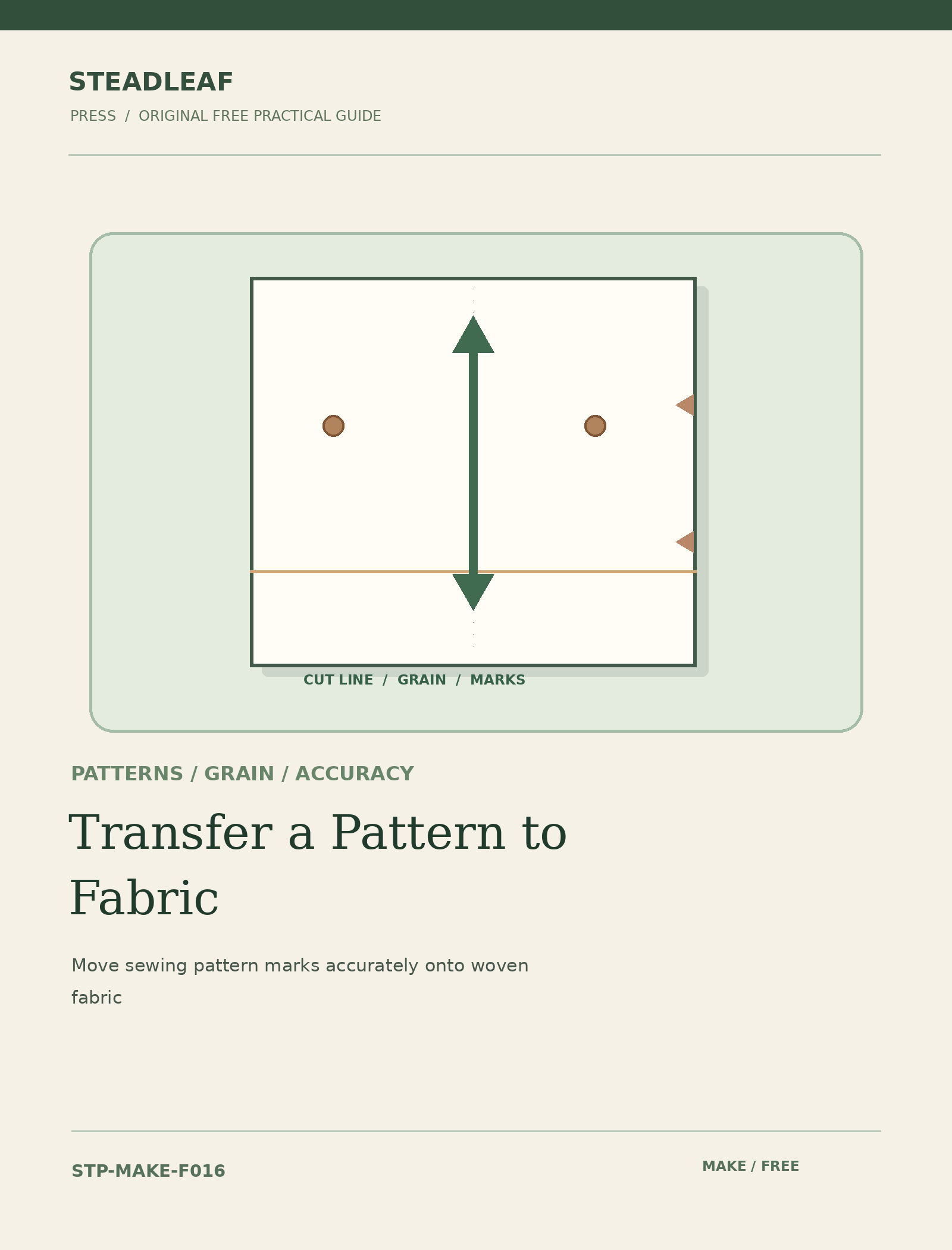
Practice transferring a cutting outline, grainline, notches, placement dots and a reference line using an original true-size 150 x 180 mm pattern and a printable transfer audit.
View free guide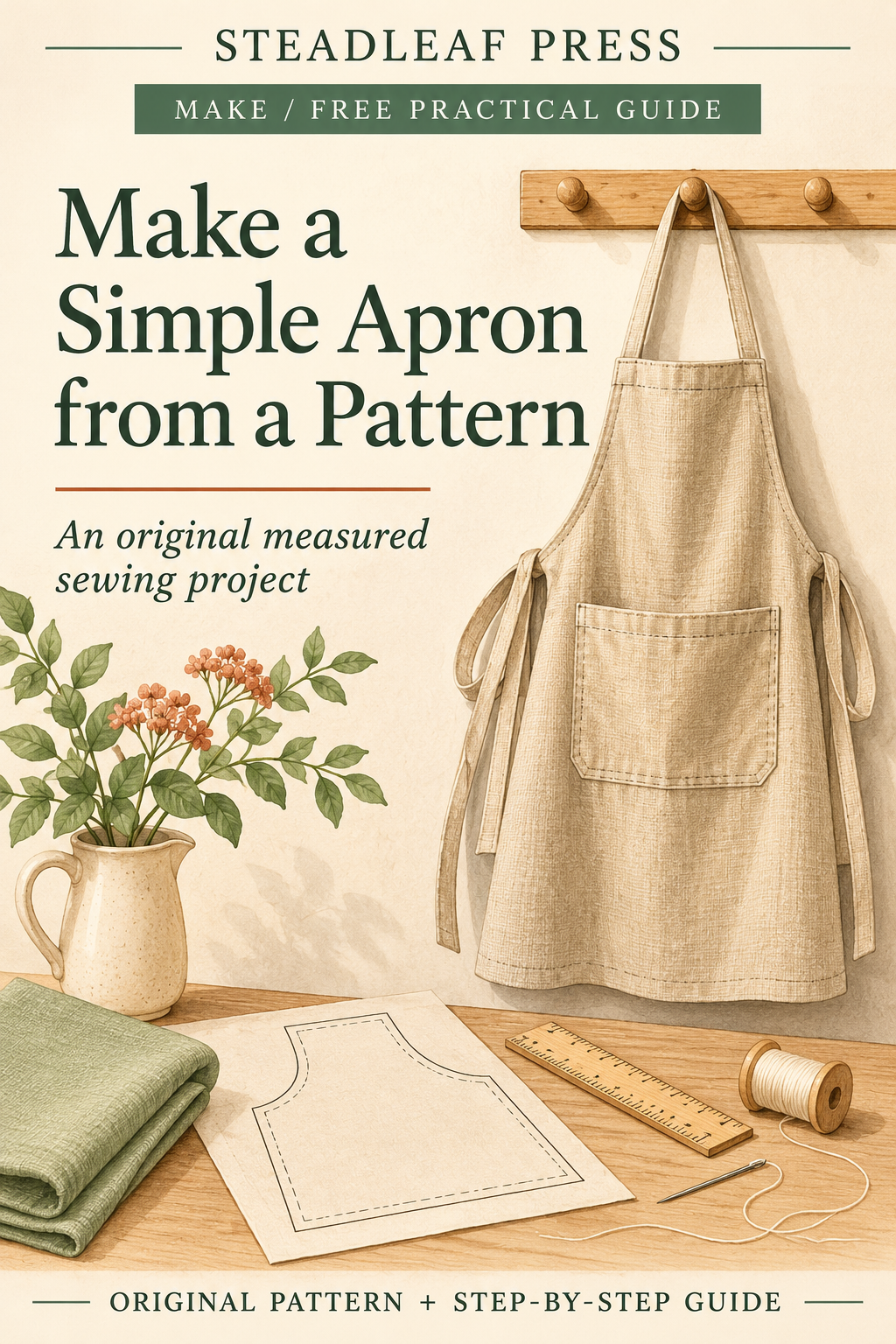
A free original adult apron guide with a measured cut-on-fold body pattern, neck and waist ties, pocket and a pattern-coordinate worksheet.
View free guide
Make three decorative folded-card table tents from an original 180 x 130 mm template, with seasonal motif sketches and a safety-first display record.
View free guide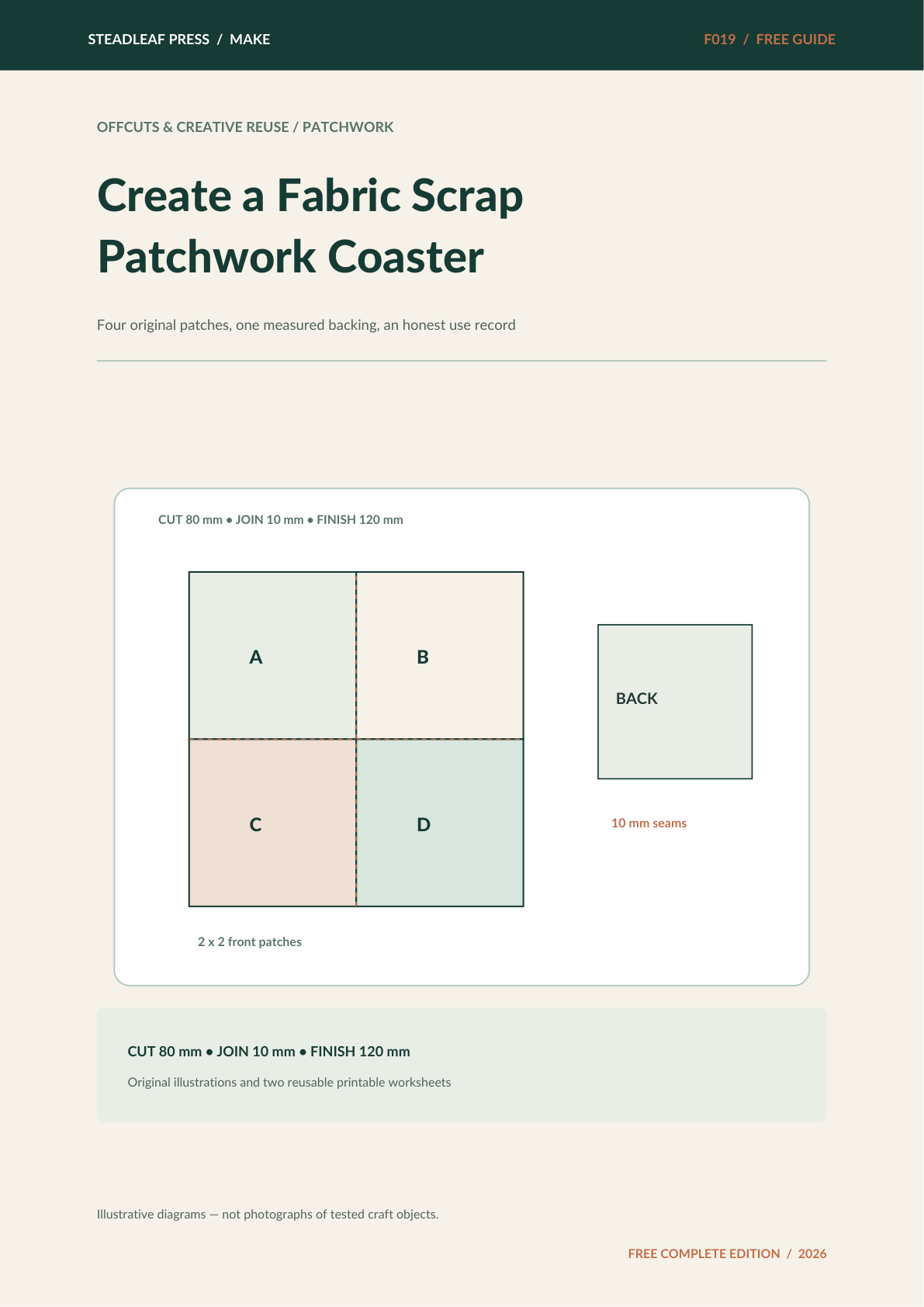
An original small patchwork fabric-mat tutorial with four 80 mm scrap squares, a 140 mm backing, 10 mm seam allowances and printable assembly records.
View free guide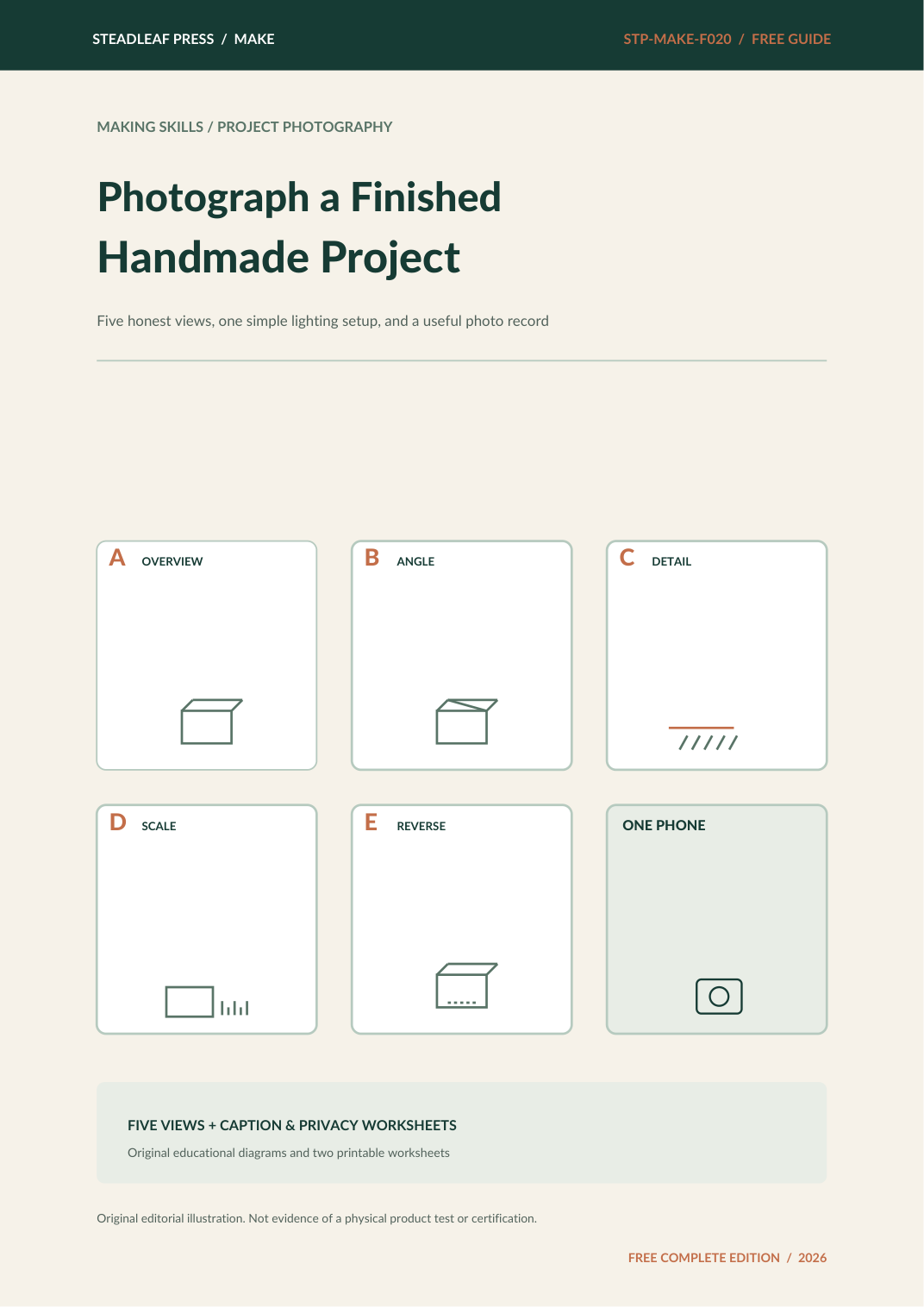
Photograph an actual handmade object with a phone through five essential views, controlled natural light, truthful edits and private-safe captions, with printable recording sheets.
View free guide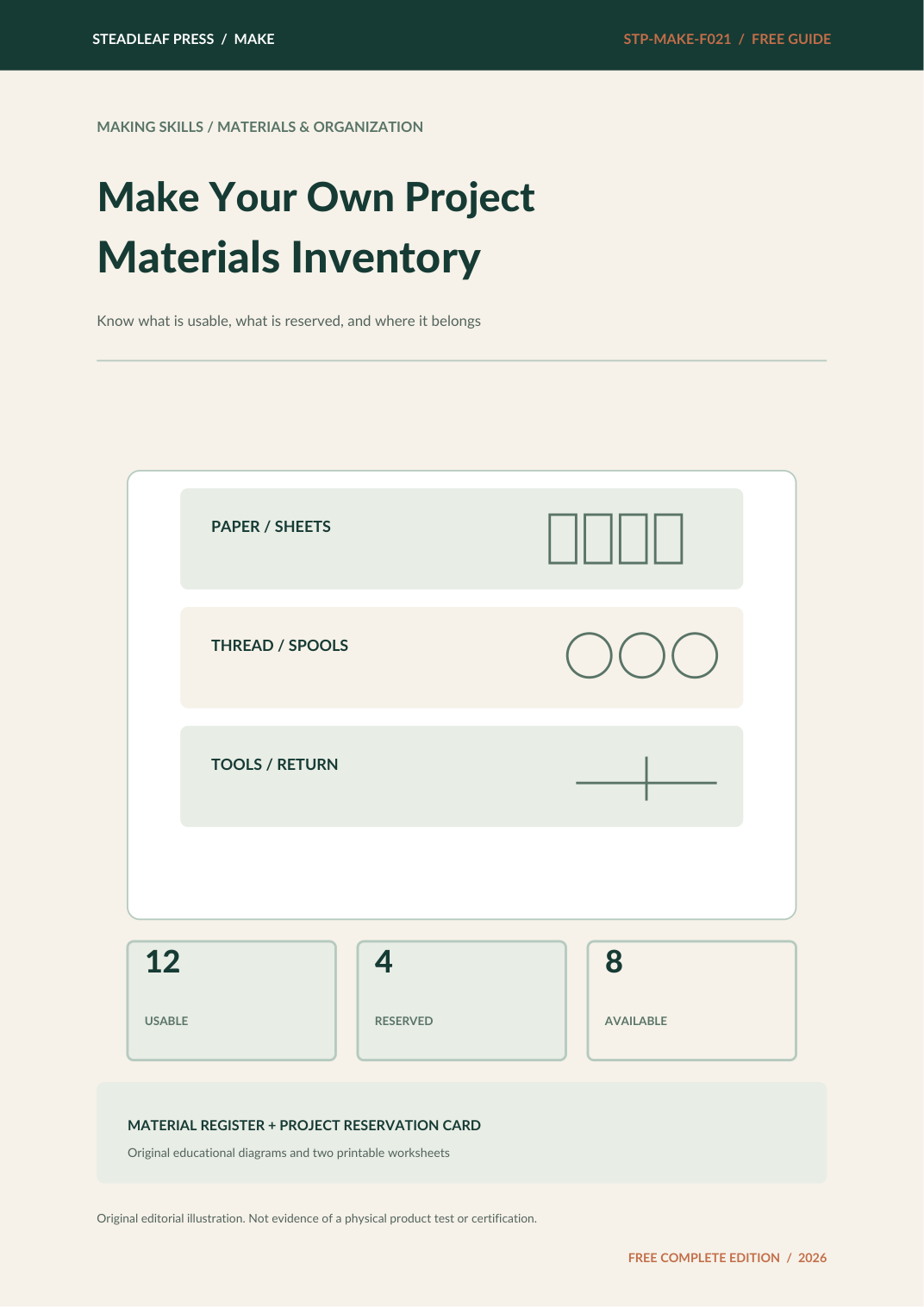
Build a practical craft materials inventory with usable, reserved and available quantities, safe storage locations, example calculations and two printable planning worksheets.
View free guide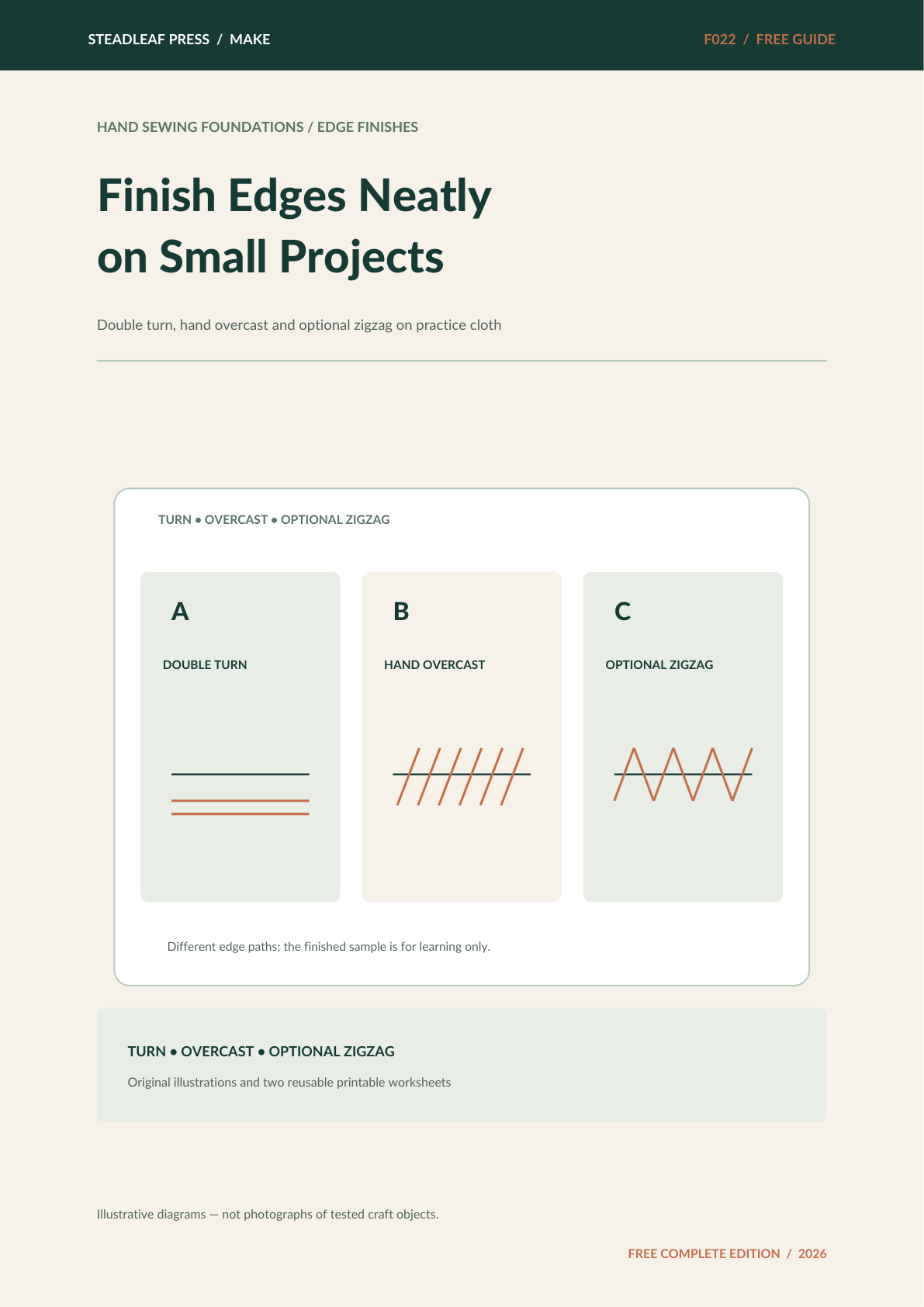
Compare three small-project fabric edge finishes with original double-turn, overcast and zigzag diagrams, specific size math, safe tool handling and printable records.
View free guide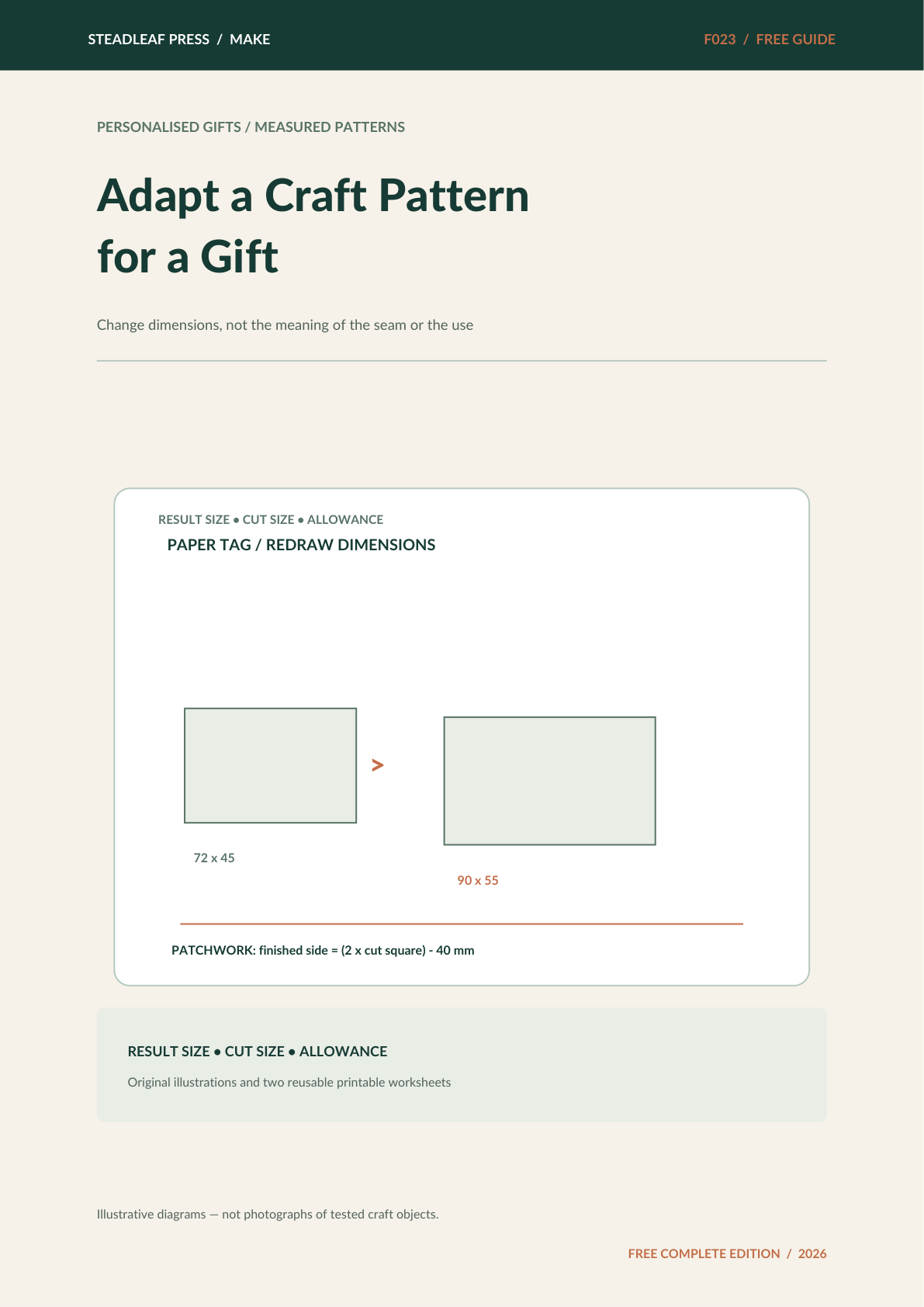
Resize an original flat paper tag and patchwork-mat pattern with transparent calculations, separate seam allowances, safe limitations and printable size-change worksheets.
View free guide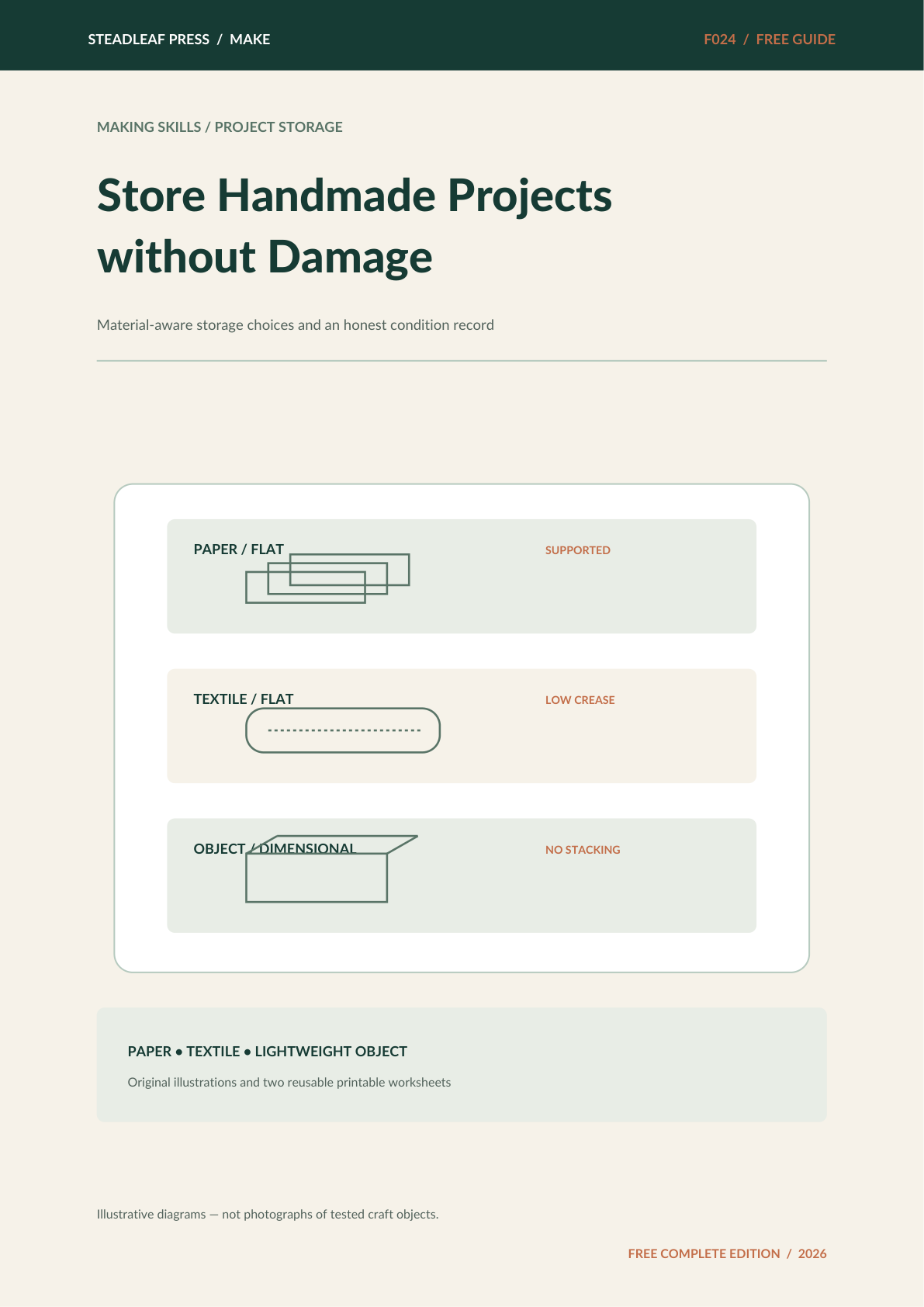
Store everyday handmade paper, textile and dimensional craft projects with a material-specific risk check, protected locations and printable condition records.
View free guide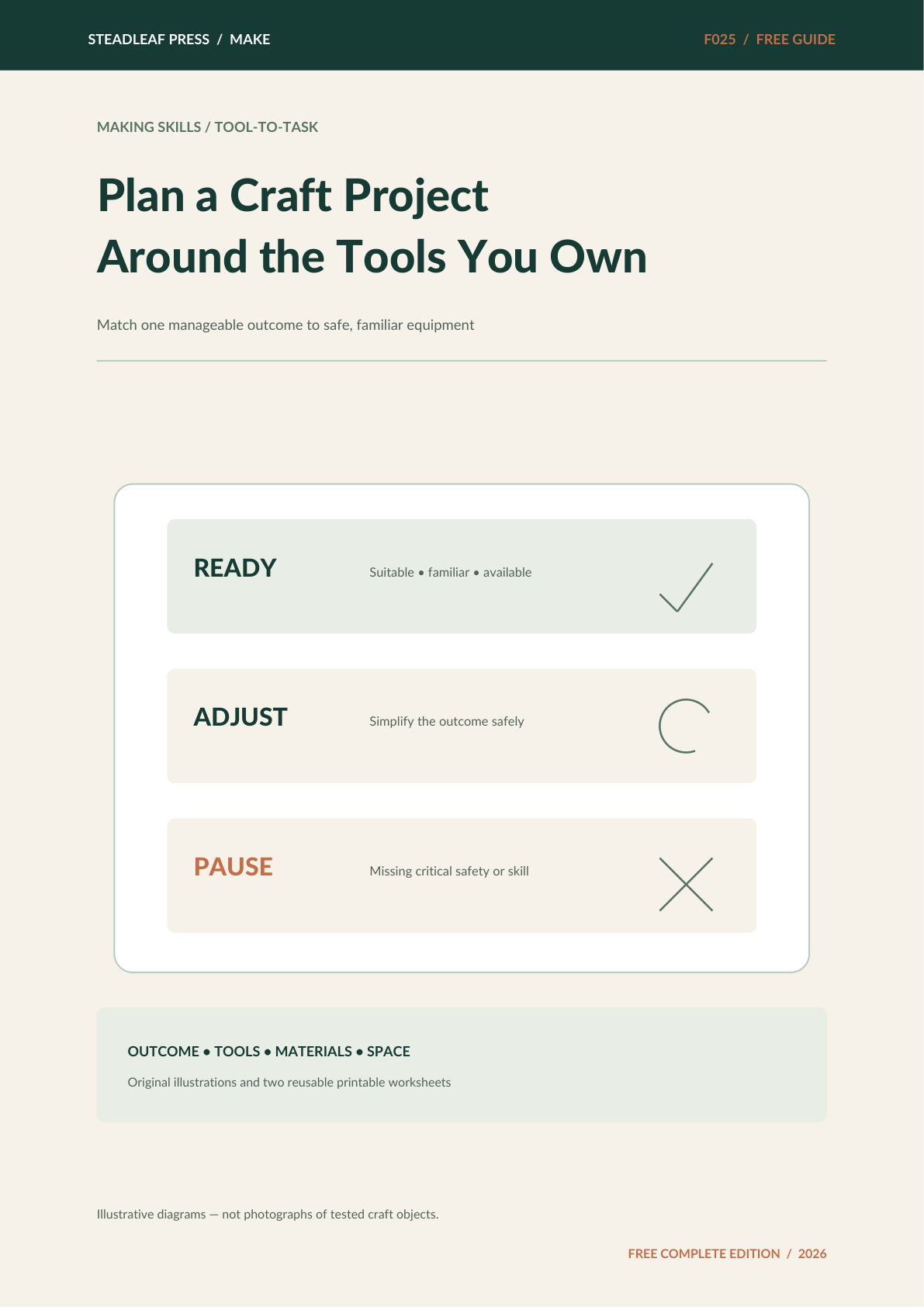
Choose a manageable craft project using equipment you already own, with a four-gate safety decision, tool-to-task map and first-session worksheet.
View free guide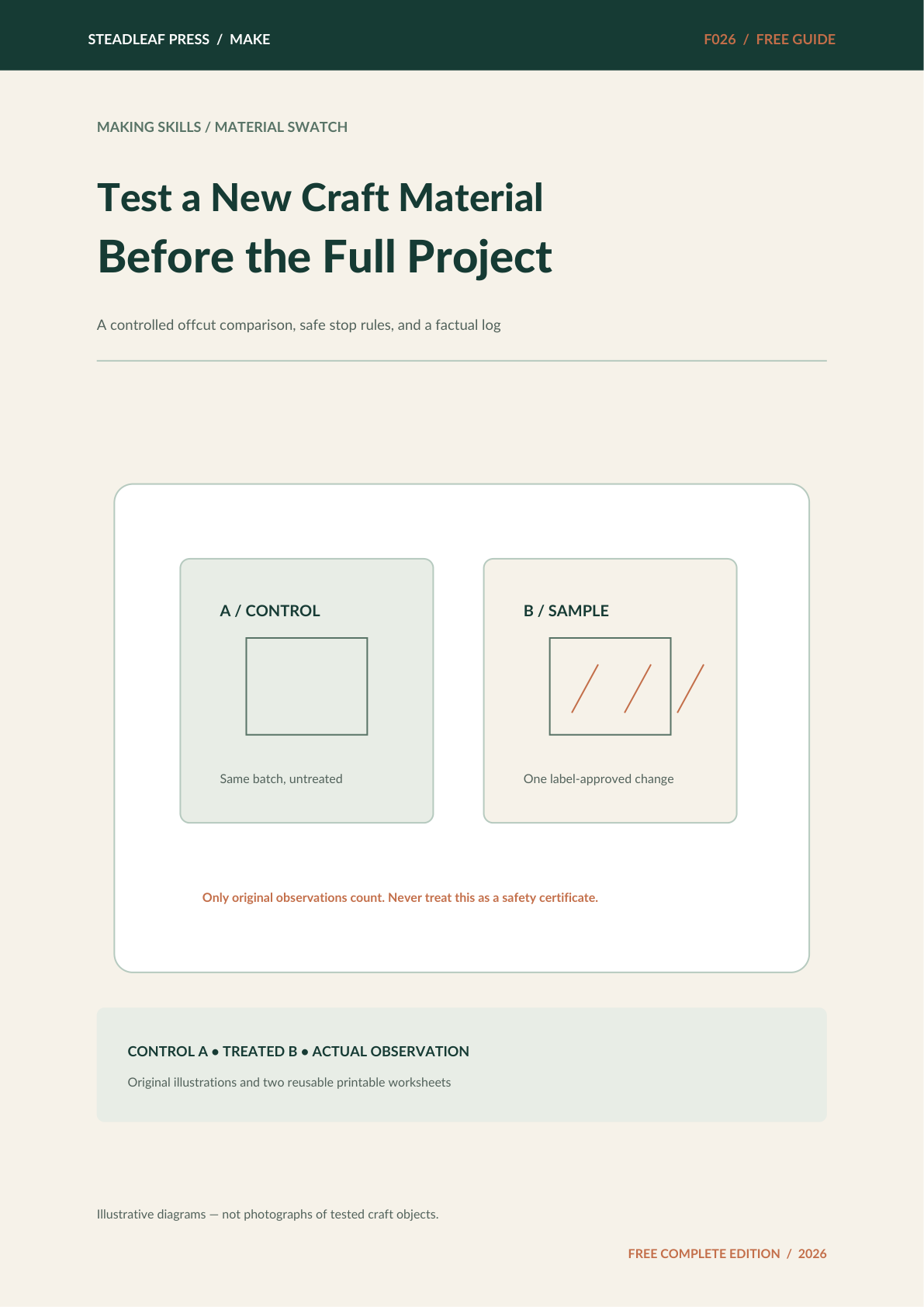
Compare identified low-risk craft materials on expendable swatches using a blank control, label-directed handling and printable observation and decision cards.
View free guide
Fold an original paper gift envelope from one measured cardstock pattern, with a full-scale cut/score diagram and a practical dry-fit record.
View free guide
Make a foldable, optionally supported zigzag paper display with eight original measured panels, a two-strip joining tab, and assembly diagram.
View free guide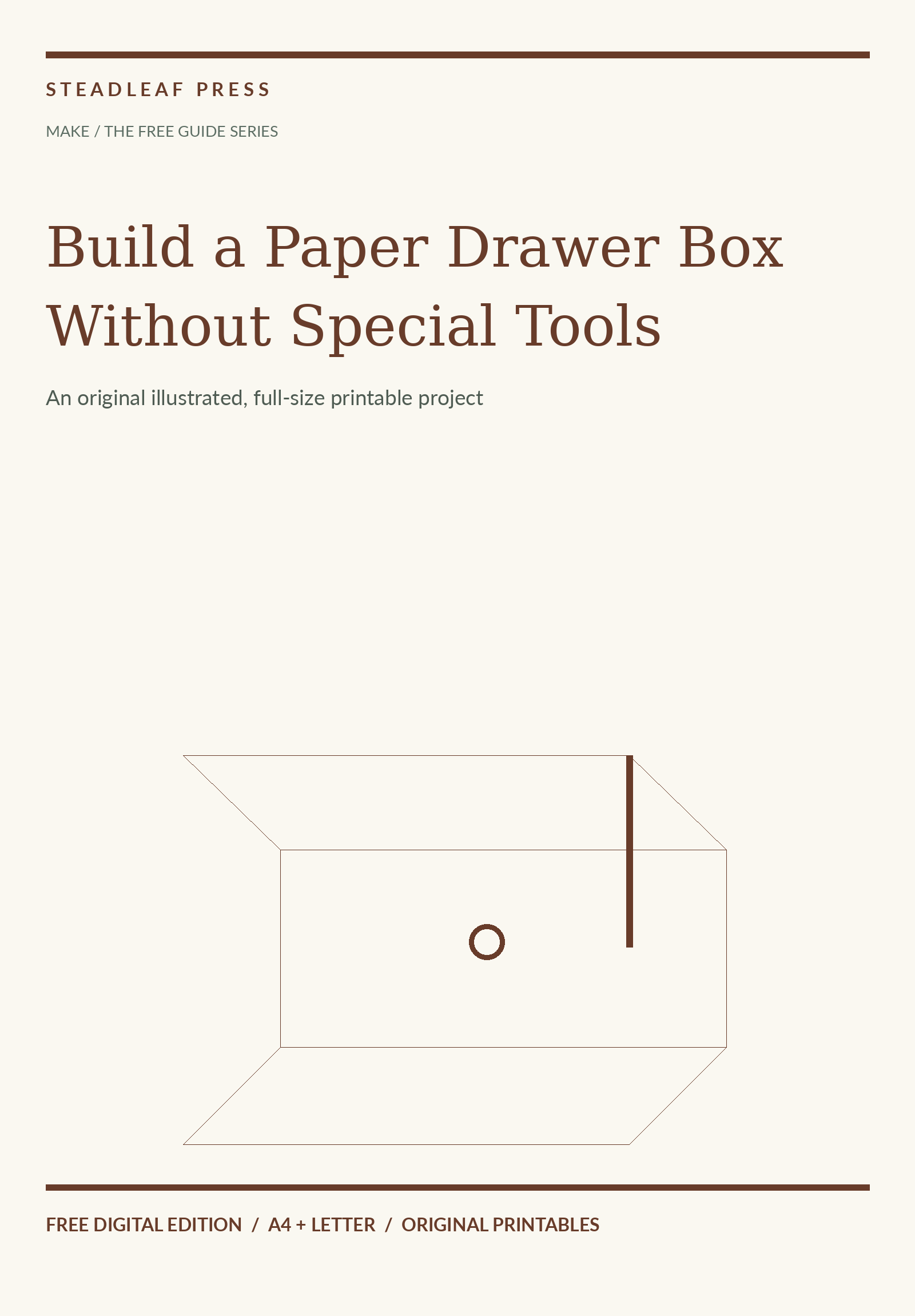
Build an original small paper drawer using a 100 x 65 mm tray base, 20 mm walls, a scored sliding sleeve and practical fit checks.
View free guide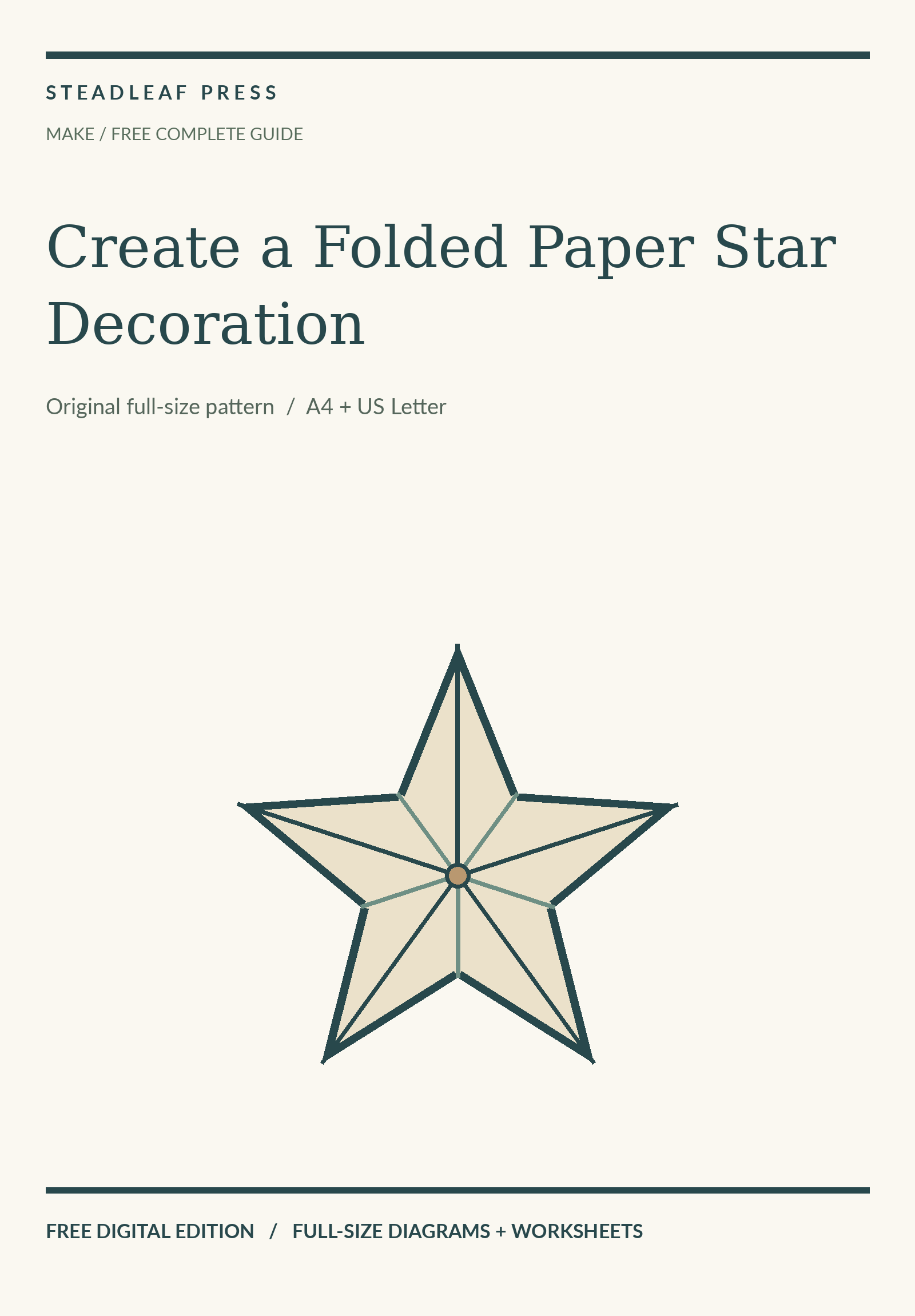
Cut and crease a symmetrical paper star with five mountain folds and five valley folds, a true-size pattern, and printable fold log.
View free guide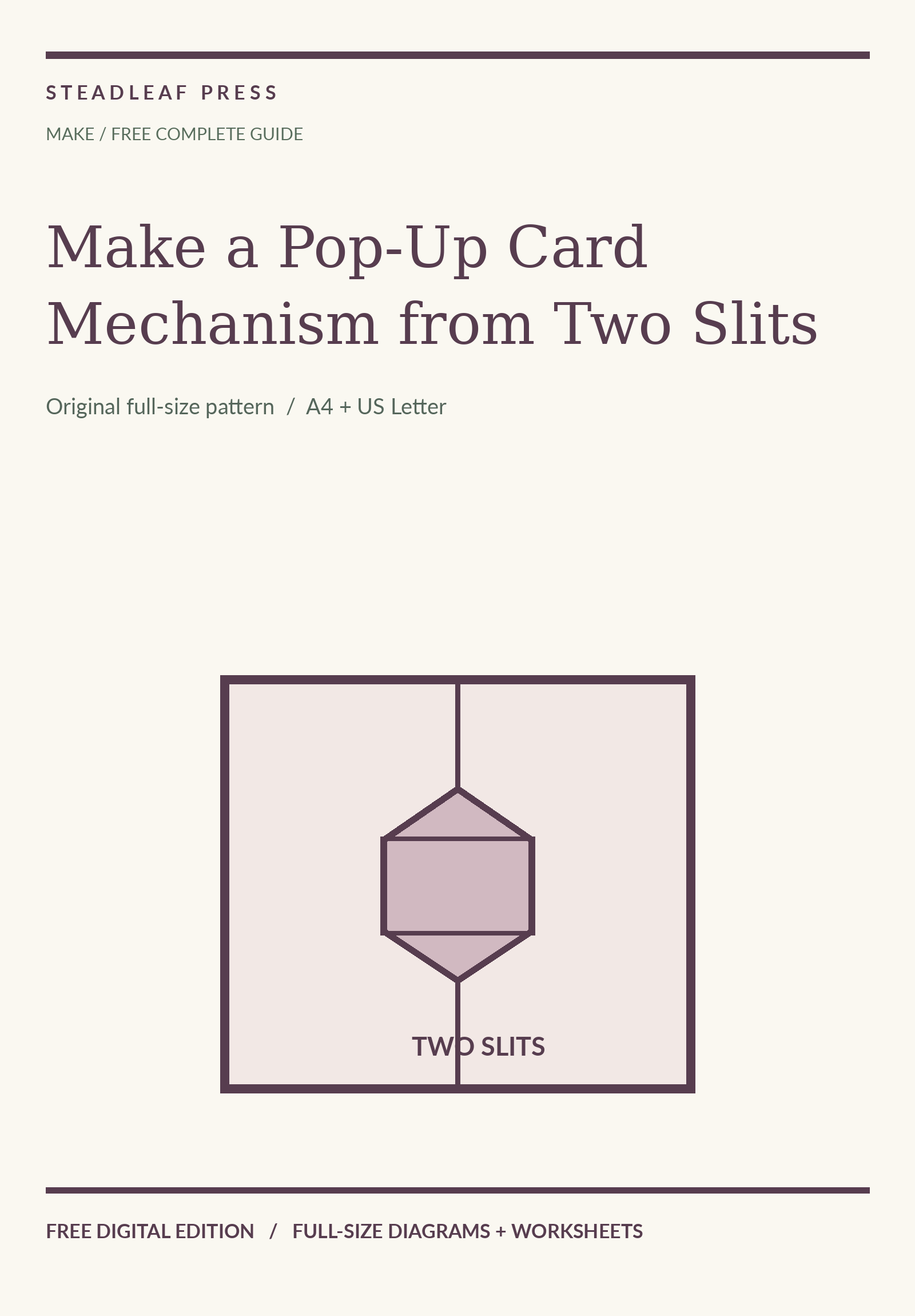
Build a measured two-slit pop-up step in a folded card, using an original full-size cut and score map and a practical folding record.
View free guide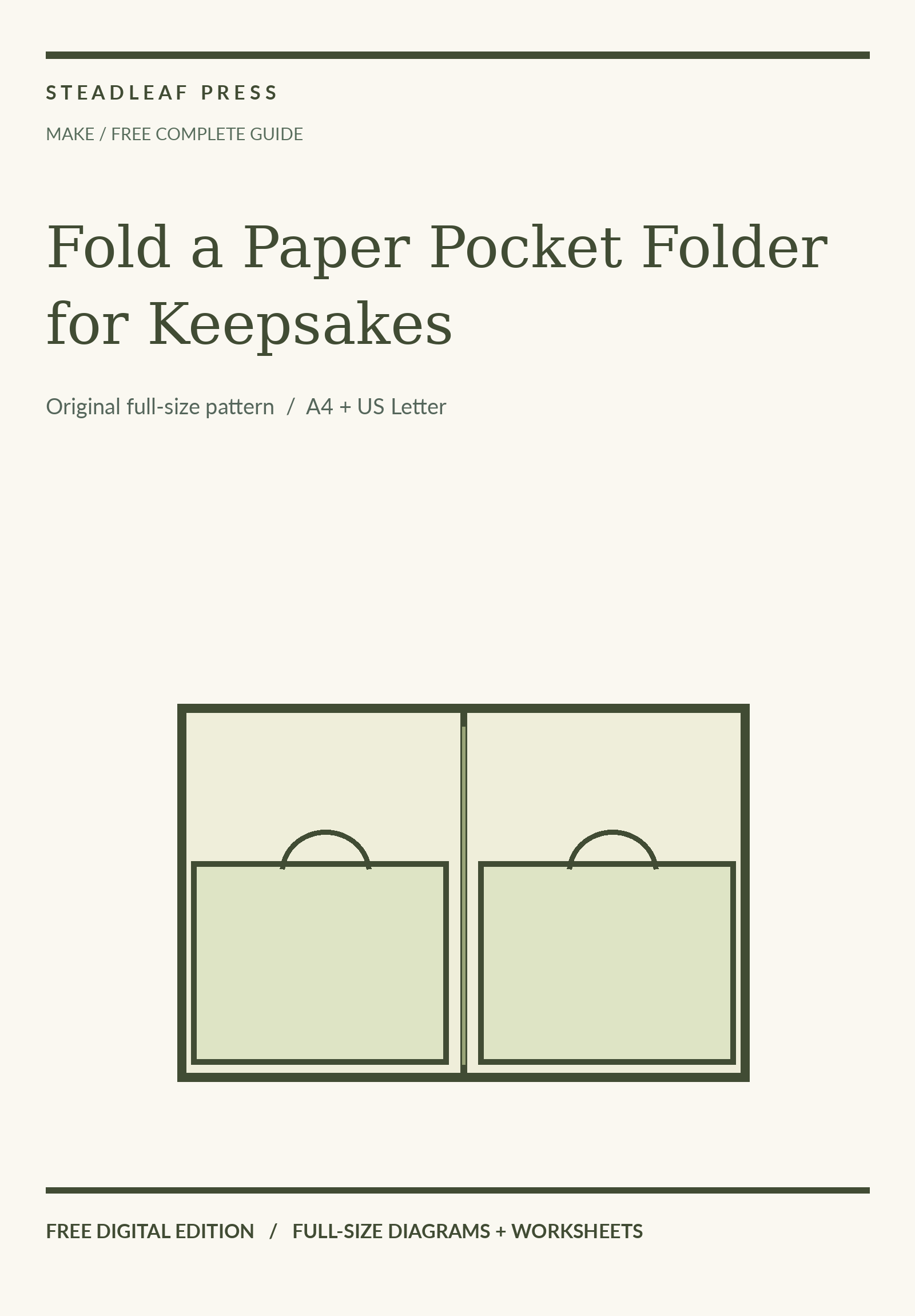
Fold a two-panel paper folder and add two original cut-to-size pocket strips, with calibrated patterns, glue zones and an insert-size record.
View free guide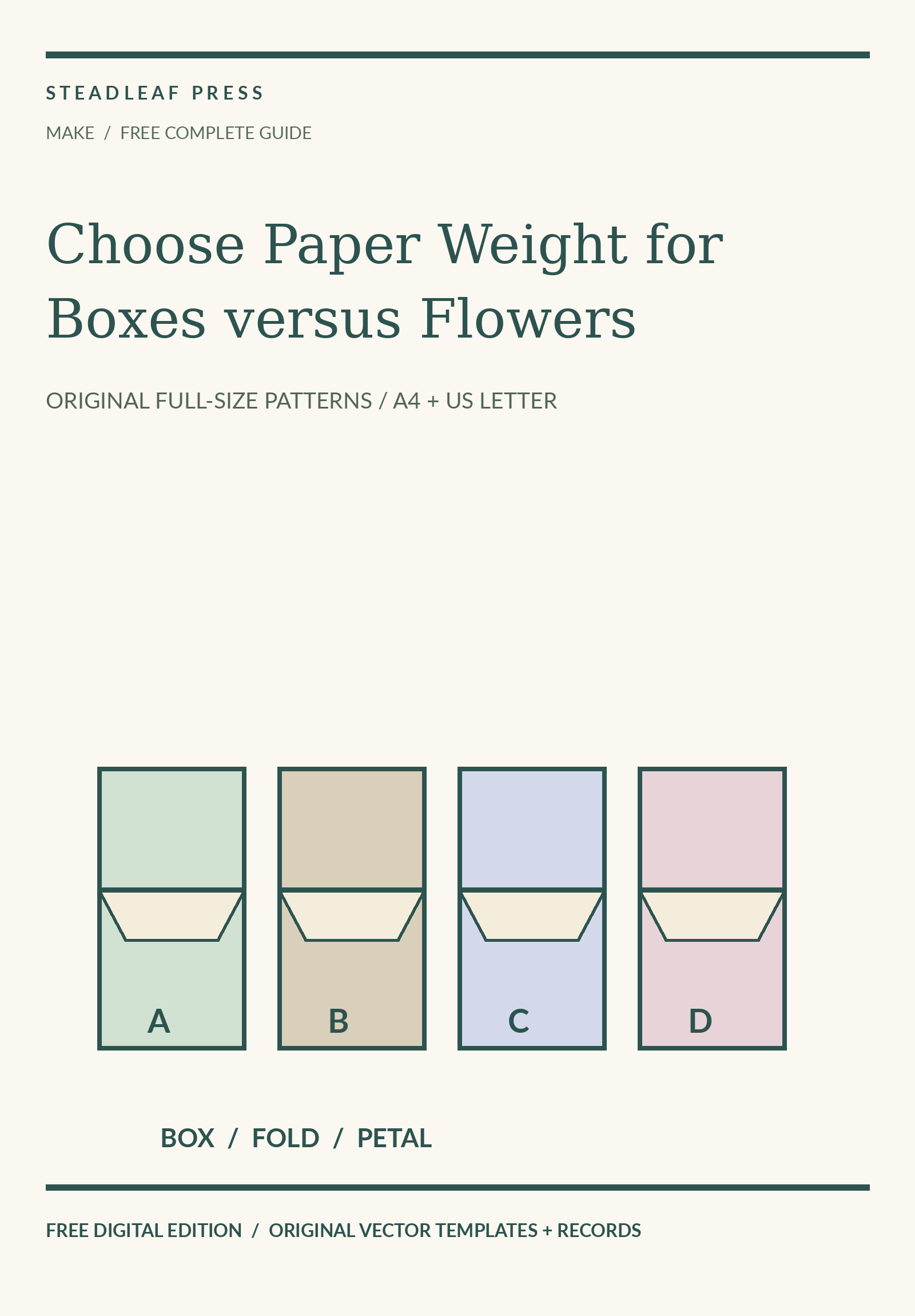
Compare paper weight, thickness, grain, scoring and surface finish for a small box versus a layered paper flower; includes original cut coupons and a decision log.
View free guide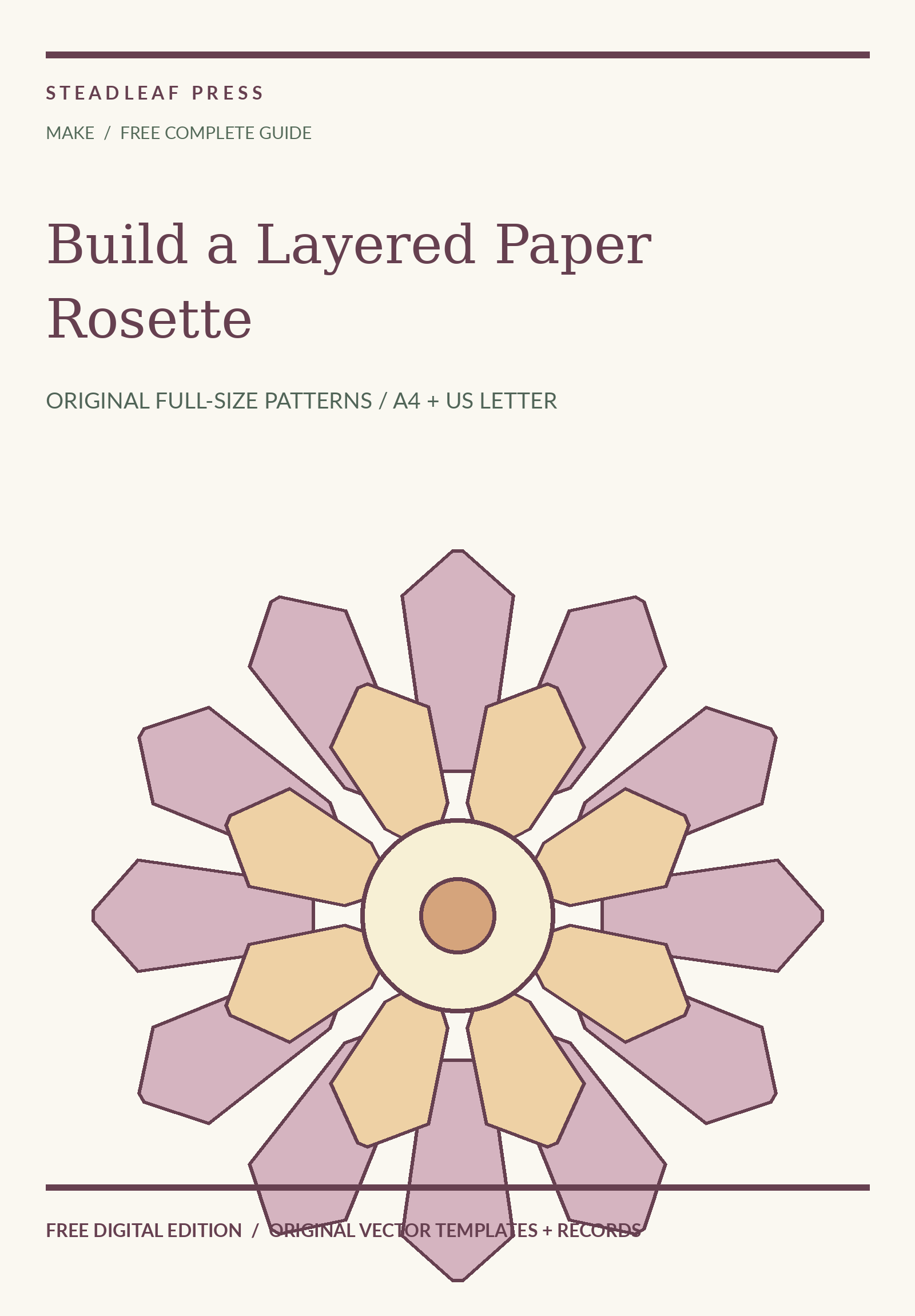
Make an original decorative paper rosette from twelve large petals, eight smaller petals and three measured circles with full-size cutting patterns and a placement record.
View free guide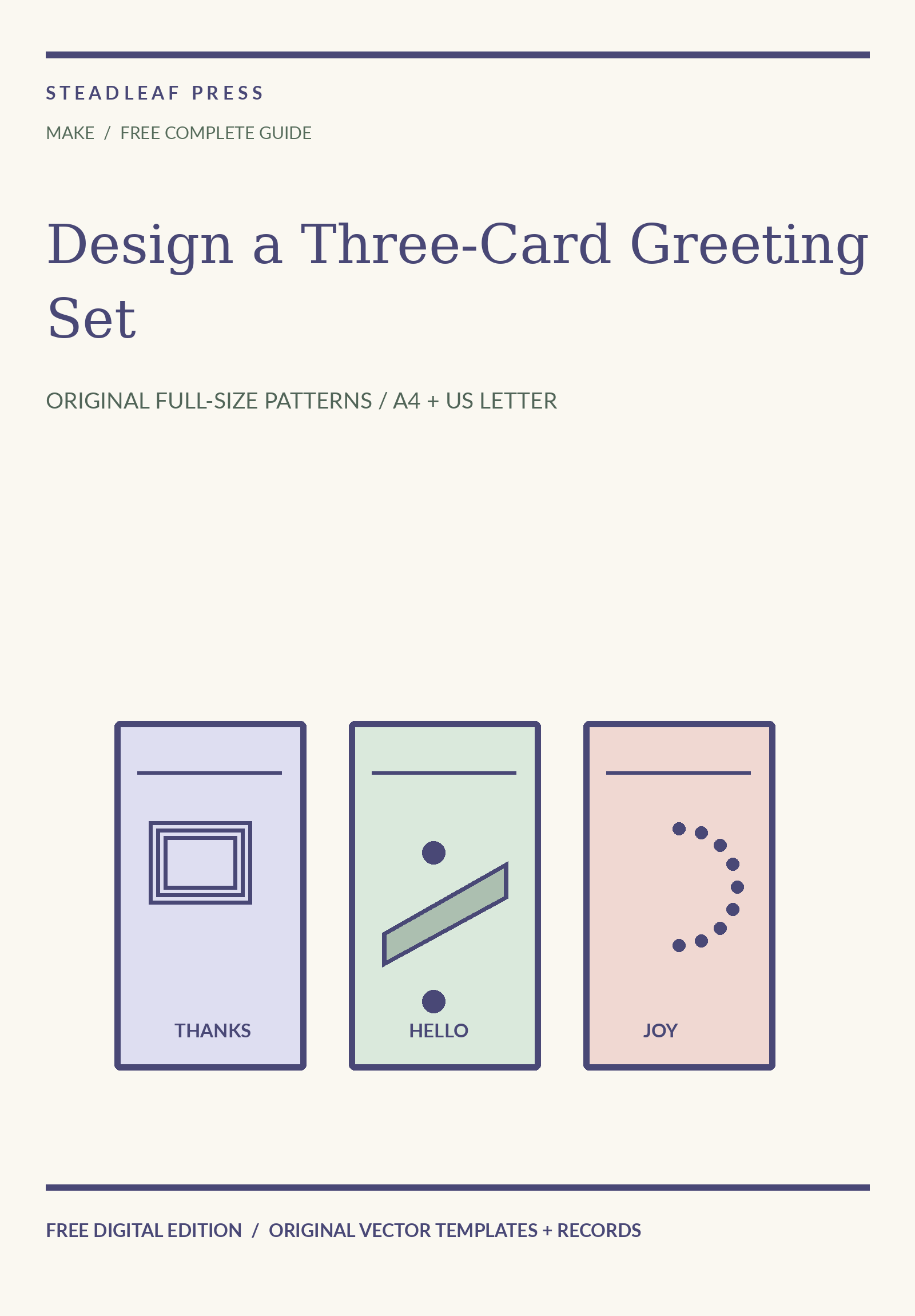
Design and cut three original coordinated small greeting cards using full-size cut-and-score pages, clear front-face guides, and a reusable three-card planning log.
View free guide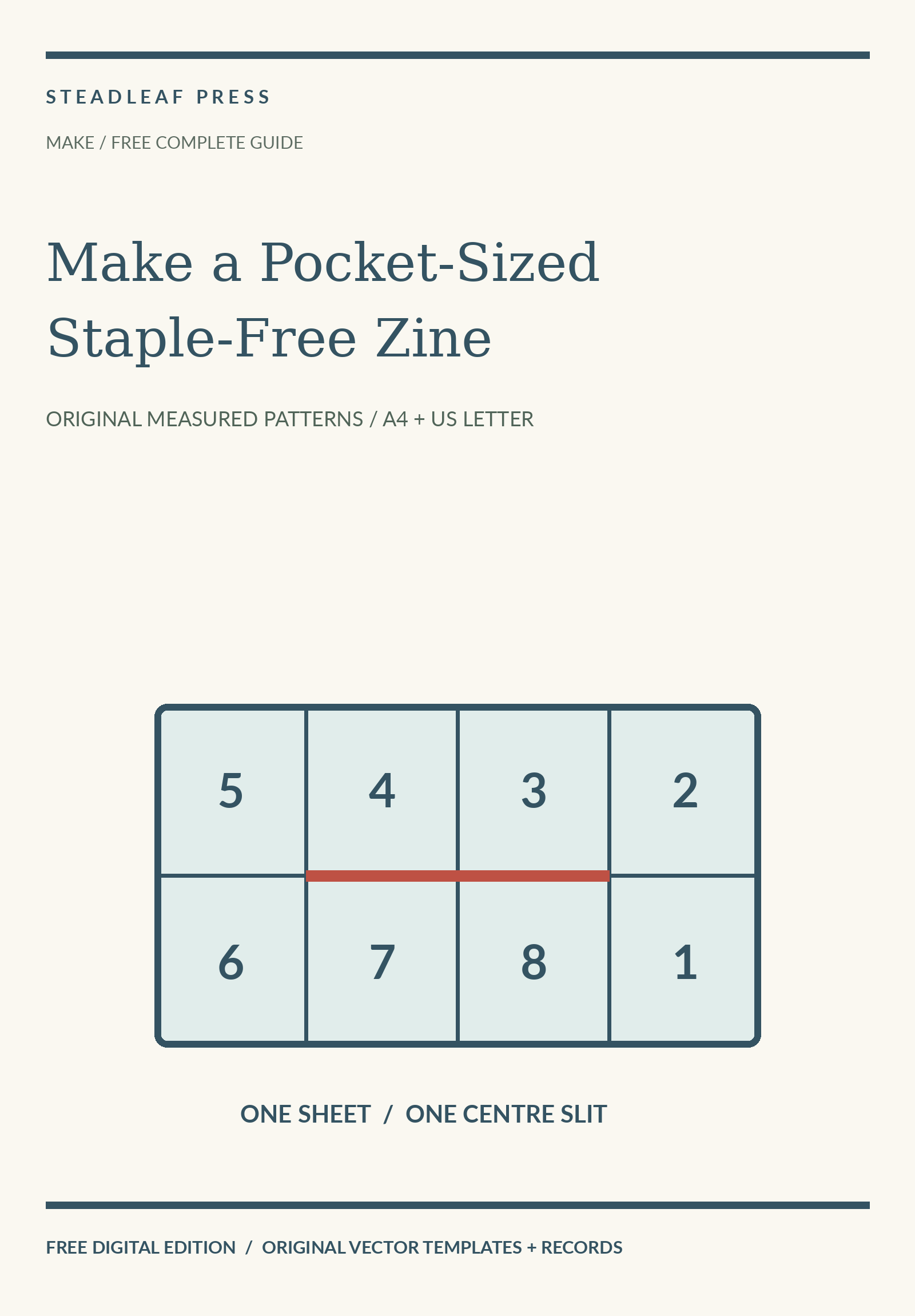
Fold an original eight-page pocket zine from one A4 or Letter sheet using a carefully numbered one-sheet imposition master, cut map and printable reading-order record.
View free guide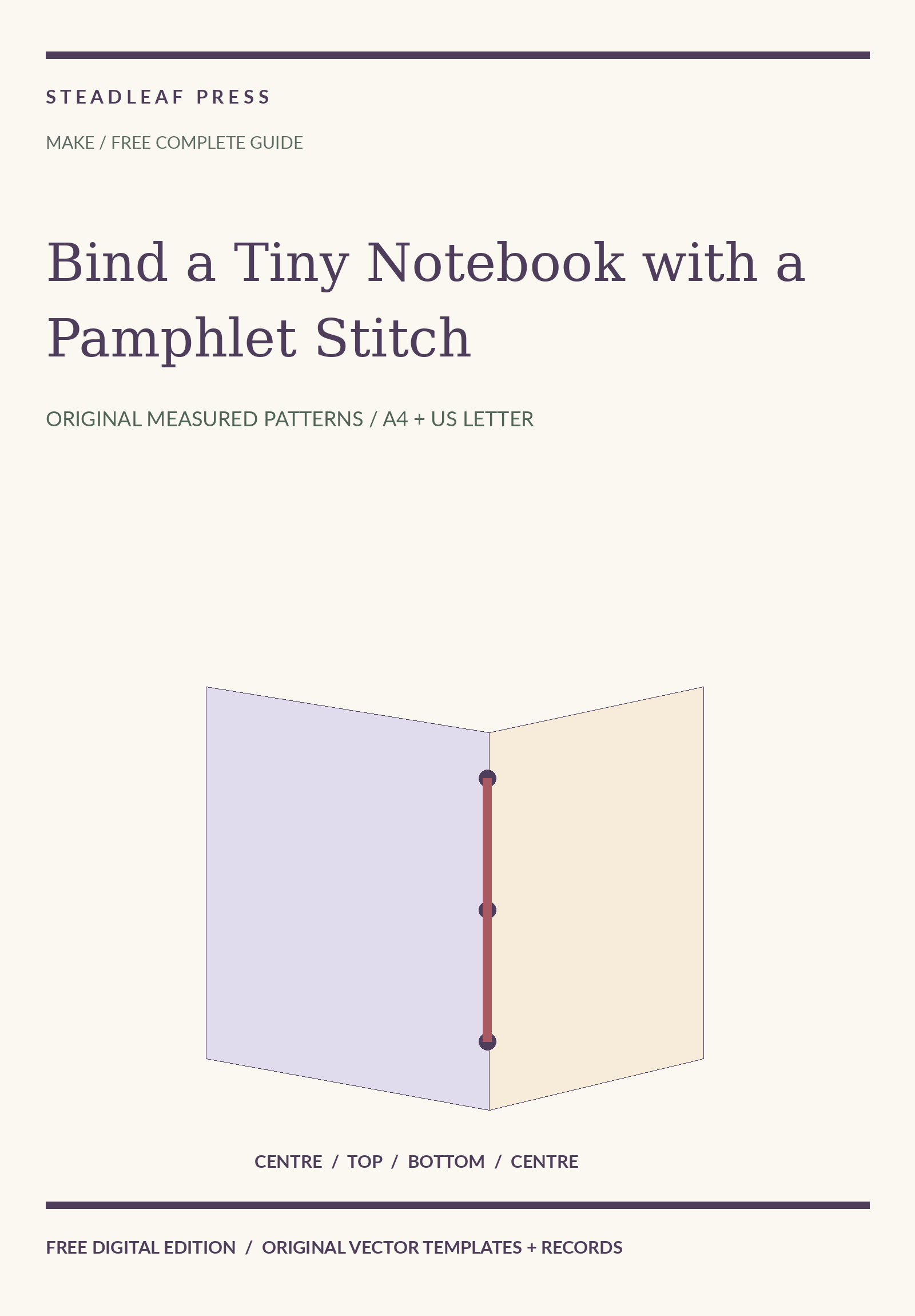
Bind a small original folded-paper notebook with a precise three-hole spine guide, clear inside/outside thread sequence, and printable safety and stitch record.
View free guide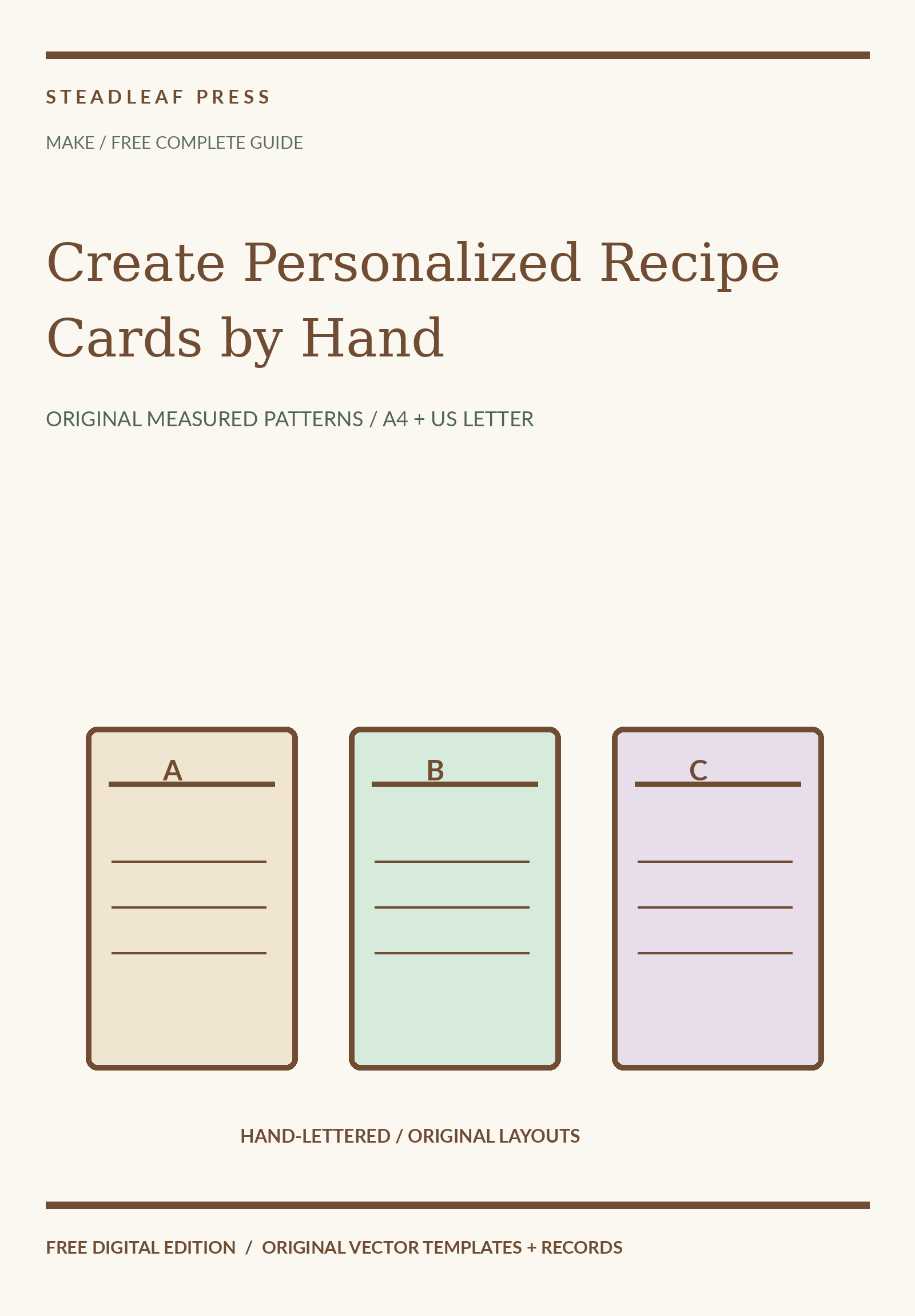
Design original hand-lettered recipe cards using three full-size 140 x 90 mm templates, structured ingredient fields, readable lettering guidance and a printable revision record.
View free guide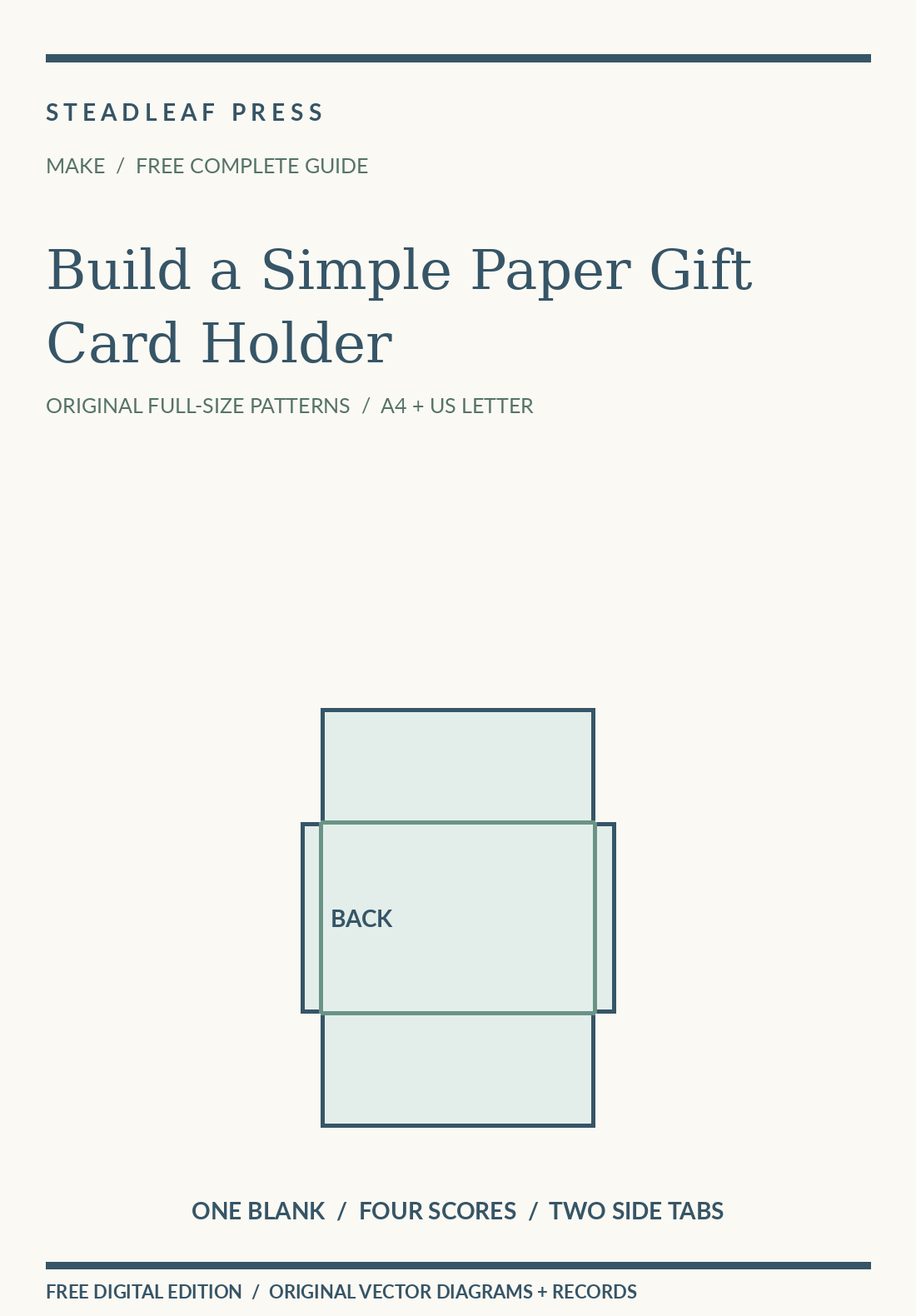
Cut, score and fold one original measured cardstock net into a light-duty gift-card pocket with a top closing flap, actual-size reference gauge and fold record.
View free guide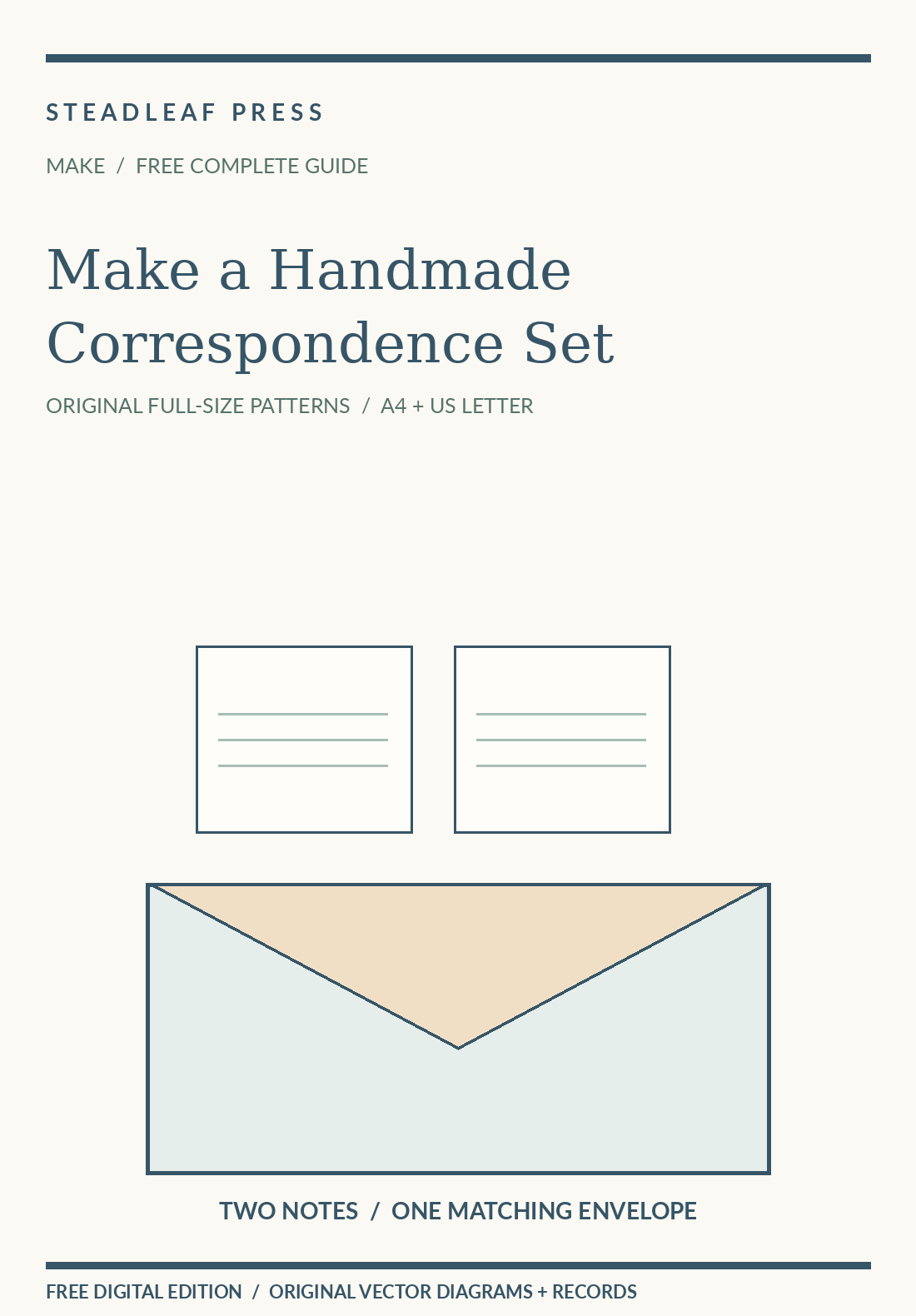
Make a coordinated two-note correspondence set with original measured note borders, an envelope net with side tabs and four score lines, and a printable message/assembly record.
View free guide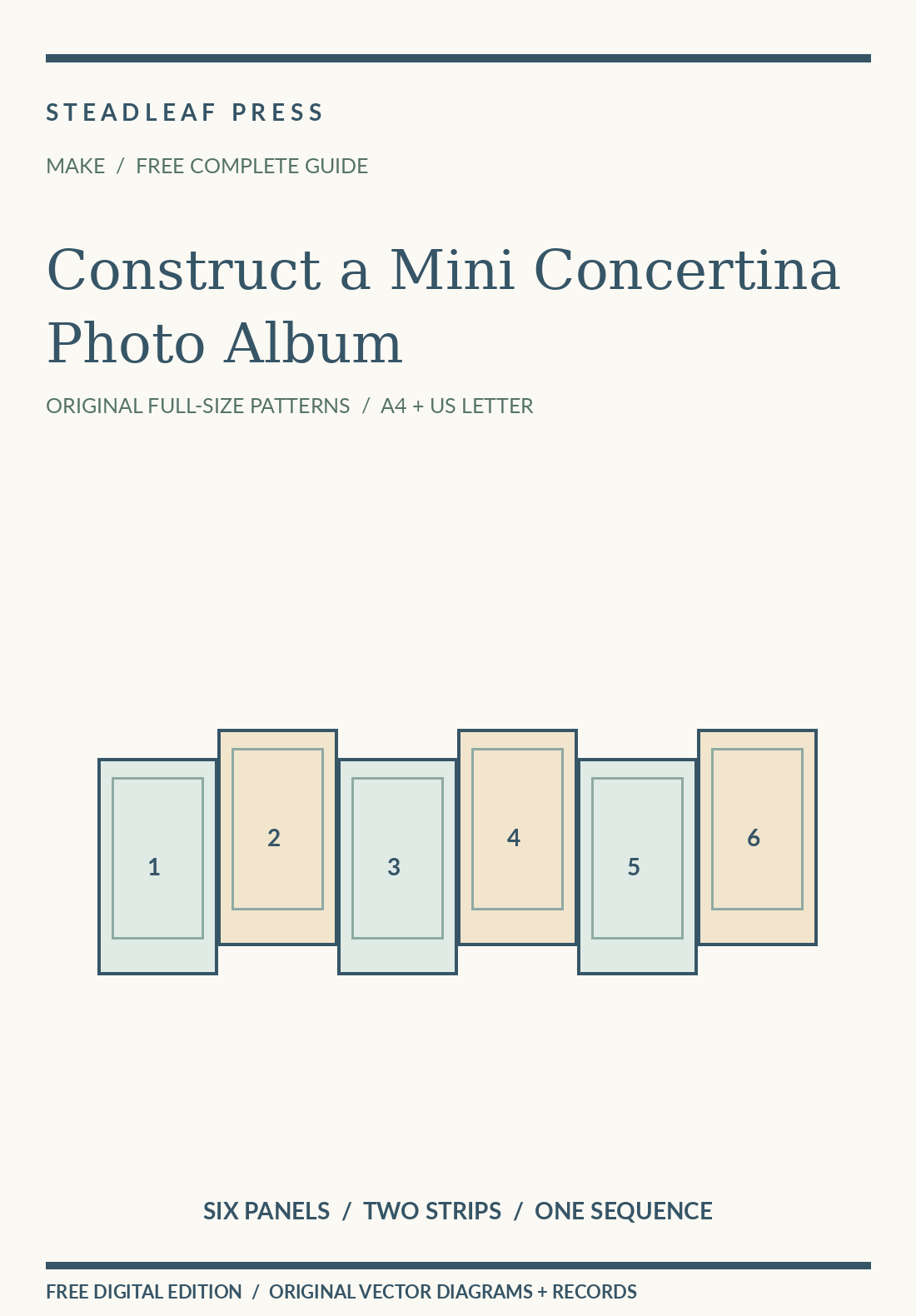
Make a six-panel folded-photo mini album using two full-size original accordion strips, a 10 mm joining tab, two optional outer covers and a photo-layout record.
View free guide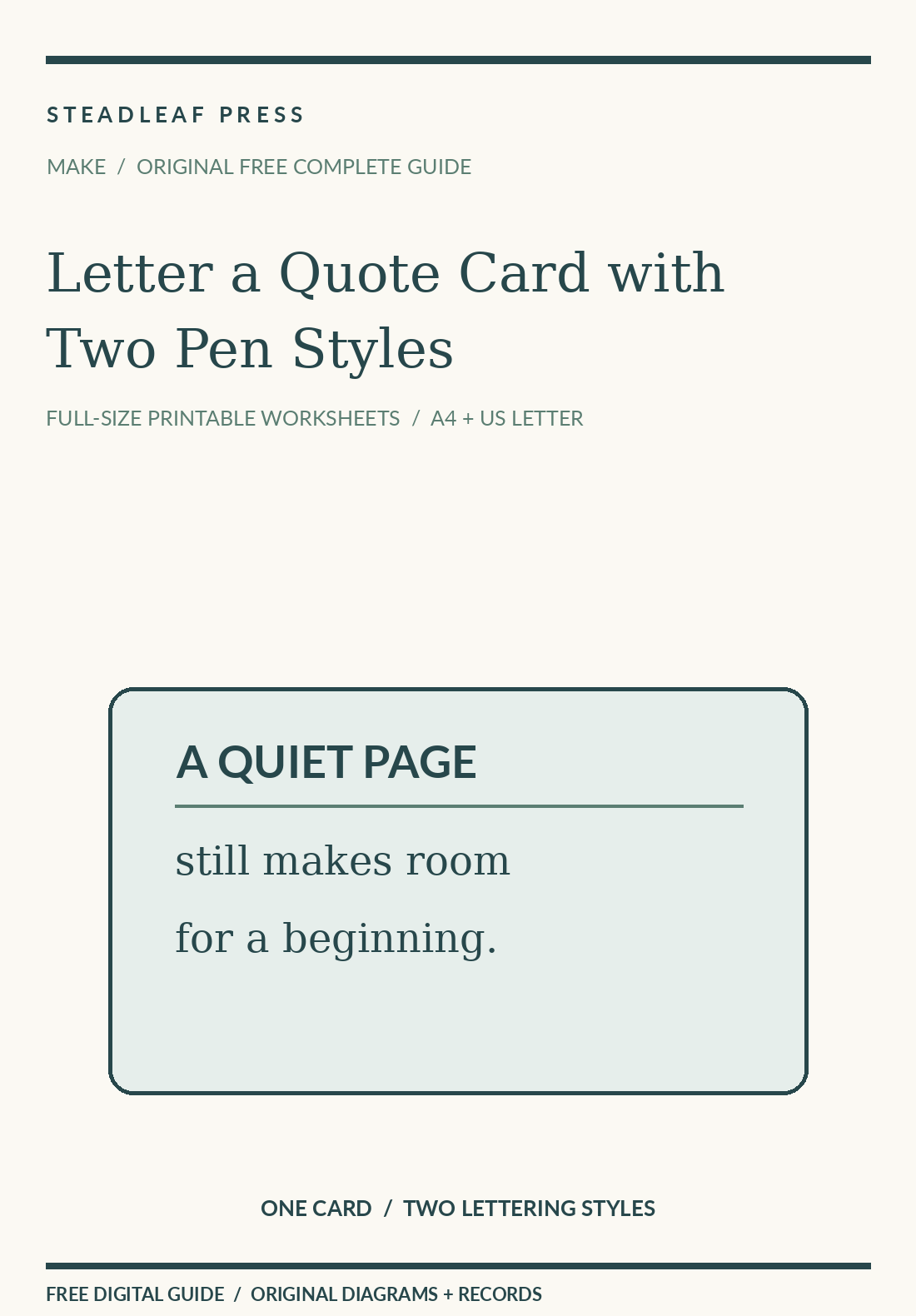
Letter an original short quotation using upright and slanted pen styles, two measured full-size practice grids and a 150 x 100 mm quote card with printable record.
View free guide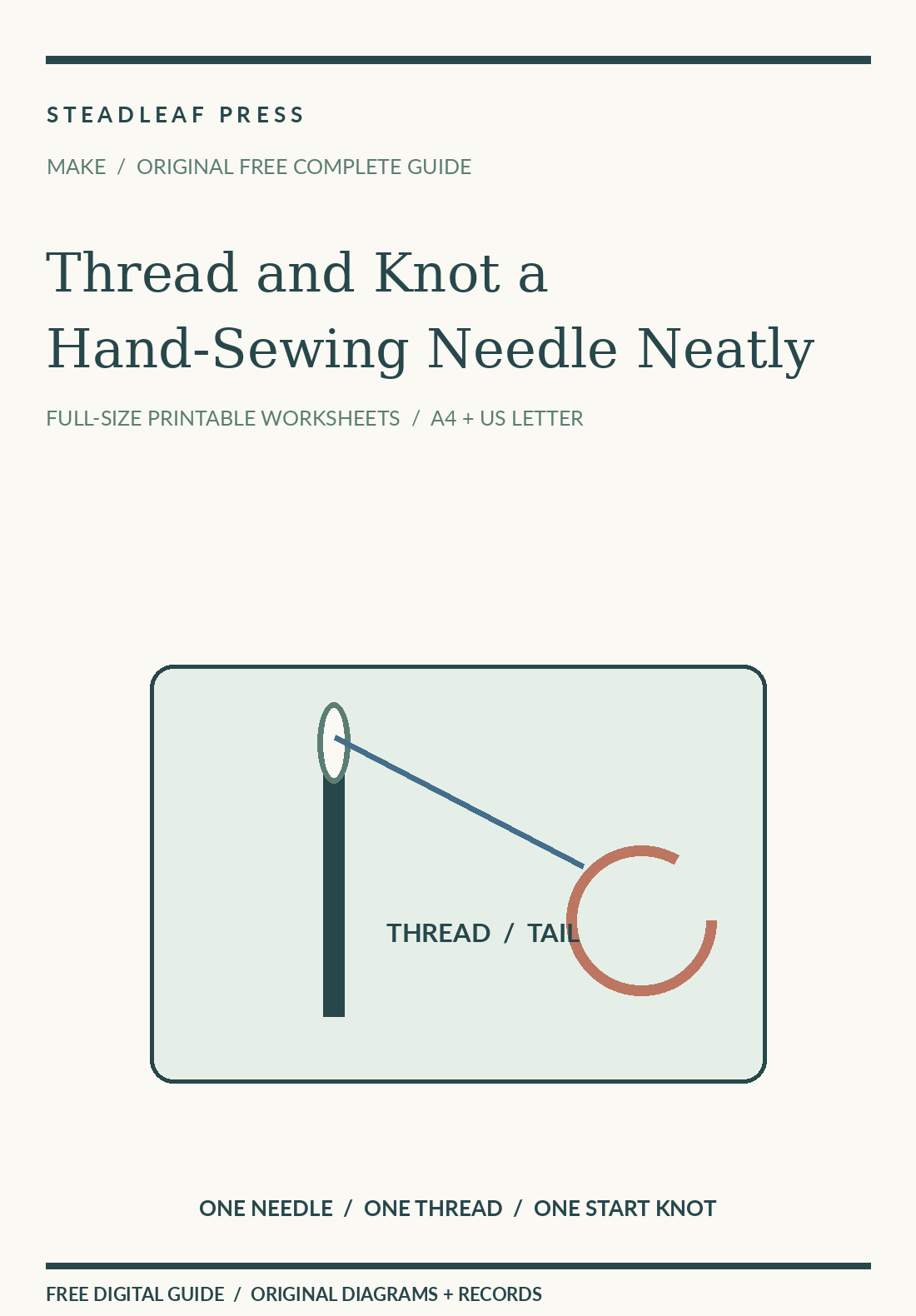
Prepare one hand-sewing needle with a 400 mm example thread, 80 mm short tail, overhand knot on the free long end, original step diagram and safe practice guide.
View free guide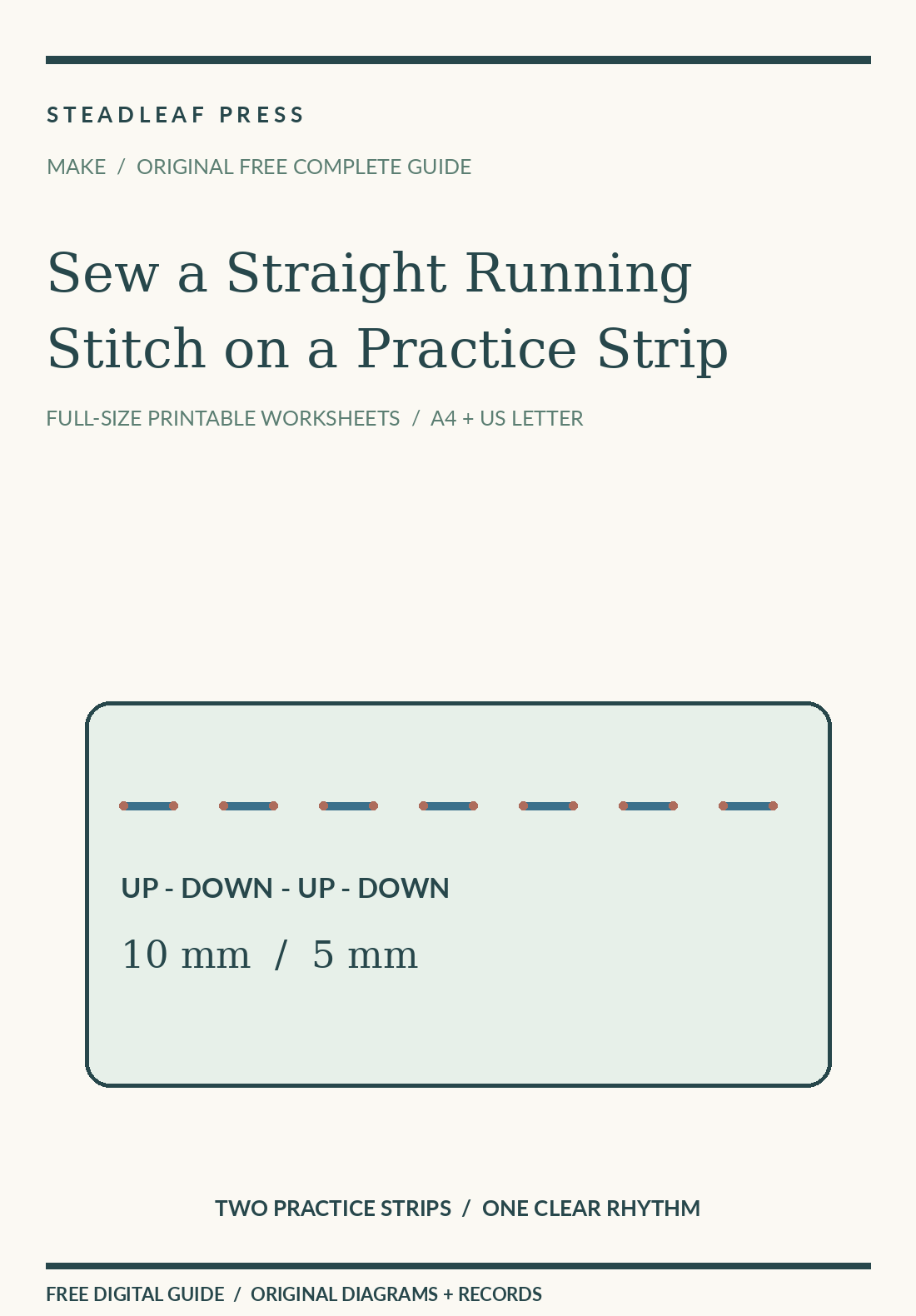
Use original full-size 150 x 50 mm fabric strip patterns with 10 mm and 5 mm mark spacing, a numbered front/back stitch diagram and printable observation log.
View free guide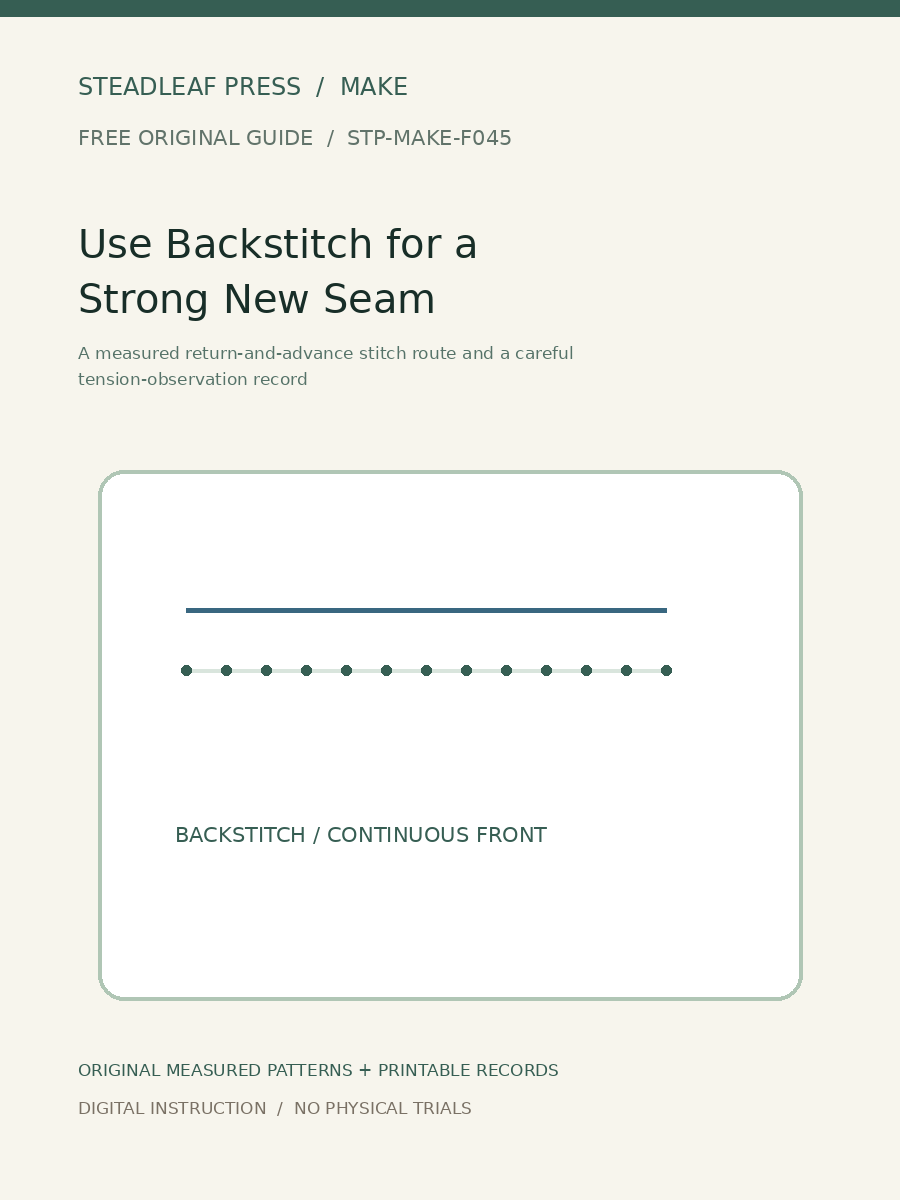
Practice a continuous hand backstitch using two original full-size 160 x 55 mm cloth guides, 10 mm and 5 mm intervals, a numbered needle path, and a tension observation record.
View free guide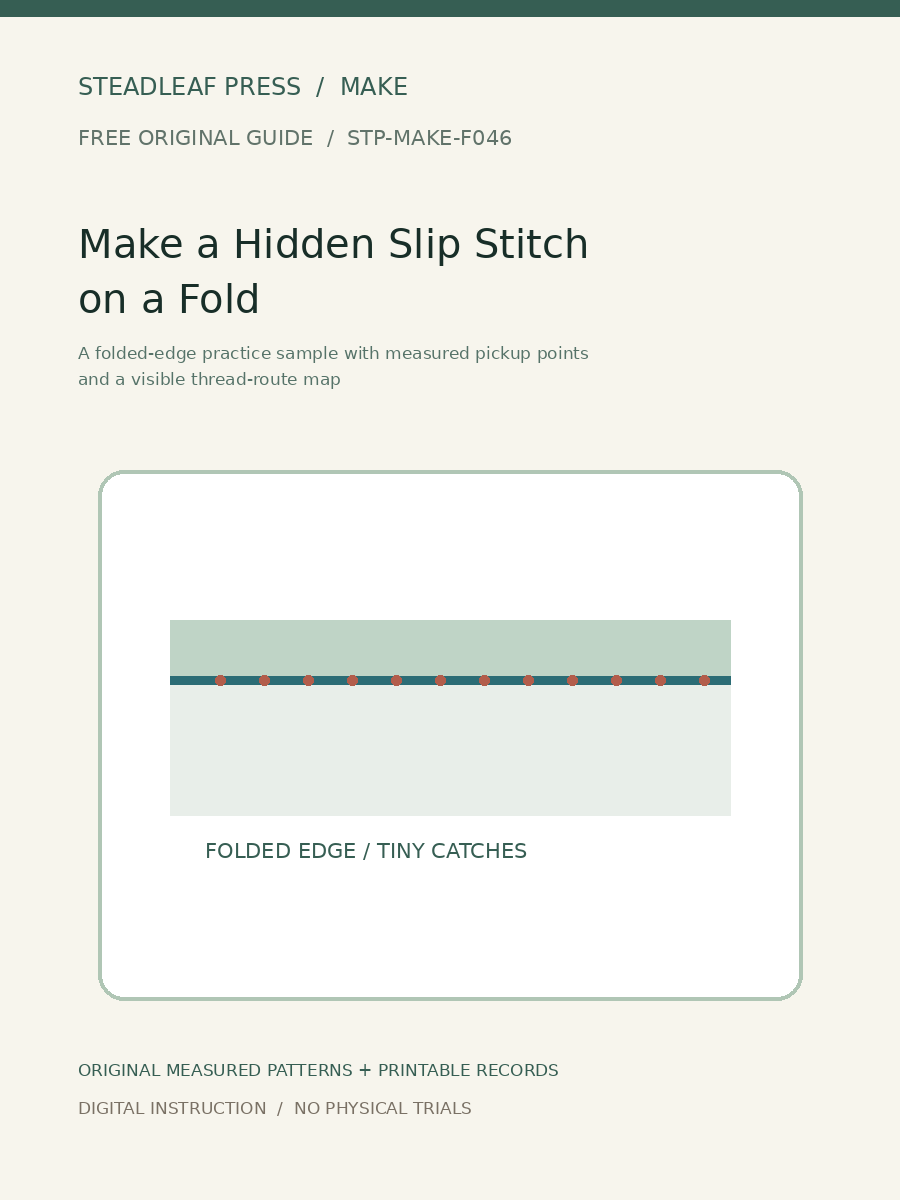
Learn the folded-edge slip stitch with an original 160 x 90 mm base and 160 x 45 mm practice strip, a 12 mm turn-under and 11 measured pickup guides at 12 mm intervals.
View free guide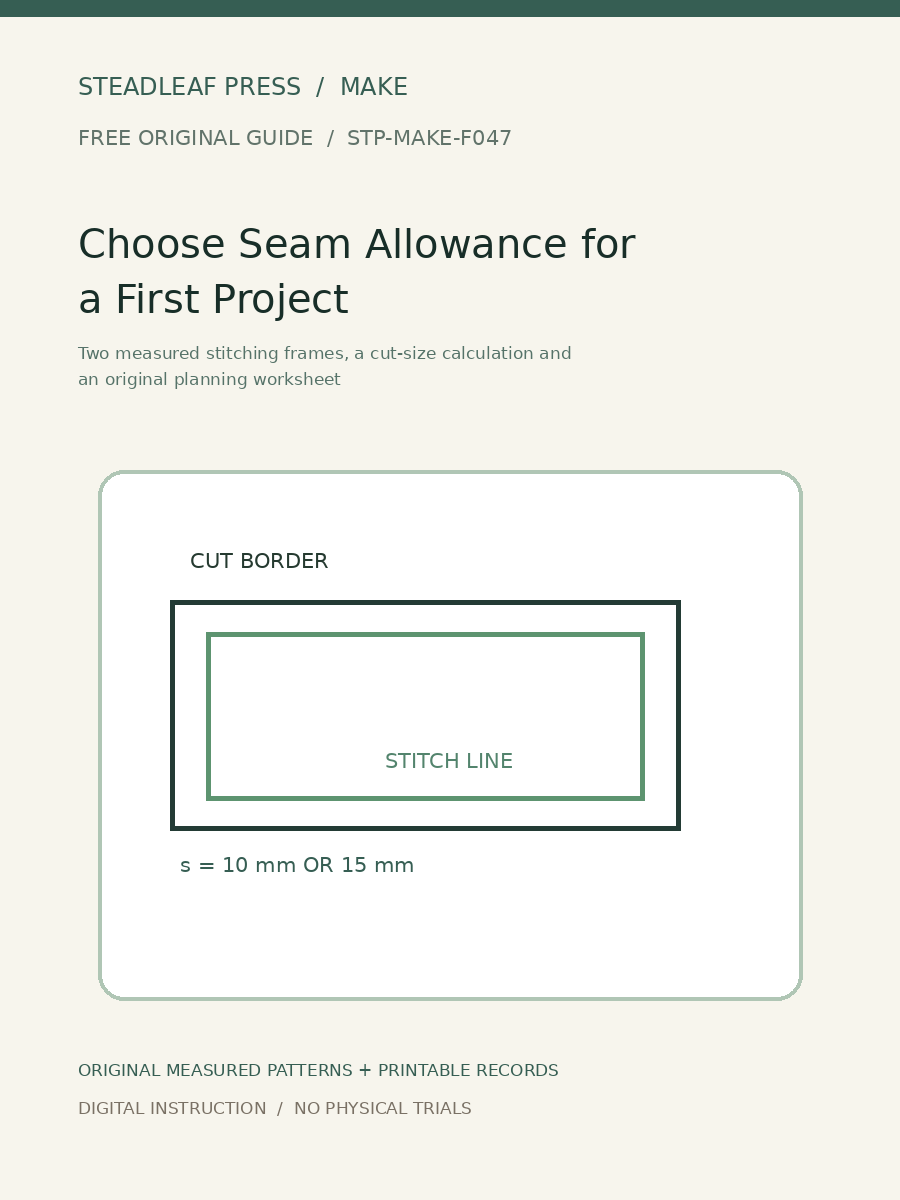
Use two original actual-size cut-and-stitch frames to compare 10 mm and 15 mm seam allowances around a 120 x 80 mm planned stitching rectangle, with dimension records.
View free guide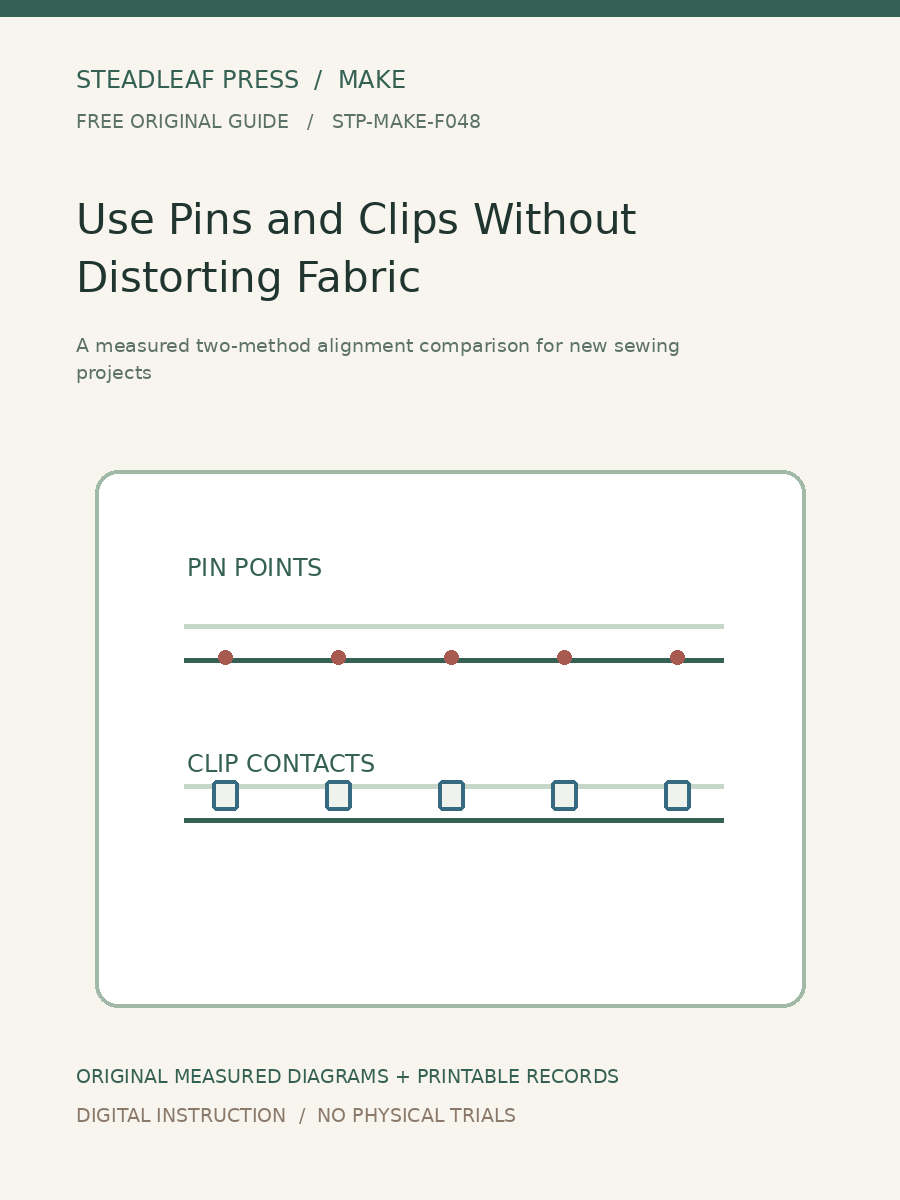
Compare pins and clips on two original 160 x 70 mm sewing alignment references, with five measured positions, a seamline guide, and a distortion record.
View free guide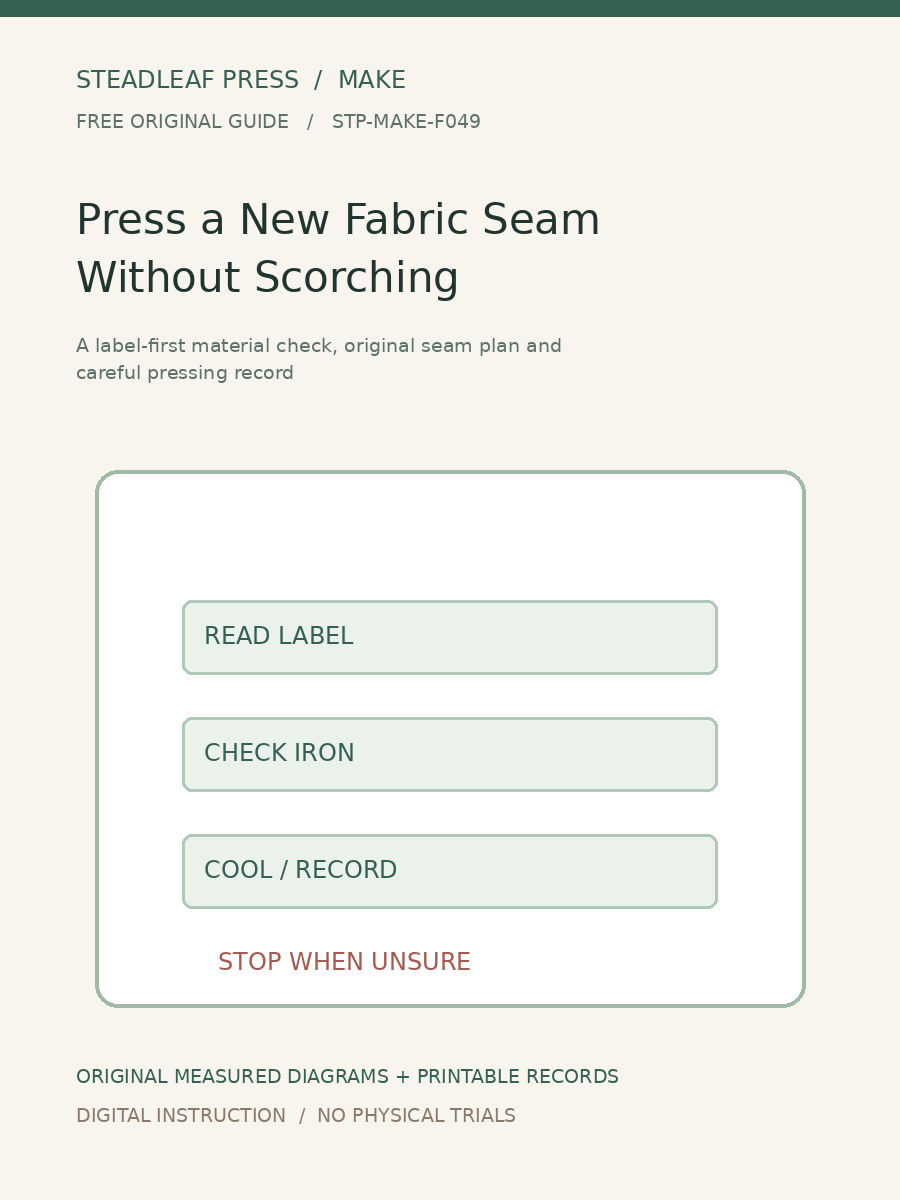
Learn to plan seam pressing safely using a measured 150 x 80 mm paper reference, a label-first STOP/CONTINUE flowchart and original material-observation records.
View free guide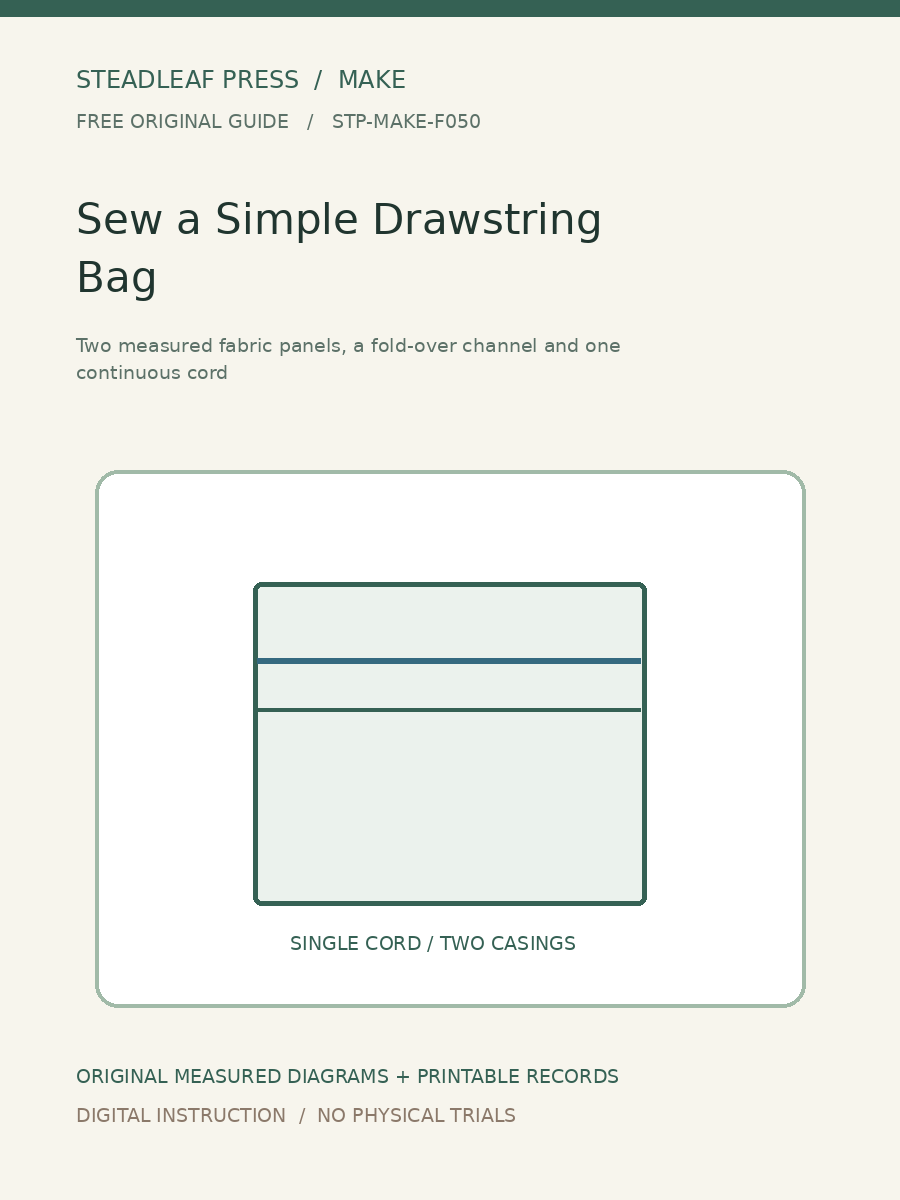
Make a simple drawstring bag from two original 180 x 230 mm full-size fabric panels with 10 mm side/bottom seams, 10+20 mm top casing folds and a one-cord threading path.
View free guide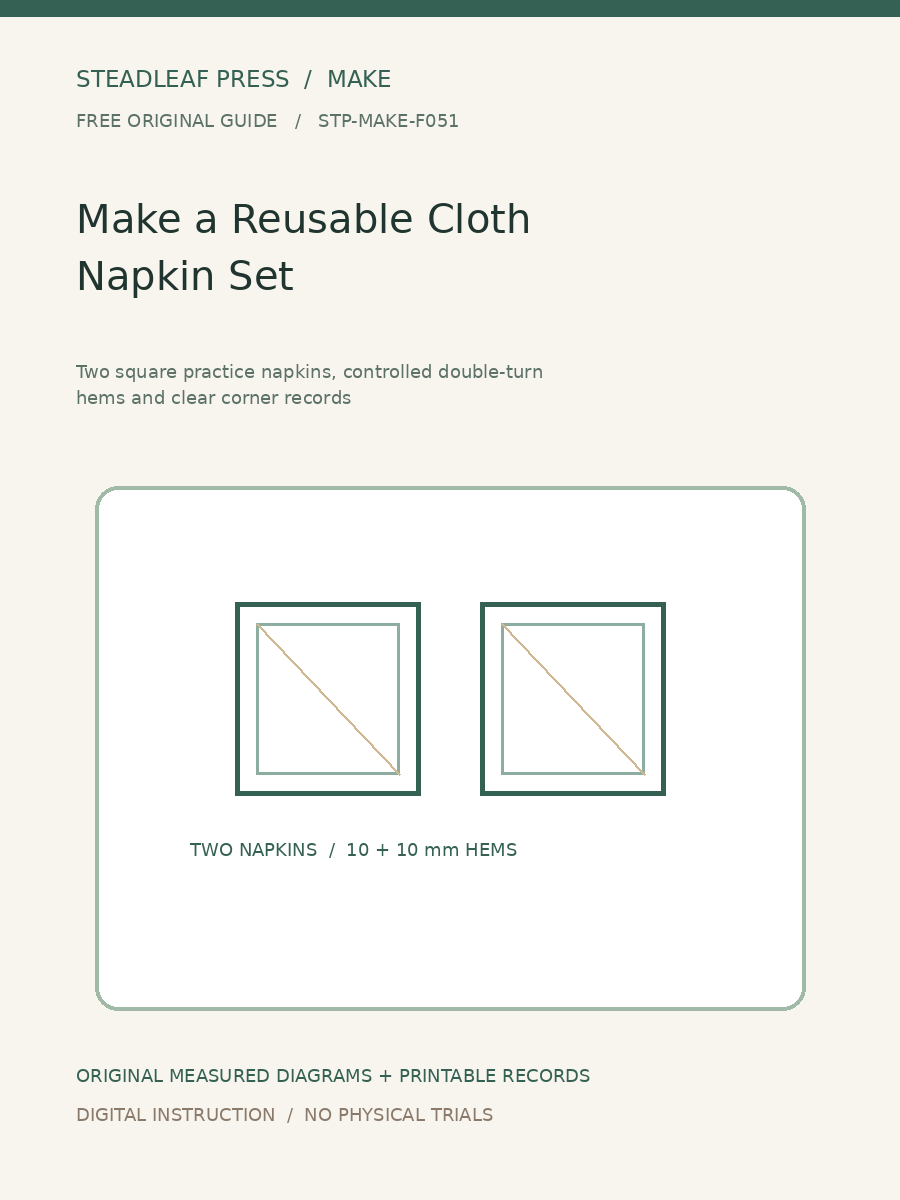
Cut two original 180 x 180 mm fabric squares and practise 10+10 mm double-turn hems with a separate corner-planning diagram and measured maker record.
View free guide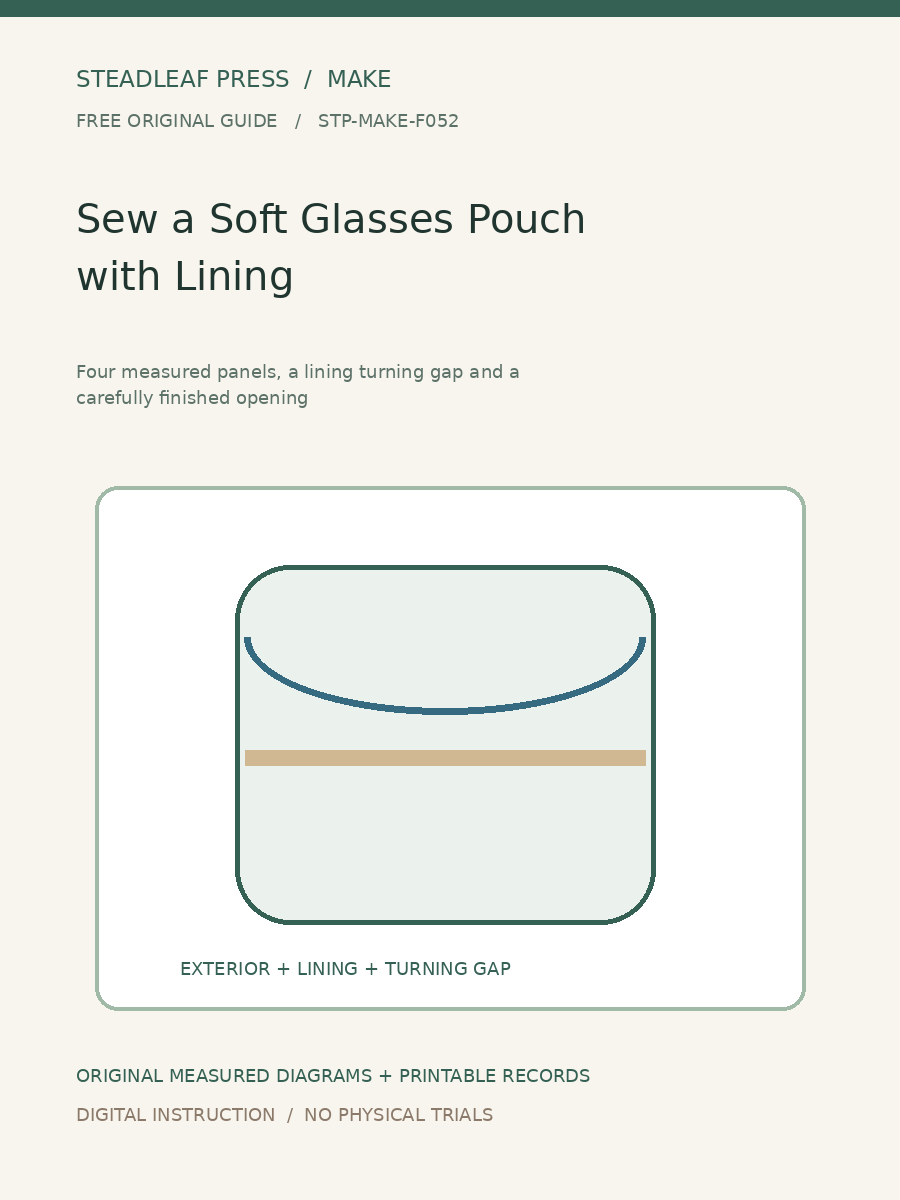
Use two exterior and two lining 110 x 190 mm panels with 10 mm seams, a 40 mm lining-bottom turning gap and a joined upper rim for a small textile pouch.
View free guide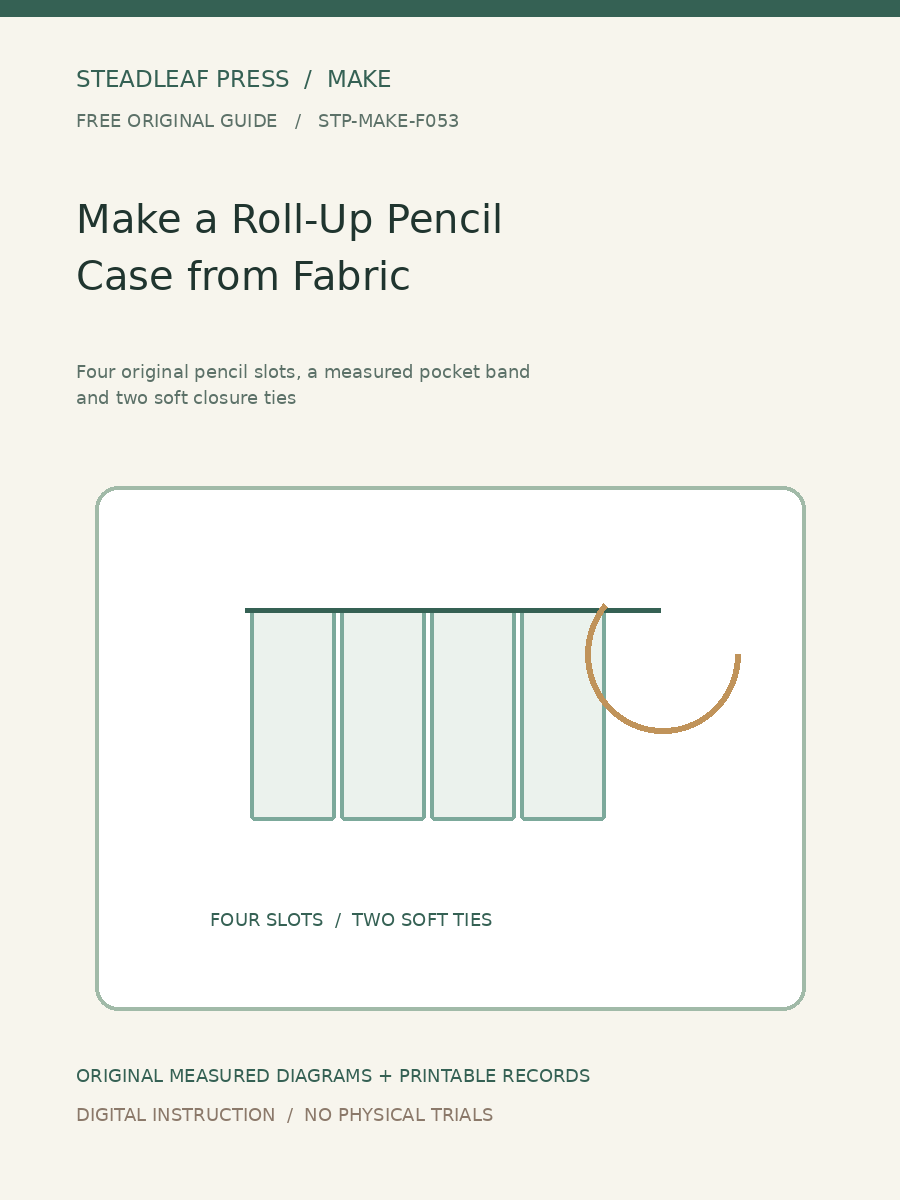
Make a roll-up textile organizer from an original 180 x 220 mm base, a 180 x 90 mm folded pocket band and two 180 x 20 mm tie strips with four 40 mm slot guides.
View free guide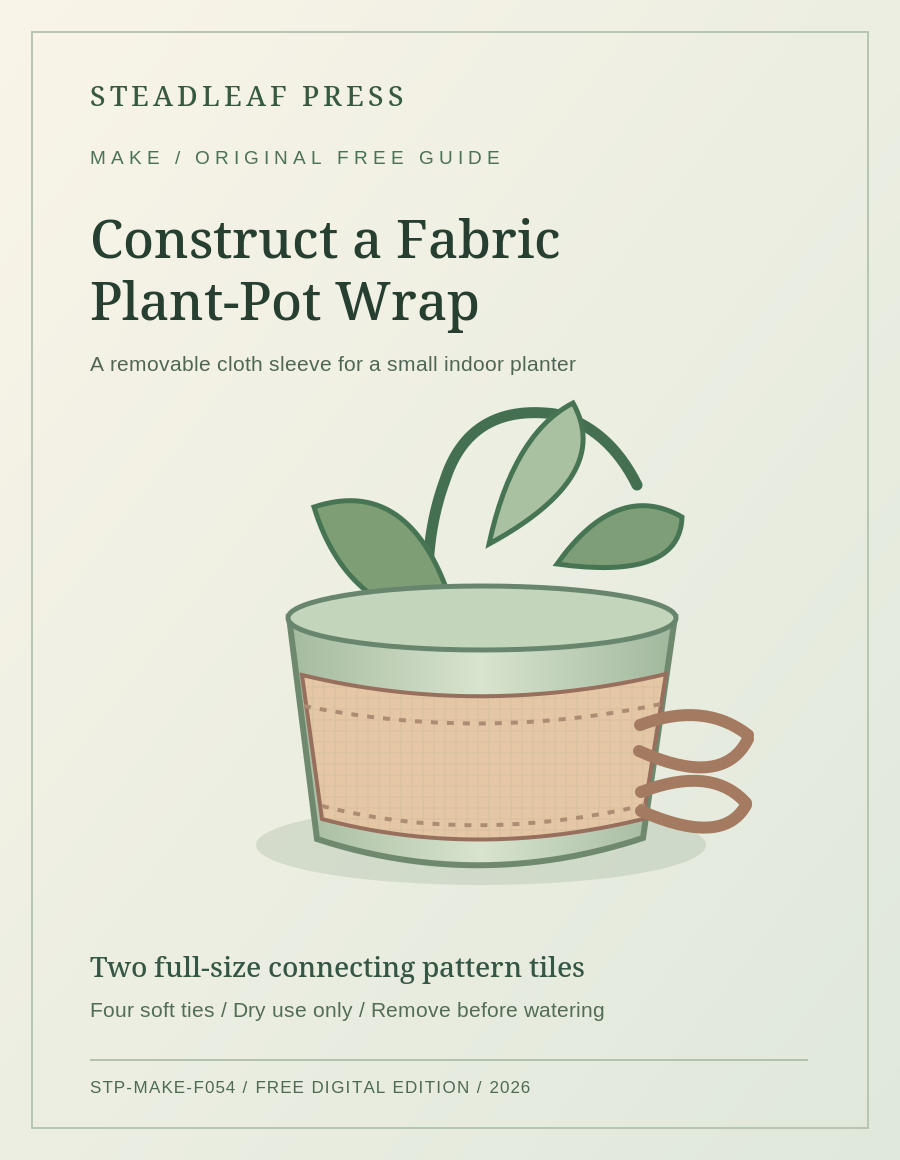
Sew a removable decorative textile wrap for a small dry planter, with two actual-size joining pattern tiles, four fabric ties and clear drainage precautions.
View free guide
A free sewn book protector with a measured cutting formula, two full-size panels, a clear open-top seam method and an original sizing worksheet.
View free guide
A free original washable-style fabric basket liner with five cut pieces, a simple corner-ring construction and care notes.
View free guide
A free beginner hand-embroidery sampler with full-scale motif, hoop setup, five stitch techniques and a practice record.
View free guide
Learn to trace a new floral outline in backstitch with a printable 120 mm motif, stitch-order diagram and record sheets.
View free guide
Practise short-span satin-stitch filling on an original petal with directional arrows, a padding option and a tension record.
View free guide
Learn an original French-knot wrap sequence on a printable practice-dot grid with troubleshooting and a tension worksheet.
View free guide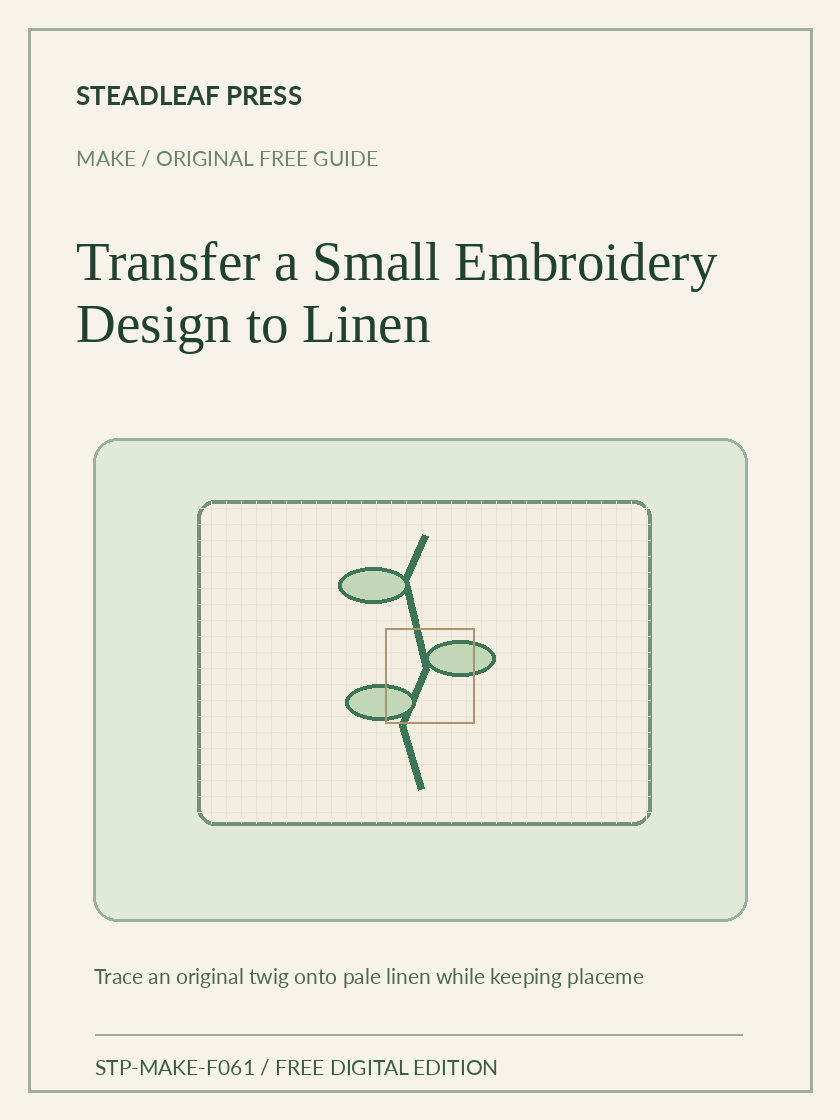
A free beginner guide to tracing an original small twig inside a 100 mm alignment field onto light linen using a safe light source and an offcut-tested removable fabric marker.
View free guide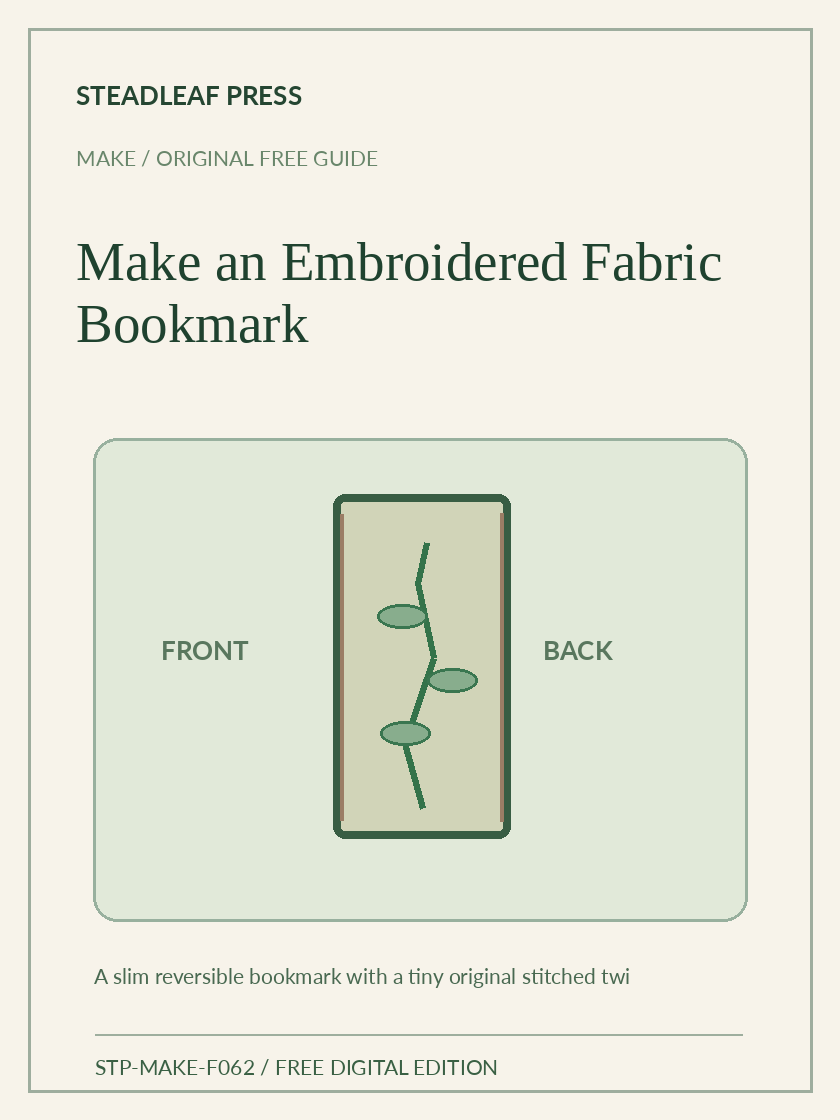
A free two-panel embroidered cloth bookmark with a full-size 55 x 190 mm cut template, original twig motif, 6 mm seams and turning-gap notes.
View free guide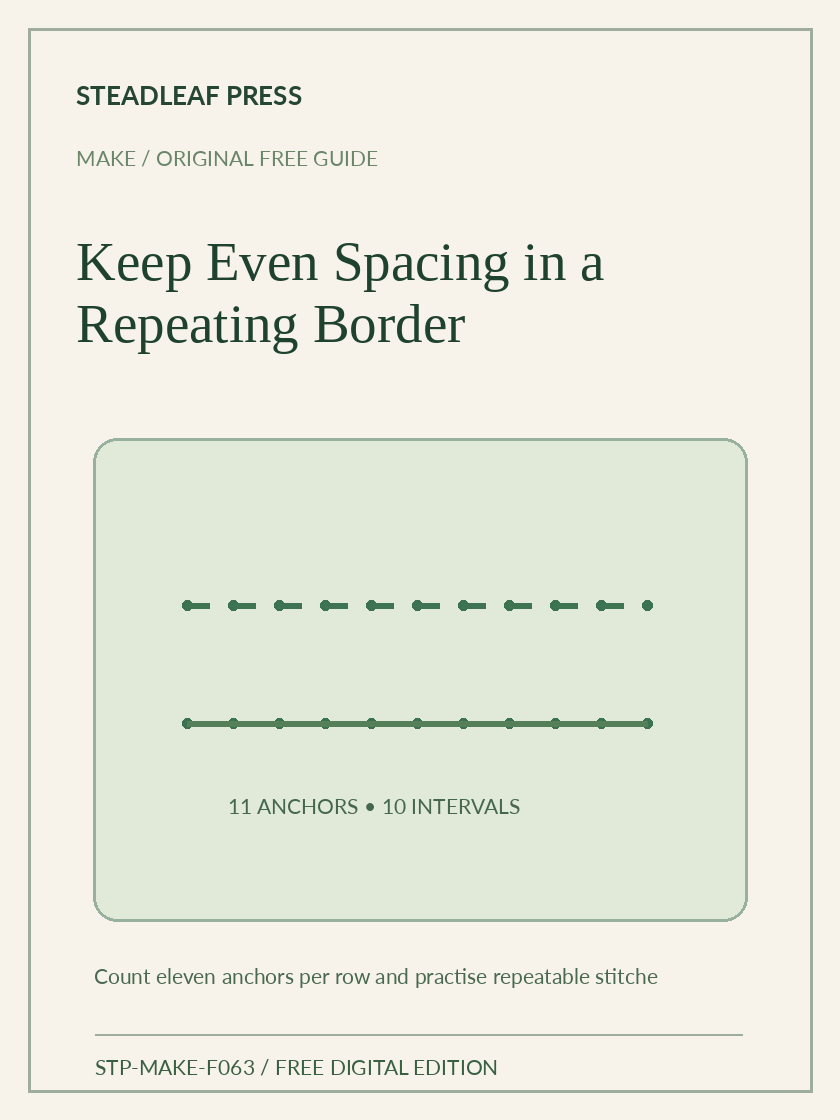
A printable 120 x 60 mm grid with eleven anchors PER ROW (22 total), ten 10 mm intervals across each row, a counting card and practice records.
View free guide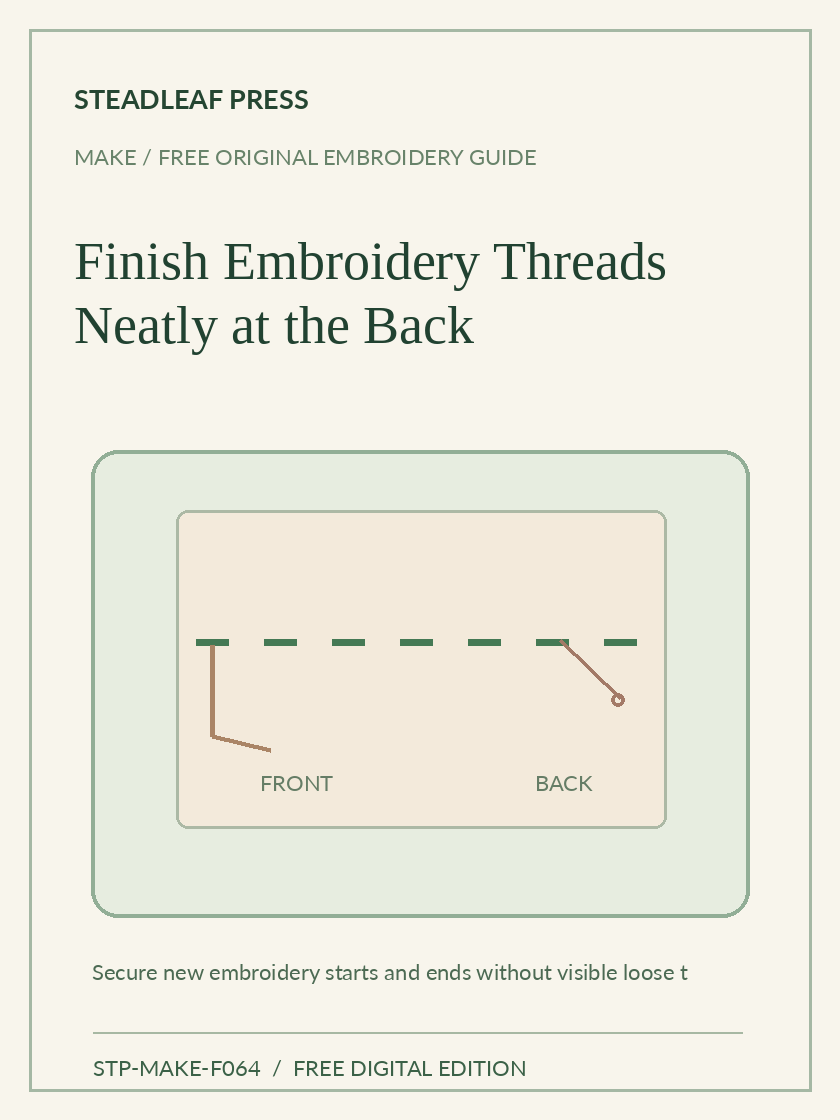
Learn two original embroidery backing practice paths, a temporary away-knot start and a woven-tail finish with a dimensioned 120 x 100 mm print guide and two maker records.
View free guide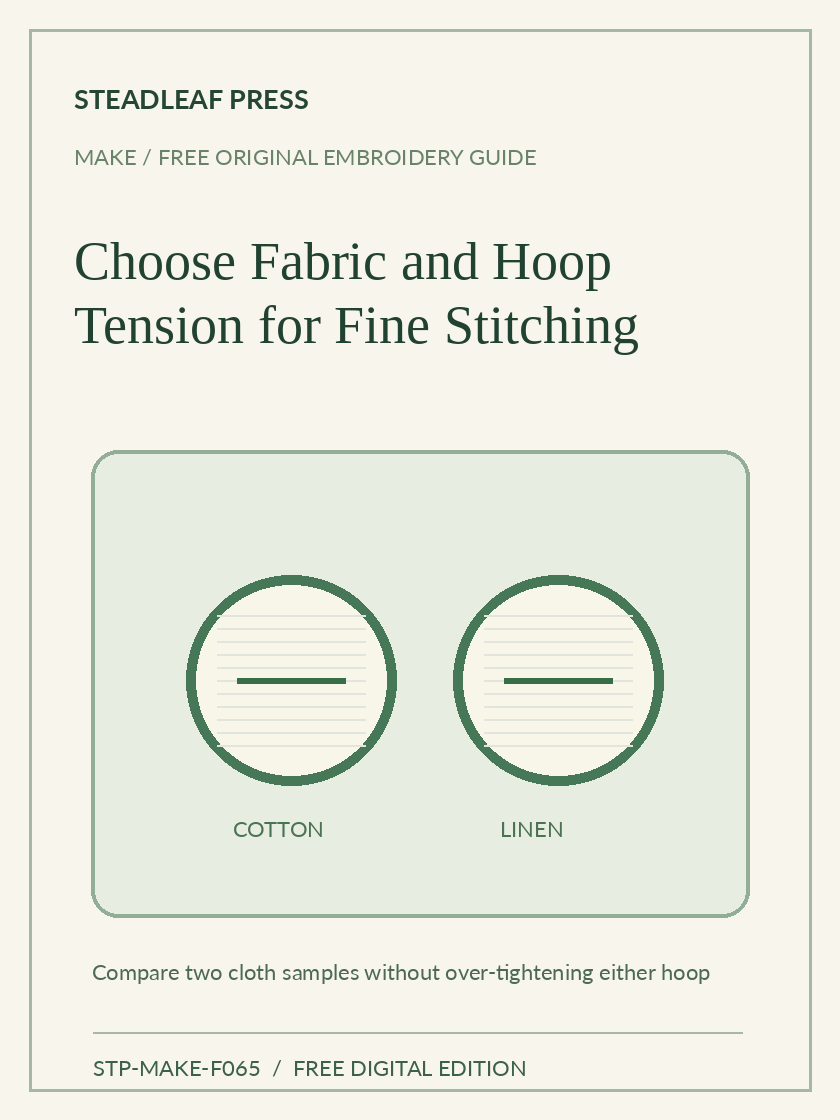
Compare fine hand stitches on two 200 x 200 mm original sample cloth squares using identical 50 mm printed practice lines, a hoop-centering diagram and observation records.
View free guide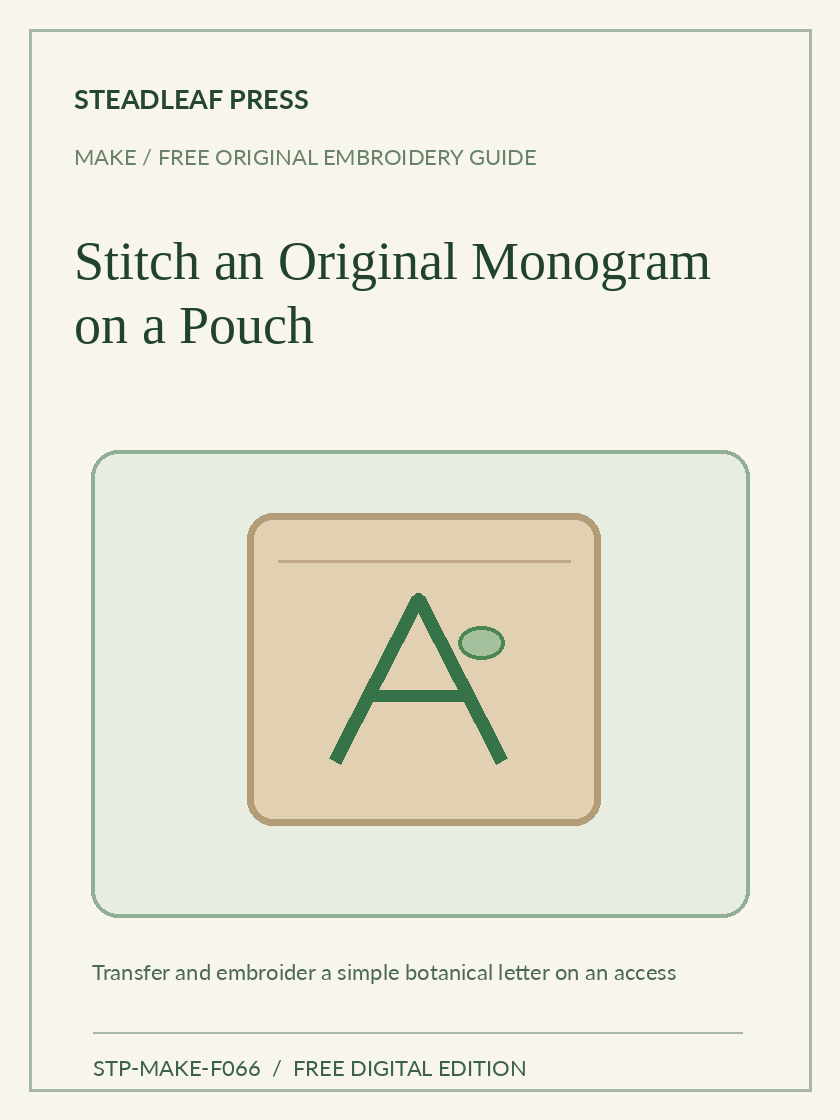
An original 45 x 60 mm botanical letter A template, pouch-placement field, backstitch sequence and maker records for personalising a plain unlined pouch without sewing its layers together.
View free guide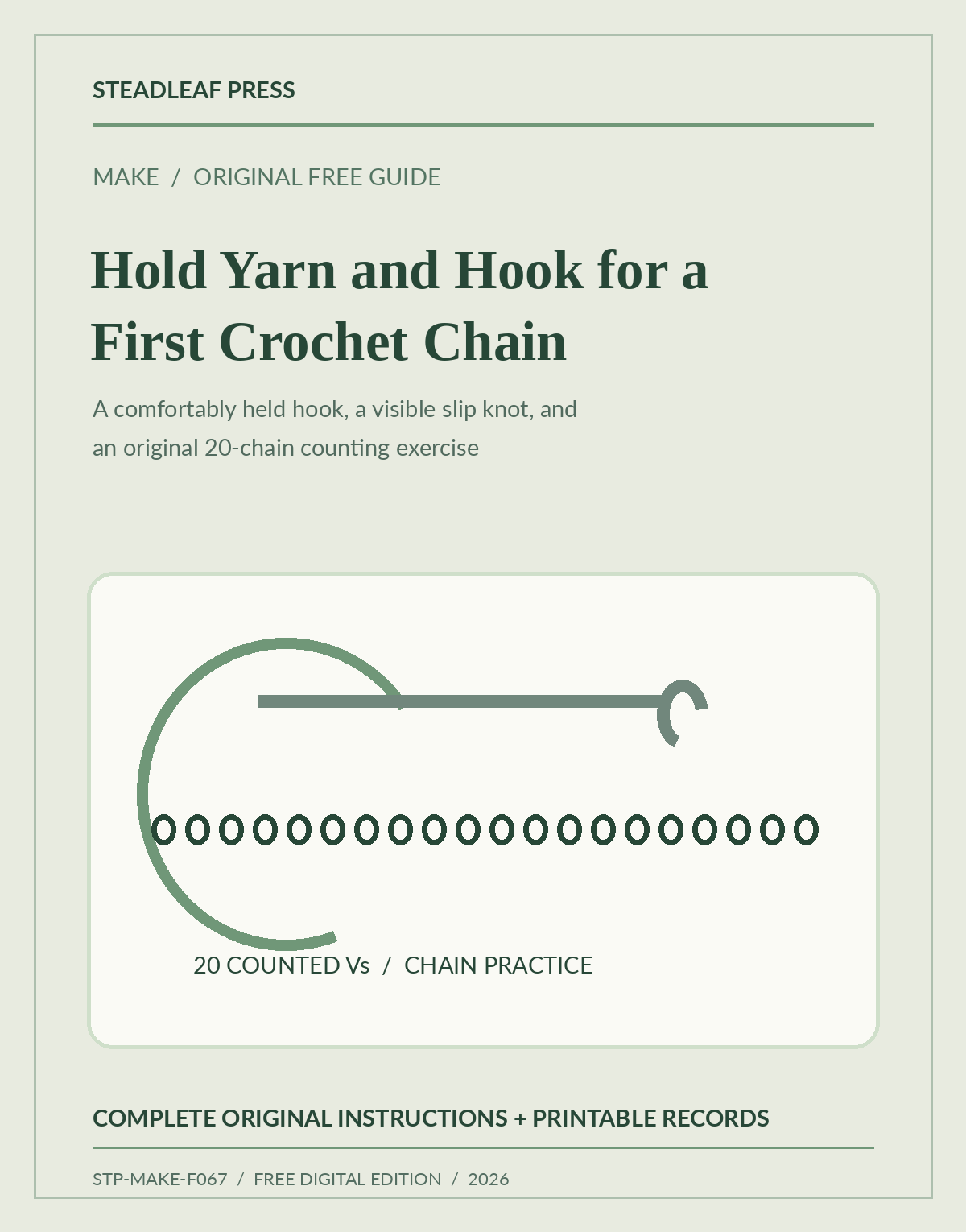
Make and count an original 20-chain practice strip with clear hook grips, yarn tension choices, a slip-knot drawing, and two printable maker records.
View free guide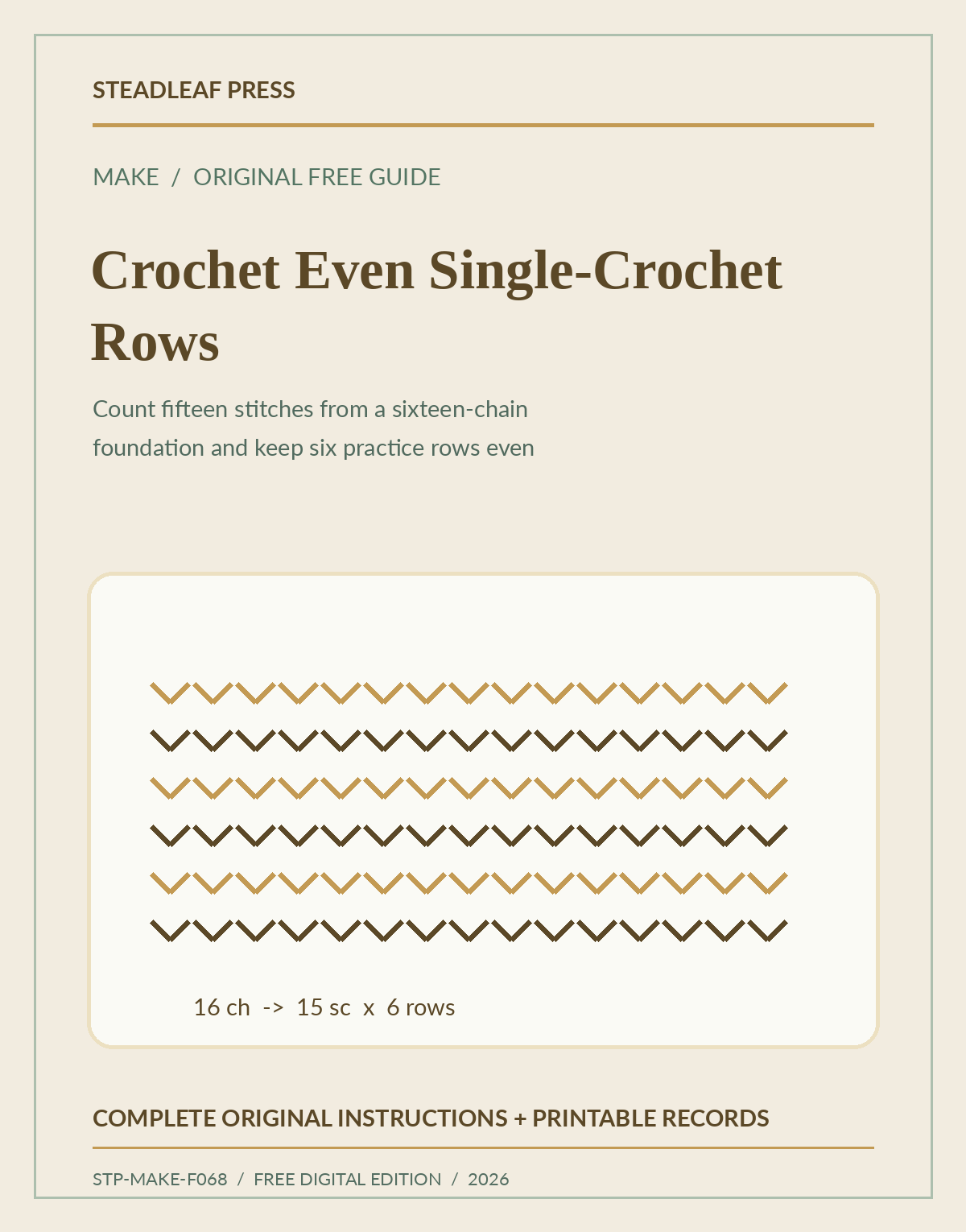
Practice the US single-crochet stitch in six even rows, with a 16-chain to 15-stitch worked example, turning-chain diagram, and printable count records.
View free guide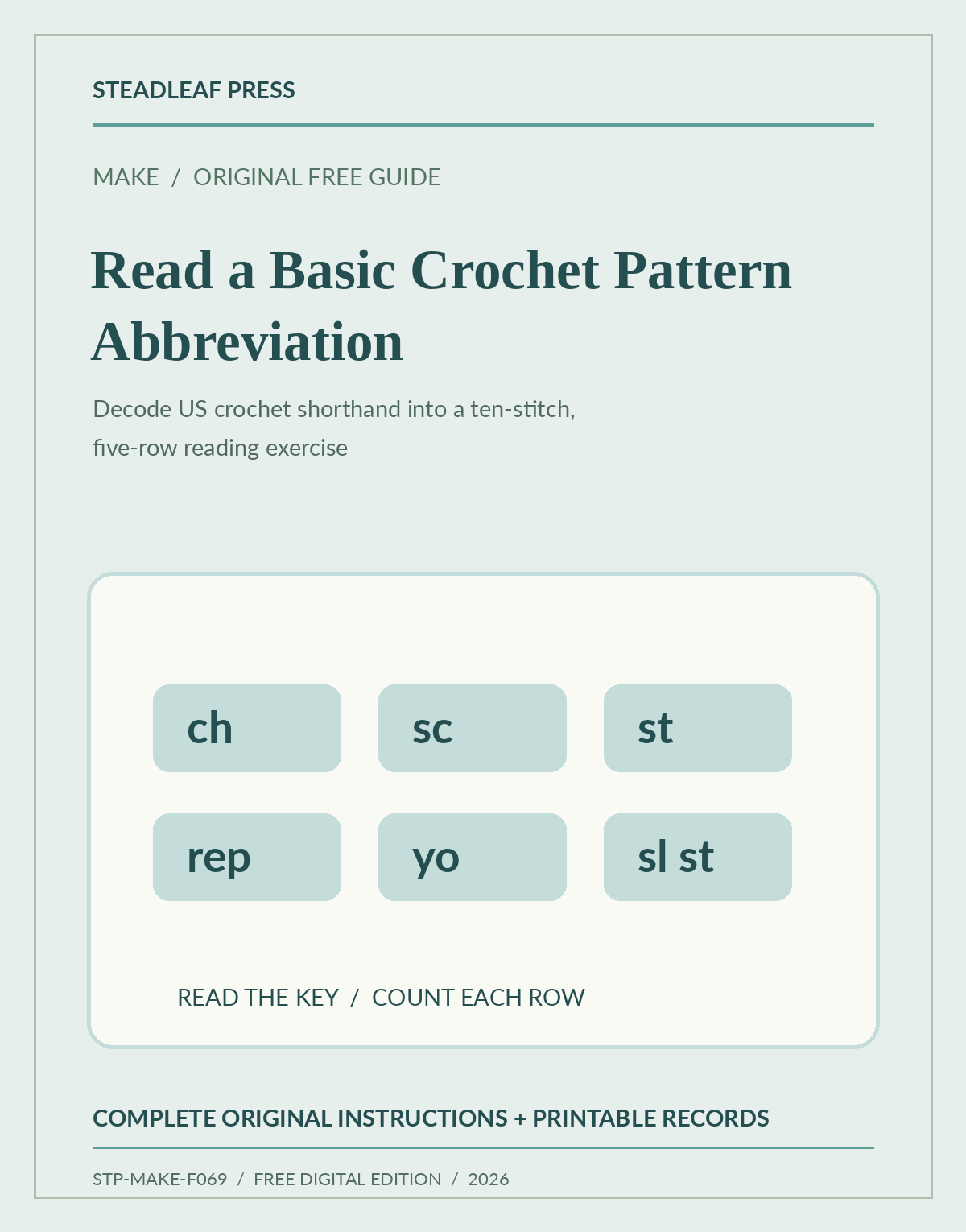
Decode a complete original five-row US crochet practice pattern with a stitch abbreviation key, ten-stitch count arithmetic, and two printable reading worksheets.
View free guide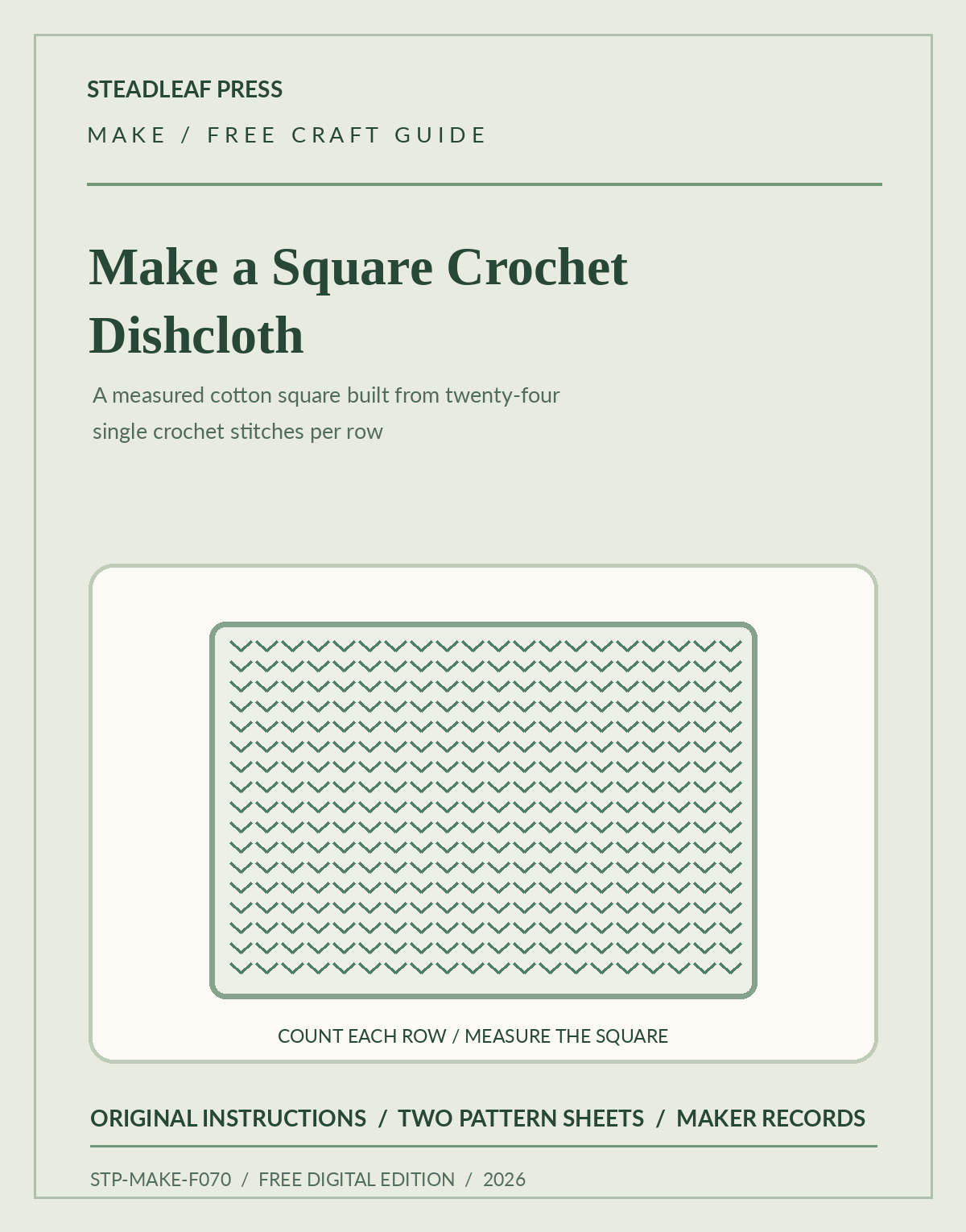
A complete free cotton dishcloth lesson with a 25-chain foundation, 24 single crochet stitches per row, a width-versus-height sizing worksheet and original diagrams.
View free guide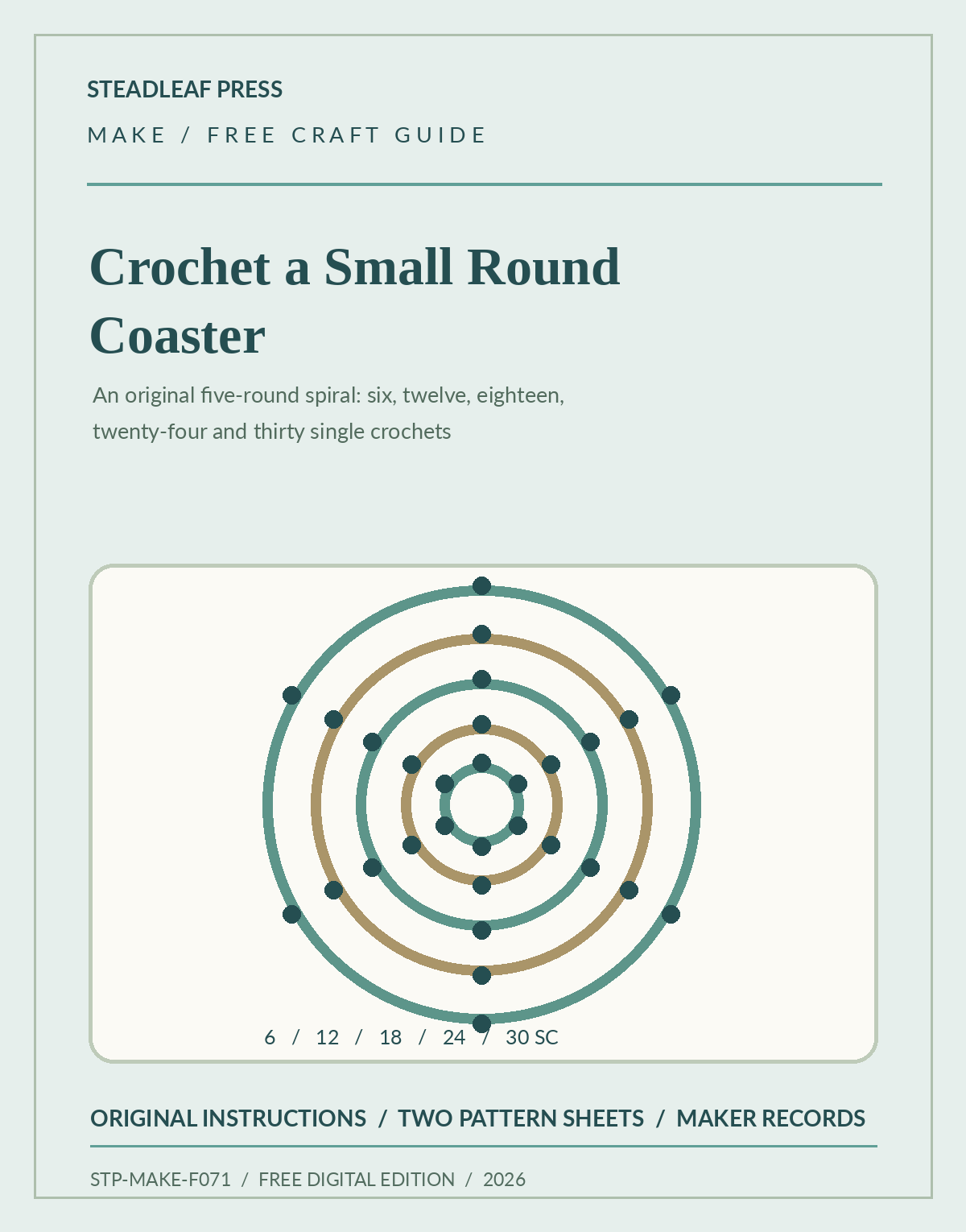
A free original round crochet coaster with a five-round US single-crochet spiral (6, 12, 18, 24, 30), increase-placement diagrams and count worksheets.
View free guide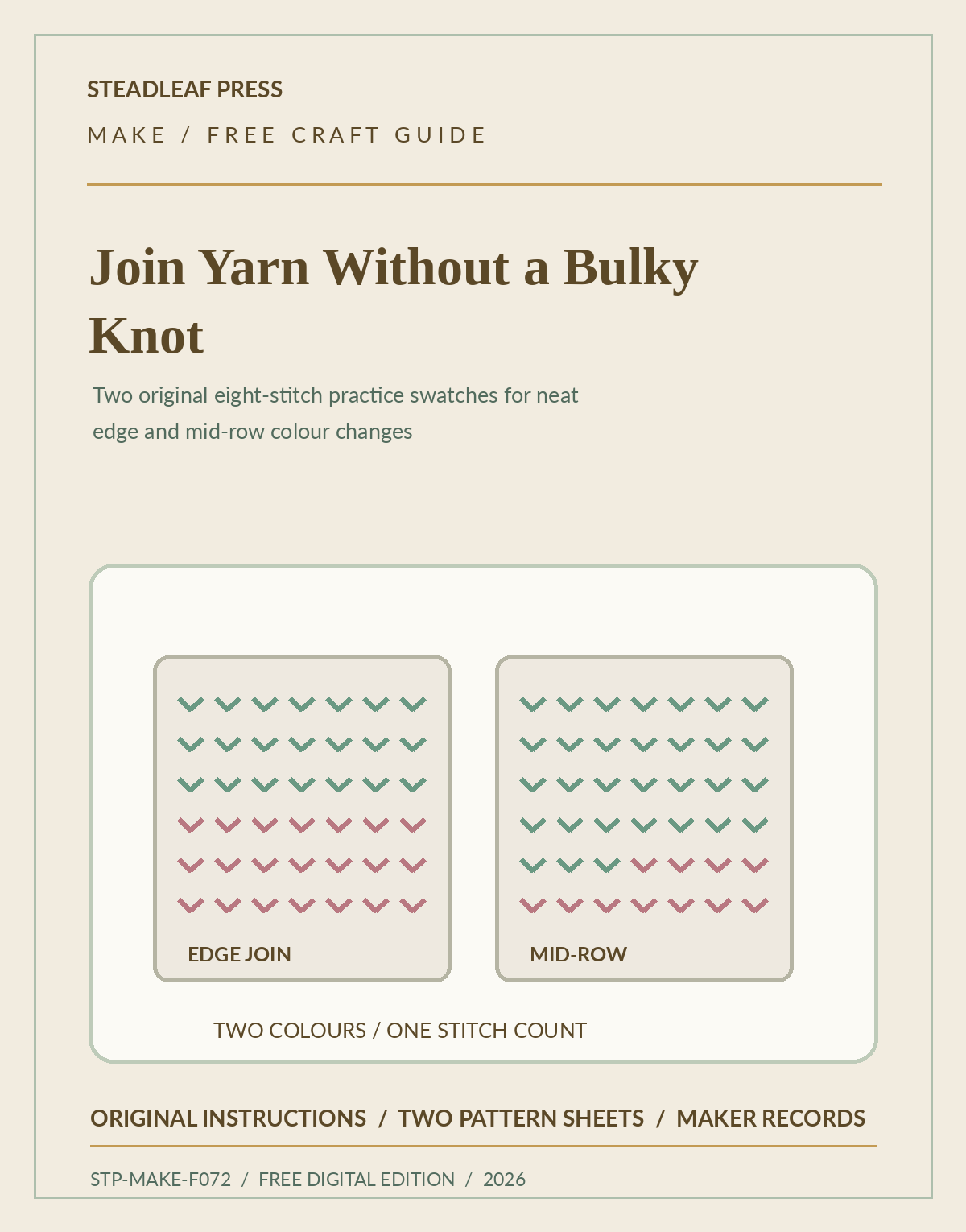
A free original crochet yarn-joining guide with two eight-stitch colour-change swatches, final-yarn-over diagrams, separate tail-weaving notes and comparative worksheets.
View free guide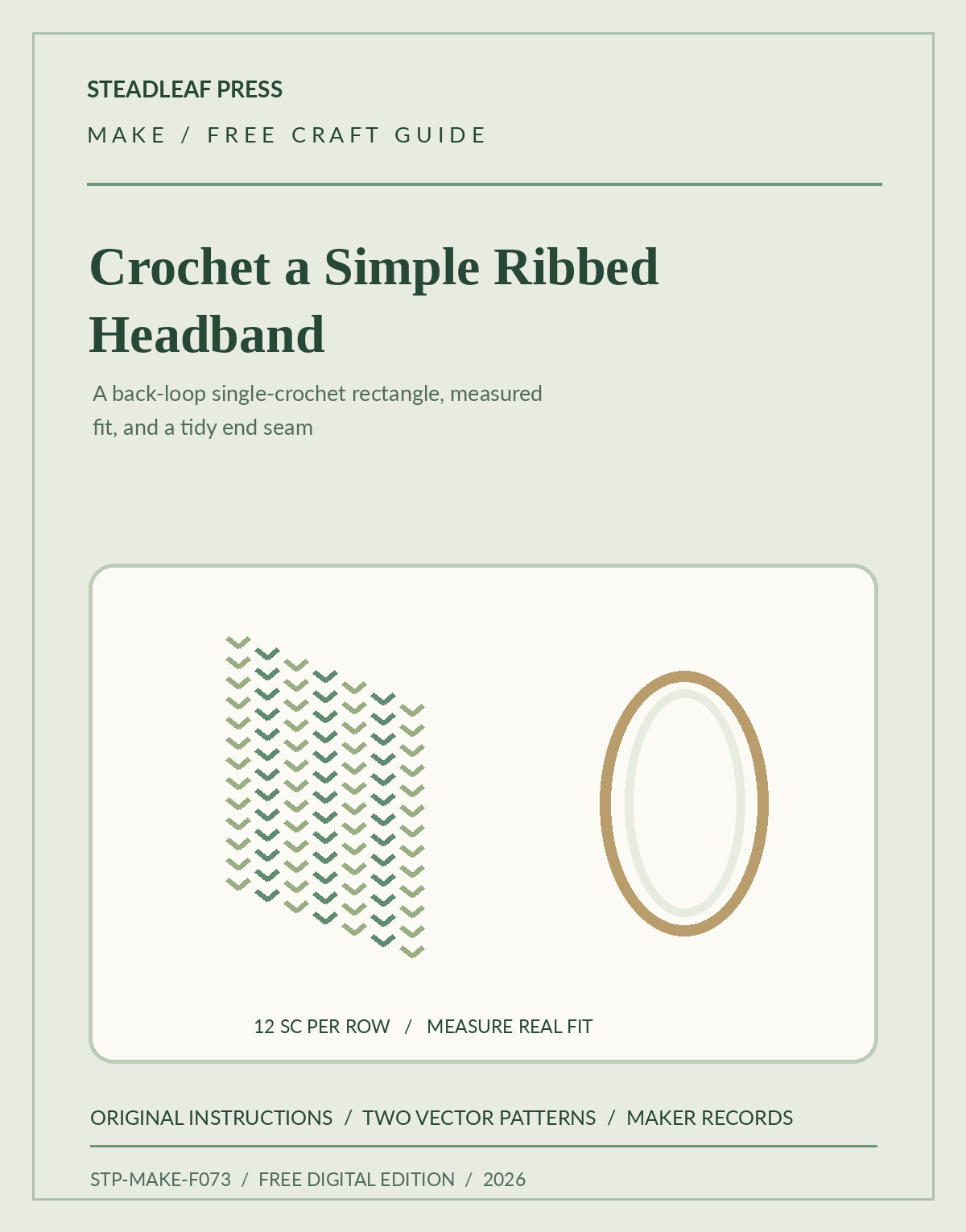
Make an original ribbed crochet headband from a simple back-loop single-crochet strip, with a measured-fit worksheet, edge-join diagram, and clear comfort precautions.
View free guide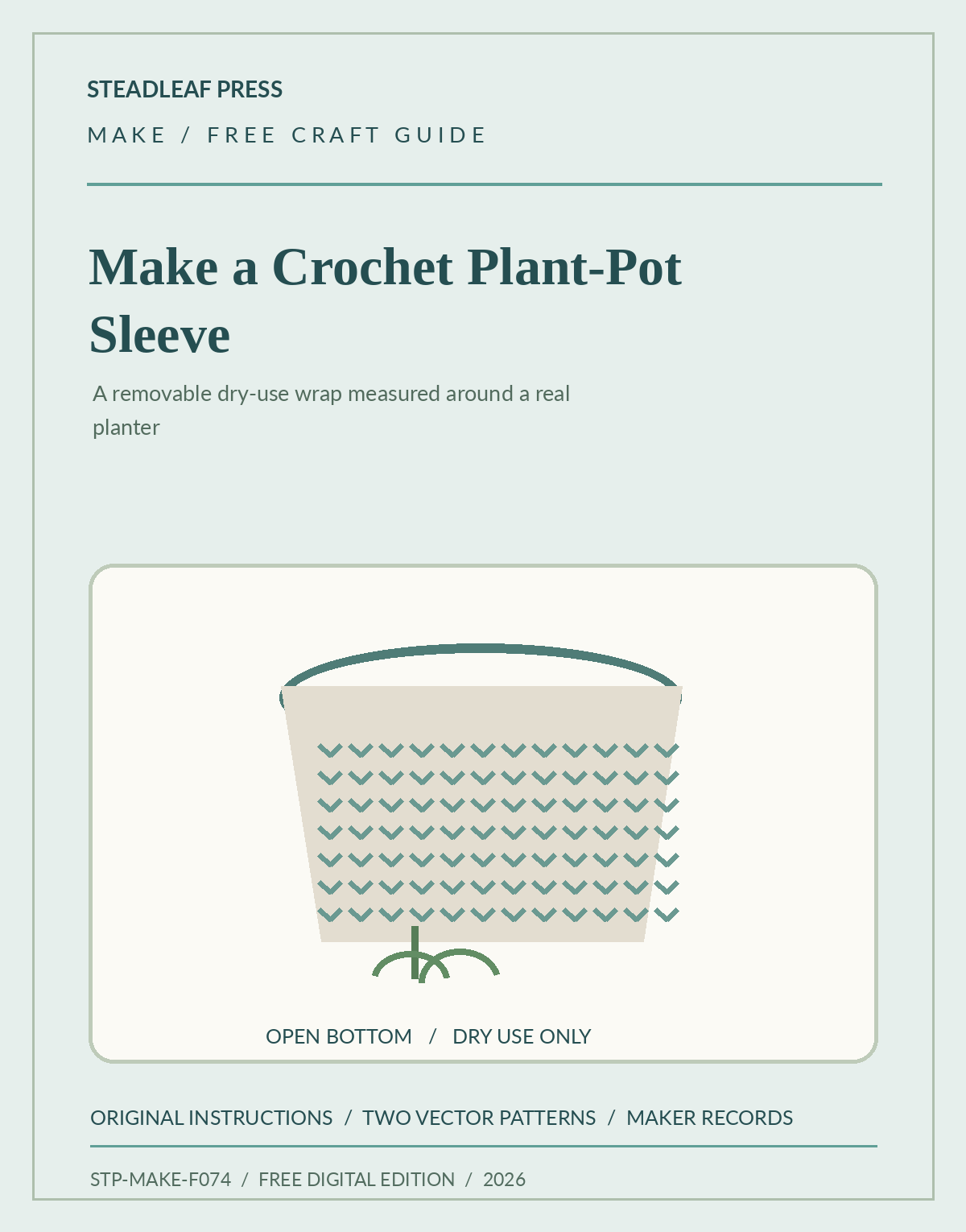
Crochet an original removable decorative plant-pot sleeve with a measured circumference worksheet, 12-sc practice strip, seam diagram, and careful moisture and drainage warnings.
View free guide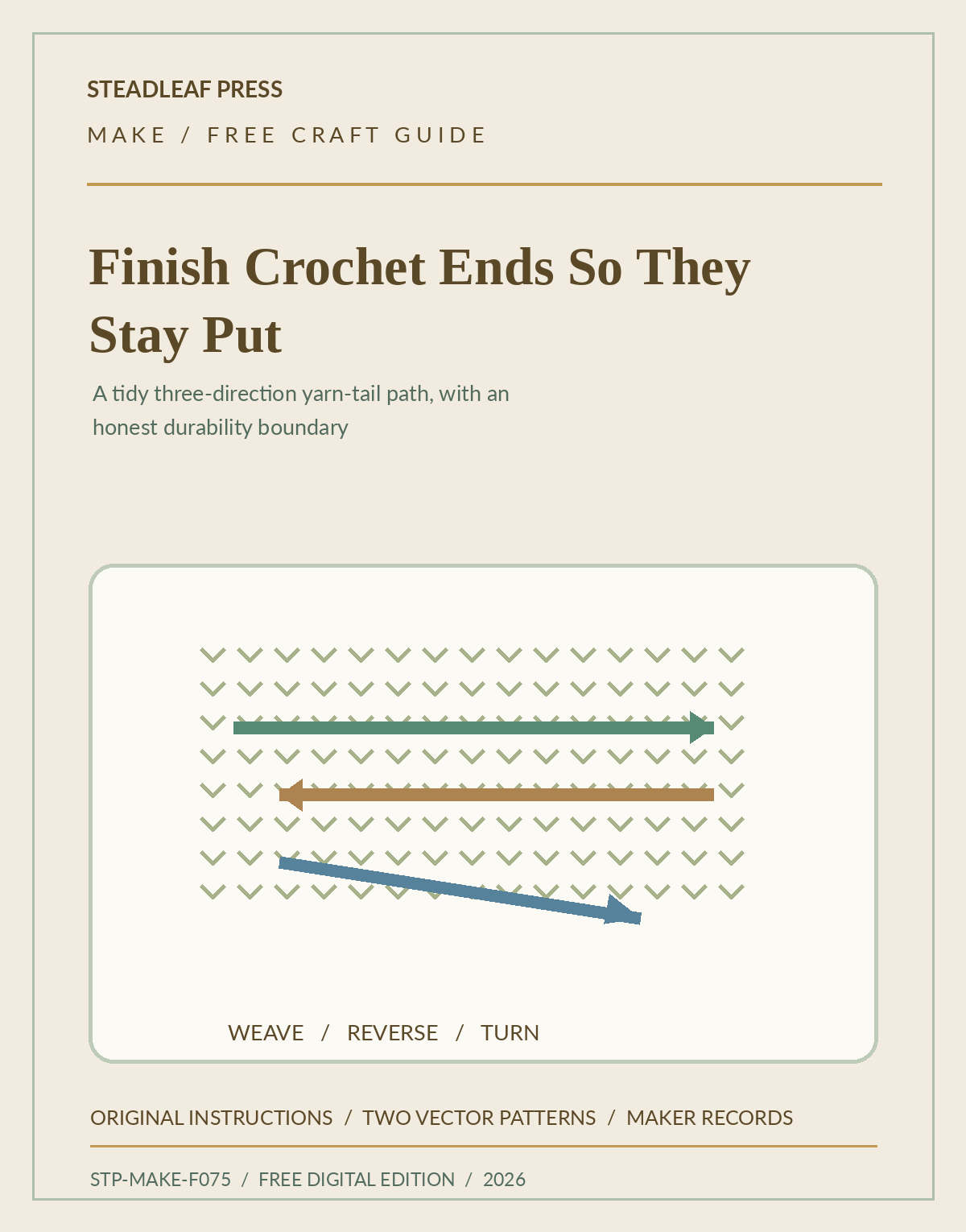
Learn an original three-direction crochet yarn-tail finishing drill, with secure-fastening sequence, needle-path diagrams, a ten-stitch practice swatch and observation records.
View free guide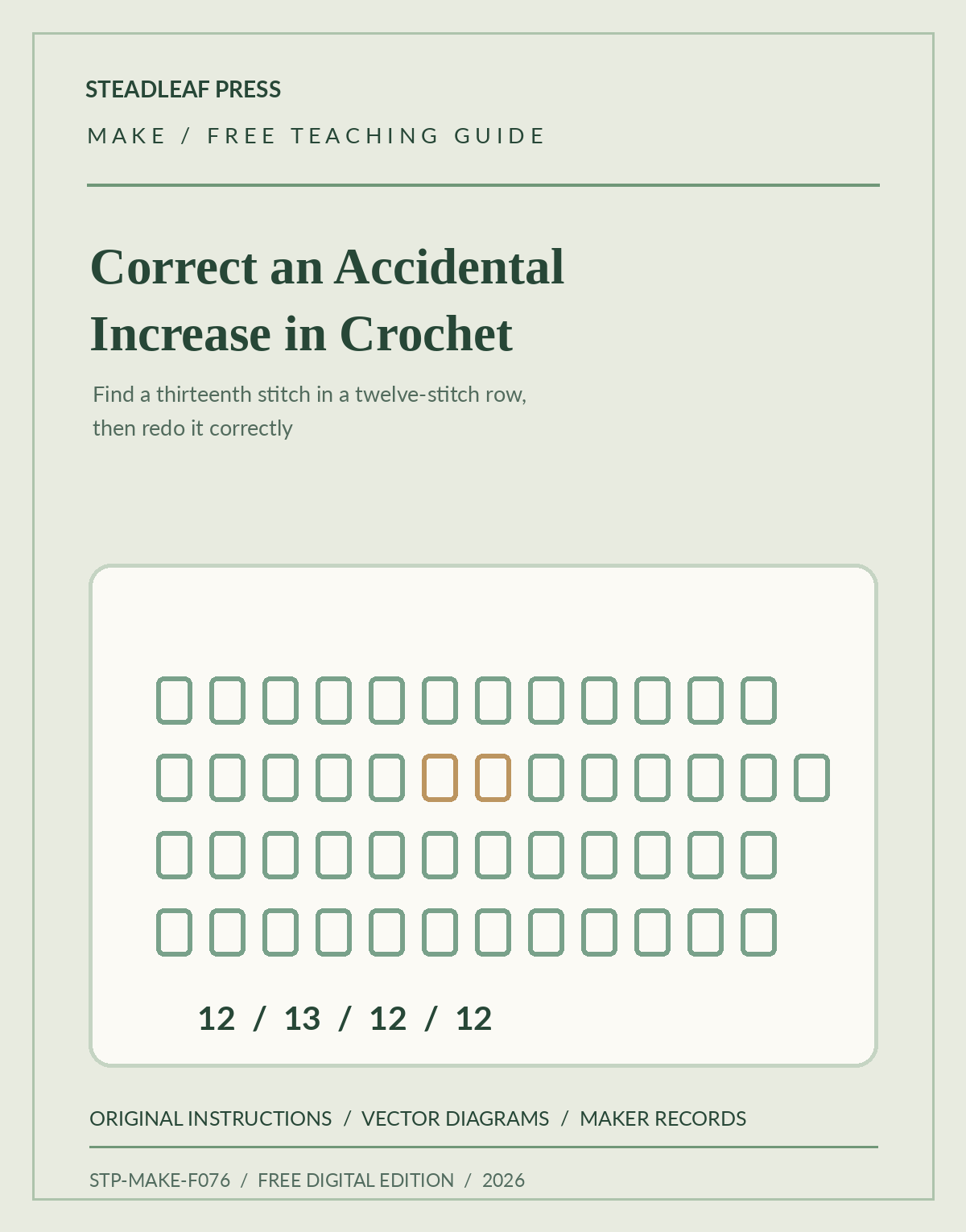
A free original crochet error-recovery lesson with a twelve-stitch counting chart, an intentional extra-stitch diagram and a redo worksheet.
View free guide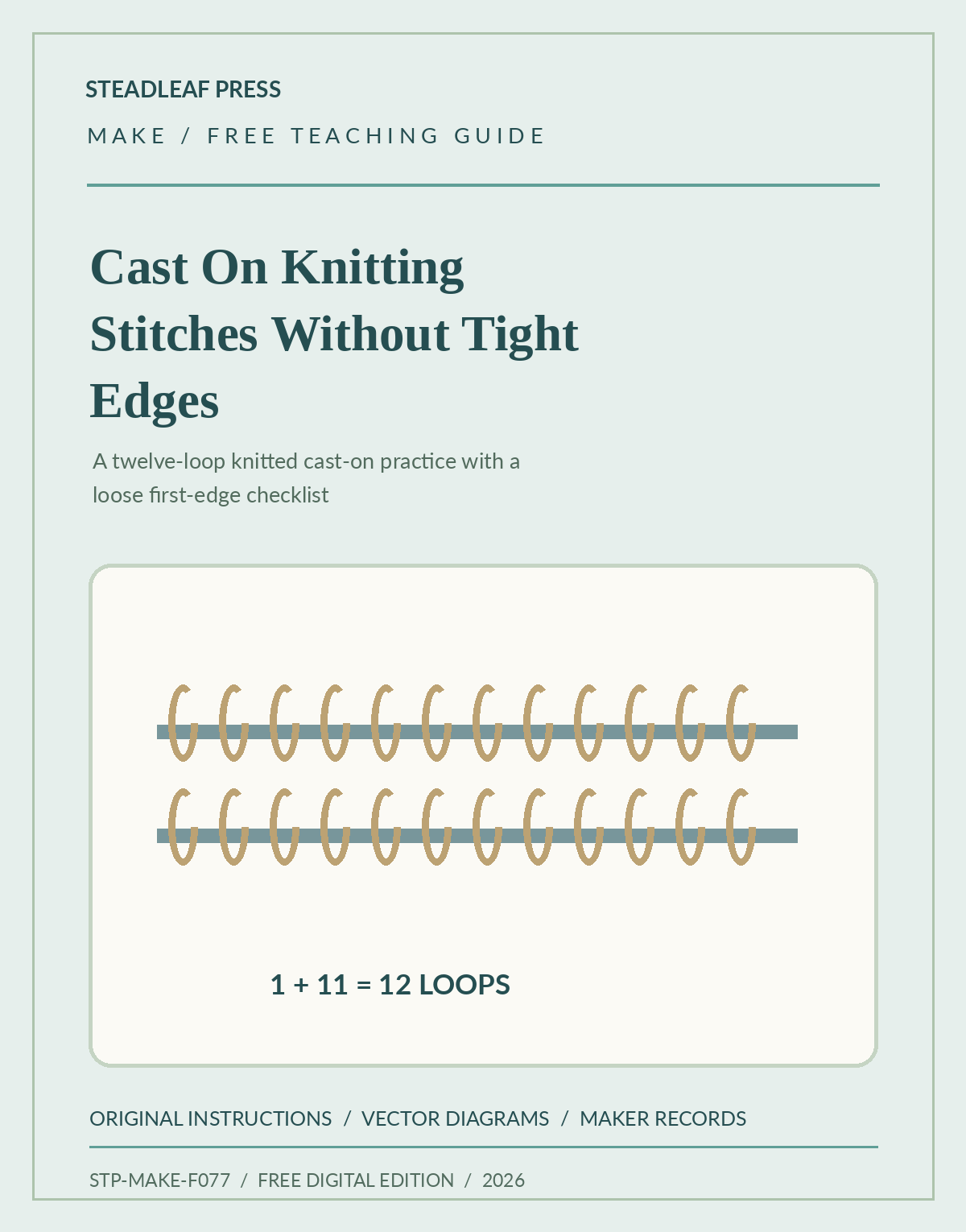
Learn an original 12-stitch knitted cast-on practice with clear needle-loop sequence, tension checkpoints, a first-row count and a printable edge checklist.
View free guide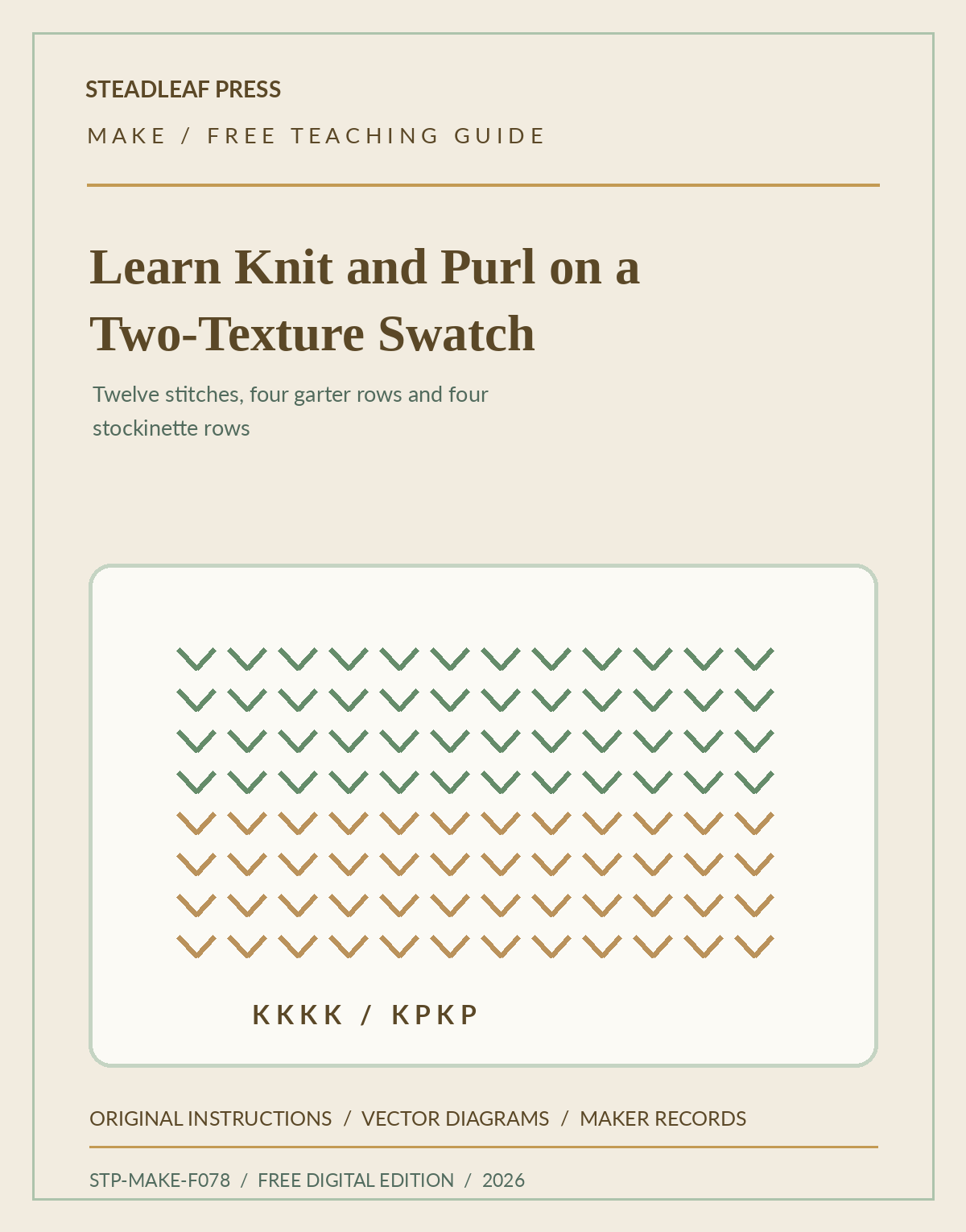
A free original knitting practice chart comparing knit and purl, using twelve stitches and an eight-row garter-to-stockinette swatch with a row record.
View free guide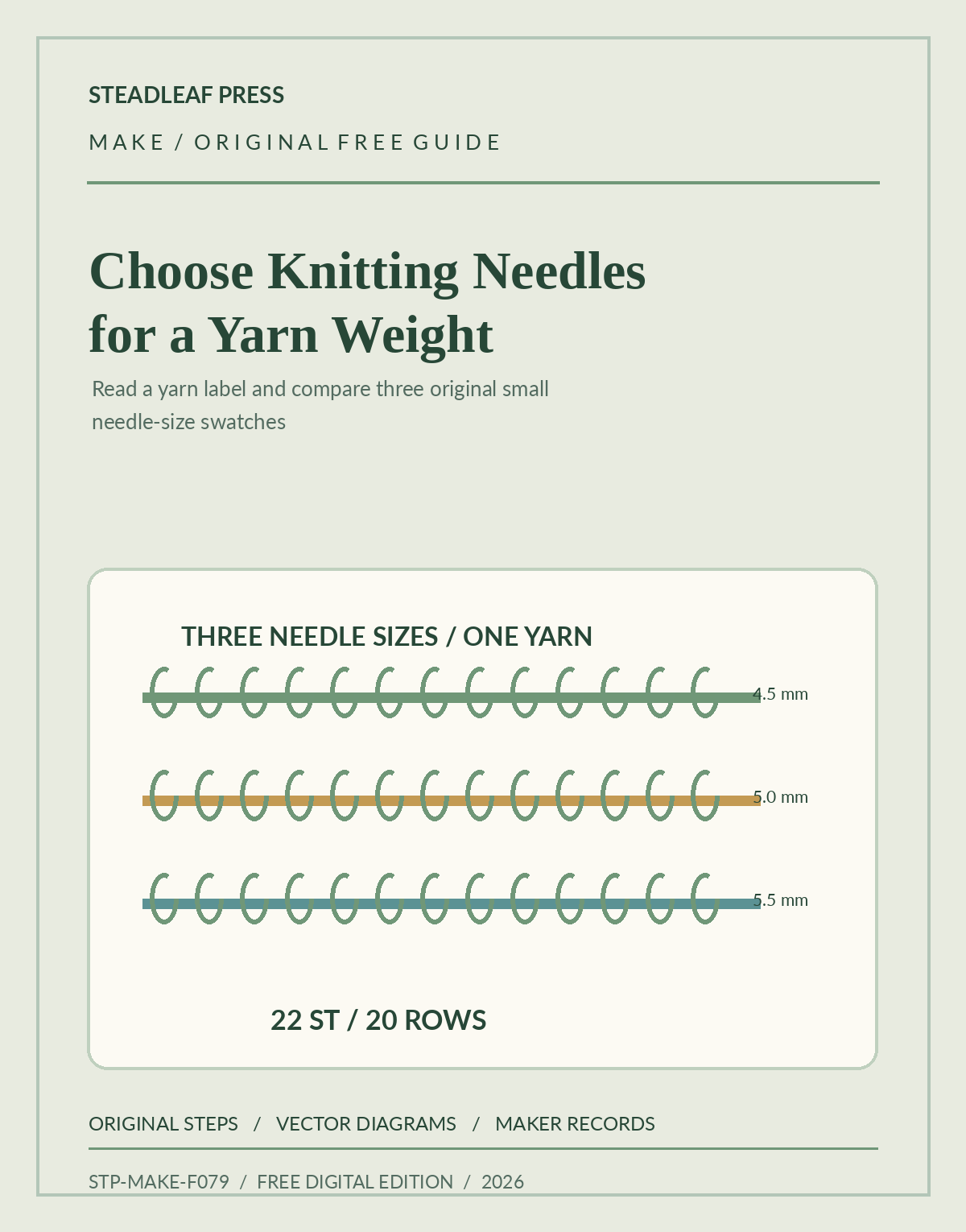
Learn to interpret yarn-weight symbols, choose metric knitting needle diameters, and compare 22-stitch practice swatches with an original gauge and feel worksheet.
View free guide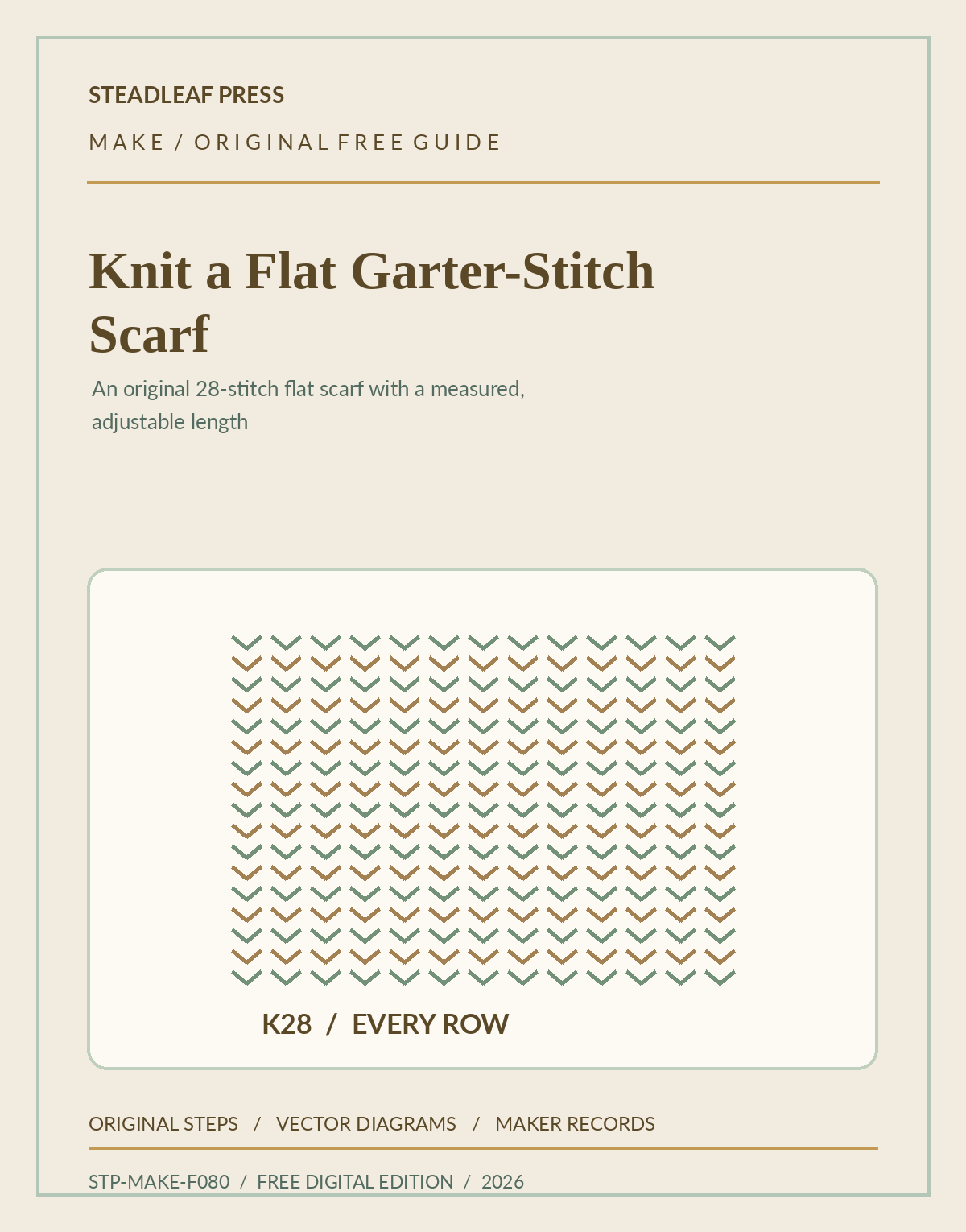
An original free adult scarf pattern using 28 knit stitches per row, measured width and length, a readable bind-off sequence, and printable row and yarn records.
View free guide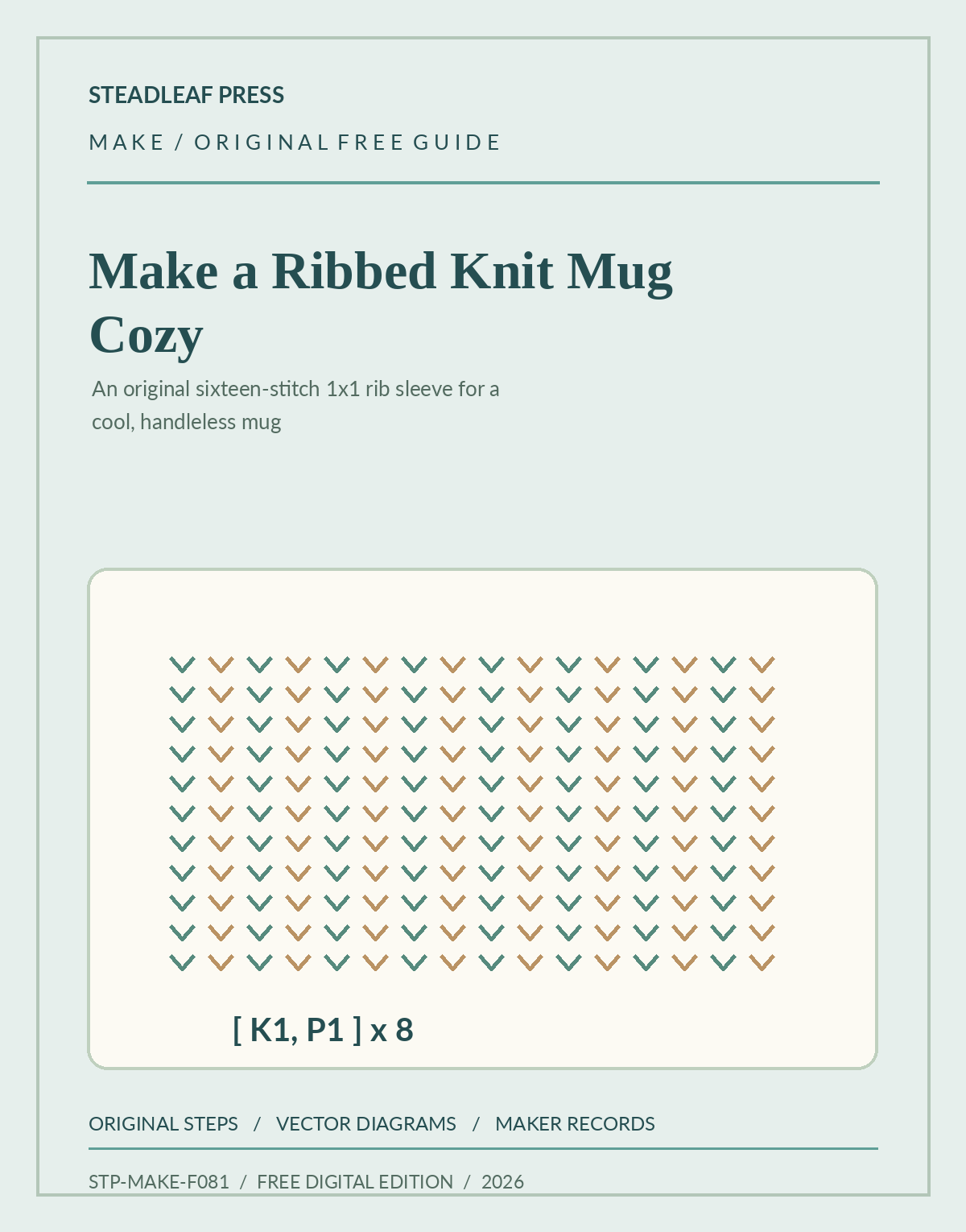
A free original flat-knit 16-stitch 1x1 rib pattern with a measured circumference worksheet and an open-ended sleeve for a cool handleless mug only.
View free guide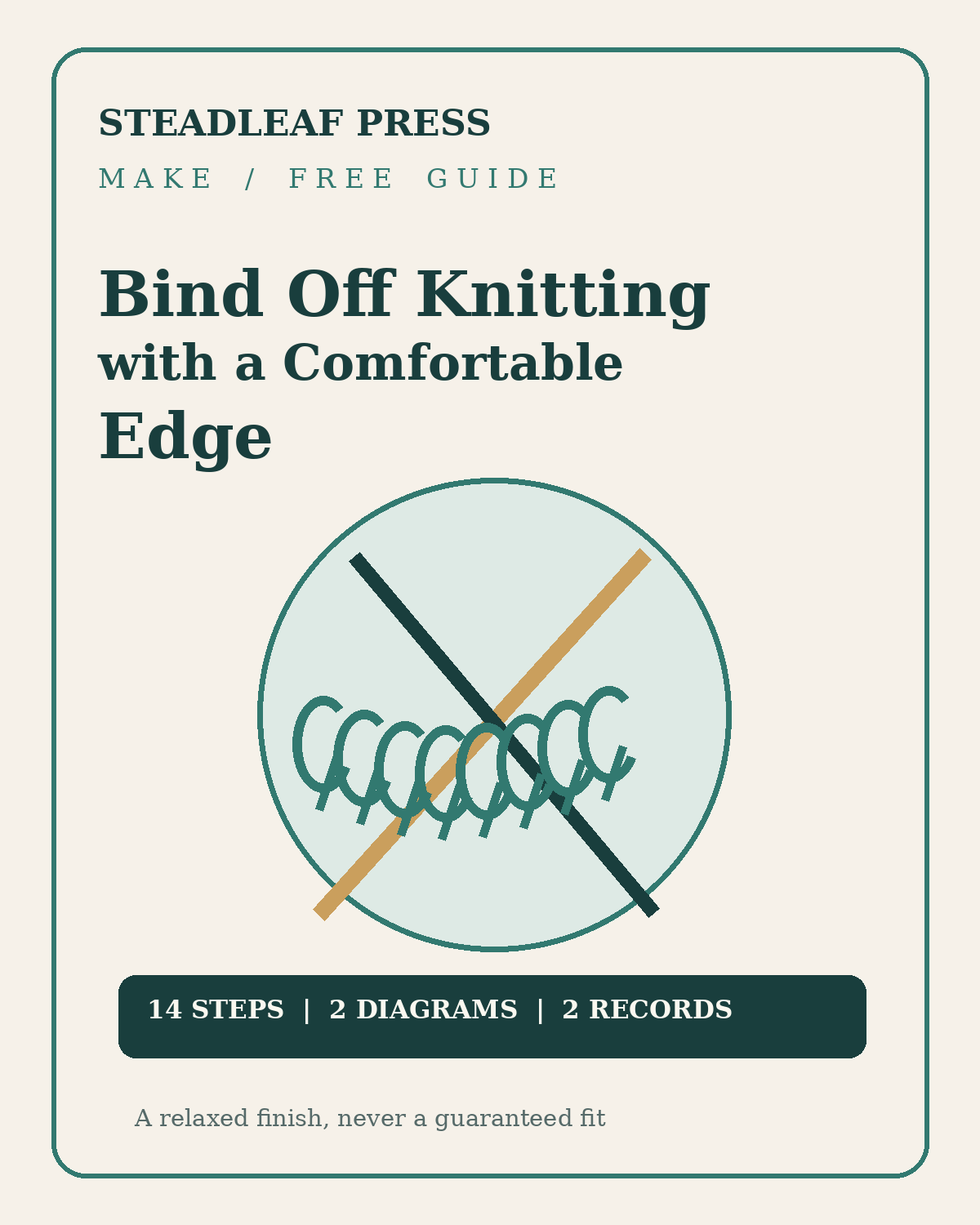
A free 14-step beginner knitting guide to a loose standard bind-off, with original loop diagrams, a fit-free swatch comparison and printable tension records.
View free guide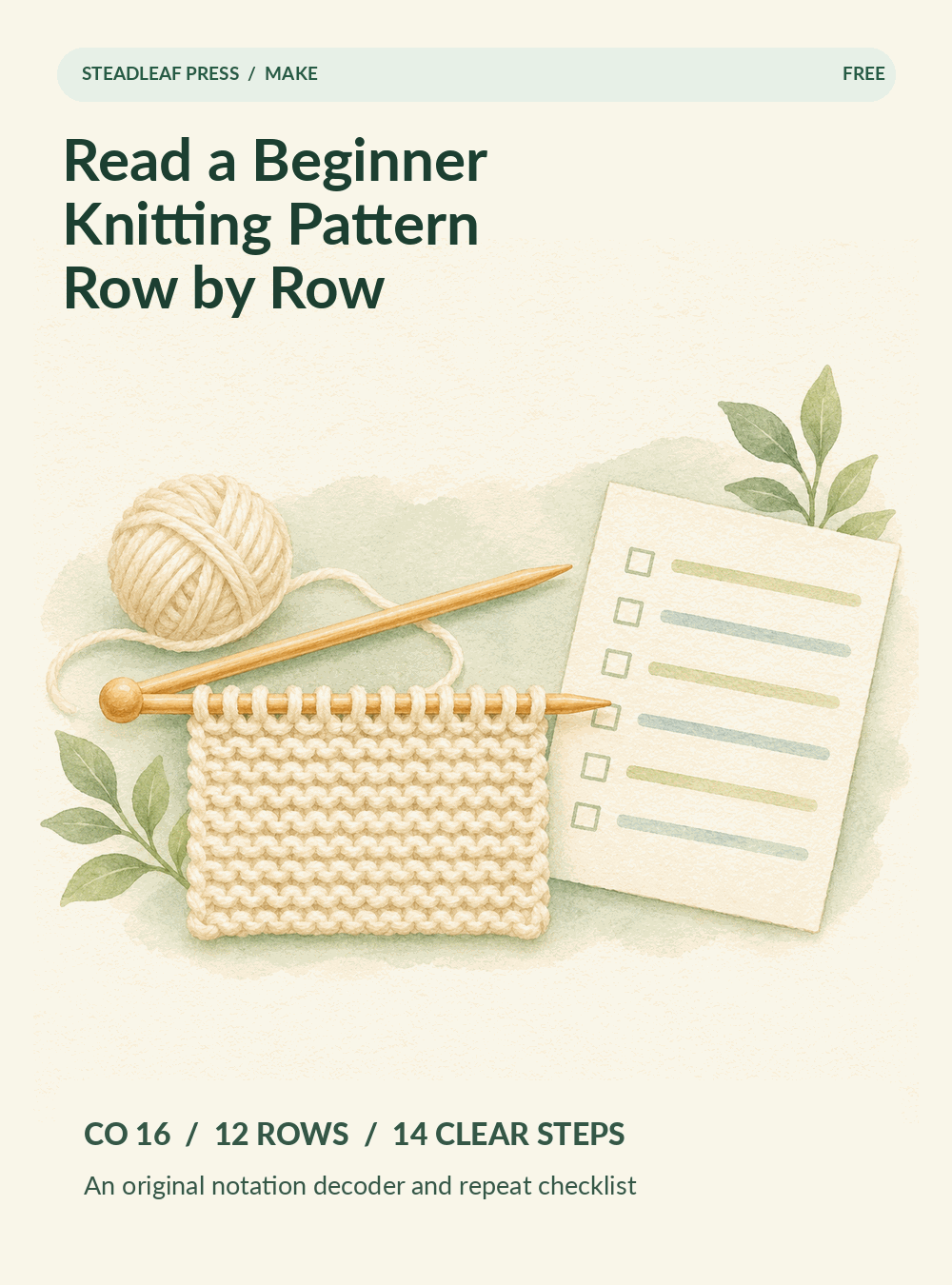
A complete free 14-step guide to reading a beginner flat-knitting pattern: CO, K, P, RS/WS, and three-more-times repeats, with an original 16-stitch 12-row sample and printable row tracker.
View free guide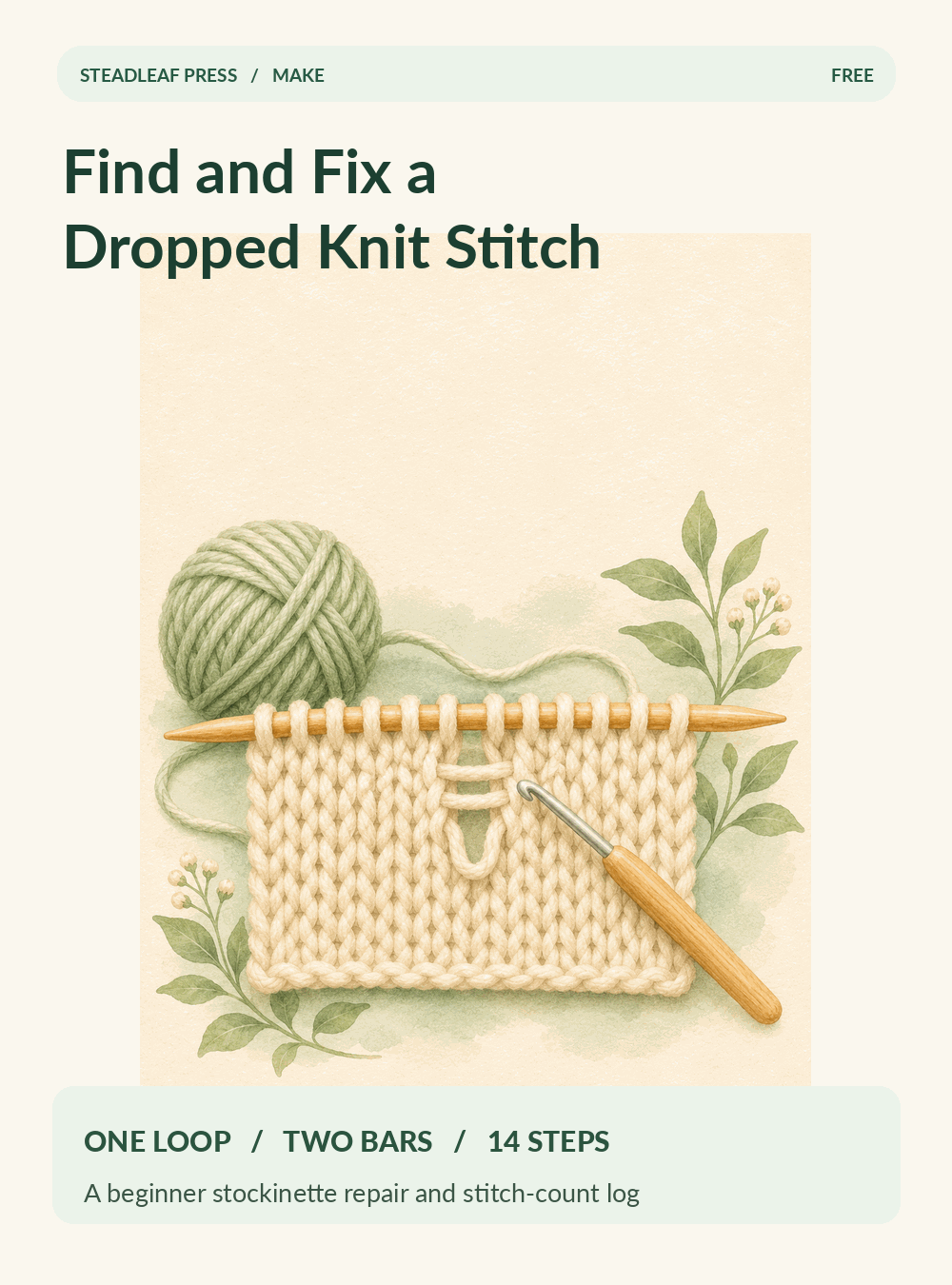
A complete free beginner knitting guide to catching one dropped stockinette knit stitch, rebuilding two ladder bars in order, and restoring a 16-stitch count.
View free guide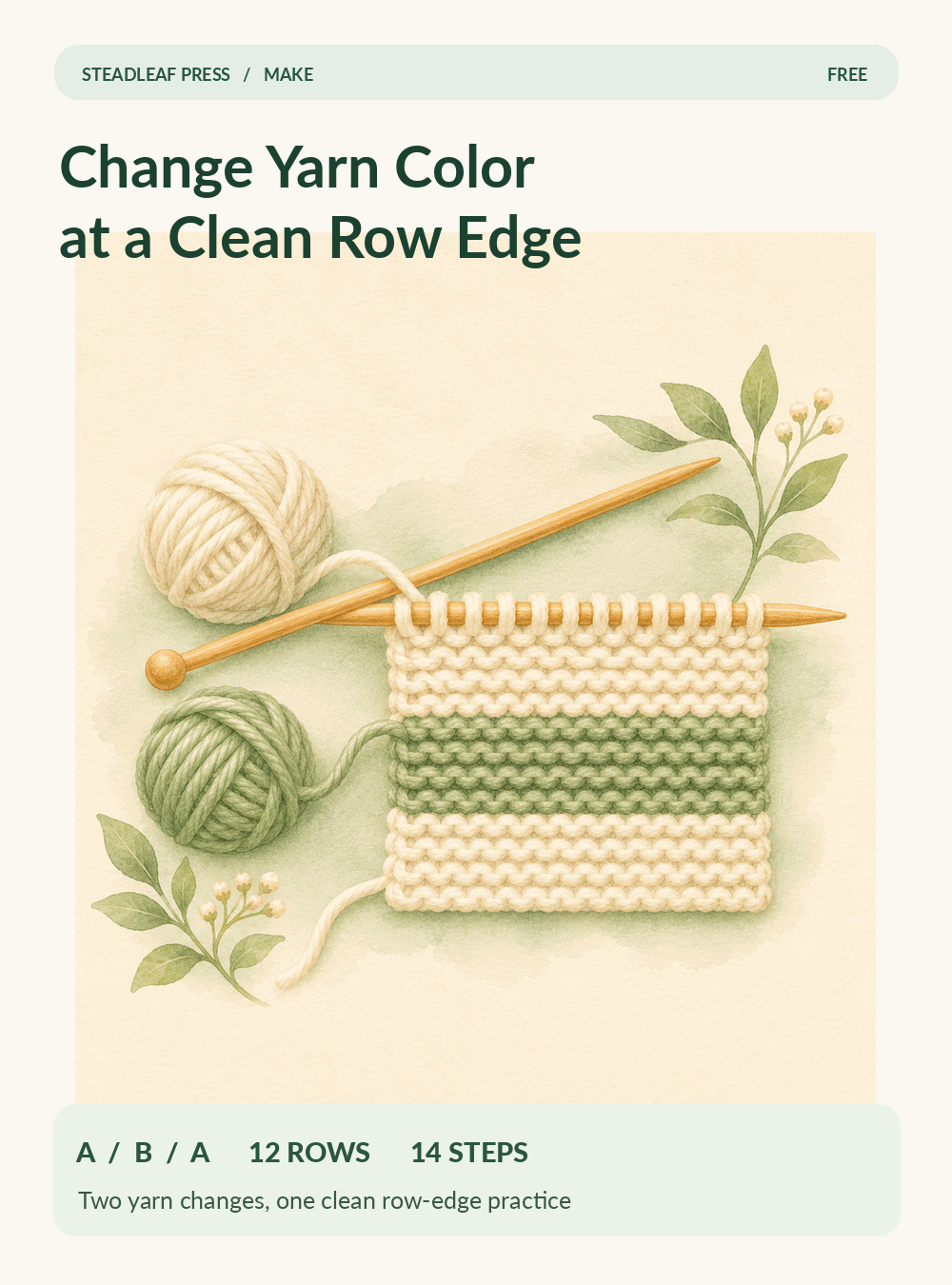
A complete FREE 14-step flat-knitting guide for changing yarn colour at a clean right-side row edge: original 16-stitch, 12-row A/B/A garter sample, diagrams and six-end worksheet.
View free guide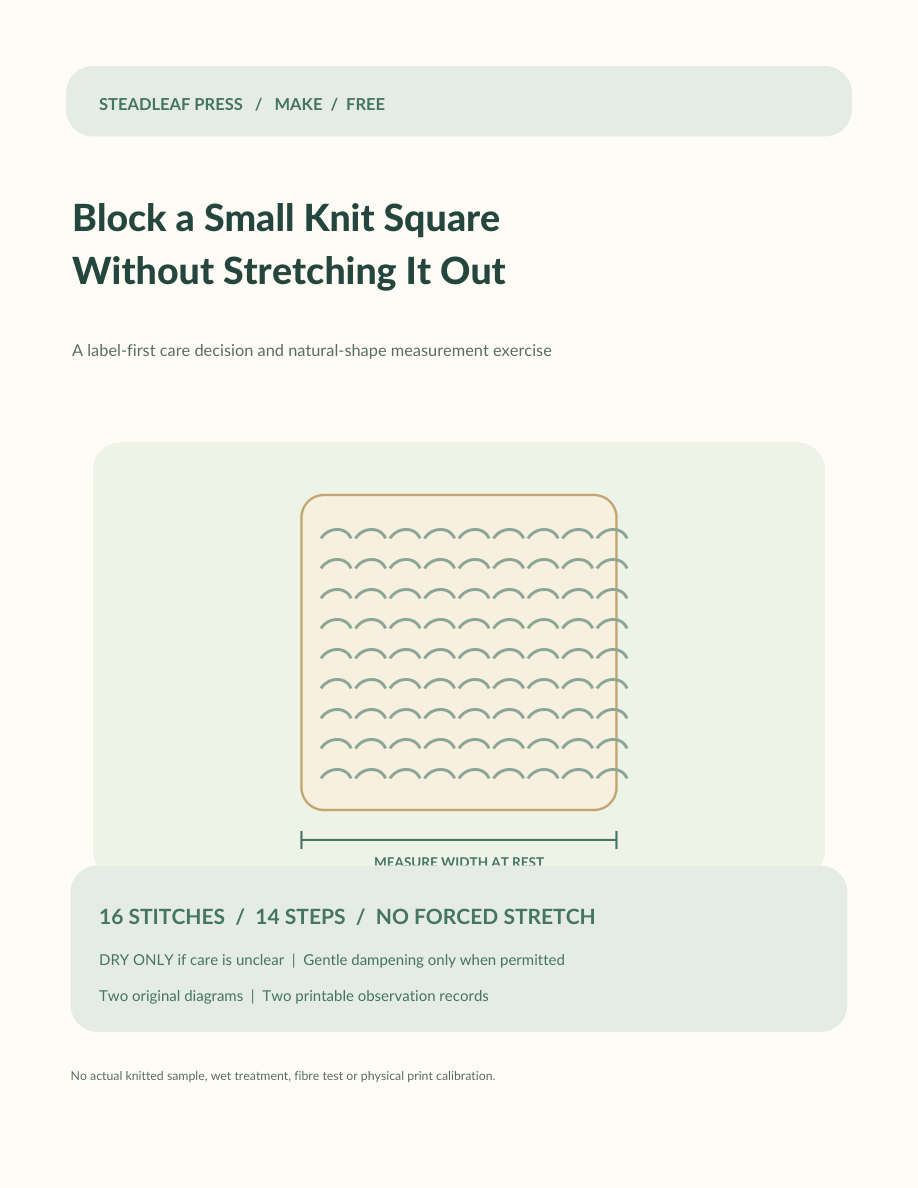
A complete original FREE 14-step guide to reading yarn care labels and gently laying out a small knitted square, measuring its natural shape before and after without forced stretching.
View free guide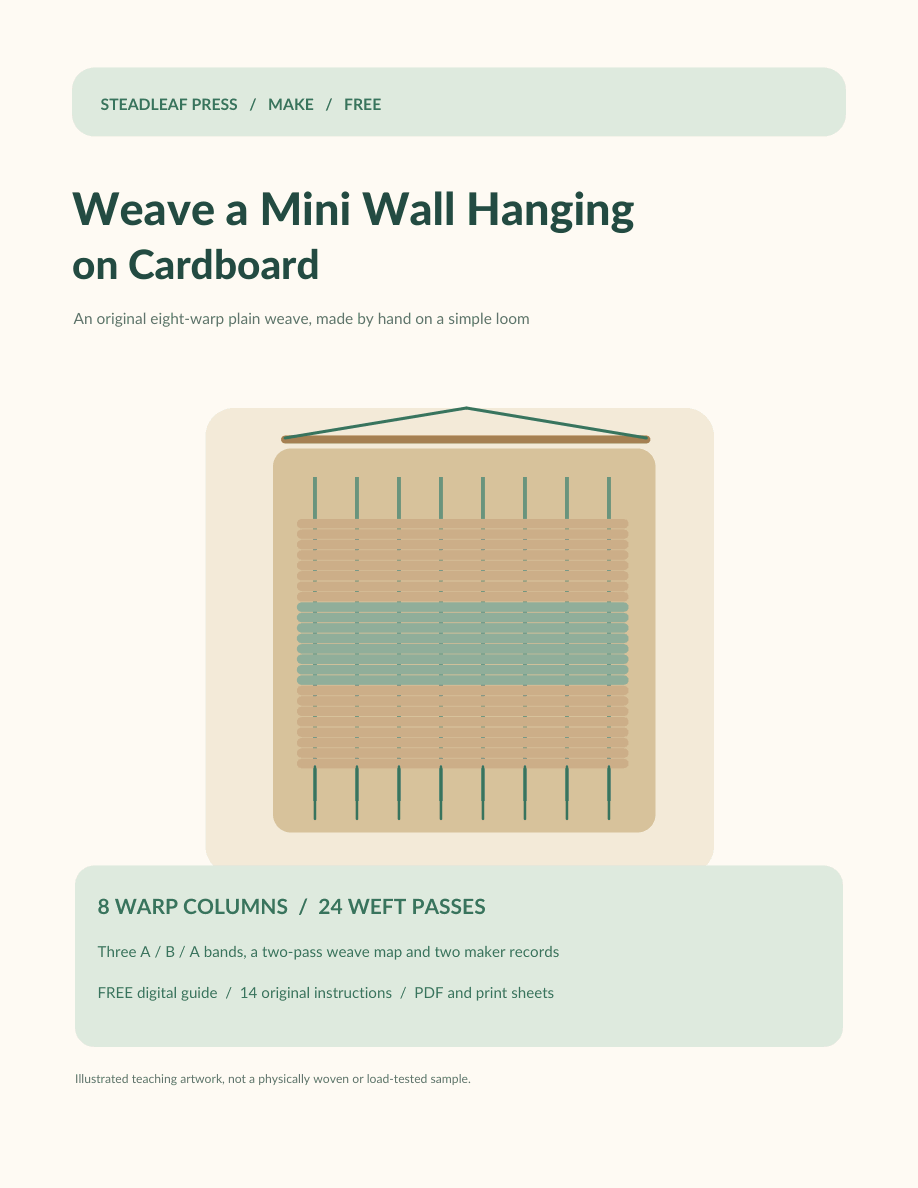
An original free 14-step beginner weaving guide: cut an eight-warp cardboard loom, weave 24 alternating passes in A/B/A colour bands, finish paired fringe and hang a small decorative panel.
View free guide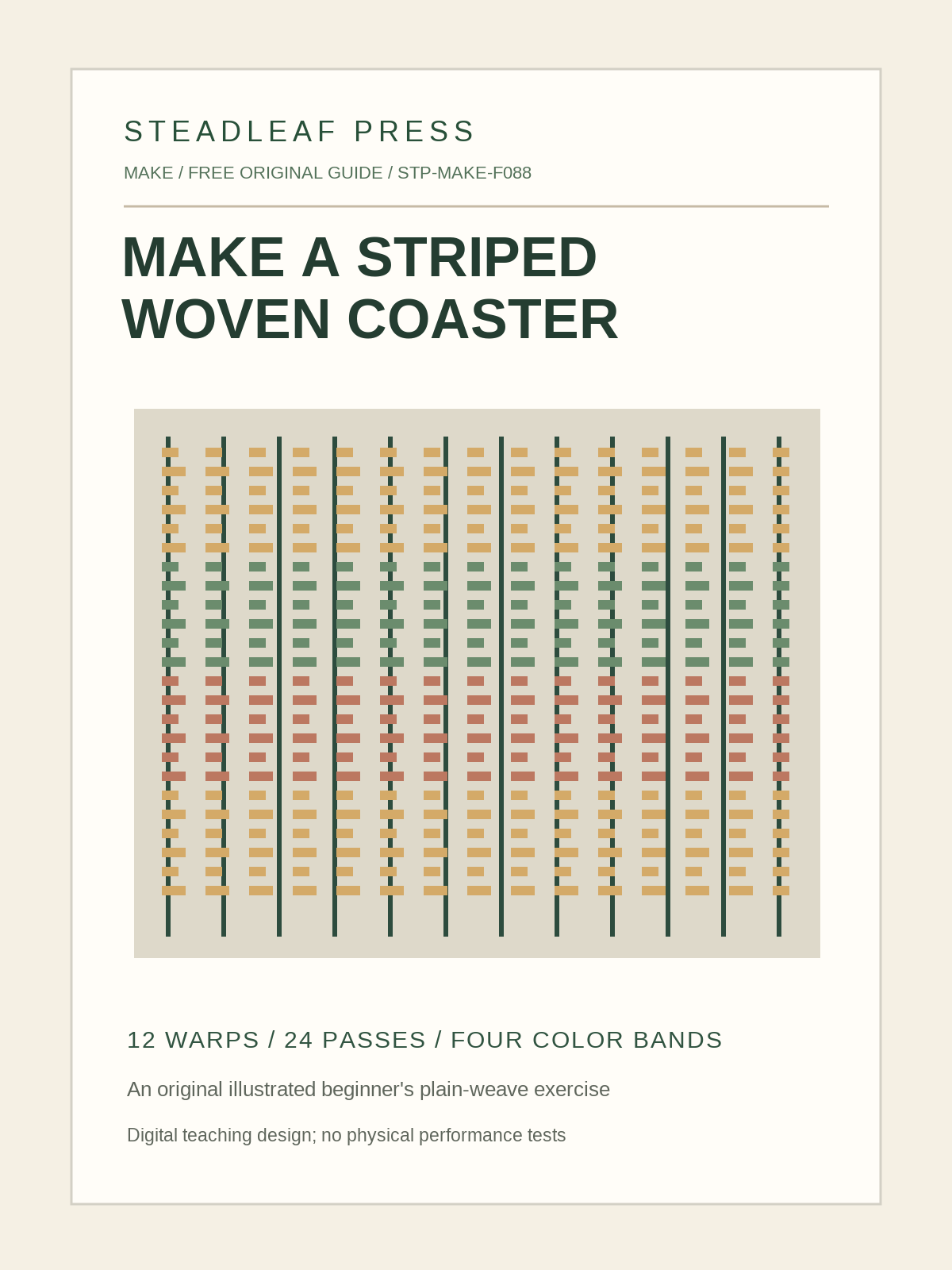
Free original 14-step twelve-warp cardboard weaving guide: make four six-pass stripes A/B/C/A, learn relaxed plain-weave edges and secure a small coaster-sized sample.
View free guide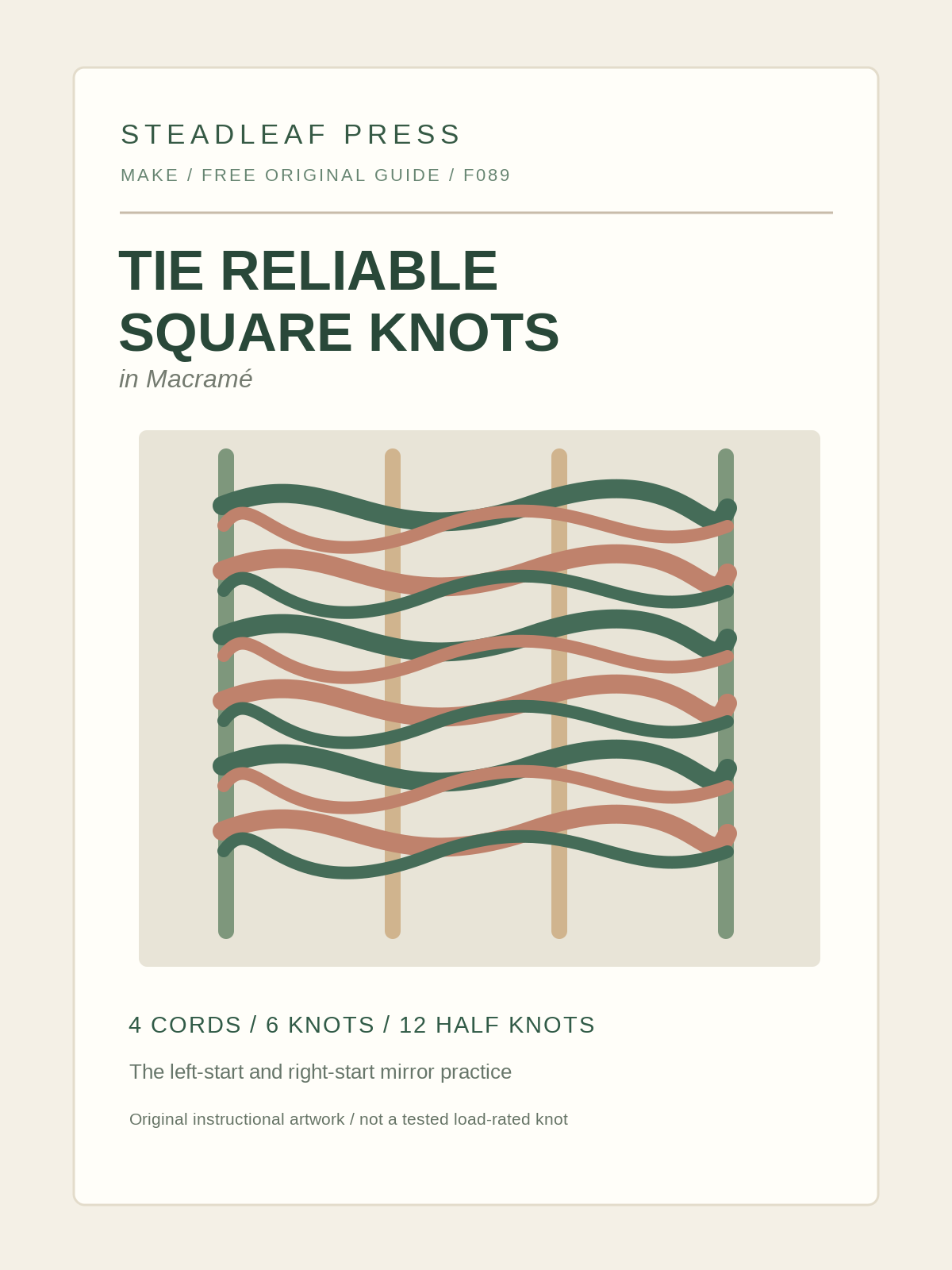
Free original adult macramé square-knot practice: work with four cords and learn to make six balanced knots from twelve left/right mirrored half knots.
View free guide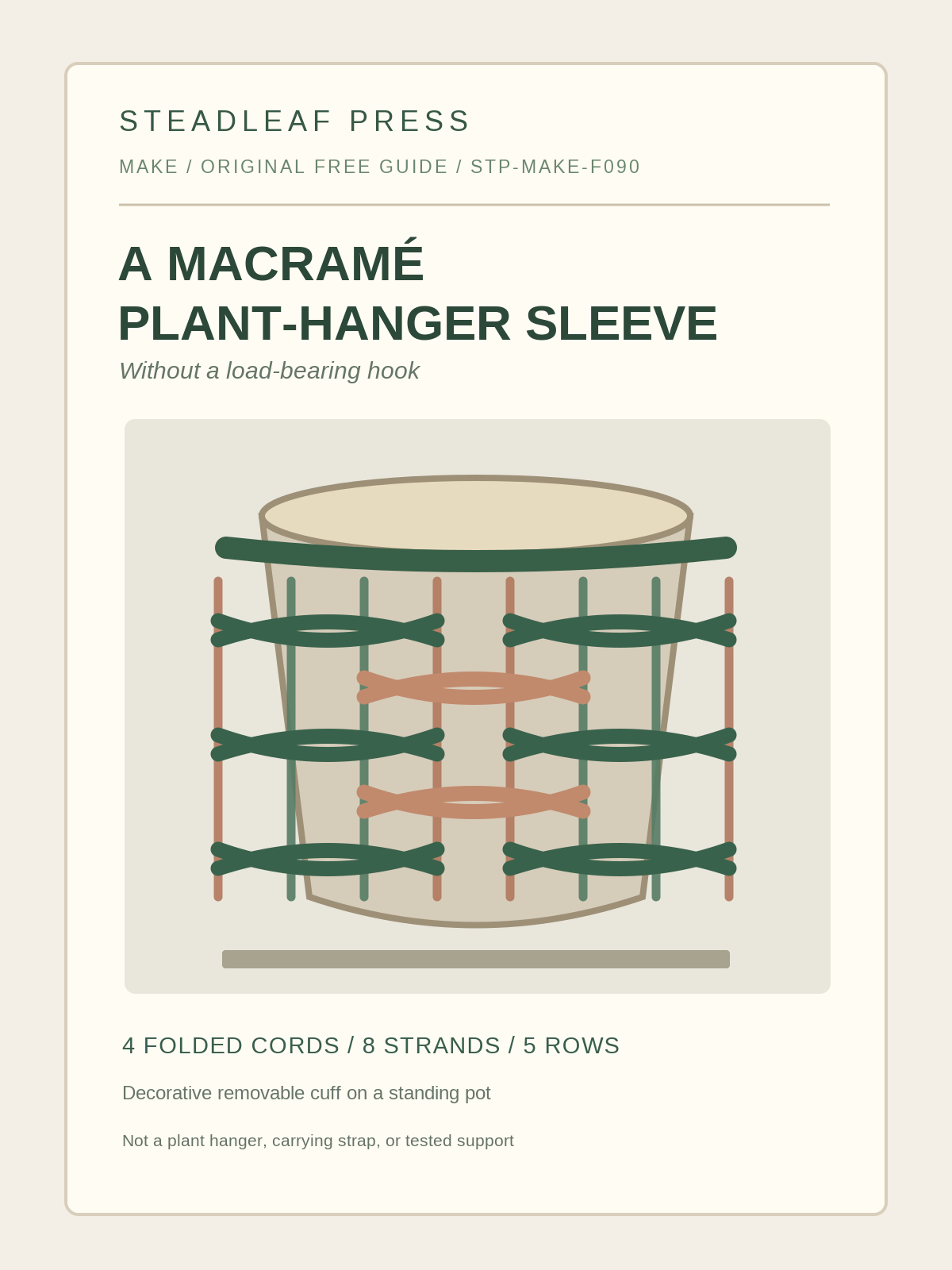
Make a free original decorative macramé sleeve for a pot that stays on its own stable base: four folded cords, eight strands, five rows and eight square knots.
View free guide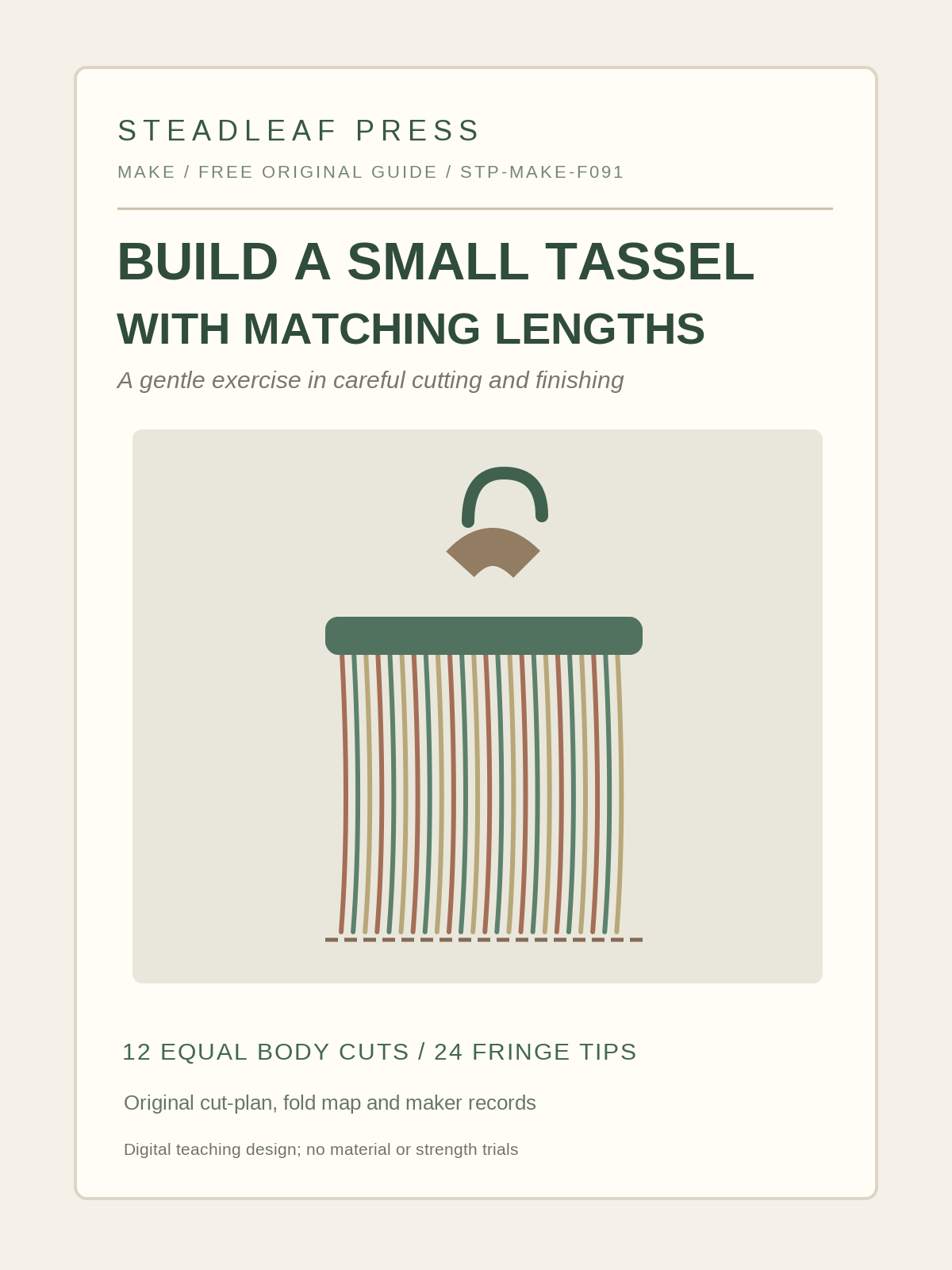
A free original fourteen-step tassel lesson: cut twelve matching body strands, fold to 24 fringe ends, create a separate decorative hanger and collar, and trim evenly.
View free guide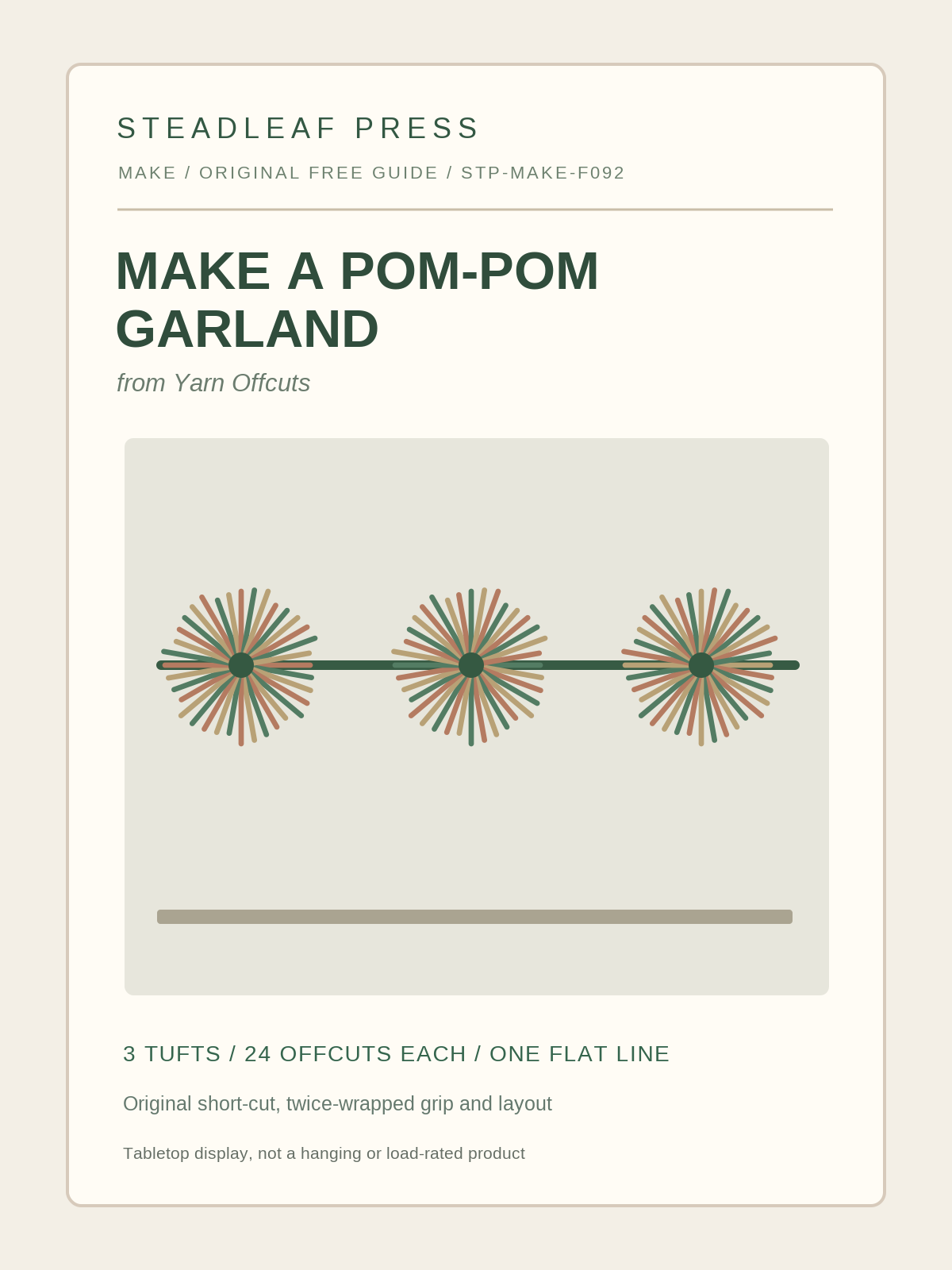
A free original fourteen-step offcut-yarn tabletop garland: three small hand-bound pom-poms, twenty-four scraps each, on a supported decorative line.
View free guide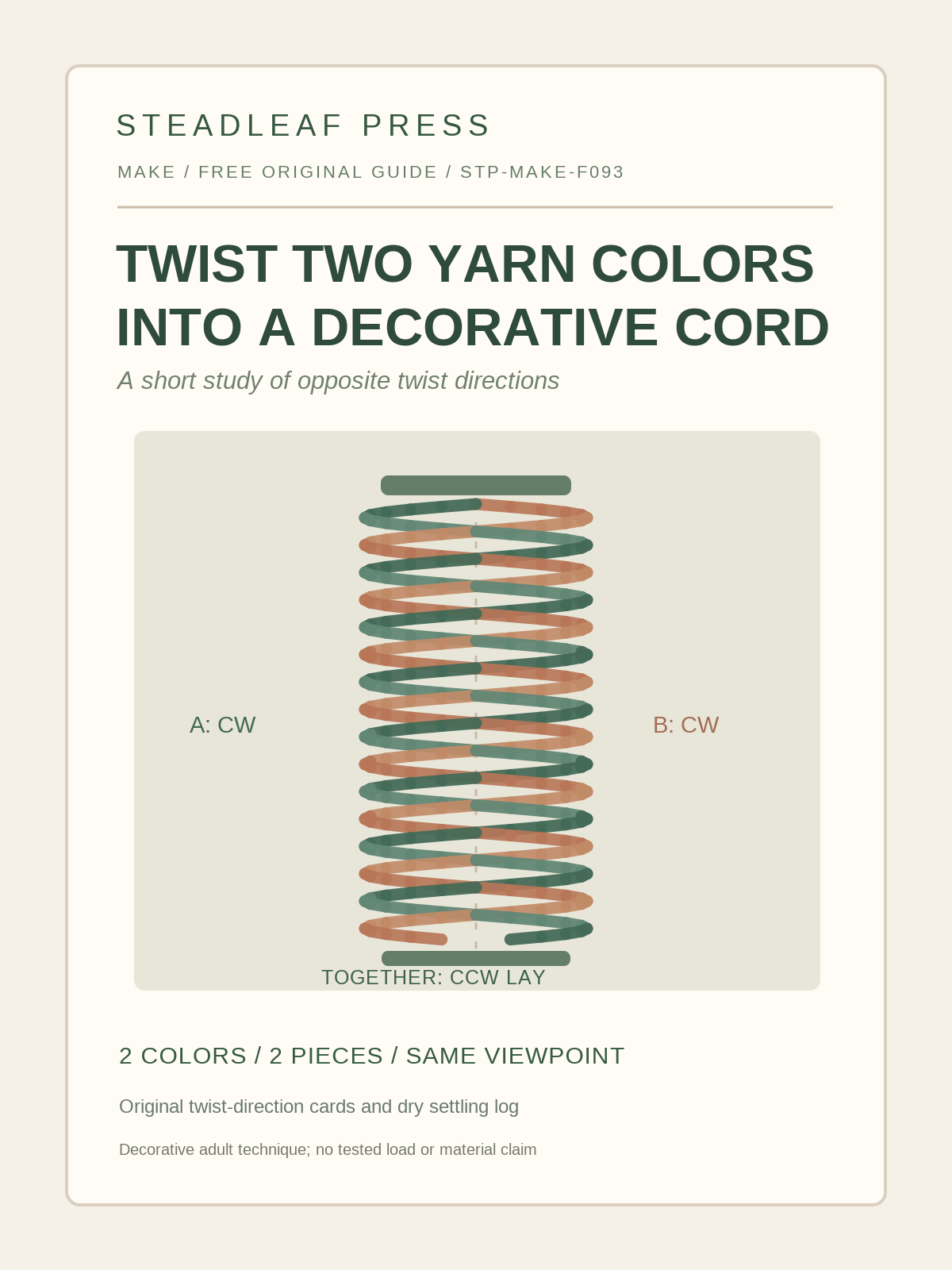
A free original adult yarn-craft guide for twisting two contrasting 80cm pieces in the same direction, then laying them together in the opposite direction and observing the dry twist balance.
View free guide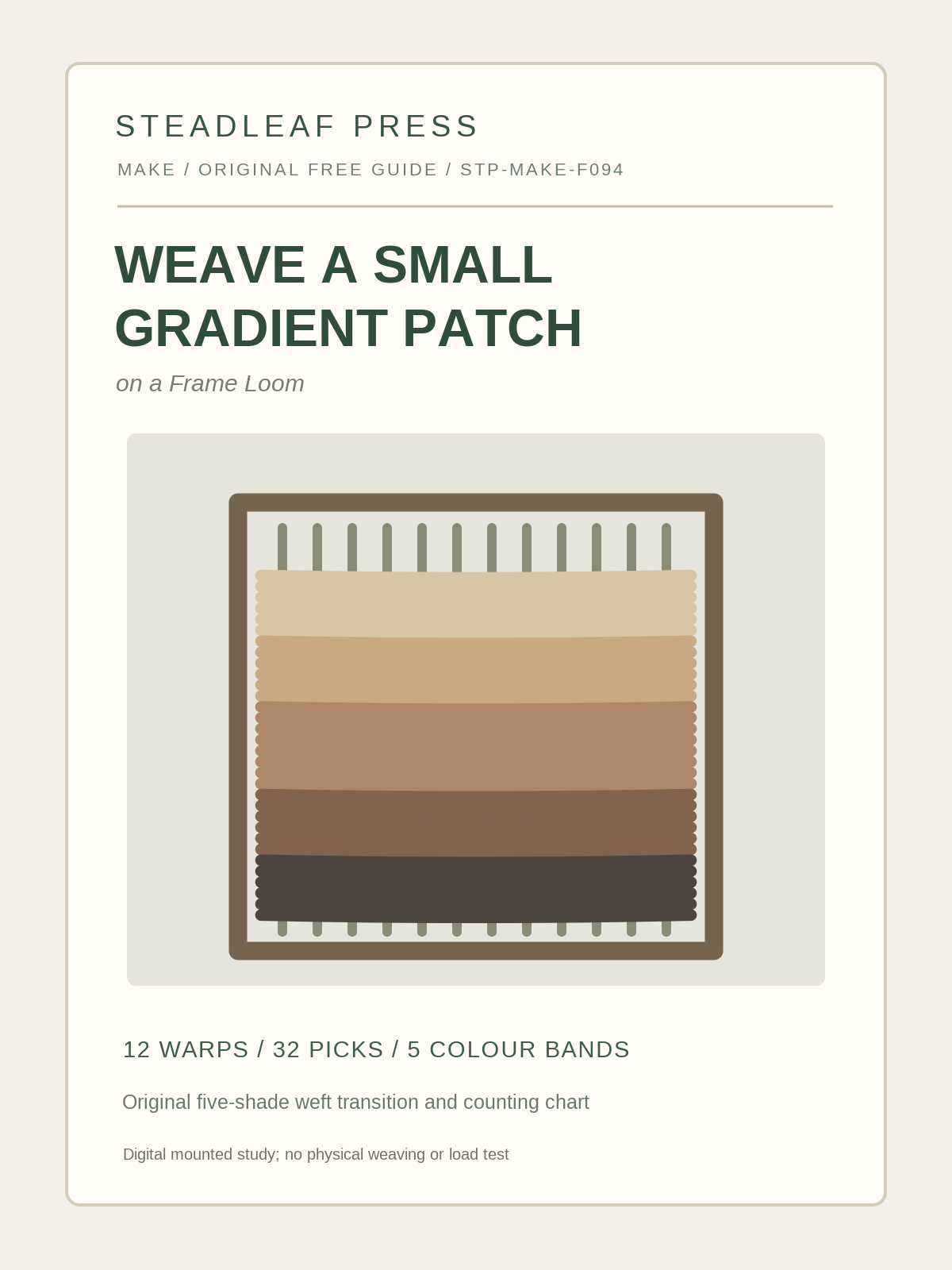
Free original adult frame-loom plain-weave swatch: weave 32 complete picks across 12 warp strands in five progressive color bands and follow an illustrated shade transition chart.
View free guide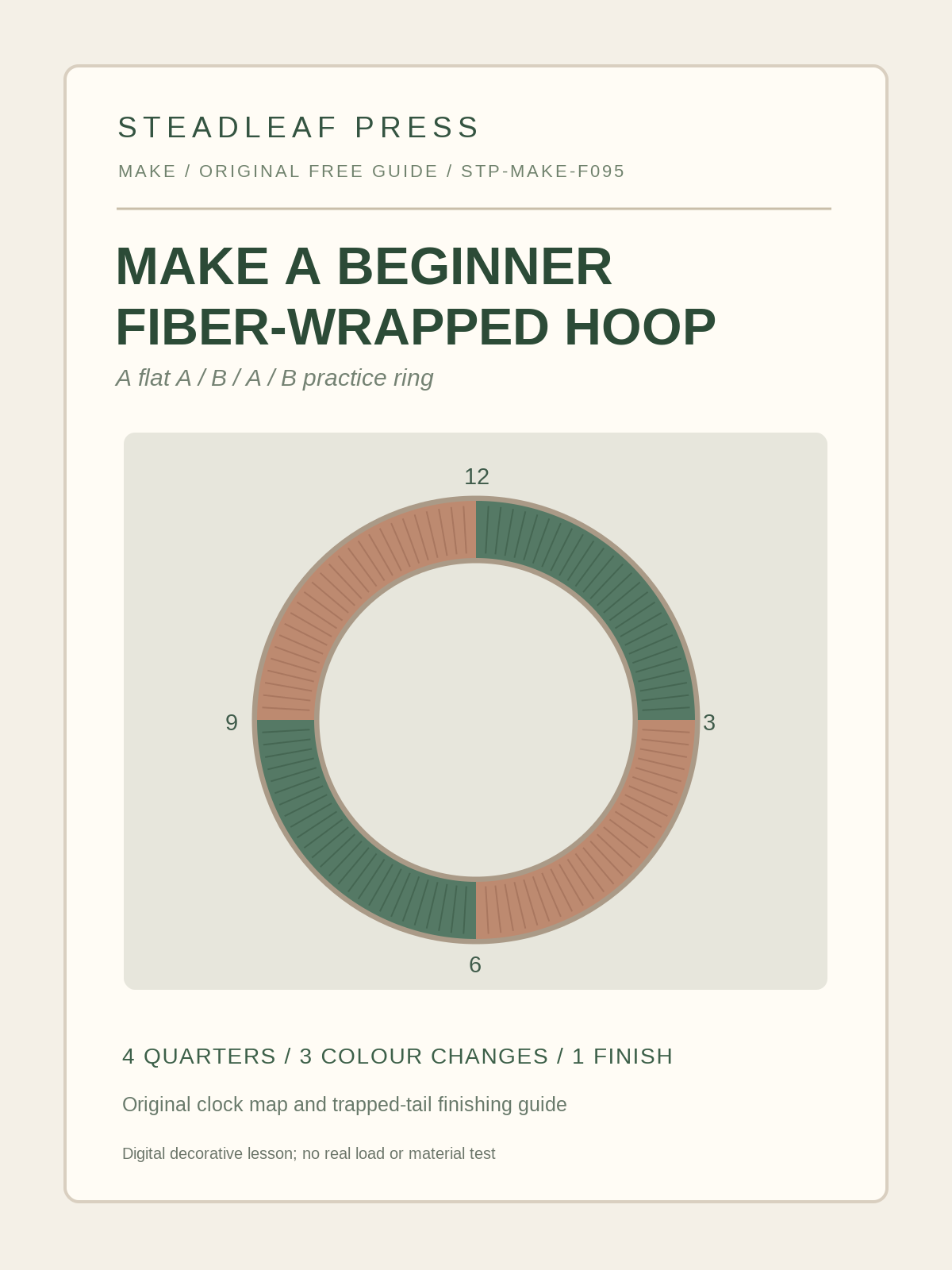
Free original adult yarn-wrapping guide: cover a smooth wooden craft ring in four alternating A/B colour quarters, trapping colour-change tails and tucking the last end.
View free guide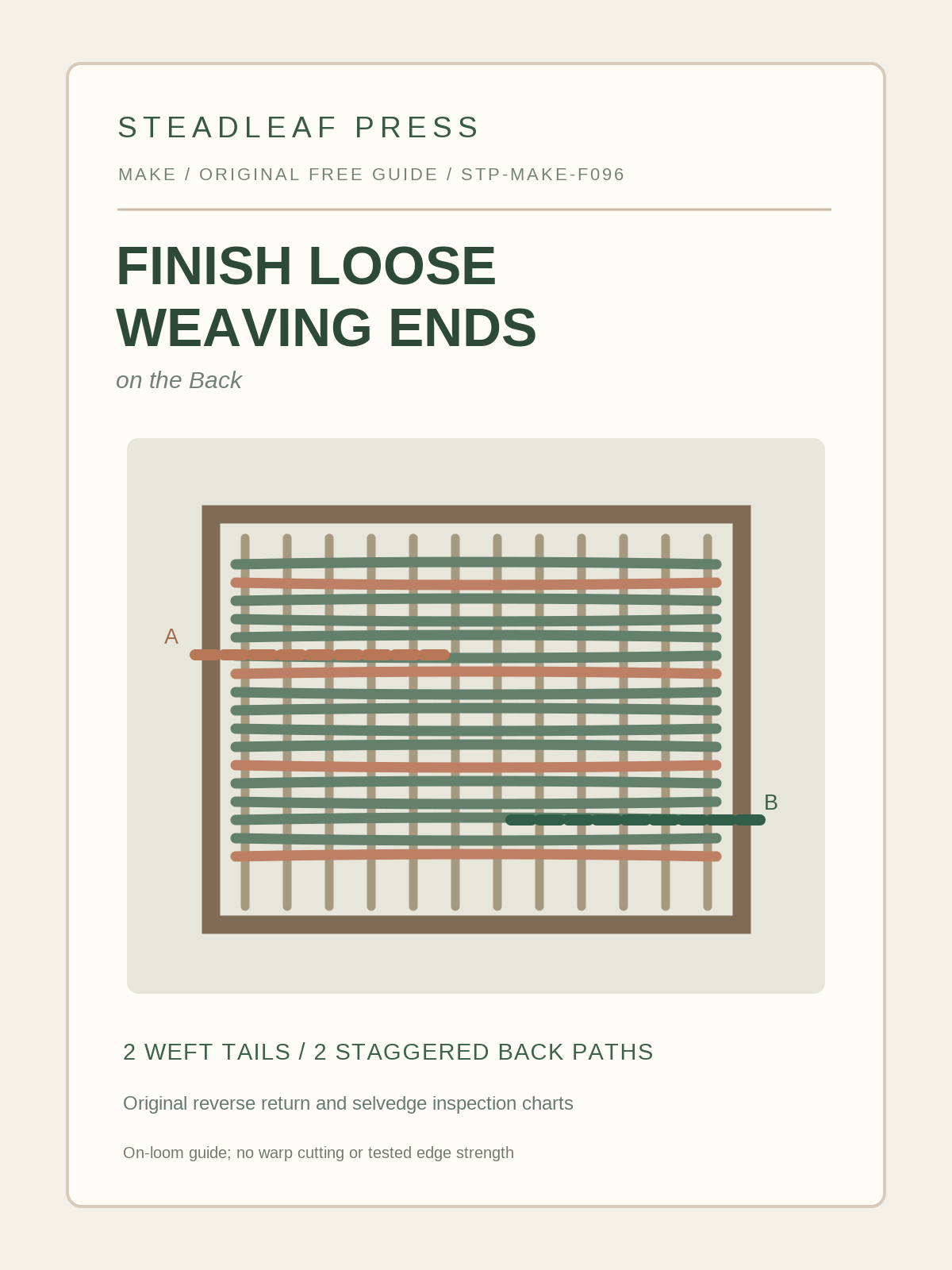
A free original adult frame-loom exercise for returning two loose weft yarn ends into adjacent weft paths on the back of a still-mounted practice swatch without cutting warp.
View free guide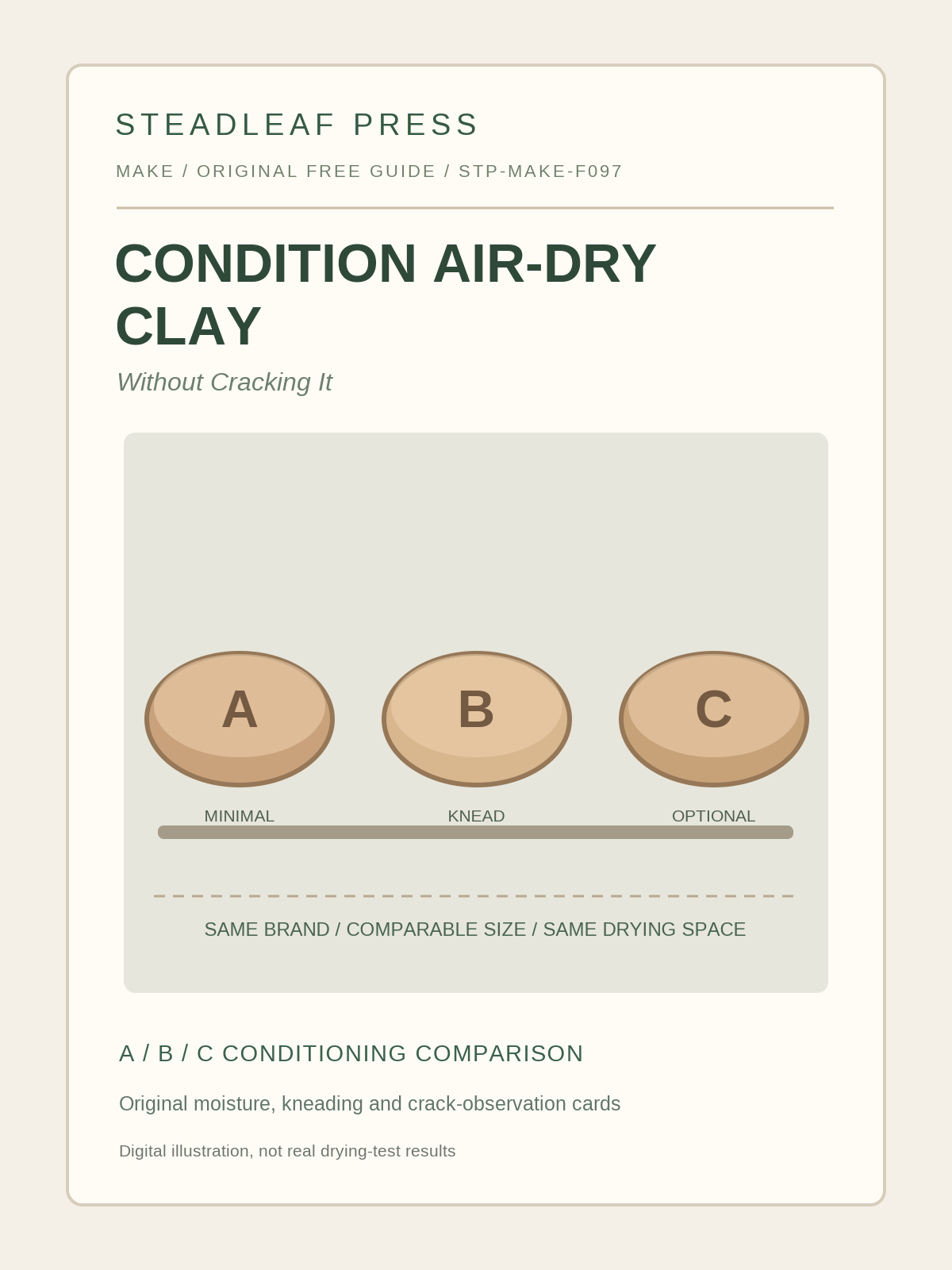
Original free adult air-dry-clay guide: compare three gently conditioned practice buttons and log moisture, kneading, edge splits and final-drying cracks.
View free guide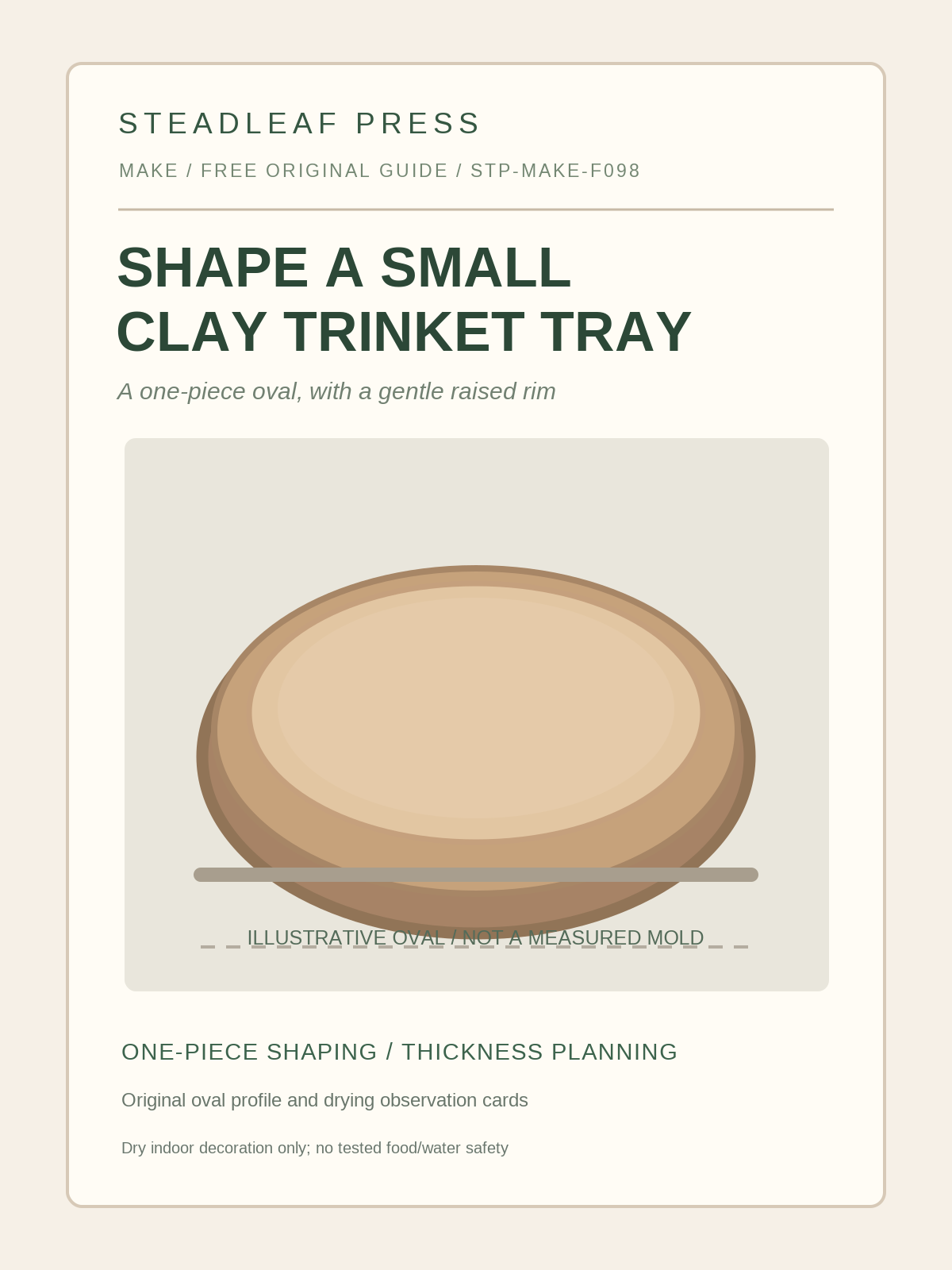
Free original adult air-dry clay craft guide for shaping a shallow one-piece oval decorative trinket tray, with an original footprint-and-thickness plan and drying record.
View free guide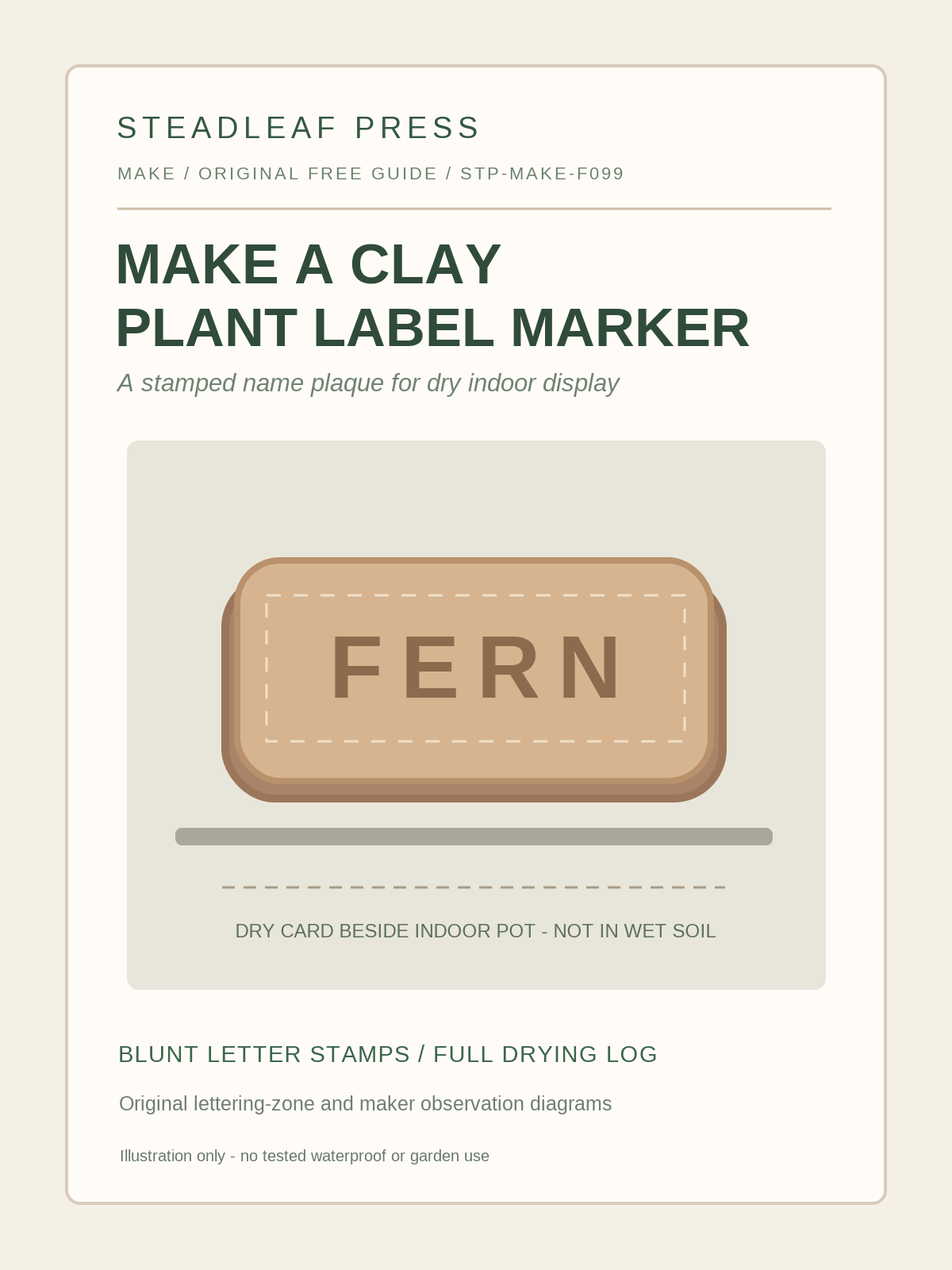
Free original adult clay-stamping tutorial: make a small soft-cornered plant-name plaque with shallow letters, maker-approved full drying and a dry indoor display card beside a plant.
View free guide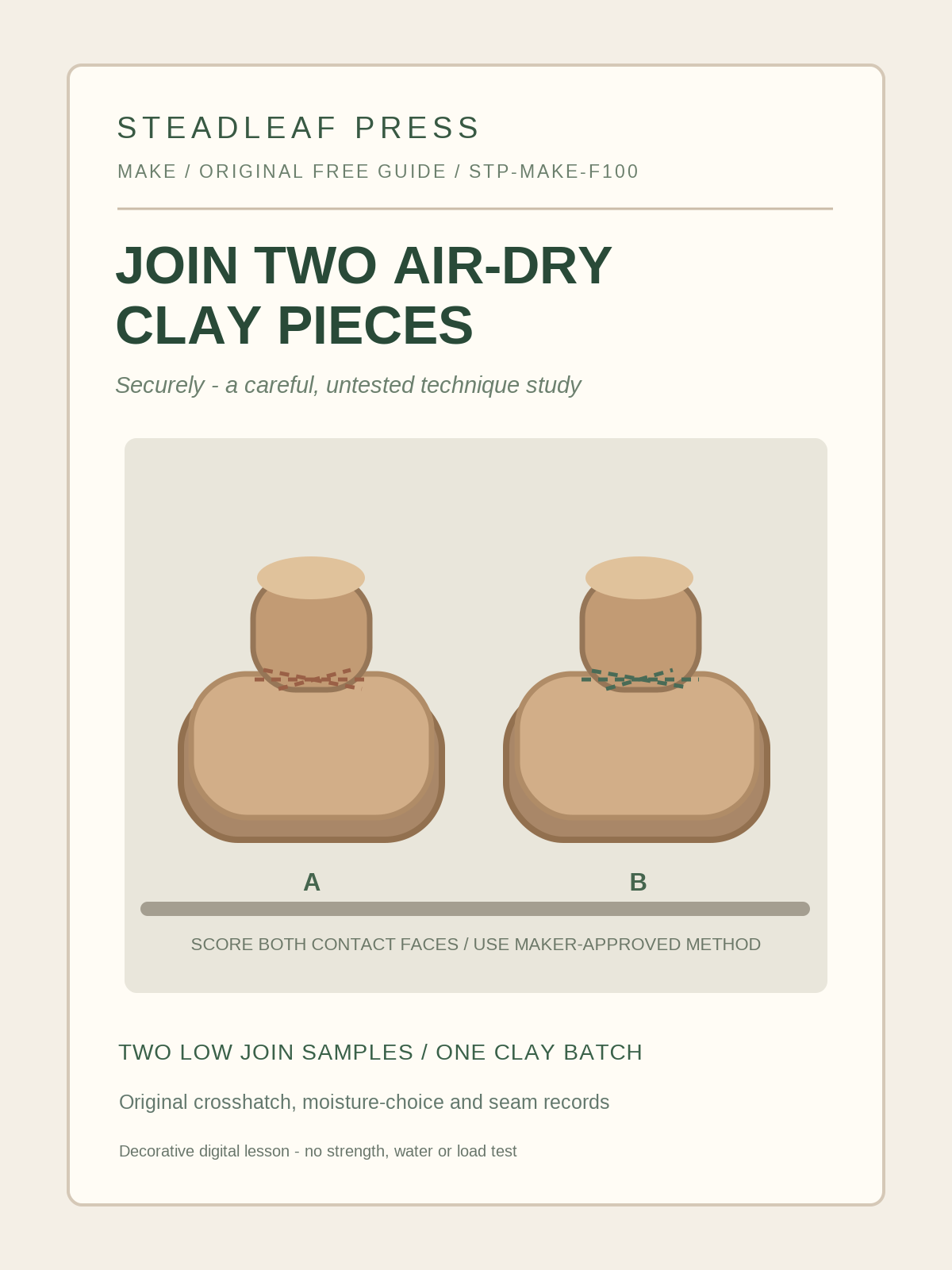
An original free adult guide to a safe two-sample soft air-dry clay joining exercise with both-contact-face scoring, manufacturer-approved minimal moisture and conditional slip, with records and diagrams.
View free guide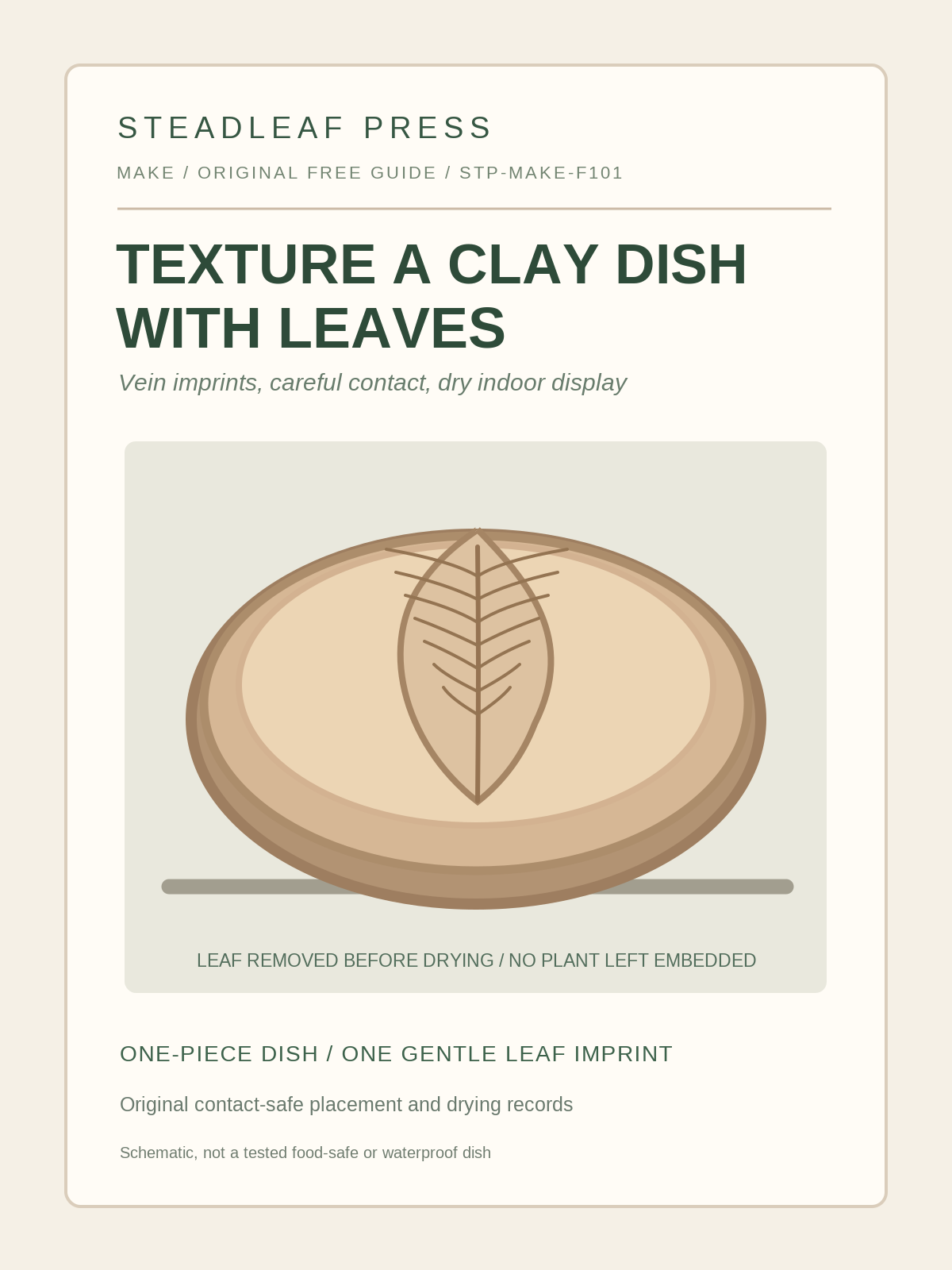
Original free adult clay-craft guide to making a shallow decorative one-piece dish with a shallow leaf-vein texture from an identified contact-safe leaf, removed before fully drying.
View free guide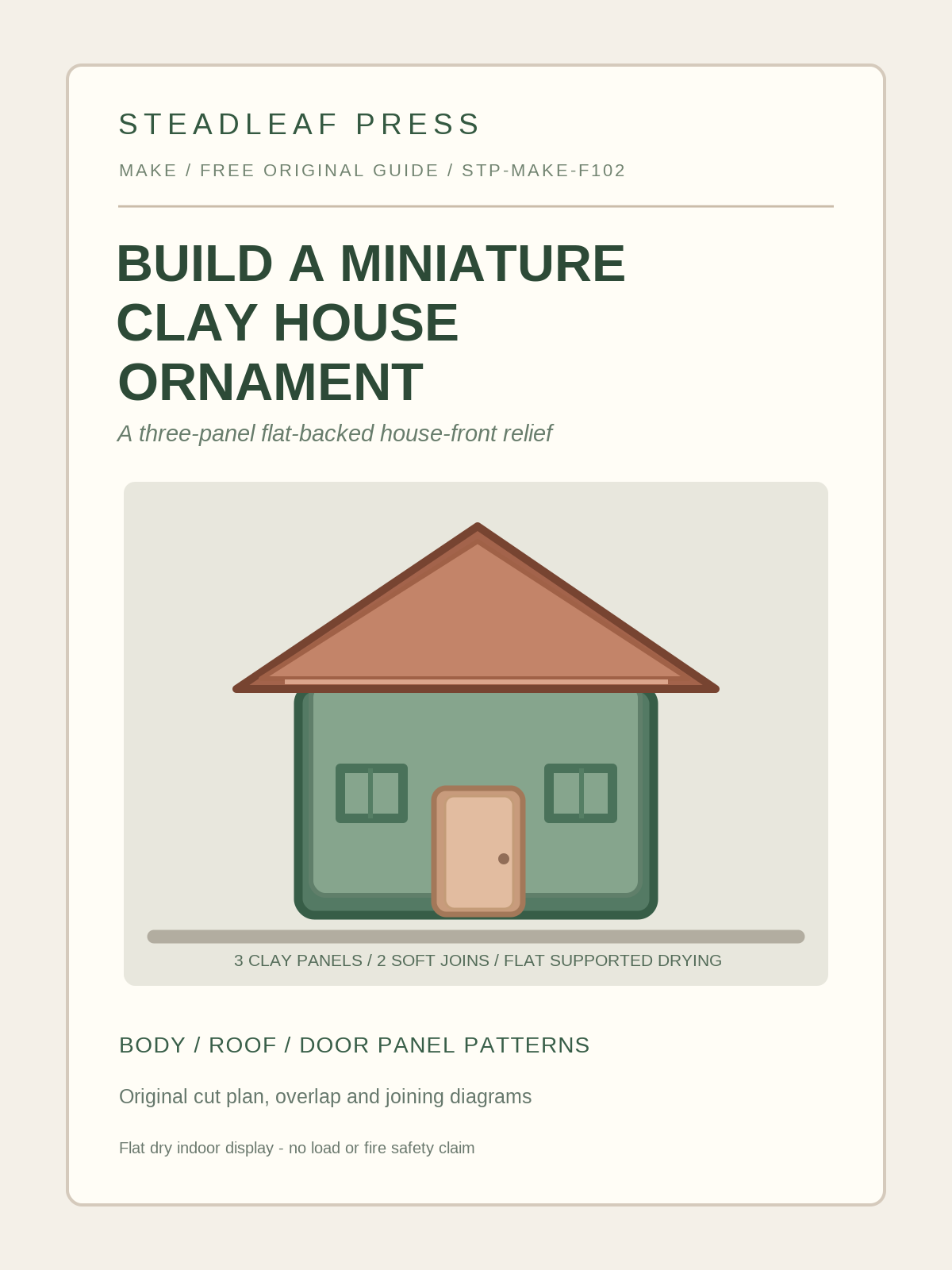
Original free adult air-dry clay craft guide to a supported, flat-backed miniature house-front ornament with three thick maker-compatible clay panels, two gentle scored joins and printable geometric assembly patterns.
View free guide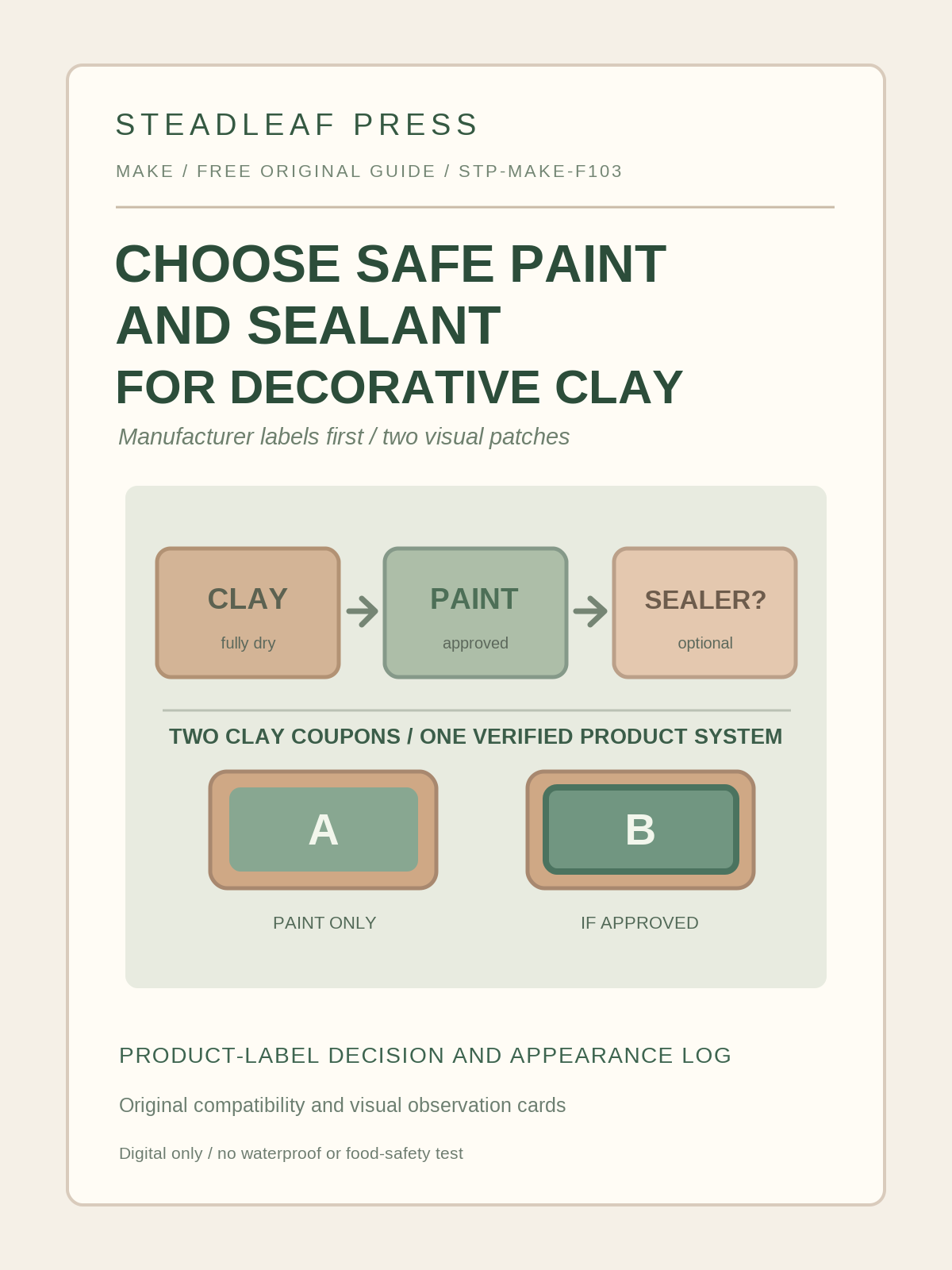
Free original adult decorative-clay guide to checking manufacturer-compatible brush-on paint and optional sealant labels, with an original A/B dry appearance patch record.
View free guide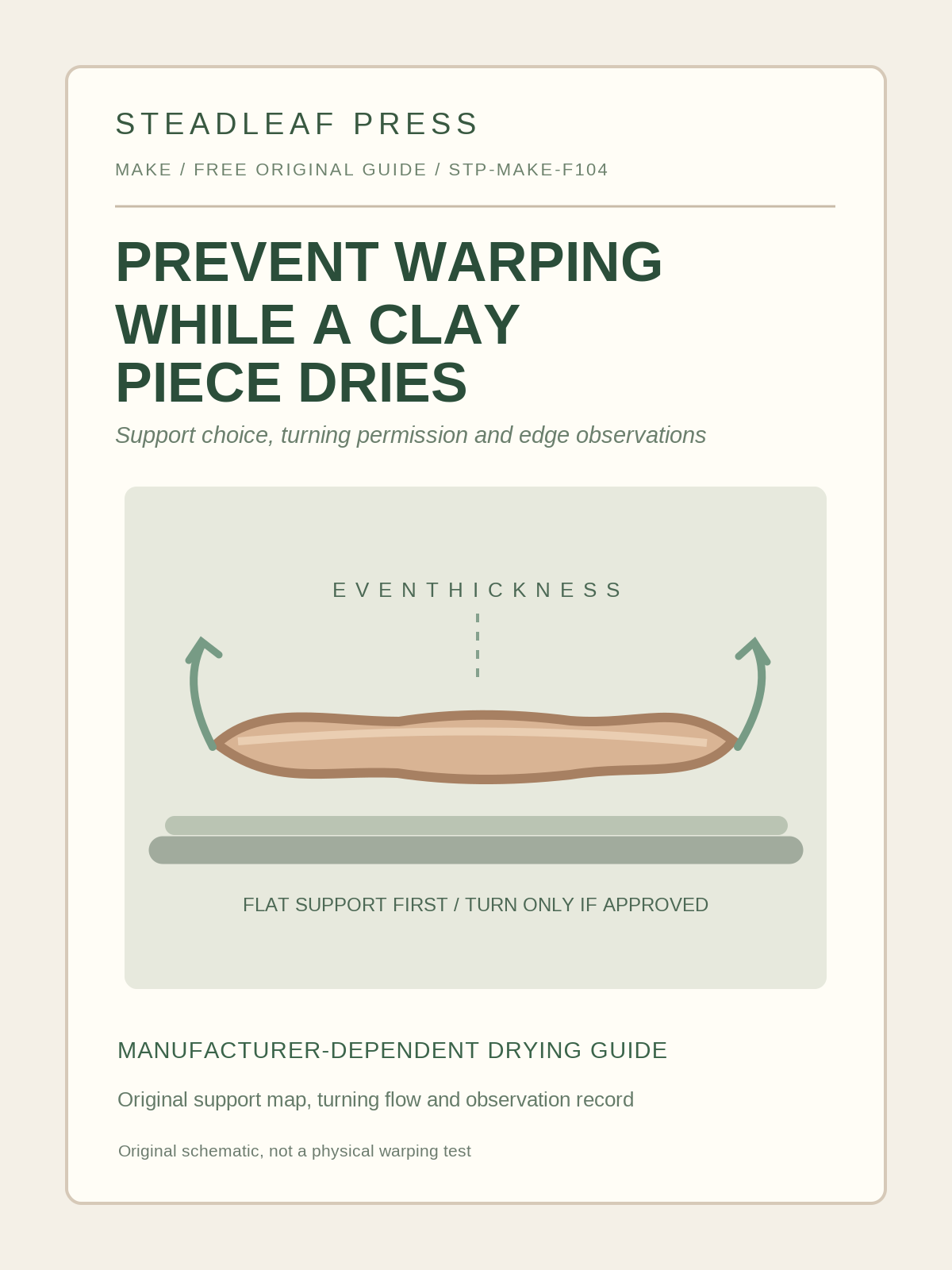
Original free adult air-dry clay guide on keeping a small sample fully supported, using the exact manufacturer's turning instructions, recording visible edge curl and avoiding premature moving or forced drying.
View free guide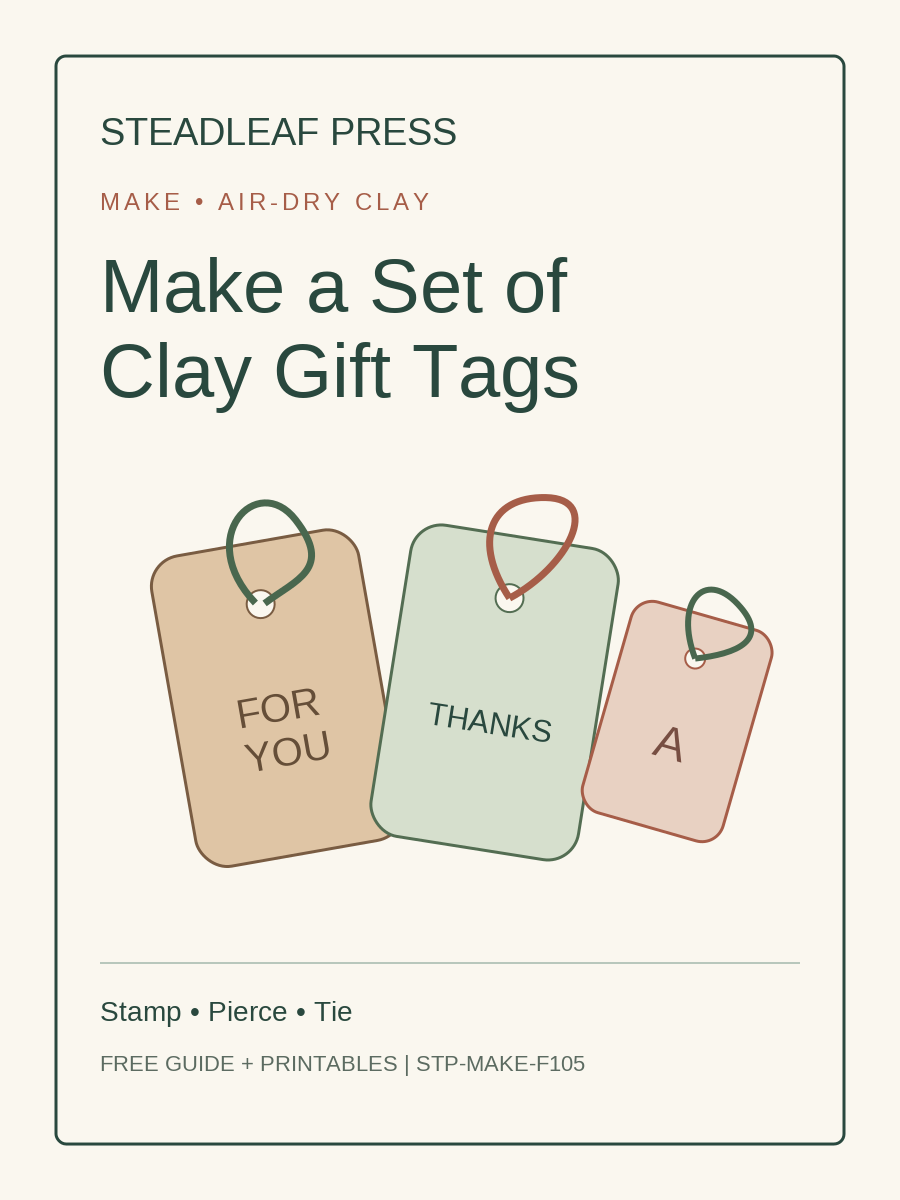
Original free adult air-dry clay craft guide for three matching decorative gift tags, with letter layout, wet-clay piercing, maker-specific drying and gentle cord attachment.
View free guide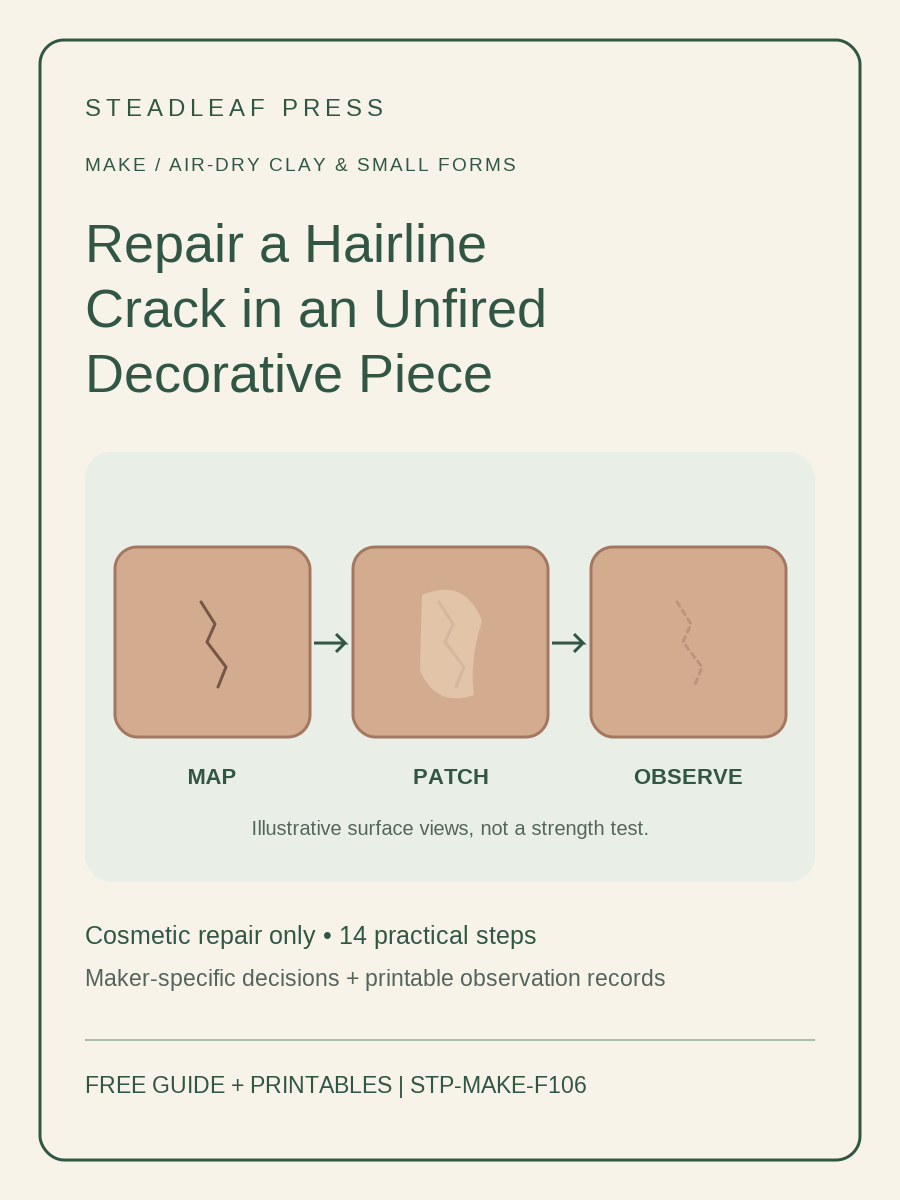
Original free adult air-dry clay guide for recognising a possible cosmetic repair candidate, following the exact clay maker’s repair instructions, and observing a repaired surface without assuming restored strength.
View free guide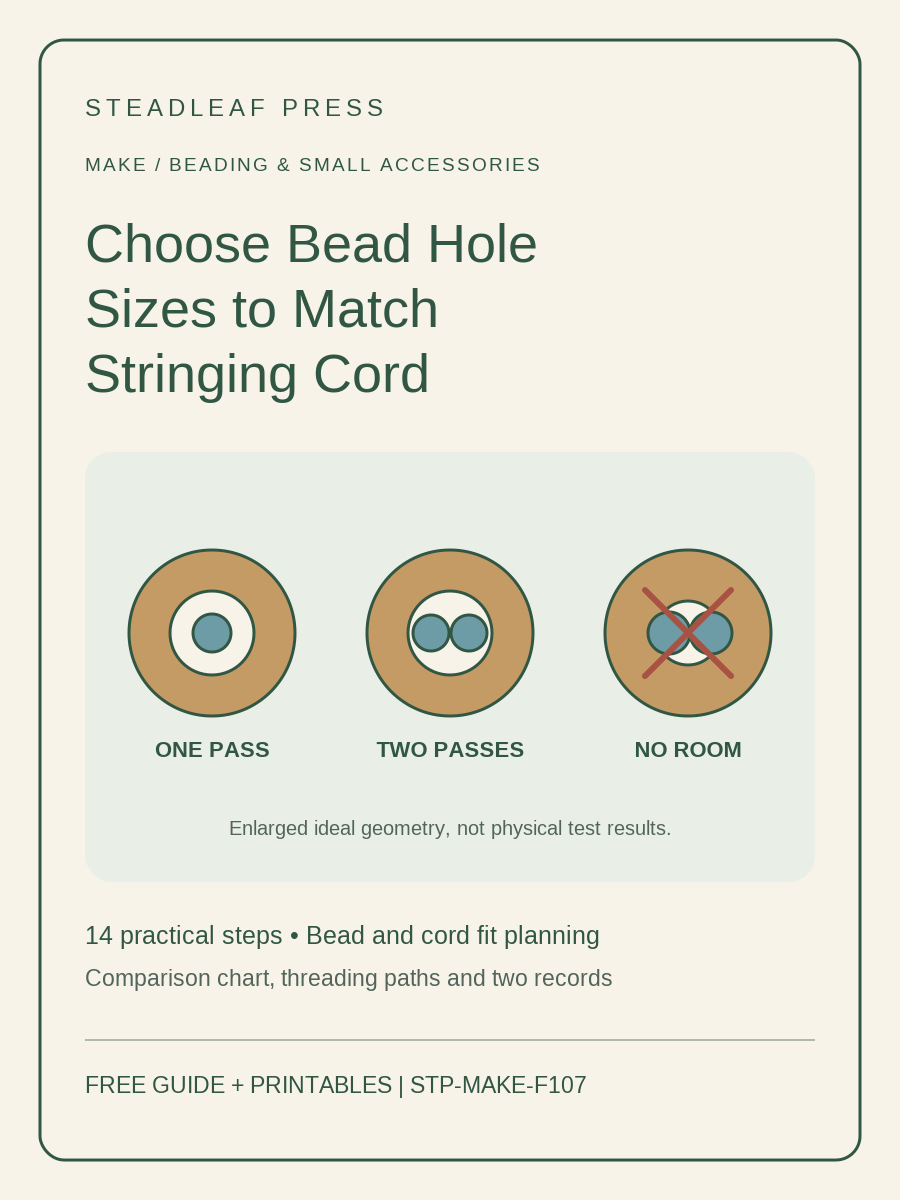
Original free adult bead-stringing guide for choosing cord by nominal hole size, actual usable opening, required return passes and loaded-needle profile, with practical fit records.
View free guide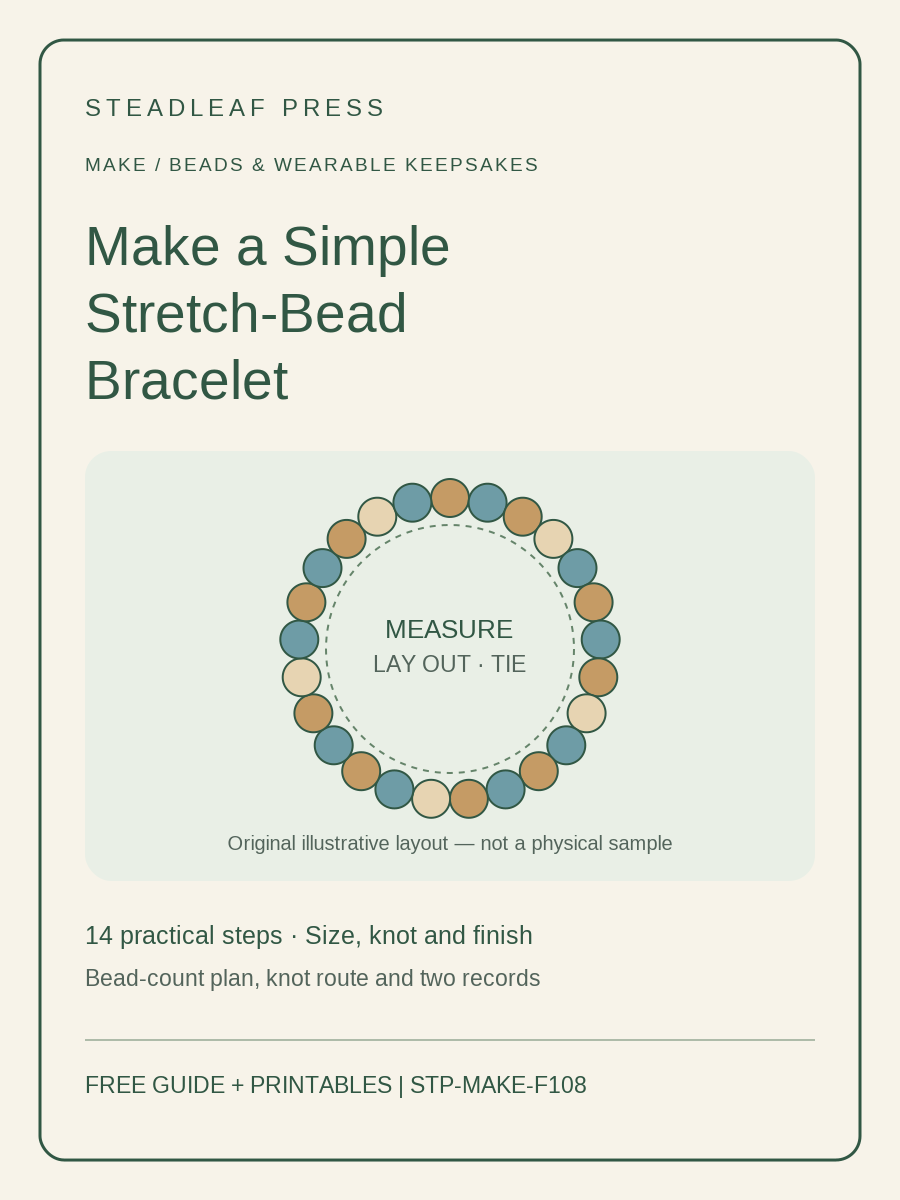
Original free adult guide to sizing a stretch-bead bracelet, selecting compatible beads and elastic, practising a surgeon’s knot and following the exact cord’s finishing instructions.
View free guide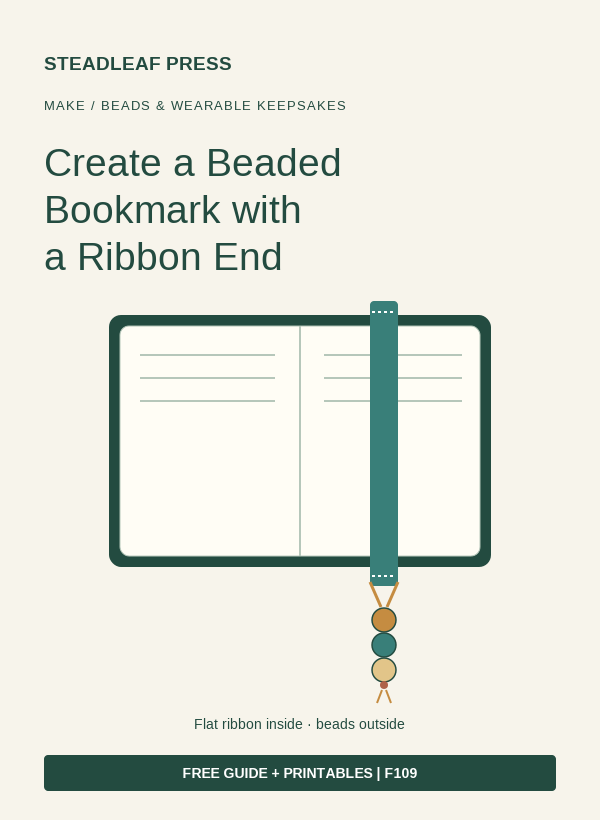
Original free adult craft guide to a flat ribbon bookmark with sewn hems, an open-sided lower channel and three lightweight beads positioned outside the book.
View free guide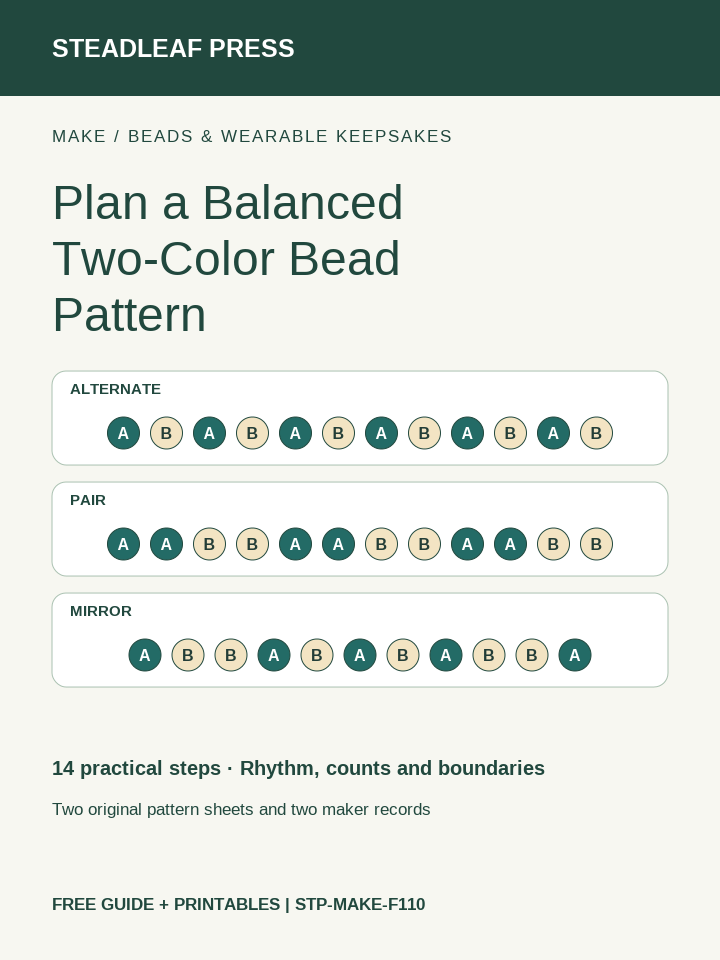
Original free adult bead-design guide comparing alternating, paired and mirrored two-colour patterns, including circular boundaries, actual bead counts and nominal widths.
View free guide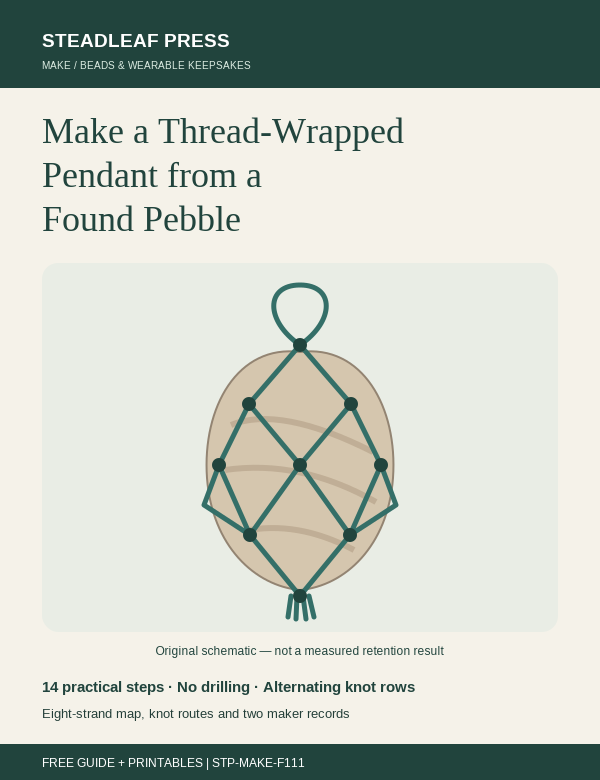
Original free adult craft guide to a non-drilled pebble pendant component with eight-strand alternating knot rows, a common top loop and gathered bottom closure.
View free guide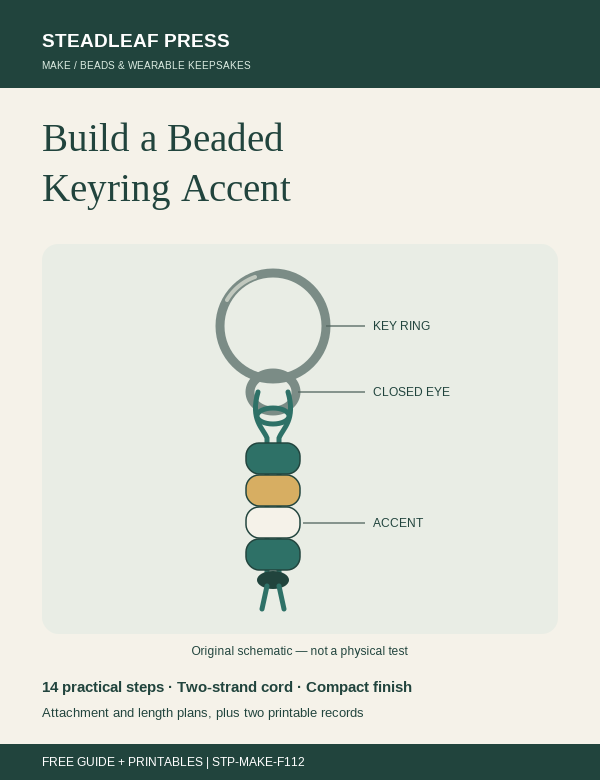
Original free adult craft guide to building a short two-strand beaded keyring accent on a separate closed accessory eye with a folded hitch and bundled stopper.
View free guide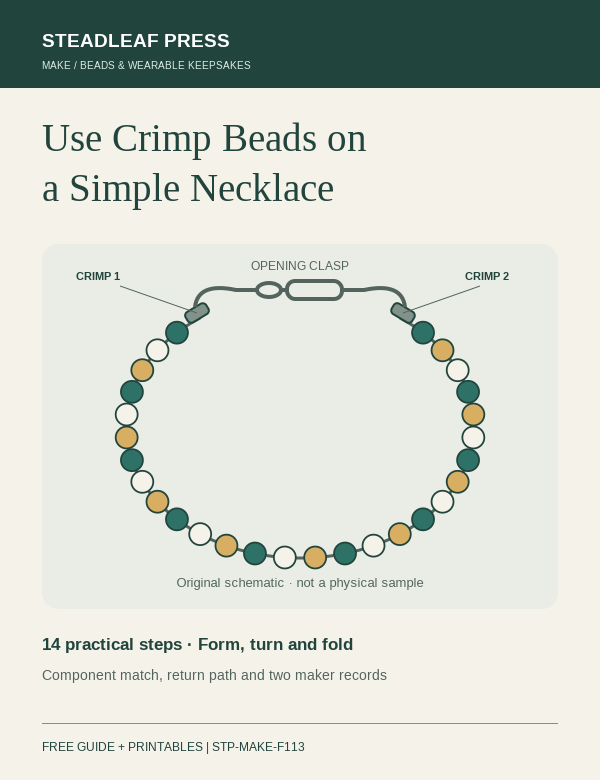
Original free adult jewellery craft guide to matching coated beading wire with crimp tubes and forming two-stage crimp connections on a single-strand necklace.
View free guide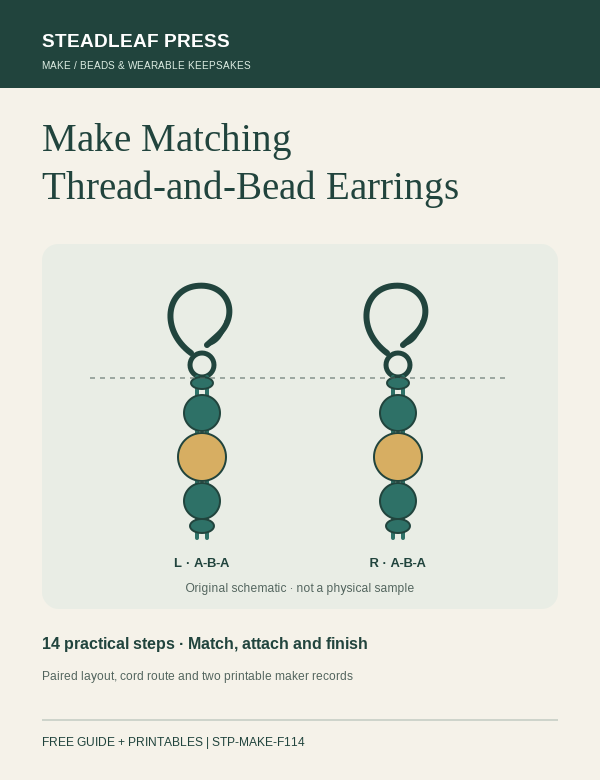
Original free adult craft guide to making two matching thread-and-bead earrings with paired bead layout, compatible closed-eye findings, a folded hitch and bundled stopper.
View free guide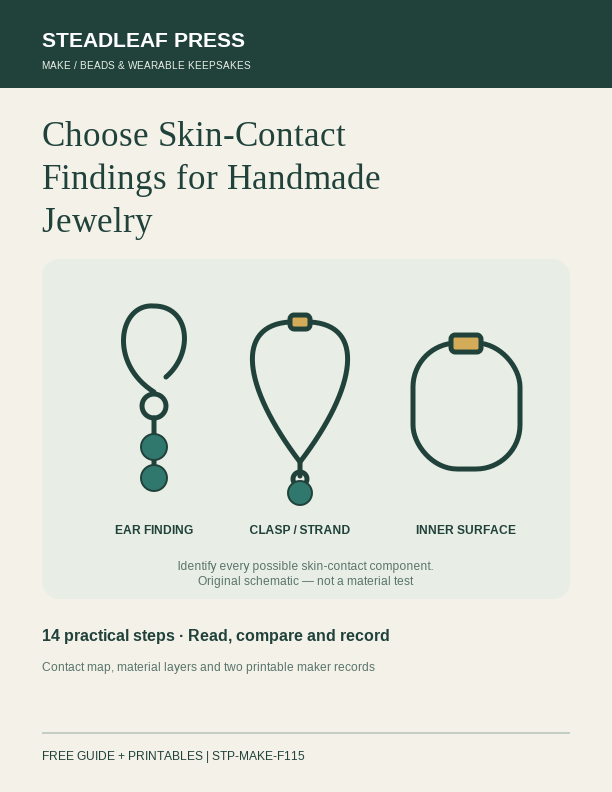
Original free adult jewellery craft guide to mapping possible skin-contact findings, distinguishing alloys and coatings, documenting supplier claims and making a component decision.
View free guide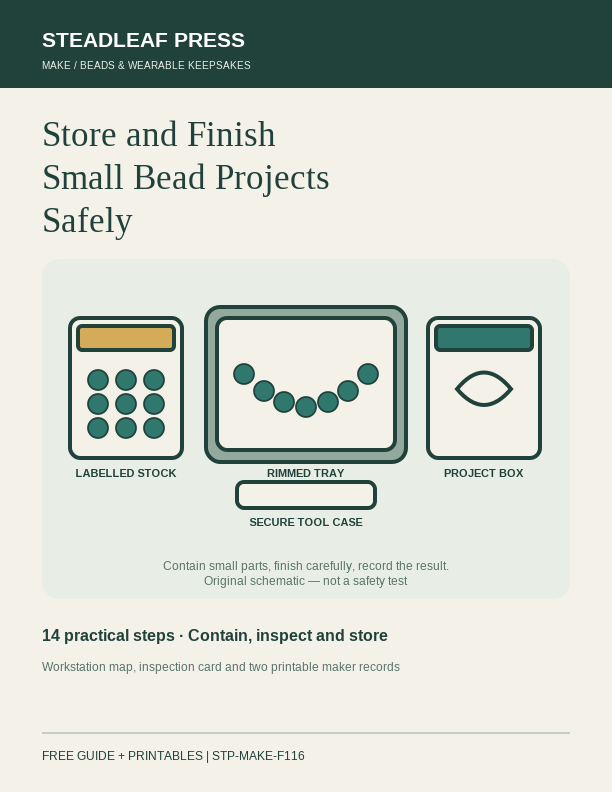
Original free adult craft guide to containing small bead components, material-specific finishing, inventory reconciliation and documented final inspection.
View free guide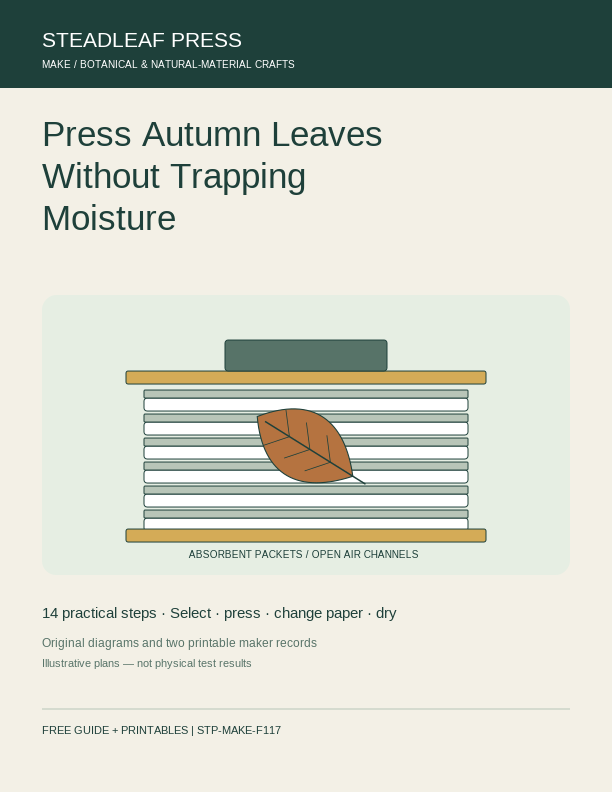
An original adult craft guide to pressing known autumn leaves between absorbent sheets, replacing damp paper and recording dryness and flatness before storage.
View free guide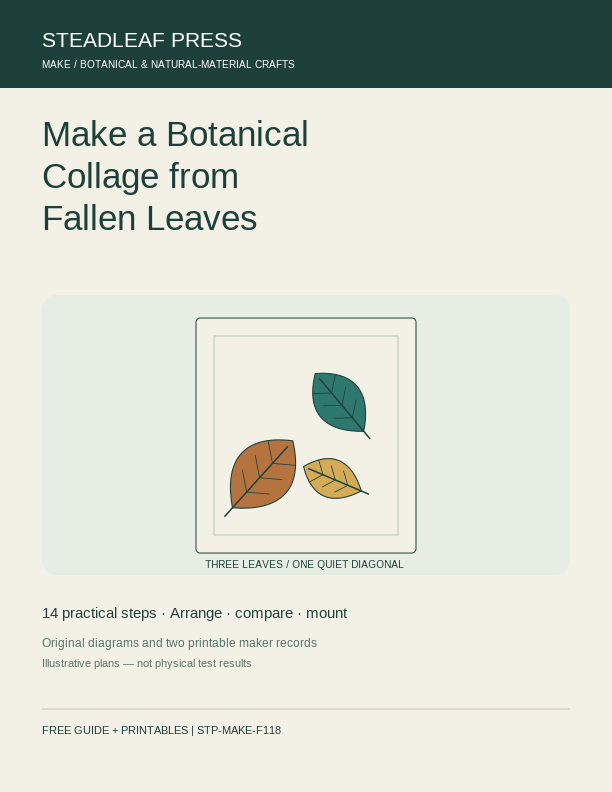
An original adult paper-craft guide to arranging dry fallen leaves on a card panel, testing a suitable adhesive on scrap and mounting without trapping moisture.
View free guide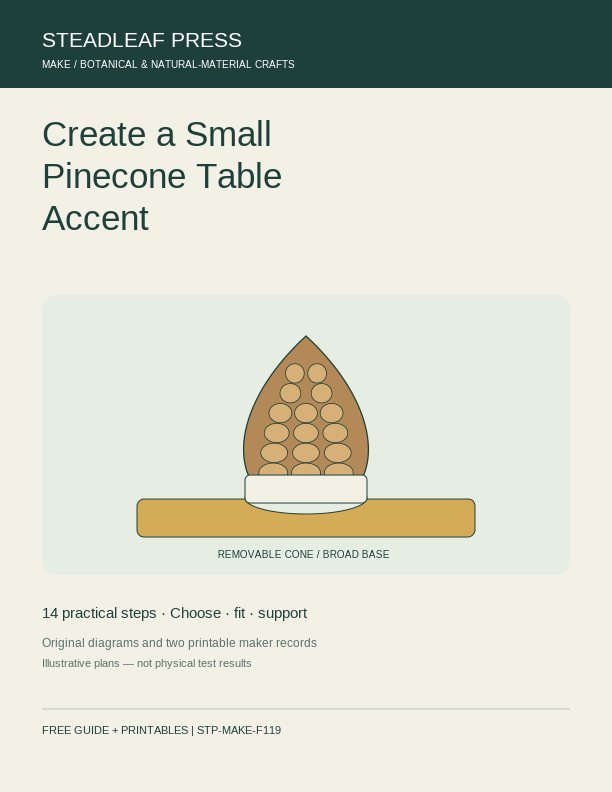
An original adult craft guide to selecting a dry pinecone, sizing a removable collar and making a low stable indoor non-food tabletop accent.
View free guide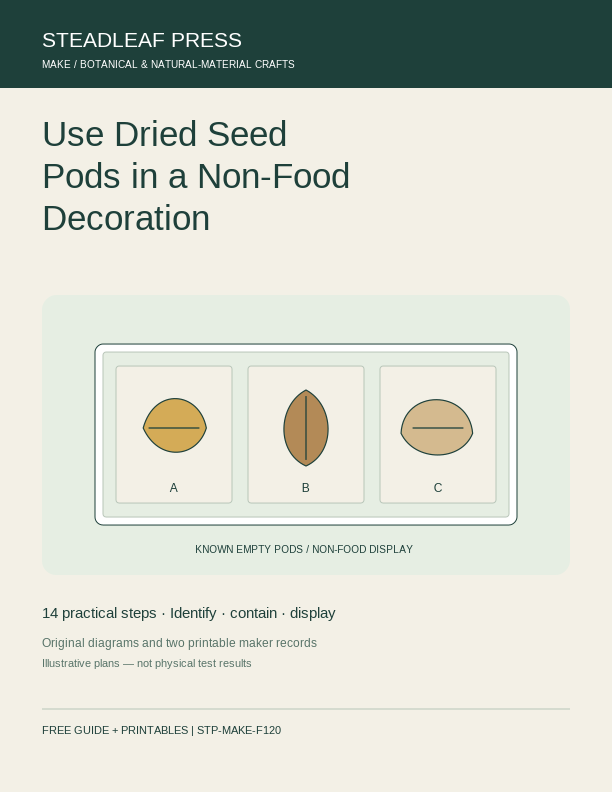
An original adult craft guide to responsible sourcing, selecting dry empty seed pods and making a labelled non-food display with three removable compartments.
View free guide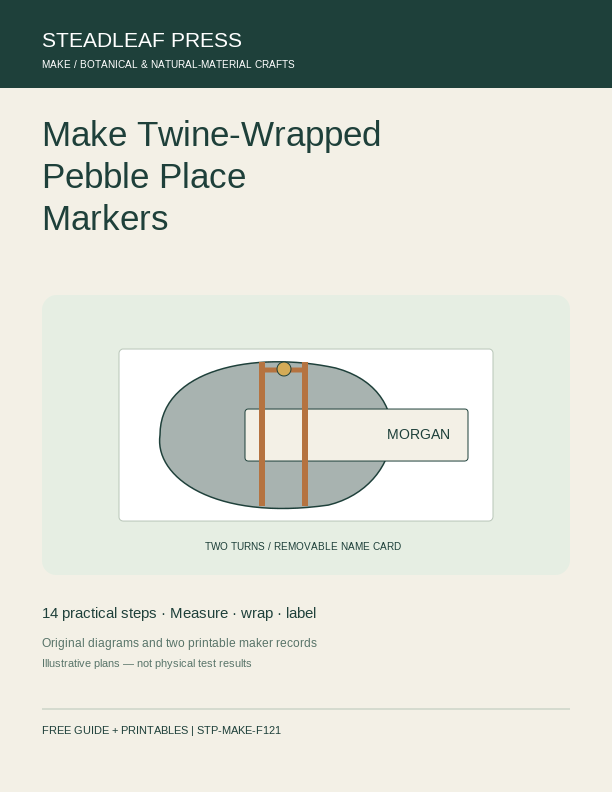
An original adult craft guide to creating three dry tabletop name markers from flat rounded pebbles, compatible twine and removable paper cards.
View free guide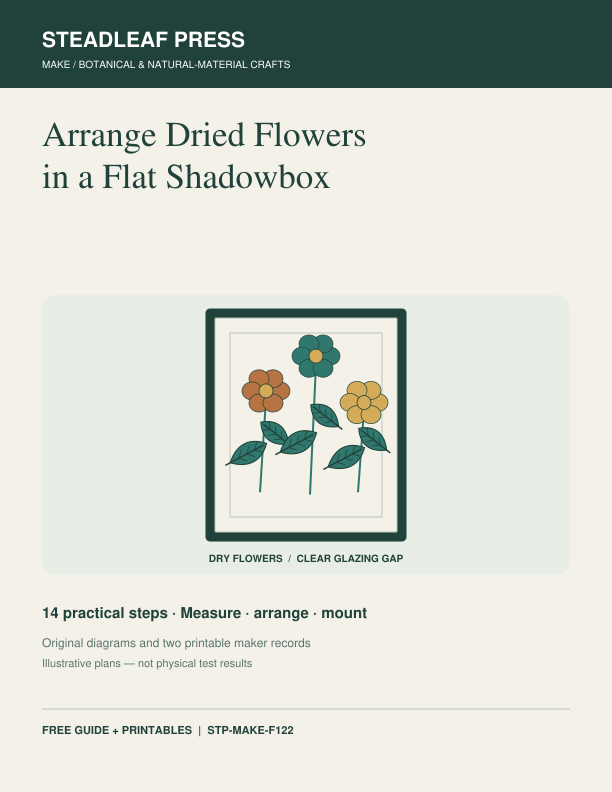
Arrange thin, fully dried flowers on a removable backing panel in a shallow ready-made shadowbox, with clearance and humidity precautions.
View free guide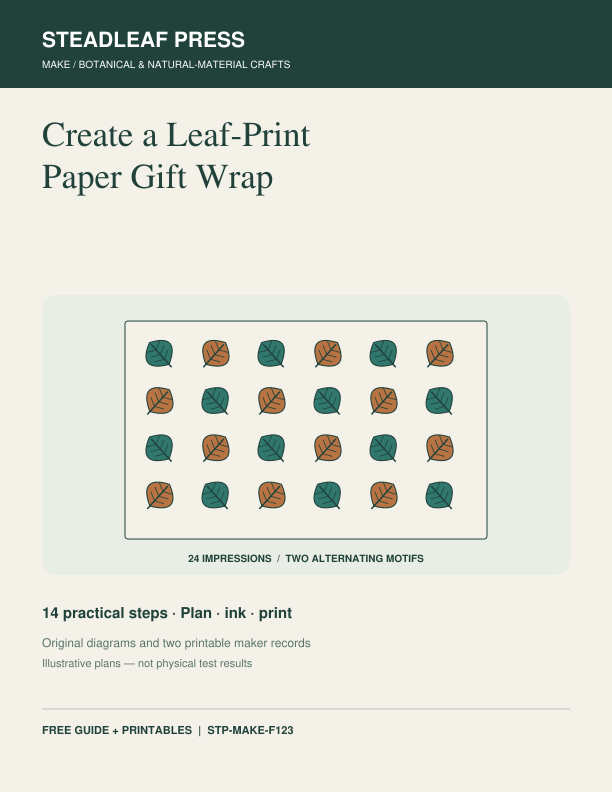
Print a simple repeated leaf motif on plain paper using a thin coat of water-based craft paint and a measured registration grid.
View free guide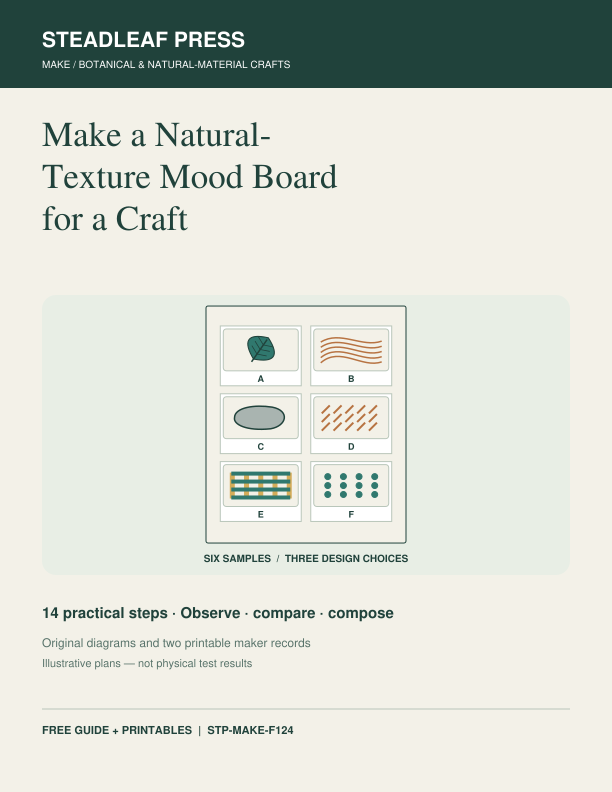
Create a removable six-sample texture mood board using paper, sketches and lawful familiar natural materials to inform a craft design.
View free guide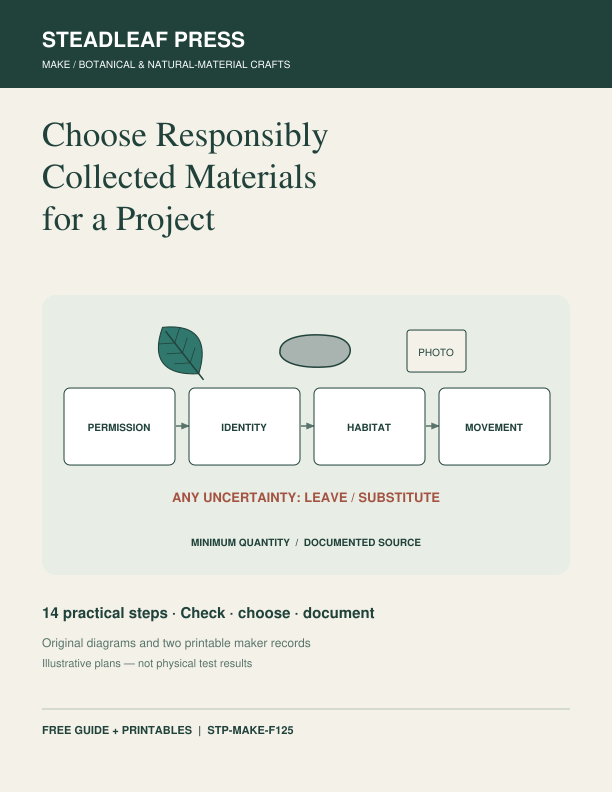
Plan a small natural-material craft using a documented permission and condition checklist, keeping unsuitable or uncertain specimens out of the project.
View free guide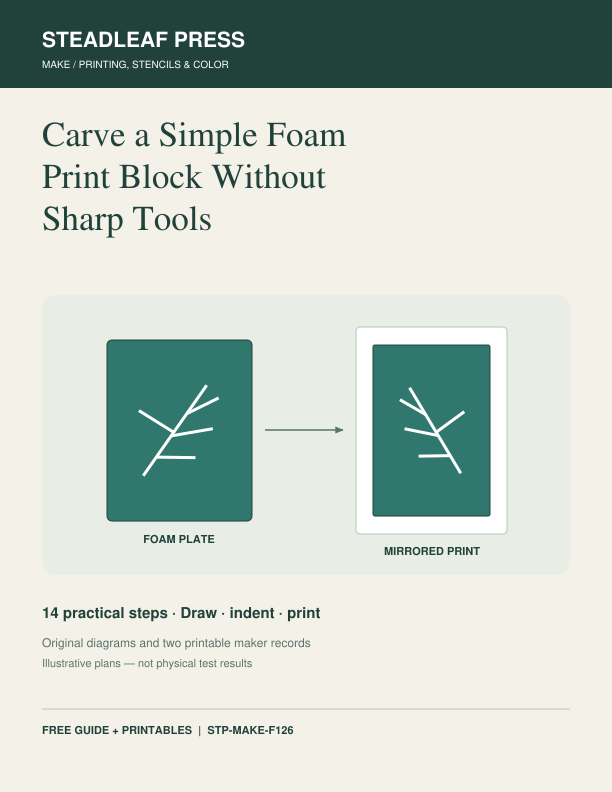
Make a small relief print from purpose-made soft printing foam using a blunt stylus, water-based printing ink and a paper registration plan.
View free guide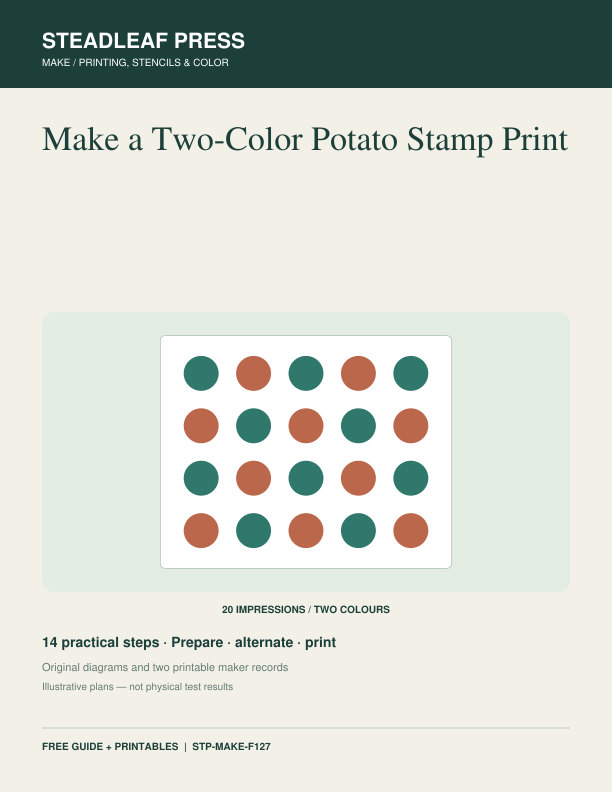
Make a repeat of two coloured potato impressions on paper, using flat pre-cut potato faces instead of carving with a knife.
View free guide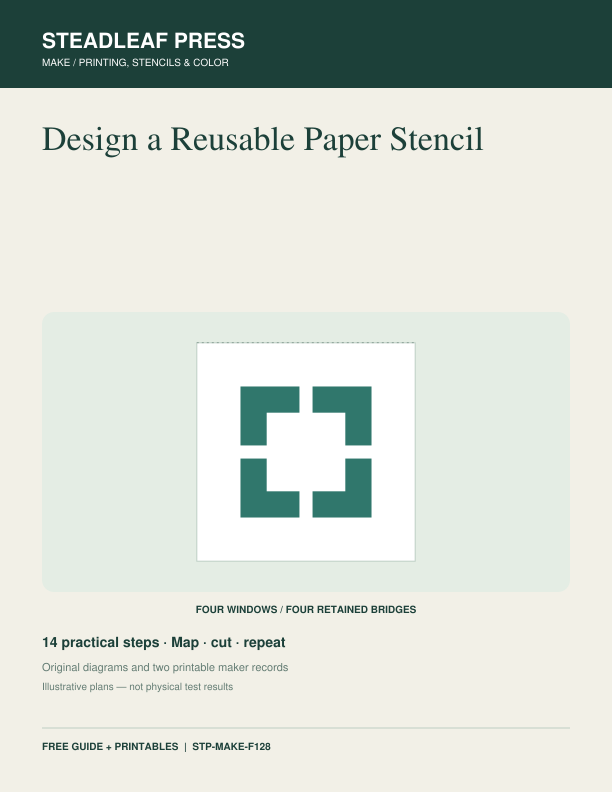
Create a segmented square-ring stencil with four retained bridges, a full-size cutting plan and a repeat-print trial.
View free guide
Print six evenly spaced motifs on a small fabric panel and compare cured swatches for visible colour transfer and washing behaviour.
View free guide
Make a one-pull gel-plate print by rolling a thin film of compatible acrylic paint, adding soft-tool marks and transferring once to paper.
View free guide
Cut an original two-letter ON stencil using a connected, bridged O and open N, then compare trial prints and preserve a reusable master.
View free guide
Print an original two-colour geometric motif using two separately cut stencils and a reusable corner-registration guide.
View free guide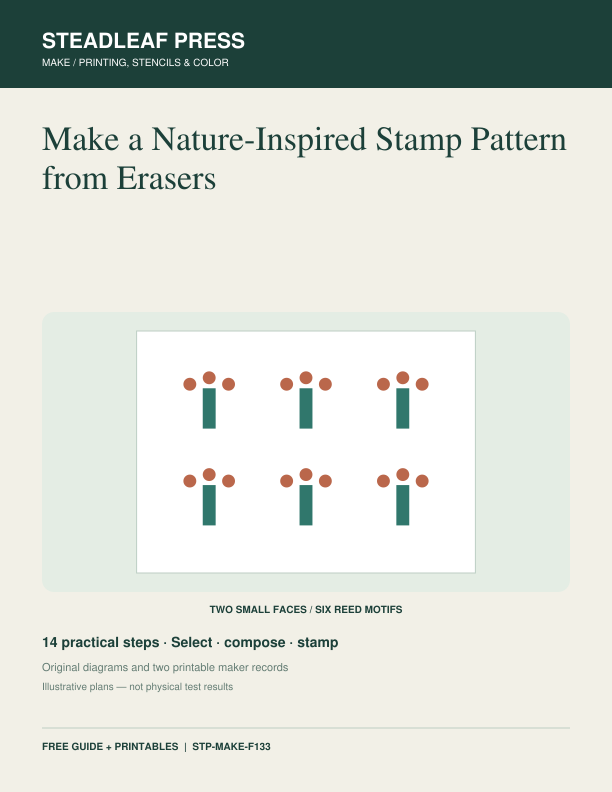
Combine small flat eraser faces into an original reed-and-seed motif, then repeat the motif across a measured grid.
View free guide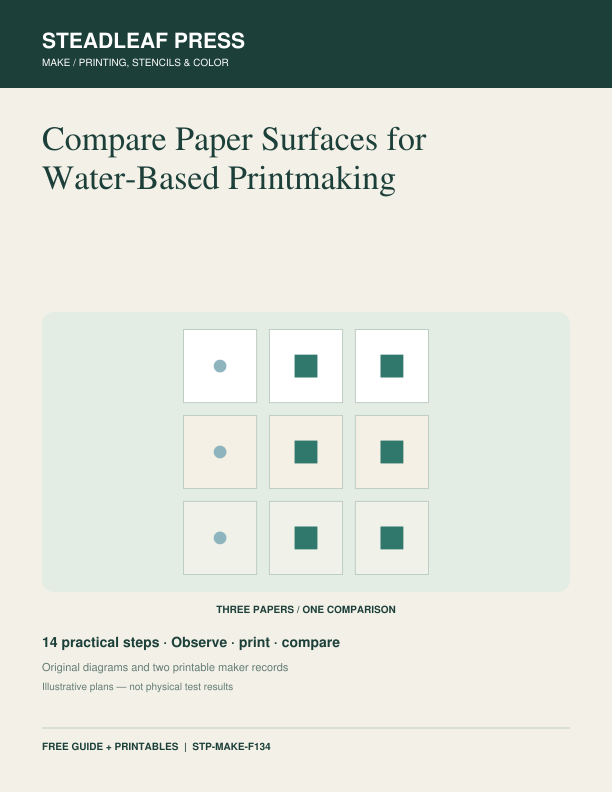
Compare three paper surfaces with a small water-drop observation and matched stamp impressions using one compatible water-based paint.
View free guide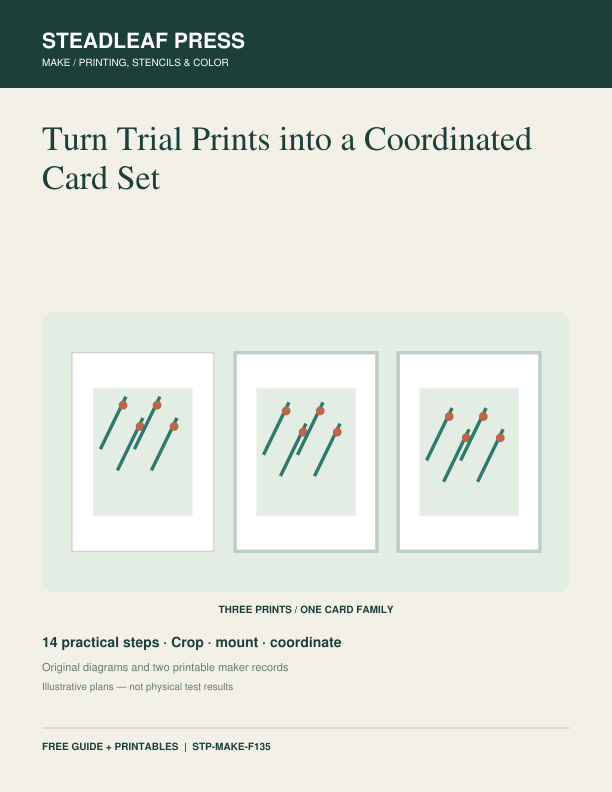
Crop three dry original trial prints into matching panels, mount them on folded cards and coordinate margins and envelopes.
View free guide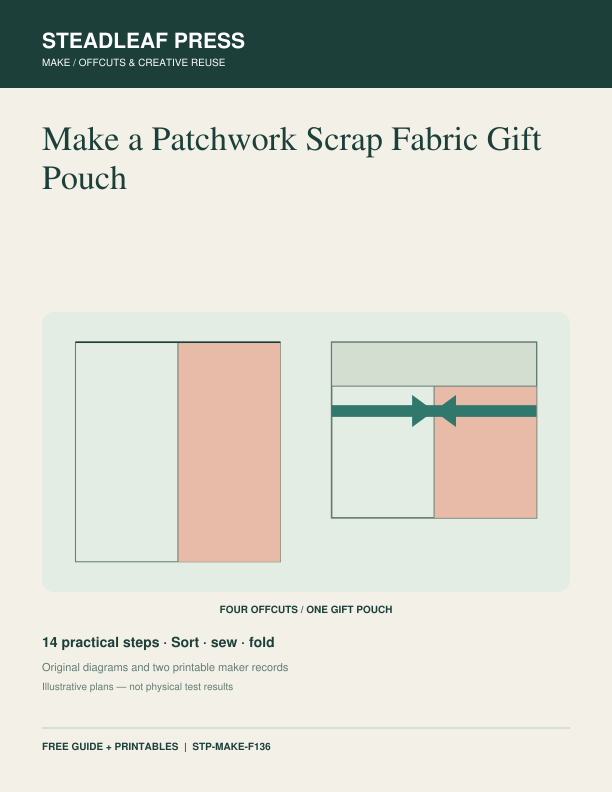
Join four compatible fabric offcuts into two patchwork panels, then sew an open-top gift pouch with a fold-over ribbon closure.
View free guide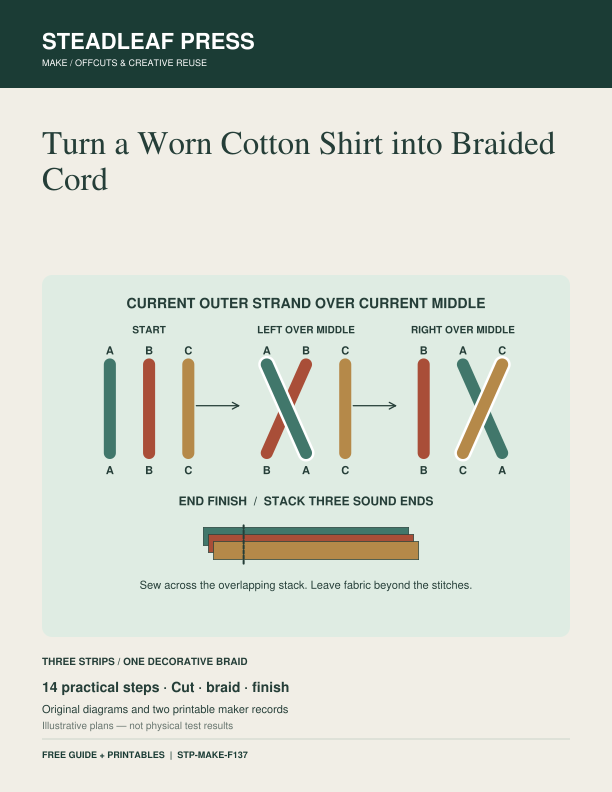
Cut three sound cotton shirt strips and braid them into a short decorative cord, with an actual length record and sewn ends.
View free guide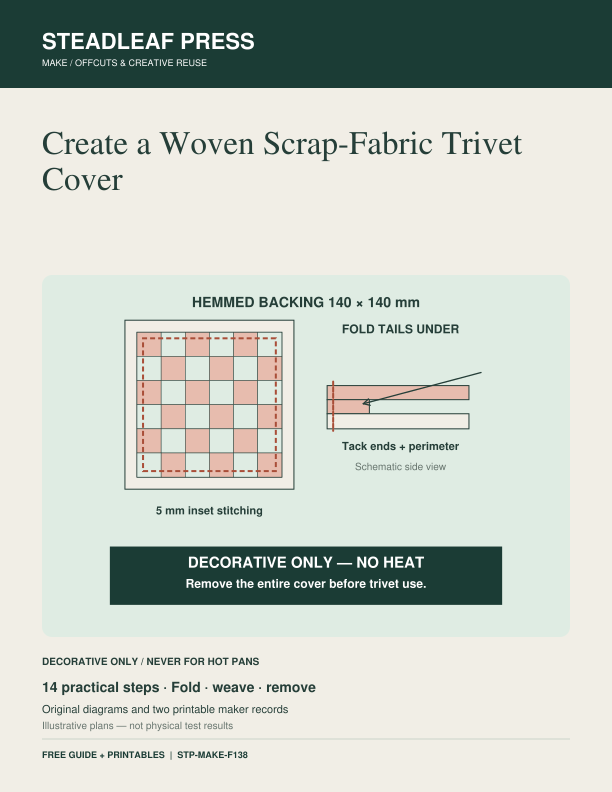
Weave twelve folded fabric strips into a removable decorative cover for an unused cool trivet, with an explicit no-heat-use boundary.
View free guide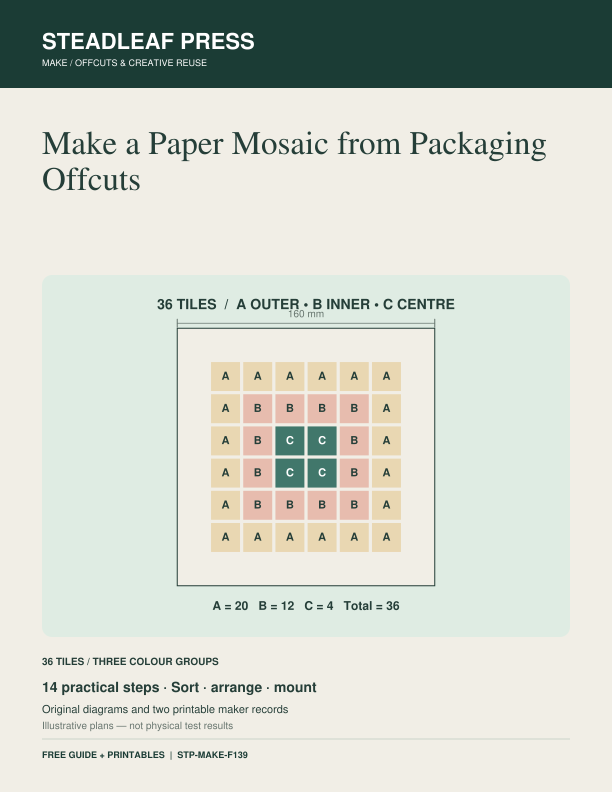
Sort clean paper packaging by colour and build an original six-by-six geometric mosaic with regular gaps and a mounting record.
View free guide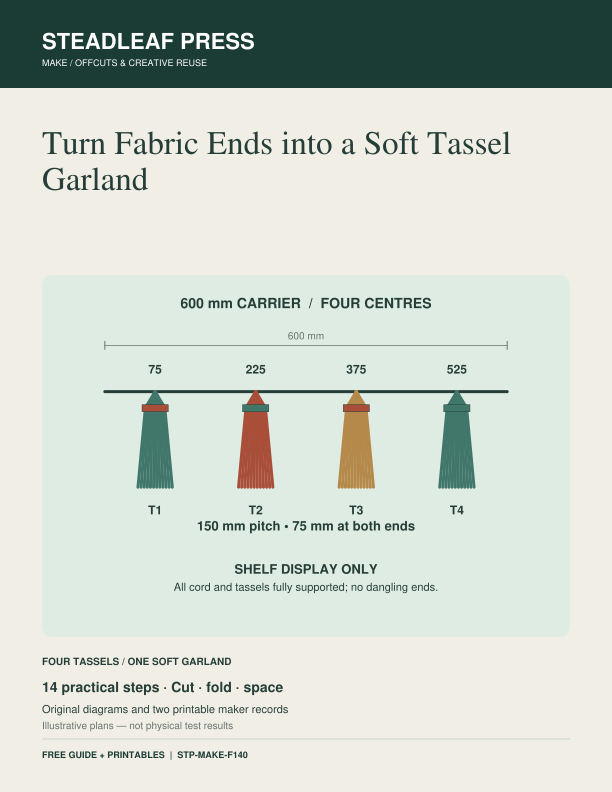
Make four soft tassels from equal-length fabric remnants and space them on a short decorative carrier for adult shelf display.
View free guide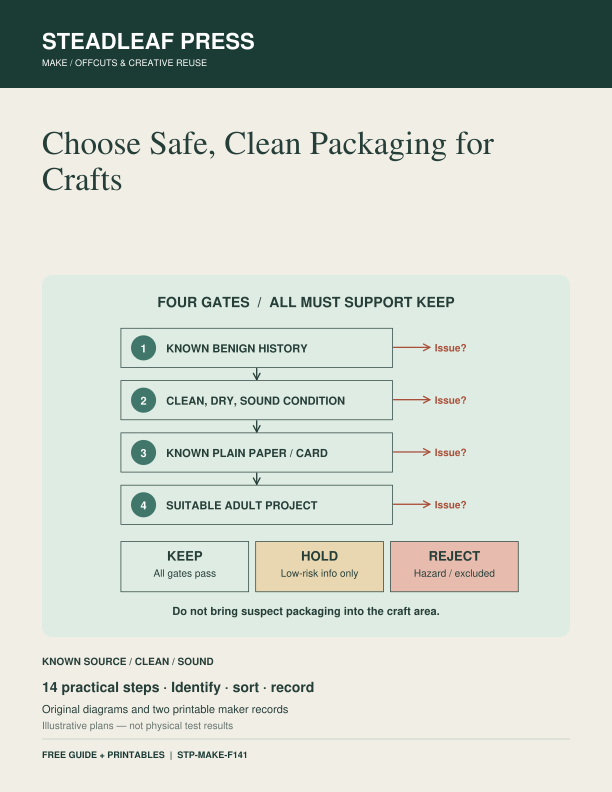
Use an evidence-led sorting process for clean, known paper packaging, with clear hold and reject rules and a six-item selection log.
View free guide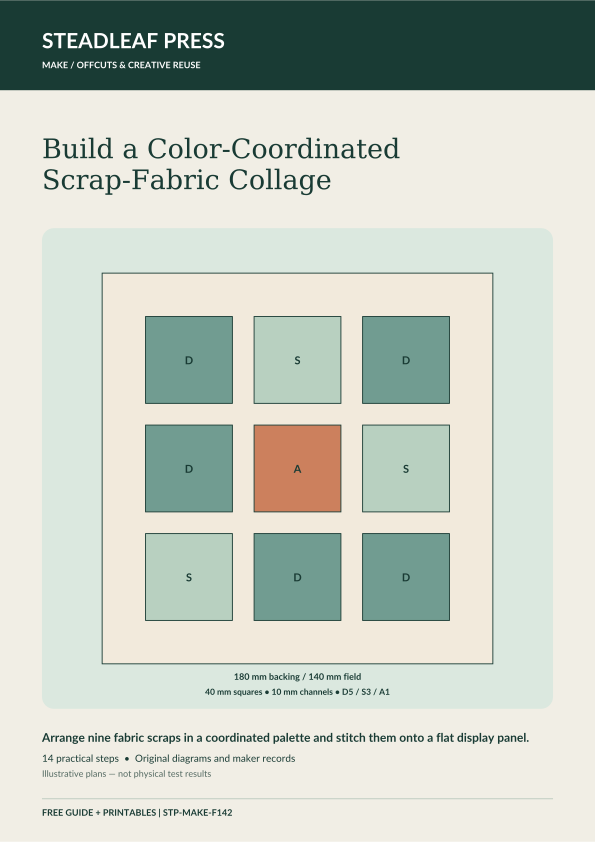
Arrange nine fabric scraps in a coordinated palette and stitch them onto a flat display panel.
View free guide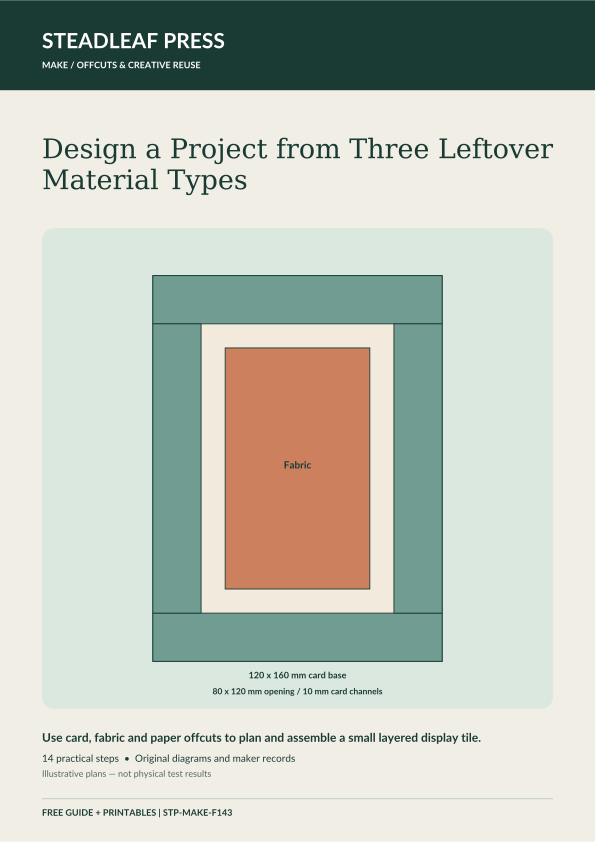
Use card, fabric and paper offcuts to plan and assemble a small layered display tile.
View free guide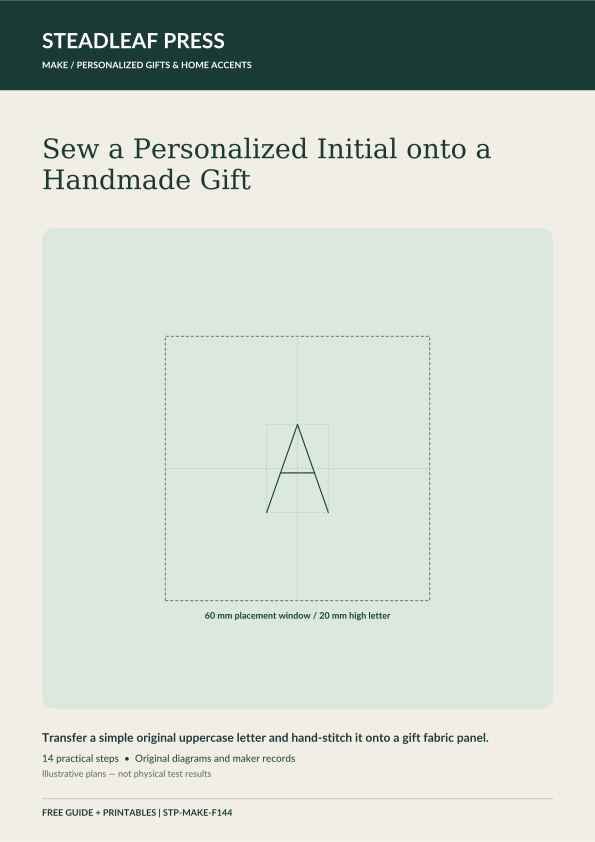
Transfer a simple original uppercase letter and hand-stitch it onto a gift fabric panel.
View free guide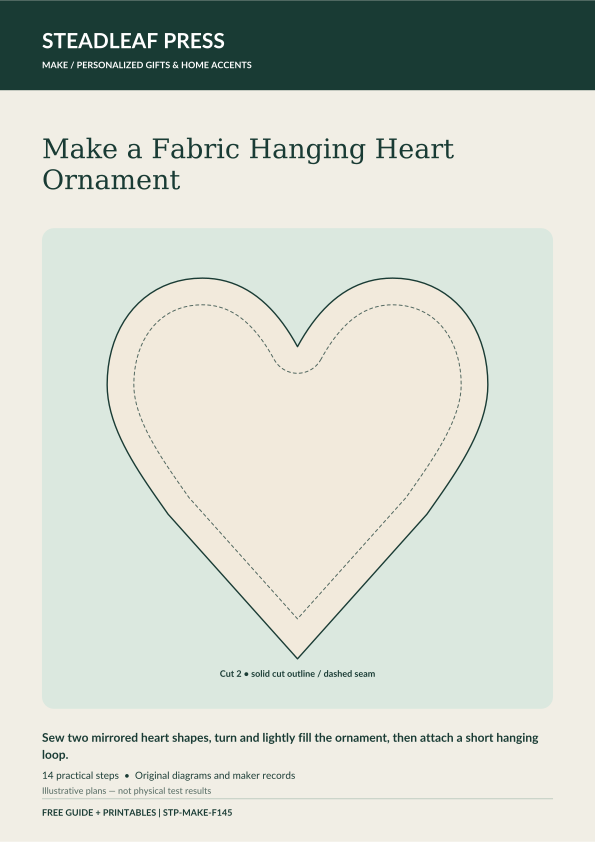
Sew two mirrored heart shapes, turn and lightly fill the ornament, then attach a short hanging loop.
View free guide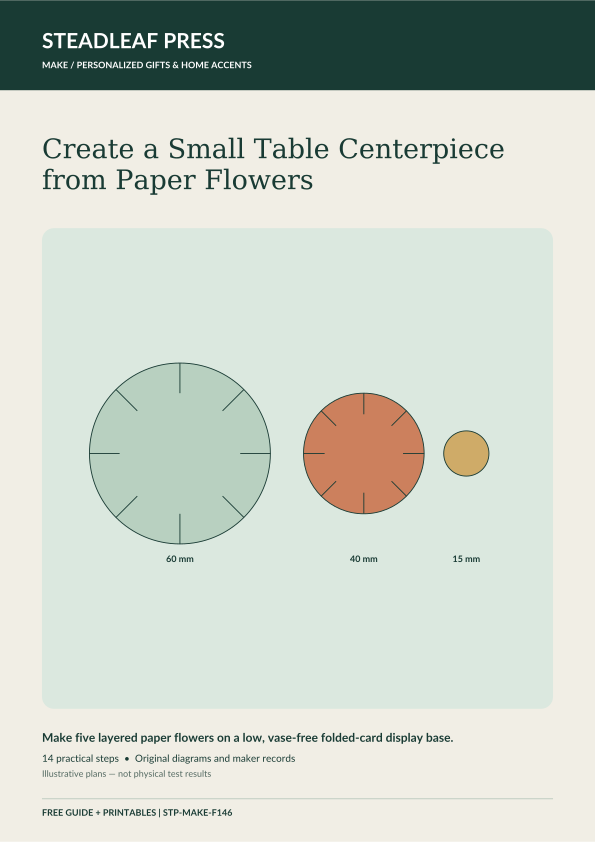
Make five layered paper flowers on a low, vase-free folded-card display base.
View free guide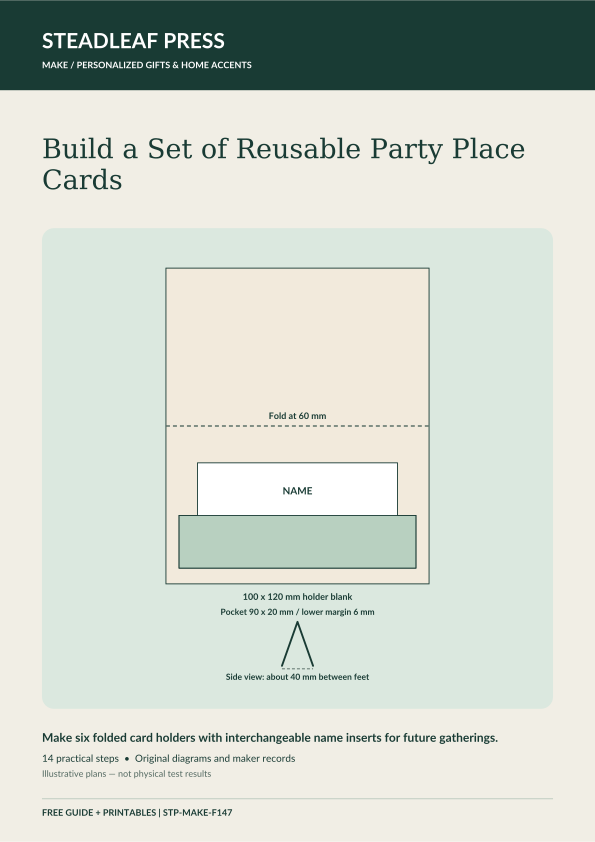
Make six folded card holders with interchangeable name inserts for future gatherings.
View free guide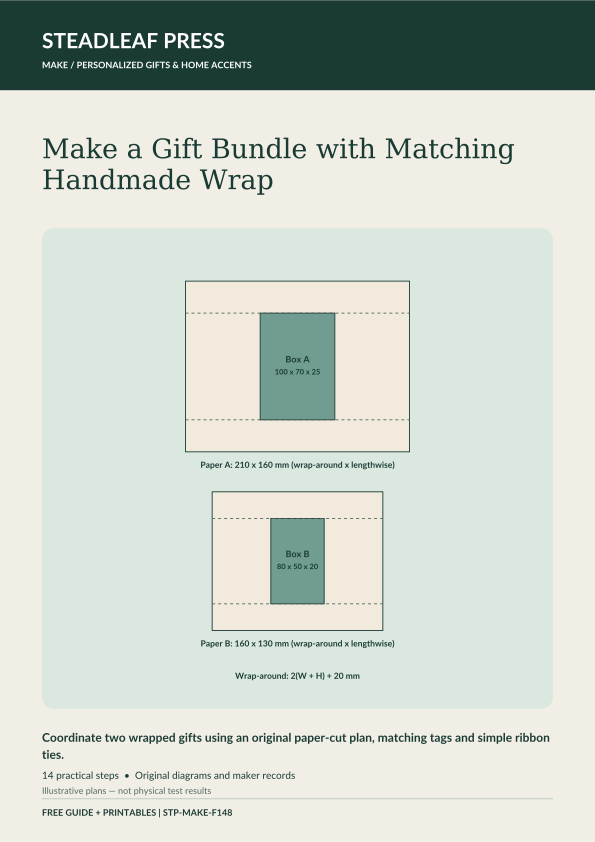
Coordinate two wrapped gifts using an original paper-cut plan, matching tags and simple ribbon ties.
View free guide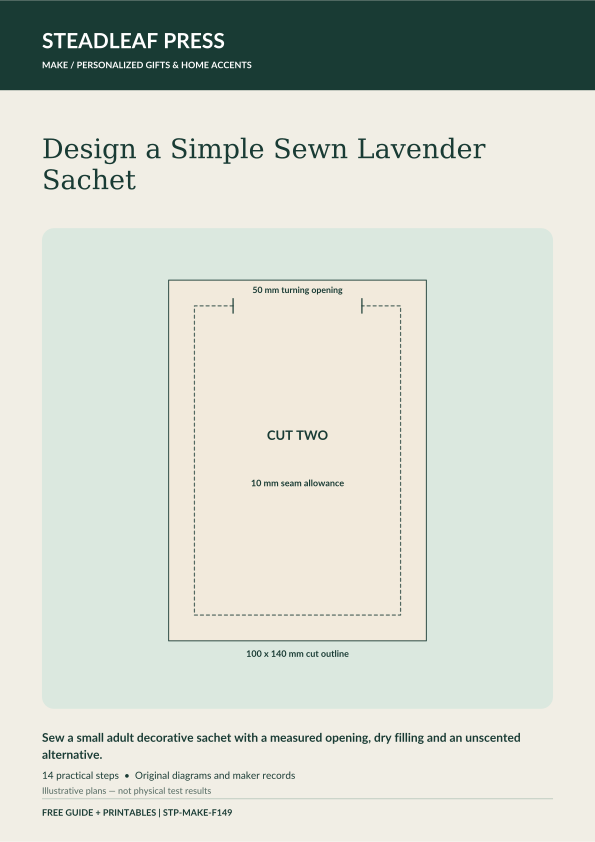
Sew a small adult decorative sachet with a measured opening, dry filling and an unscented alternative.
View free guide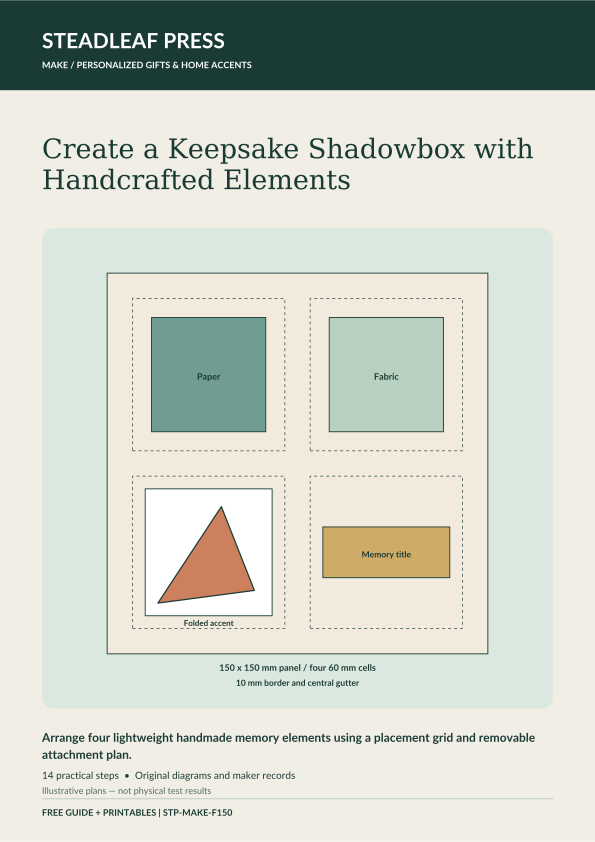
Arrange four lightweight handmade memory elements using a placement grid and removable attachment plan.
View free guideNOW AVAILABLE / FREE
31 original, complete free Grow guides.
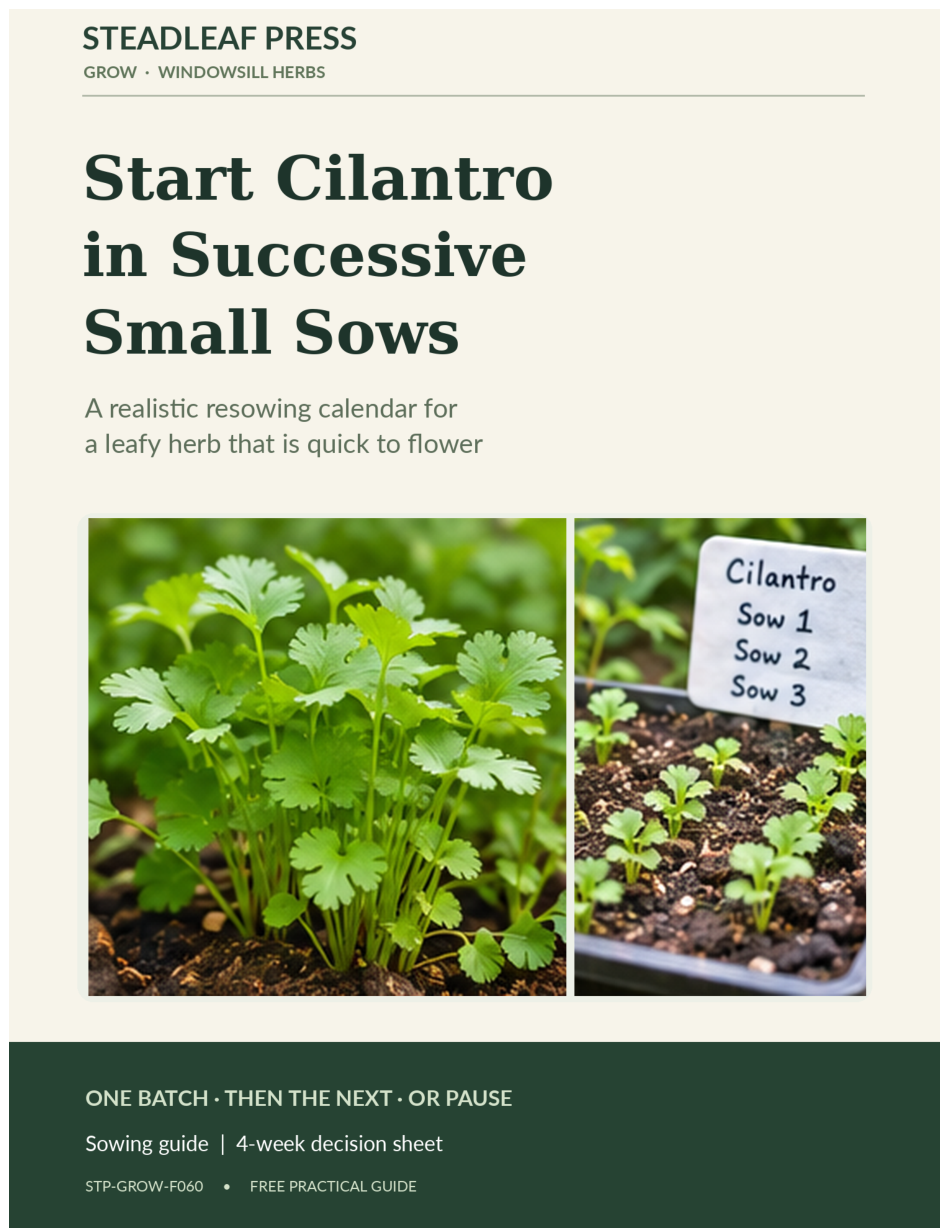
Start small sowings of cilantro in separate manageable batches, observe actual growth stages and decide when to resow or pause without promising a fixed harvest.
View free guide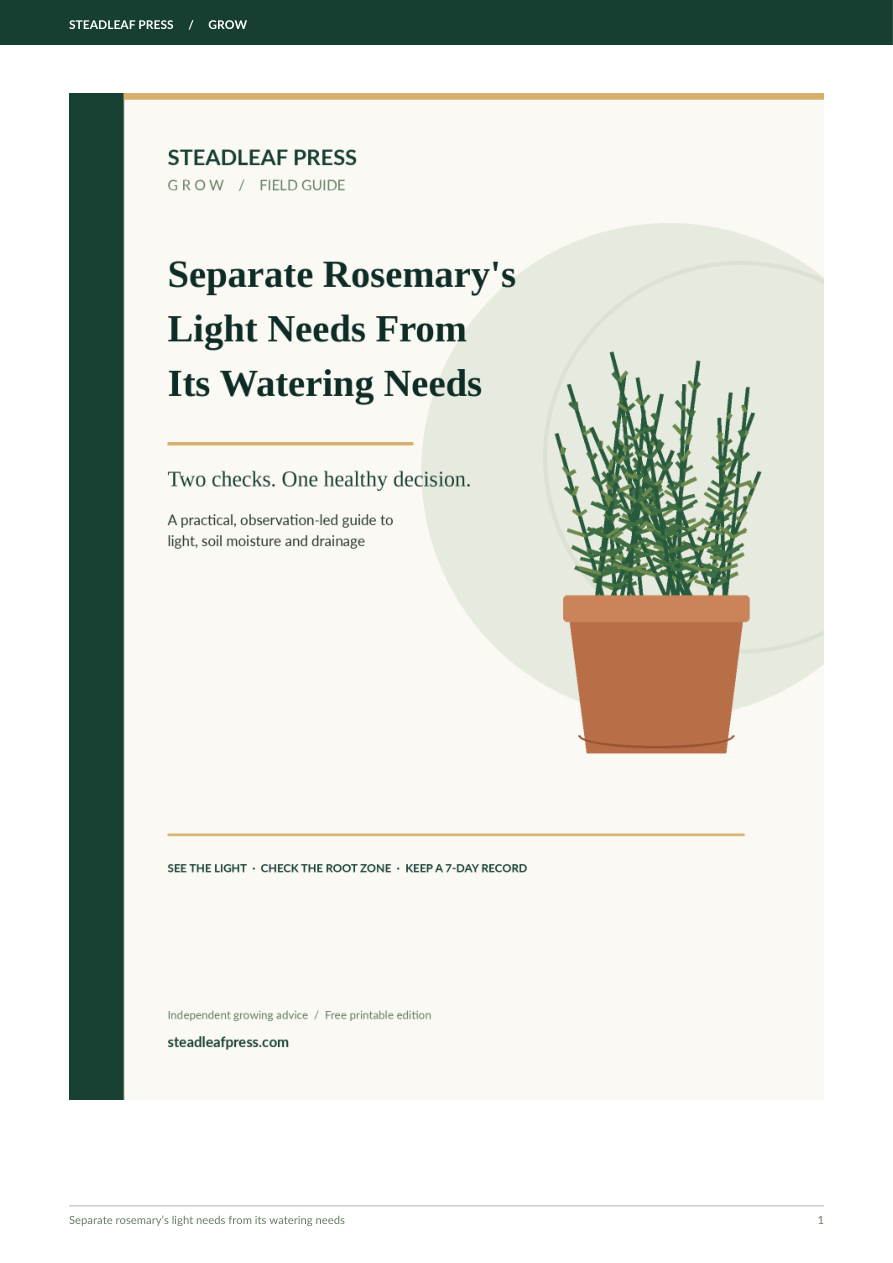
Understand rosemary's light requirements separately from the moisture and drainage of its pot using a practical two-factor guide and seven-day care record.
View free guide
Choose when to harvest potted culinary herbs using checks for identity, growing environment, treatment history, plant condition and clean handling.
View free guide
Grow loose-leaf lettuce in containers, monitor successive sowings and harvest outer leaves using a recordable, hygiene-conscious approach.
View free guide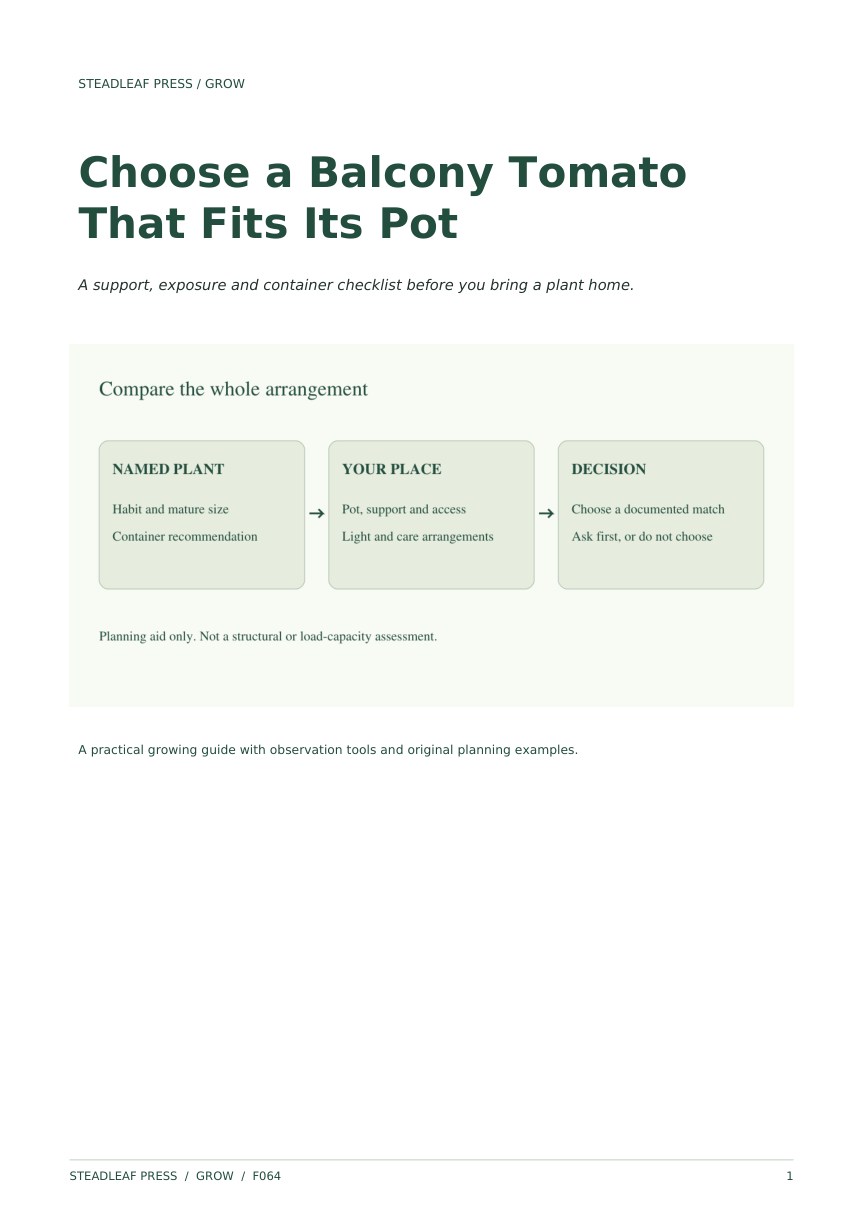
Use a practical site and cultivar checklist to decide whether a balcony tomato can be supported, lit, watered and safely accommodated before purchase.
View free guide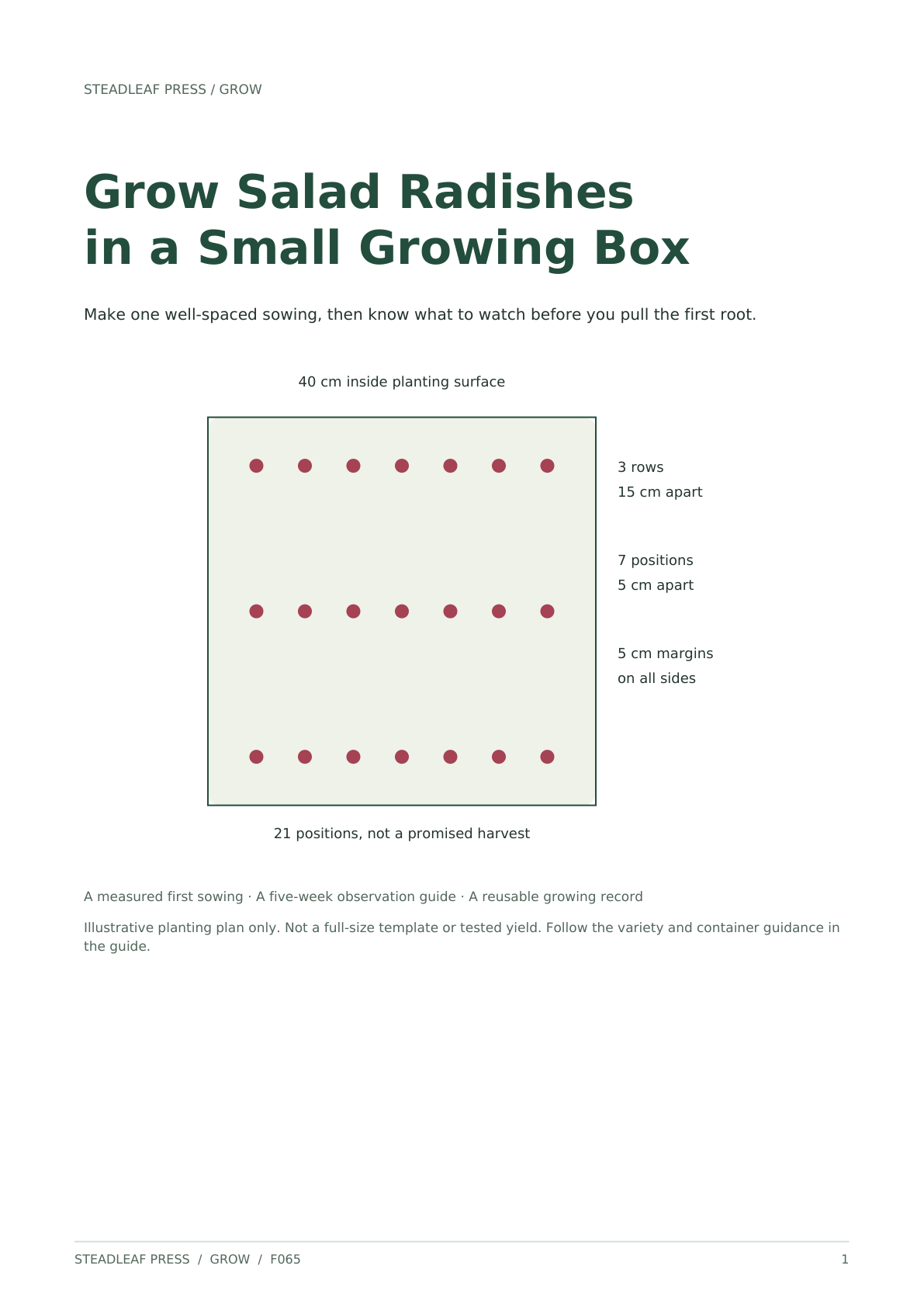
Grow named short-rooted salad radishes in a suitably sized container using a 40 × 40 cm example planting grid, seed-packet guidance, and an observation-led harvest plan.
View free guide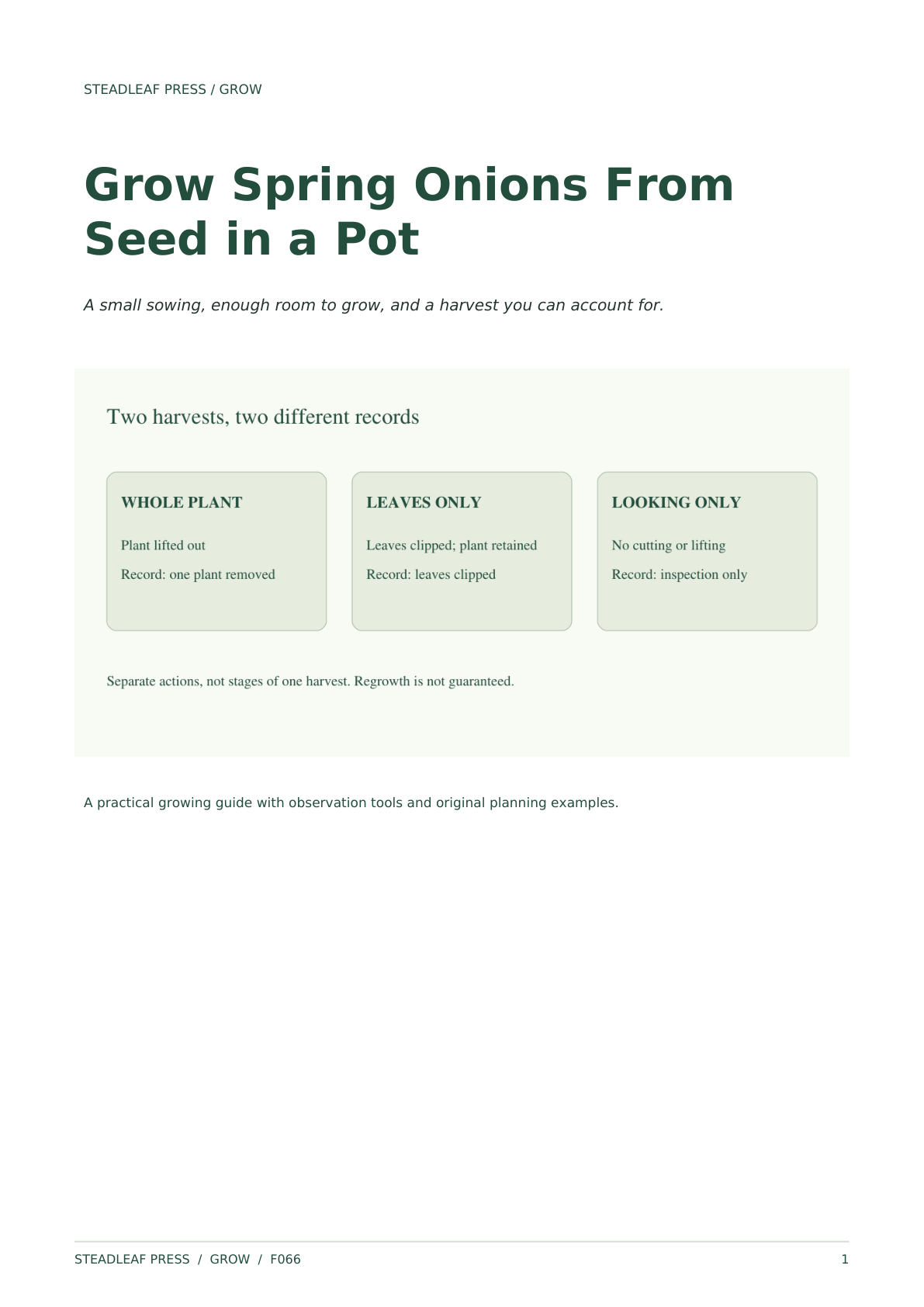
Grow spring onions from named seed in a draining container, with a practical spacing plan and separate records for whole-plant harvest and clipped leaves.
View free guide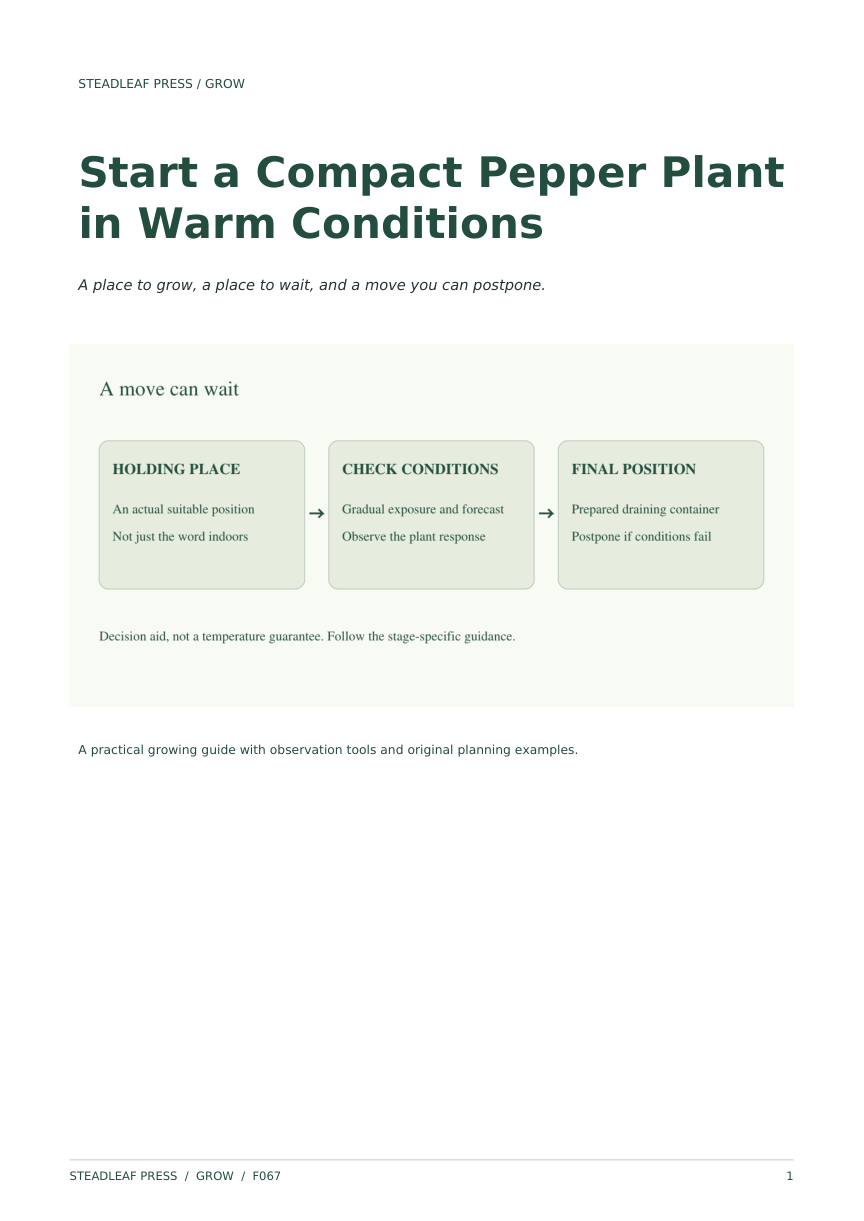
Choose a compact sweet-pepper variety and a realistic warm-location plan for seed starting, transplant timing and temporary shelter without promising harvests.
View free guide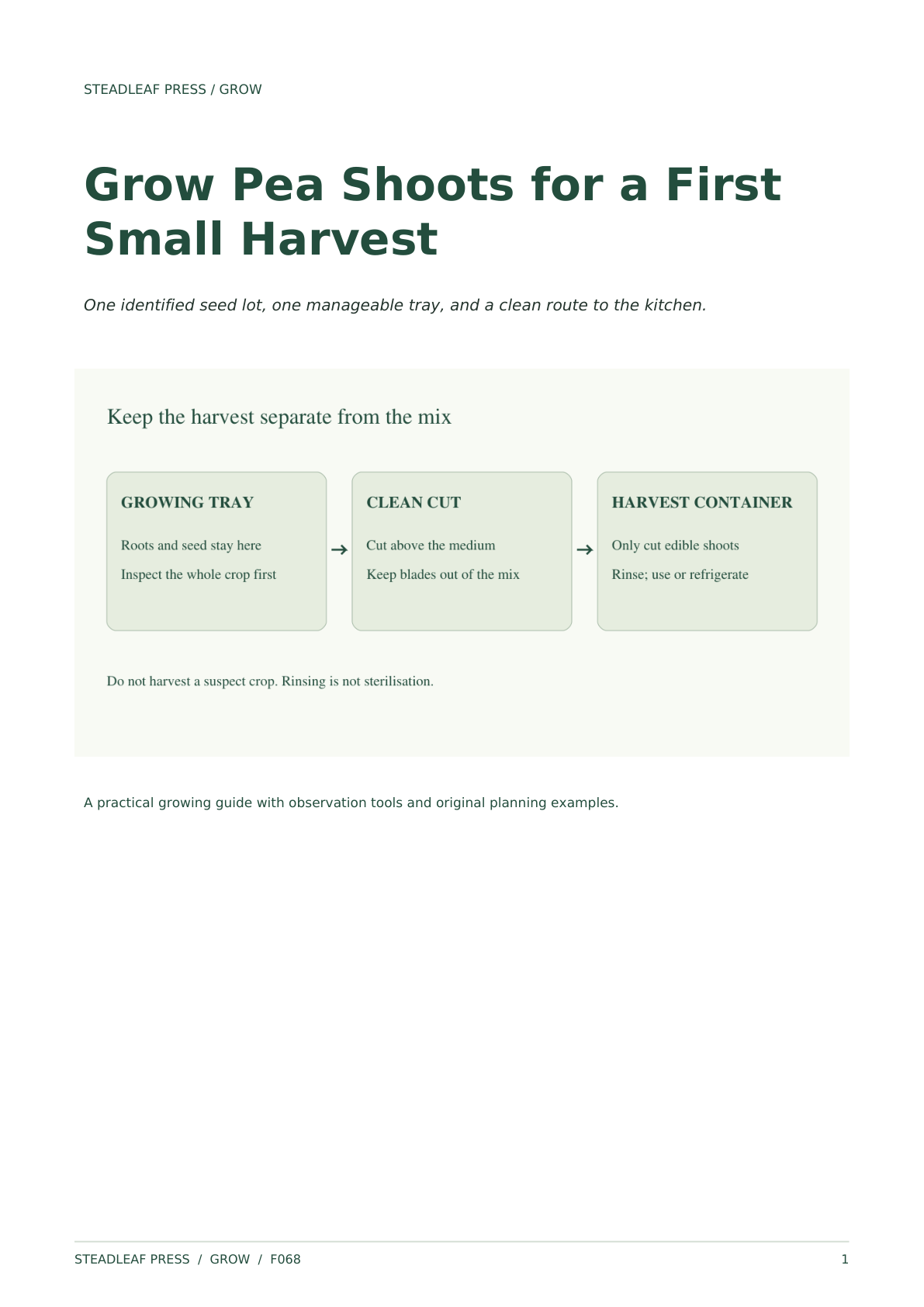
Grow and harvest positively identified edible pea shoots with a manageable tray, moisture and airflow checks, clean cutting, and clear separation from jar sprouts and ornamental sweet peas.
View free guide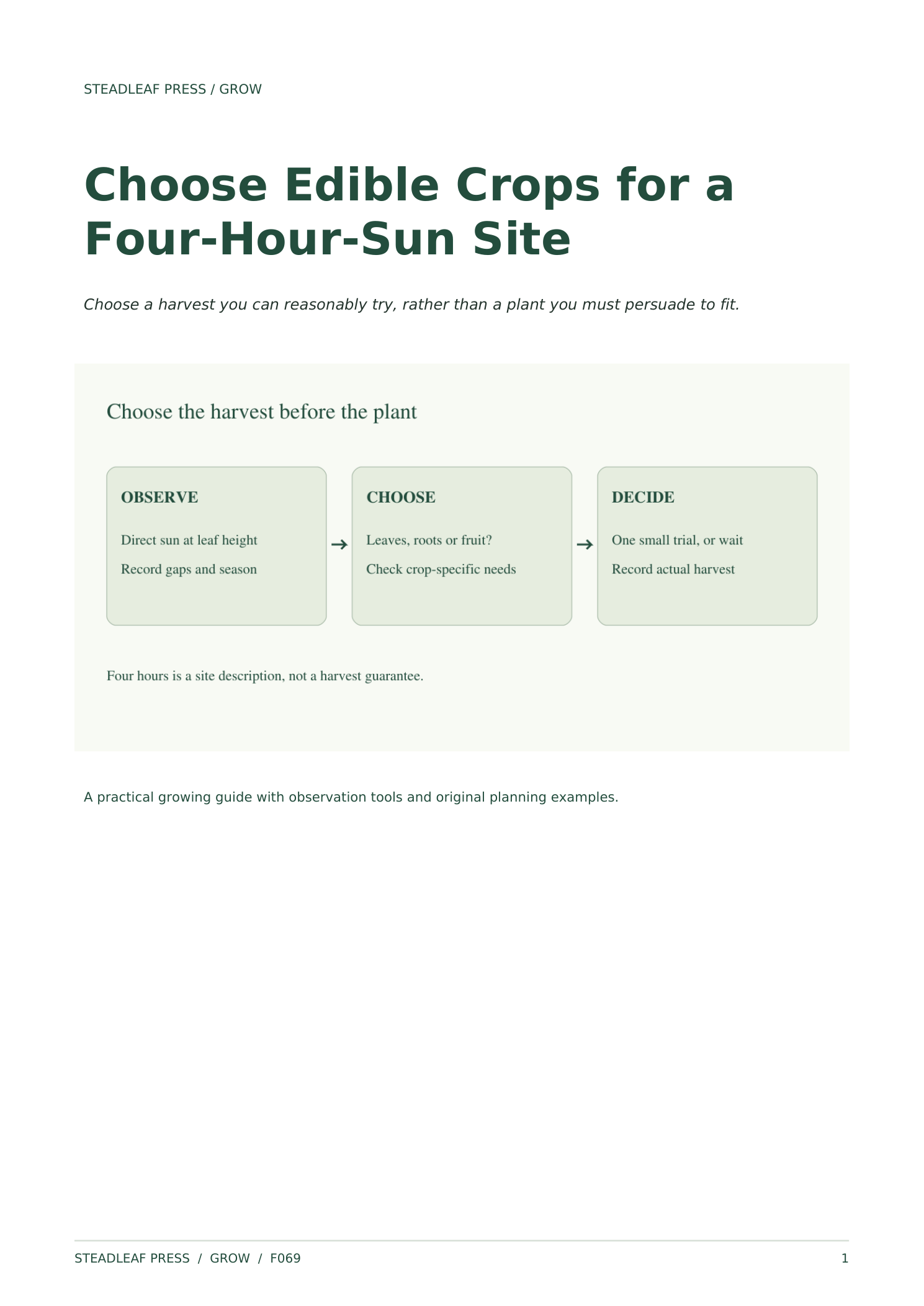
Measure real sunlight and choose modest edible container crops matched to a four-hour sun site, using a crop comparison matrix and observation log.
View free guide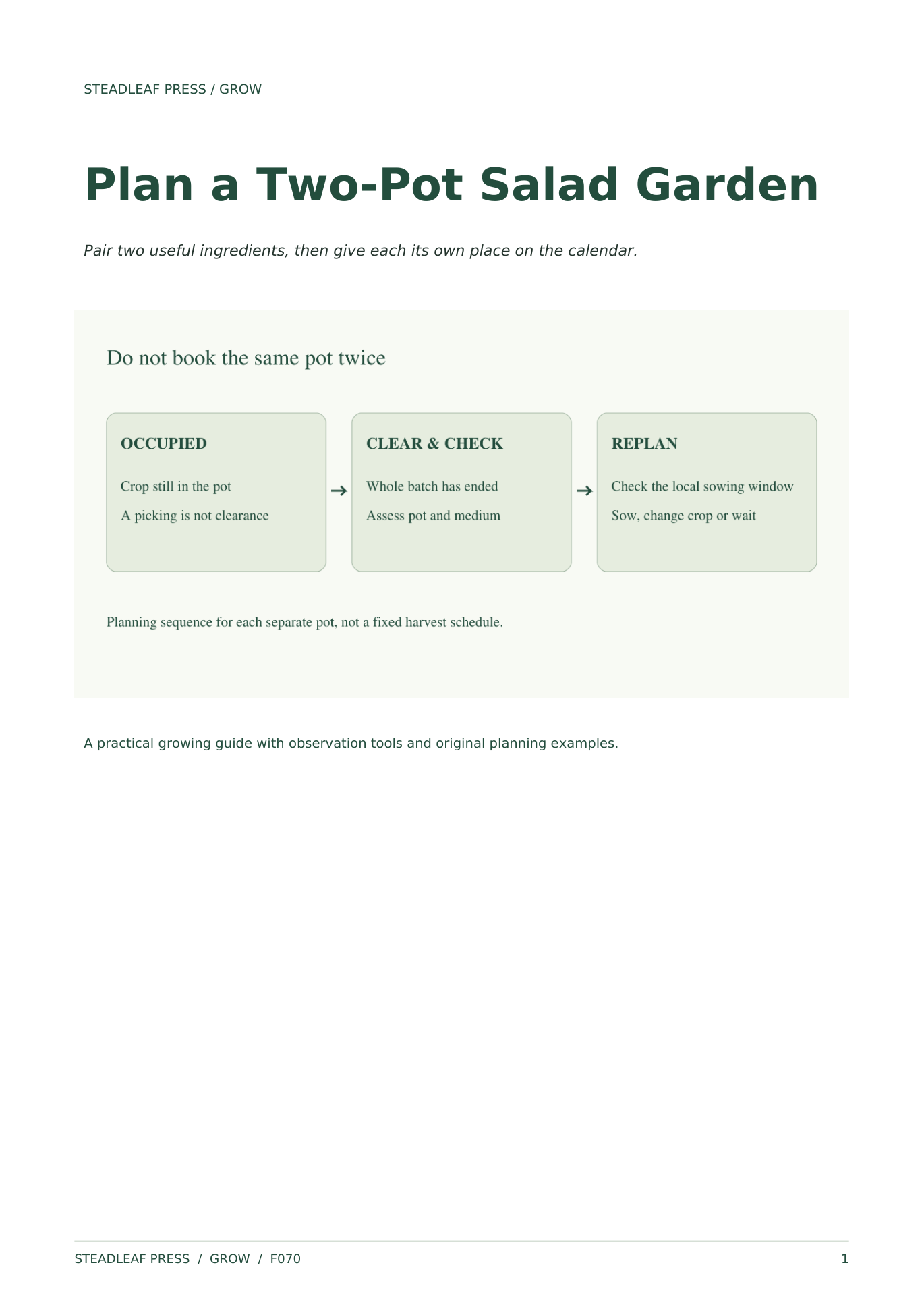
Plan separate lettuce and radish pots, with a crop-stage and succession calendar that can be adapted to real conditions.
View free guide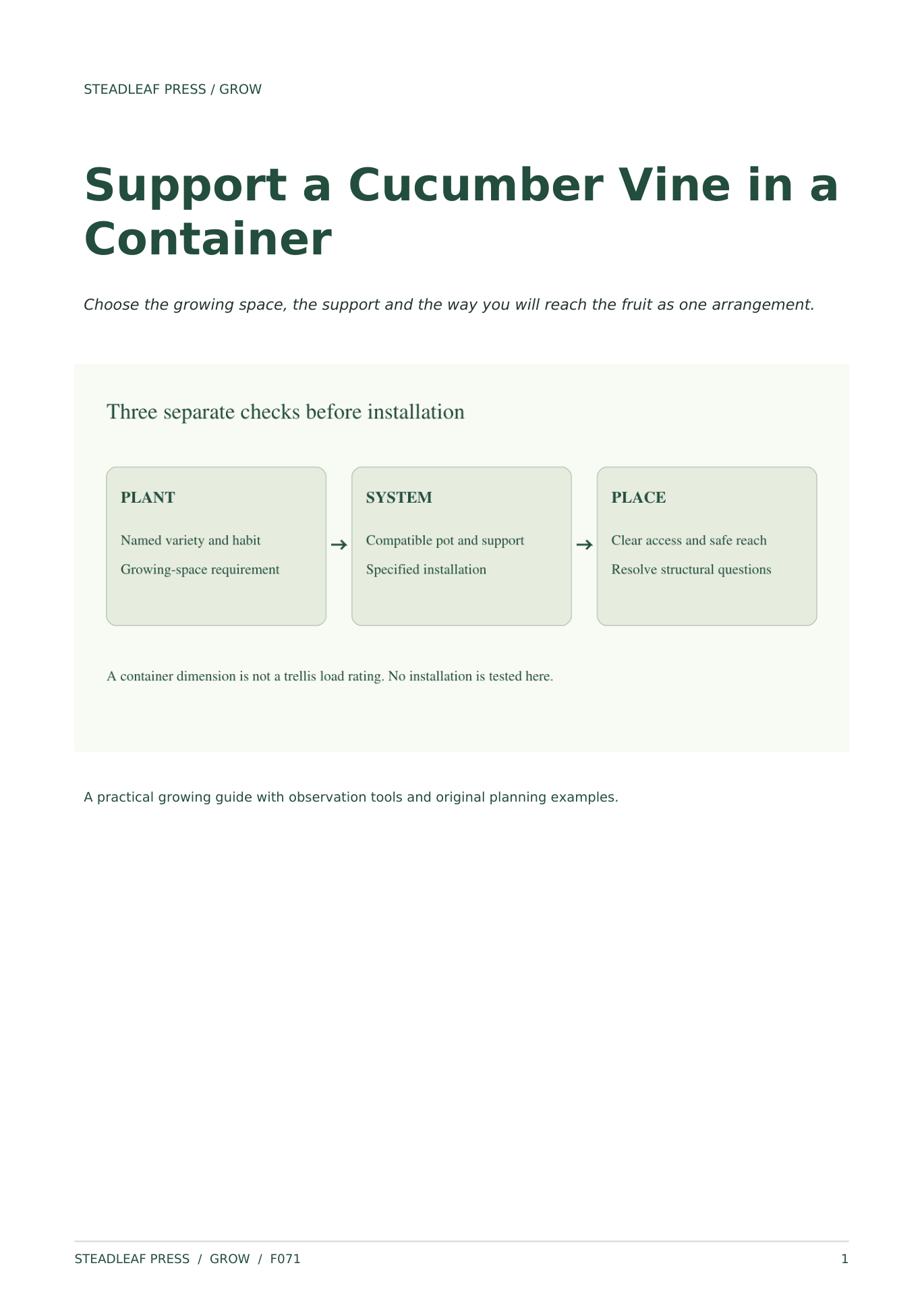
Check container cucumber variety, growing space, support installation limits and safe access before setting up a climbing system.
View free guide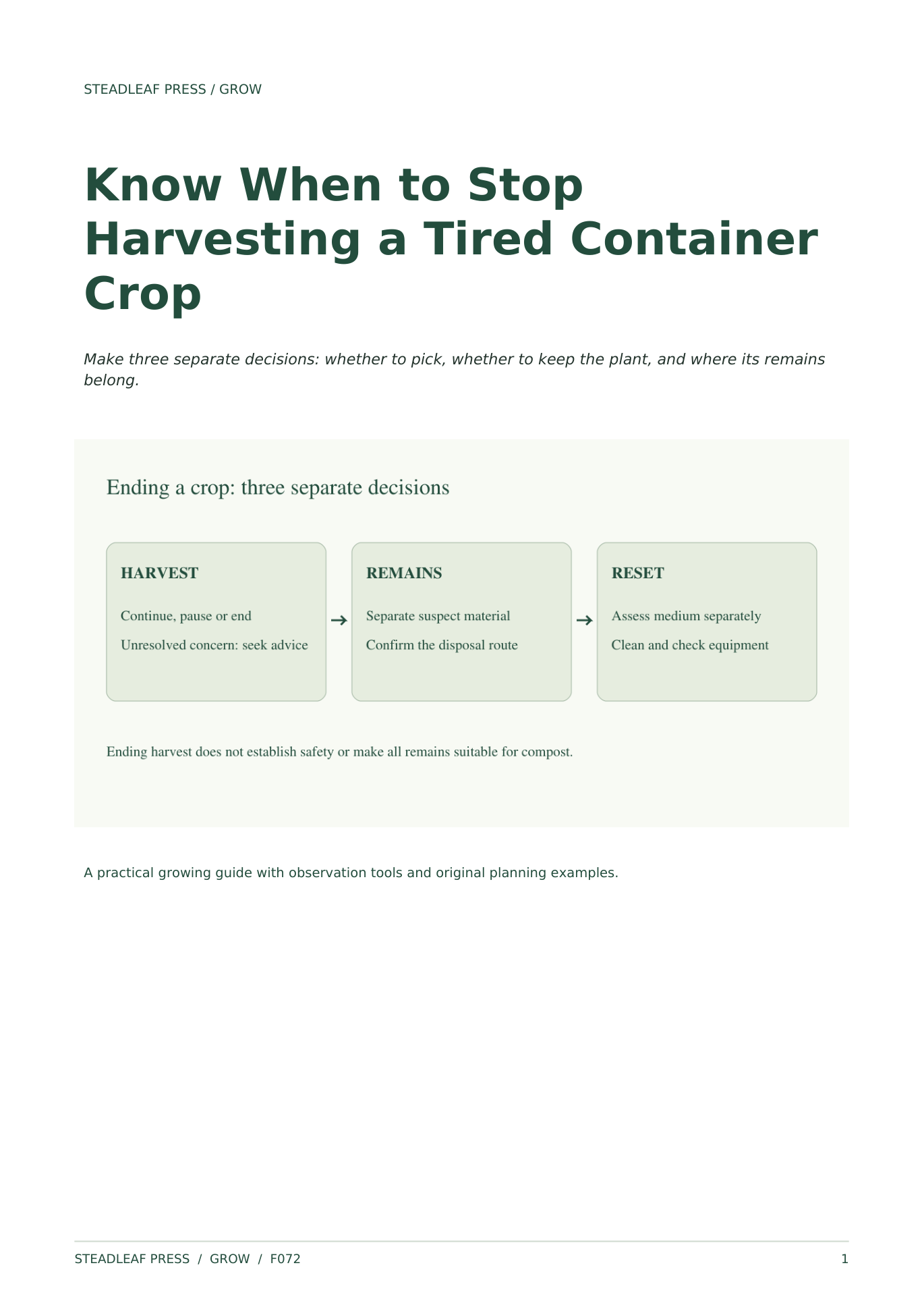
Decide when to pick, pause or reset a container crop and how to handle plant remains, growing medium and equipment conservatively.
View free guide
A practical free guide: a water-and-light symptom observation sheet, with an observation worksheet and cautious plant-care decisions.
View free guide
A practical free guide: a two-place light and scorch-risk comparison, with an observation worksheet and cautious plant-care decisions.
View free guide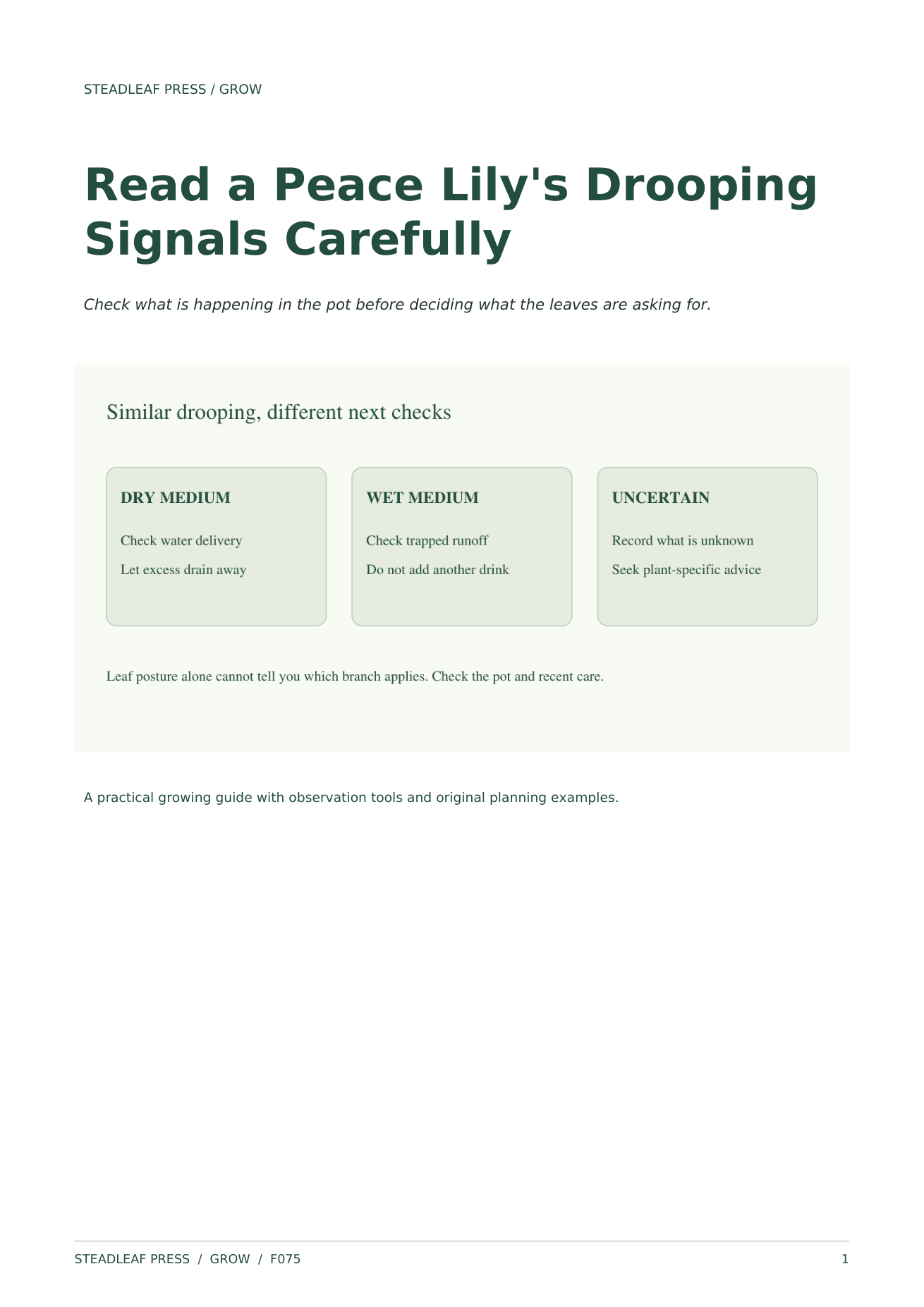
A practical free guide: a moisture-and-stress differential checklist, with an observation worksheet and cautious plant-care decisions.
View free guide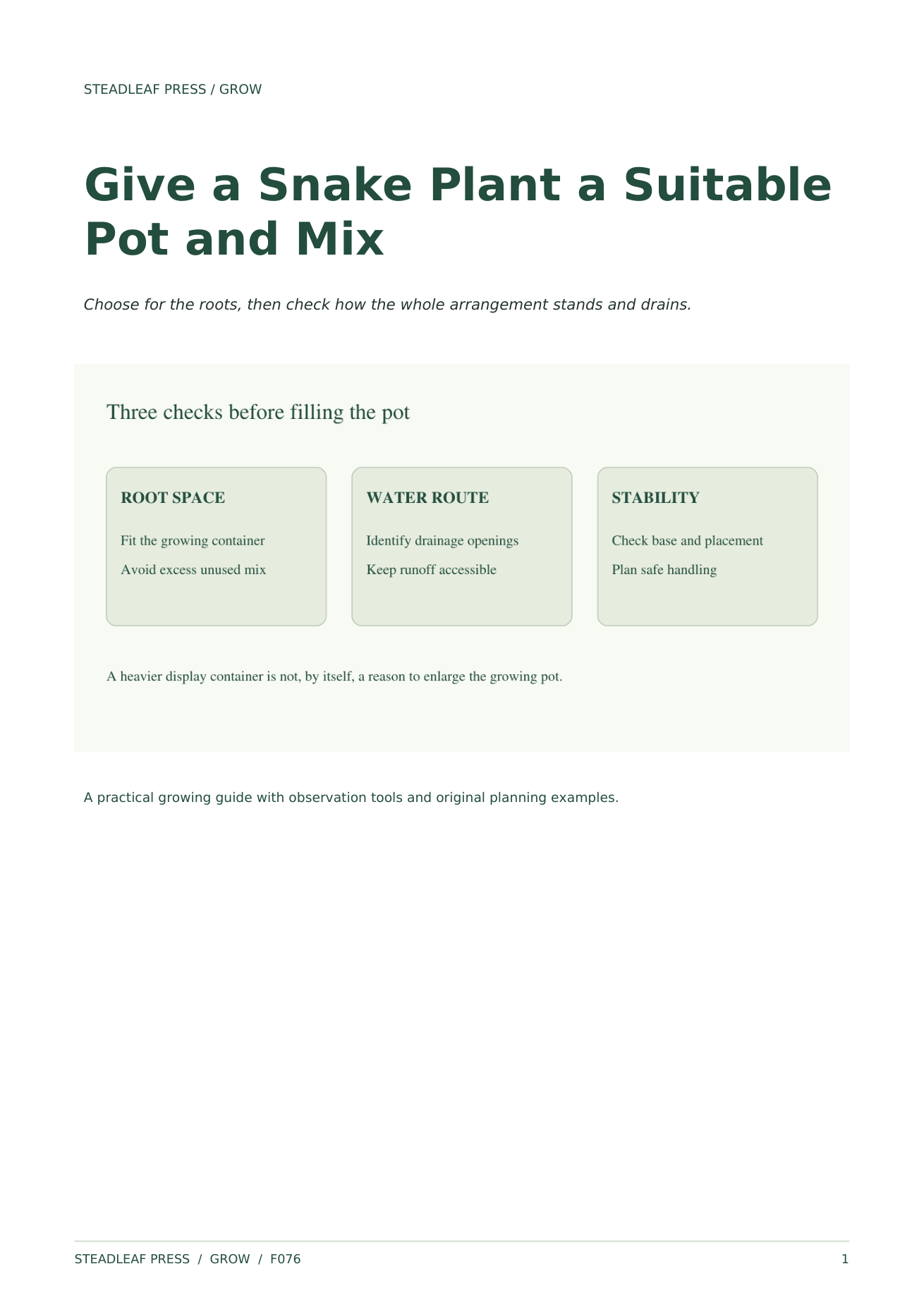
Give a Snake Plant a Suitable Pot and Mix: a practical observation-led guide and printable decision record.
View free guide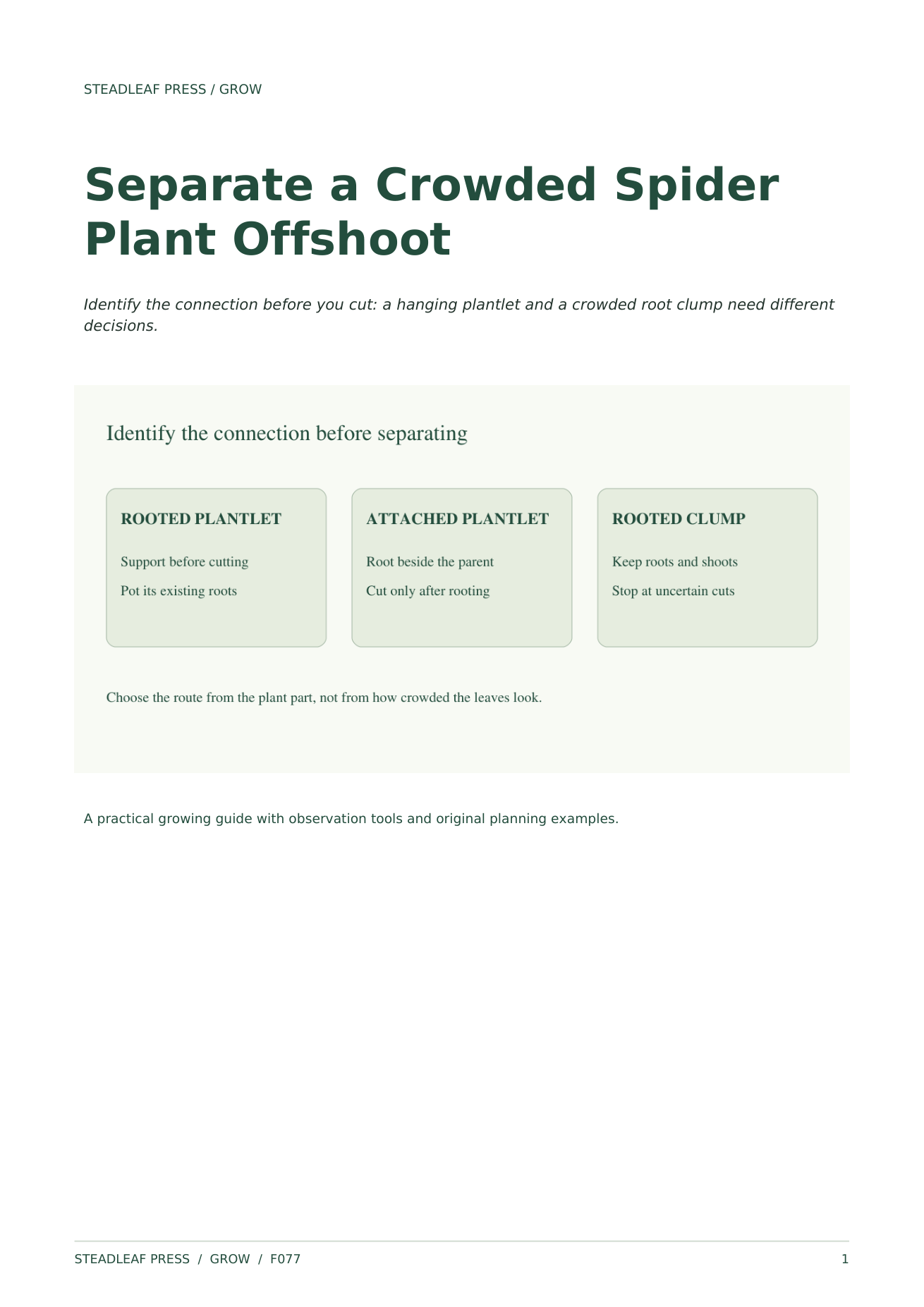
Separate a Crowded Spider Plant Offshoot: a practical observation-led guide and printable decision record.
View free guide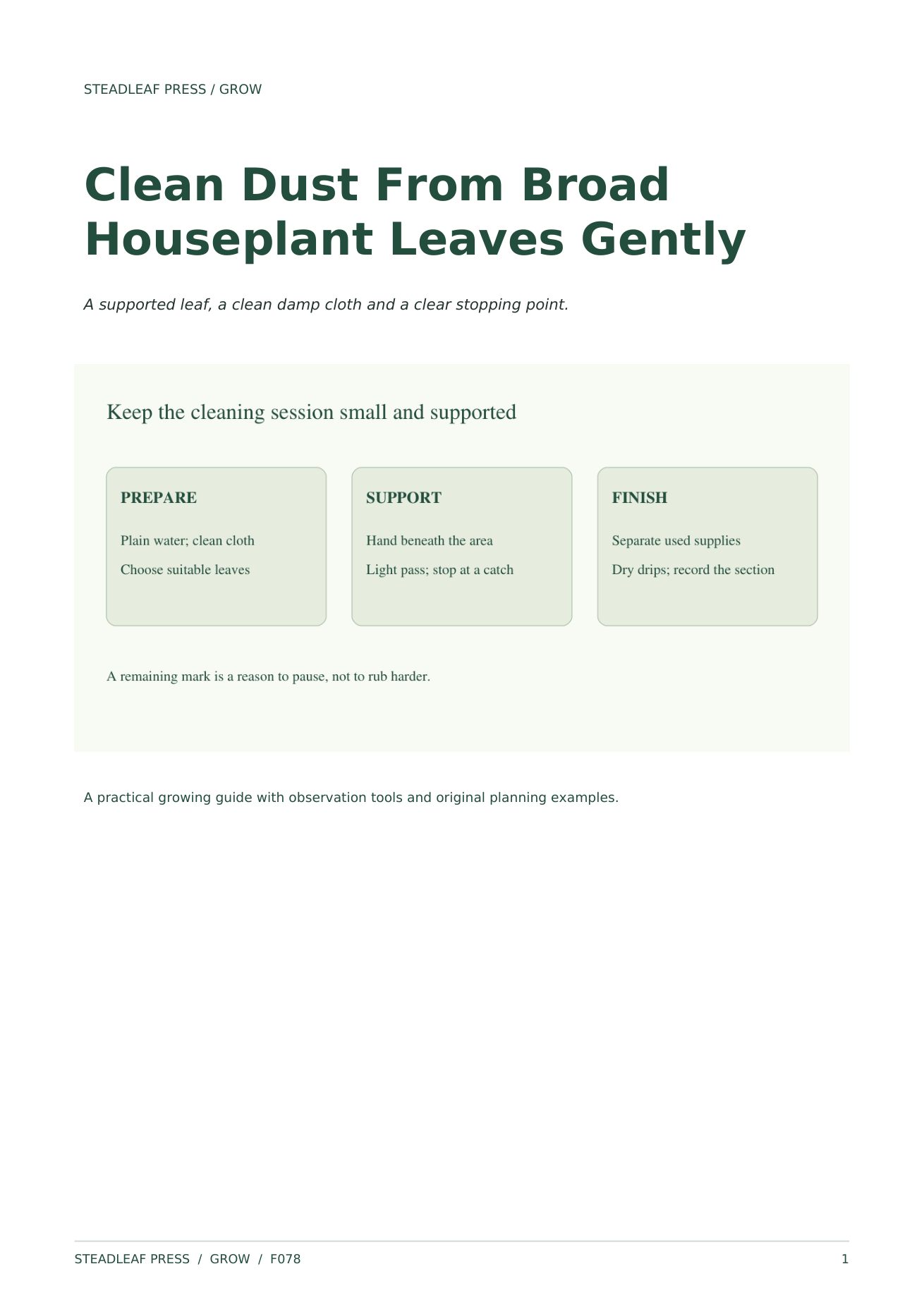
Clean Dust From Broad Houseplant Leaves Gently: a practical observation-led guide and printable decision record.
View free guide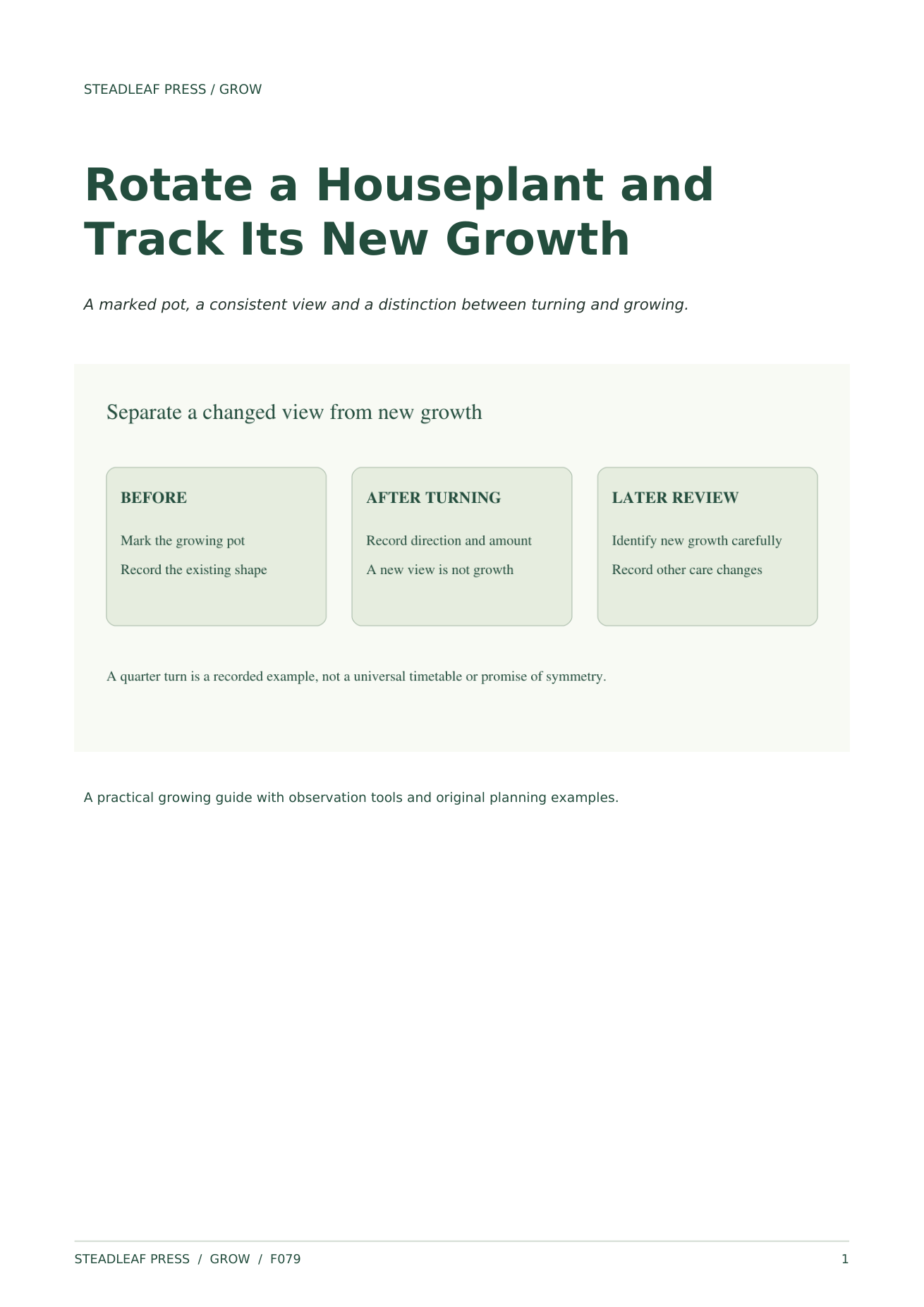
Rotate a Houseplant and Track Its New Growth: a practical observation-led guide and printable decision record.
View free guide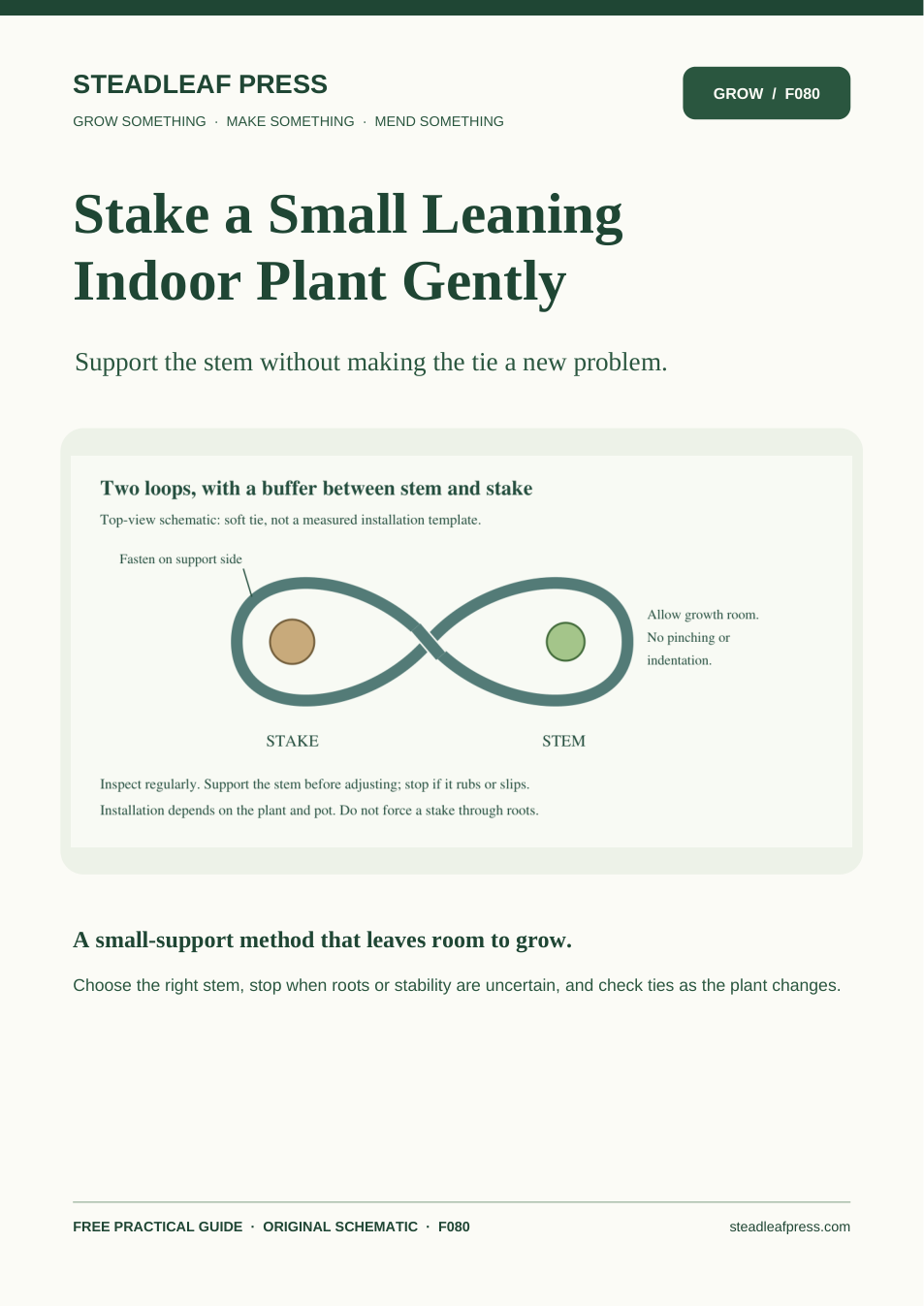
Support a suitable small indoor plant gently with a stable stake and a non-restrictive tie, including root and safety stop rules.
View free guide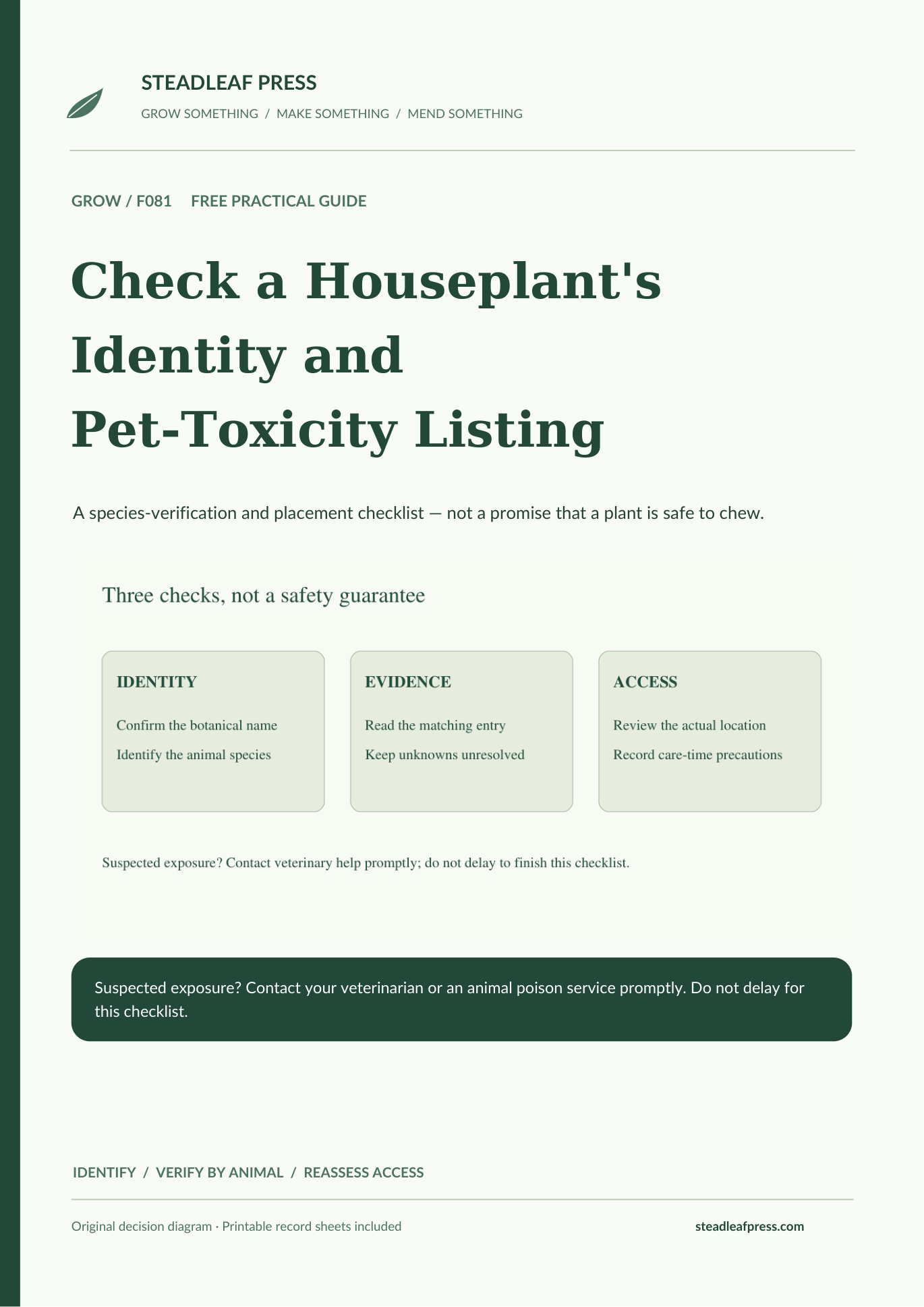
Verify a houseplant's identity, check animal-specific toxicity resources, and assess actual household access.
View free guide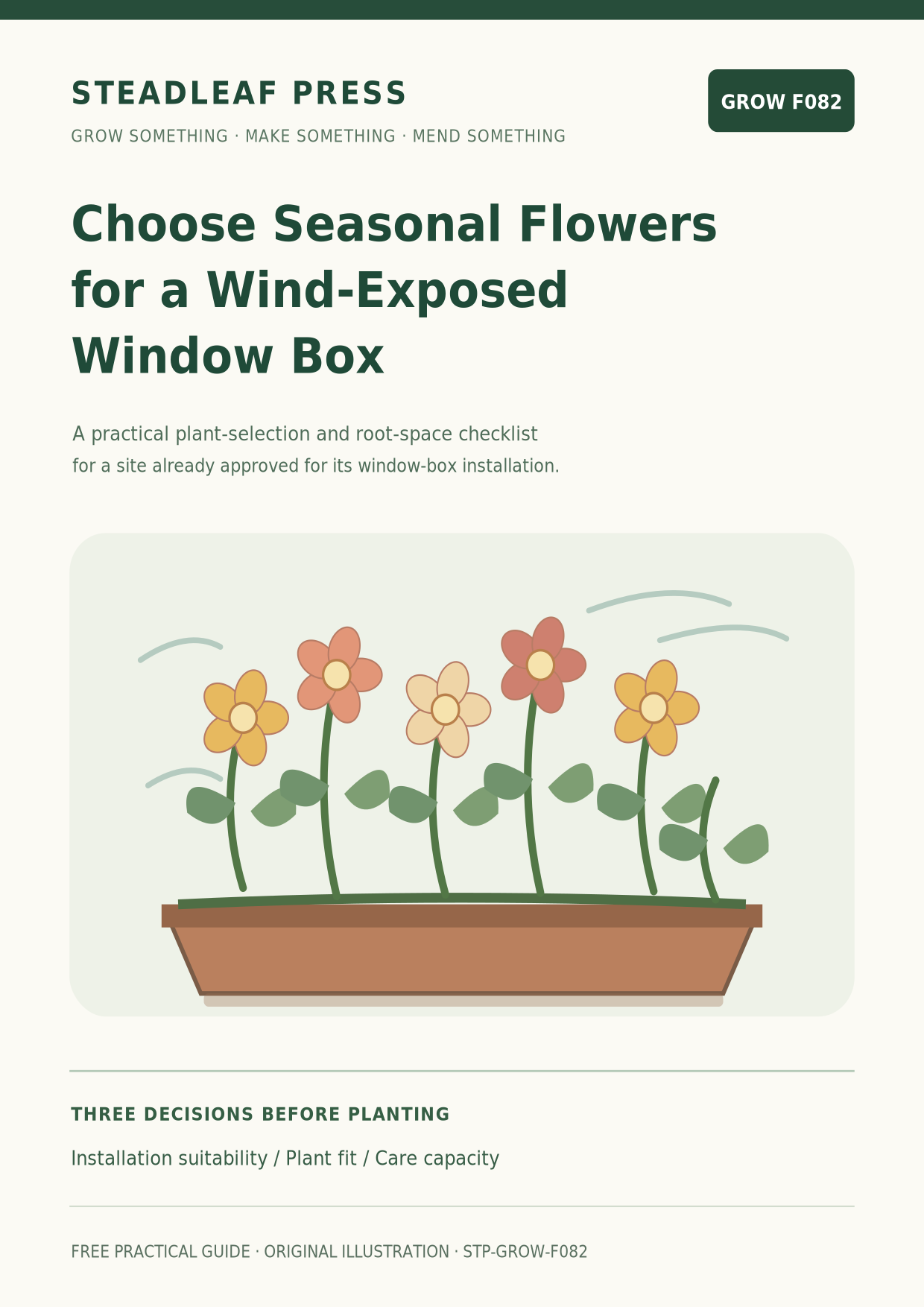
Compare installation suitability, plant fit, wind exposure, root space and realistic care capacity for a window box.
View free guide
Inspect individual plants after travel, distinguish dry and wet conditions, and record condition-based next checks.
View free guide
Record plant identification evidence, care sources, moisture-check conditions and a traceable review date.
View free guide
Use tool-specific manufacturer instructions to plan safe maintenance of a manual pruner and record completed checks.
View free guide
Choose which plants need repotting, prepare species-specific supplies, work one plant at a time, and document aftercare.
View free guide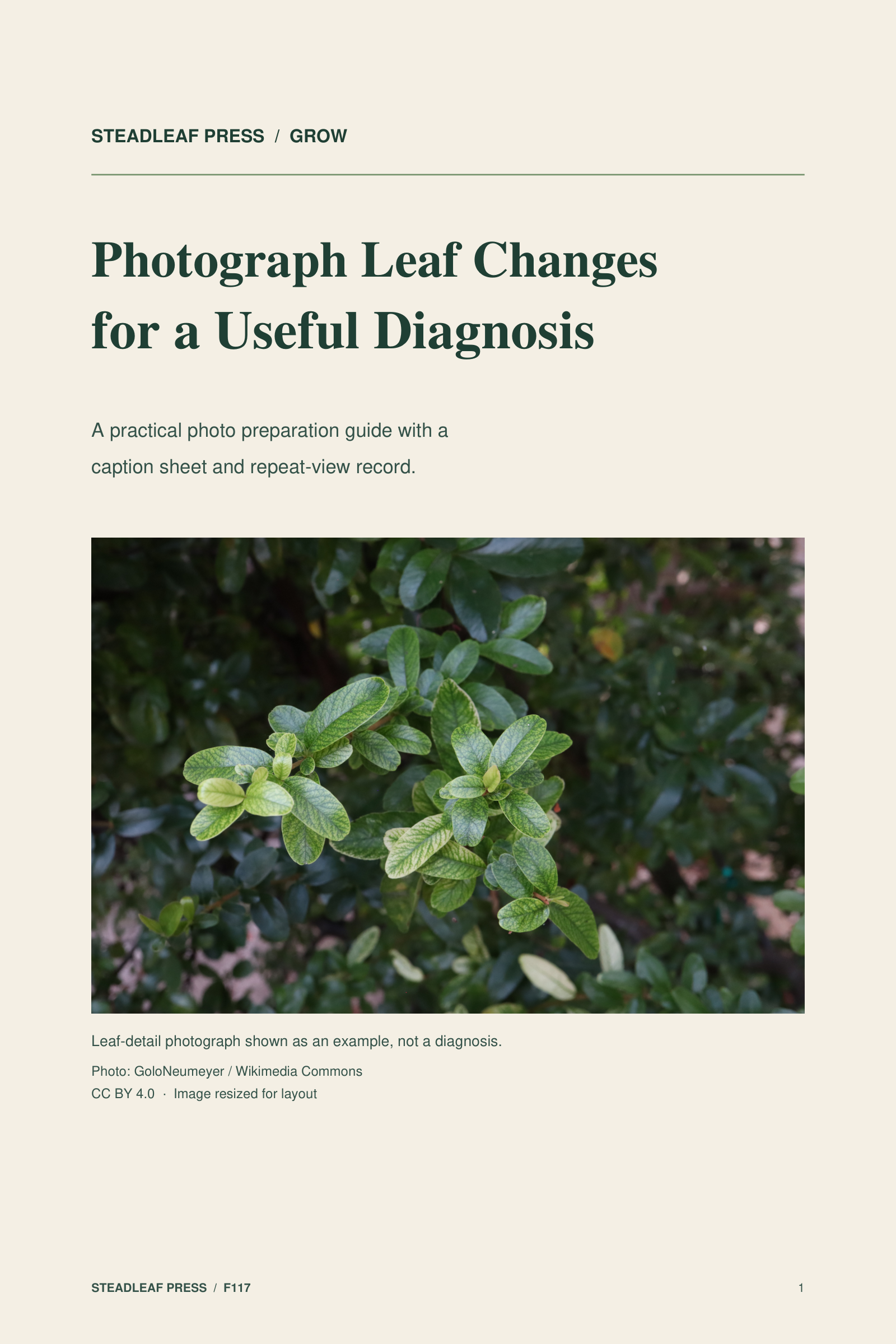
Create contextual and comparable plant photographs, record observations and preserve the originals for an appropriate adviser.
View free guide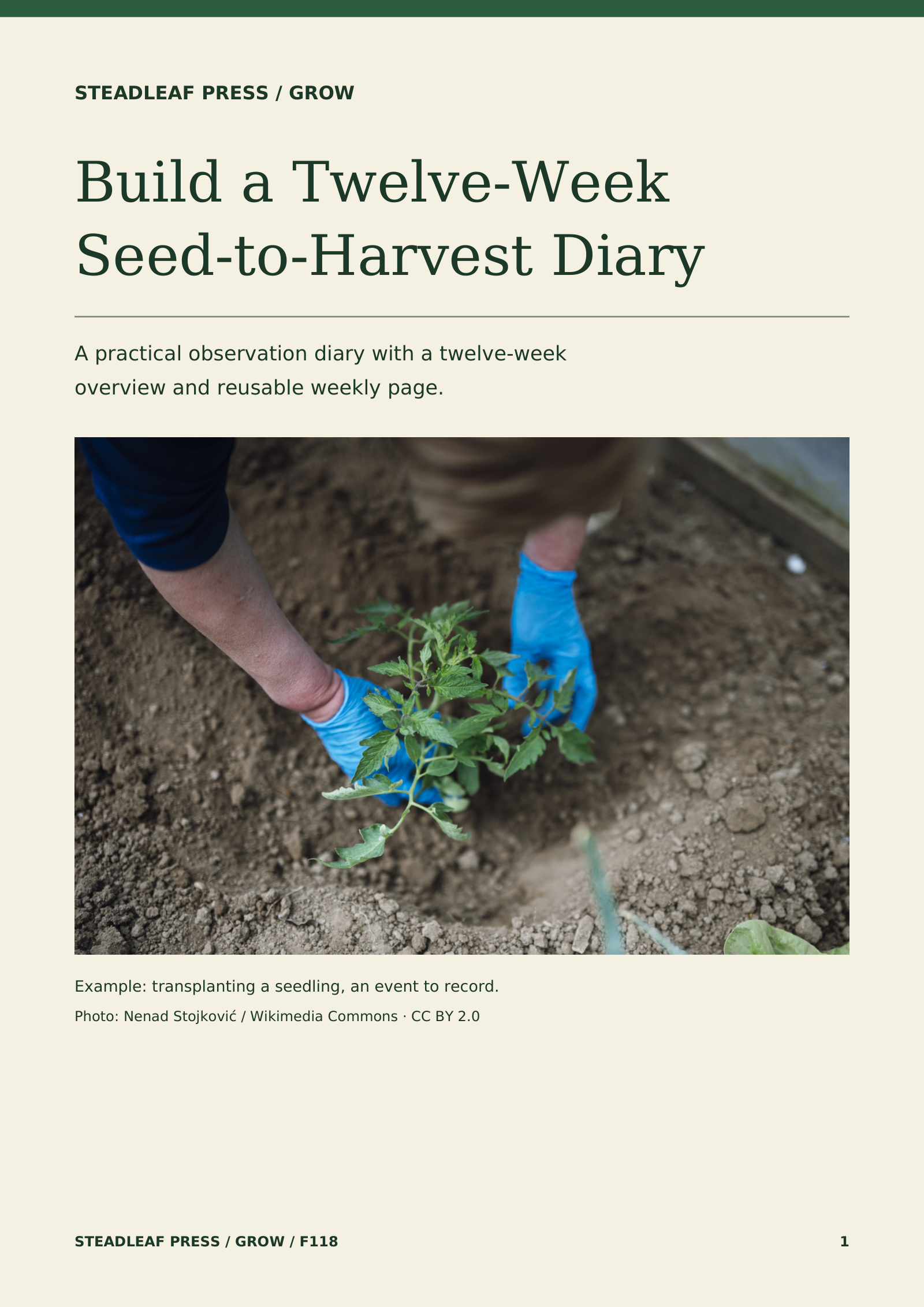
Record and review crop changes and harvest observations over twelve weeks without treating the calendar as a yield guarantee.
View free guide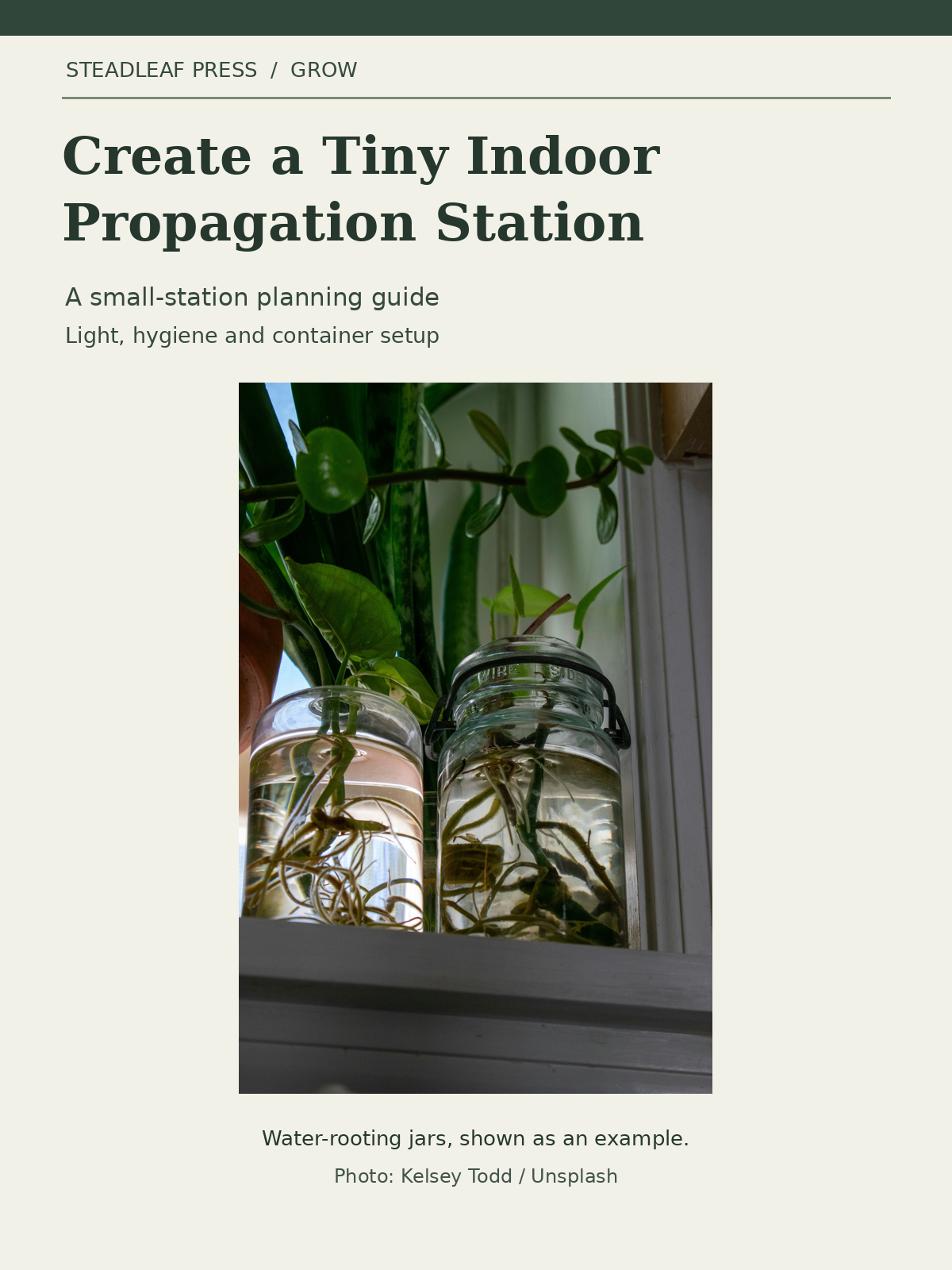
Plan a compact propagation station using identified plant-specific methods, clean supplies, and a separate record for each attempt.
View free guide
Compare up to three plant candidates against real growing conditions, household constraints and budget; then plan a manageable learning experiment.
View free guideNOW AVAILABLE / FREE
100 original, complete free Mend guides.
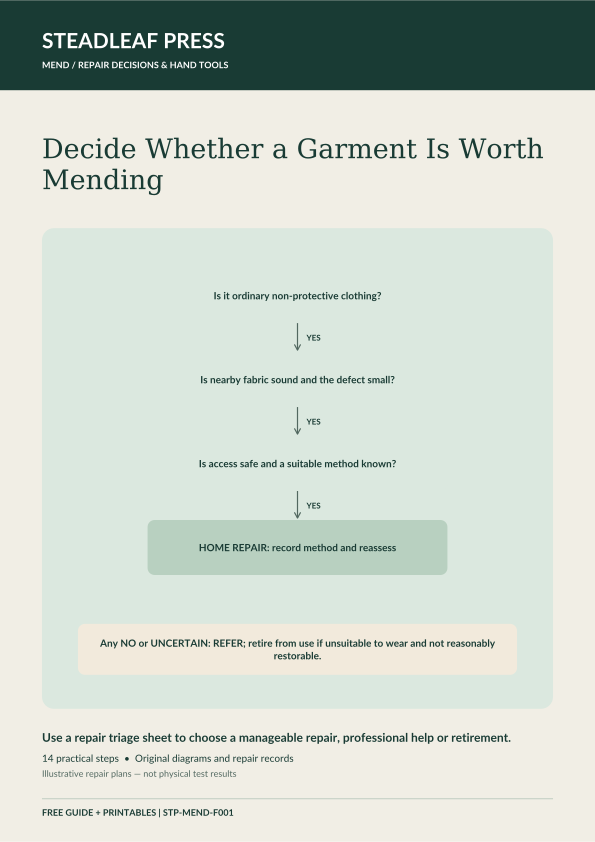
Use a repair triage sheet to choose a manageable repair, professional help or retirement.
View free guide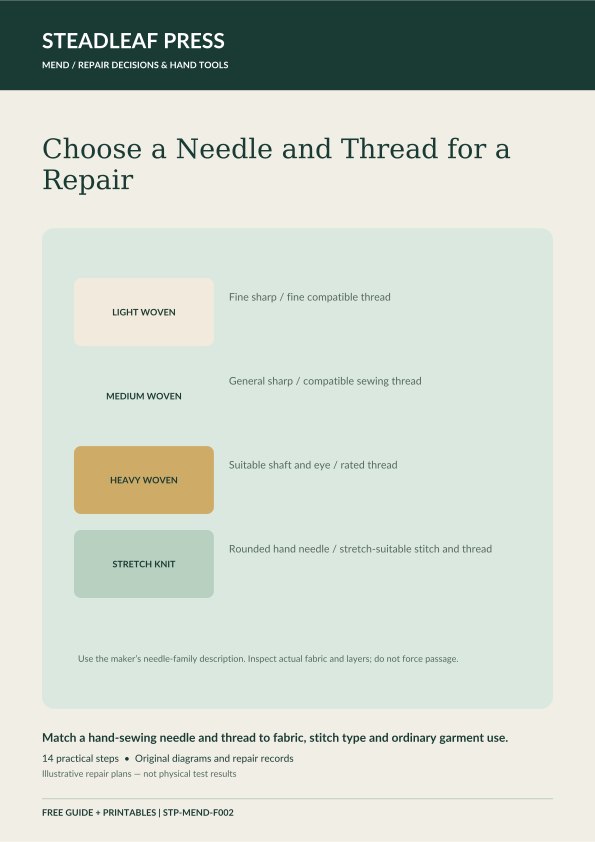
Match a hand-sewing needle and thread to fabric, stitch type and ordinary garment use.
View free guide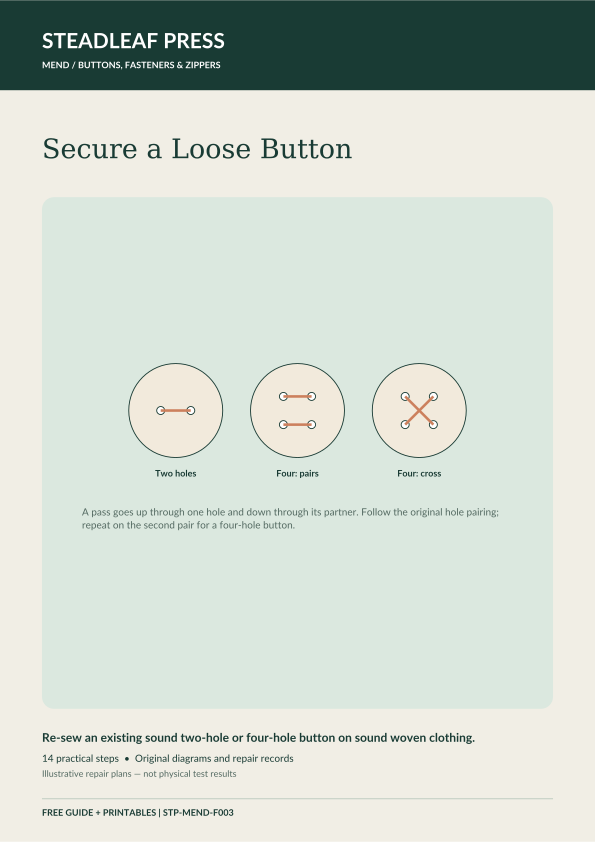
Re-sew an existing sound two-hole or four-hole button on sound woven clothing.
View free guide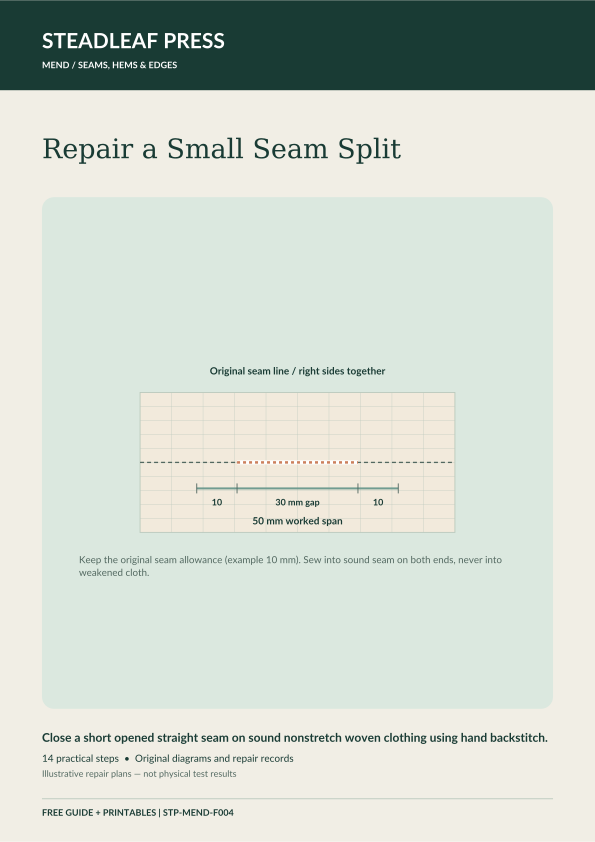
Close a short opened straight seam on sound nonstretch woven clothing using hand backstitch.
View free guide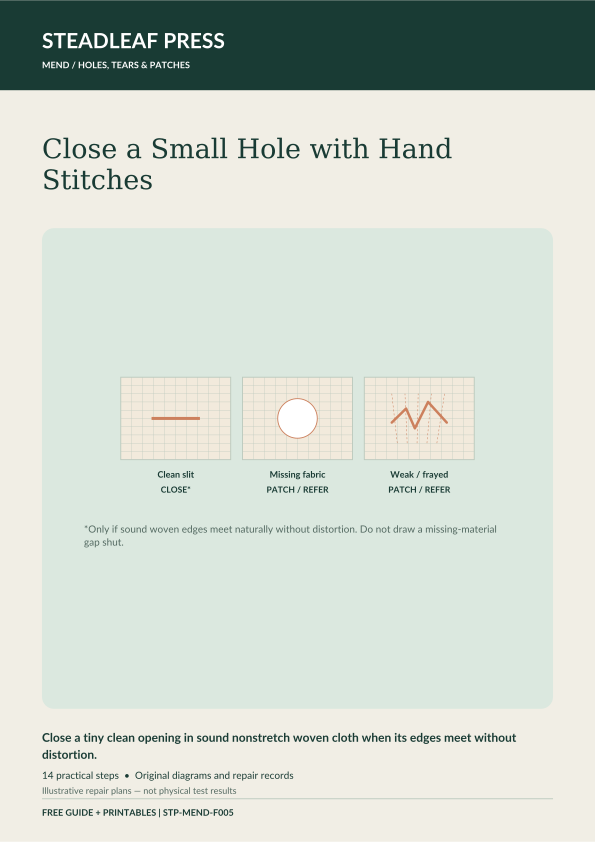
Close a tiny clean opening in sound nonstretch woven cloth when its edges meet without distortion.
View free guide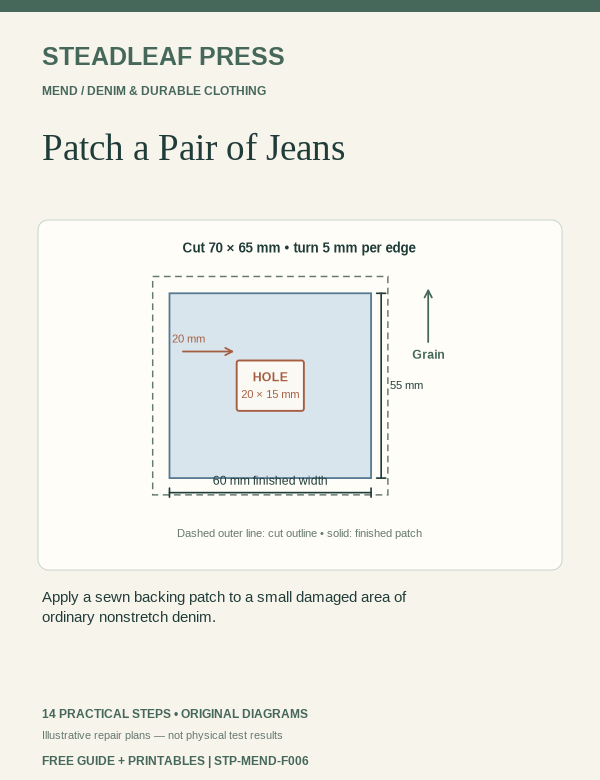
Apply a sewn backing patch to a small damaged area of ordinary nonstretch denim.
View free guide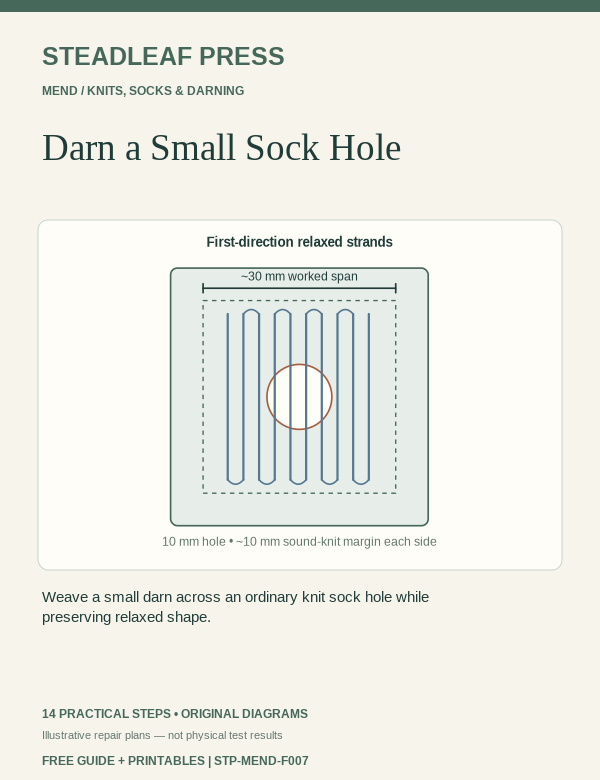
Weave a small darn across an ordinary knit sock hole while preserving relaxed shape.
View free guide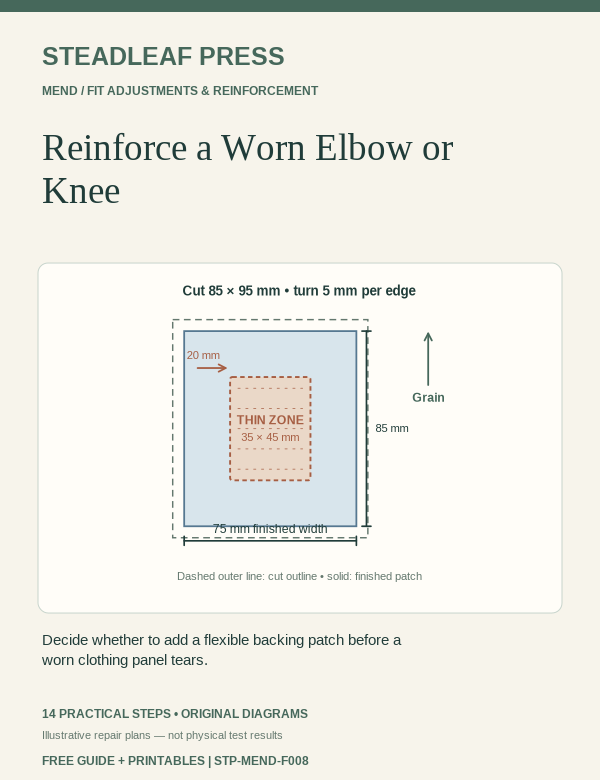
Decide whether to add a flexible backing patch before a worn clothing panel tears.
View free guide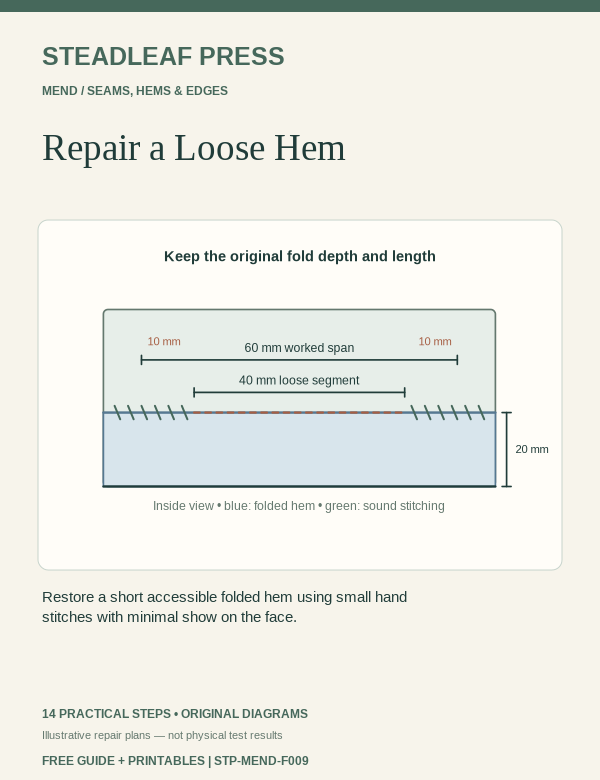
Restore a short accessible folded hem using small hand stitches with minimal show on the face.
View free guide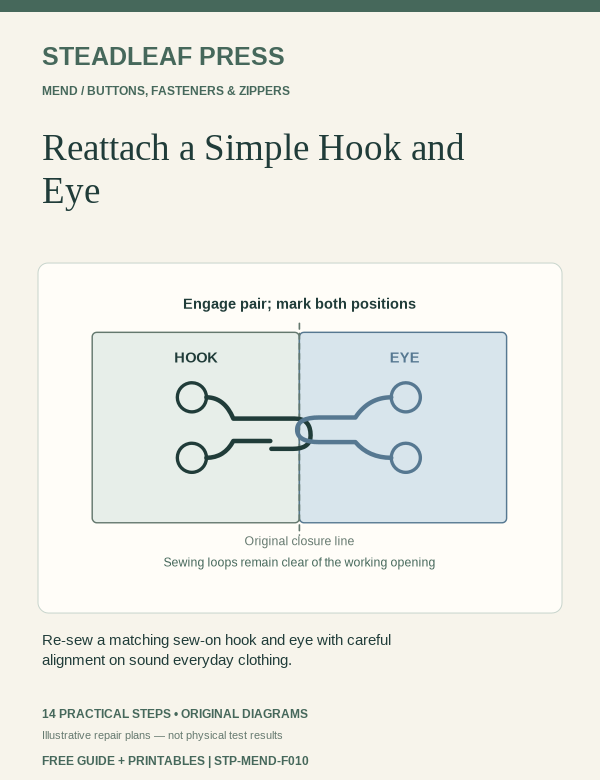
Re-sew a matching sew-on hook and eye with careful alignment on sound everyday clothing.
View free guide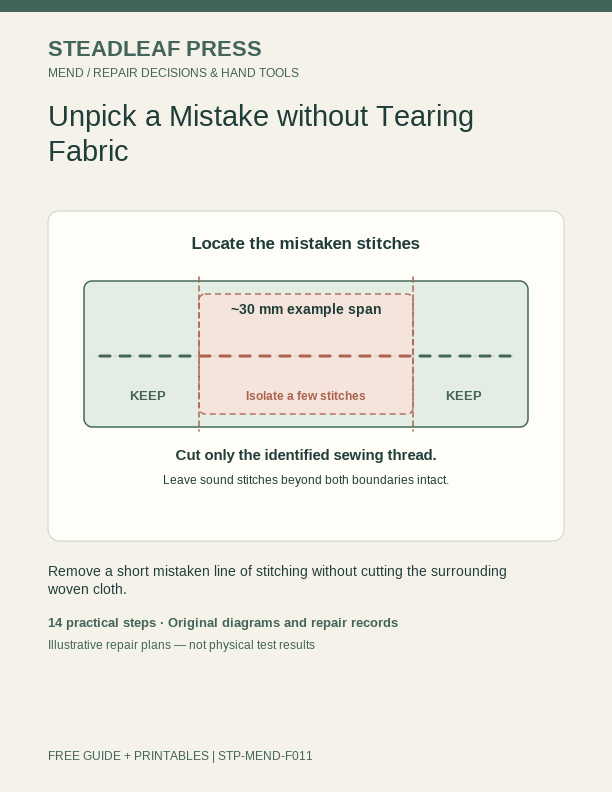
Remove a short mistaken line of stitching without cutting the surrounding woven cloth.
View free guide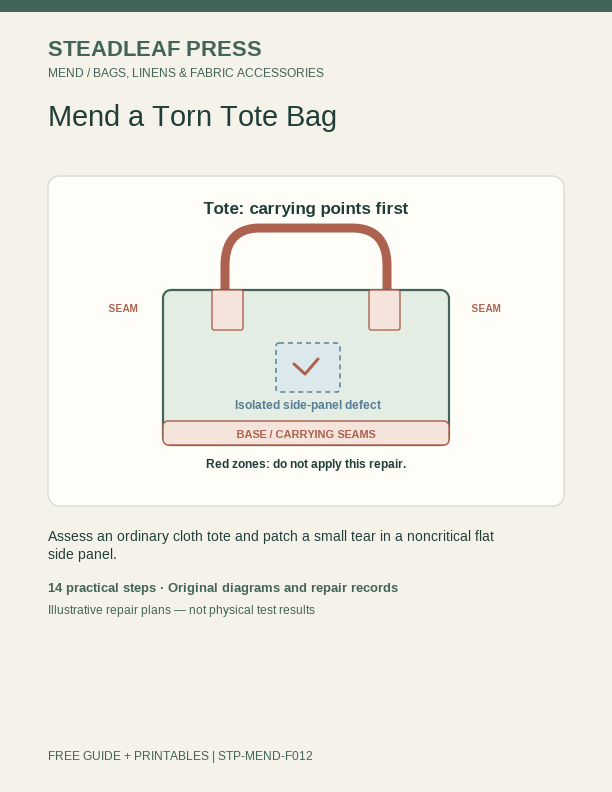
Assess an ordinary cloth tote and patch a small tear in a noncritical flat side panel.
View free guide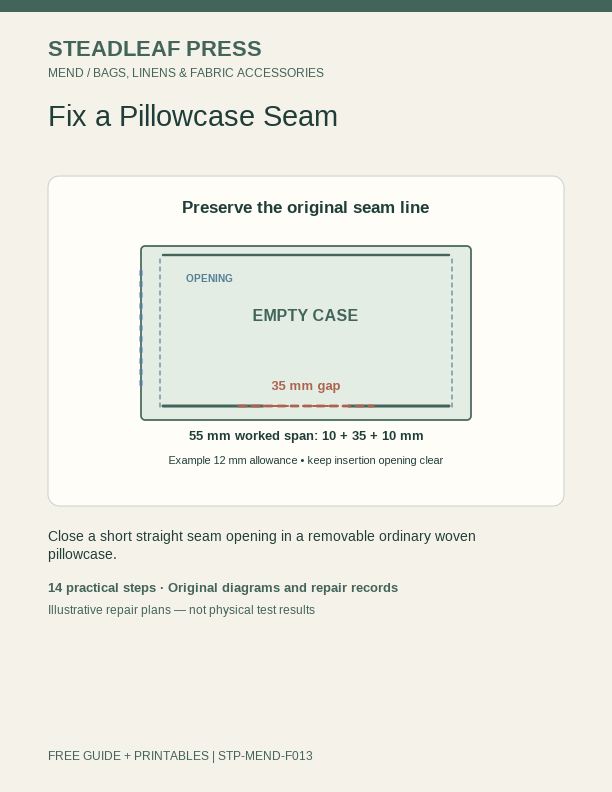
Close a short straight seam opening in a removable ordinary woven pillowcase.
View free guide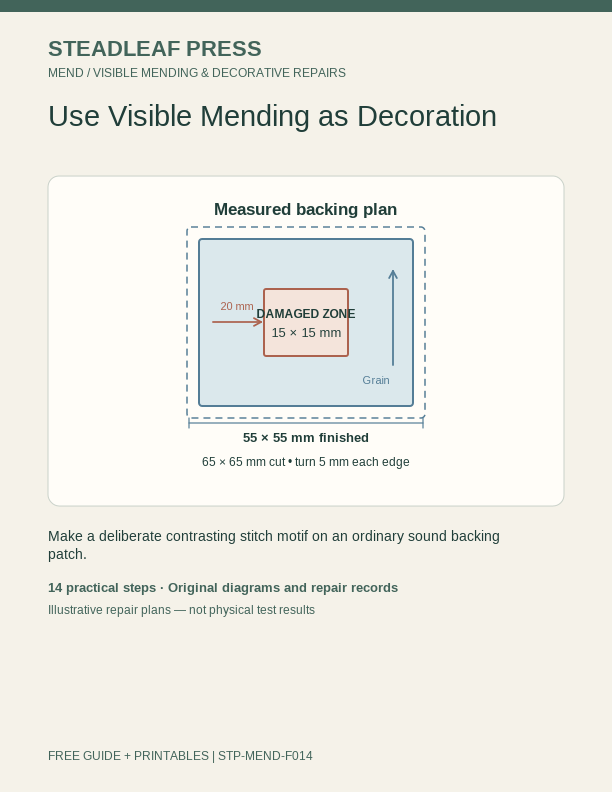
Make a deliberate contrasting stitch motif on an ordinary sound backing patch.
View free guide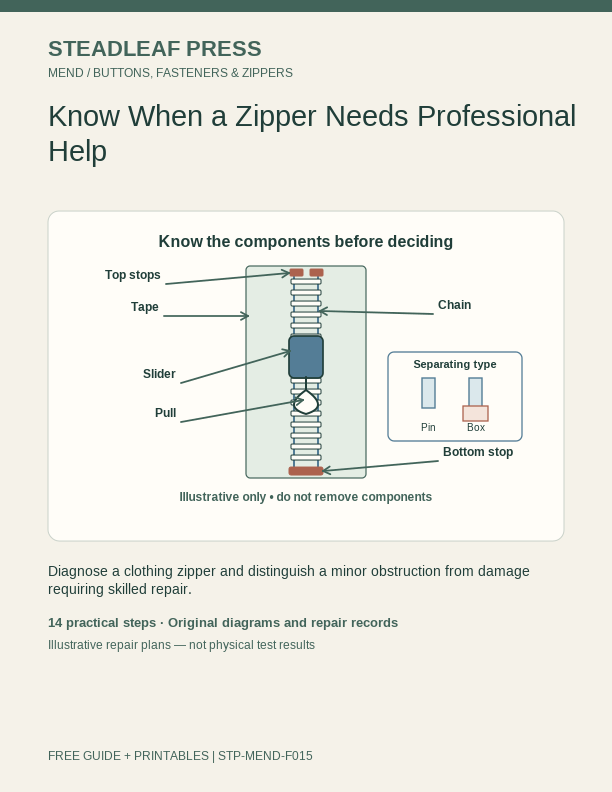
Diagnose a clothing zipper and distinguish a minor obstruction from damage requiring skilled repair.
View free guide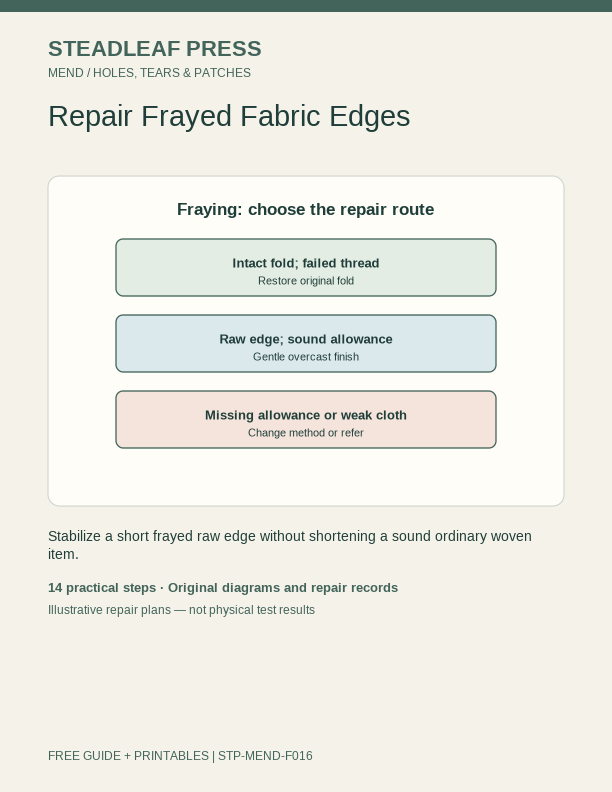
Stabilize a short frayed raw edge without shortening a sound ordinary woven item.
View free guide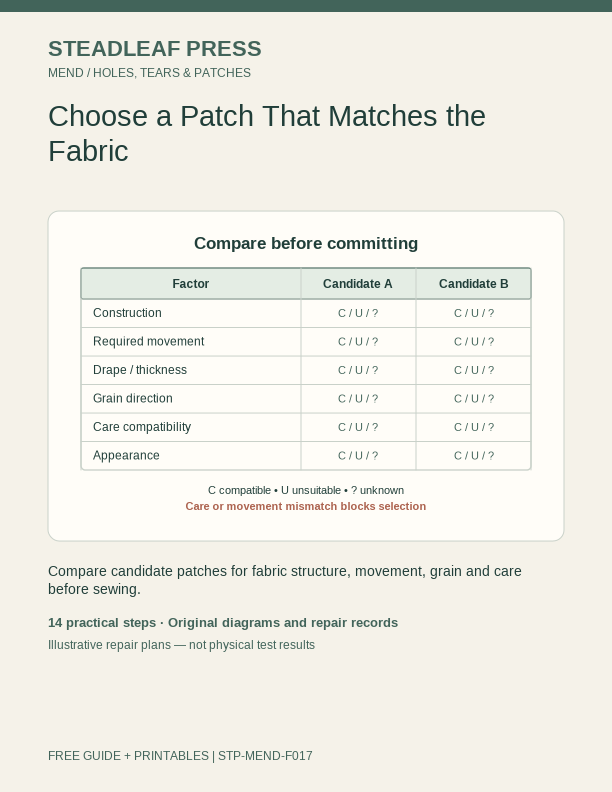
Compare candidate patches for fabric structure, movement, grain and care before sewing.
View free guide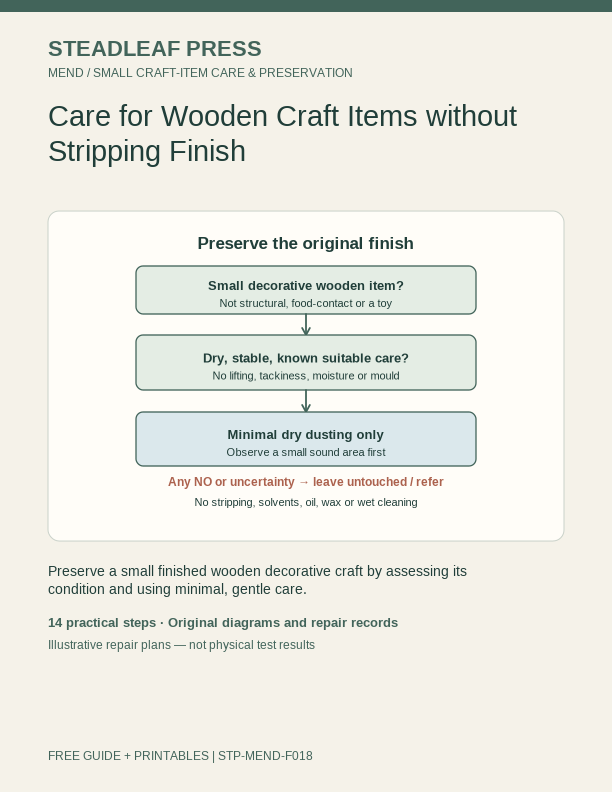
Preserve a small finished wooden decorative craft by assessing its condition and using minimal, gentle care.
View free guide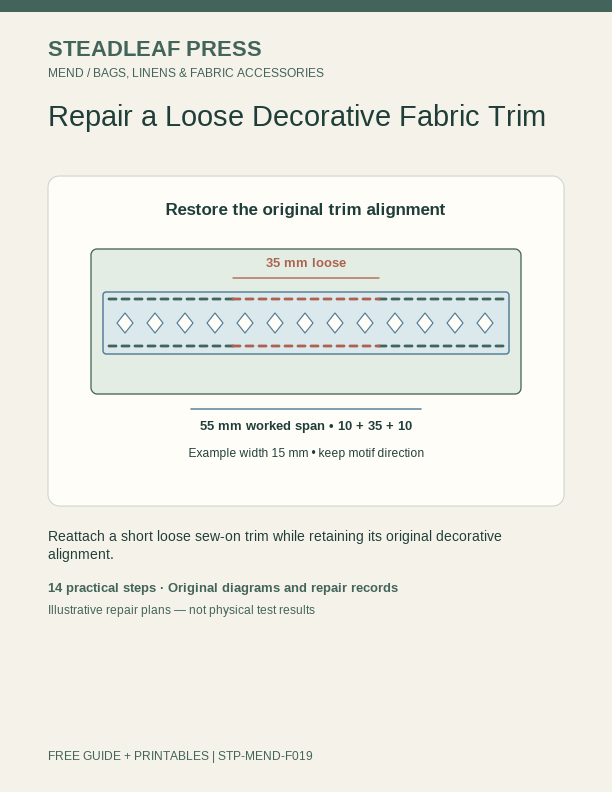
Reattach a short loose sew-on trim while retaining its original decorative alignment.
View free guide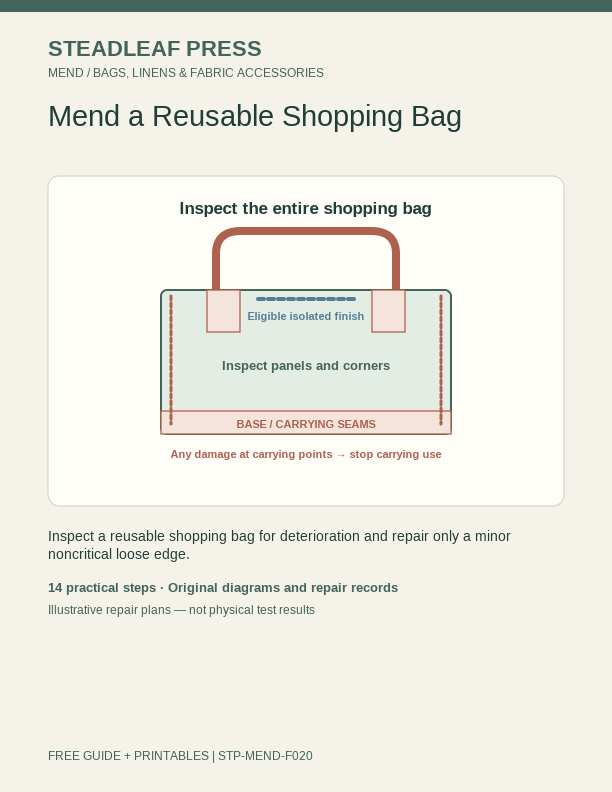
Inspect a reusable shopping bag for deterioration and repair only a minor noncritical loose edge.
View free guide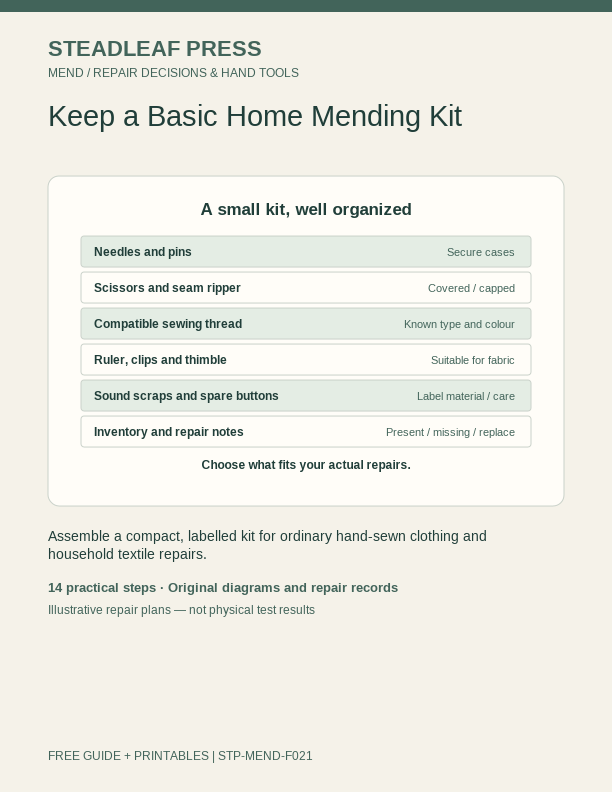
Assemble a compact, labelled kit for ordinary hand-sewn clothing and household textile repairs.
View free guide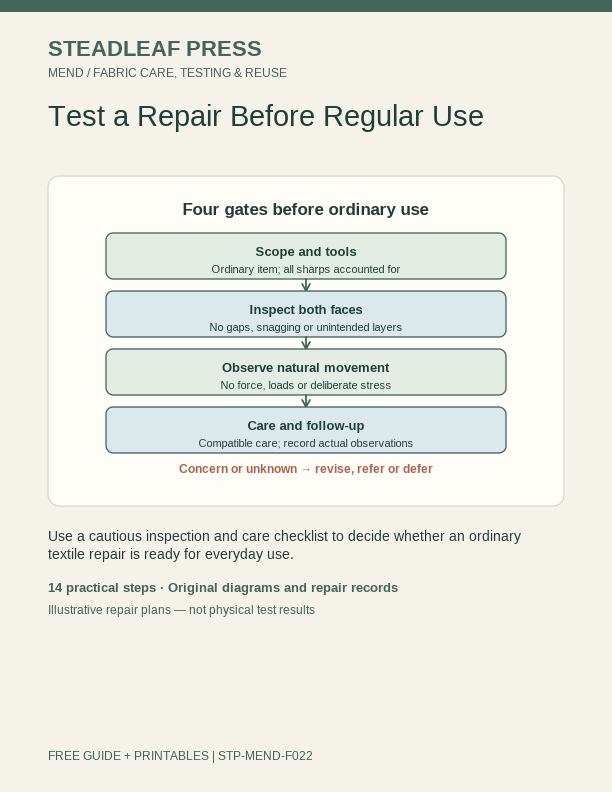
Use a cautious inspection and care checklist to decide whether an ordinary textile repair is ready for everyday use.
View free guide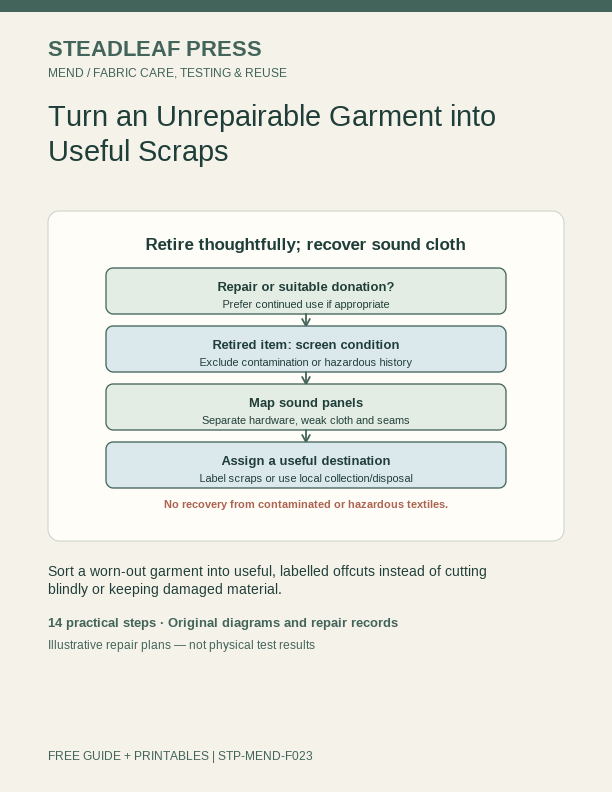
Sort a worn-out garment into useful, labelled offcuts instead of cutting blindly or keeping damaged material.
View free guide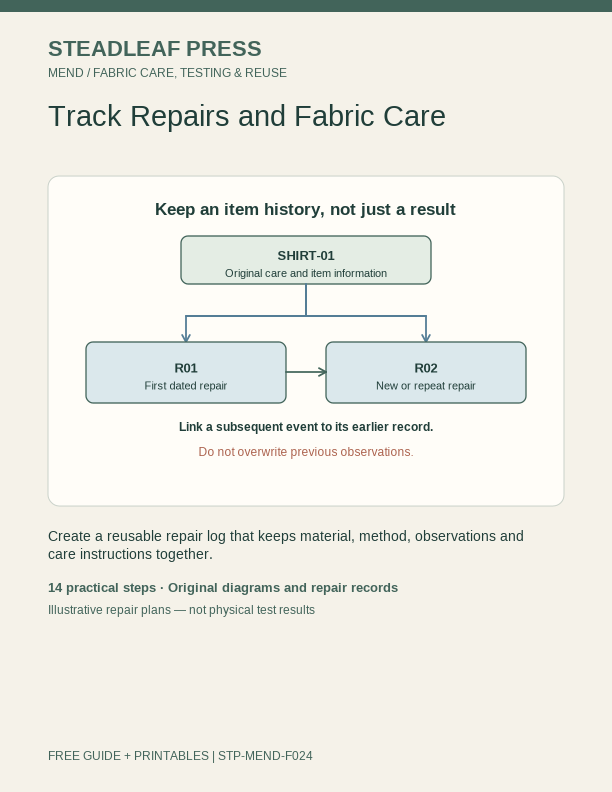
Create a reusable repair log that keeps material, method, observations and care instructions together.
View free guide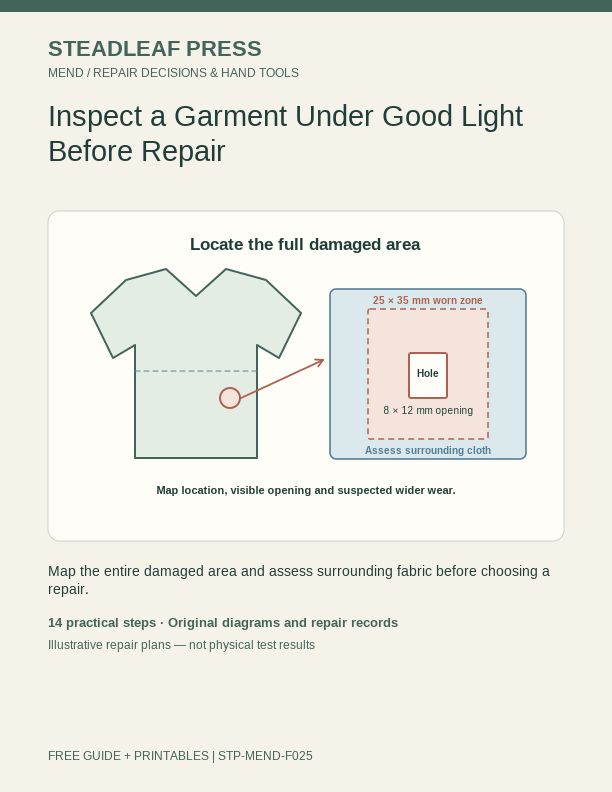
Map the entire damaged area and assess surrounding fabric before choosing a repair.
View free guide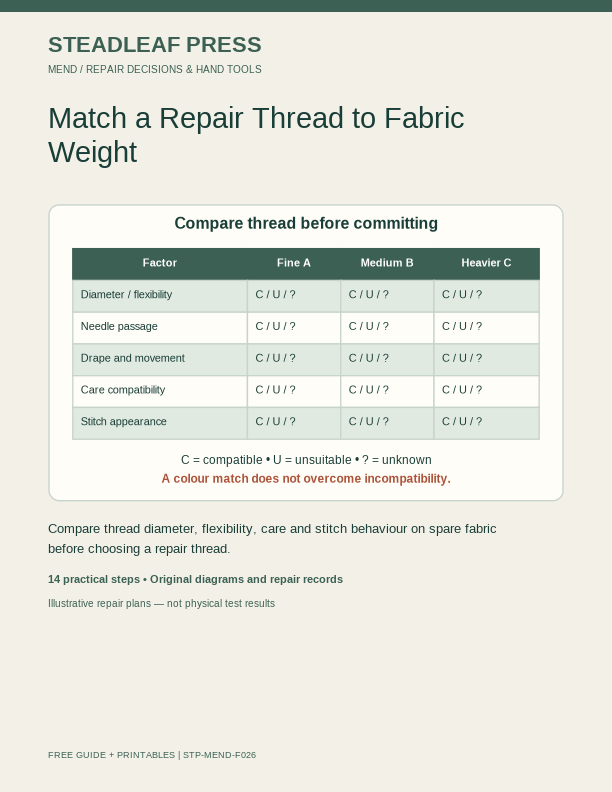
Compare thread diameter, flexibility, care and stitch behaviour on spare fabric before choosing a repair thread.
View free guide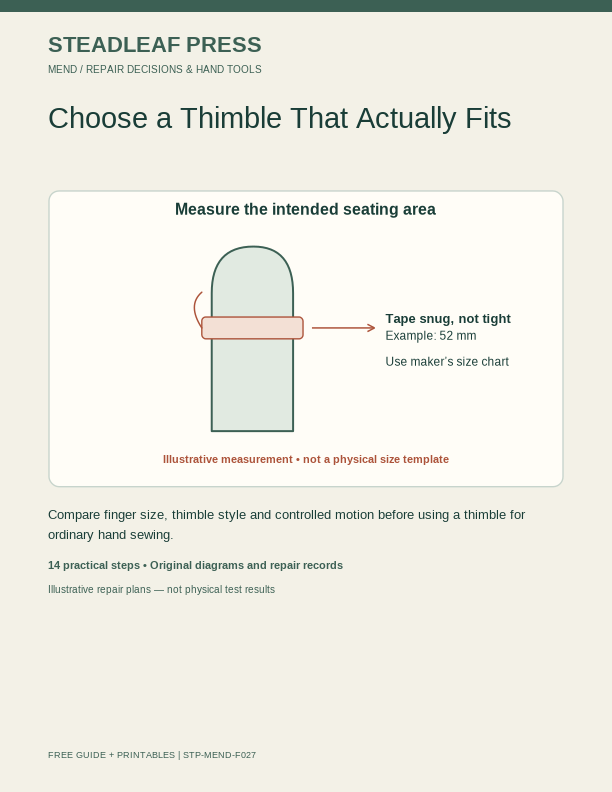
Compare finger size, thimble style and controlled motion before using a thimble for ordinary hand sewing.
View free guide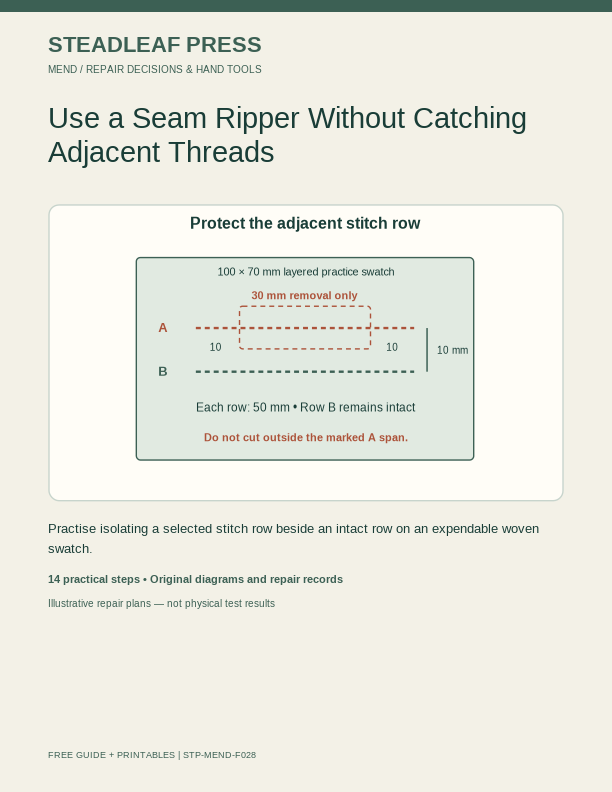
Practise isolating a selected stitch row beside an intact row on an expendable woven swatch.
View free guide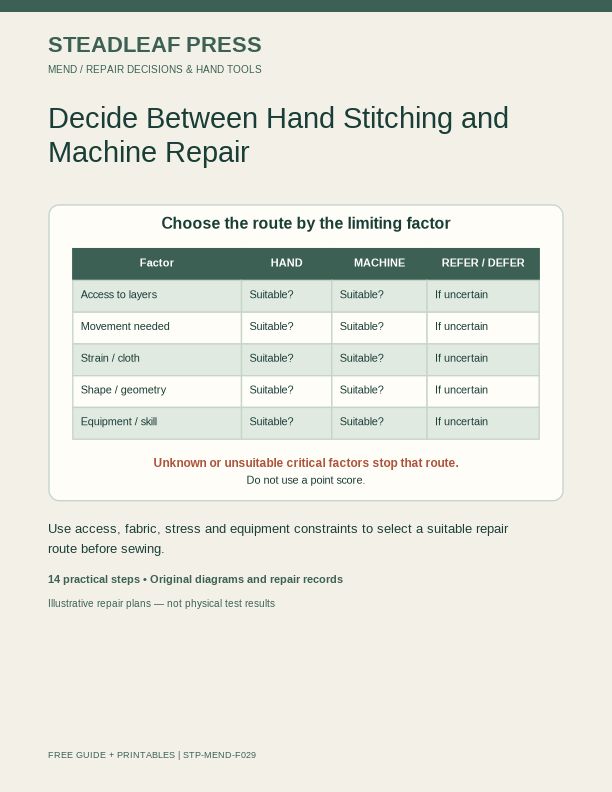
Use access, fabric, stress and equipment constraints to select a suitable repair route before sewing.
View free guide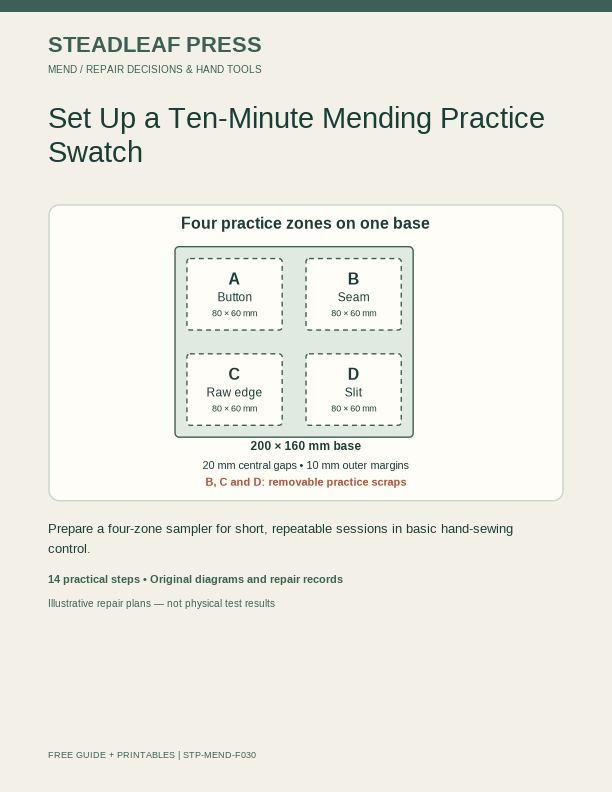
Prepare a four-zone sampler for short, repeatable sessions in basic hand-sewing control.
View free guide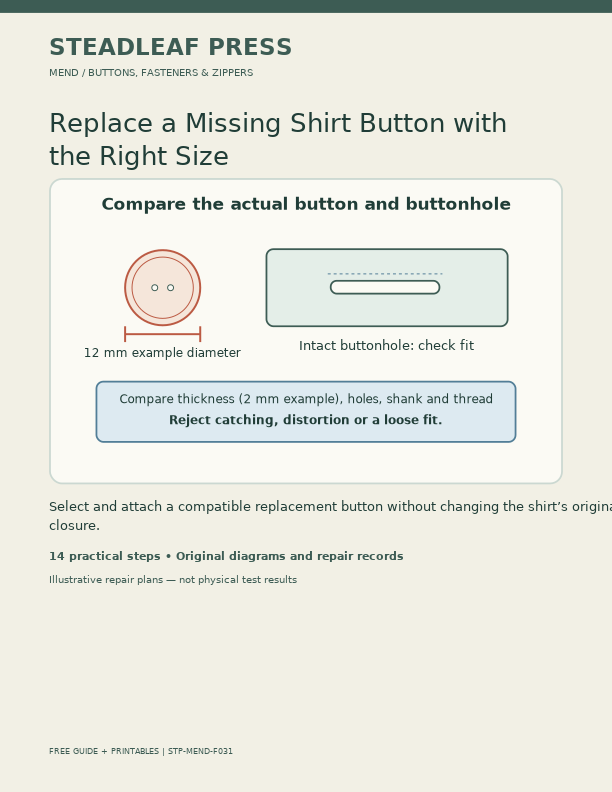
Select and attach a compatible replacement button without changing the shirt’s original closure.
View free guide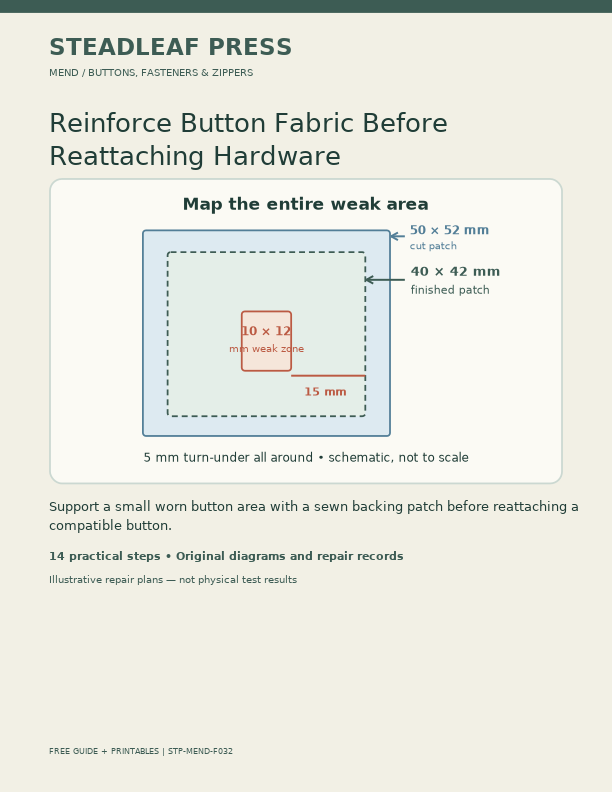
Support a small worn button area with a sewn backing patch before reattaching a compatible button.
View free guide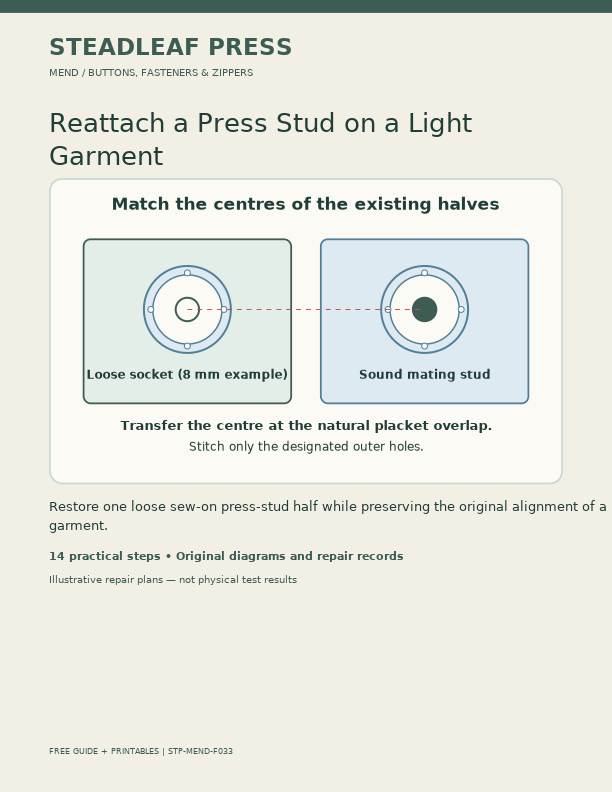
Restore one loose sew-on press-stud half while preserving the original alignment of a light garment.
View free guide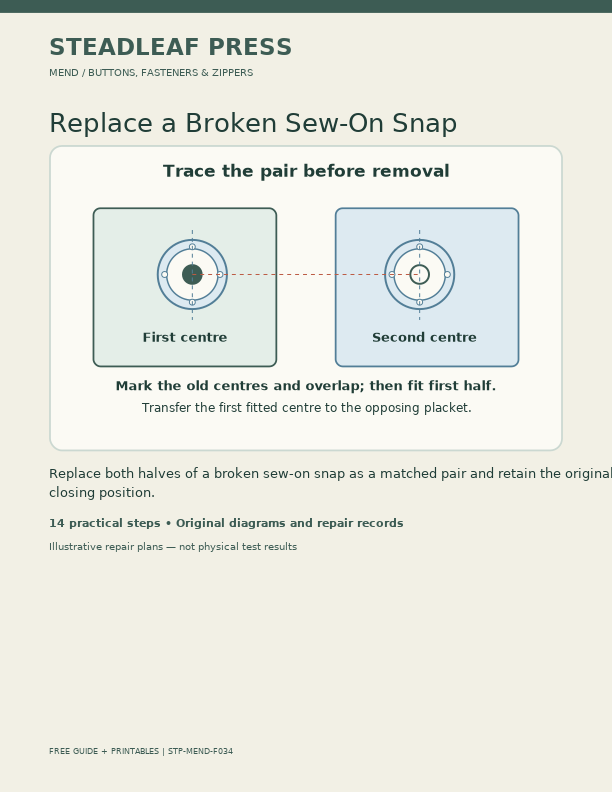
Replace both halves of a broken sew-on snap as a matched pair and retain the original closing position.
View free guide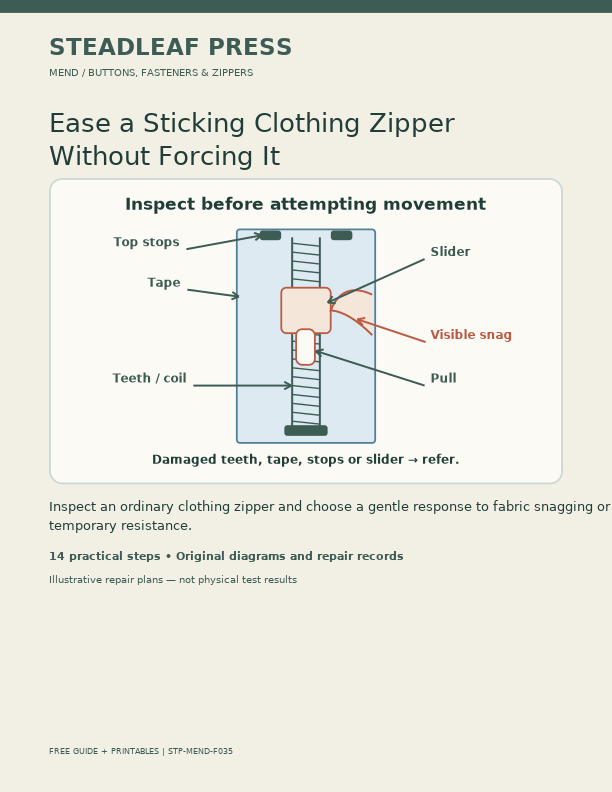
Inspect an ordinary clothing zipper and choose a gentle response to fabric snagging or temporary resistance.
View free guide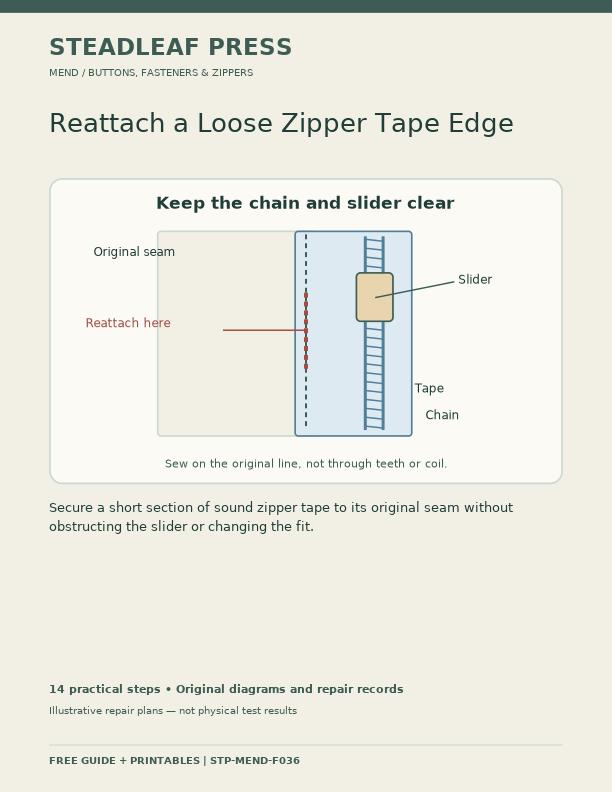
Secure a short section of sound zipper tape to its original seam without obstructing the slider or changing the fit.
View free guide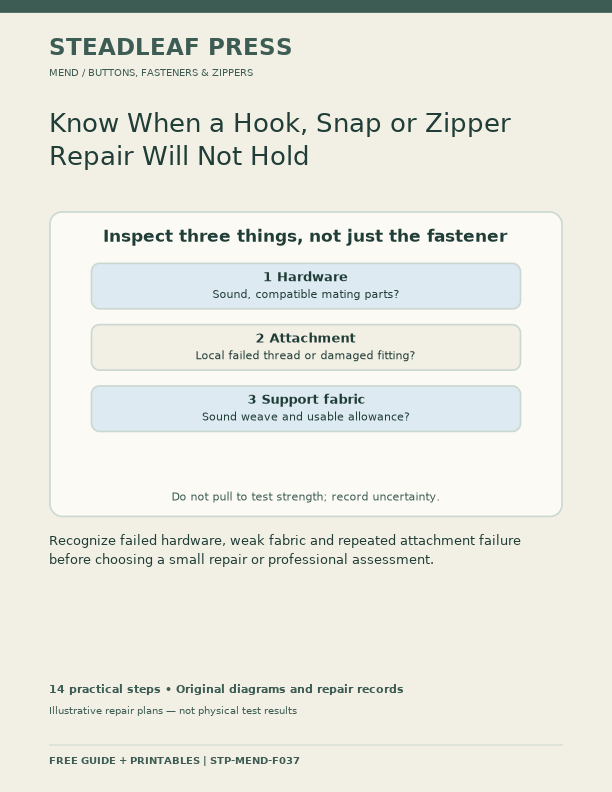
Recognize failed hardware, weak fabric and repeated attachment failure before choosing a small repair or professional assessment.
View free guide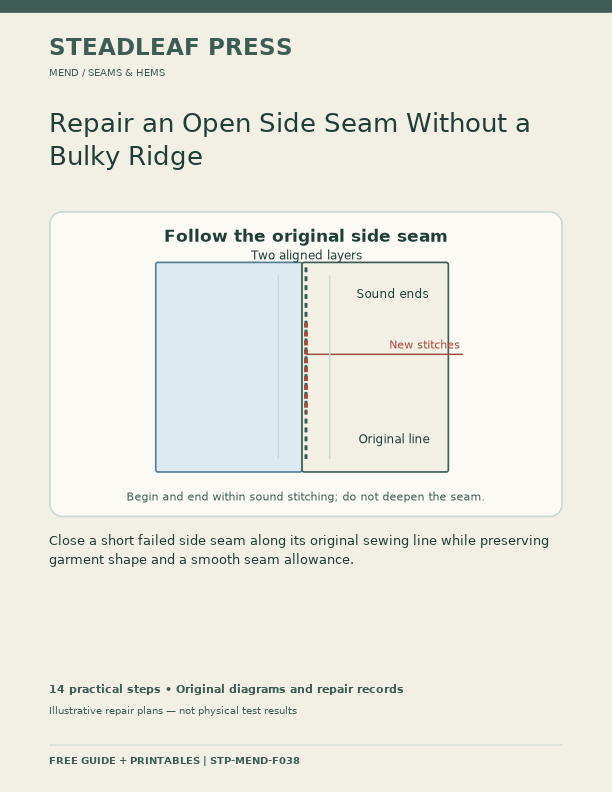
Close a short failed side seam along its original sewing line while preserving garment shape and a smooth seam allowance.
View free guide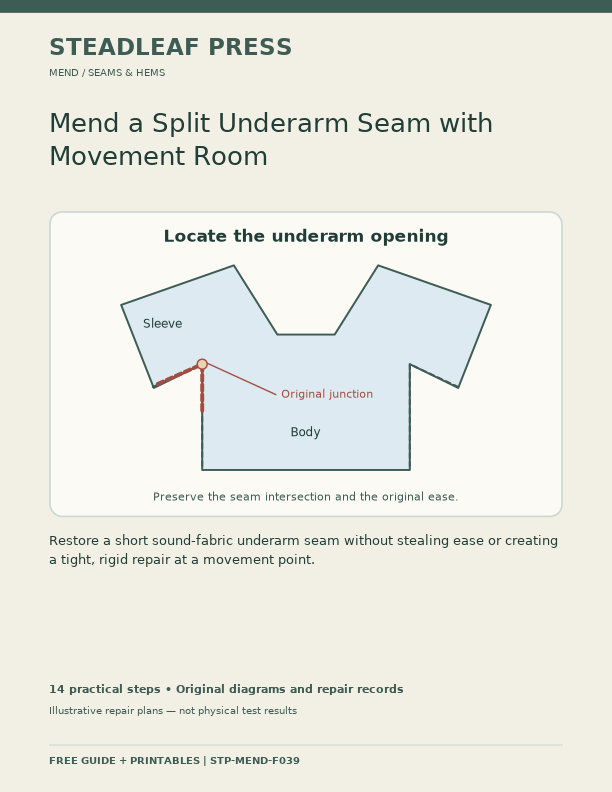
Restore a short sound-fabric underarm seam without stealing ease or creating a tight, rigid repair at a movement point.
View free guide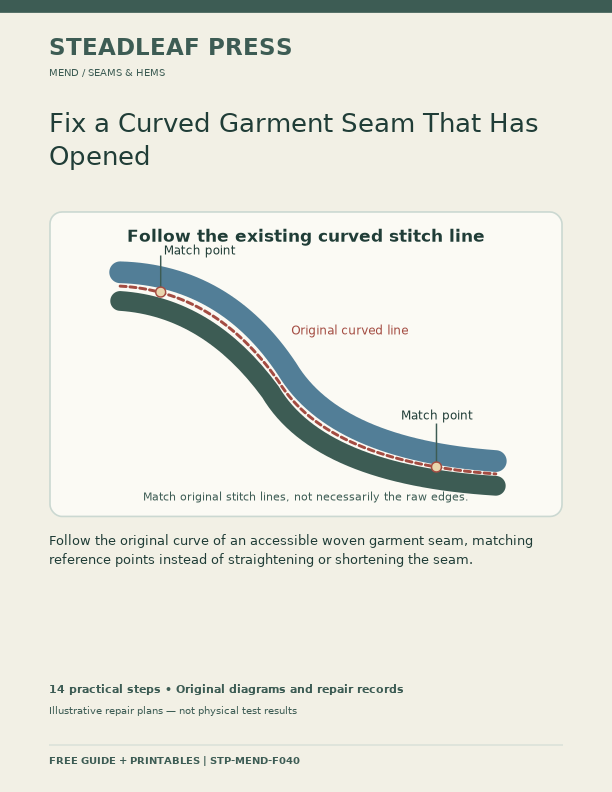
Follow the original curve of an accessible woven garment seam, matching reference points instead of straightening or shortening the seam.
View free guide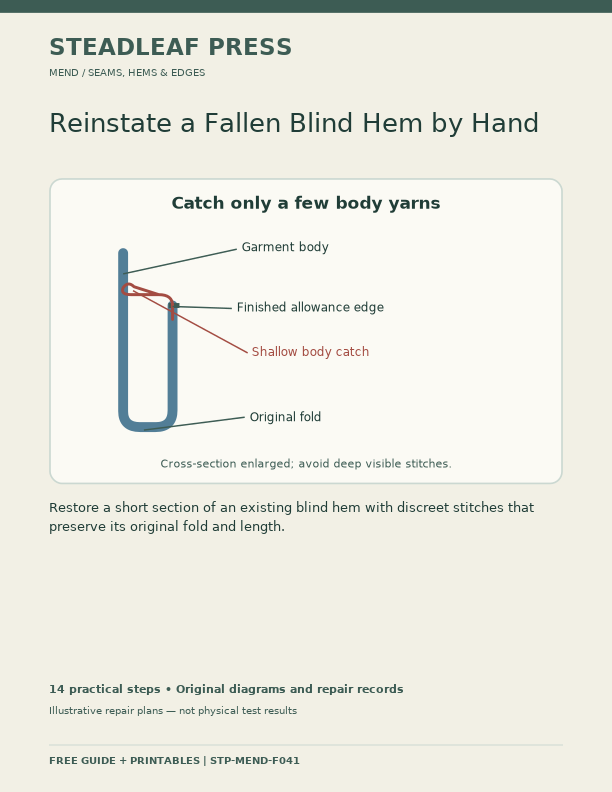
Restore a short section of an existing blind hem with discreet stitches that preserve its original fold and length.
View free guide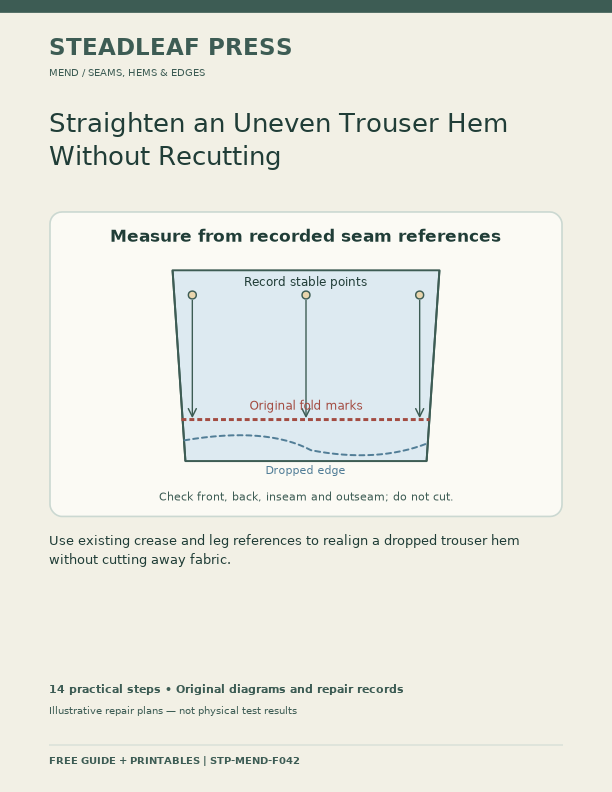
Use existing crease and leg references to realign a dropped trouser hem without cutting away fabric.
View free guide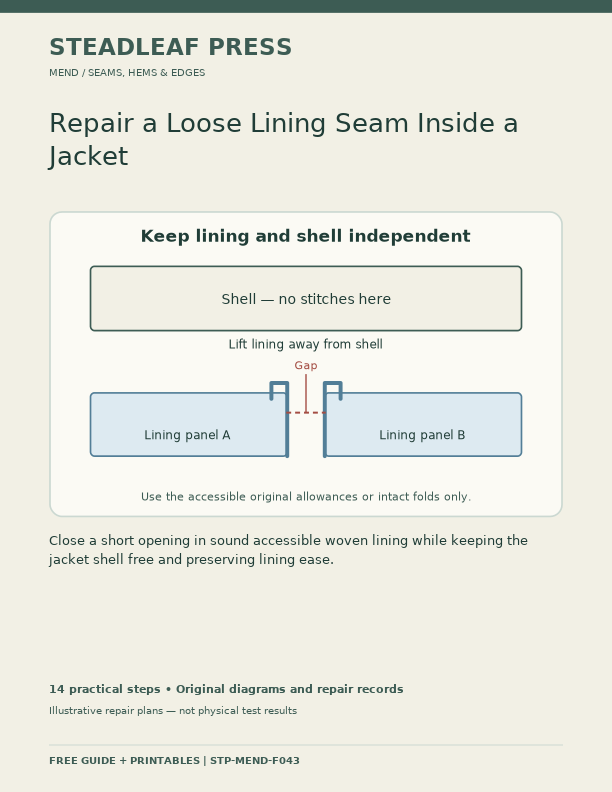
Close a short opening in sound accessible woven lining while keeping the jacket shell free and preserving lining ease.
View free guide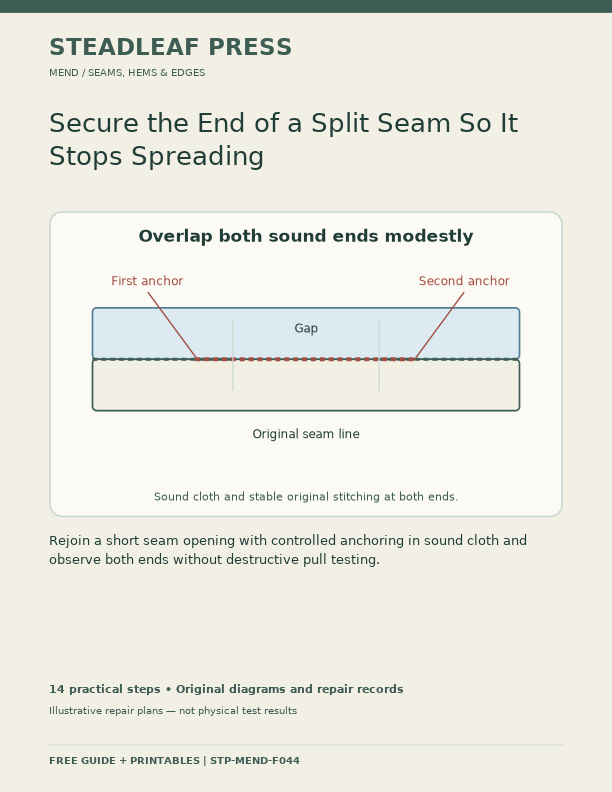
Rejoin a short seam opening with controlled anchoring in sound cloth and observe both ends without destructive pull testing.
View free guide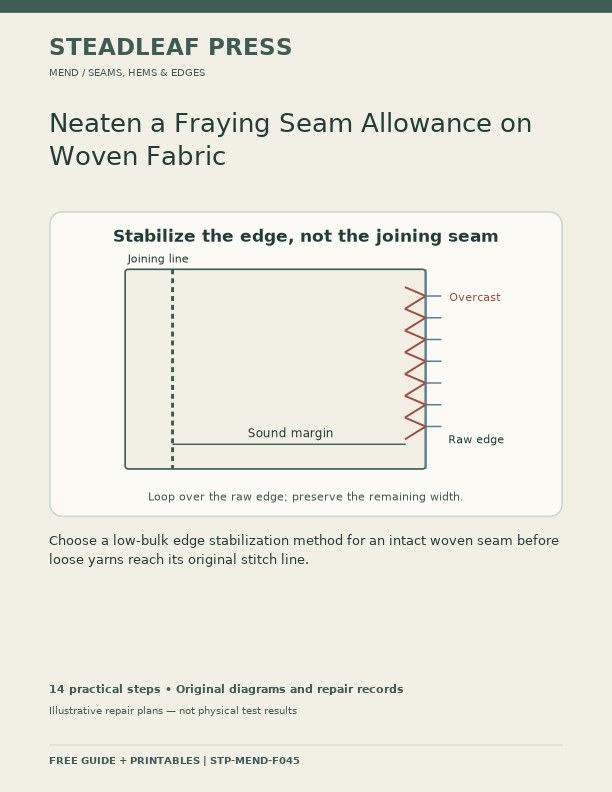
Choose a low-bulk edge stabilization method for an intact woven seam before loose yarns reach its original stitch line.
View free guide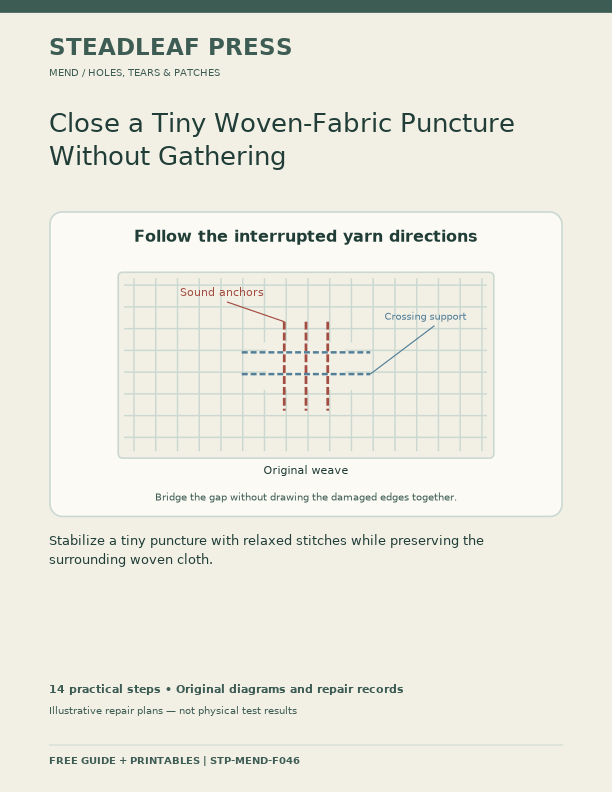
Stabilize a tiny puncture with relaxed stitches while preserving the surrounding woven cloth.
View free guide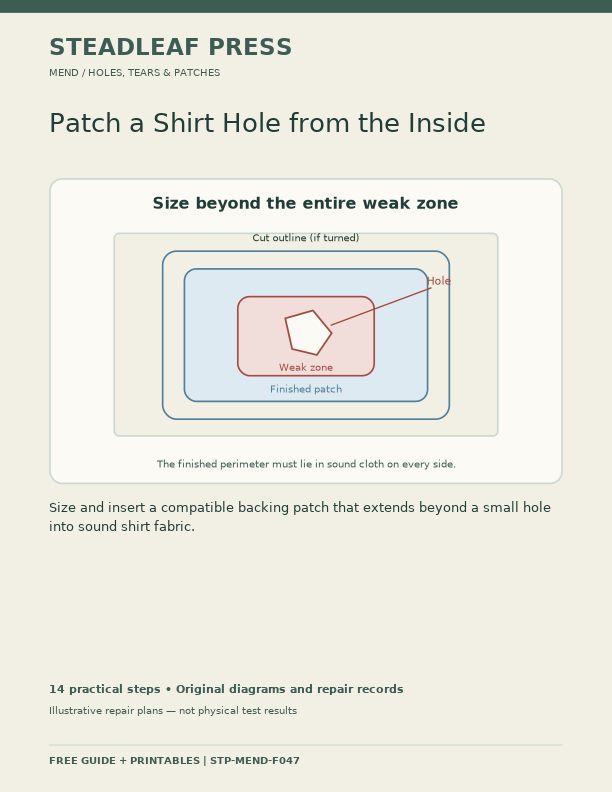
Size and insert a compatible backing patch that extends beyond a small hole into sound shirt fabric.
View free guide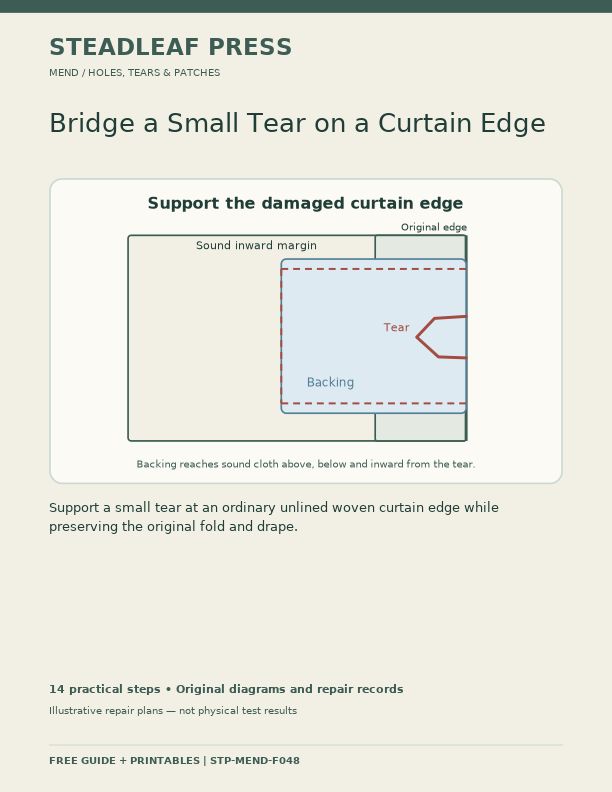
Support a small tear at an ordinary unlined woven curtain edge while preserving the original fold and drape.
View free guide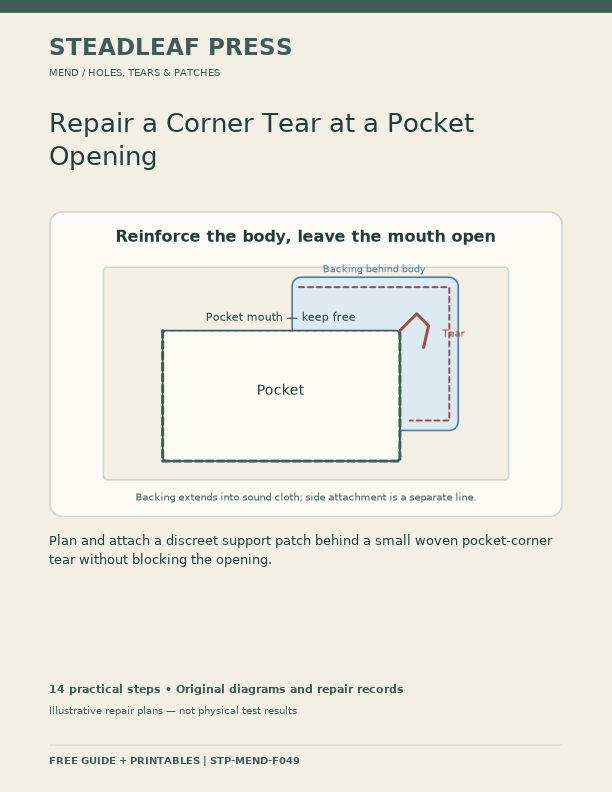
Plan and attach a discreet support patch behind a small woven pocket-corner tear without blocking the opening.
View free guide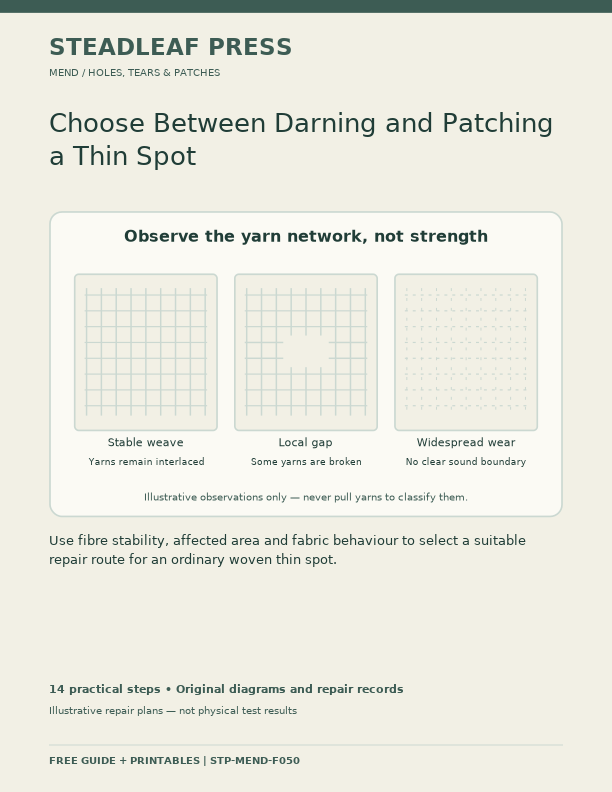
Use fibre stability, affected area and fabric behaviour to select a suitable repair route for an ordinary woven thin spot.
View free guide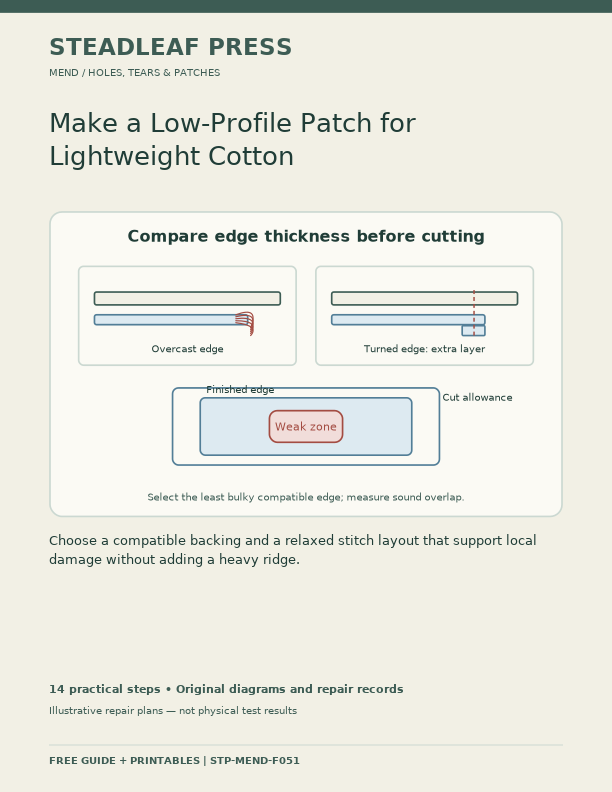
Choose a compatible backing and a relaxed stitch layout that support local damage without adding a heavy ridge.
View free guide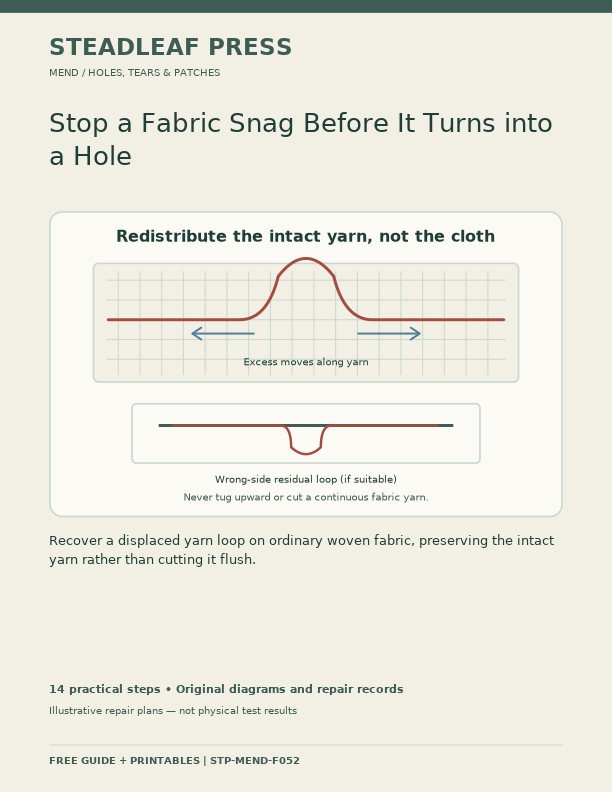
Recover a displaced yarn loop on ordinary woven fabric, preserving the intact yarn rather than cutting it flush.
View free guide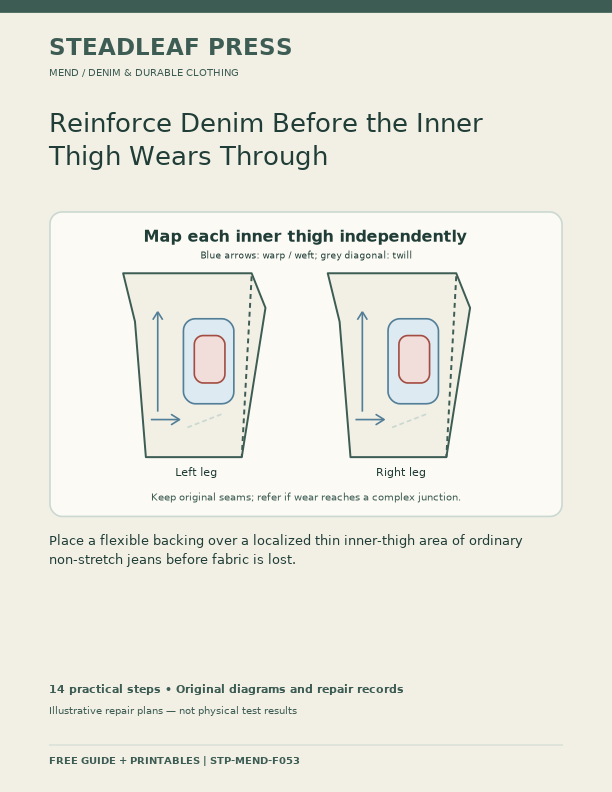
Place a flexible backing over a localized thin inner-thigh area of ordinary non-stretch jeans before fabric is lost.
View free guide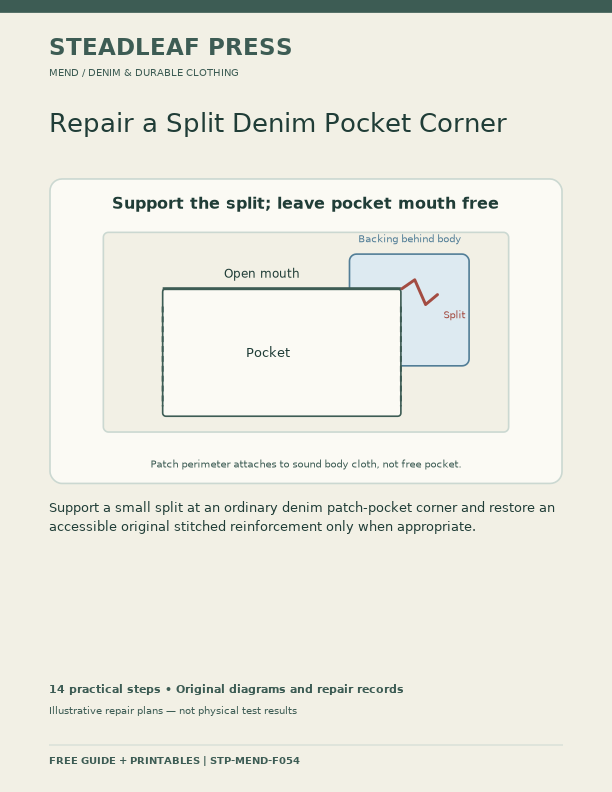
Support a small split at an ordinary denim patch-pocket corner and restore an accessible original stitched reinforcement only when appropriate.
View free guide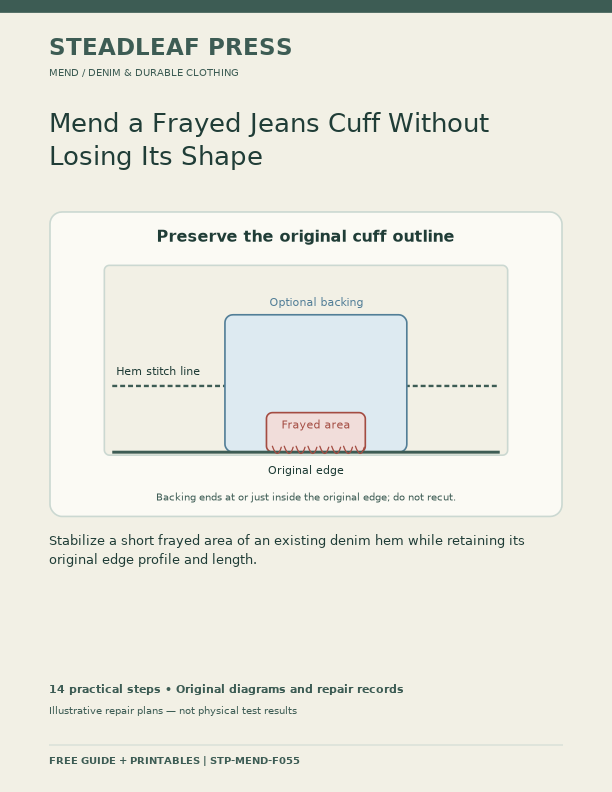
Stabilize a short frayed area of an existing denim hem while retaining its original edge profile and length.
View free guide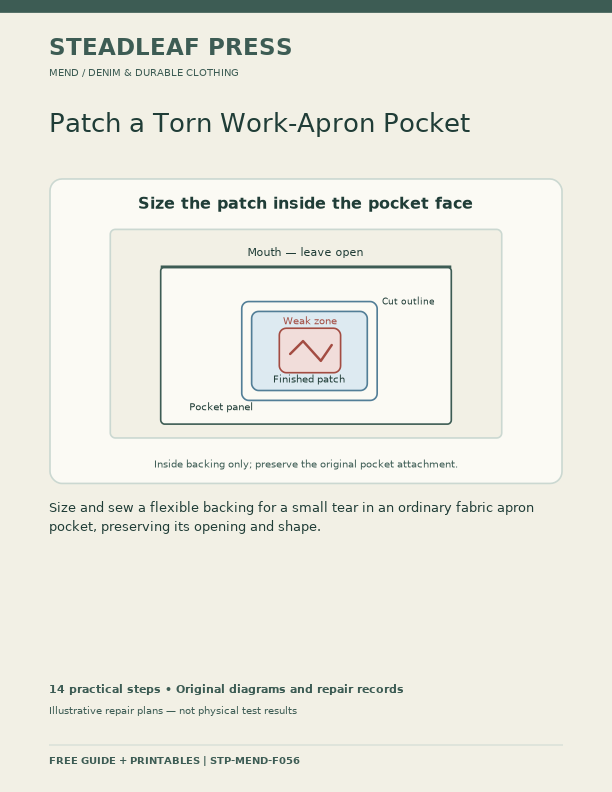
Size and sew a flexible backing for a small tear in an ordinary fabric apron pocket, preserving its opening and shape.
View free guide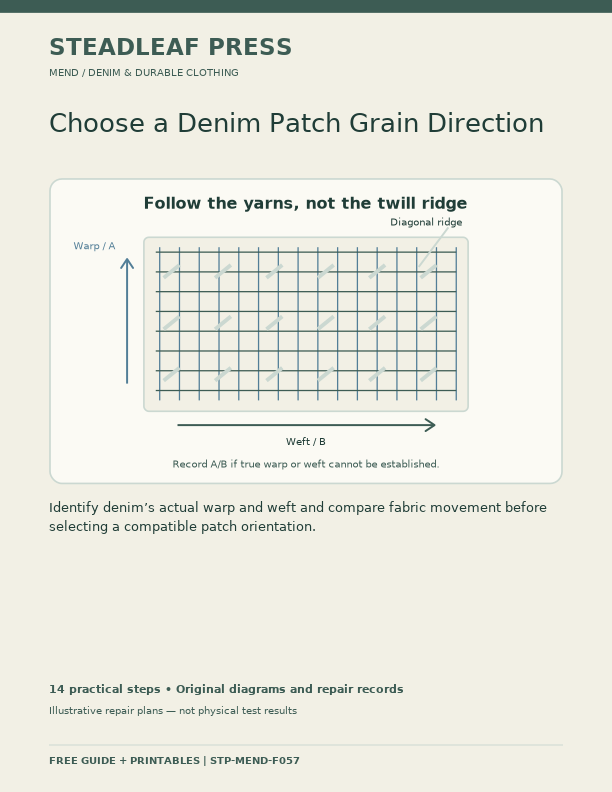
Identify denim’s actual warp and weft and compare fabric movement before selecting a compatible patch orientation.
View free guide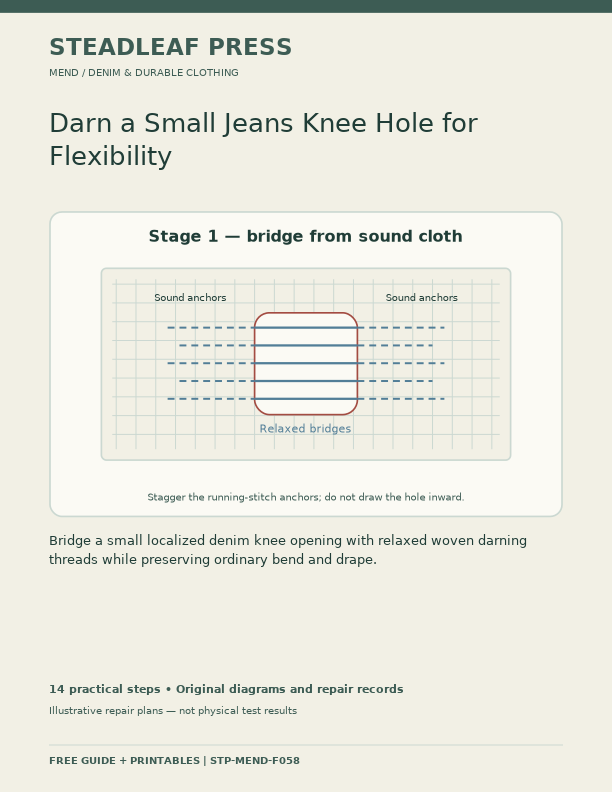
Bridge a small localized denim knee opening with relaxed woven darning threads while preserving ordinary bend and drape.
View free guide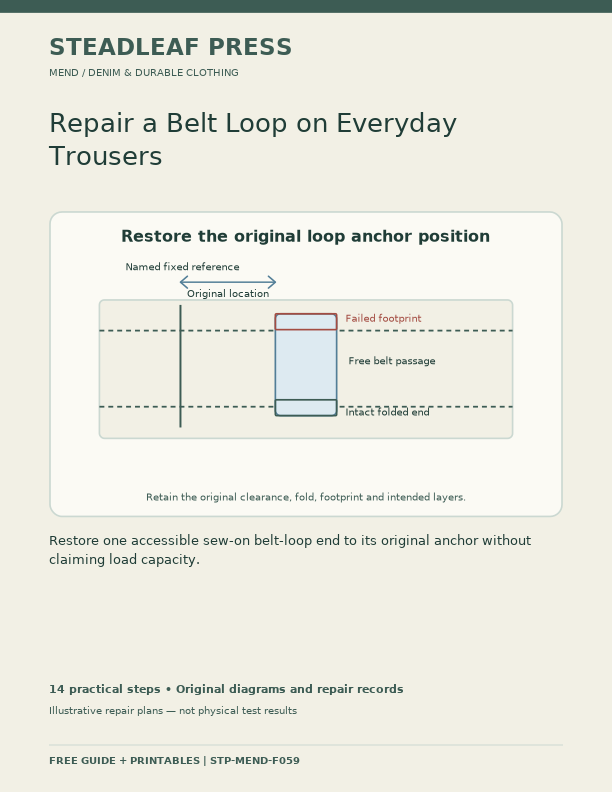
Restore one accessible sew-on belt-loop end to its original anchor without claiming load capacity.
View free guide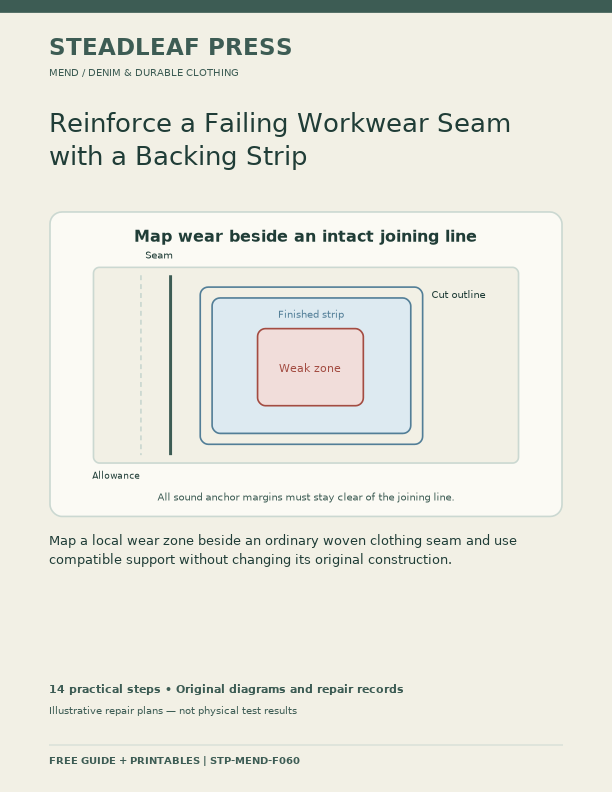
Map a local wear zone beside an ordinary woven clothing seam and use compatible support without changing its original construction.
View free guide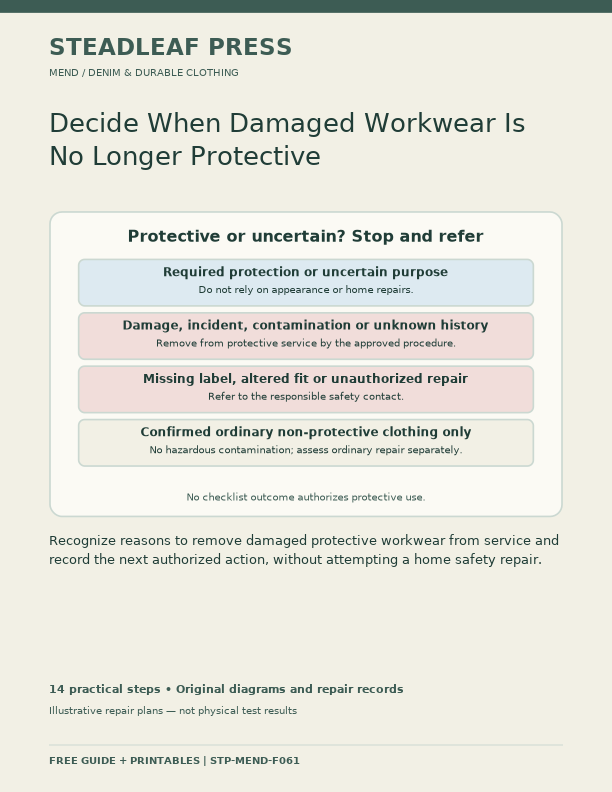
Recognize reasons to remove damaged protective workwear from service and record the next authorized action, without attempting a home safety repair.
View free guide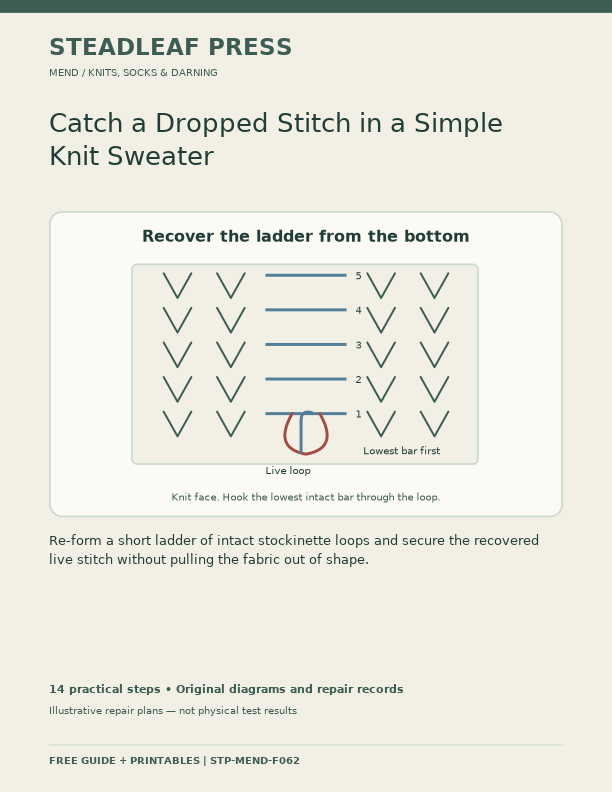
Re-form a short ladder of intact stockinette loops and secure the recovered live stitch without pulling the fabric out of shape.
View free guide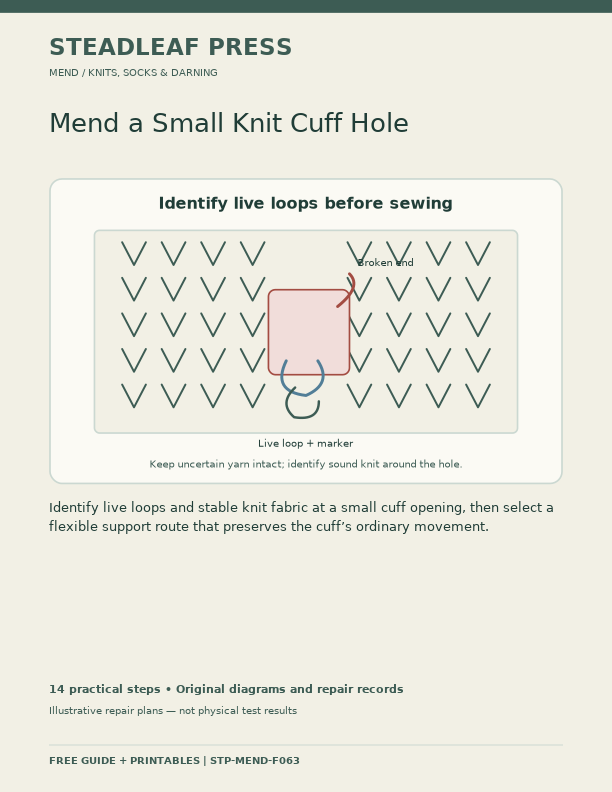
Identify live loops and stable knit fabric at a small cuff opening, then select a flexible support route that preserves the cuff’s ordinary movement.
View free guide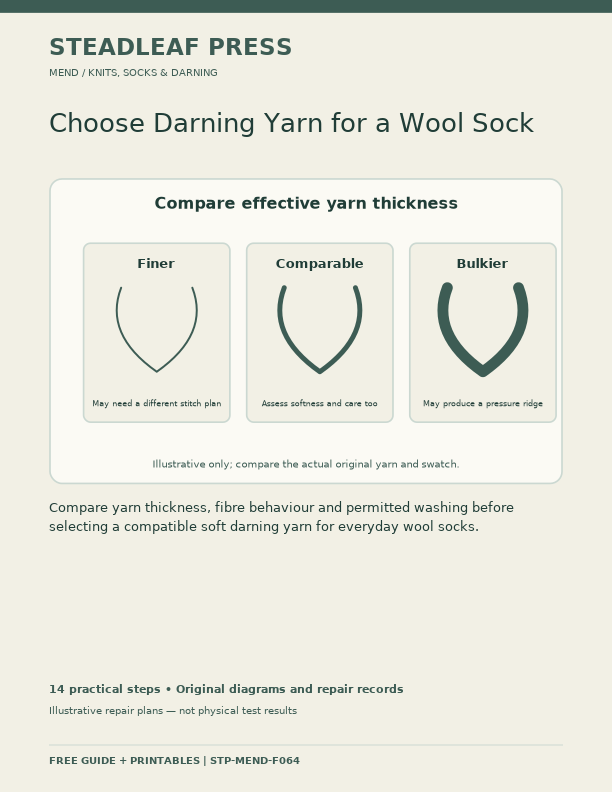
Compare yarn thickness, fibre behaviour and permitted washing before selecting a compatible soft darning yarn for everyday wool socks.
View free guide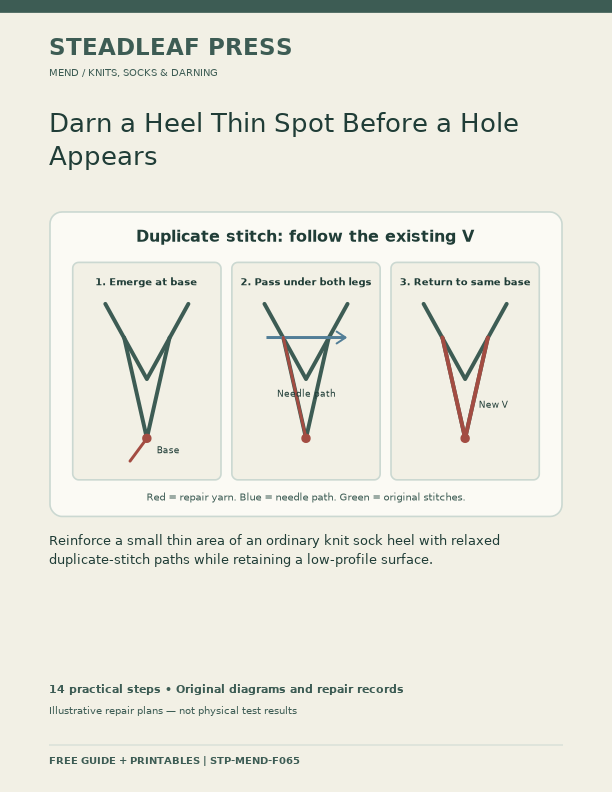
Reinforce a small thin area of an ordinary knit sock heel with relaxed duplicate-stitch paths while retaining a low-profile surface.
View free guide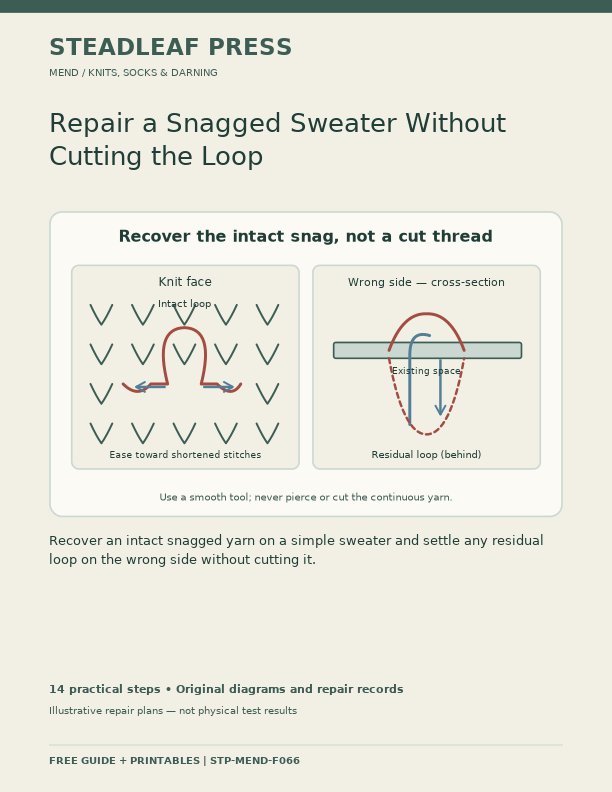
Recover an intact snagged yarn on a simple sweater and settle any residual loop on the wrong side without cutting it.
View free guide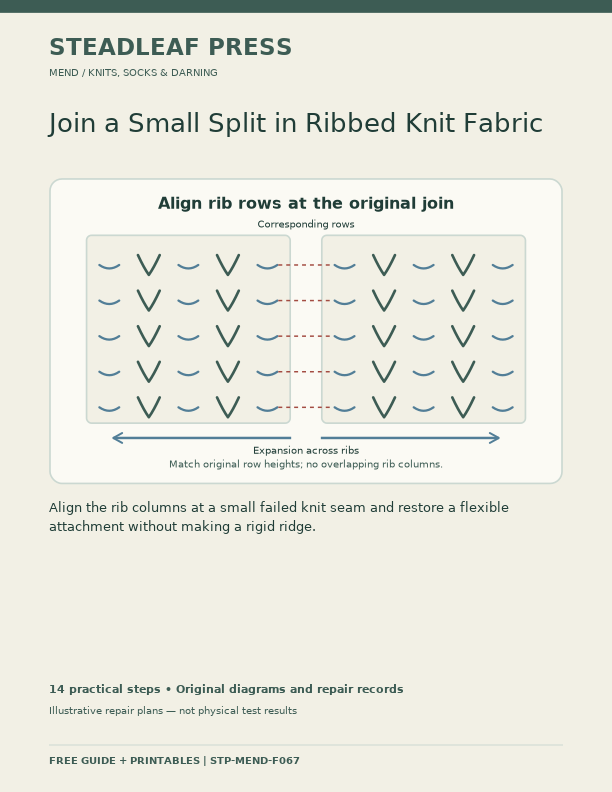
Align the rib columns at a small failed knit seam and restore a flexible attachment without making a rigid ridge.
View free guide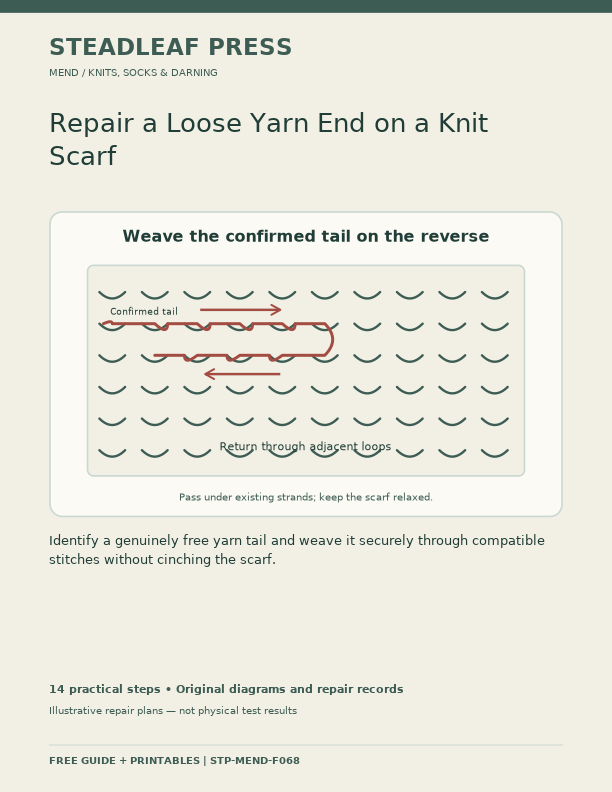
Identify a genuinely free yarn tail and weave it securely through compatible stitches without cinching the scarf.
View free guide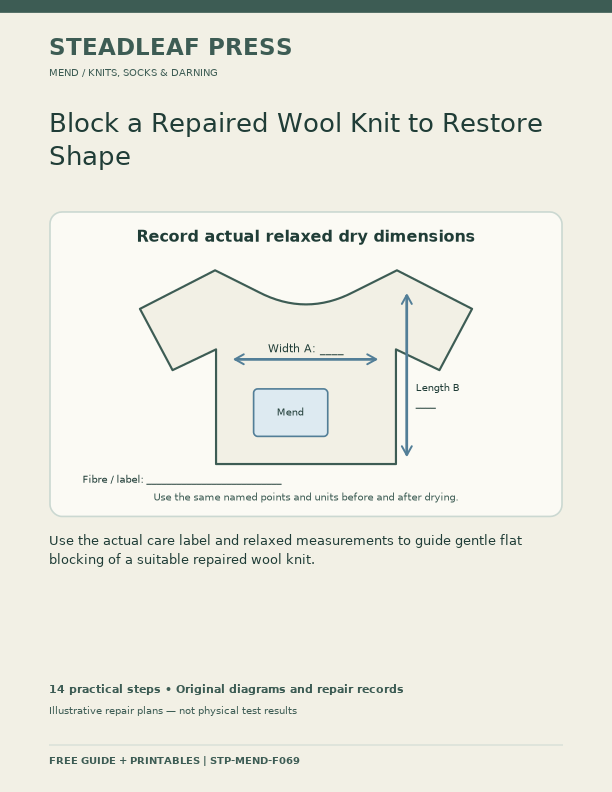
Use the actual care label and relaxed measurements to guide gentle flat blocking of a suitable repaired wool knit.
View free guide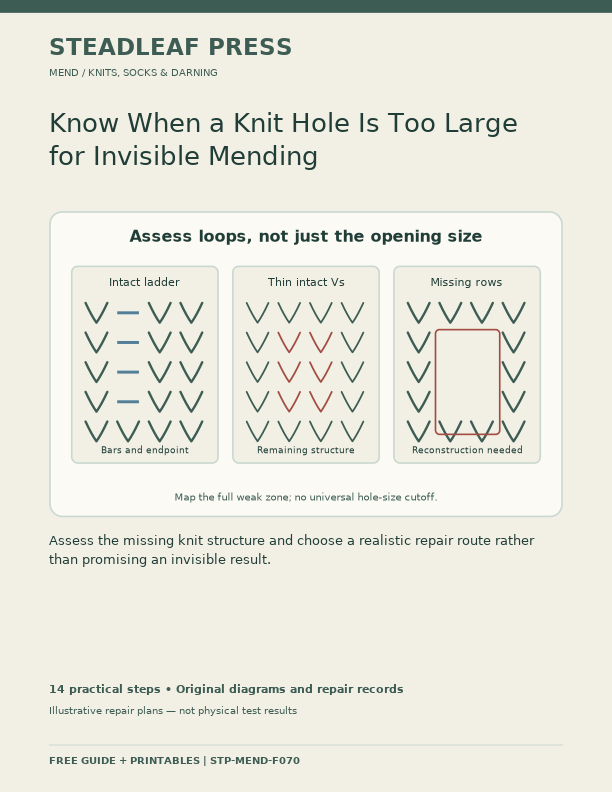
Assess the missing knit structure and choose a realistic repair route rather than promising an invisible result.
View free guide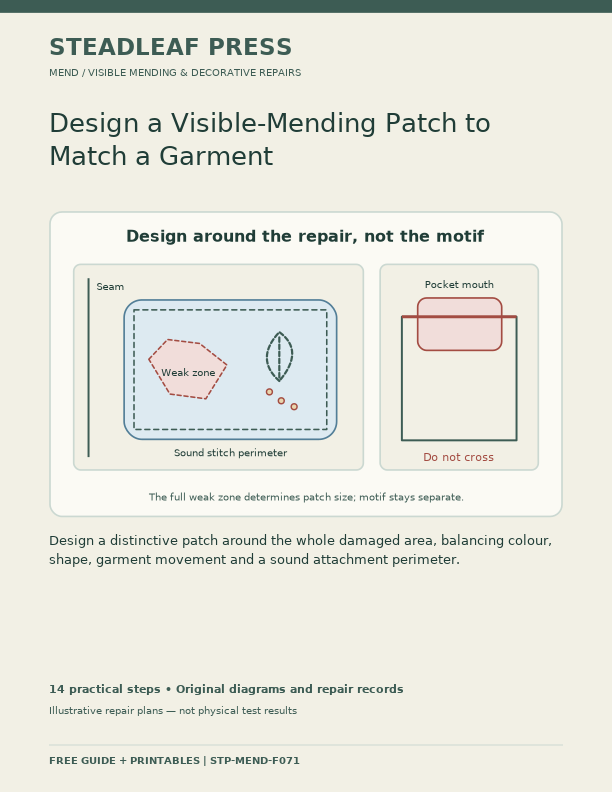
Design a distinctive patch around the whole damaged area, balancing colour, shape, garment movement and a sound attachment perimeter.
View free guide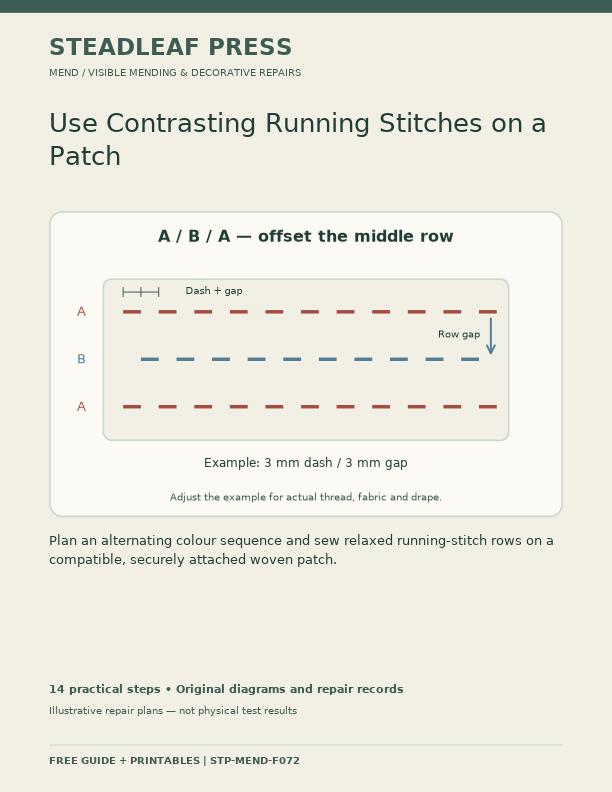
Plan an alternating colour sequence and sew relaxed running-stitch rows on a compatible, securely attached woven patch.
View free guide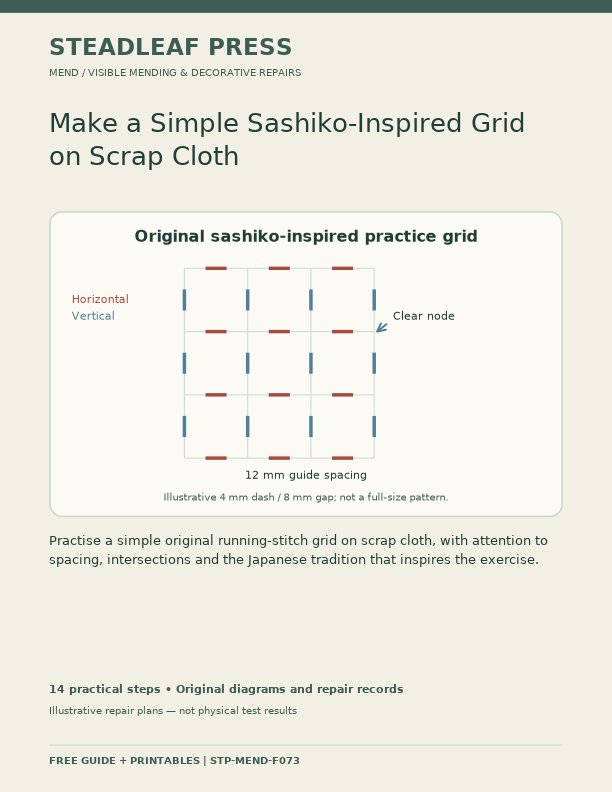
Practise a simple original running-stitch grid on scrap cloth, with attention to spacing, intersections and the Japanese tradition that inspires the exercise.
View free guide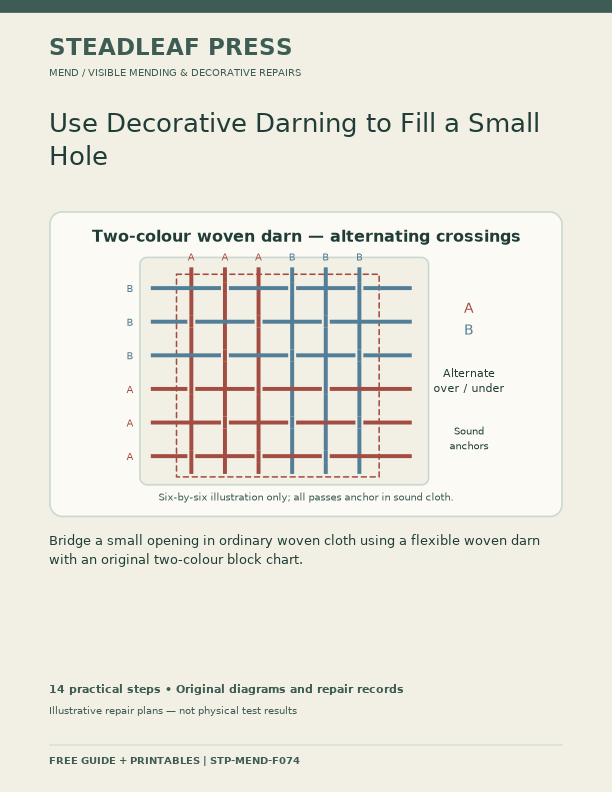
Bridge a small opening in ordinary woven cloth using a flexible woven darn with an original two-colour block chart.
View free guide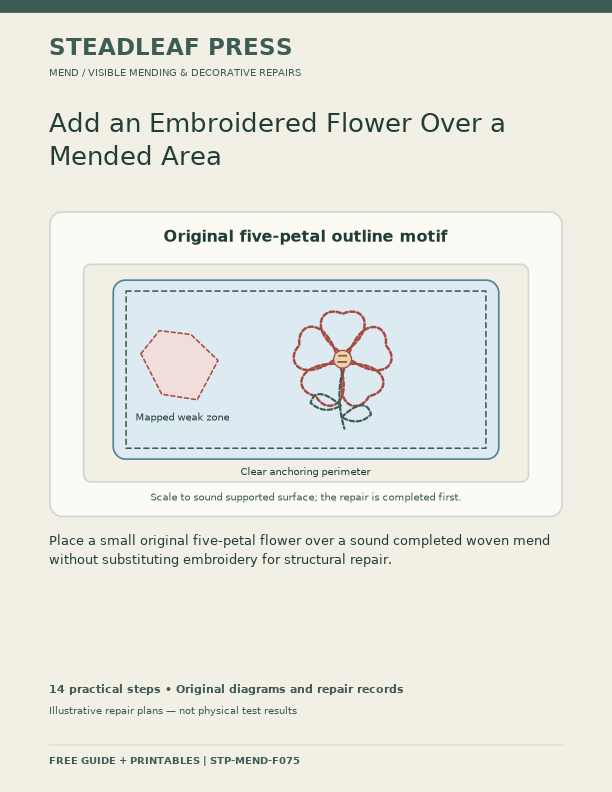
Place a small original five-petal flower over a sound completed woven mend without substituting embroidery for structural repair.
View free guide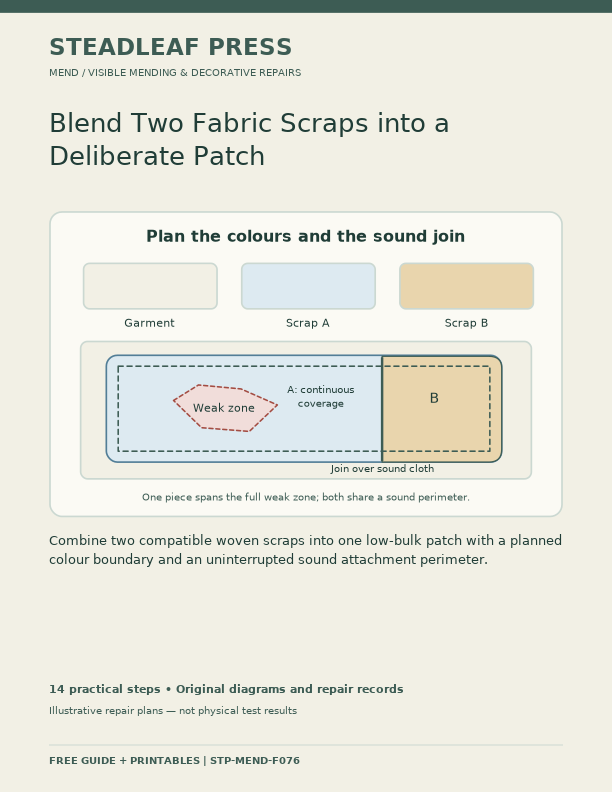
Combine two compatible woven scraps into one low-bulk patch with a planned colour boundary and an uninterrupted sound attachment perimeter.
View free guide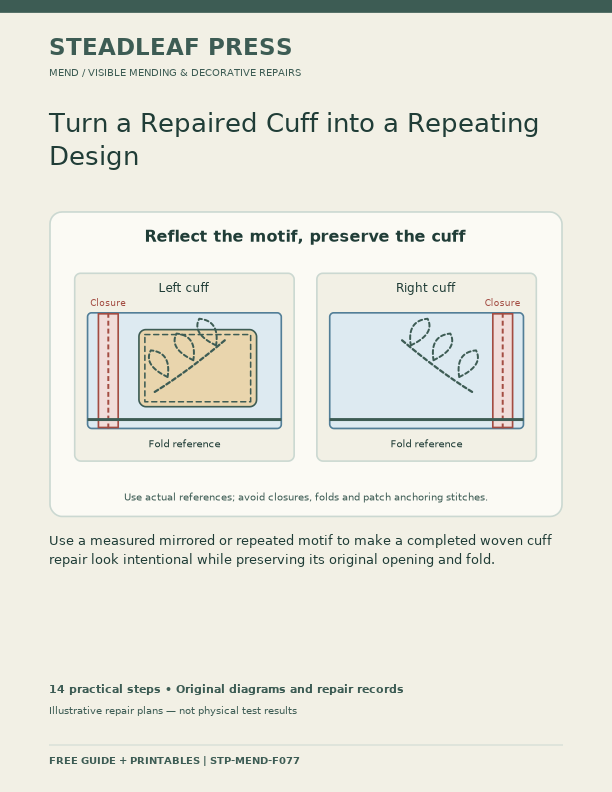
Use a measured mirrored or repeated motif to make a completed woven cuff repair look intentional while preserving its original opening and fold.
View free guide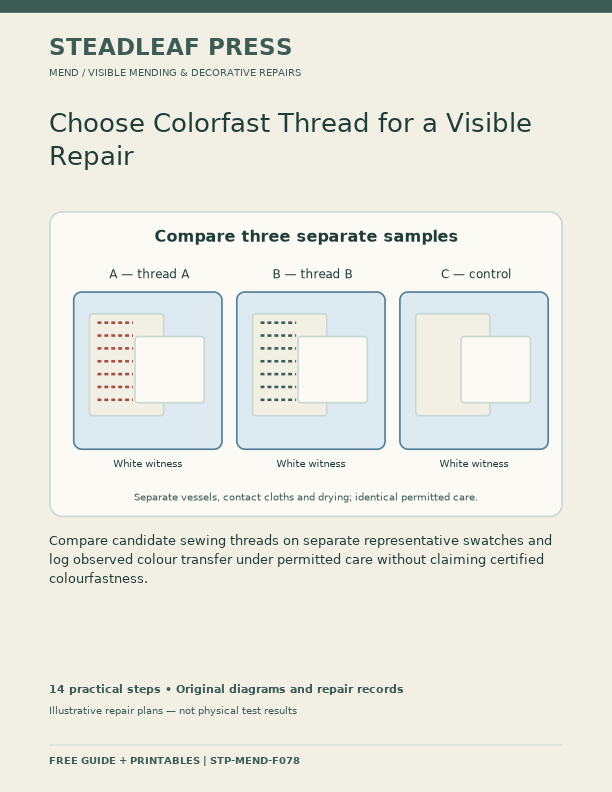
Compare candidate sewing threads on separate representative swatches and log observed colour transfer under permitted care without claiming certified colourfastness.
View free guide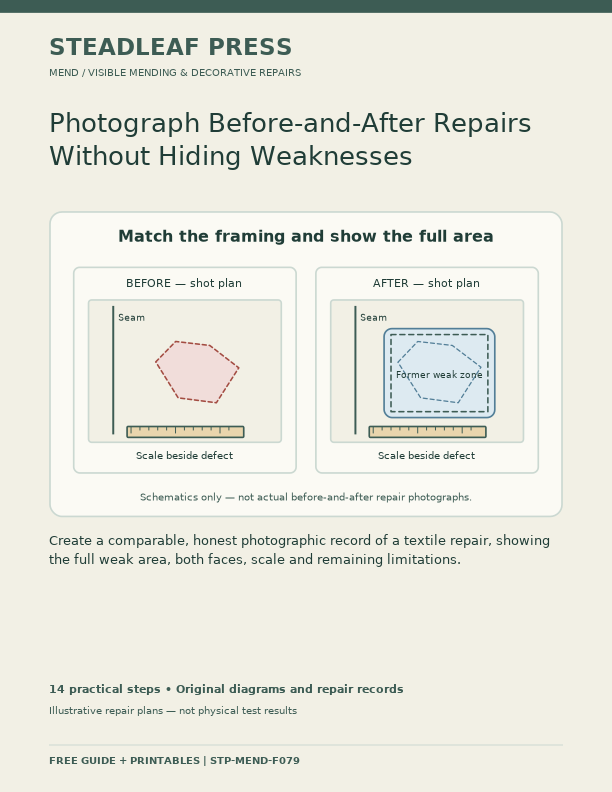
Create a comparable, honest photographic record of a textile repair, showing the full weak area, both faces, scale and remaining limitations.
View free guide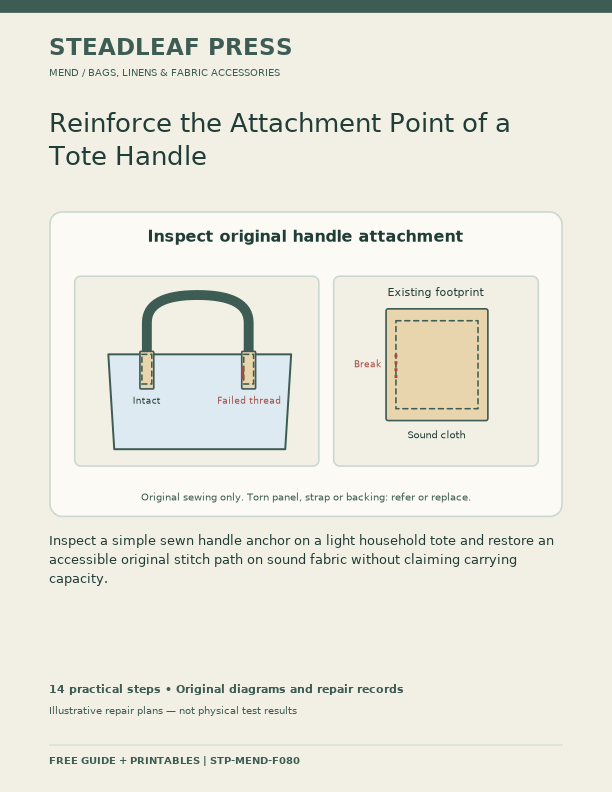
Inspect a simple sewn handle anchor on a light household tote and restore an accessible original stitch path on sound fabric without claiming carrying capacity.
View free guide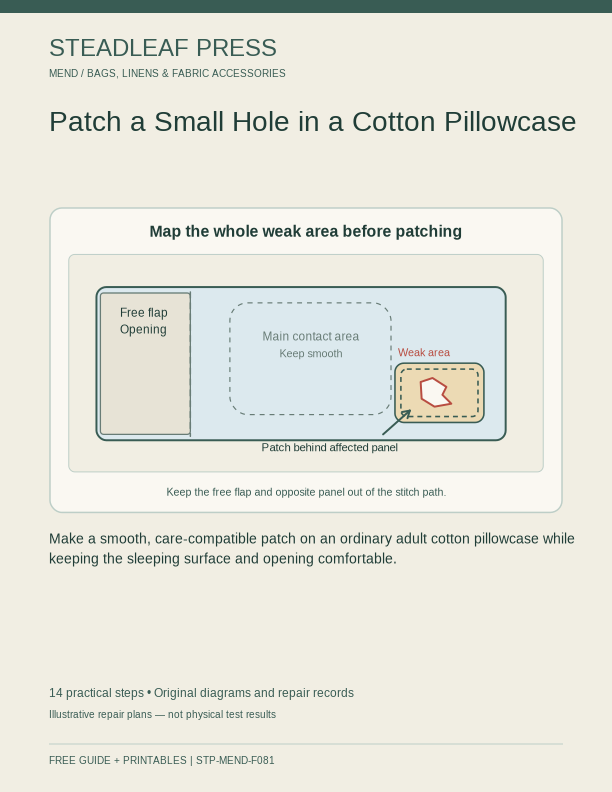
Make a smooth, care-compatible patch on an ordinary adult cotton pillowcase while keeping the sleeping surface and opening comfortable.
View free guide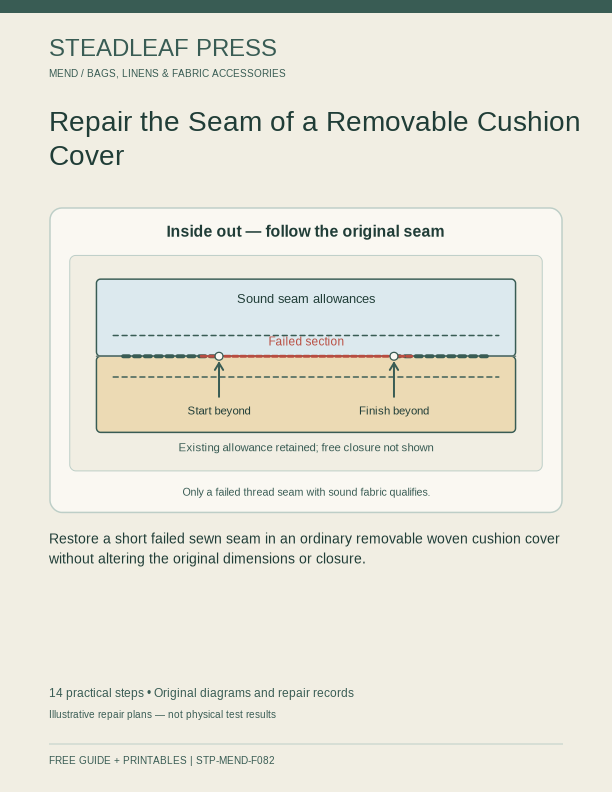
Restore a short failed sewn seam in an ordinary removable woven cushion cover without altering the original dimensions or closure.
View free guide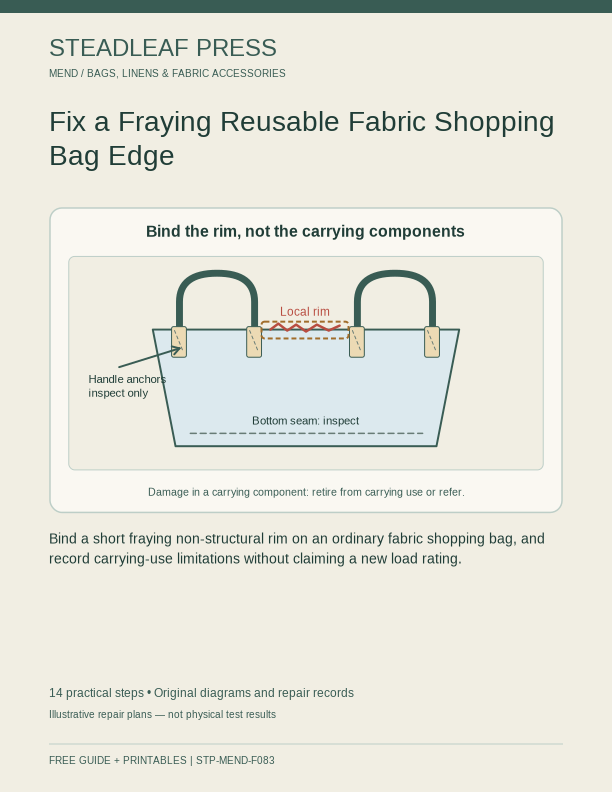
Bind a short fraying non-structural rim on an ordinary fabric shopping bag, and record carrying-use limitations without claiming a new load rating.
View free guide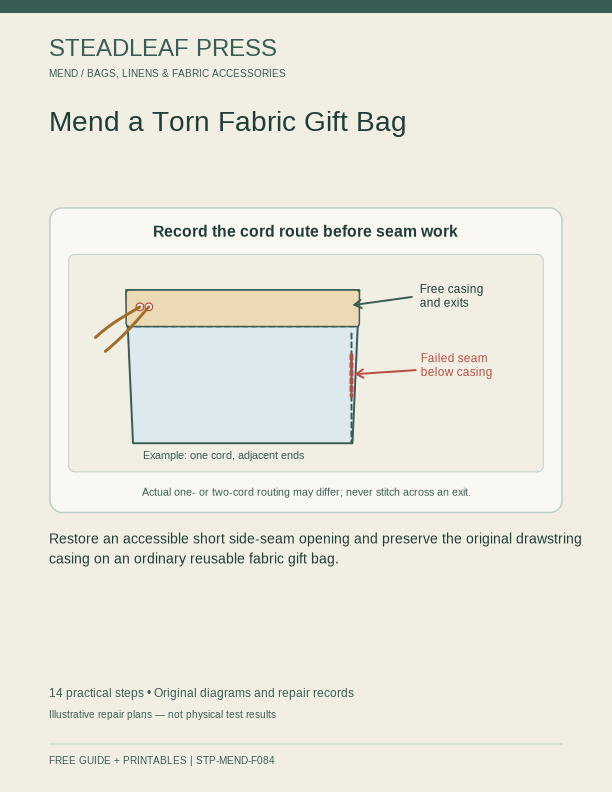
Restore an accessible short side-seam opening and preserve the original drawstring casing on an ordinary reusable fabric gift bag.
View free guide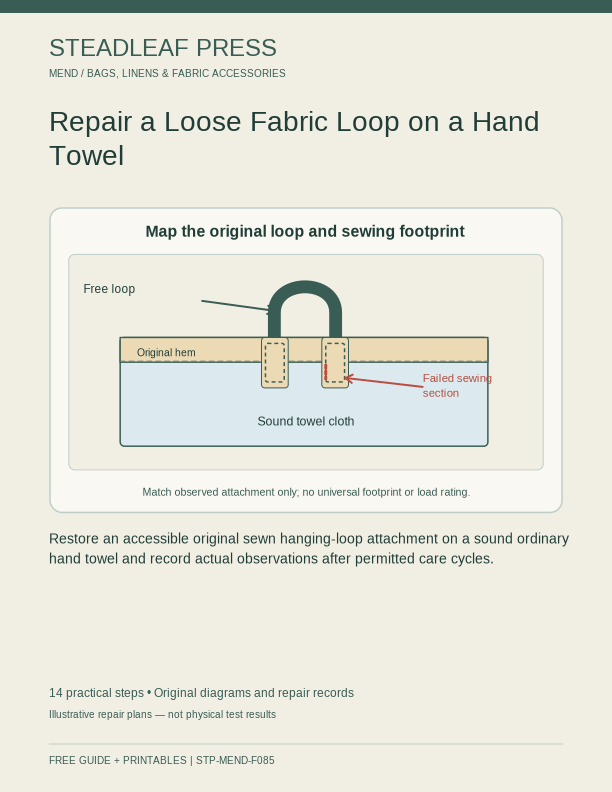
Restore an accessible original sewn hanging-loop attachment on a sound ordinary hand towel and record actual observations after permitted care cycles.
View free guide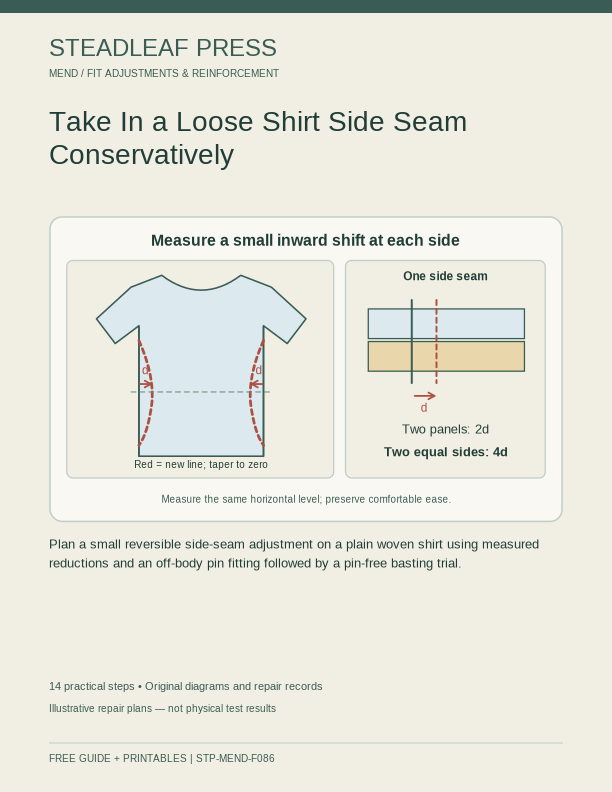
Plan a small reversible side-seam adjustment on a plain woven shirt using measured reductions and an off-body pin fitting followed by a pin-free basting trial.
View free guide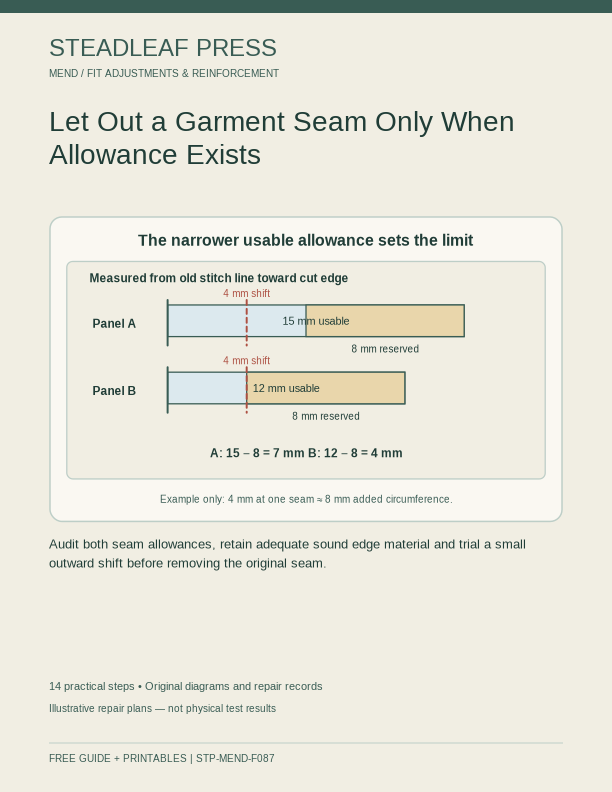
Audit both seam allowances, retain adequate sound edge material and trial a small outward shift before removing the original seam.
View free guide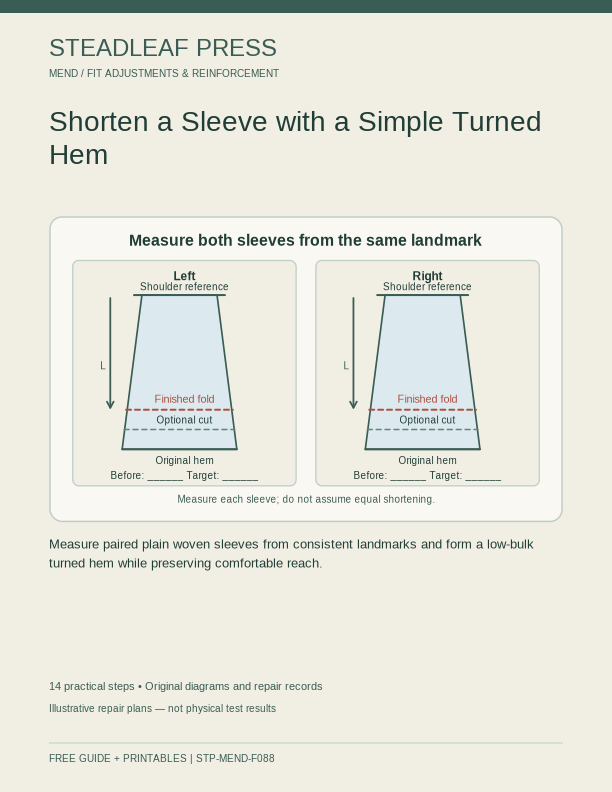
Measure paired plain woven sleeves from consistent landmarks and form a low-bulk turned hem while preserving comfortable reach.
View free guide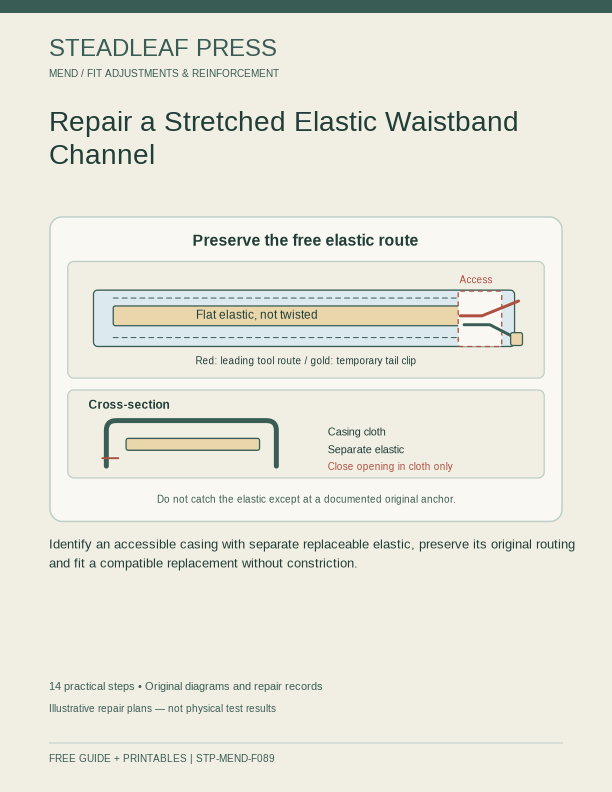
Identify an accessible casing with separate replaceable elastic, preserve its original routing and fit a compatible replacement without constriction.
View free guide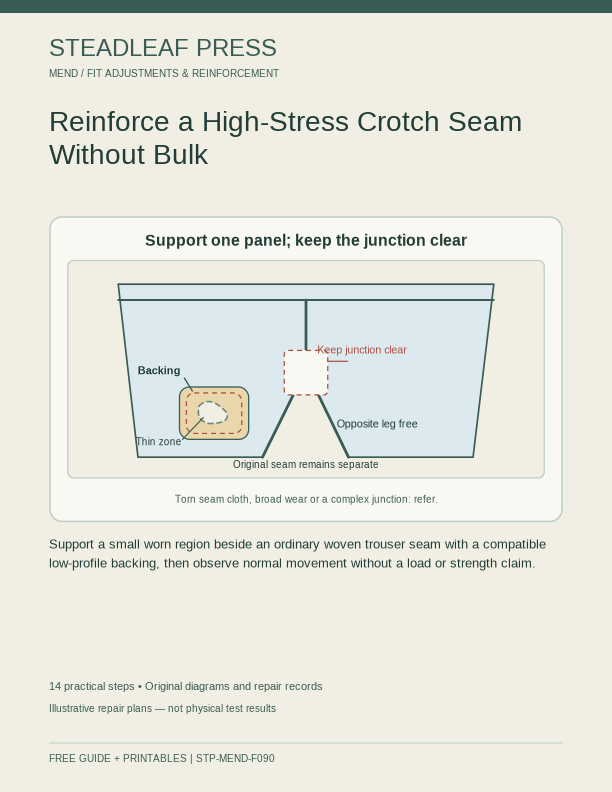
Support a small worn region beside an ordinary woven trouser seam with a compatible low-profile backing, then observe normal movement without a load or strength claim.
View free guide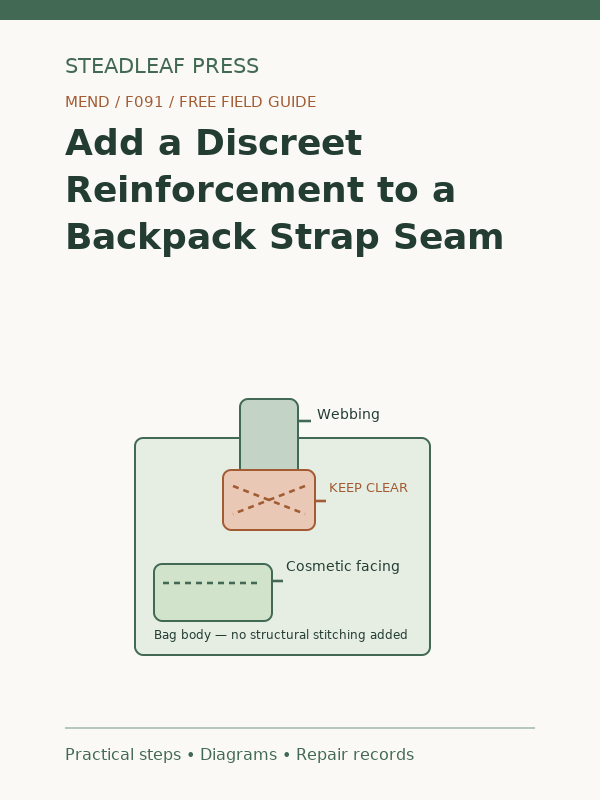
Recognize a cosmetic seam defect, and reinforce only a non-load-bearing fabric detail.
View free guide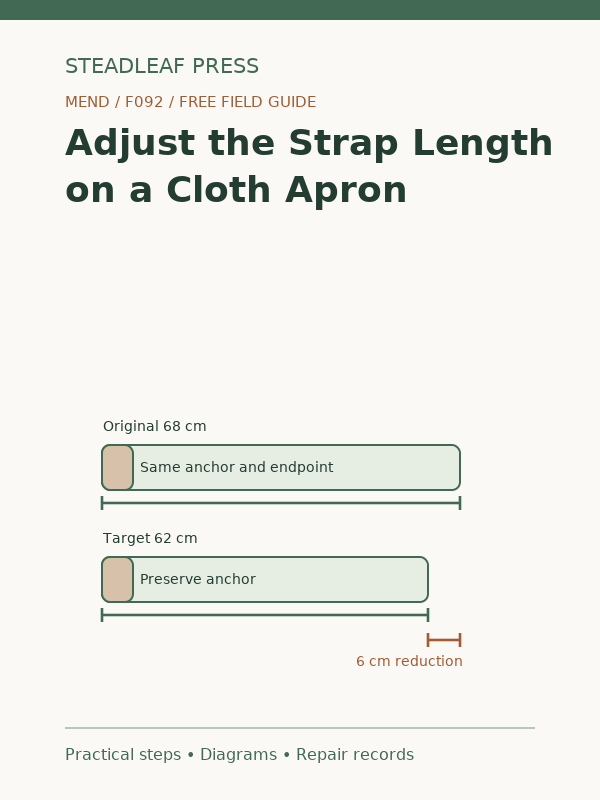
Measure a comfortable fit, preserve the original attachment and secure a simple non-protective cloth strap.
View free guide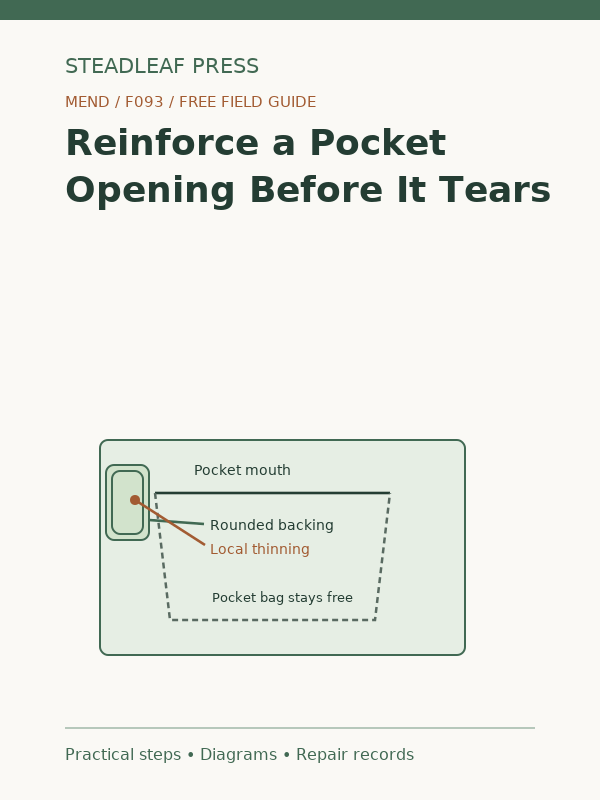
Support a small stable tension point without closing the pocket or making a hard ridge.
View free guide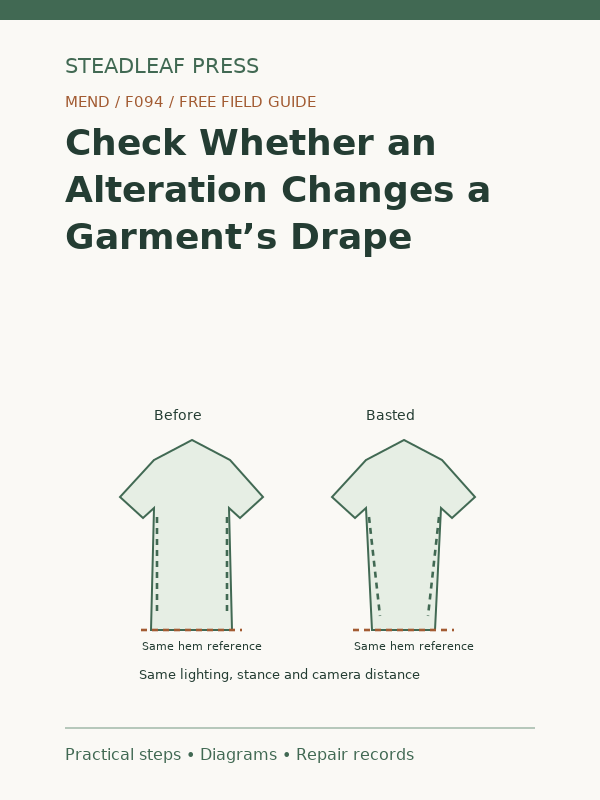
Use reversible basting, consistent comparison and a pin-free wear-test worksheet before cutting or final sewing.
View free guide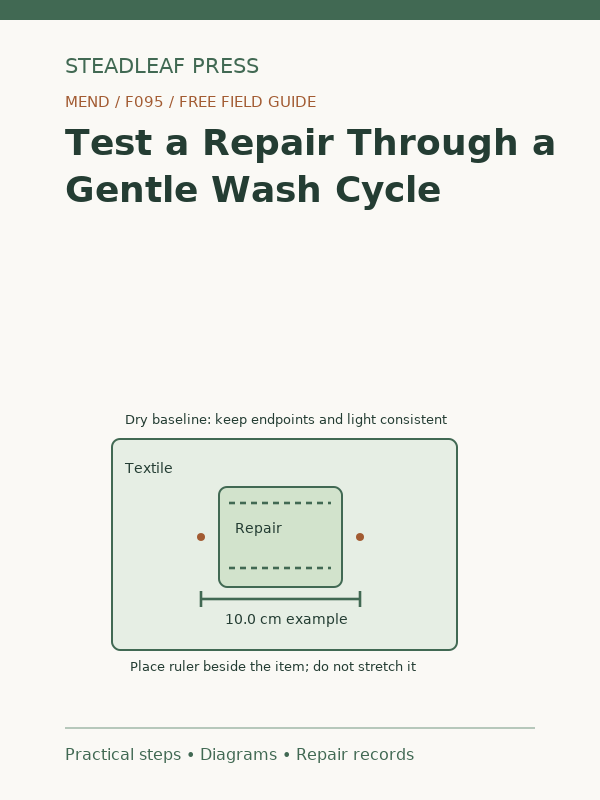
Record an ordinary permitted wash, compare prewash and postwash condition, and stop when new damage appears.
View free guide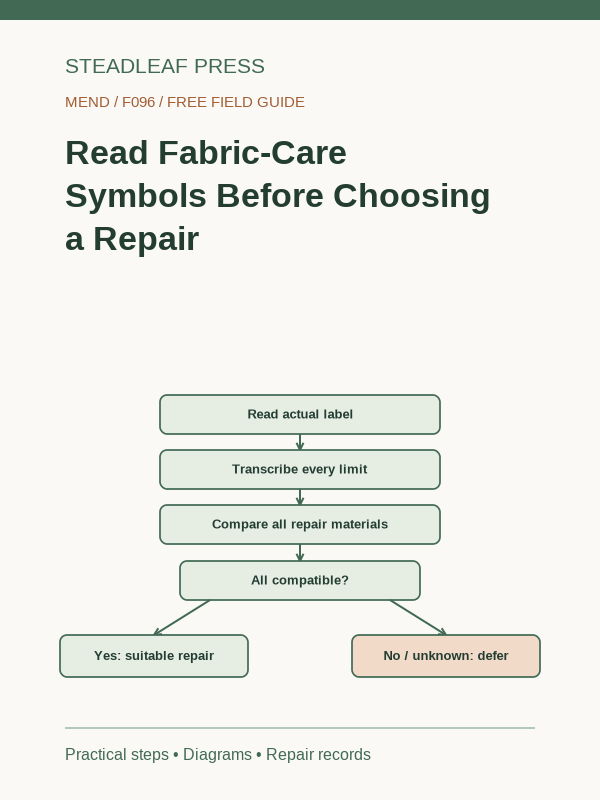
Turn the care label into a practical repair decision without overriding the maker’s instructions.
View free guide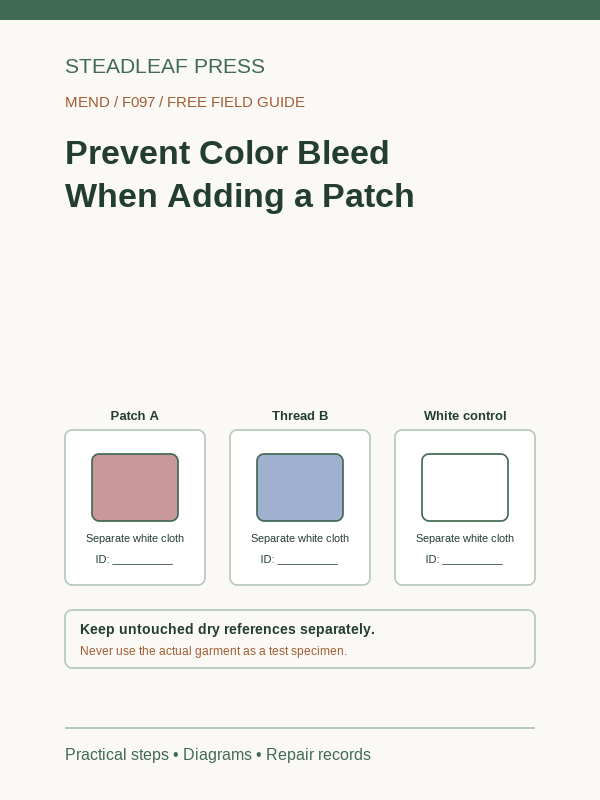
Use expendable swatches to identify obvious dye transfer risks before patching an everyday textile.
View free guide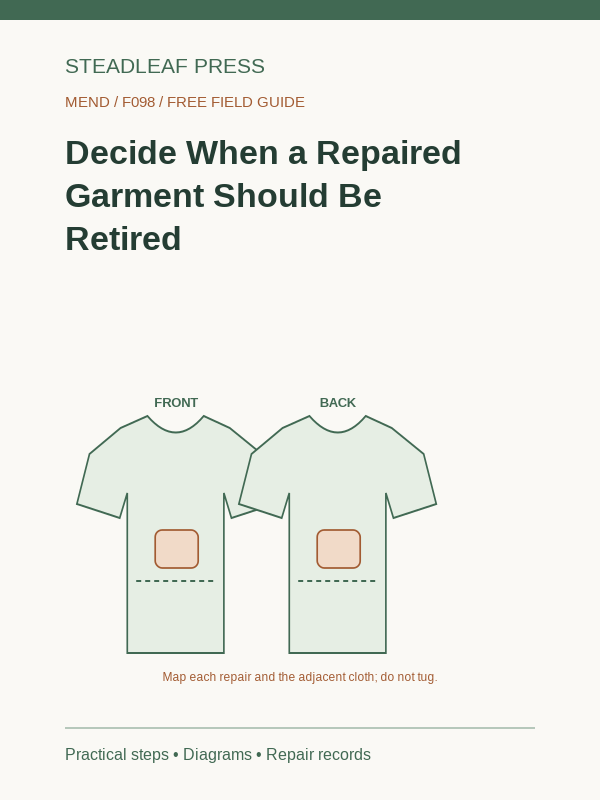
Use visible condition, ordinary fit and intended function to decide whether to keep, refer, repurpose or retire a garment.
View free guide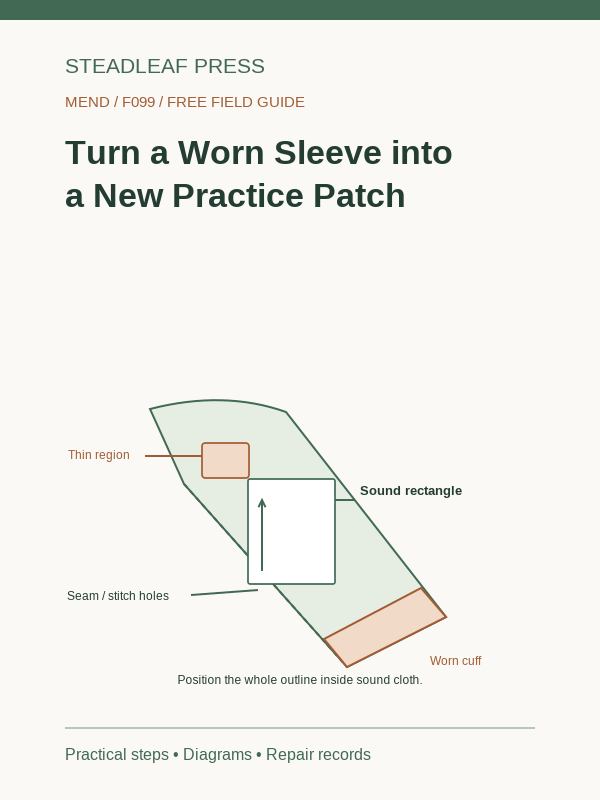
Salvage a sound area from a retired woven sleeve and turn it into a clearly labelled non-load-bearing stitch-practice patch.
View free guide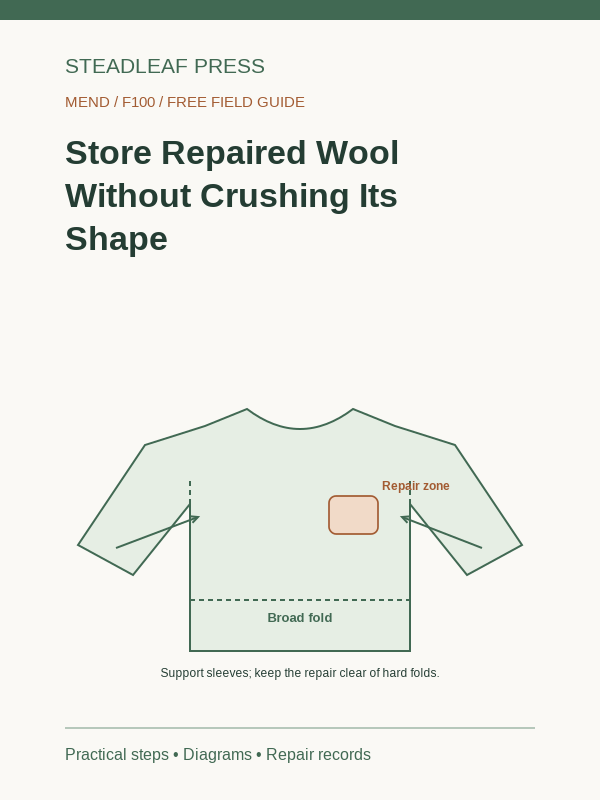
Choose a storage route for repaired everyday wool, with gentle support, care-label checks and periodic visual review.
View free guide