MEND · FREE GUIDE
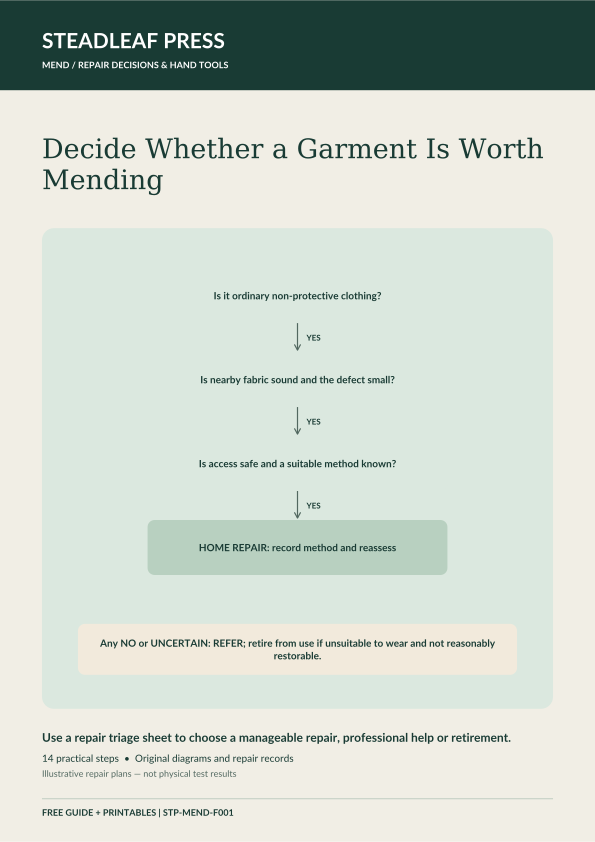
Decide Whether a Garment Is Worth Mending
Use a repair triage sheet to choose a manageable repair, professional help or retirement.
View free guideThoughtful repairs and beautiful ways to give fabric a longer life.
Decide what can be repaired and choose appropriate tools.
Restore ordinary garment fastening function without risky improvisation.
Restore functional seams, hems and woven edges.
Stabilize fabric damage using an appropriately sized, low-profile repair.
Repair and reinforce common wear points in durable everyday garments.
Restore knit fabric loops and small areas of worn yarn.
Turn a sound ordinary repair into an intentionally attractive detail.
Mend everyday bags and removable domestic fabric items.
Refine fit or strengthen ordinary textile stress points conservatively.
Check repair durability and extend fabric life without unsafe work.
These subjects are part of the editorial roadmap. A topic card is not a published guide or a purchase offer.
Our first Mend guides are in preparation. Explore the topics above, or see our currently available downloads.
NOW AVAILABLE / FREE
100 original, complete free Mend guides.
Use a repair triage sheet to choose a manageable repair, professional help or retirement.
View free guide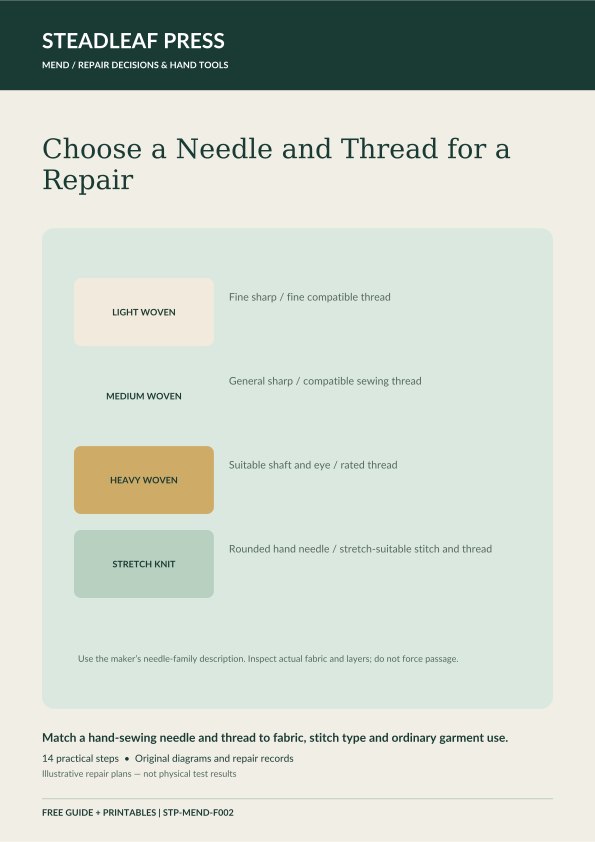
Match a hand-sewing needle and thread to fabric, stitch type and ordinary garment use.
View free guide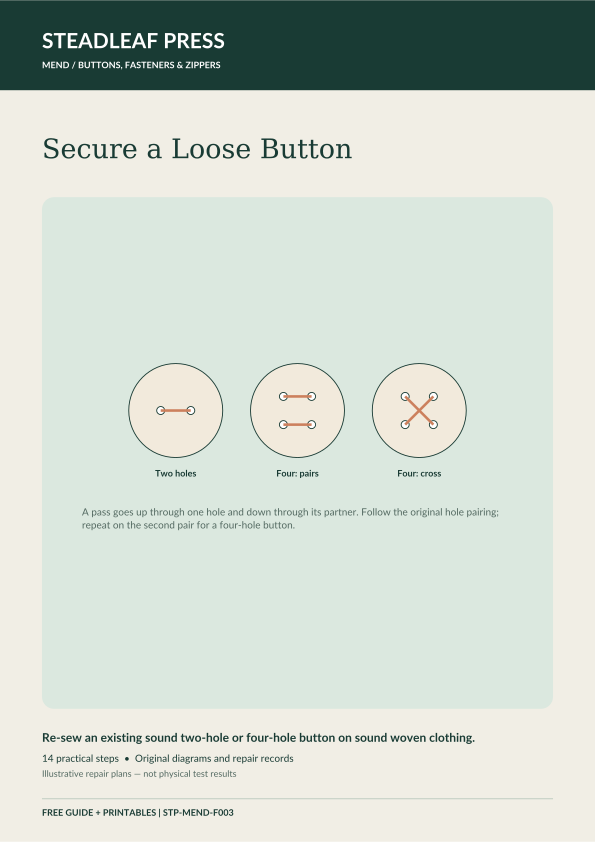
Re-sew an existing sound two-hole or four-hole button on sound woven clothing.
View free guide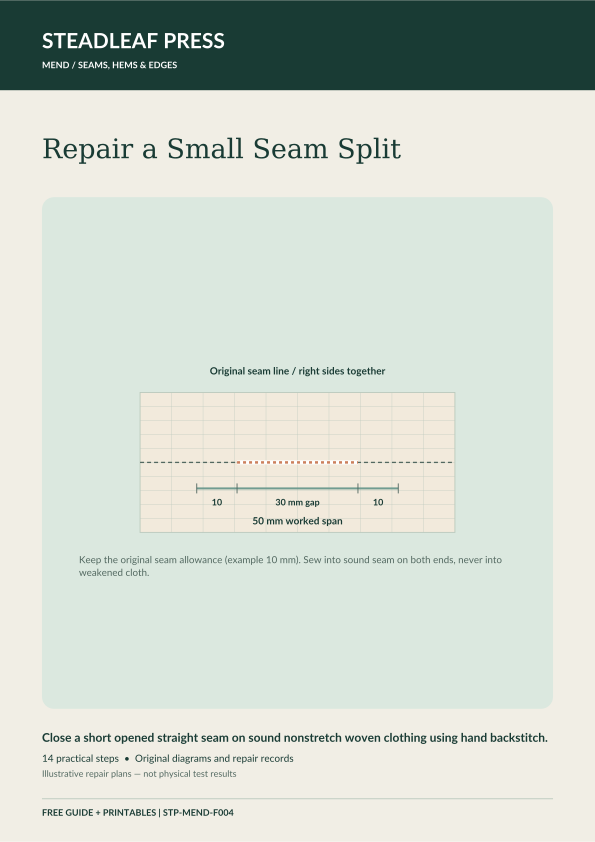
Close a short opened straight seam on sound nonstretch woven clothing using hand backstitch.
View free guide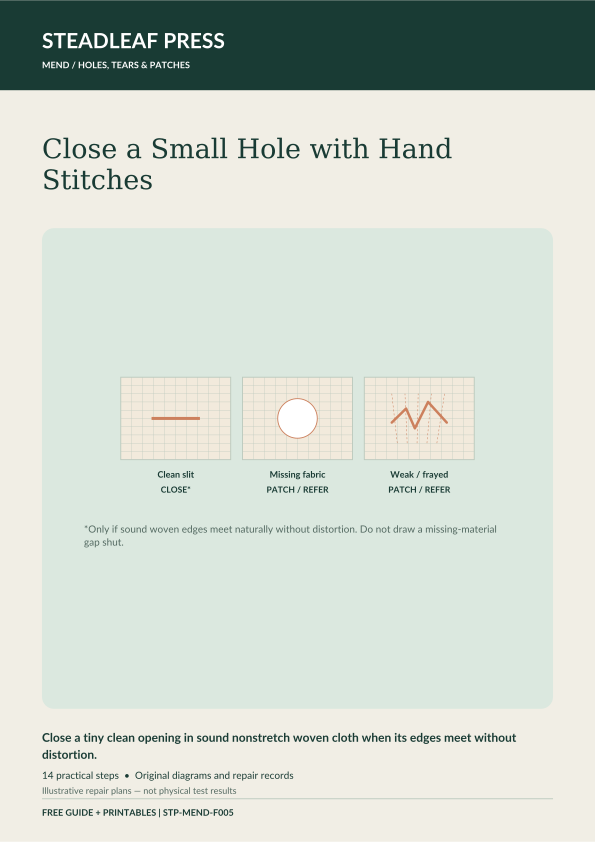
Close a tiny clean opening in sound nonstretch woven cloth when its edges meet without distortion.
View free guide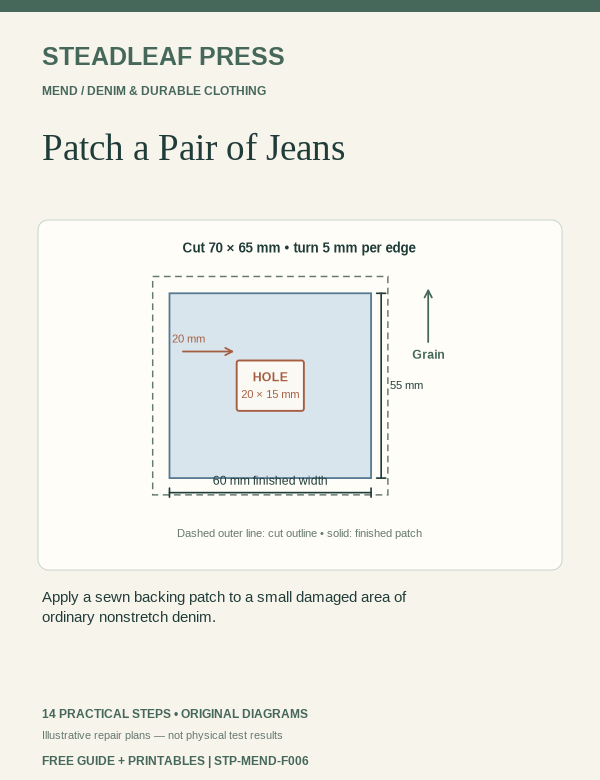
Apply a sewn backing patch to a small damaged area of ordinary nonstretch denim.
View free guide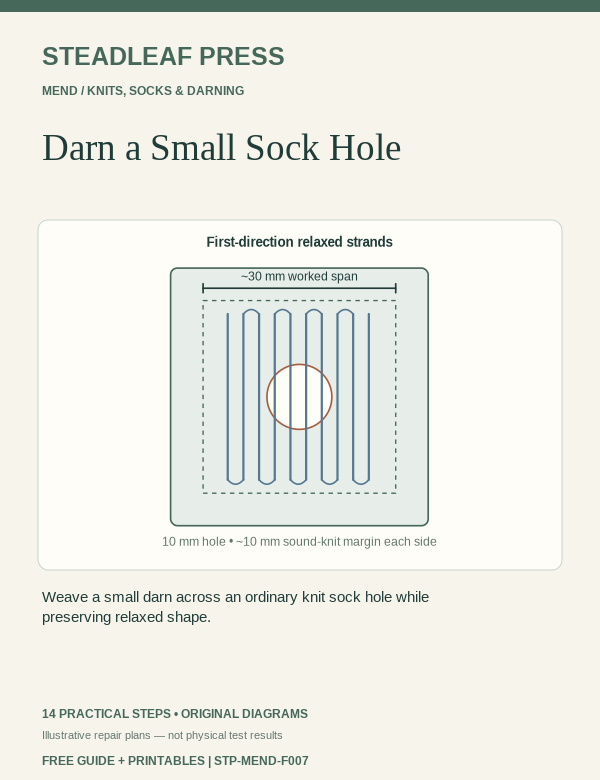
Weave a small darn across an ordinary knit sock hole while preserving relaxed shape.
View free guide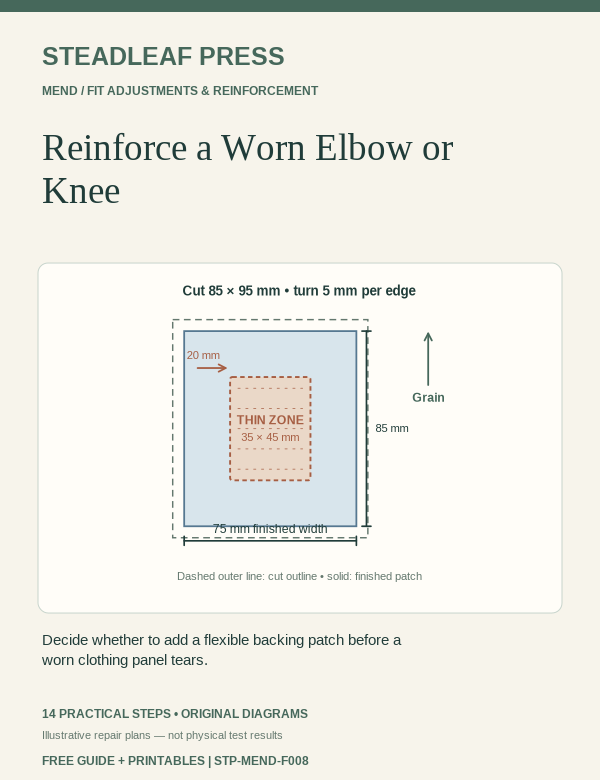
Decide whether to add a flexible backing patch before a worn clothing panel tears.
View free guide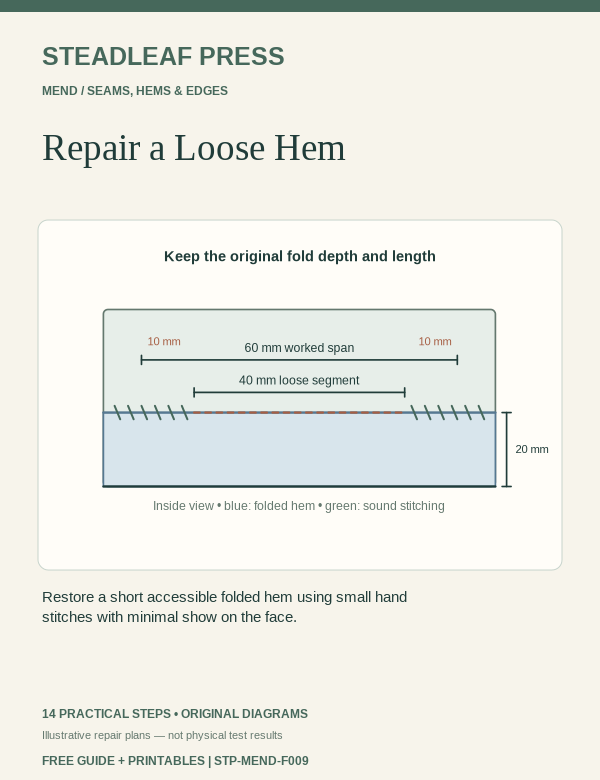
Restore a short accessible folded hem using small hand stitches with minimal show on the face.
View free guide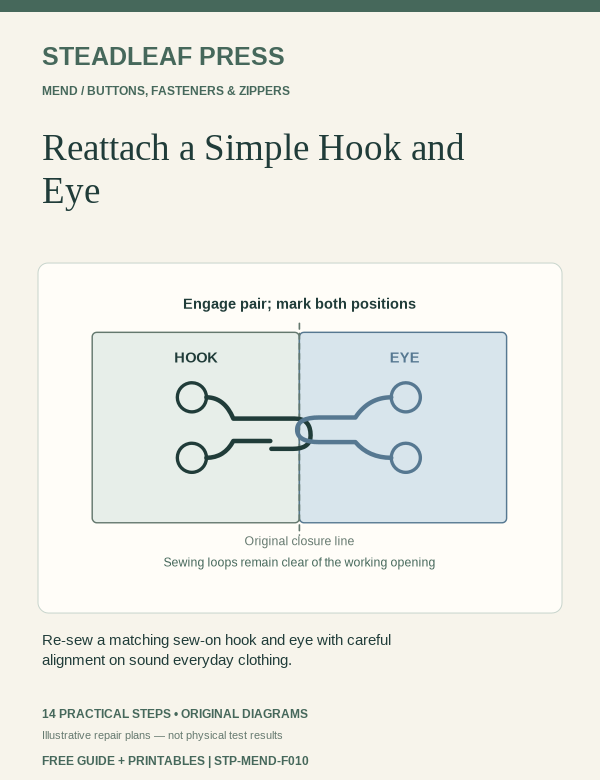
Re-sew a matching sew-on hook and eye with careful alignment on sound everyday clothing.
View free guide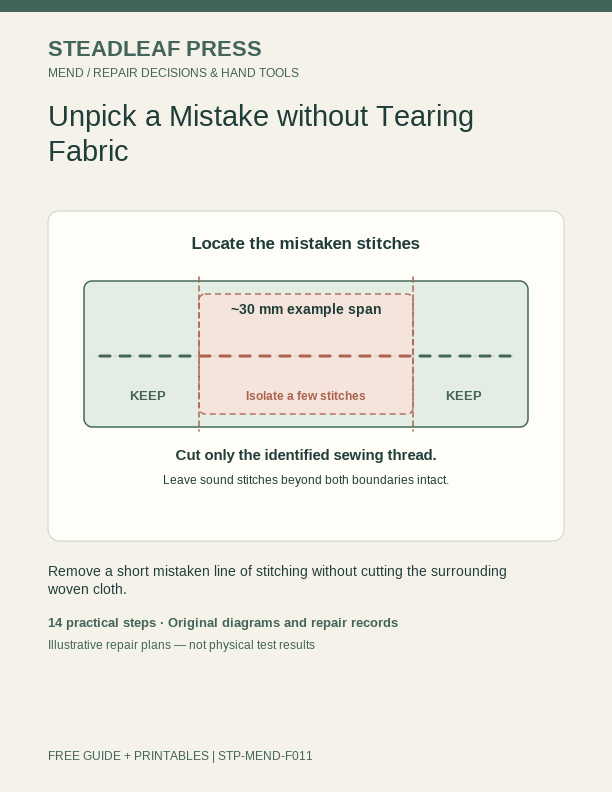
Remove a short mistaken line of stitching without cutting the surrounding woven cloth.
View free guide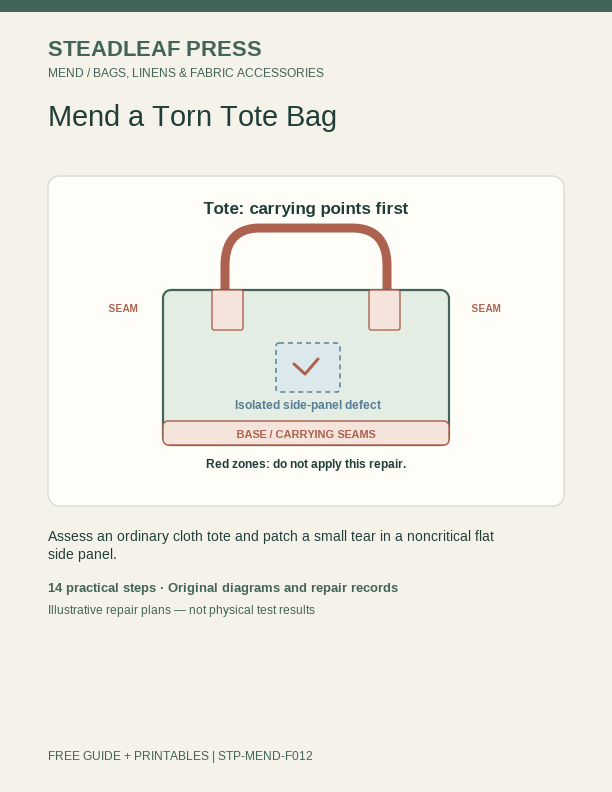
Assess an ordinary cloth tote and patch a small tear in a noncritical flat side panel.
View free guide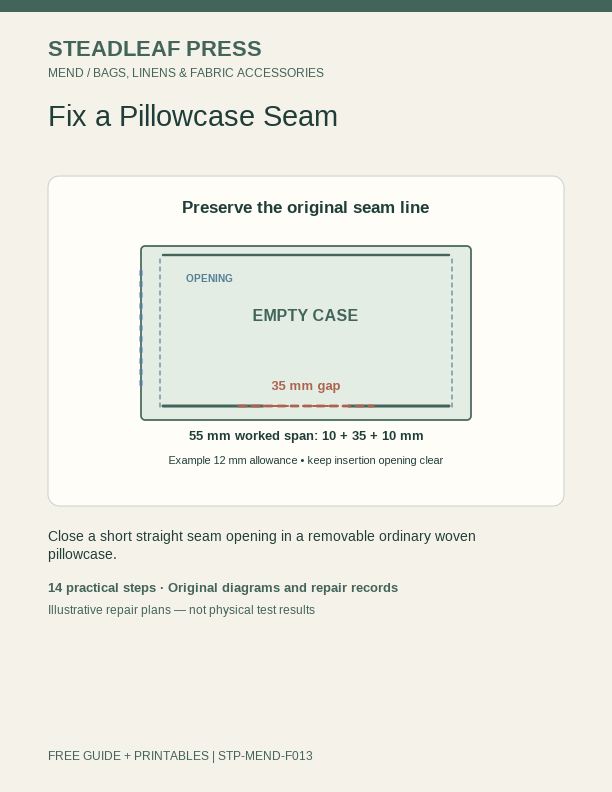
Close a short straight seam opening in a removable ordinary woven pillowcase.
View free guide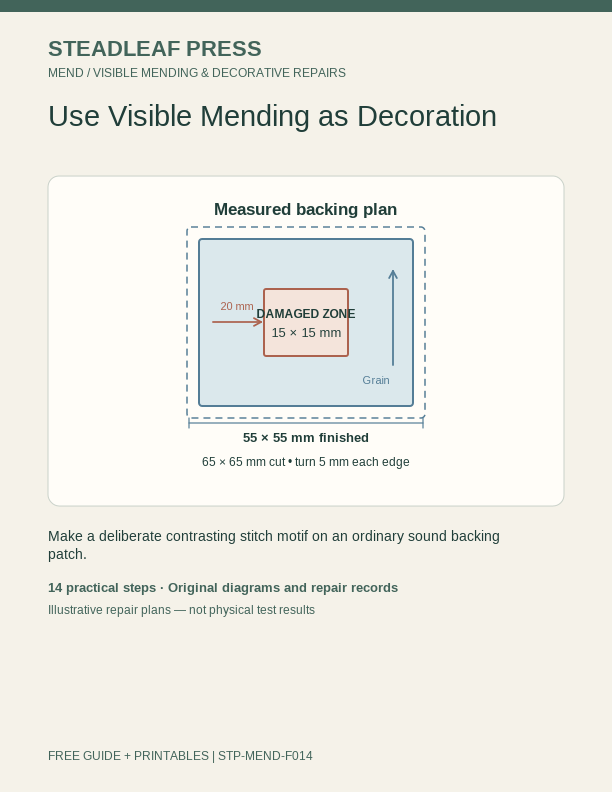
Make a deliberate contrasting stitch motif on an ordinary sound backing patch.
View free guide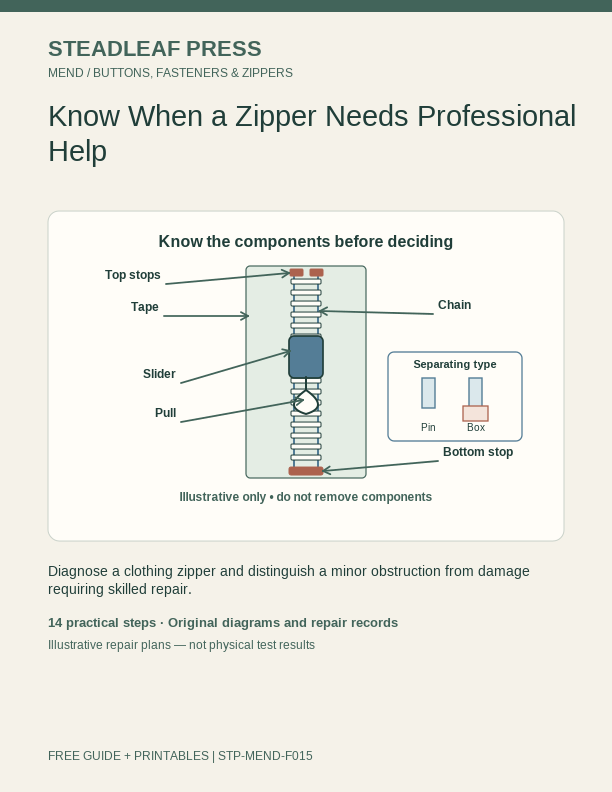
Diagnose a clothing zipper and distinguish a minor obstruction from damage requiring skilled repair.
View free guide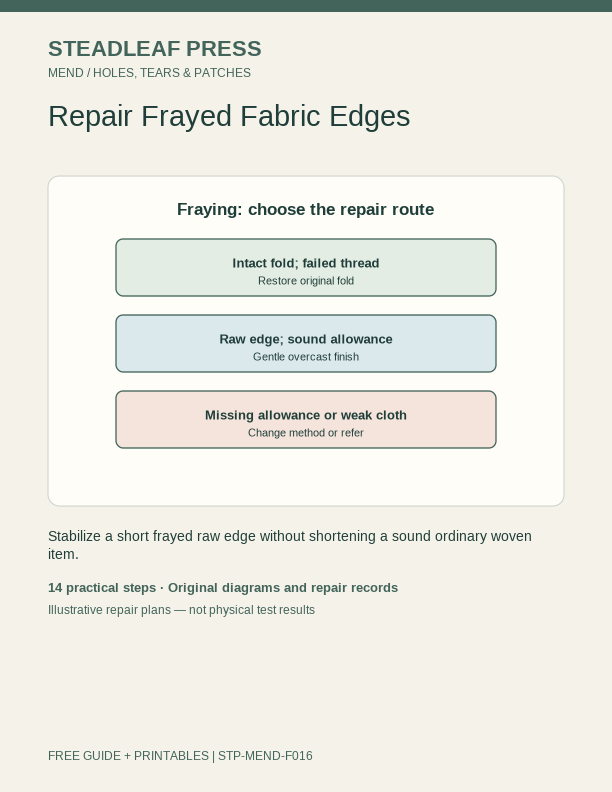
Stabilize a short frayed raw edge without shortening a sound ordinary woven item.
View free guide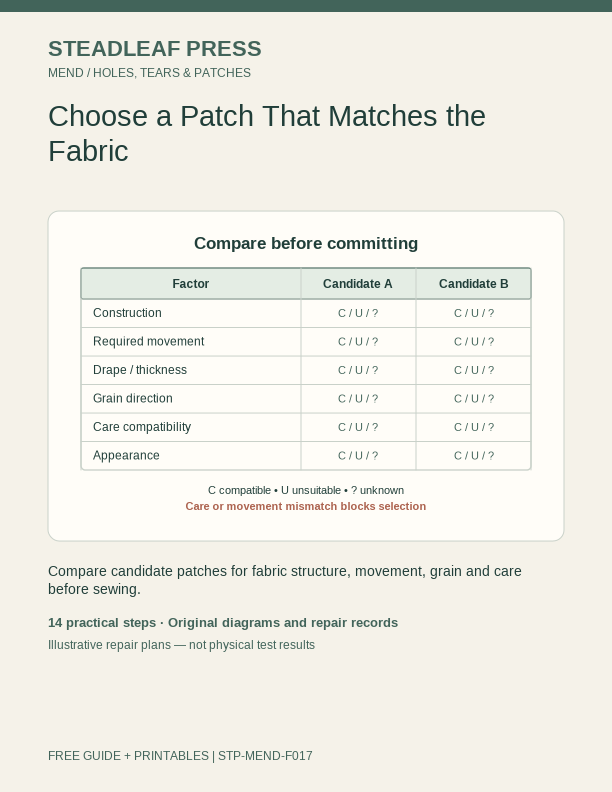
Compare candidate patches for fabric structure, movement, grain and care before sewing.
View free guide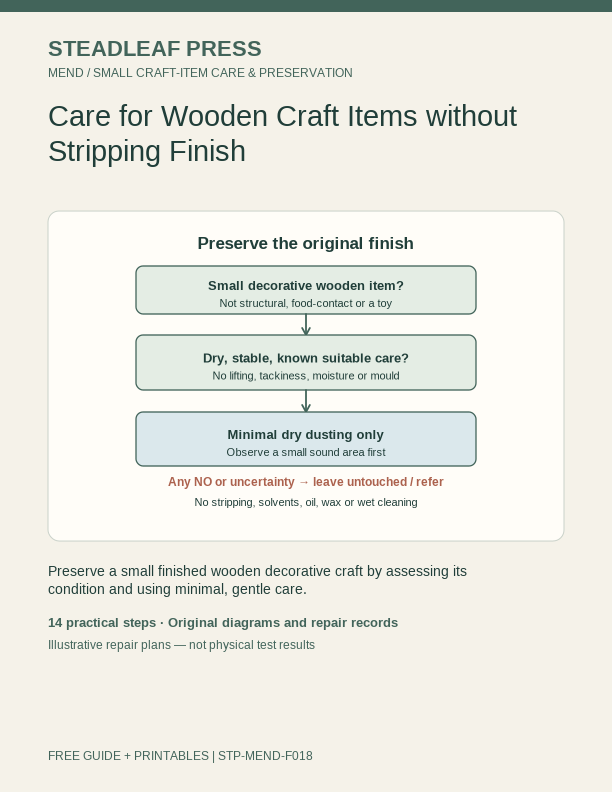
Preserve a small finished wooden decorative craft by assessing its condition and using minimal, gentle care.
View free guide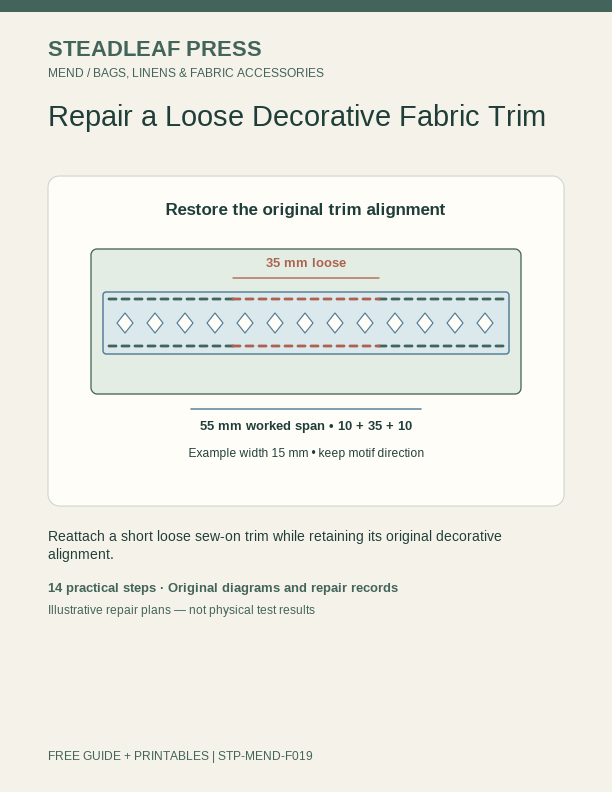
Reattach a short loose sew-on trim while retaining its original decorative alignment.
View free guide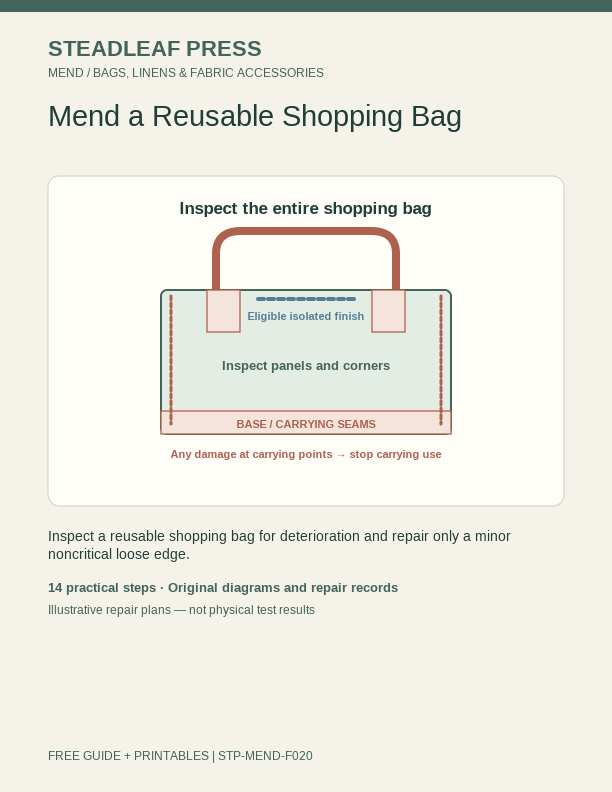
Inspect a reusable shopping bag for deterioration and repair only a minor noncritical loose edge.
View free guide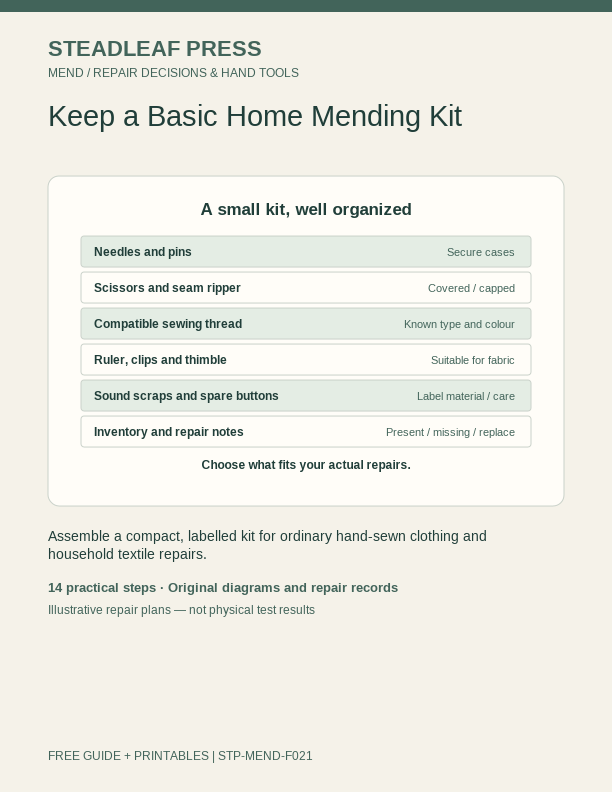
Assemble a compact, labelled kit for ordinary hand-sewn clothing and household textile repairs.
View free guide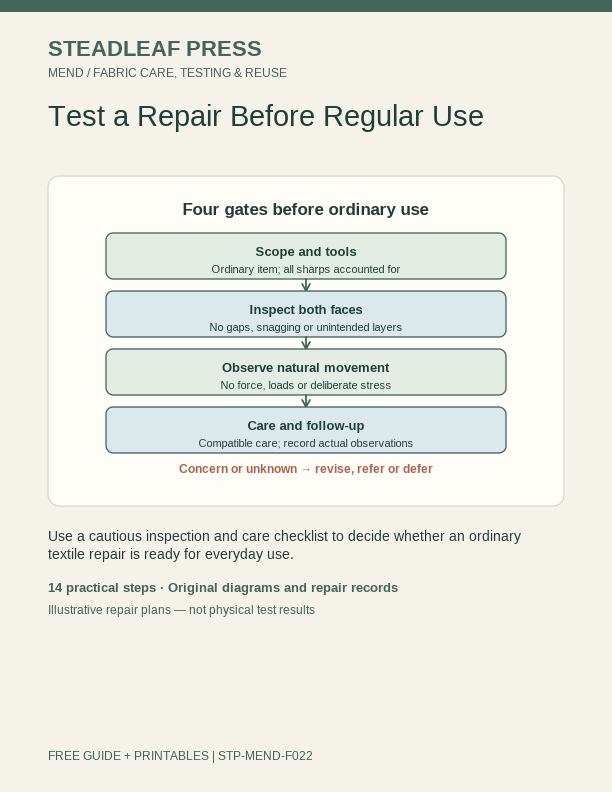
Use a cautious inspection and care checklist to decide whether an ordinary textile repair is ready for everyday use.
View free guide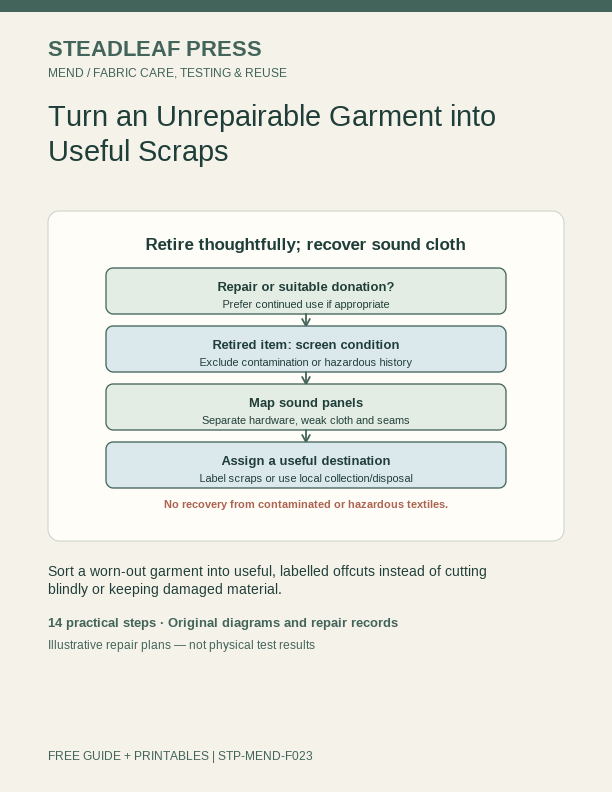
Sort a worn-out garment into useful, labelled offcuts instead of cutting blindly or keeping damaged material.
View free guide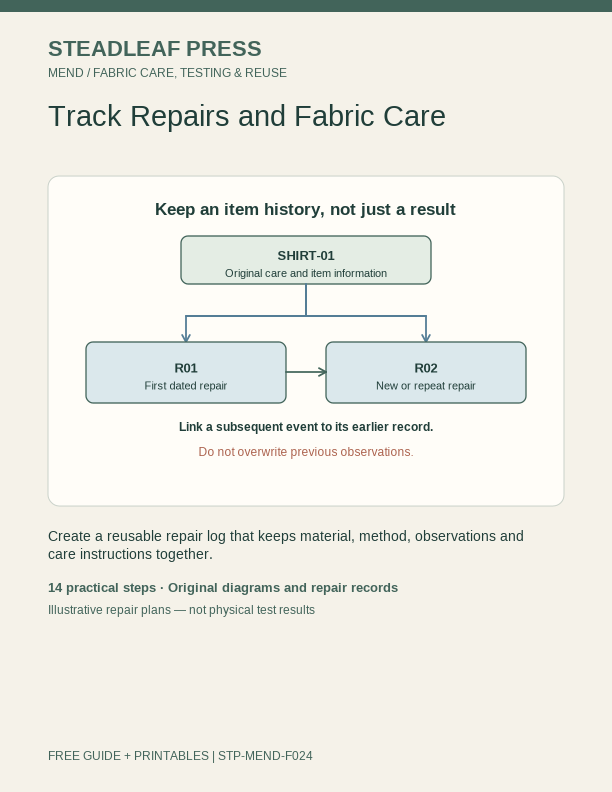
Create a reusable repair log that keeps material, method, observations and care instructions together.
View free guide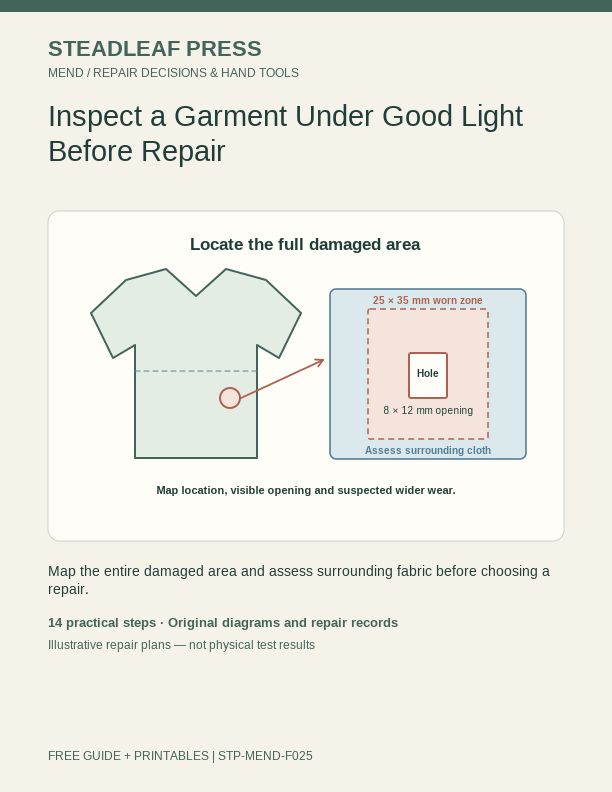
Map the entire damaged area and assess surrounding fabric before choosing a repair.
View free guide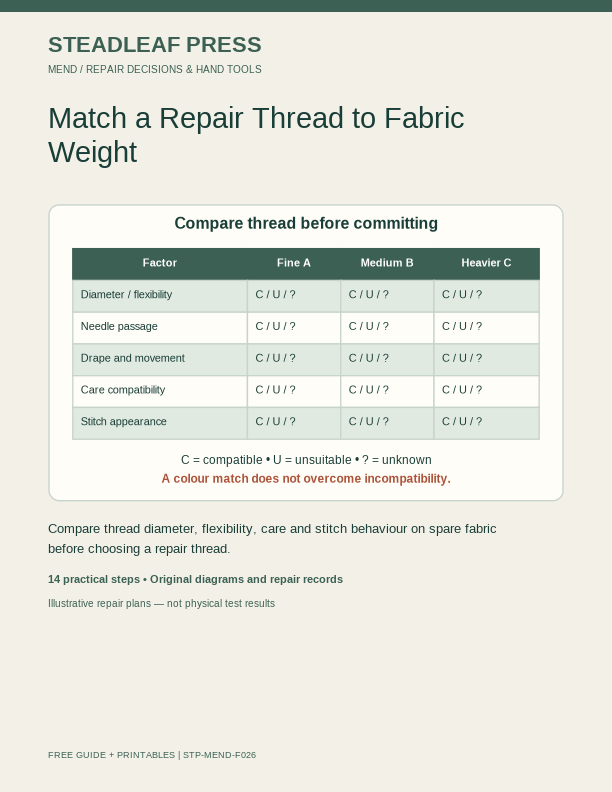
Compare thread diameter, flexibility, care and stitch behaviour on spare fabric before choosing a repair thread.
View free guide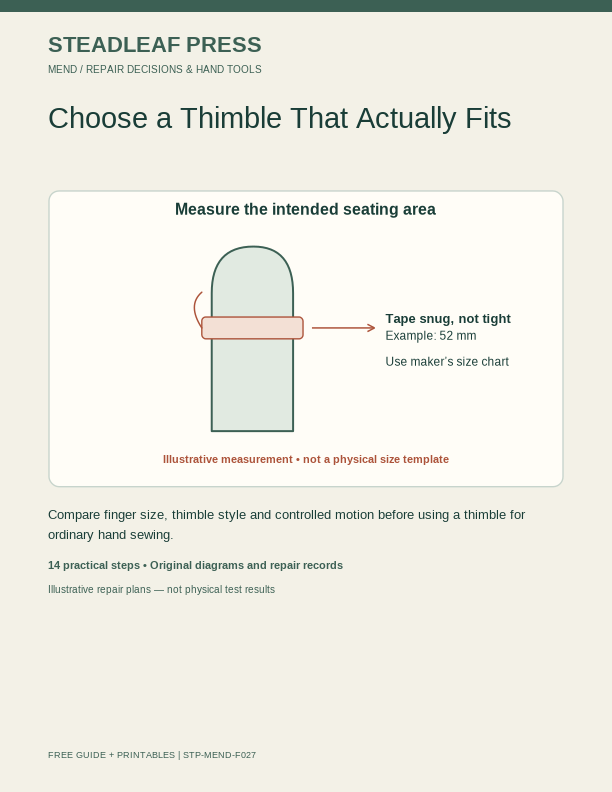
Compare finger size, thimble style and controlled motion before using a thimble for ordinary hand sewing.
View free guide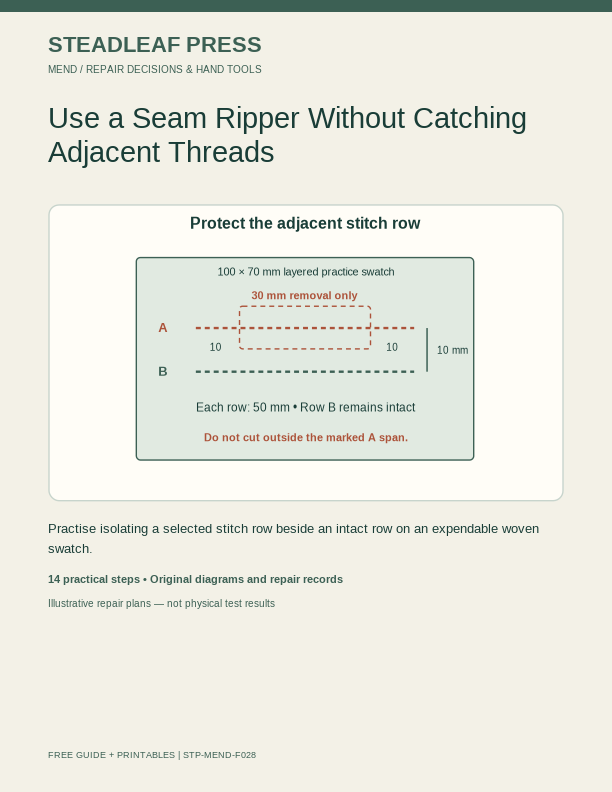
Practise isolating a selected stitch row beside an intact row on an expendable woven swatch.
View free guide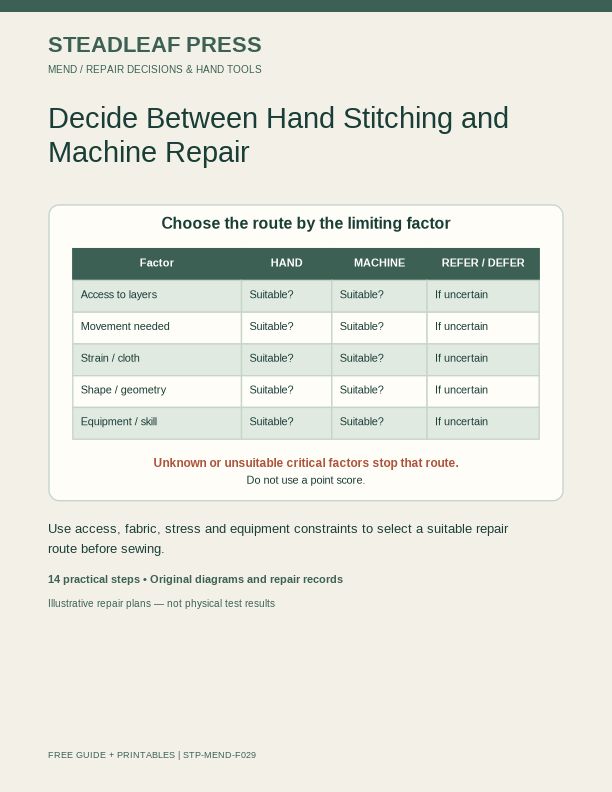
Use access, fabric, stress and equipment constraints to select a suitable repair route before sewing.
View free guide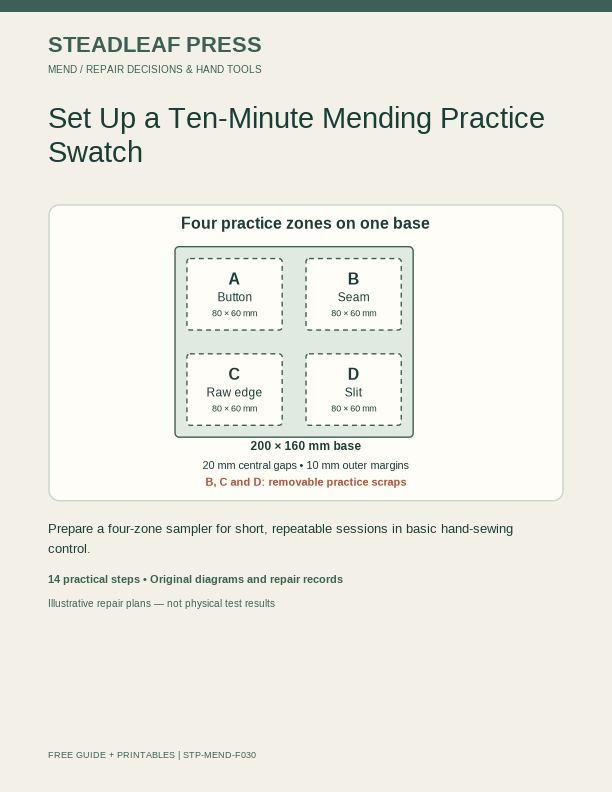
Prepare a four-zone sampler for short, repeatable sessions in basic hand-sewing control.
View free guide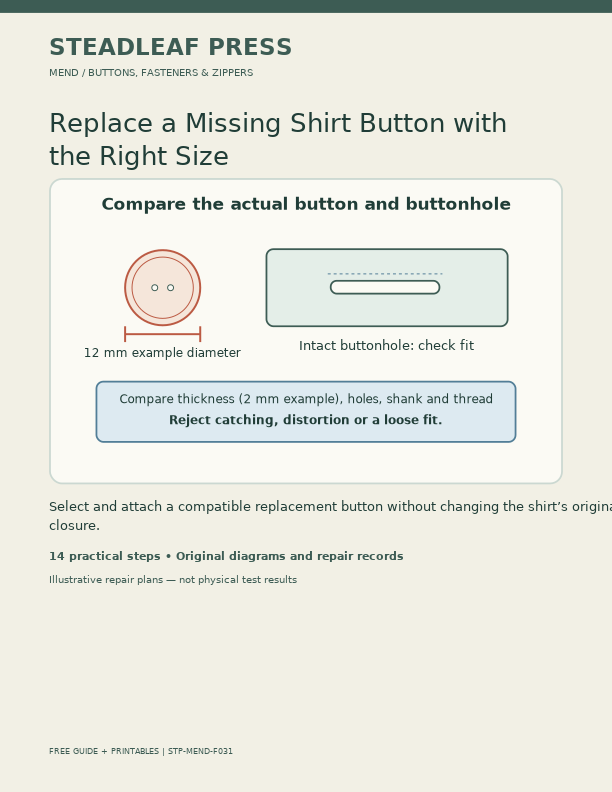
Select and attach a compatible replacement button without changing the shirt’s original closure.
View free guide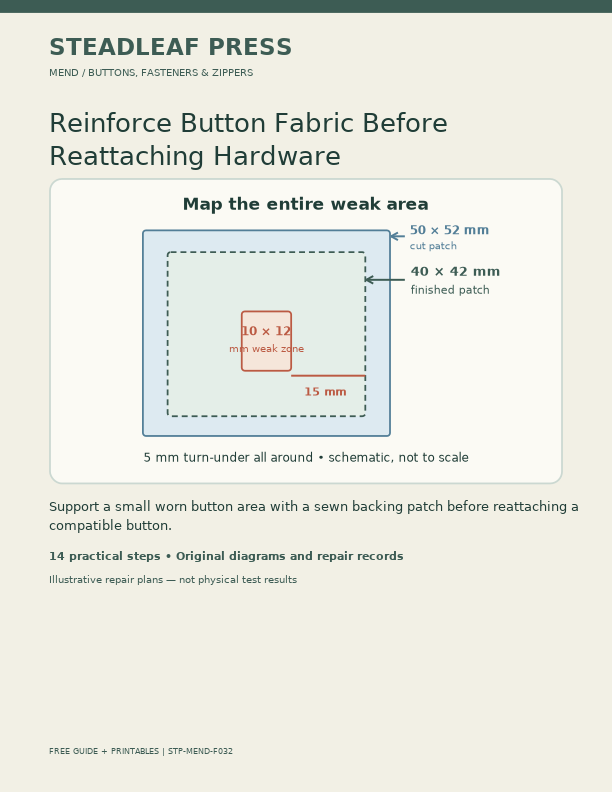
Support a small worn button area with a sewn backing patch before reattaching a compatible button.
View free guide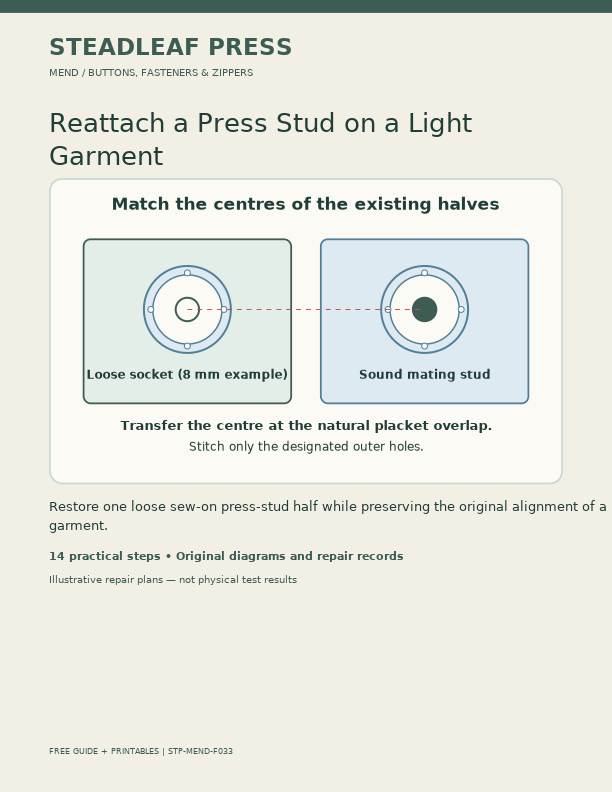
Restore one loose sew-on press-stud half while preserving the original alignment of a light garment.
View free guide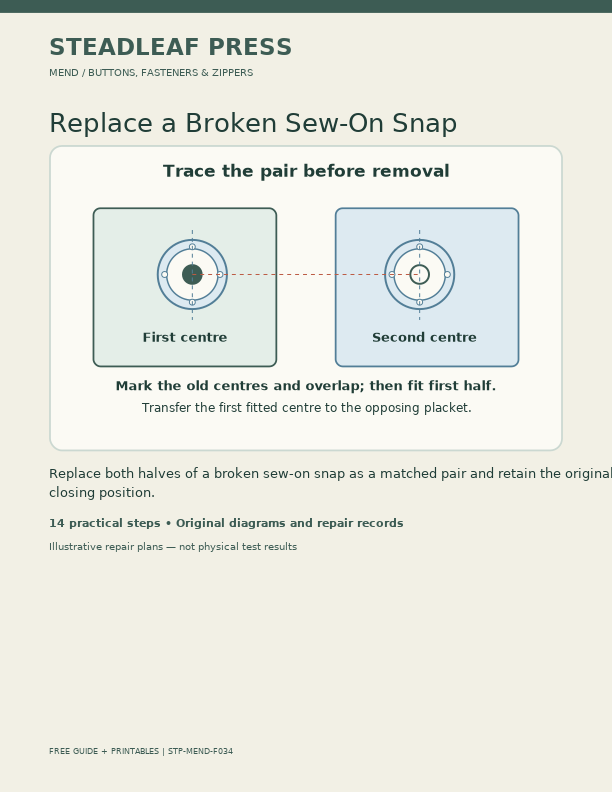
Replace both halves of a broken sew-on snap as a matched pair and retain the original closing position.
View free guide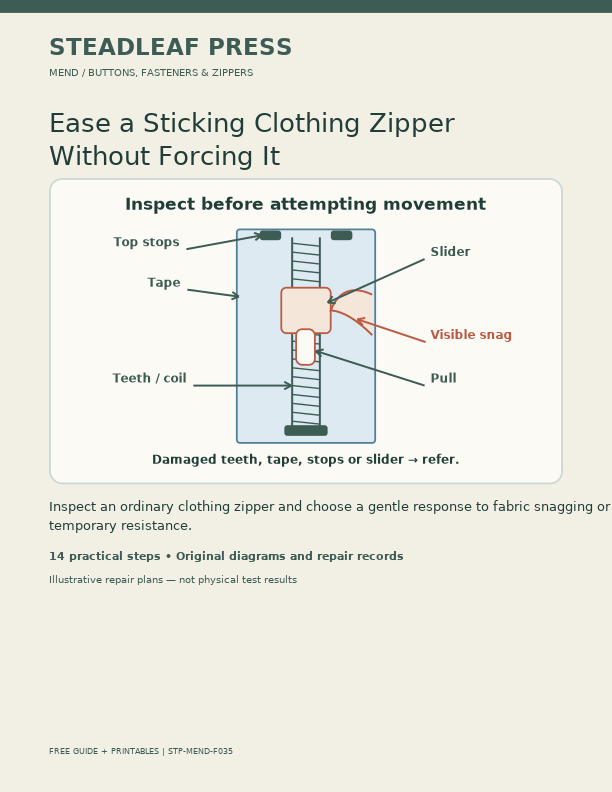
Inspect an ordinary clothing zipper and choose a gentle response to fabric snagging or temporary resistance.
View free guide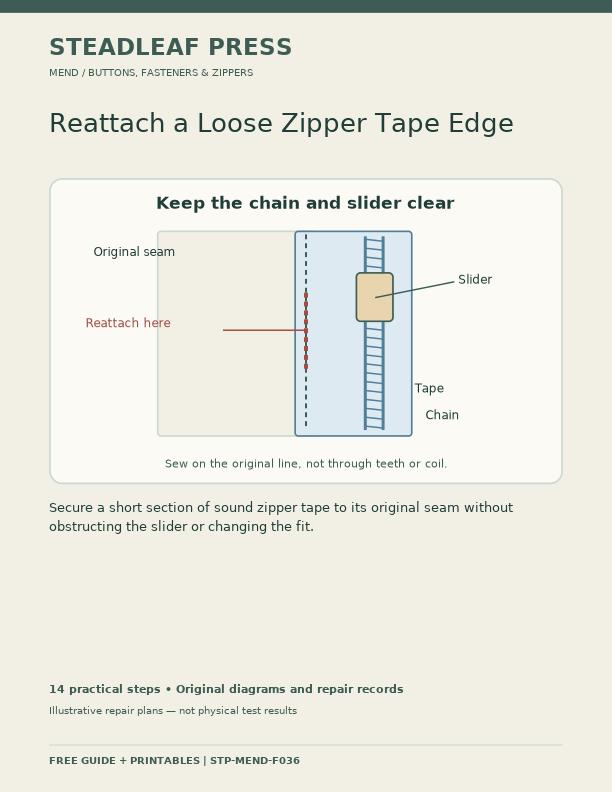
Secure a short section of sound zipper tape to its original seam without obstructing the slider or changing the fit.
View free guide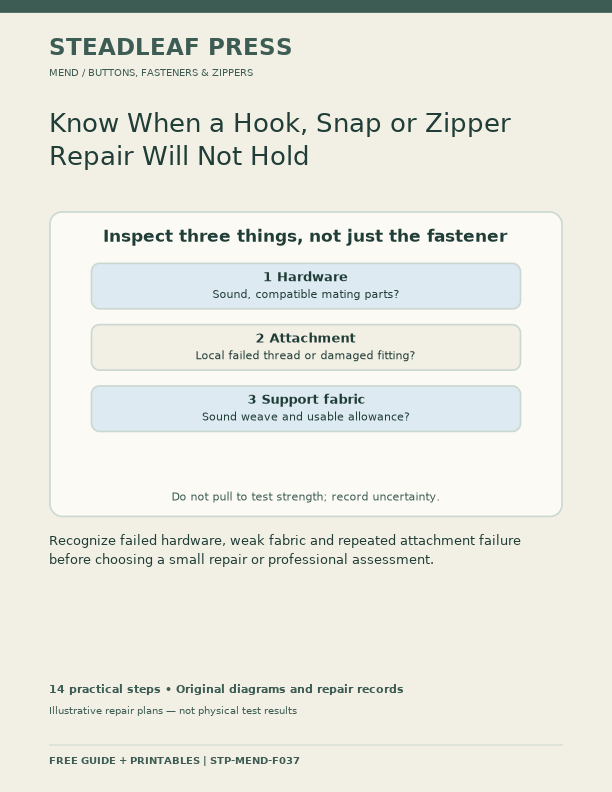
Recognize failed hardware, weak fabric and repeated attachment failure before choosing a small repair or professional assessment.
View free guide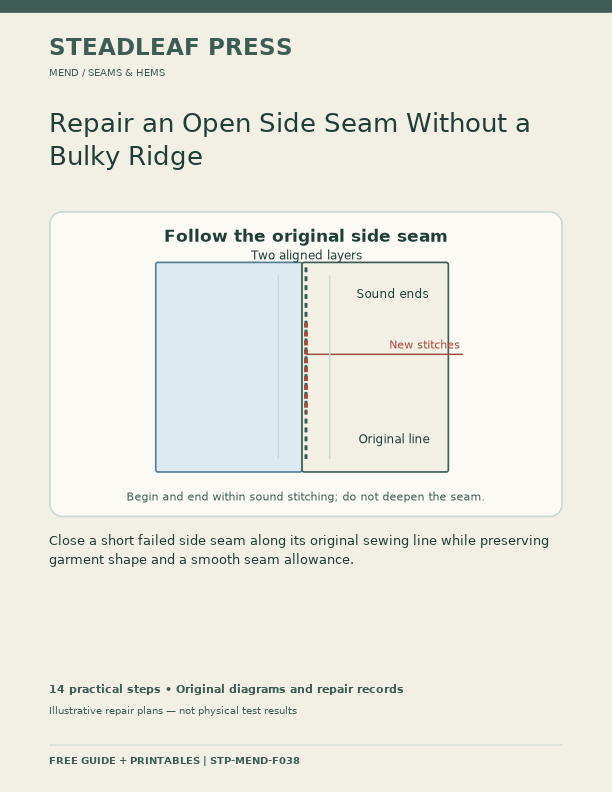
Close a short failed side seam along its original sewing line while preserving garment shape and a smooth seam allowance.
View free guide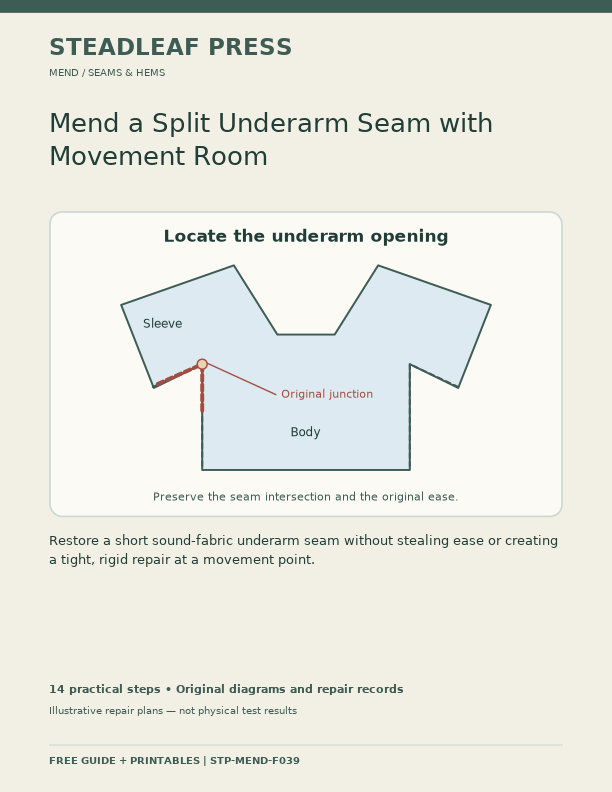
Restore a short sound-fabric underarm seam without stealing ease or creating a tight, rigid repair at a movement point.
View free guide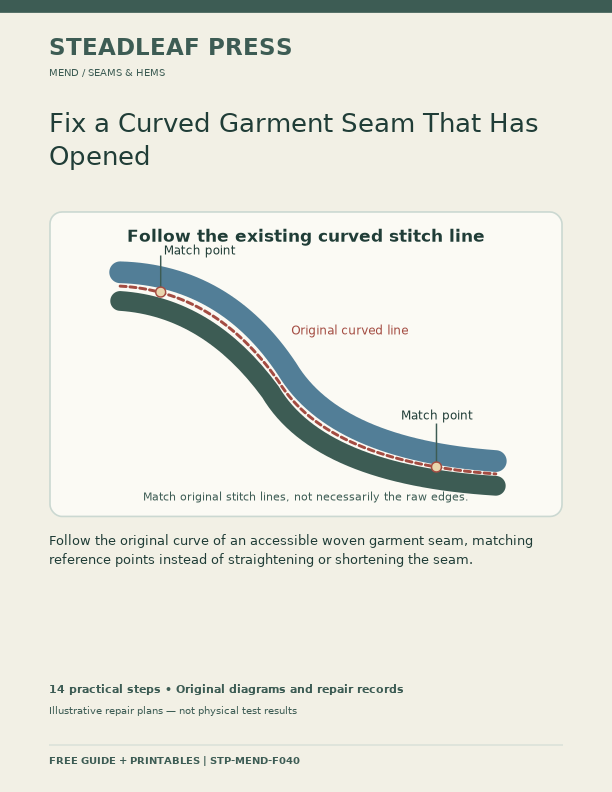
Follow the original curve of an accessible woven garment seam, matching reference points instead of straightening or shortening the seam.
View free guide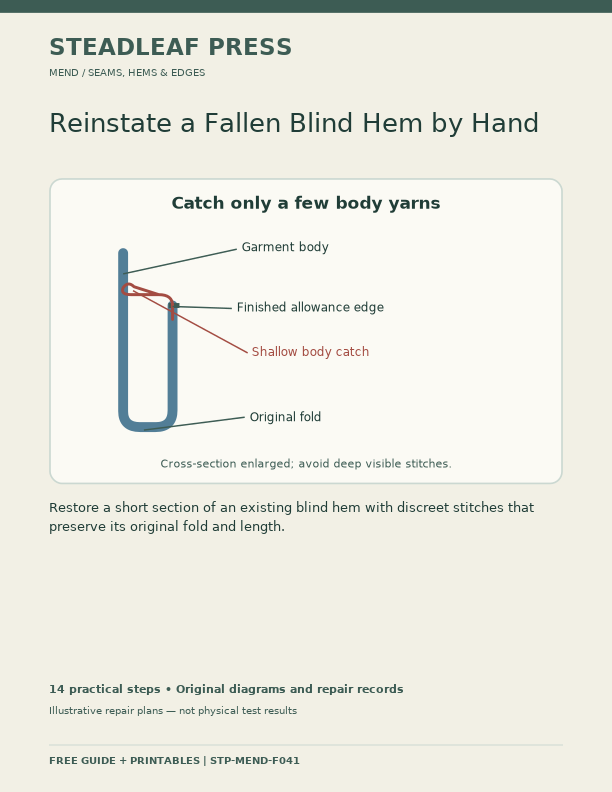
Restore a short section of an existing blind hem with discreet stitches that preserve its original fold and length.
View free guide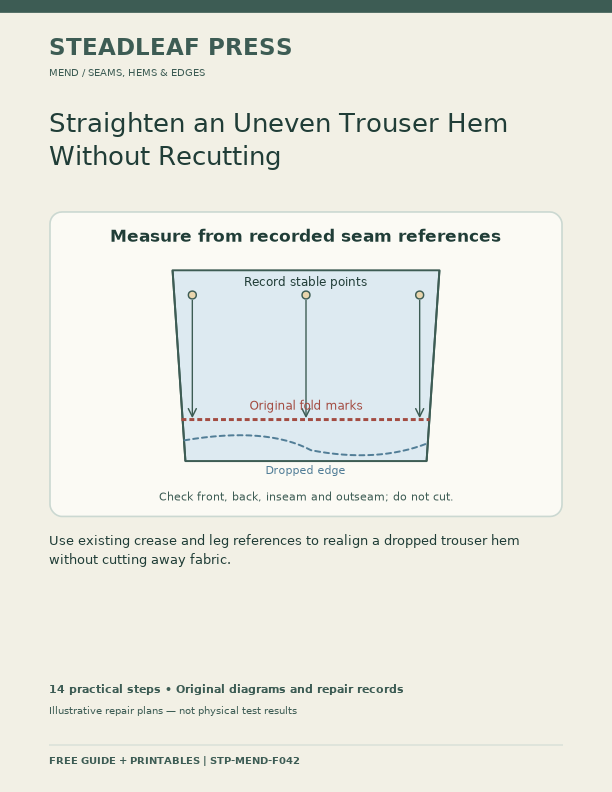
Use existing crease and leg references to realign a dropped trouser hem without cutting away fabric.
View free guide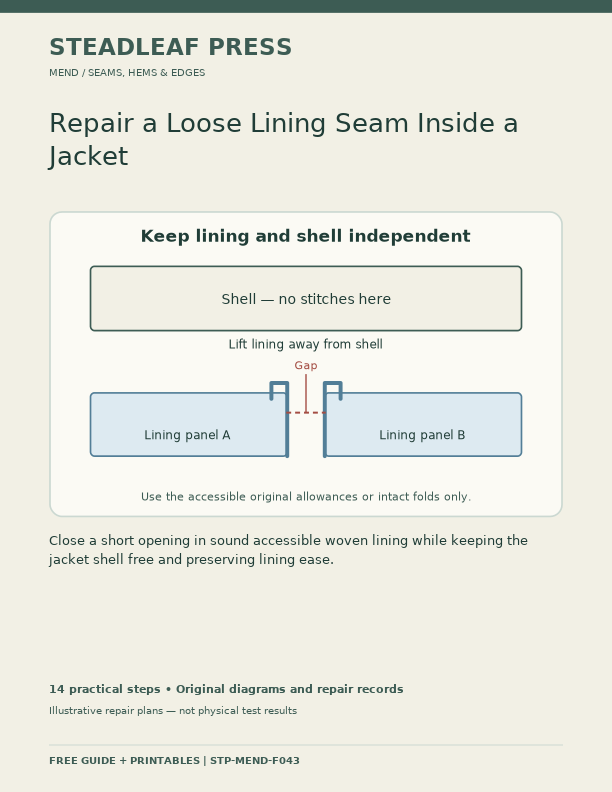
Close a short opening in sound accessible woven lining while keeping the jacket shell free and preserving lining ease.
View free guide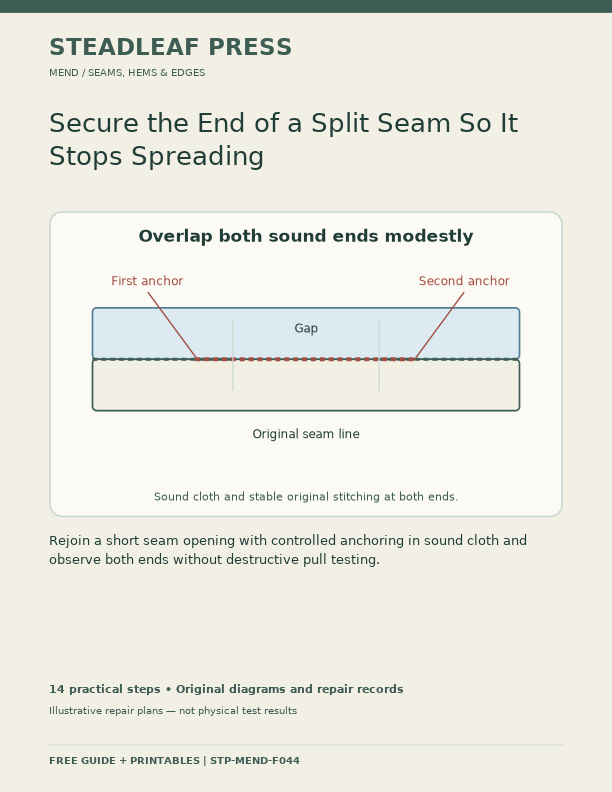
Rejoin a short seam opening with controlled anchoring in sound cloth and observe both ends without destructive pull testing.
View free guide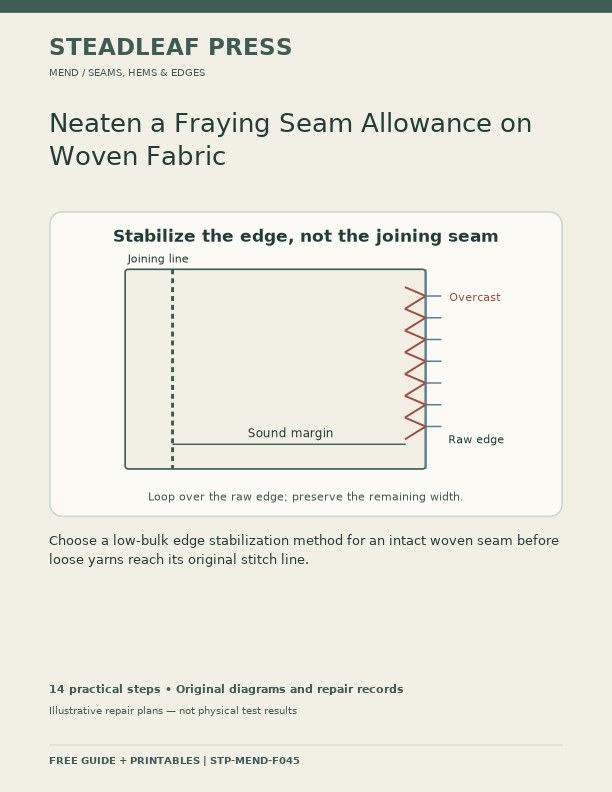
Choose a low-bulk edge stabilization method for an intact woven seam before loose yarns reach its original stitch line.
View free guide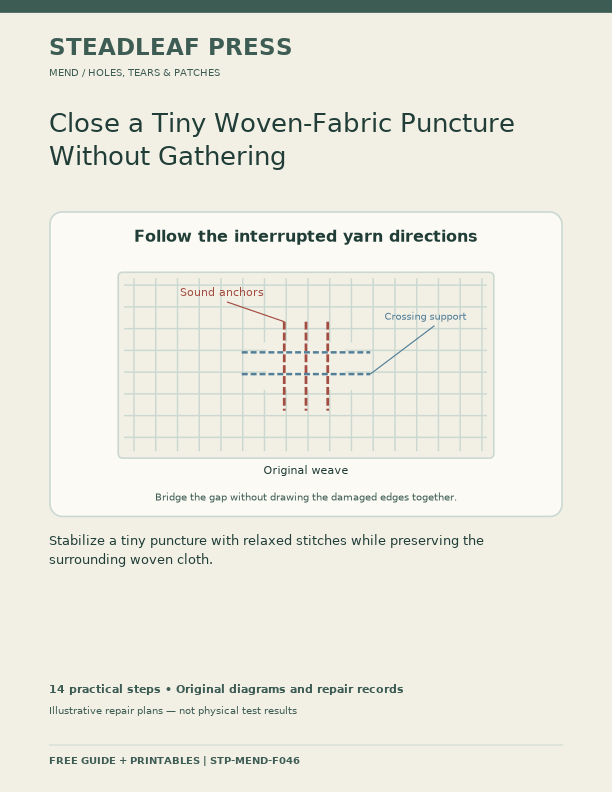
Stabilize a tiny puncture with relaxed stitches while preserving the surrounding woven cloth.
View free guide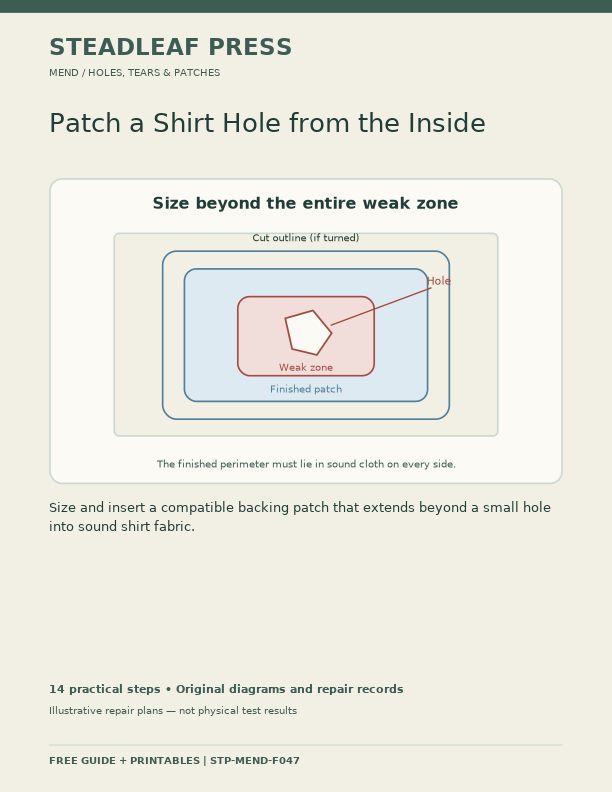
Size and insert a compatible backing patch that extends beyond a small hole into sound shirt fabric.
View free guide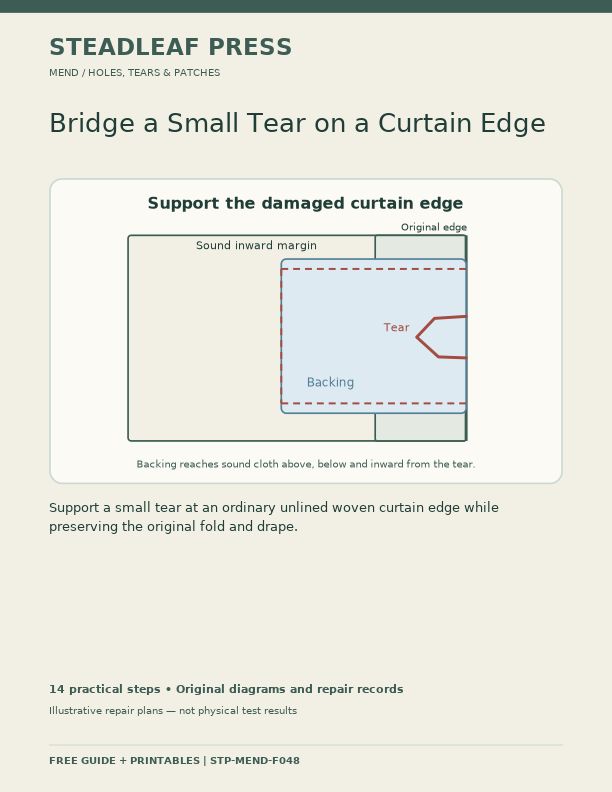
Support a small tear at an ordinary unlined woven curtain edge while preserving the original fold and drape.
View free guide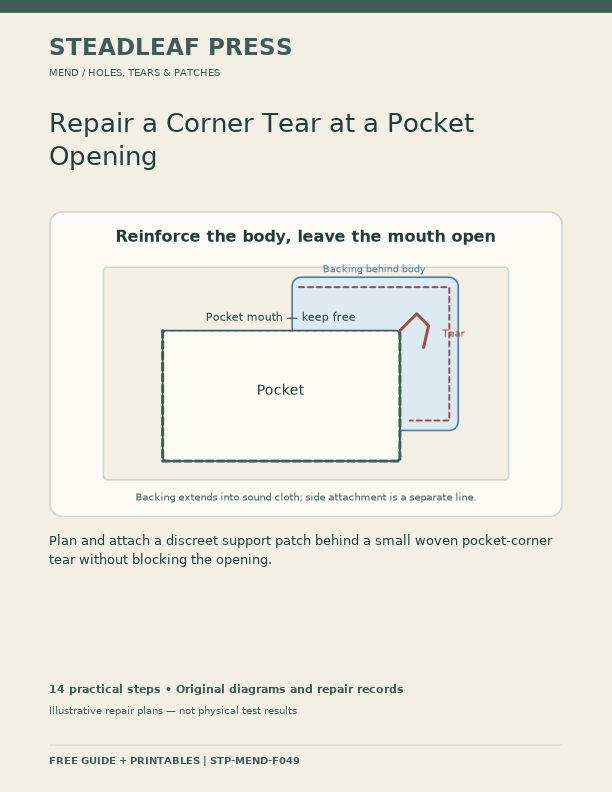
Plan and attach a discreet support patch behind a small woven pocket-corner tear without blocking the opening.
View free guide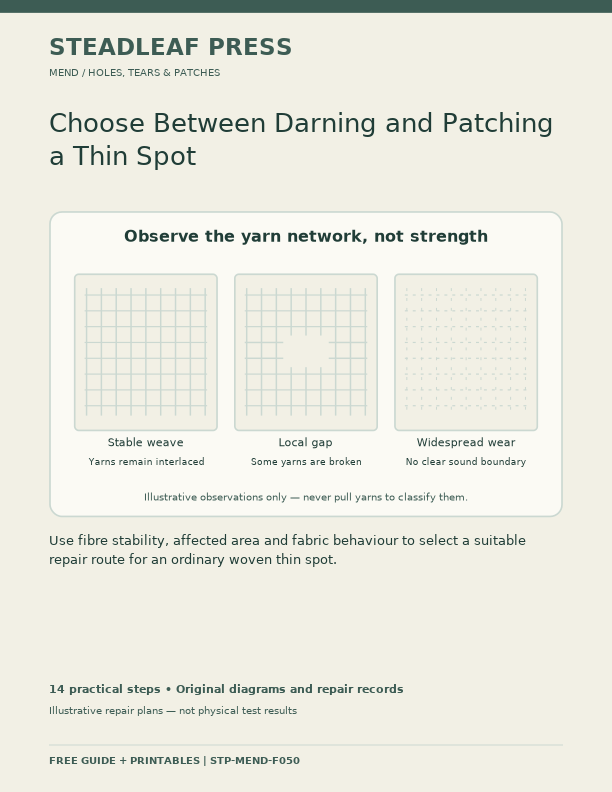
Use fibre stability, affected area and fabric behaviour to select a suitable repair route for an ordinary woven thin spot.
View free guide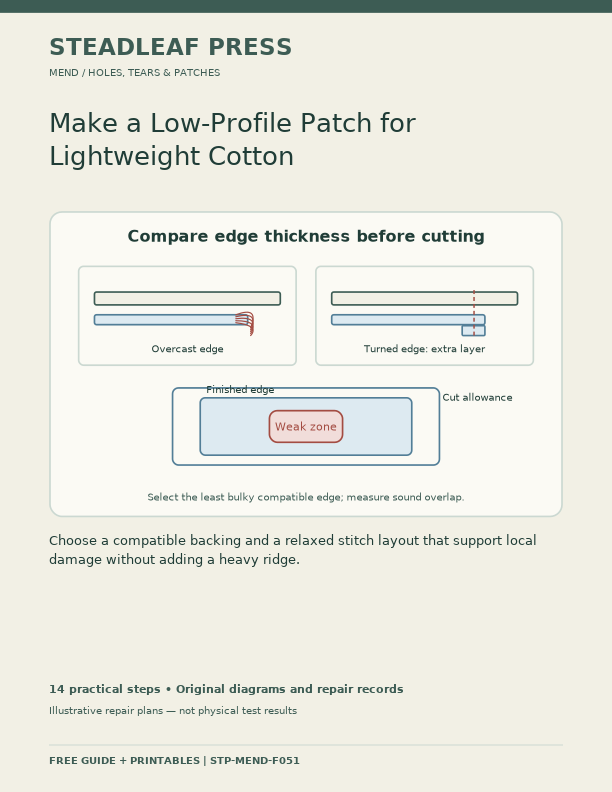
Choose a compatible backing and a relaxed stitch layout that support local damage without adding a heavy ridge.
View free guide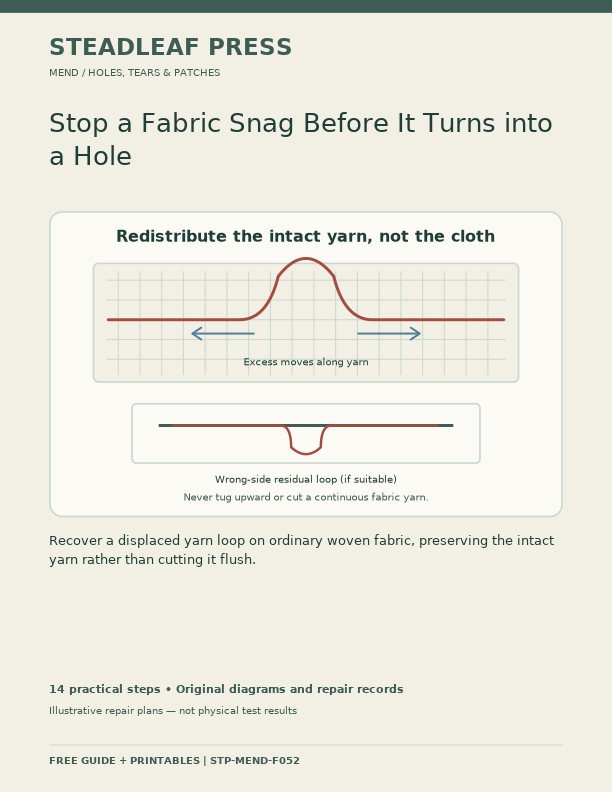
Recover a displaced yarn loop on ordinary woven fabric, preserving the intact yarn rather than cutting it flush.
View free guide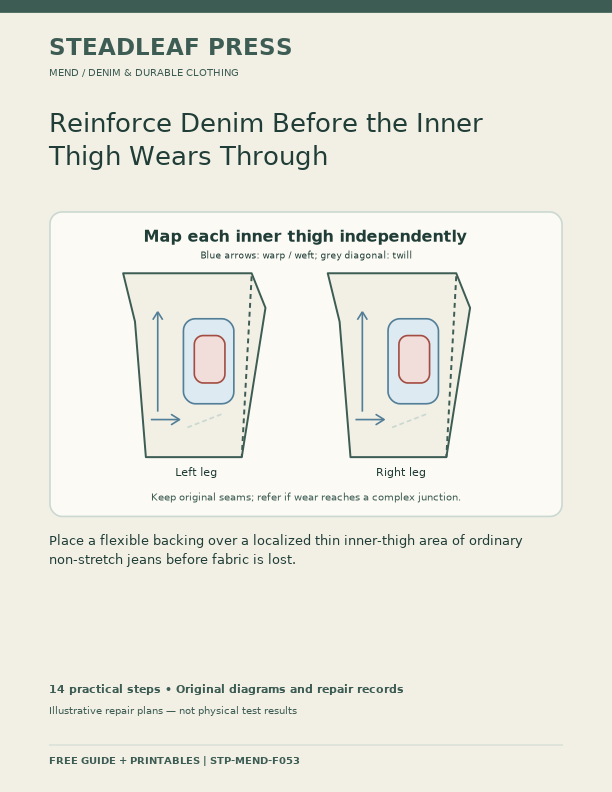
Place a flexible backing over a localized thin inner-thigh area of ordinary non-stretch jeans before fabric is lost.
View free guide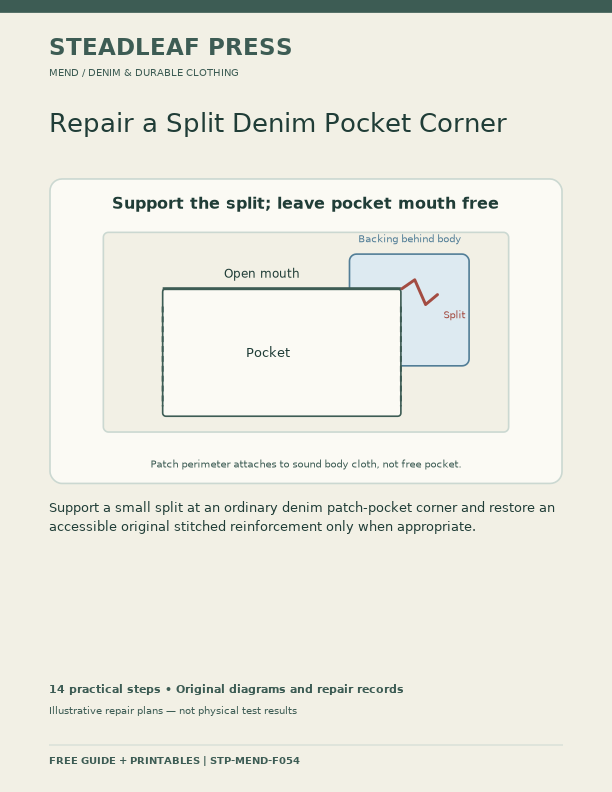
Support a small split at an ordinary denim patch-pocket corner and restore an accessible original stitched reinforcement only when appropriate.
View free guide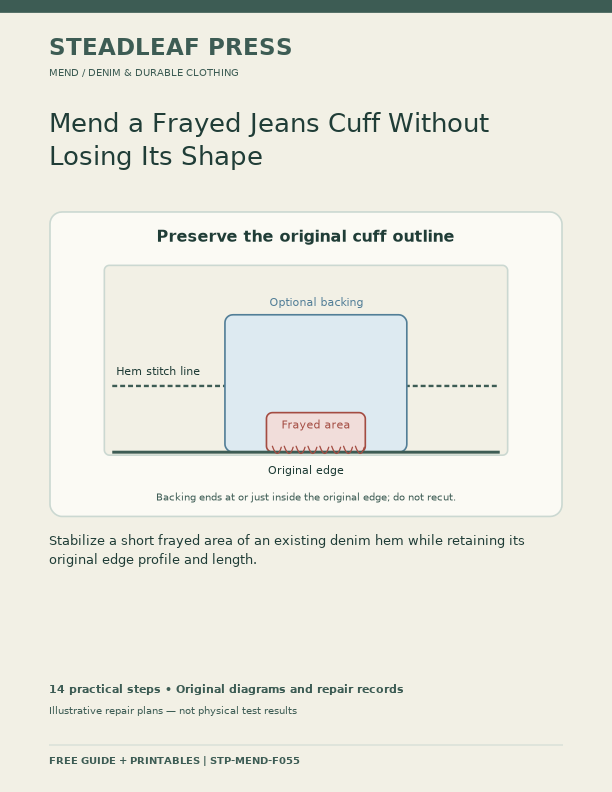
Stabilize a short frayed area of an existing denim hem while retaining its original edge profile and length.
View free guide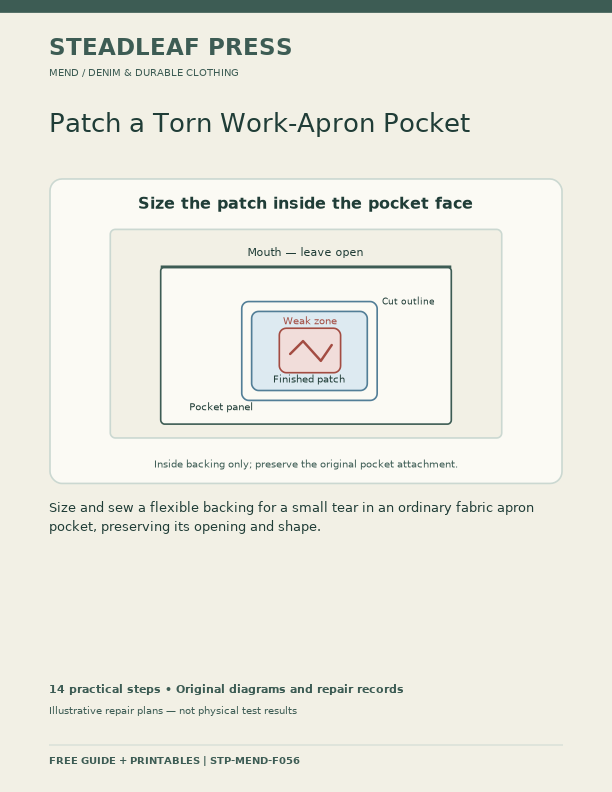
Size and sew a flexible backing for a small tear in an ordinary fabric apron pocket, preserving its opening and shape.
View free guide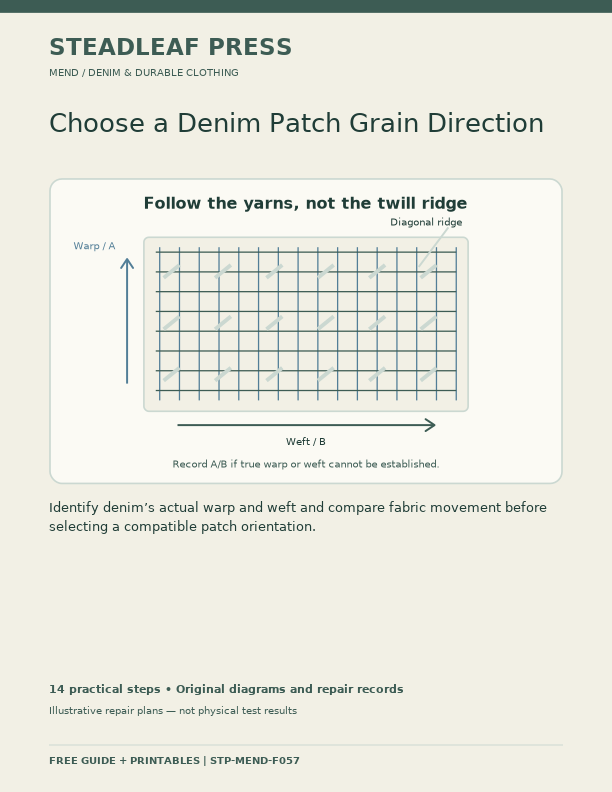
Identify denim’s actual warp and weft and compare fabric movement before selecting a compatible patch orientation.
View free guide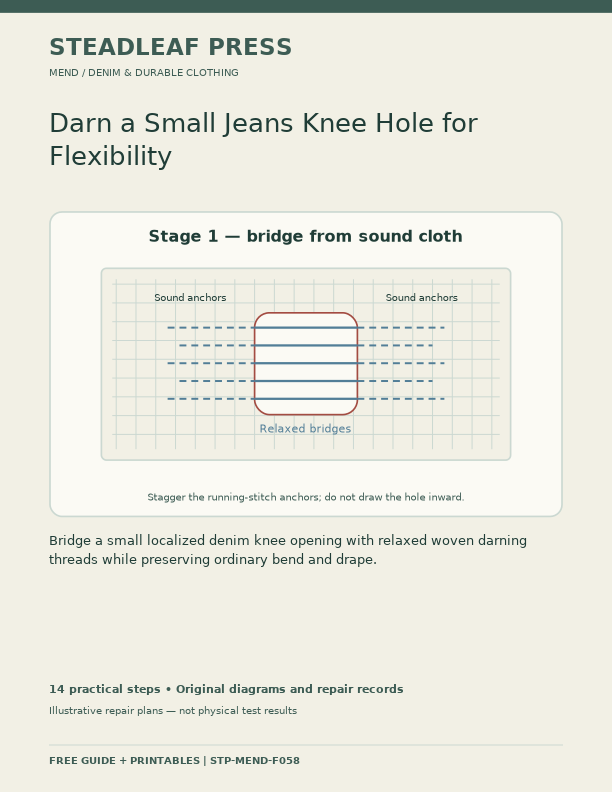
Bridge a small localized denim knee opening with relaxed woven darning threads while preserving ordinary bend and drape.
View free guide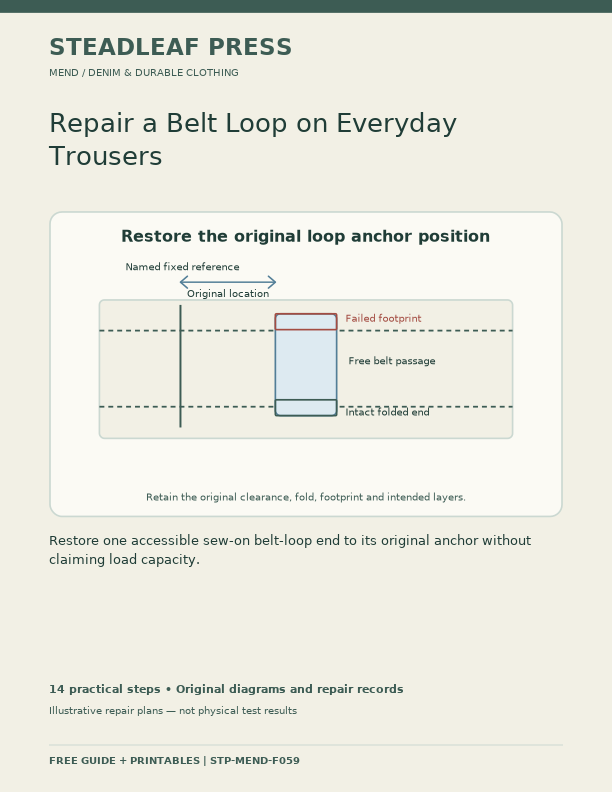
Restore one accessible sew-on belt-loop end to its original anchor without claiming load capacity.
View free guide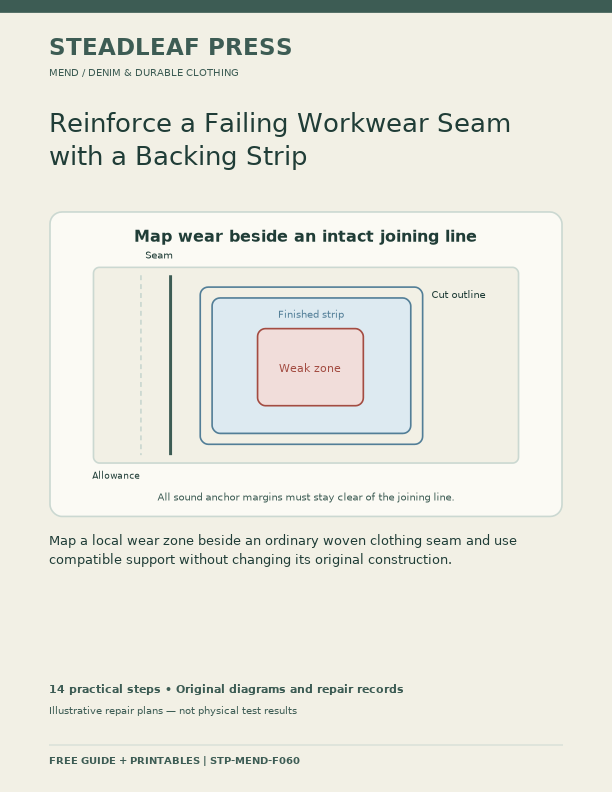
Map a local wear zone beside an ordinary woven clothing seam and use compatible support without changing its original construction.
View free guide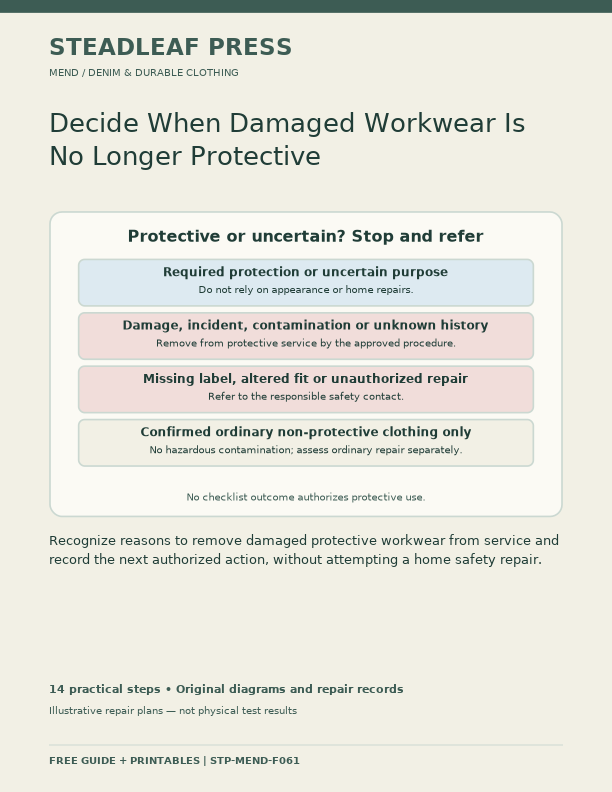
Recognize reasons to remove damaged protective workwear from service and record the next authorized action, without attempting a home safety repair.
View free guide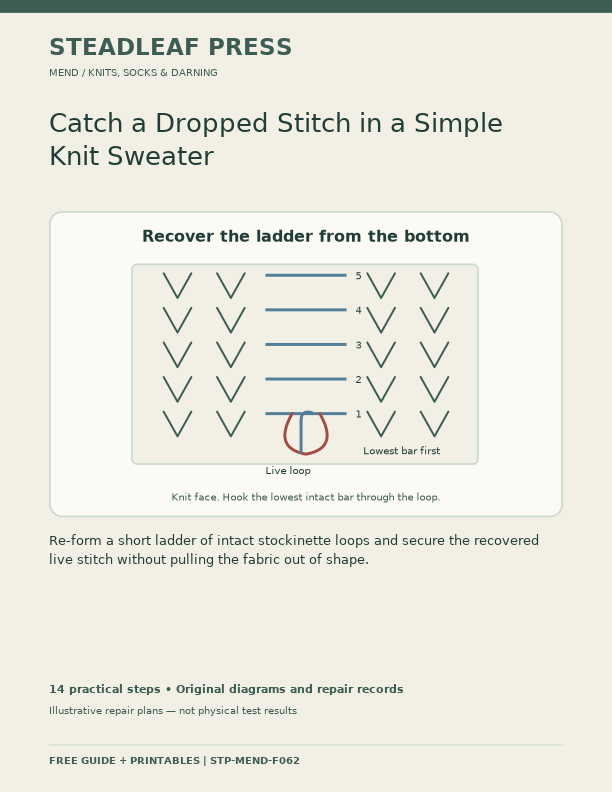
Re-form a short ladder of intact stockinette loops and secure the recovered live stitch without pulling the fabric out of shape.
View free guide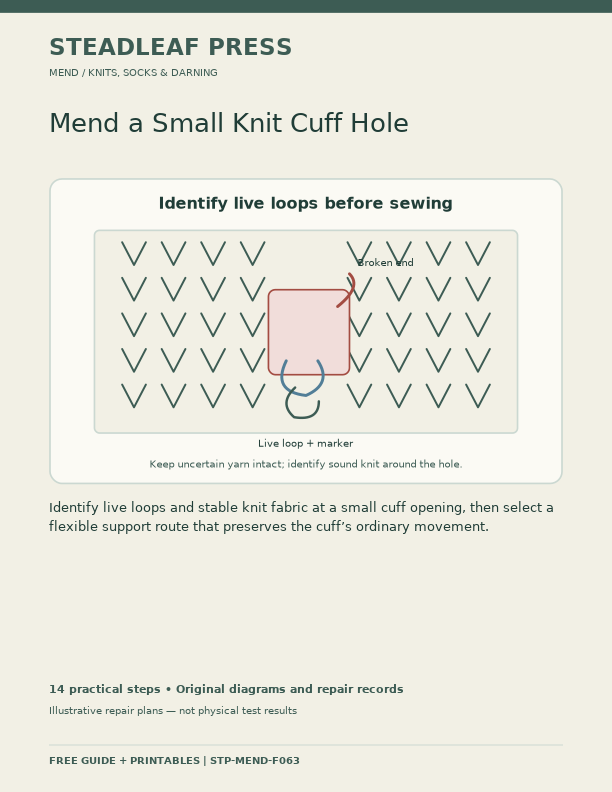
Identify live loops and stable knit fabric at a small cuff opening, then select a flexible support route that preserves the cuff’s ordinary movement.
View free guide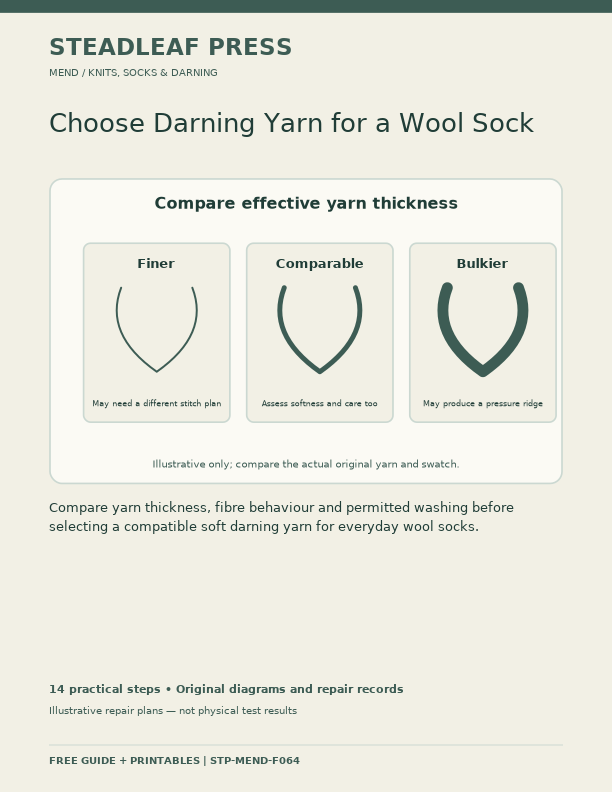
Compare yarn thickness, fibre behaviour and permitted washing before selecting a compatible soft darning yarn for everyday wool socks.
View free guide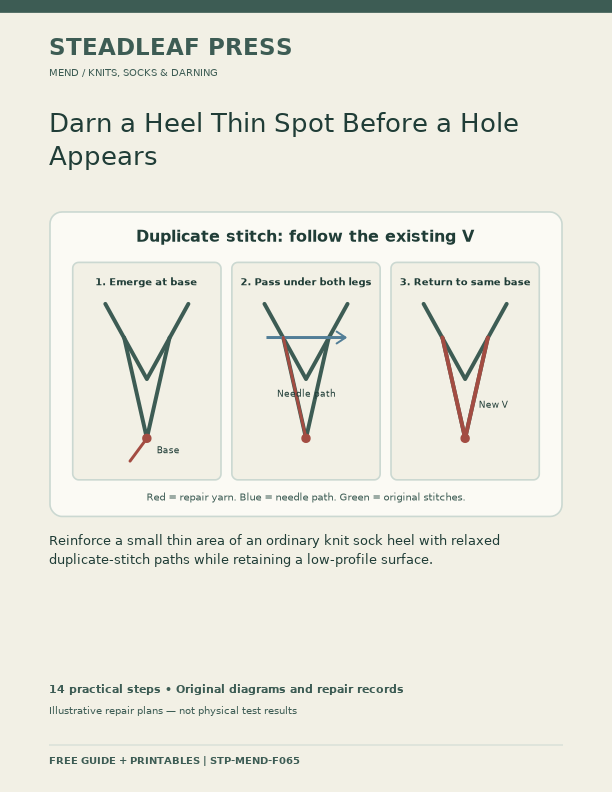
Reinforce a small thin area of an ordinary knit sock heel with relaxed duplicate-stitch paths while retaining a low-profile surface.
View free guide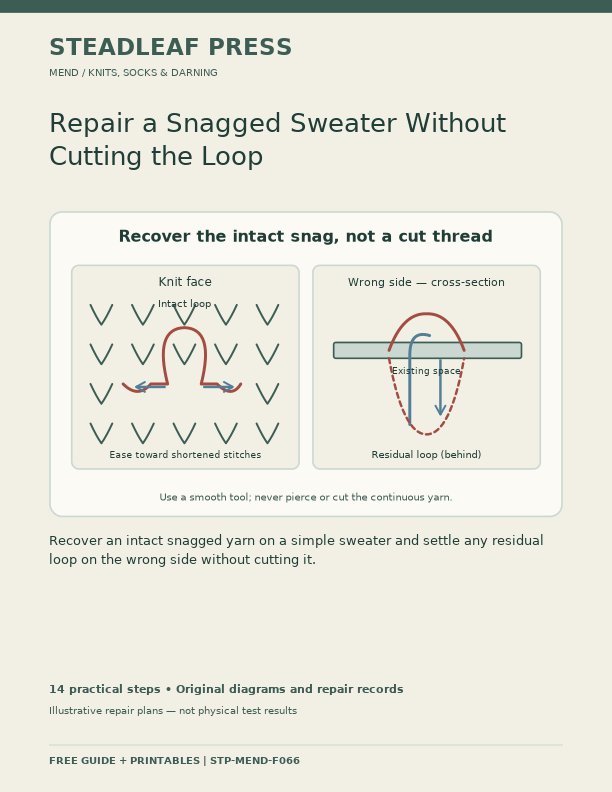
Recover an intact snagged yarn on a simple sweater and settle any residual loop on the wrong side without cutting it.
View free guide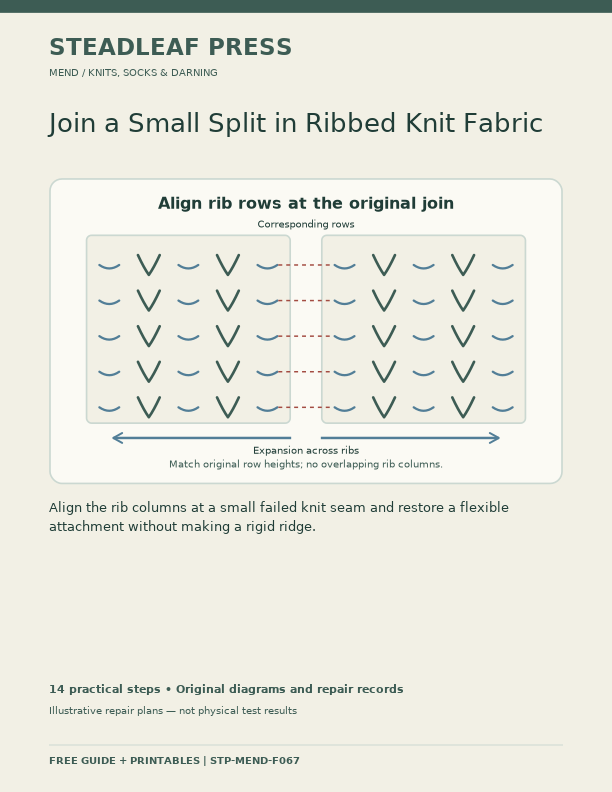
Align the rib columns at a small failed knit seam and restore a flexible attachment without making a rigid ridge.
View free guide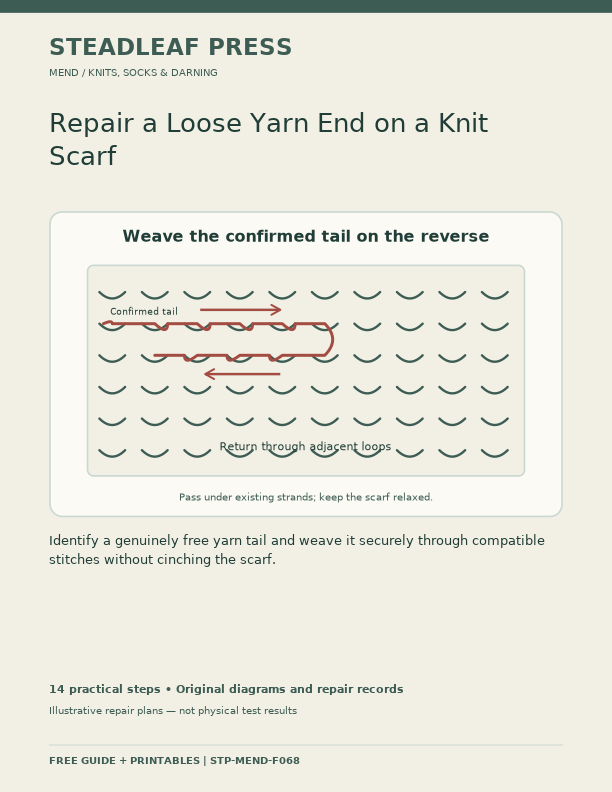
Identify a genuinely free yarn tail and weave it securely through compatible stitches without cinching the scarf.
View free guide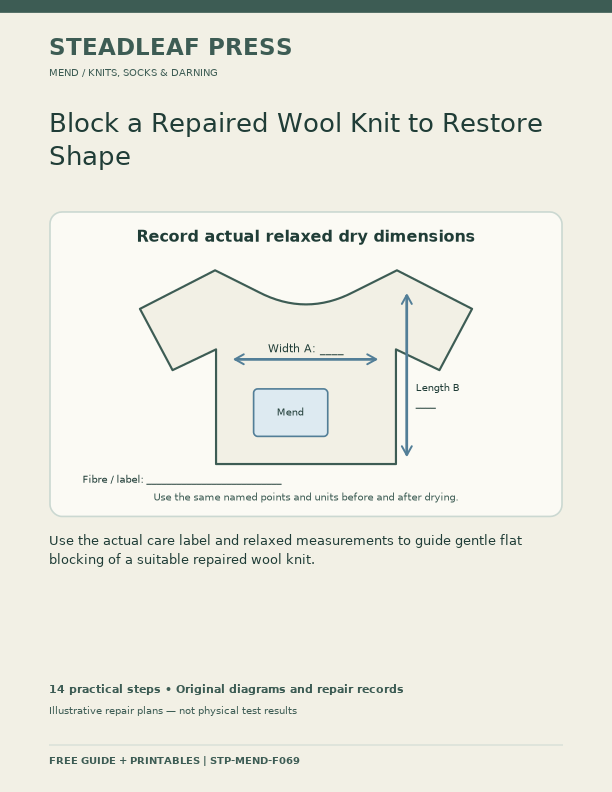
Use the actual care label and relaxed measurements to guide gentle flat blocking of a suitable repaired wool knit.
View free guide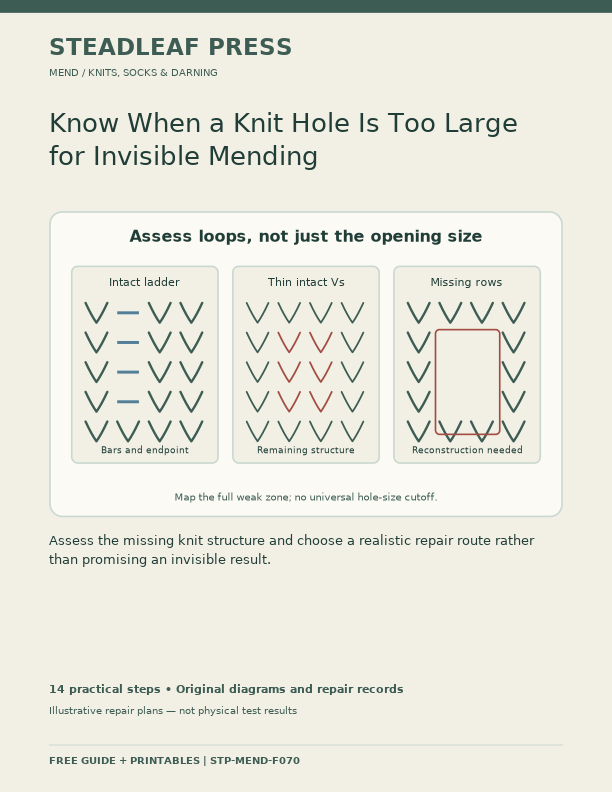
Assess the missing knit structure and choose a realistic repair route rather than promising an invisible result.
View free guide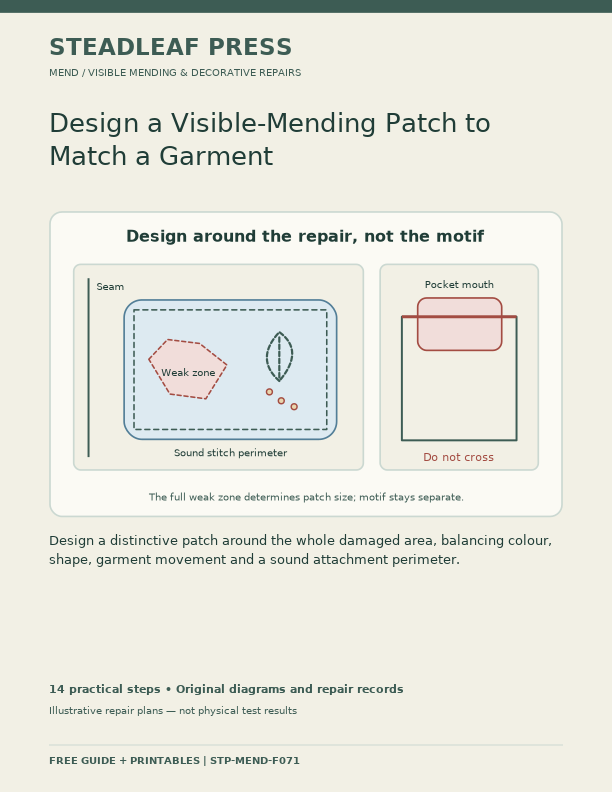
Design a distinctive patch around the whole damaged area, balancing colour, shape, garment movement and a sound attachment perimeter.
View free guide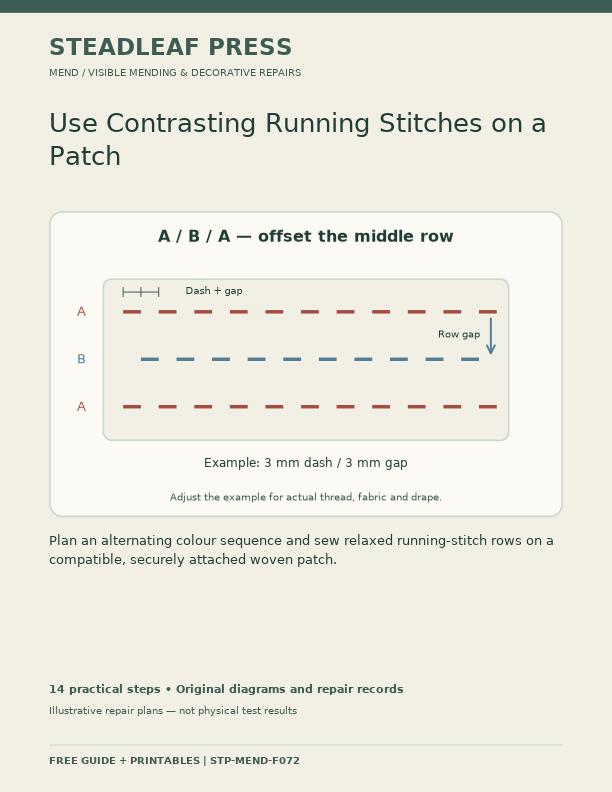
Plan an alternating colour sequence and sew relaxed running-stitch rows on a compatible, securely attached woven patch.
View free guide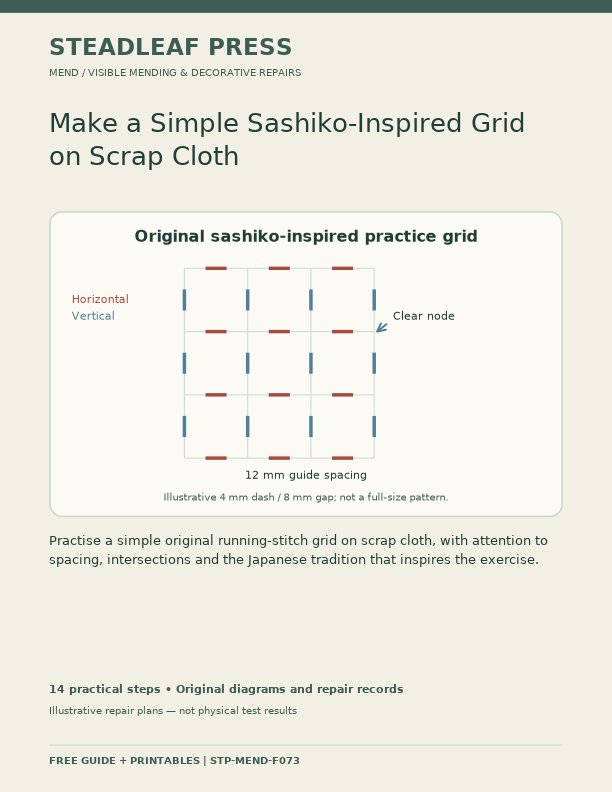
Practise a simple original running-stitch grid on scrap cloth, with attention to spacing, intersections and the Japanese tradition that inspires the exercise.
View free guide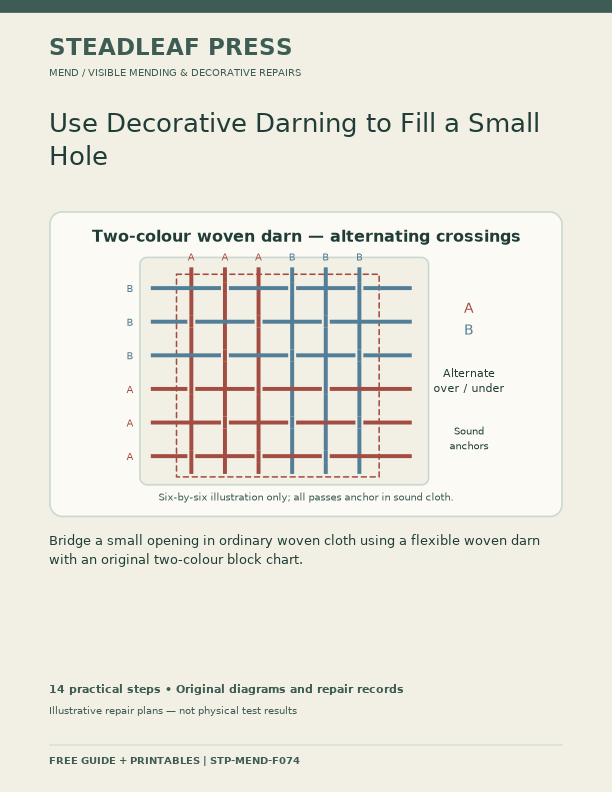
Bridge a small opening in ordinary woven cloth using a flexible woven darn with an original two-colour block chart.
View free guide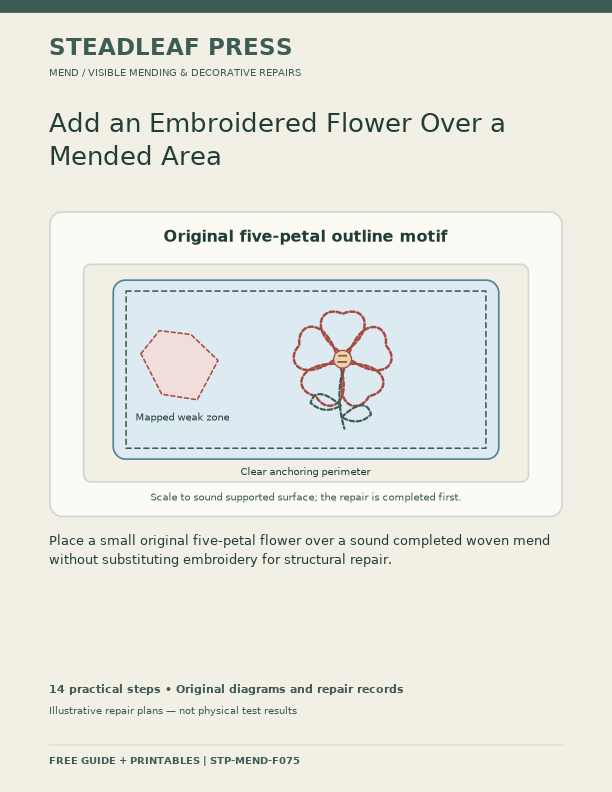
Place a small original five-petal flower over a sound completed woven mend without substituting embroidery for structural repair.
View free guide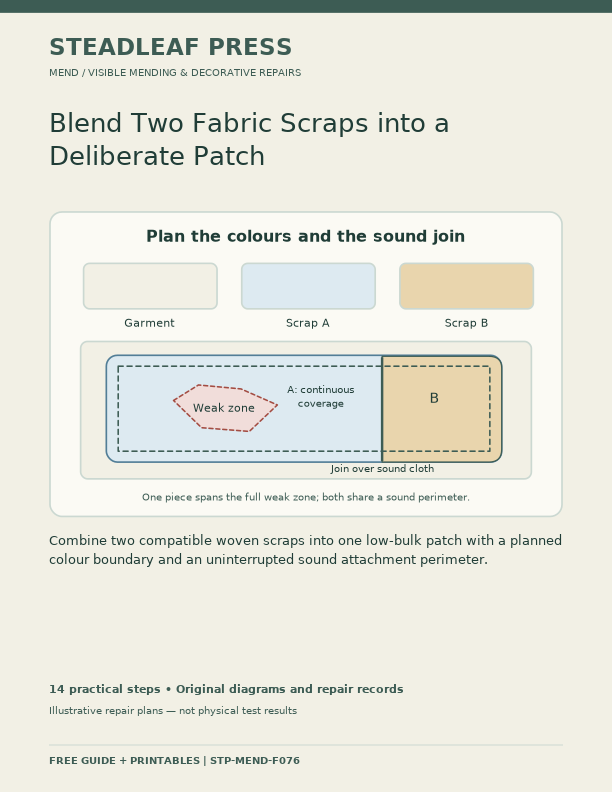
Combine two compatible woven scraps into one low-bulk patch with a planned colour boundary and an uninterrupted sound attachment perimeter.
View free guide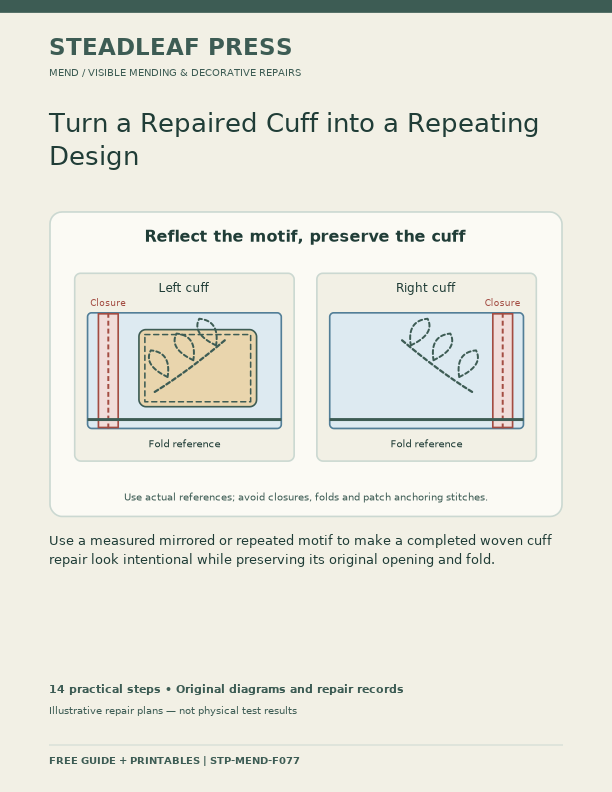
Use a measured mirrored or repeated motif to make a completed woven cuff repair look intentional while preserving its original opening and fold.
View free guide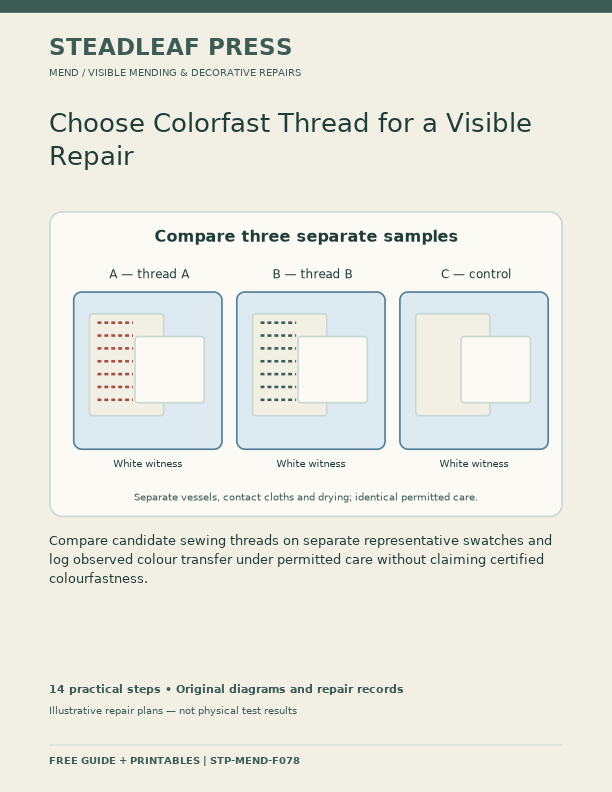
Compare candidate sewing threads on separate representative swatches and log observed colour transfer under permitted care without claiming certified colourfastness.
View free guide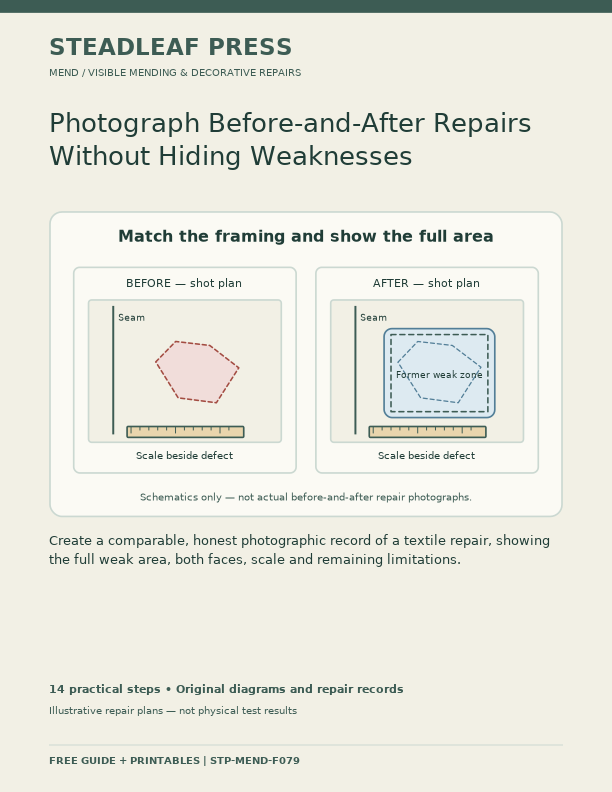
Create a comparable, honest photographic record of a textile repair, showing the full weak area, both faces, scale and remaining limitations.
View free guide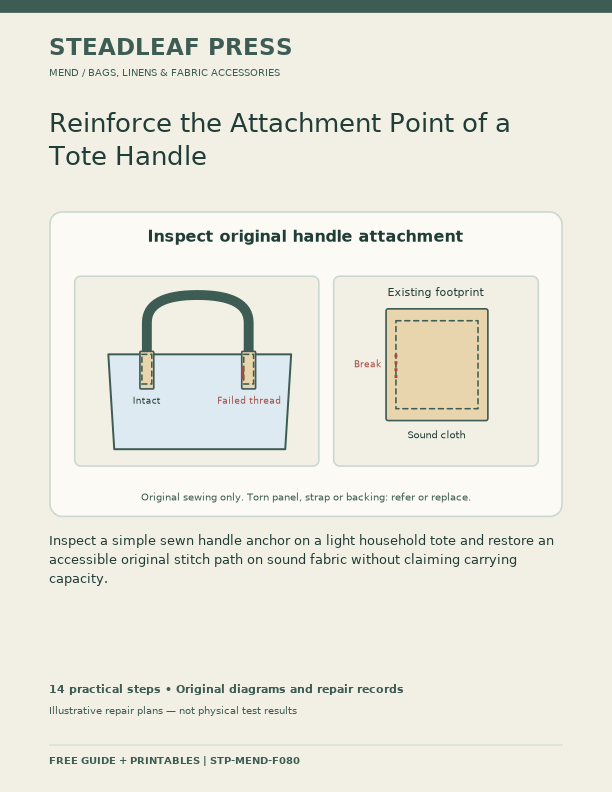
Inspect a simple sewn handle anchor on a light household tote and restore an accessible original stitch path on sound fabric without claiming carrying capacity.
View free guide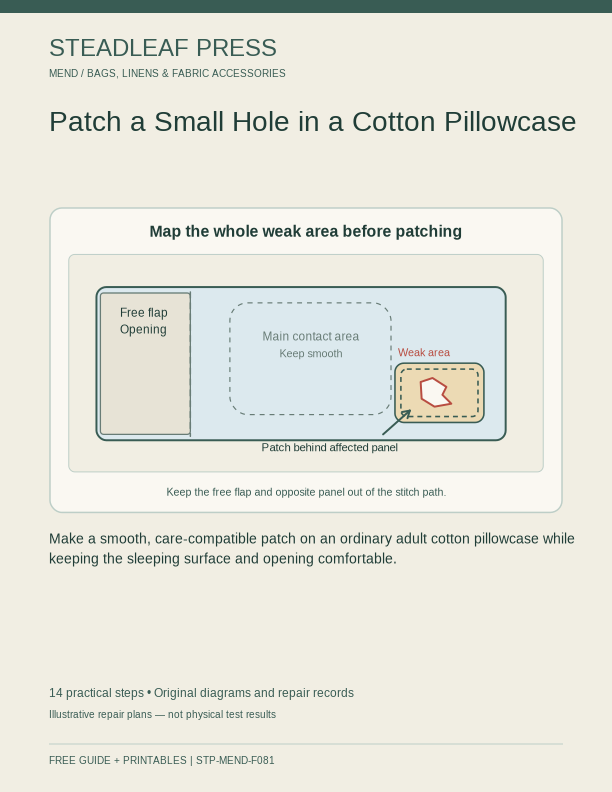
Make a smooth, care-compatible patch on an ordinary adult cotton pillowcase while keeping the sleeping surface and opening comfortable.
View free guide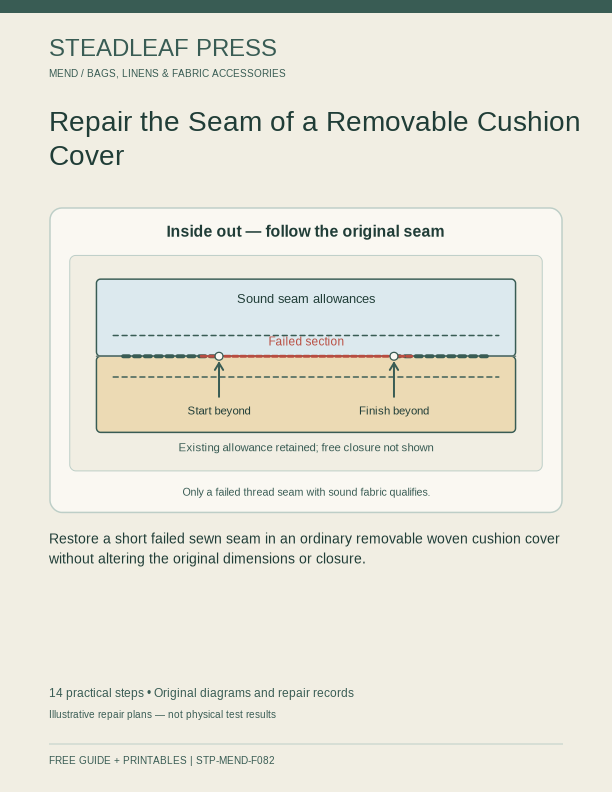
Restore a short failed sewn seam in an ordinary removable woven cushion cover without altering the original dimensions or closure.
View free guide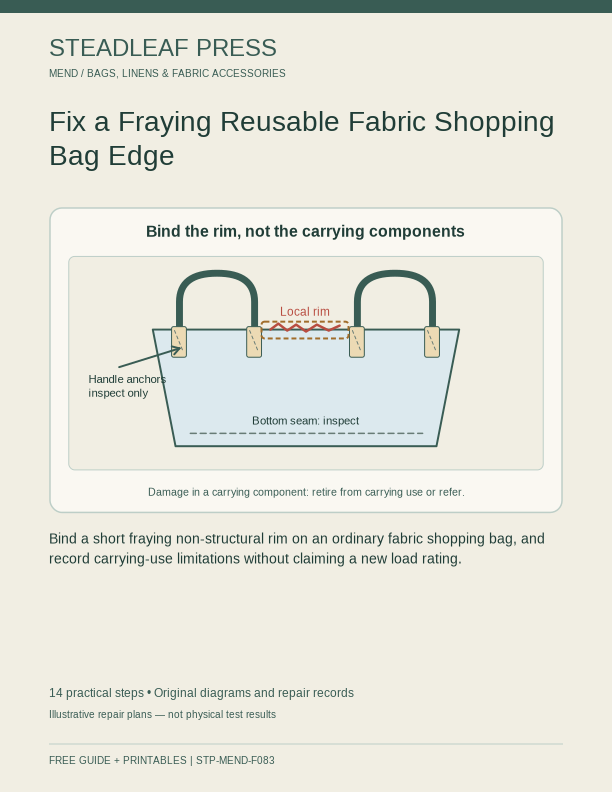
Bind a short fraying non-structural rim on an ordinary fabric shopping bag, and record carrying-use limitations without claiming a new load rating.
View free guide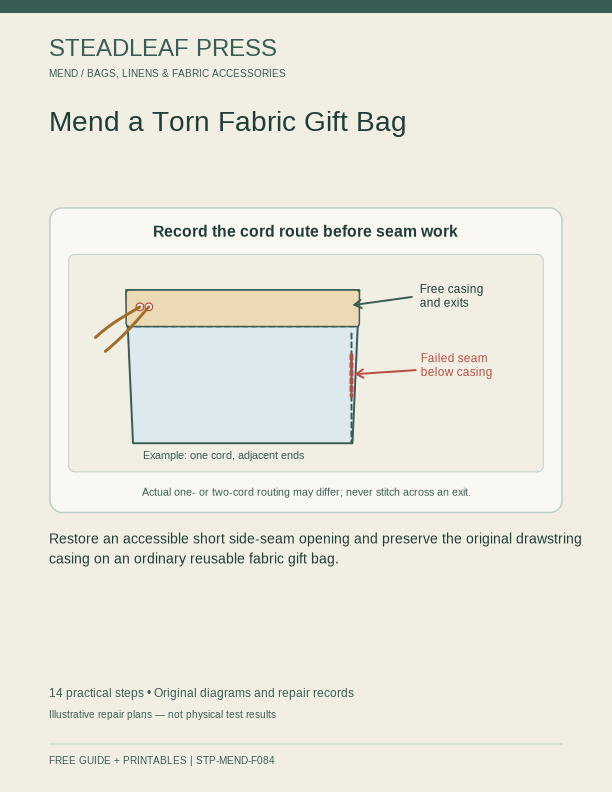
Restore an accessible short side-seam opening and preserve the original drawstring casing on an ordinary reusable fabric gift bag.
View free guide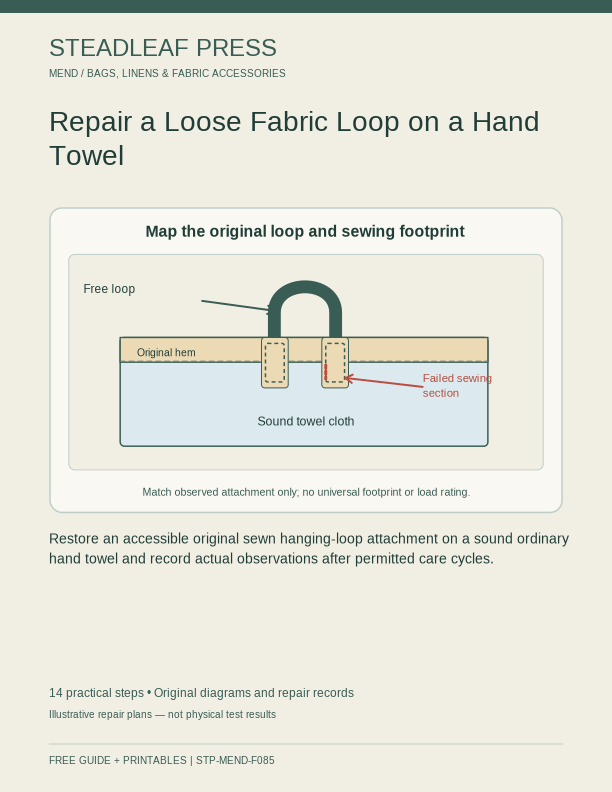
Restore an accessible original sewn hanging-loop attachment on a sound ordinary hand towel and record actual observations after permitted care cycles.
View free guide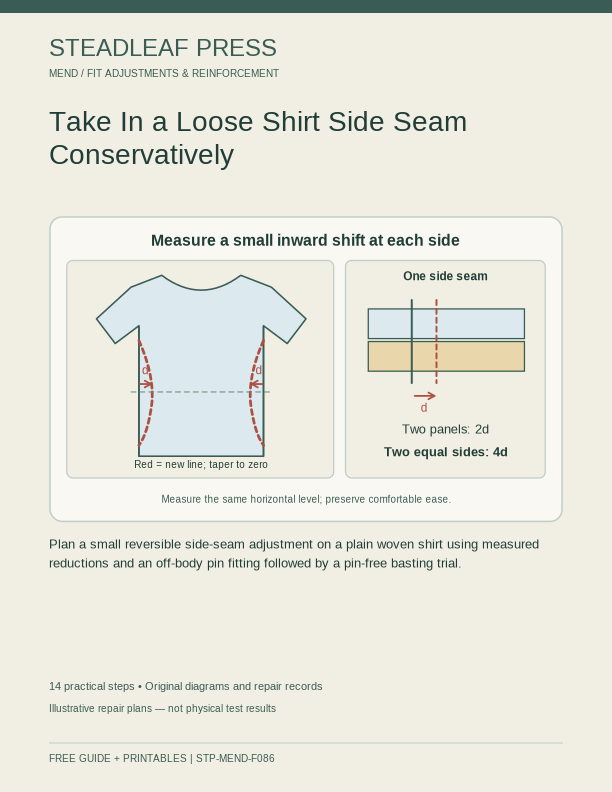
Plan a small reversible side-seam adjustment on a plain woven shirt using measured reductions and an off-body pin fitting followed by a pin-free basting trial.
View free guide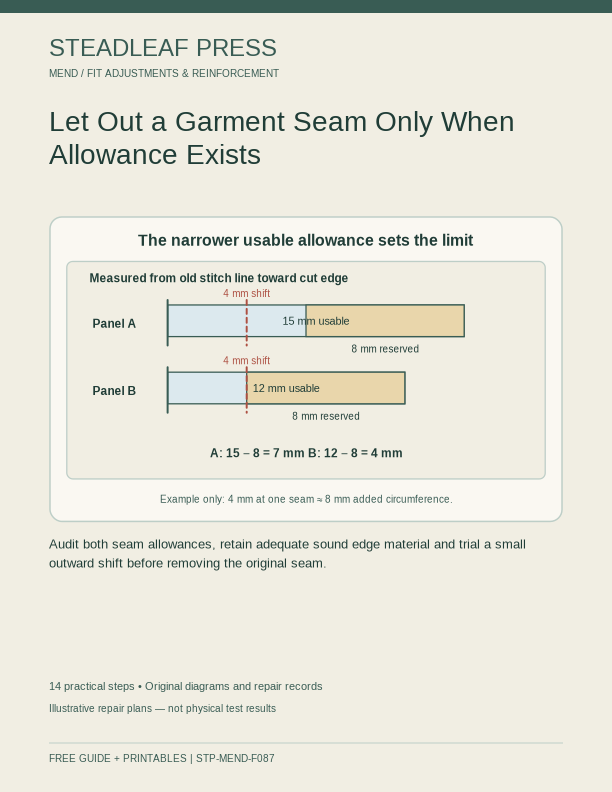
Audit both seam allowances, retain adequate sound edge material and trial a small outward shift before removing the original seam.
View free guide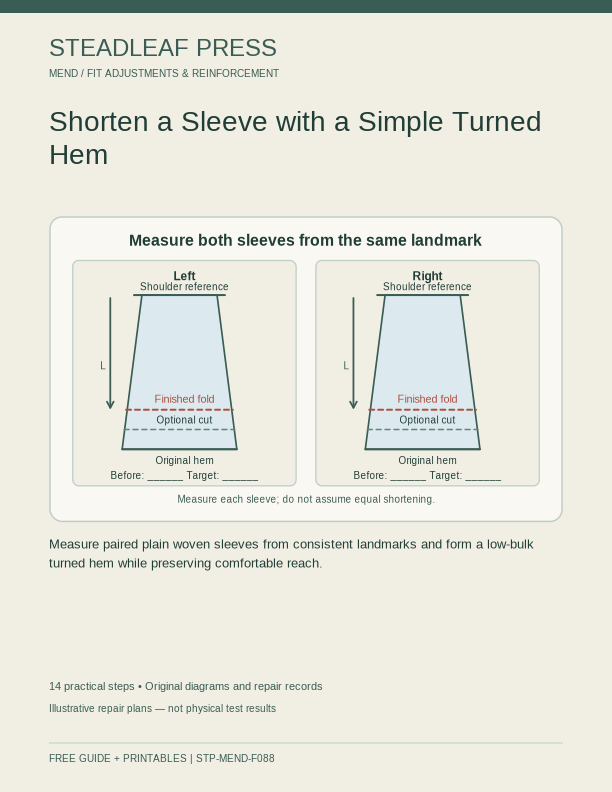
Measure paired plain woven sleeves from consistent landmarks and form a low-bulk turned hem while preserving comfortable reach.
View free guide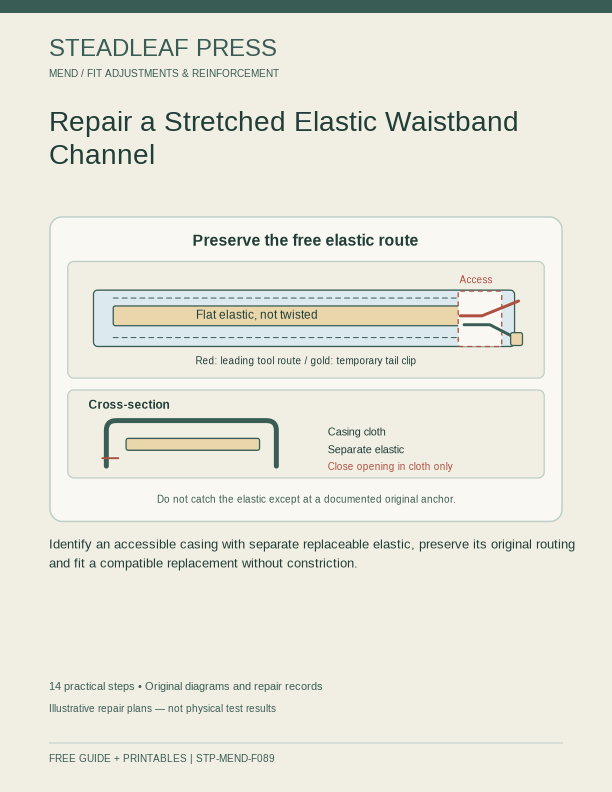
Identify an accessible casing with separate replaceable elastic, preserve its original routing and fit a compatible replacement without constriction.
View free guide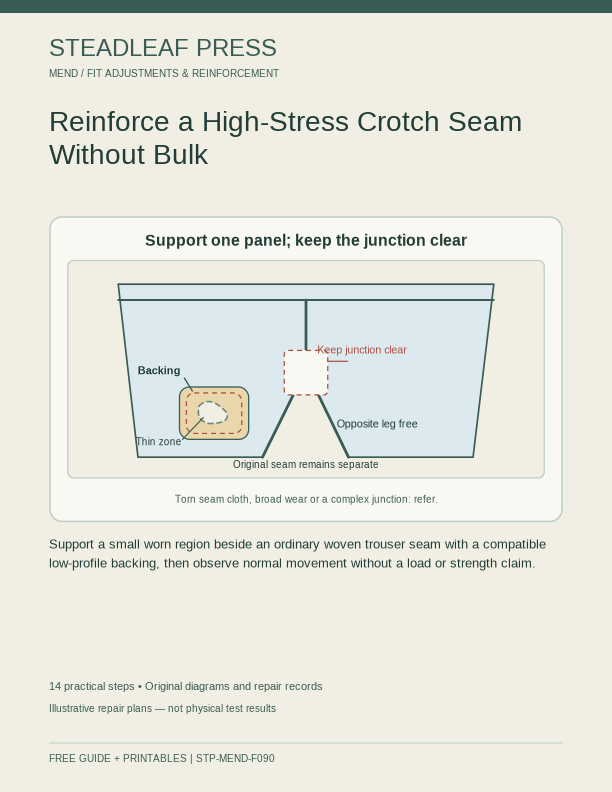
Support a small worn region beside an ordinary woven trouser seam with a compatible low-profile backing, then observe normal movement without a load or strength claim.
View free guide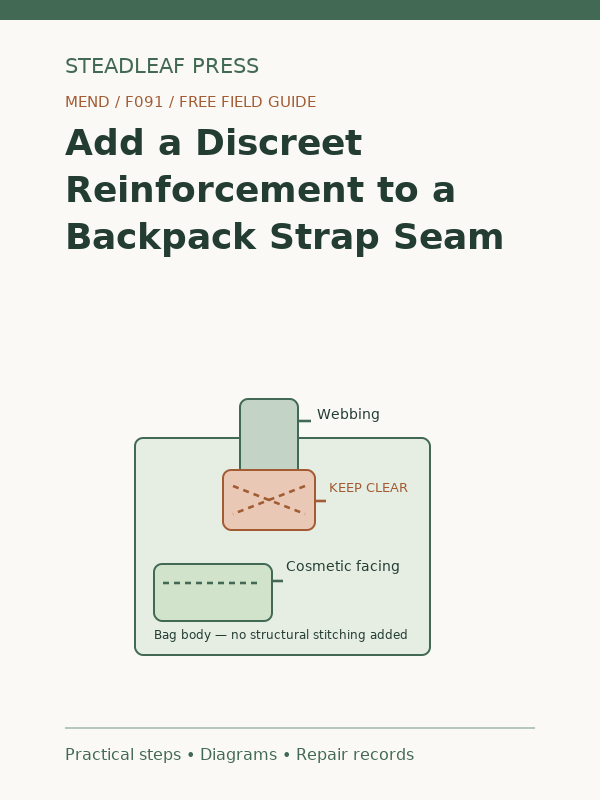
Recognize a cosmetic seam defect, and reinforce only a non-load-bearing fabric detail.
View free guide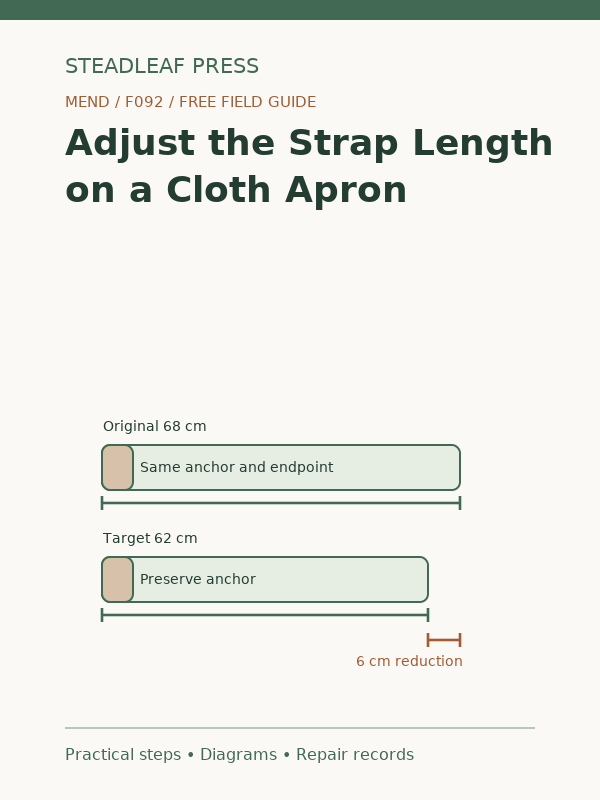
Measure a comfortable fit, preserve the original attachment and secure a simple non-protective cloth strap.
View free guide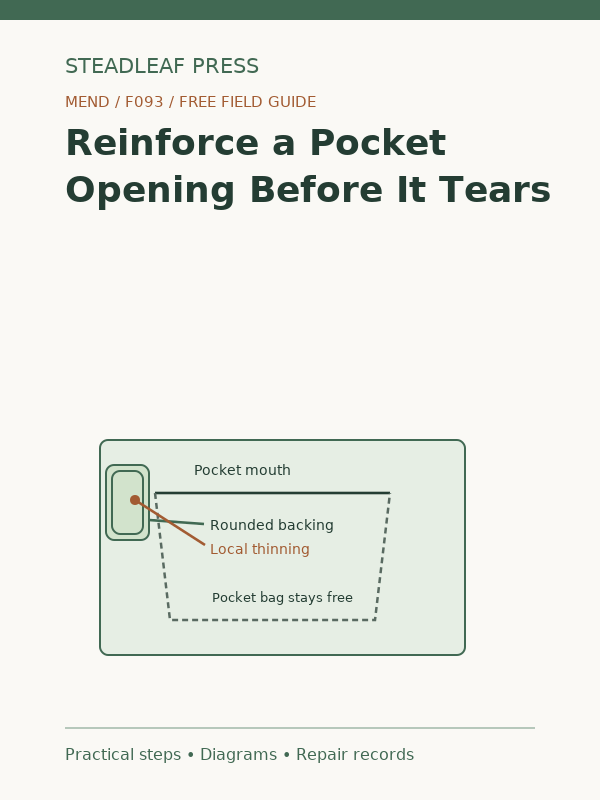
Support a small stable tension point without closing the pocket or making a hard ridge.
View free guide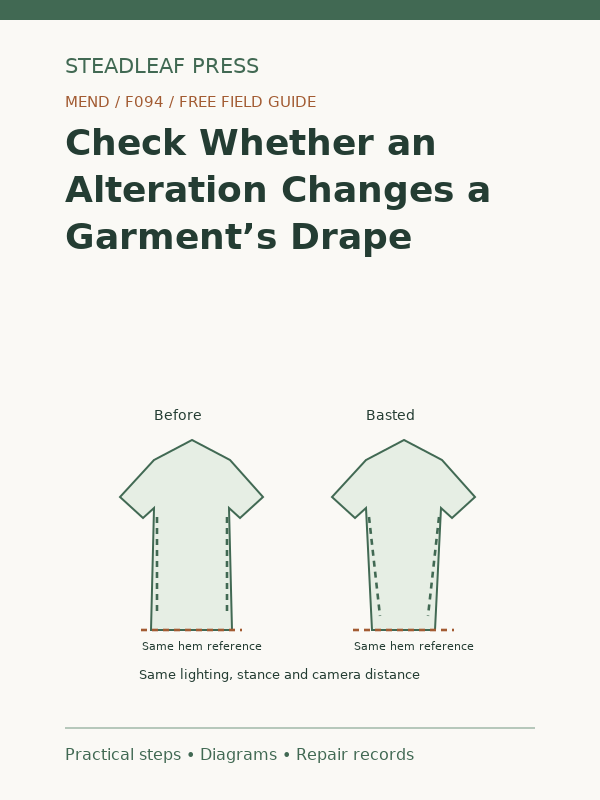
Use reversible basting, consistent comparison and a pin-free wear-test worksheet before cutting or final sewing.
View free guide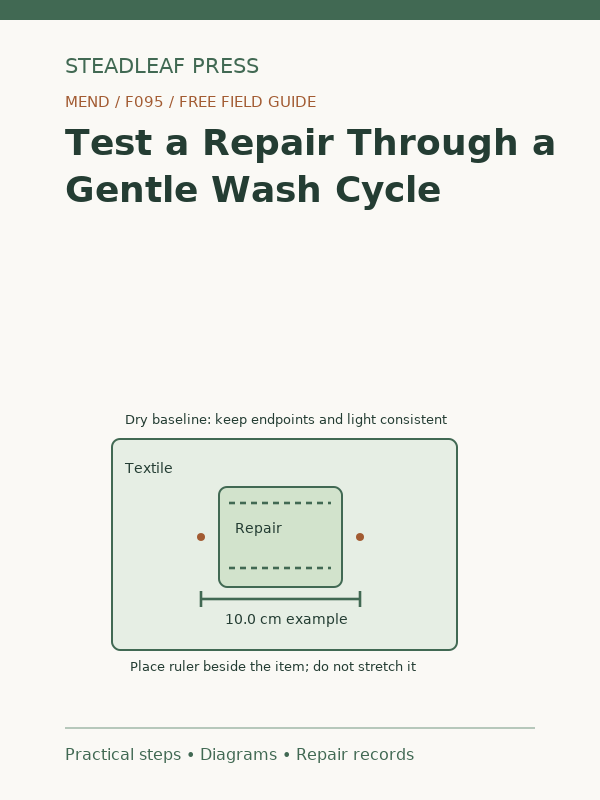
Record an ordinary permitted wash, compare prewash and postwash condition, and stop when new damage appears.
View free guide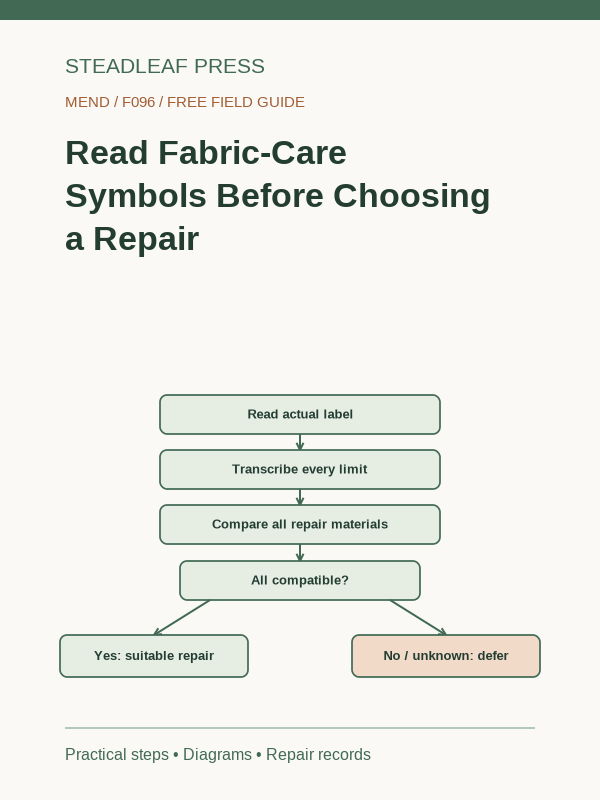
Turn the care label into a practical repair decision without overriding the maker’s instructions.
View free guide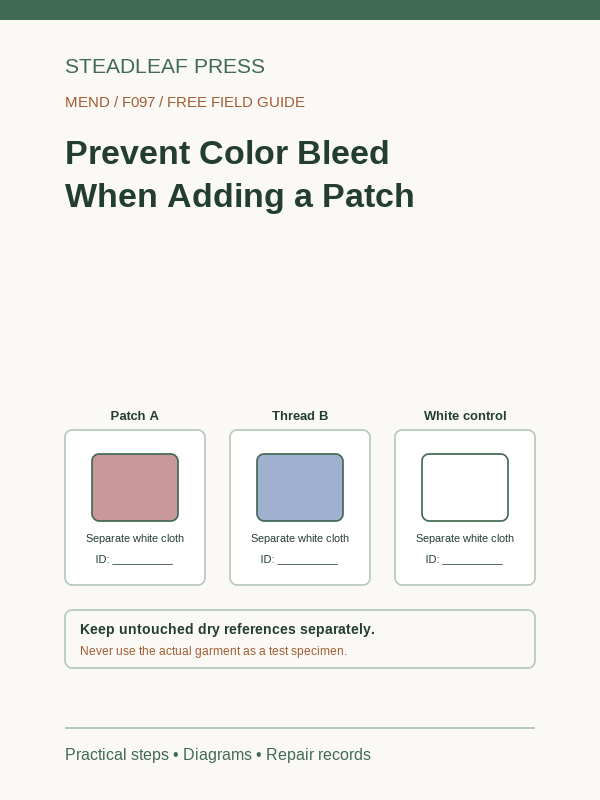
Use expendable swatches to identify obvious dye transfer risks before patching an everyday textile.
View free guide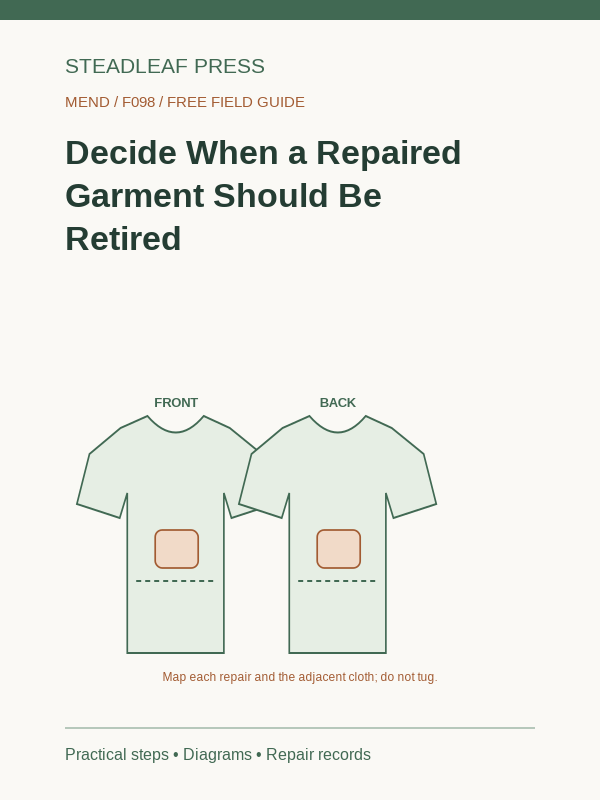
Use visible condition, ordinary fit and intended function to decide whether to keep, refer, repurpose or retire a garment.
View free guide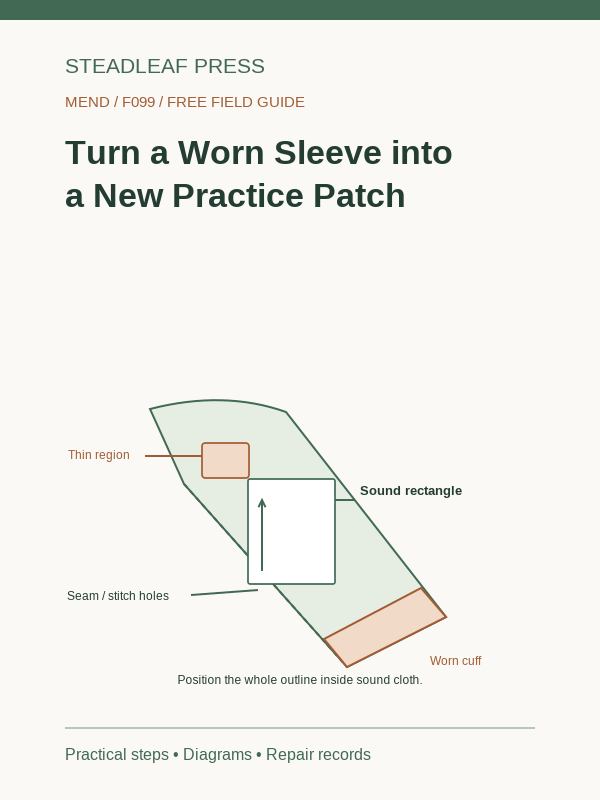
Salvage a sound area from a retired woven sleeve and turn it into a clearly labelled non-load-bearing stitch-practice patch.
View free guide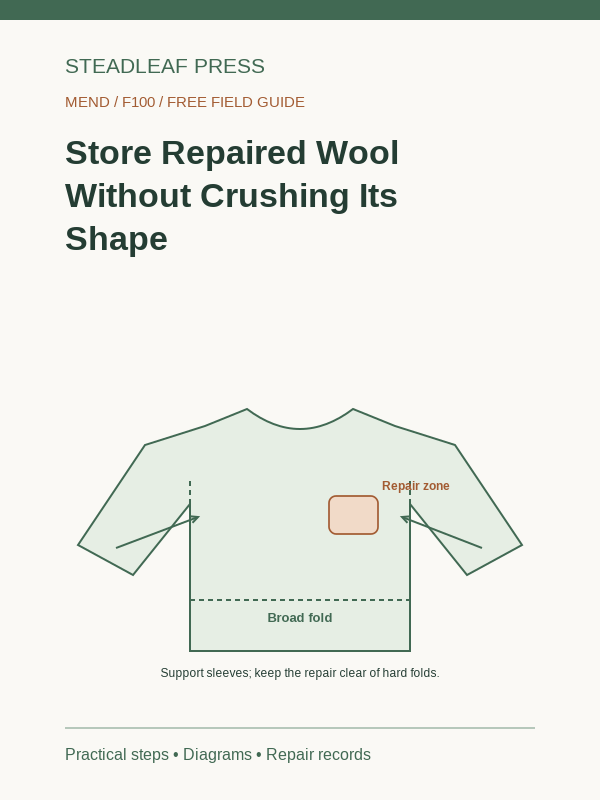
Choose a storage route for repaired everyday wool, with gentle support, care-label checks and periodic visual review.
View free guide