Watering Without Guessing: Free Visual Field Guide
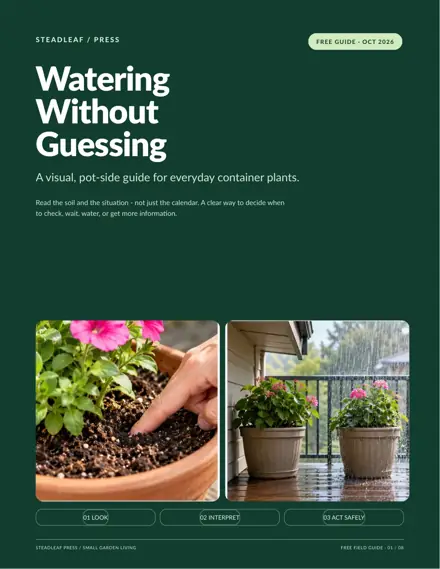
A free eight-page visual guide to safer watering checks, drainage clues and next steps for everyday container plants. Includes a pocket decision card and a 14-check printable log.
View free guide →Herbs, flowers, houseplants, and the pleasure of growing things in real spaces.
Match the real light and exposure of a specific place with a viable plant.
Choose and prepare a container and root environment before potting.
Respond to real pot conditions rather than watering or feeding on autopilot.
Start and multiply plants with concrete propagation techniques.
Grow and harvest recognizable culinary herbs in small spaces.
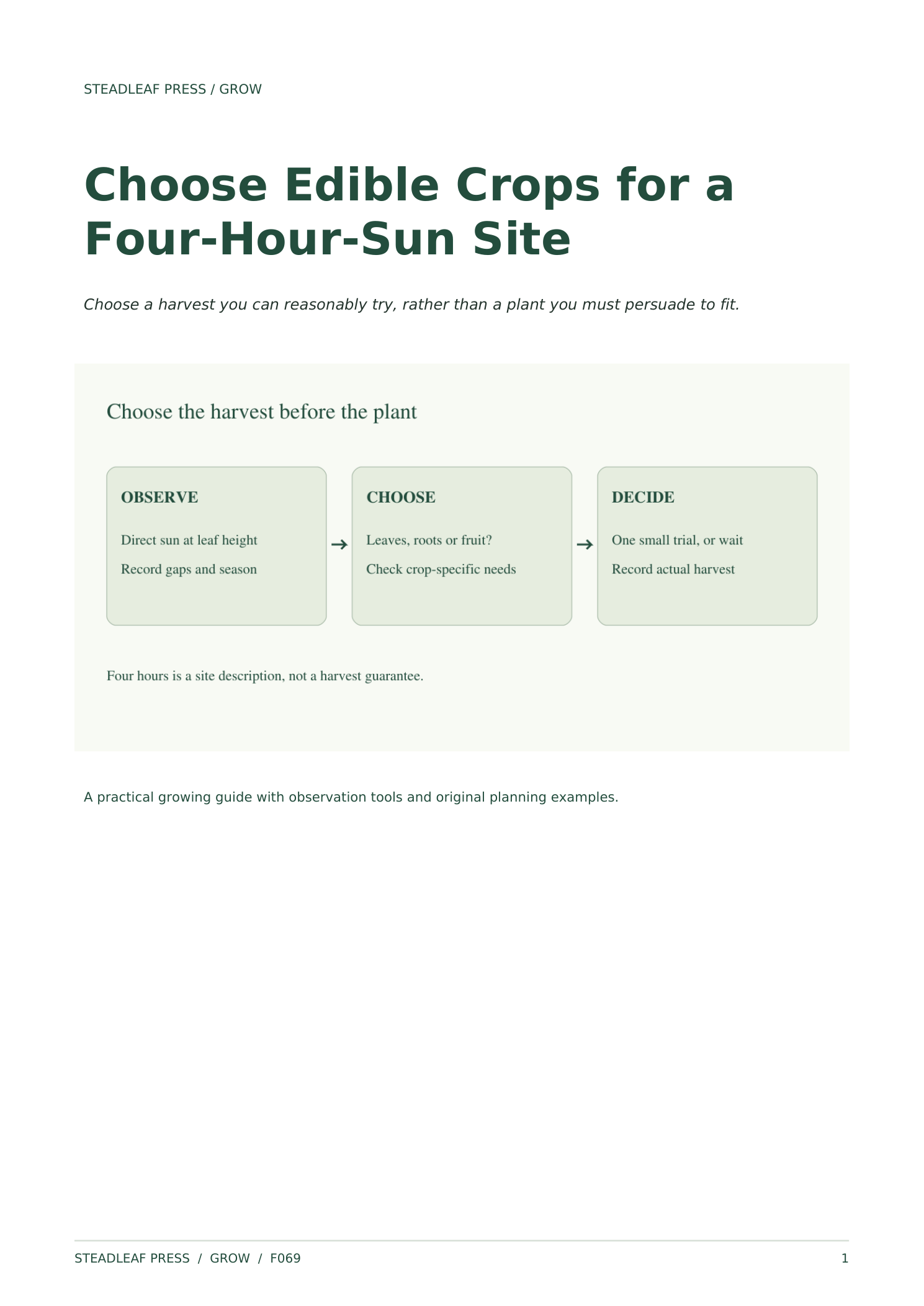
Raise realistic small edible crops with suitable light and space.
Care for specific indoor plants through observable signs.
Create and sustain flowering displays in constrained light and space.
Arrange plants into usable, attractive and habitat-conscious small spaces.
Identify a plant problem and choose a proportionate response.
Adapt existing container growing to predictable seasonal stresses.
Improve growing through specific repeatable skills and records.
These subjects are part of the editorial roadmap. A topic card is not a published guide or a purchase offer.
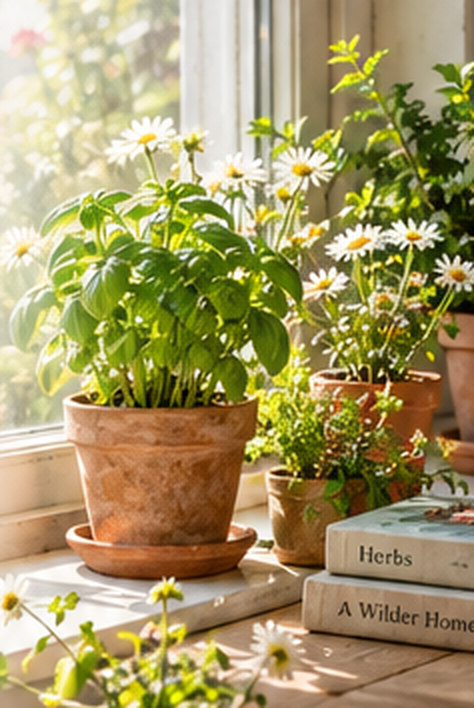
FEATURED · PERSONALIZED GROW TOOL
Measure one garden bed, arrange selected plants, and preview a practical layout before you plant.
Personalized 4-page PDF · US$24.99
Try the free planner →Secure Stripe checkout inside the studio.
A free eight-page visual guide to safer watering checks, drainage clues and next steps for everyday container plants. Includes a pocket decision card and a 14-check printable log.
View free guide →
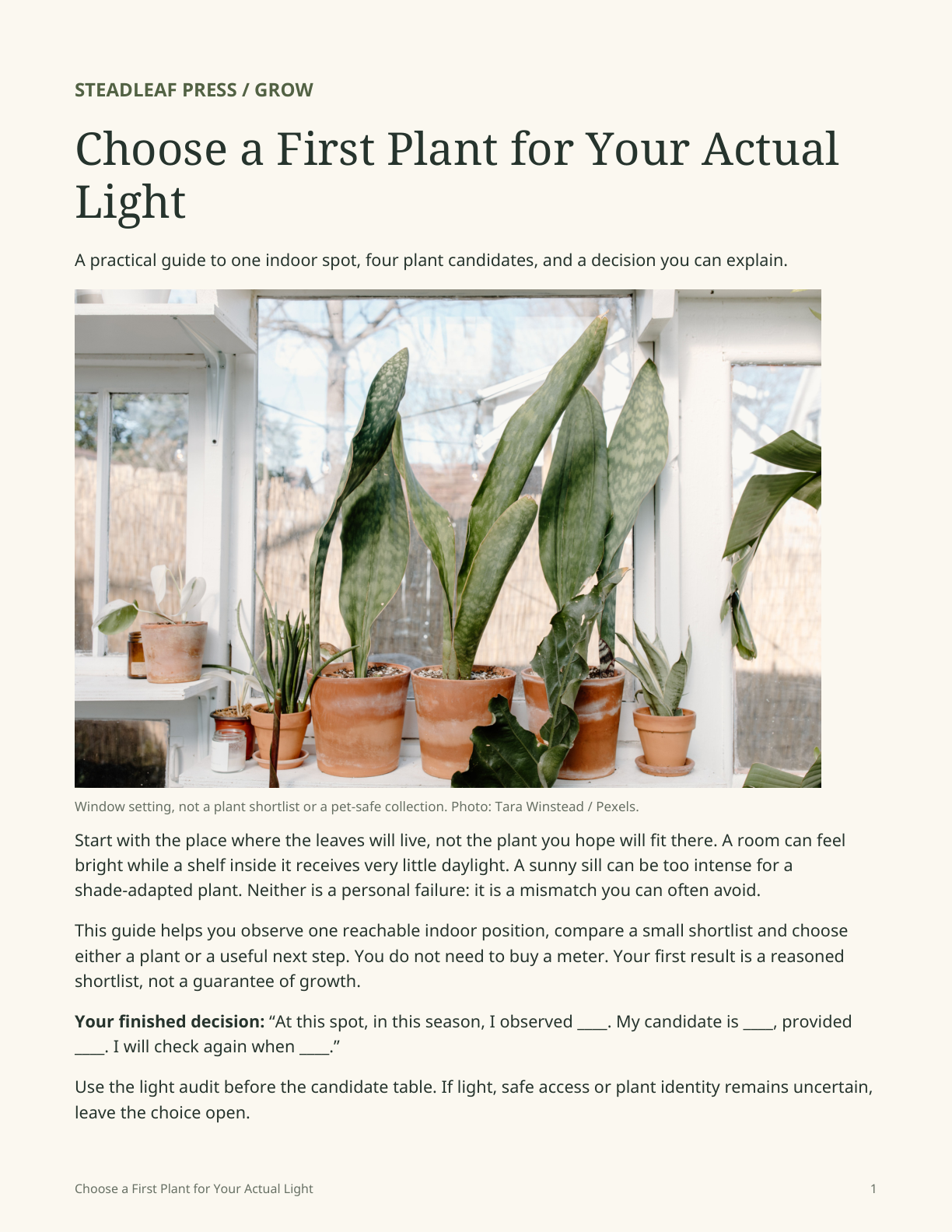
Observe direct and indirect light at the intended leaf position, classify the spot provisionally, compare four candidates and choose one with conditions—or defer.
View free guide →
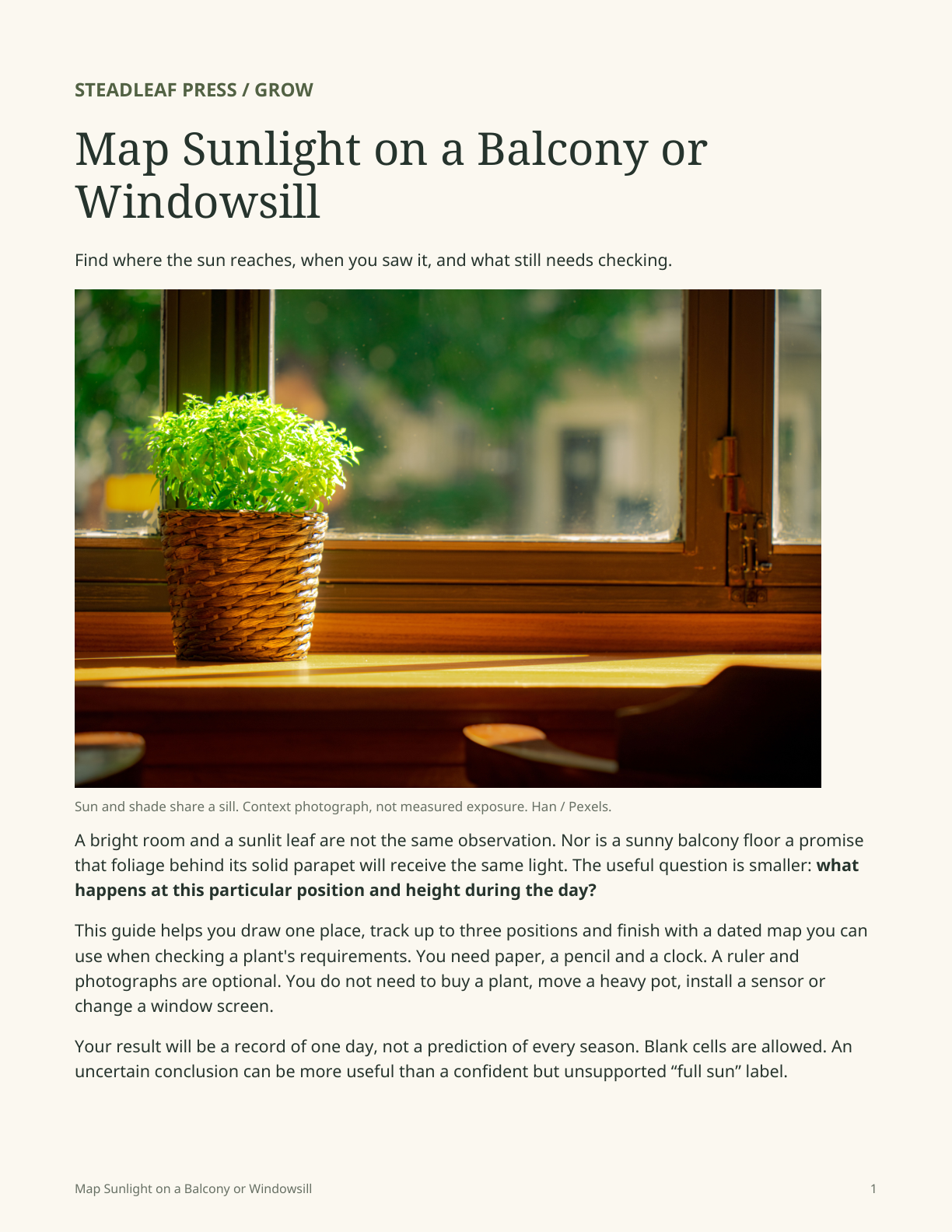
Make a height-specific, one-day sunlight map, time-stamped light-state log and honest uncertainty-led conclusion.
View free guide →
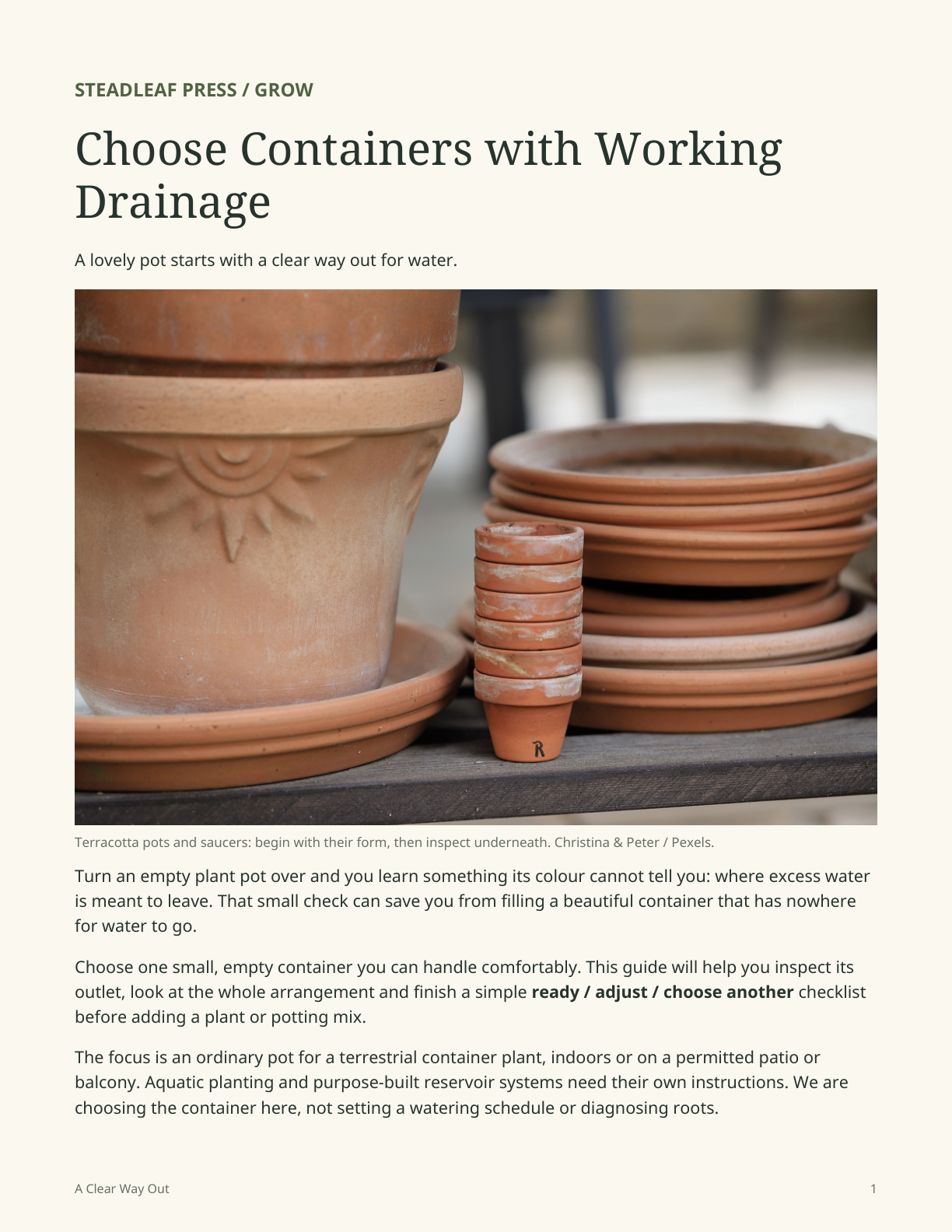
Inspect one empty container and its complete drainage route, record visible evidence, and choose ready, adjust and recheck, or another container.
View free guide →
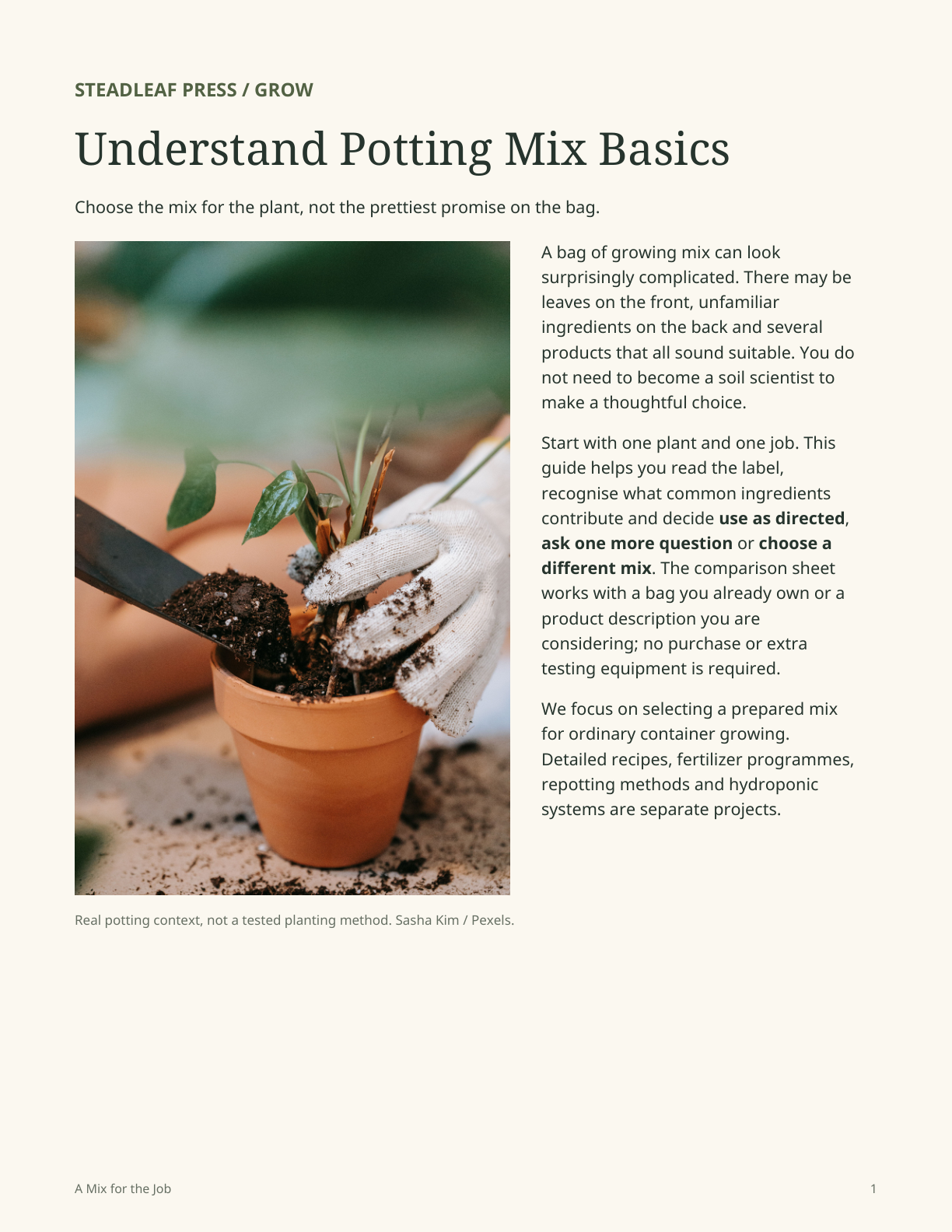
Read actual product information against plant identity and stage, compare two candidates and choose use as directed, ask one more question, or a different mix.
View free guide →
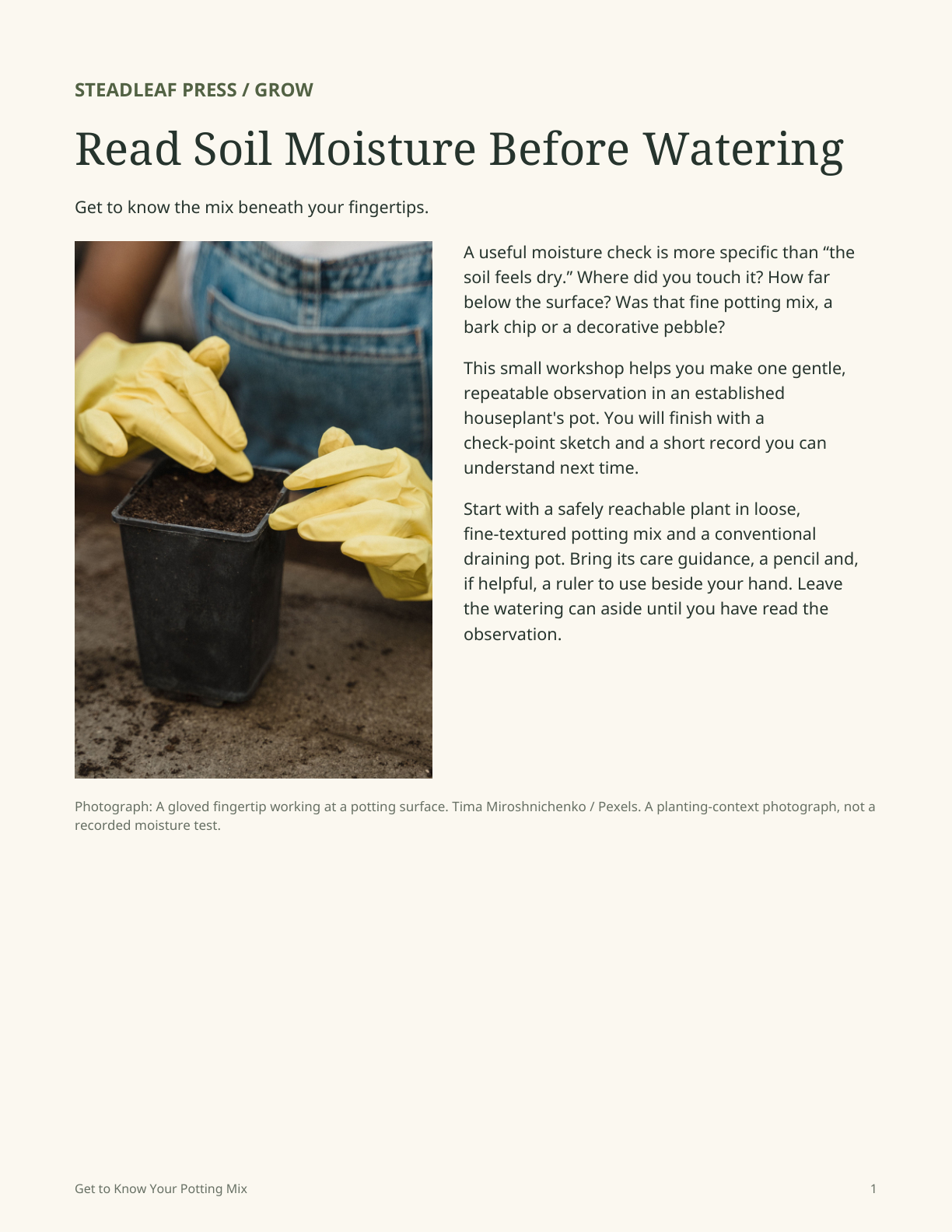
Locate the actual mix surface, make a gentle plant-appropriate contact check and record location, actual depth, feel and uncertainty on a mapped pointcard.
View free guide →
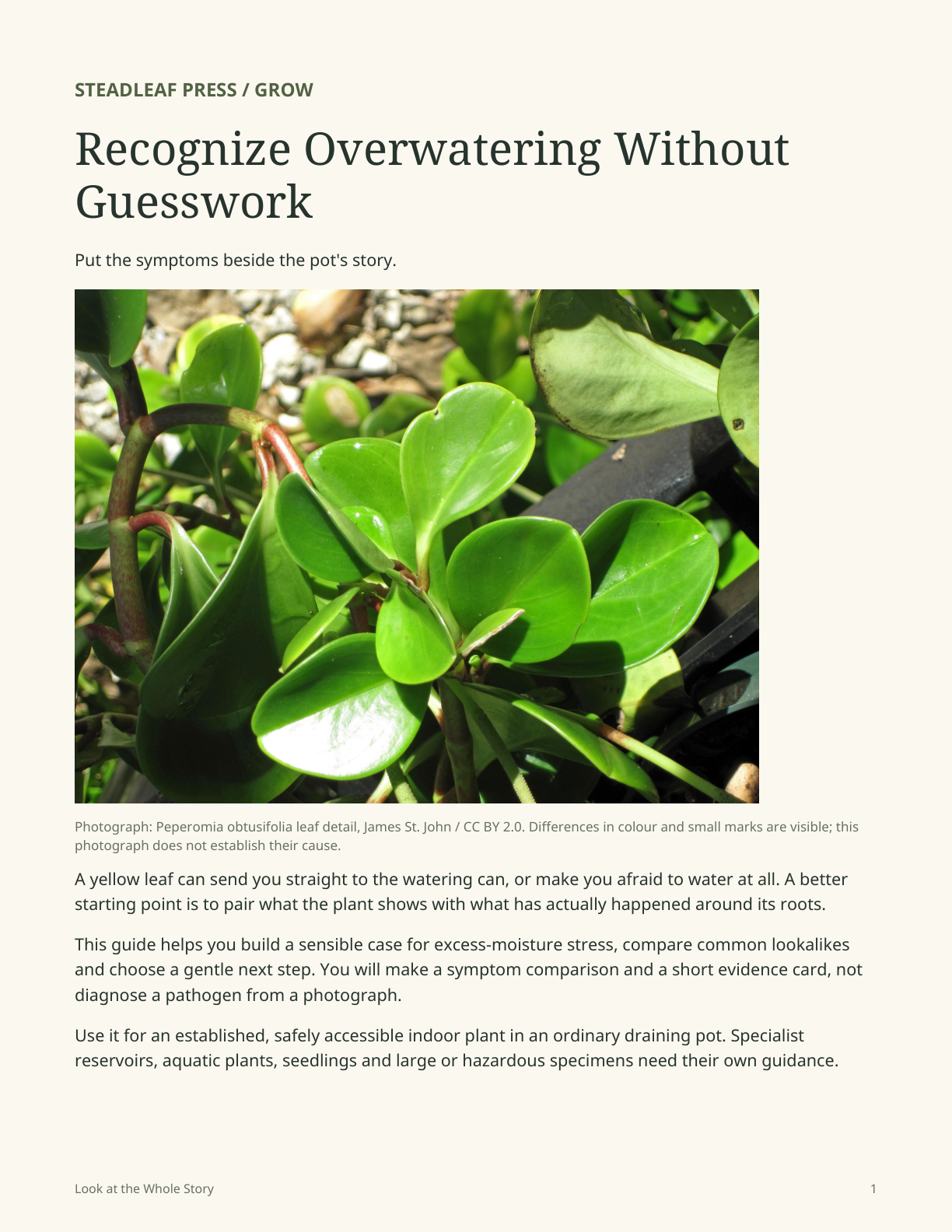
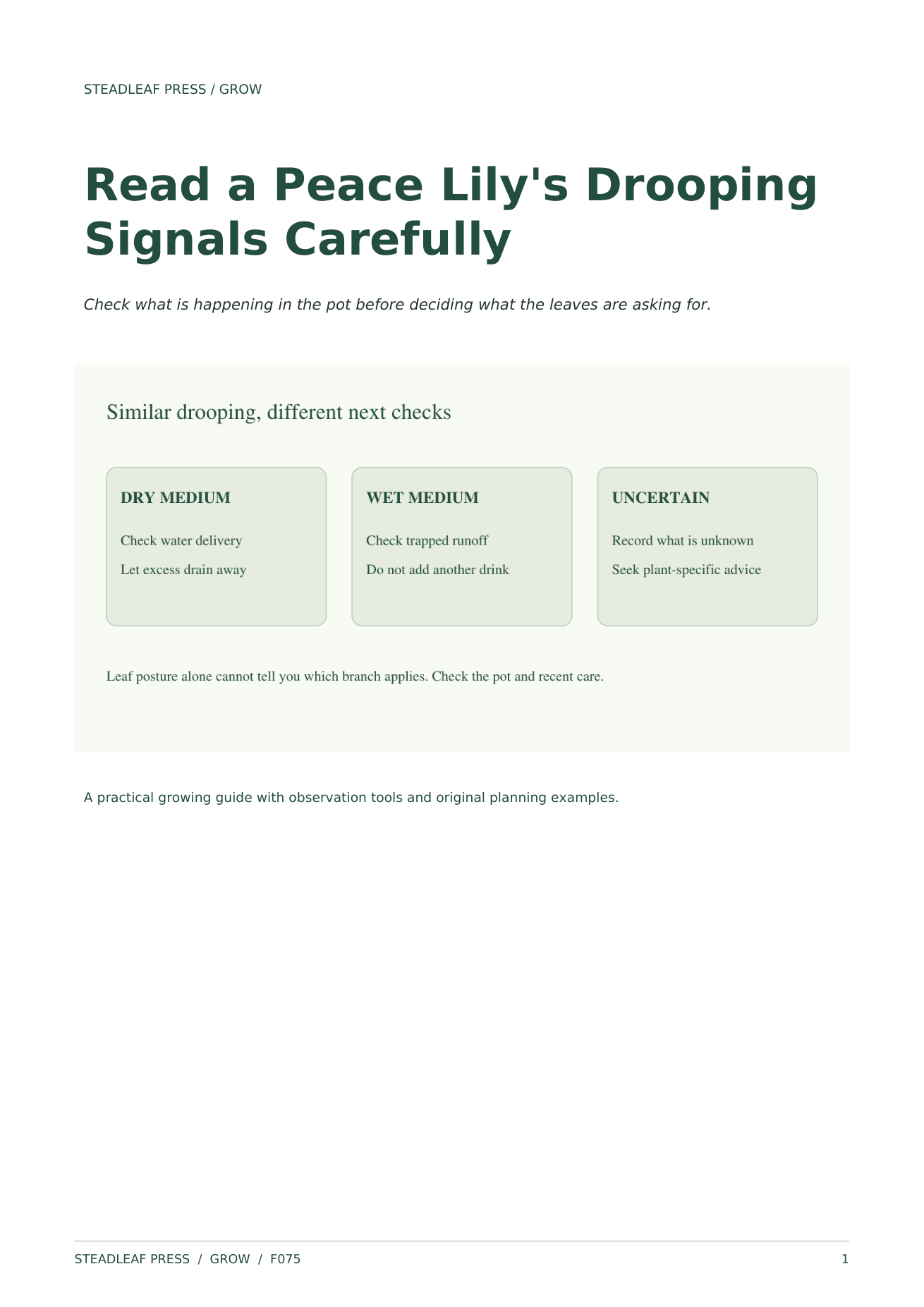
Pair a five-symptom comparison with moisture/drainage/care-history evidence and select a proportionate next action or escalation.
View free guide →
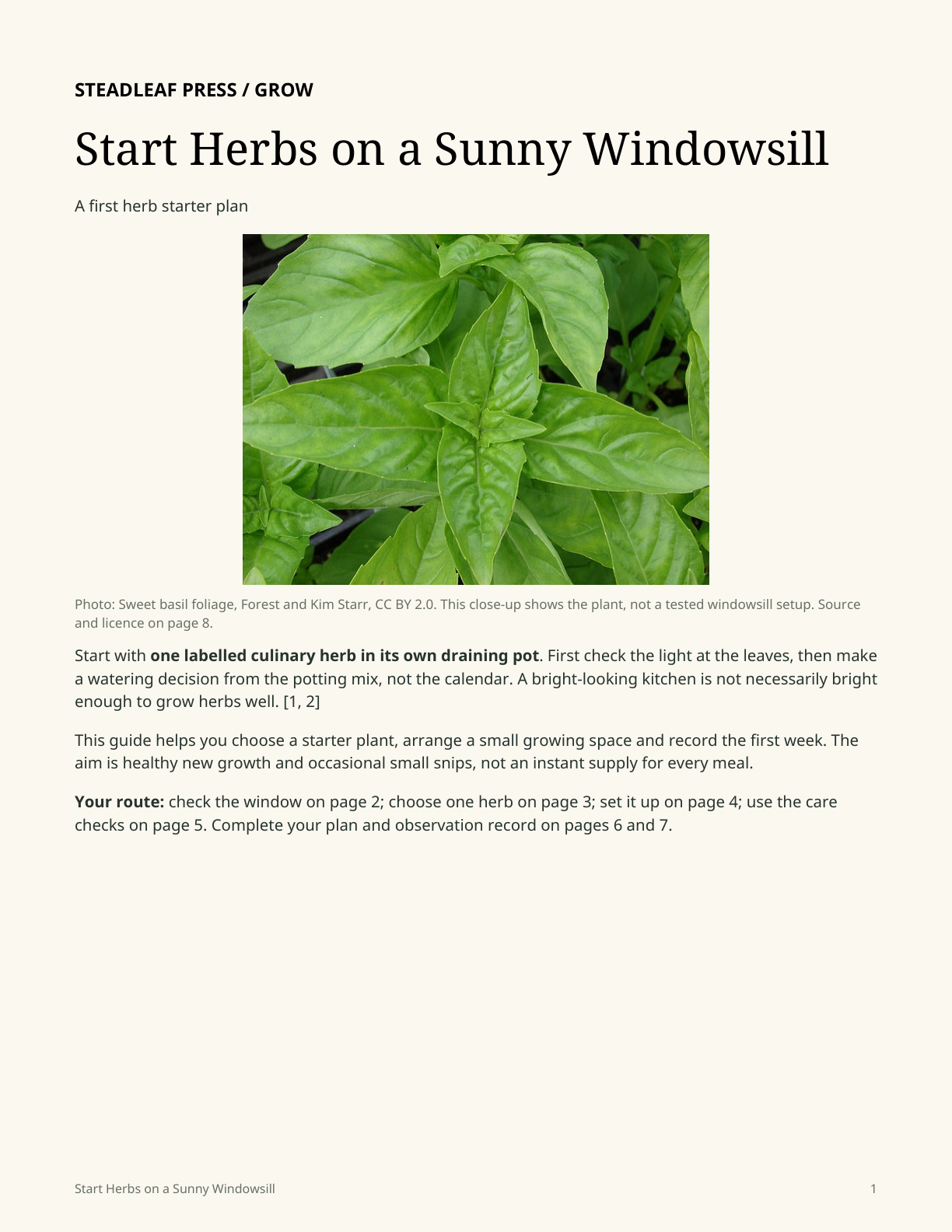
Assess actual light, choose one suitable herb, arrange a genuinely draining pot and record moisture and growth before a small first harvest.
View free guide →
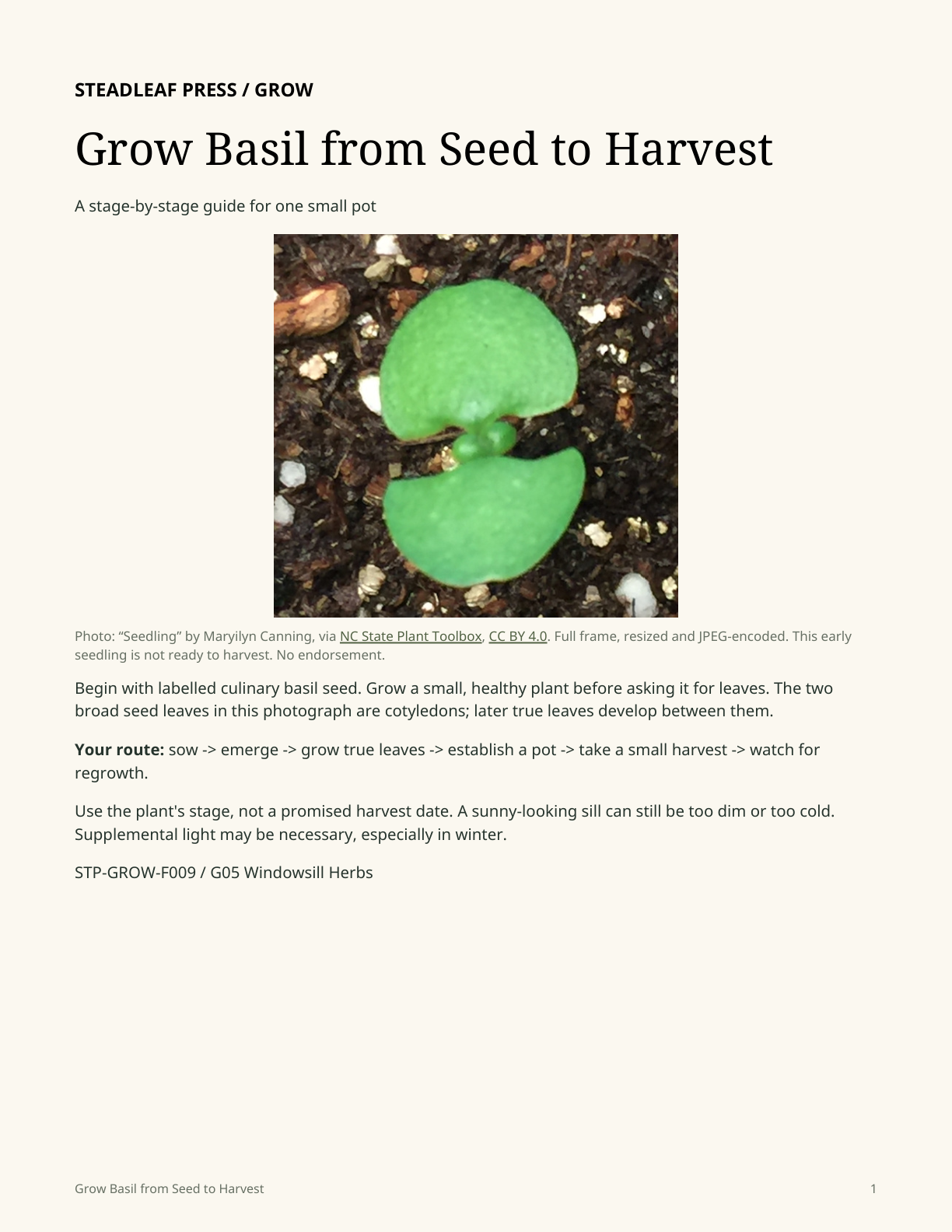
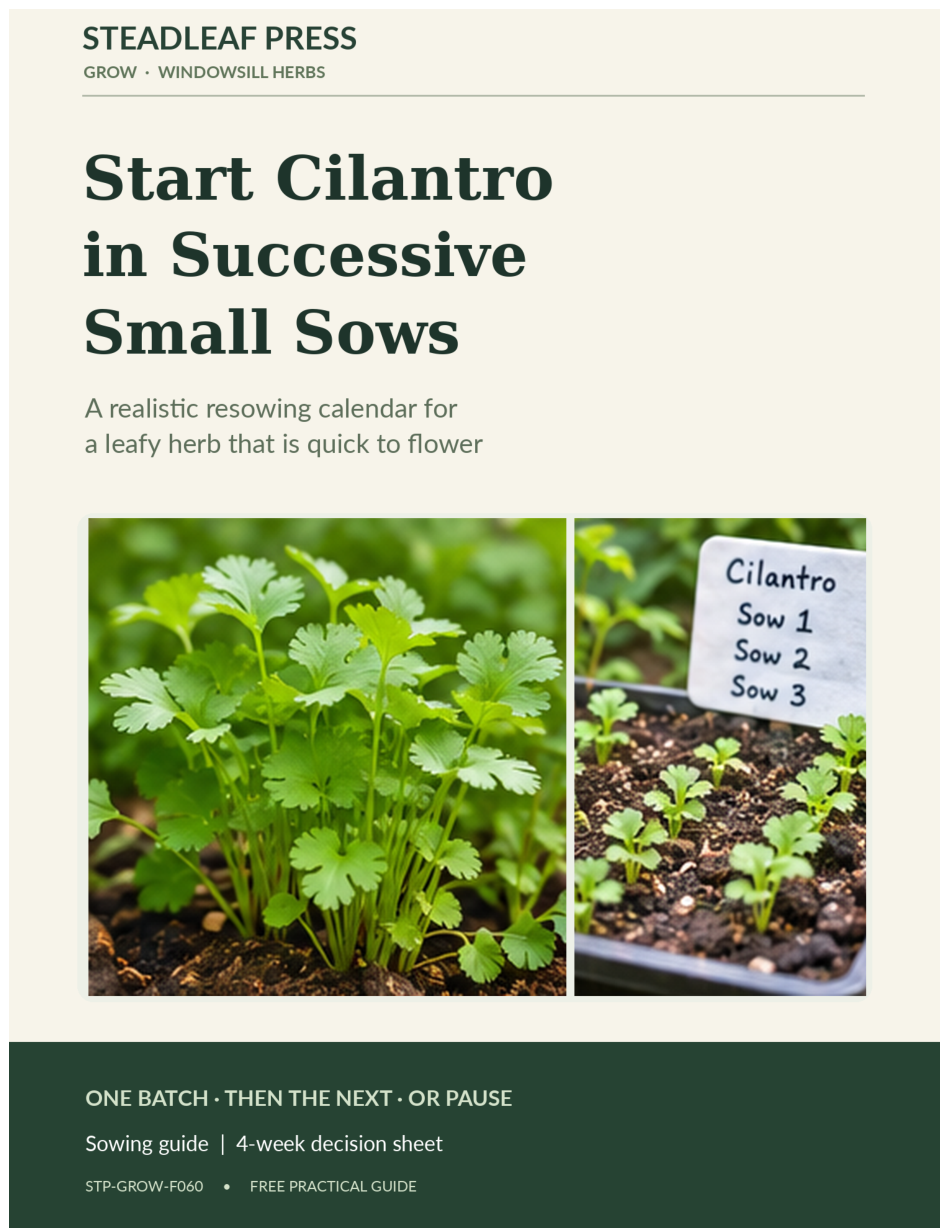
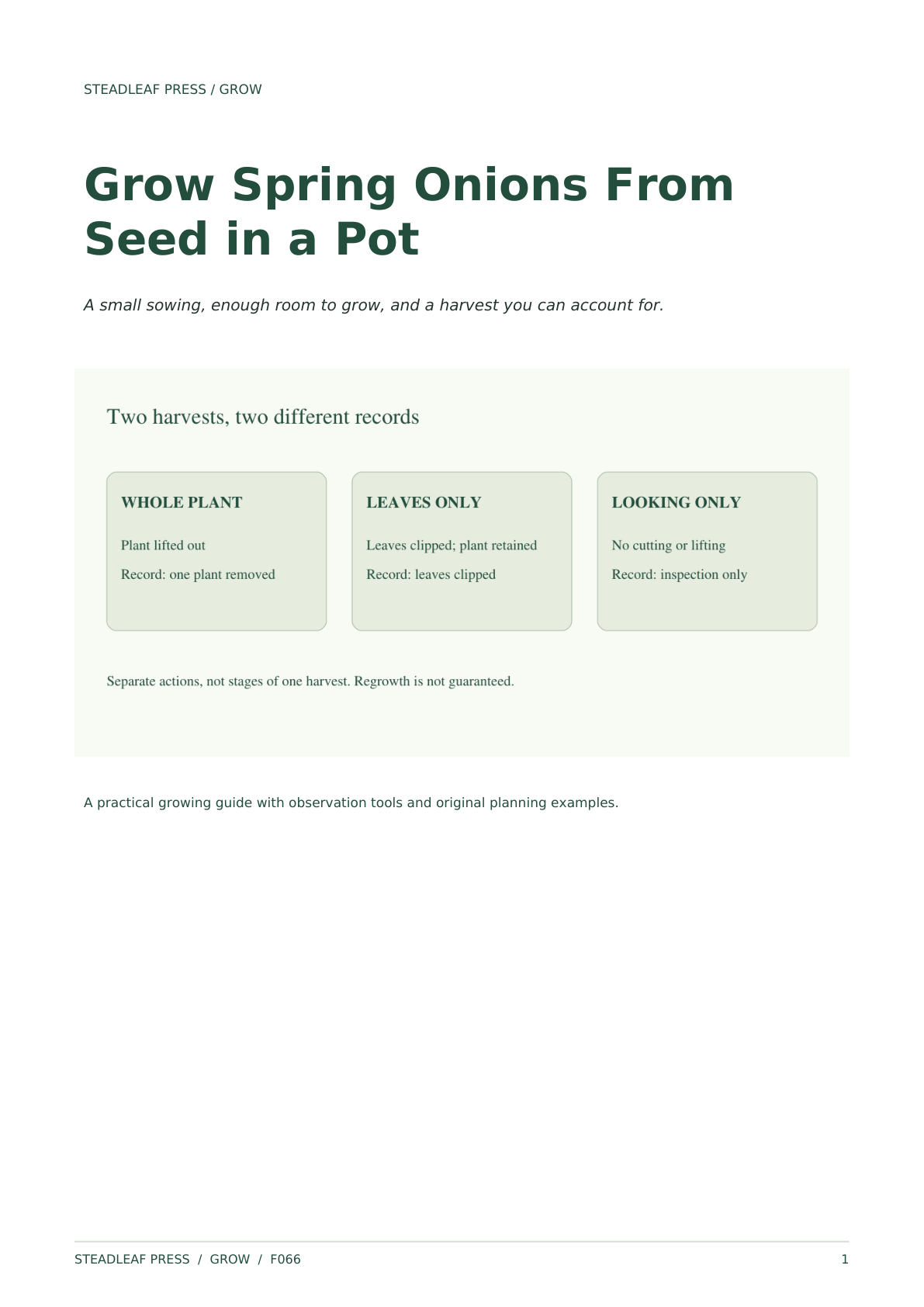
Sow a small batch, distinguish cotyledons and true leaves, establish a healthy pot, take a conservative above-leaf-pair harvest and observe regrowth.
View free guide →
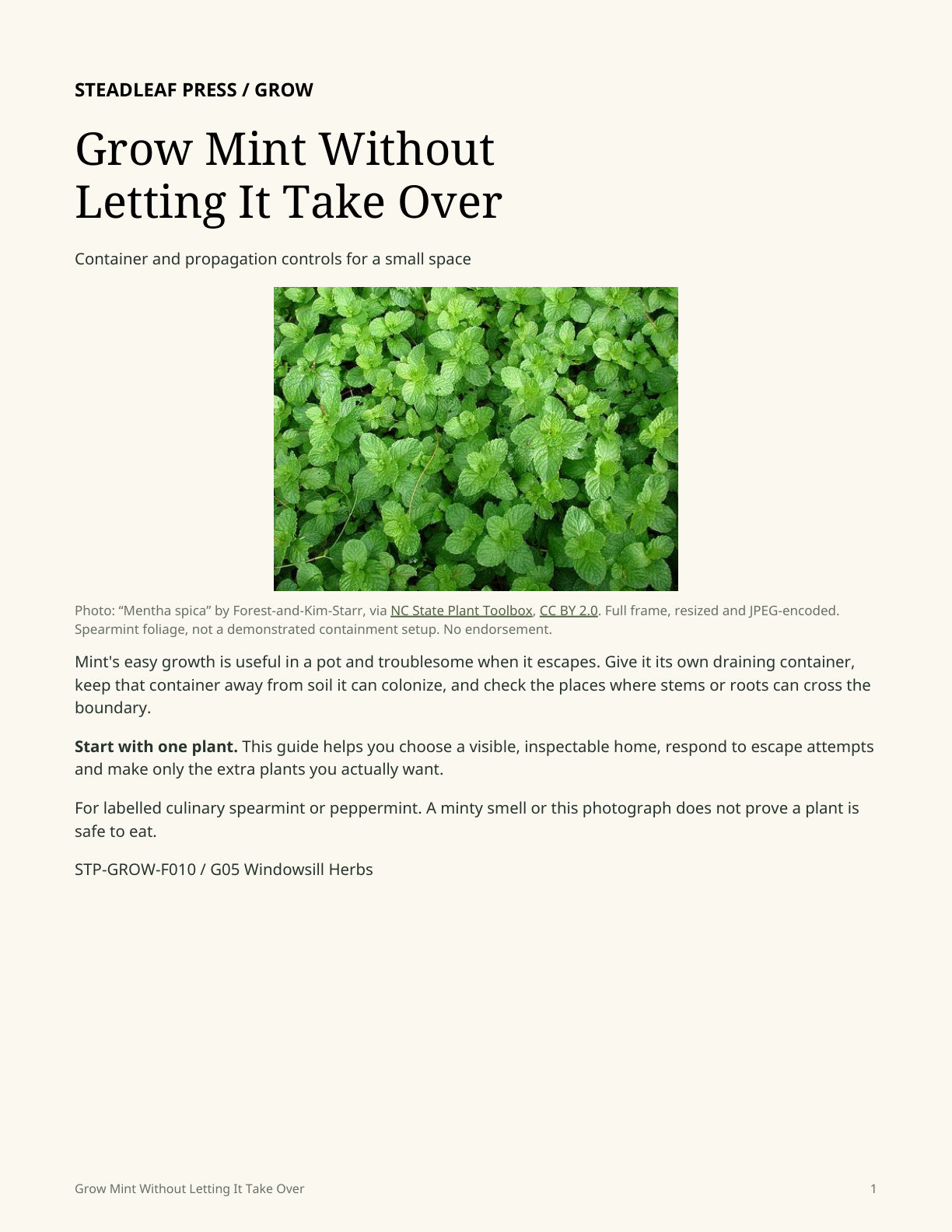
Choose an inspectable above-ground draining pot, check rim/base/neighbors, respond to rooted escapes and control renewal, extra plants and viable debris.
View free guide →
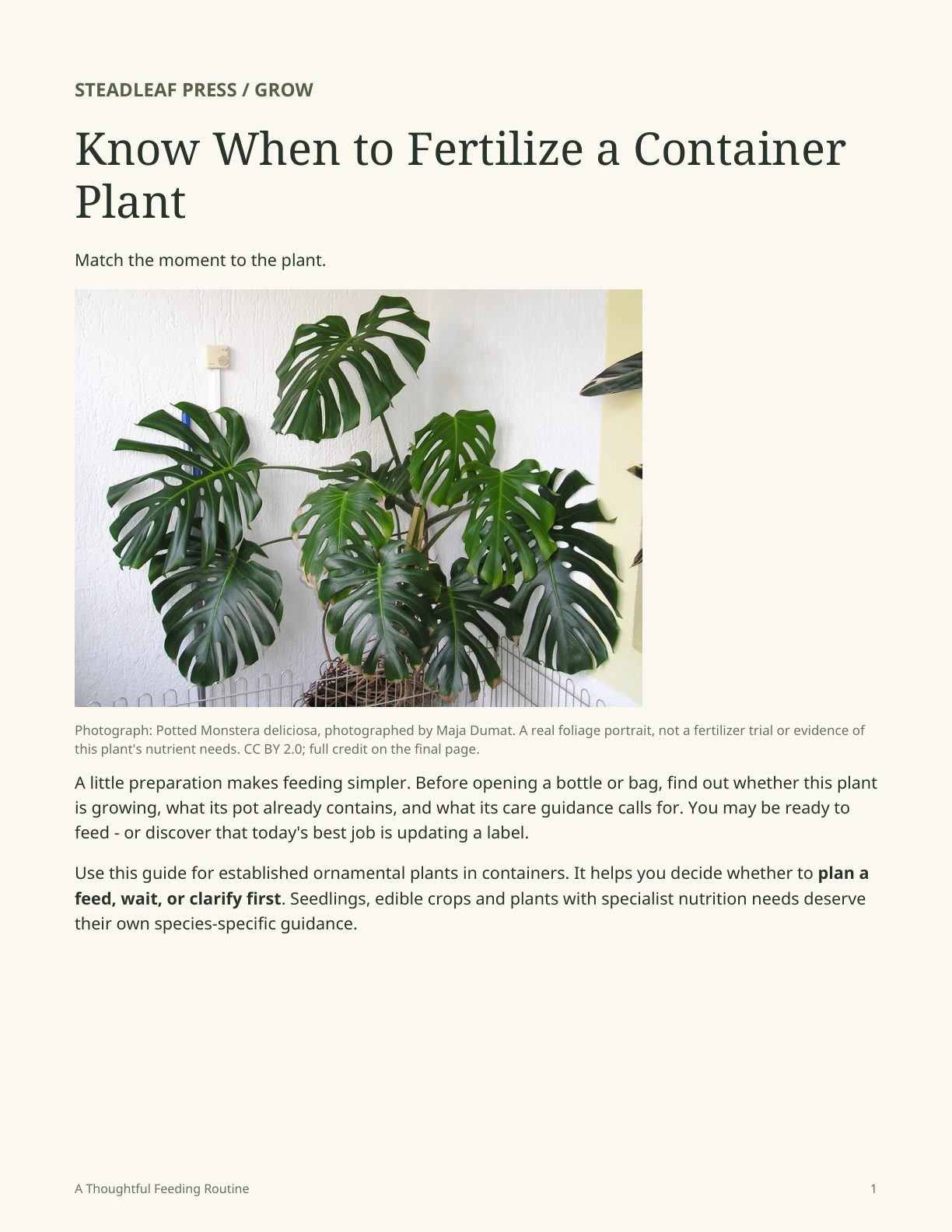
Learn when a container plant actually needs feeding—and when it is better to wait. Use a simple readiness card to record what you observe.
View free guide →
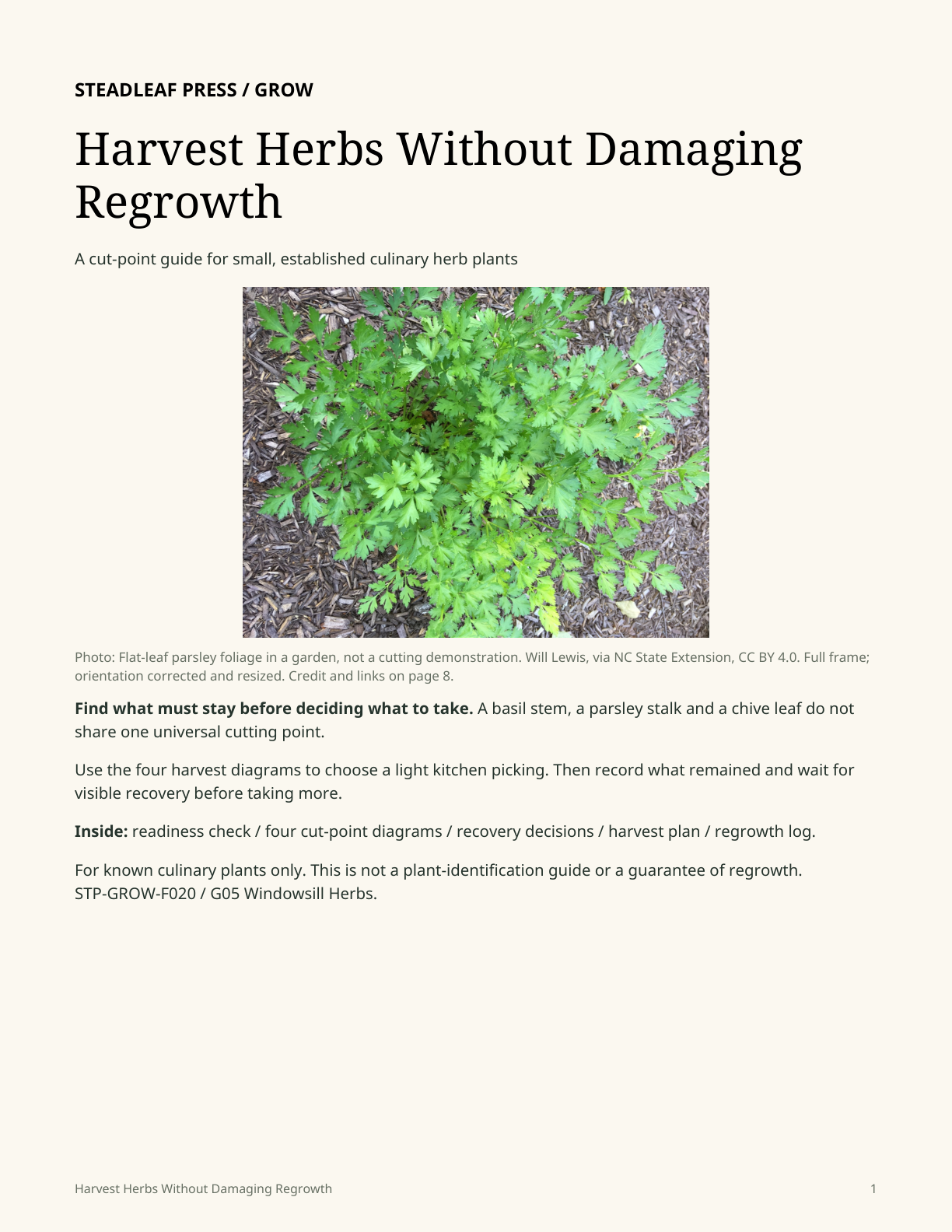
Choose one of four crop-specific cut patterns, preserve the correct growing parts, take a light picking and observe recovery before harvesting again.
View free guide →
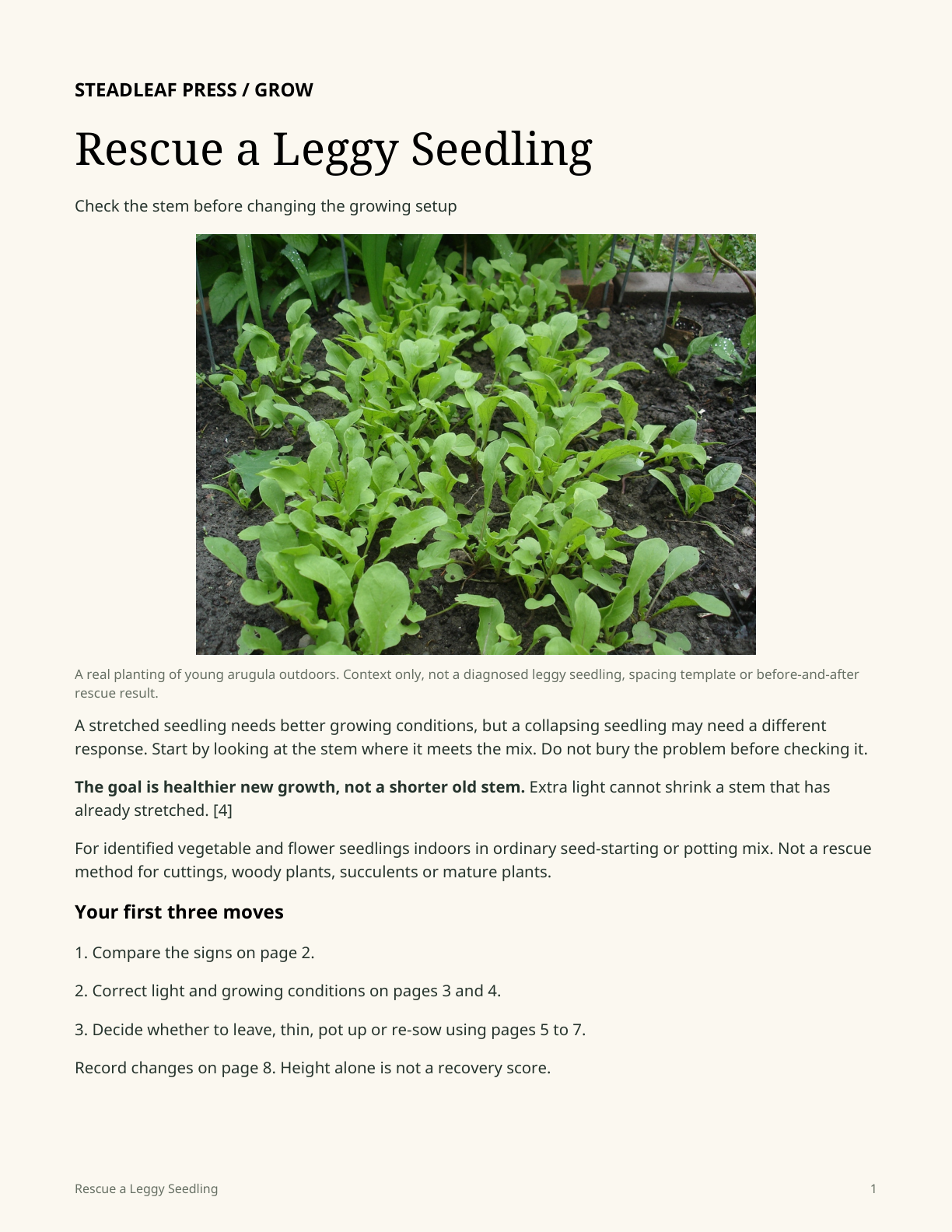
Separate stretching from collapse, correct growing conditions, choose stage-appropriate handling, distinguish tomato burial from other crops and make a rescue or replacement plan.
View free guide →
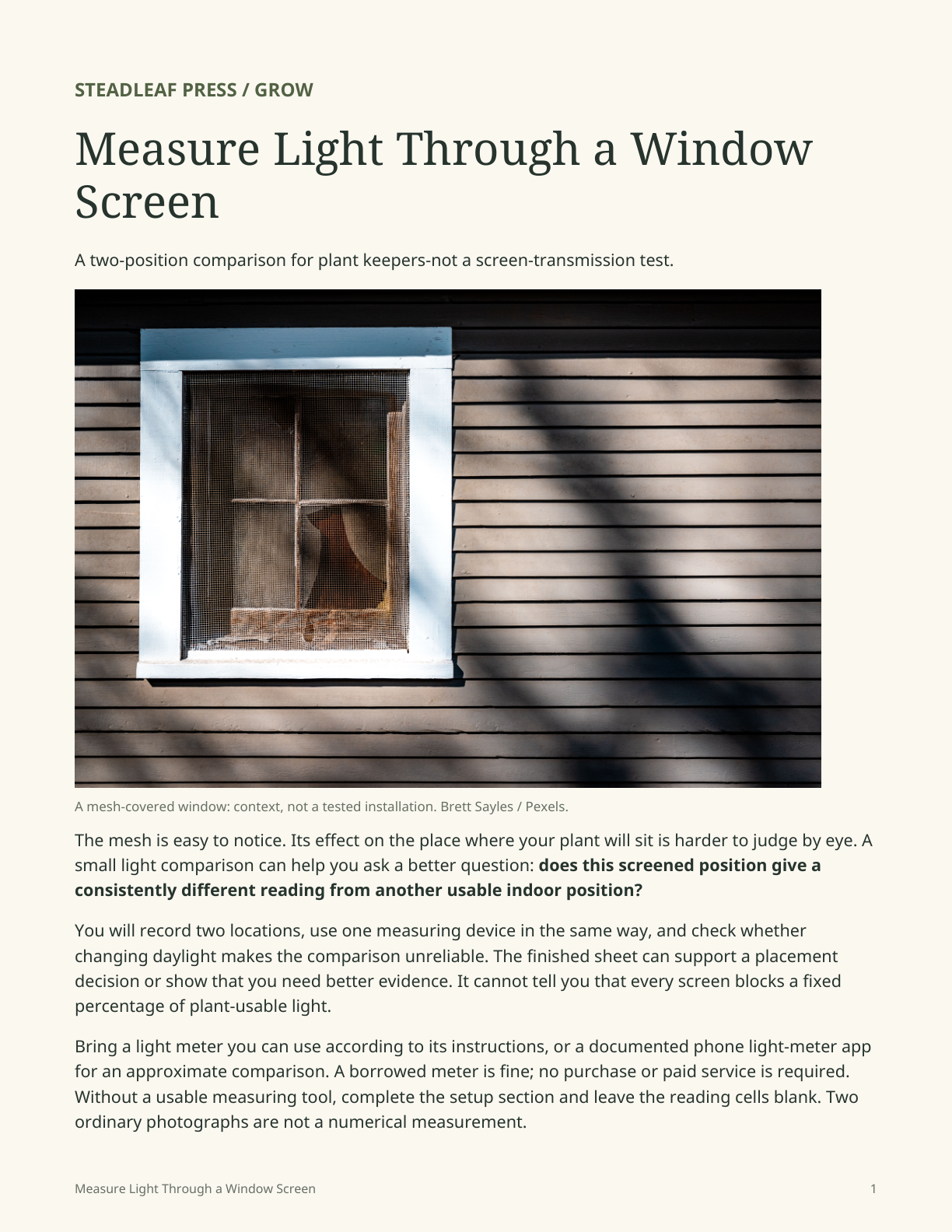
Compare light at two positions with a repeatable reading and decide whether the difference is meaningful or inconclusive.
View free guide →
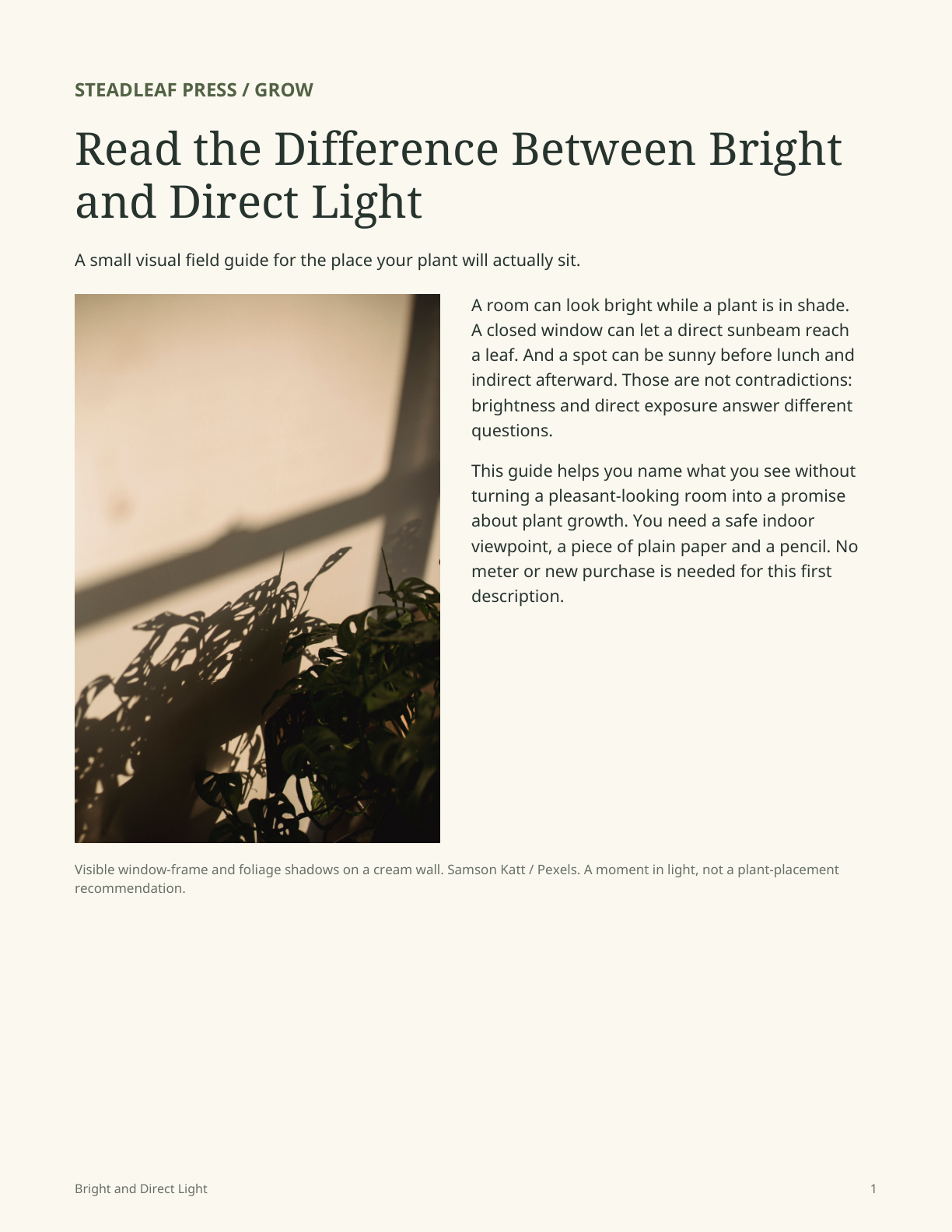
Separate direct-beam exposure from approximate light quantity, recognize four illustrated scenarios, and write a bounded leaf-position description with a next useful observation.
View free guide →
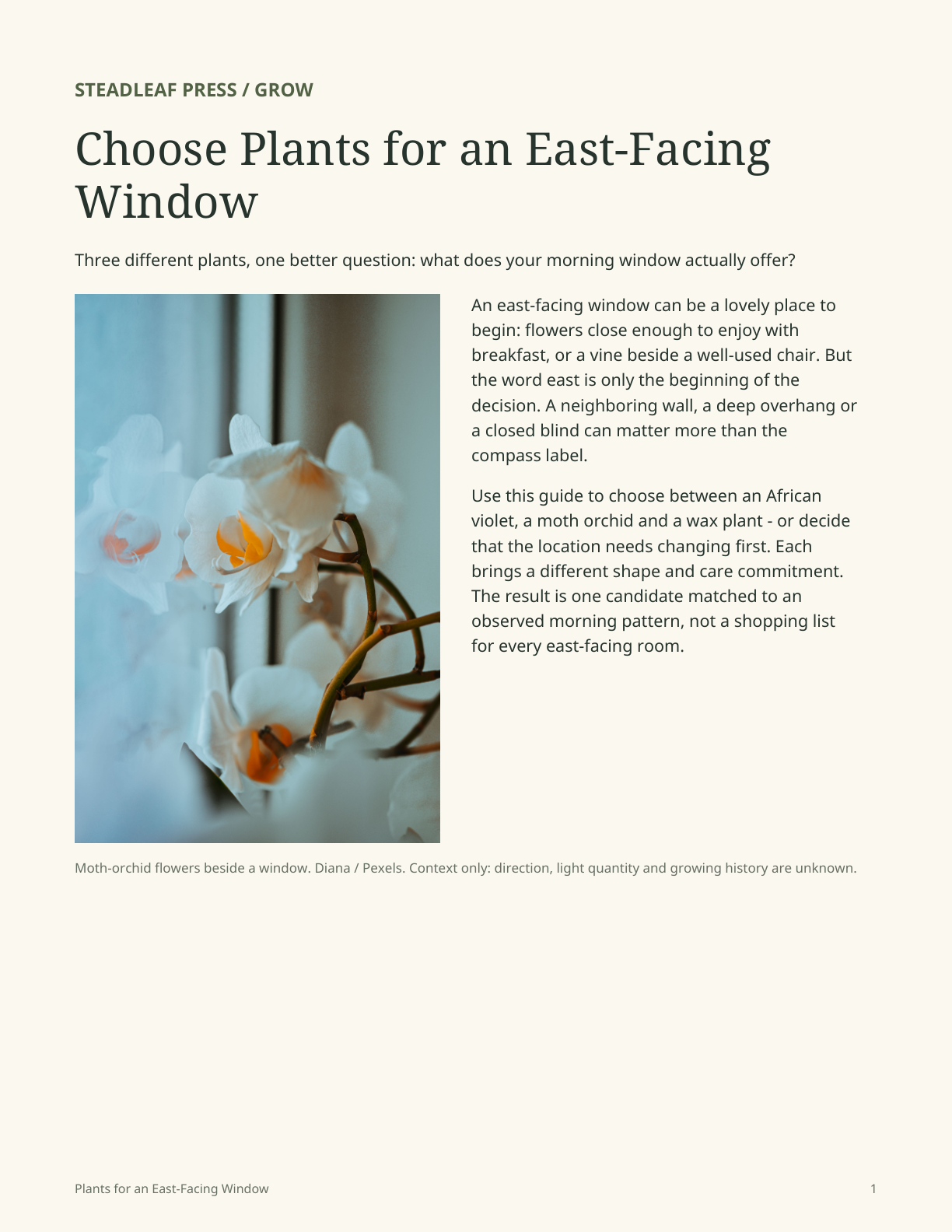
Choose or defer African violet, Phalaenopsis hybrid or Hoya carnosa using four morning-light branches, species-specific space/moisture checks and a completed choice card.
View free guide →
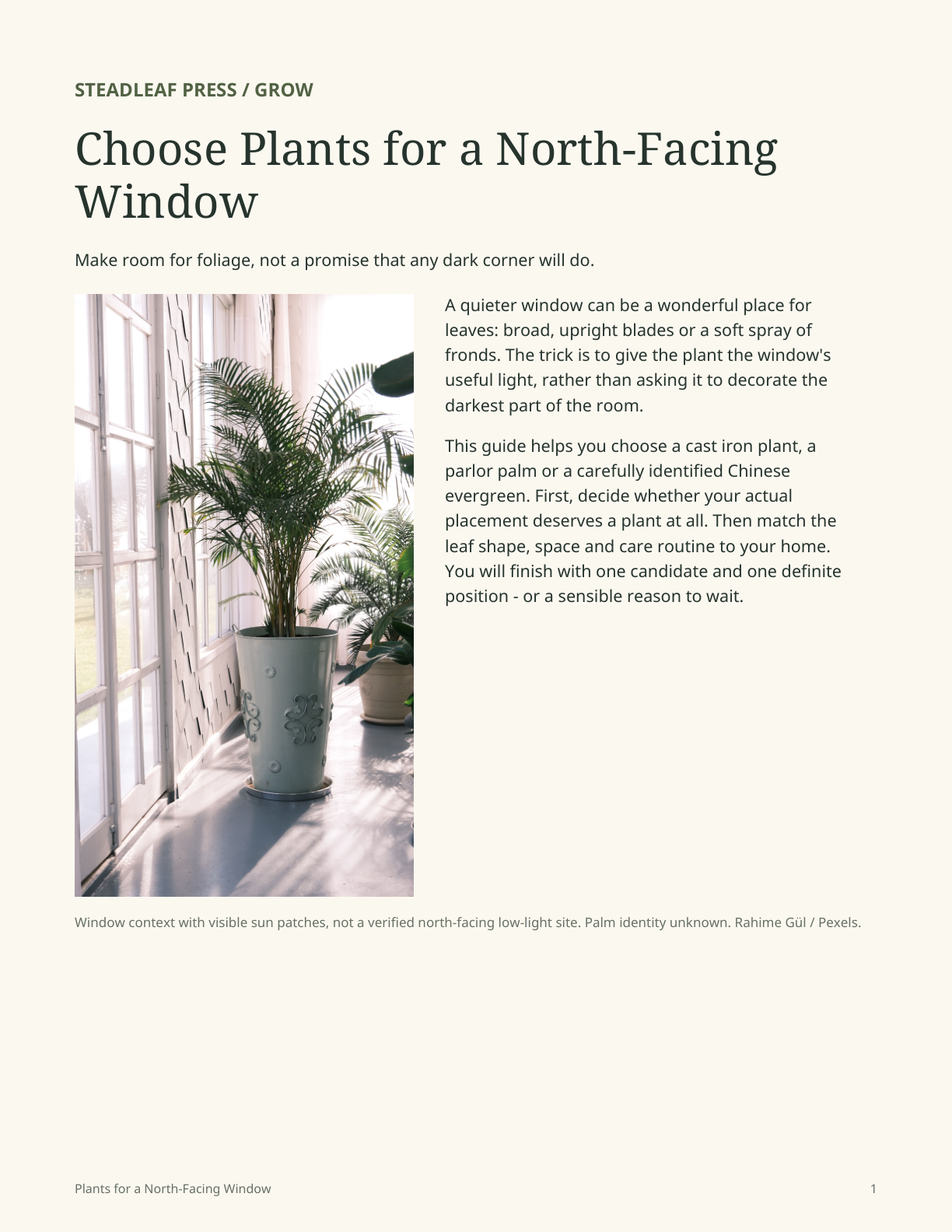
Choose or defer Aspidistra elatior, Chamaedorea elegans or Aglaonema modestum after comparing usable near-window and decorative positions, checking geography, actual beams, space, drainage and access.
View free guide →
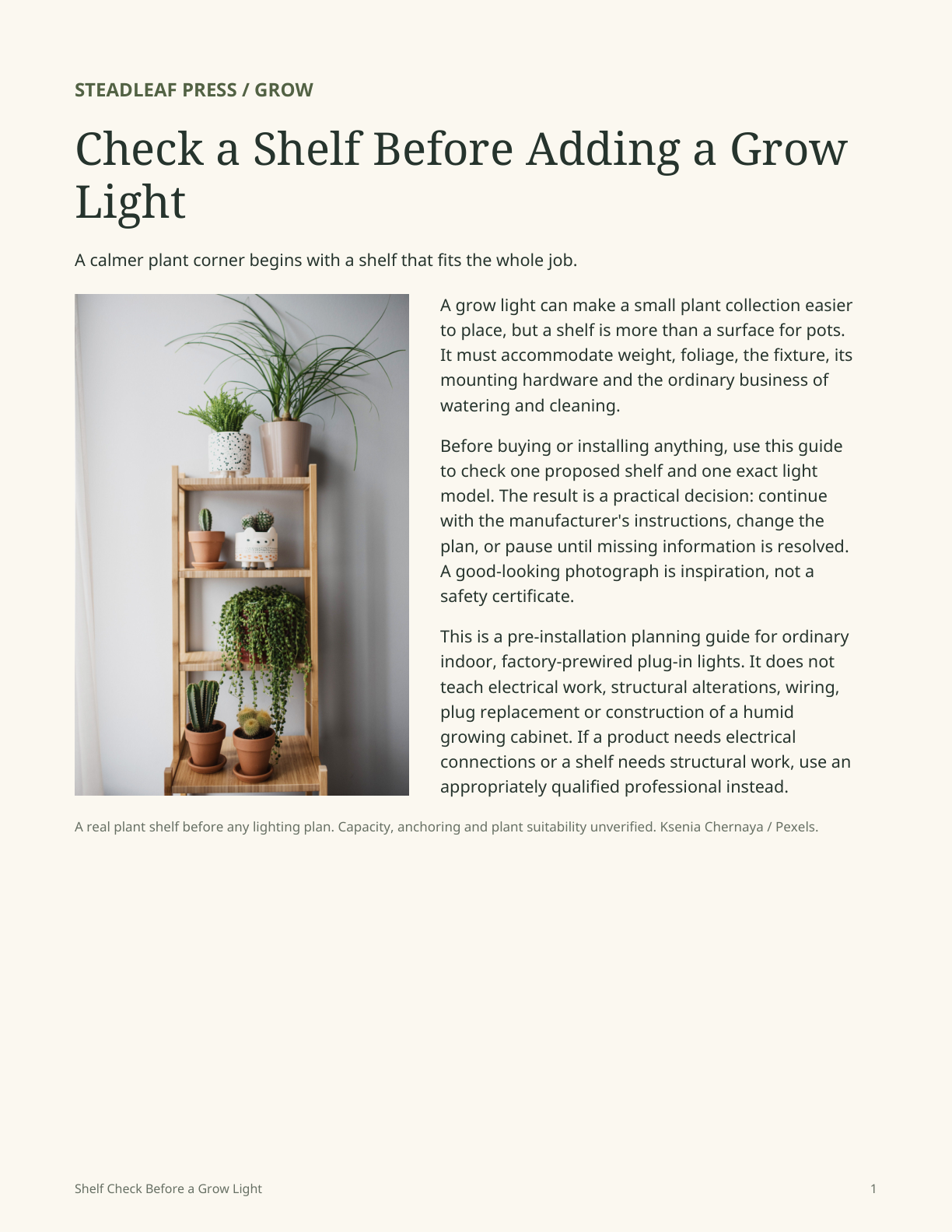
Check whether a shelf, outlet and exact grow-light model can work safely in the space before you buy or install anything.
View free guide →
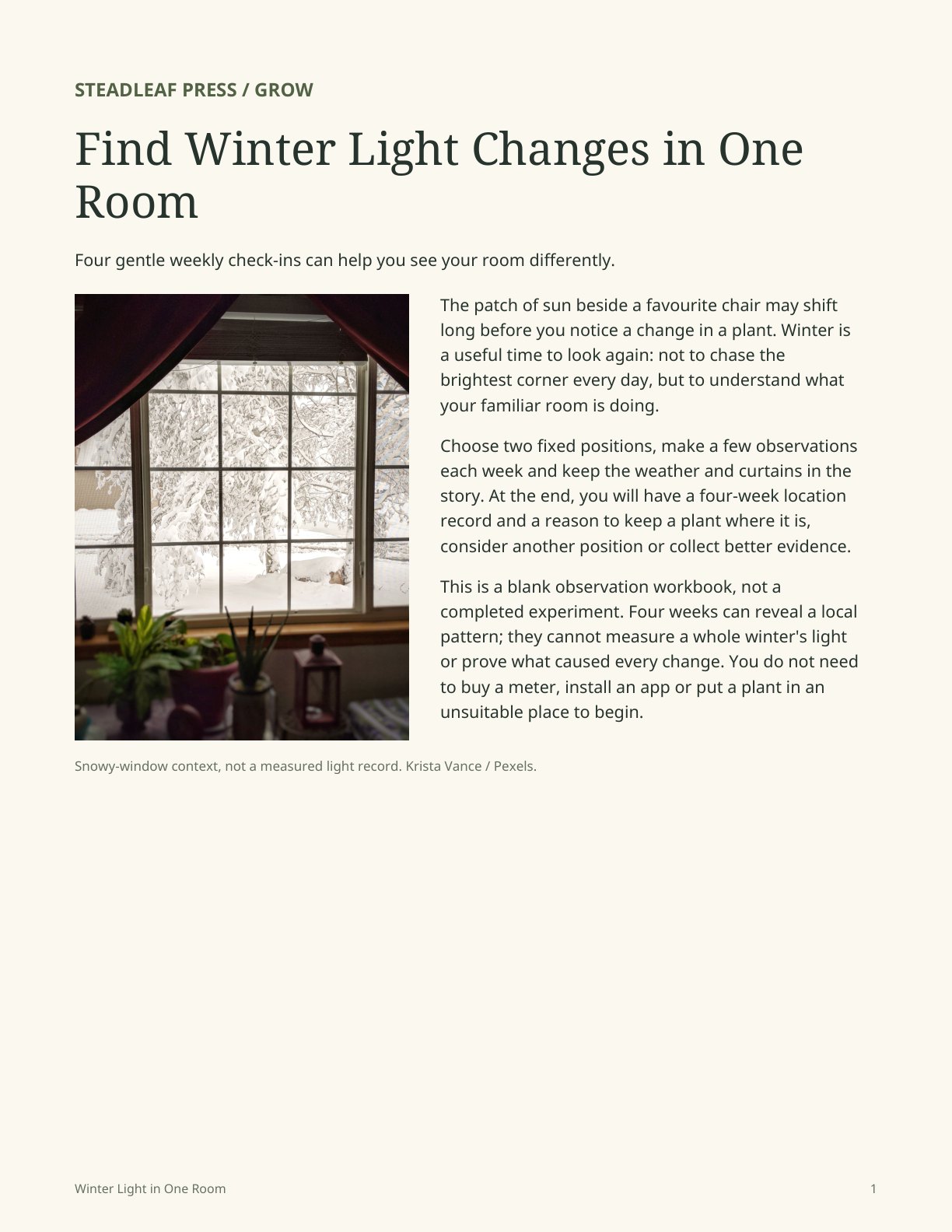
Keep a manageable four-week two-position record, distinguish observed and unknown intervals, and choose to keep a position, consider an alternative or gather a fairer comparison.
View free guide →
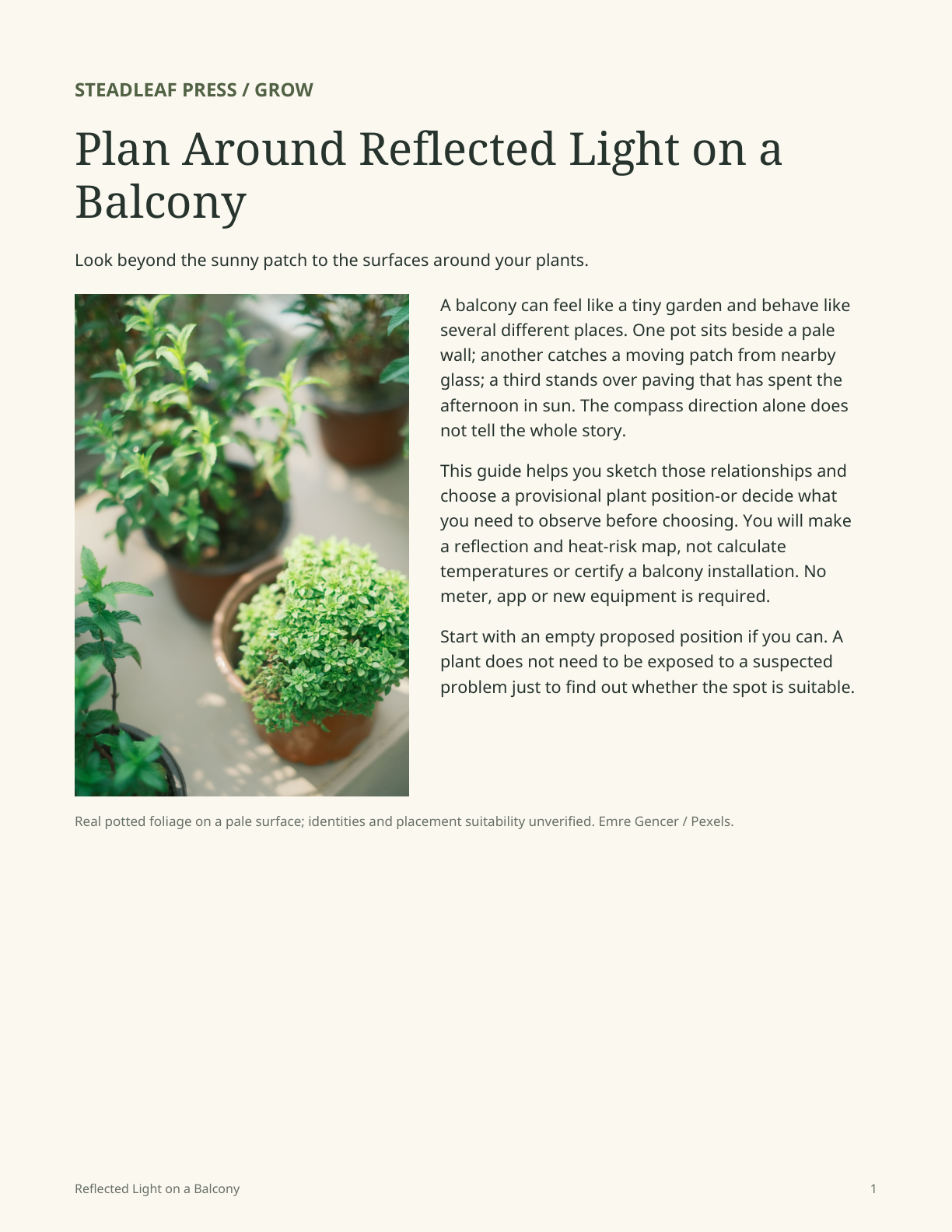
Draw observed and uncertain light paths, flag potential surface-heat concerns, compare leaf and pot positions, then choose a reversible placement change or defer an unclear site.
View free guide →
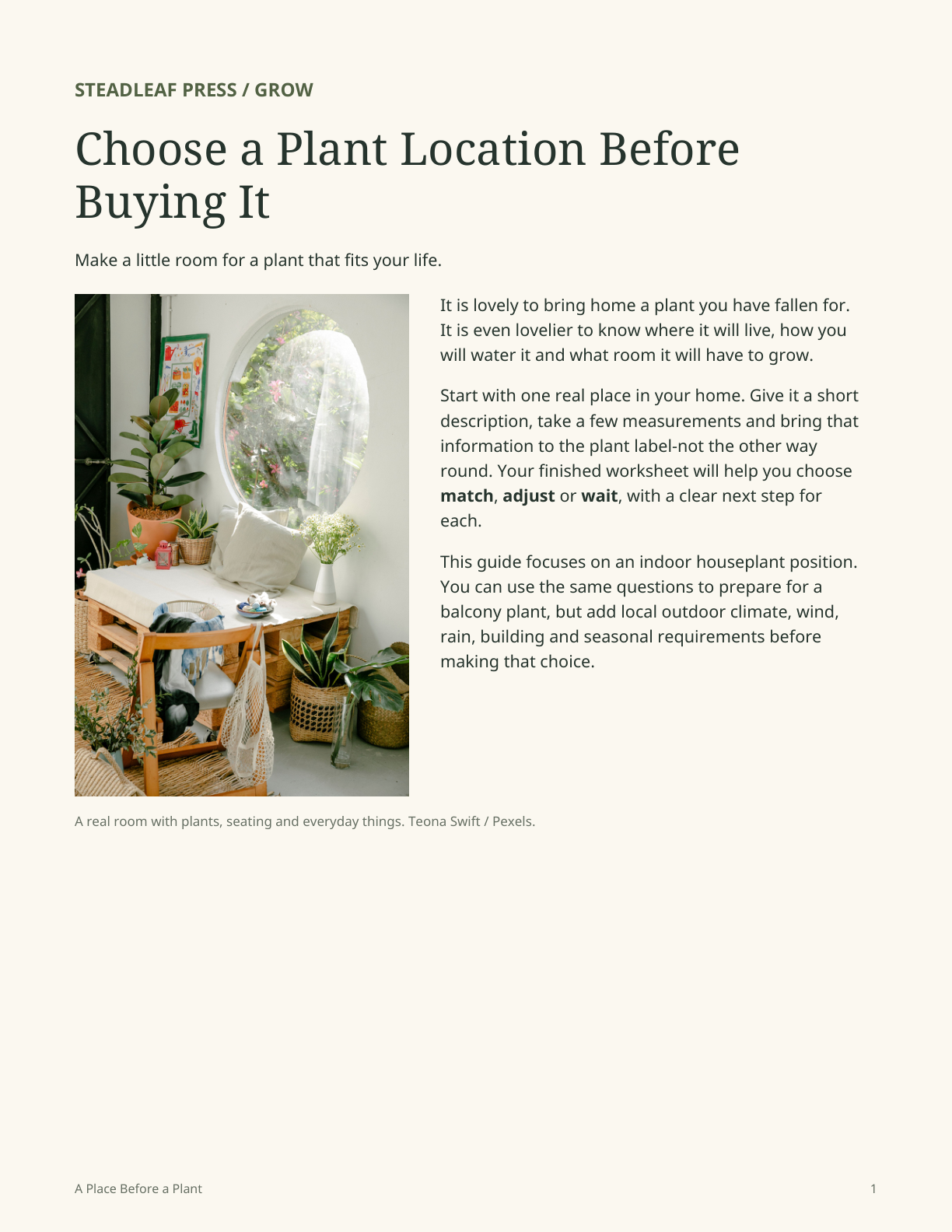
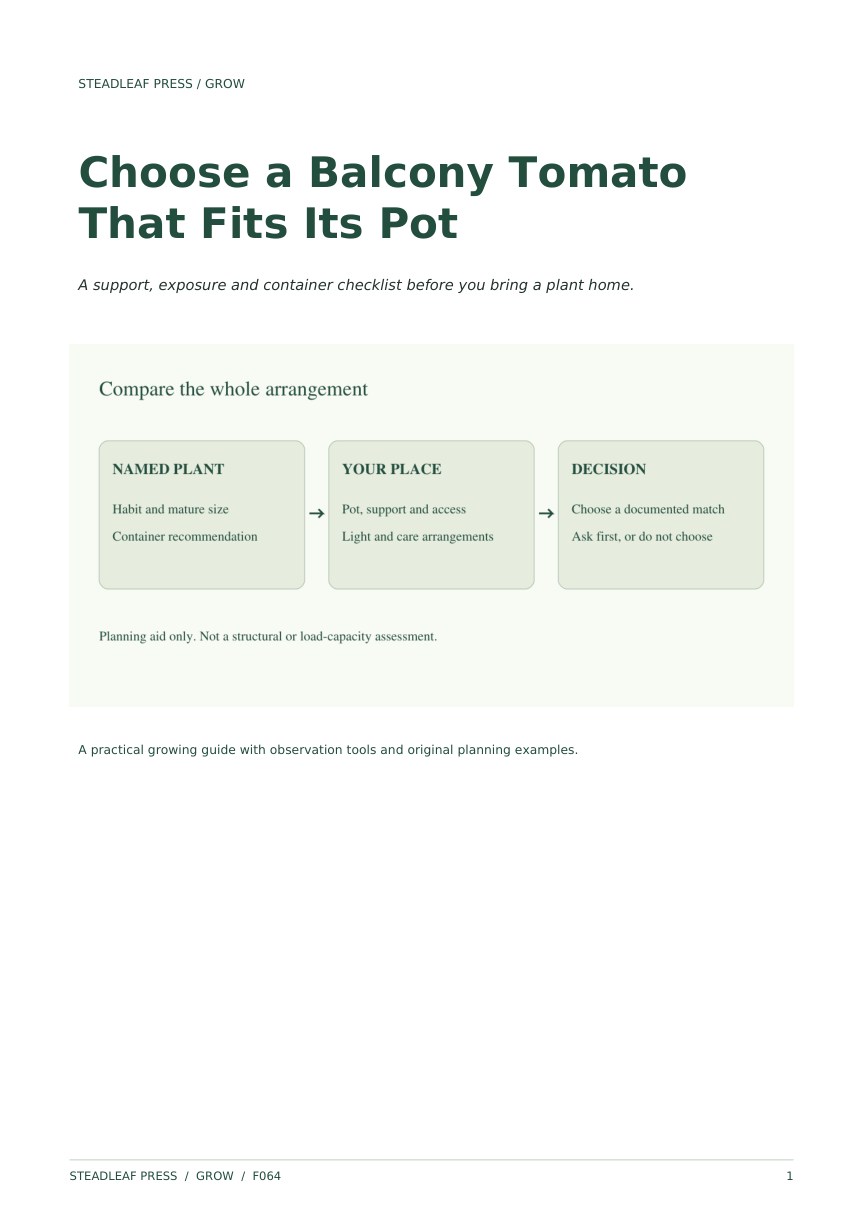
Complete a take-along site card and exact-plant matching worksheet, resolve key mismatches and choose match, adjust or wait before bringing the plant home.
View free guide →
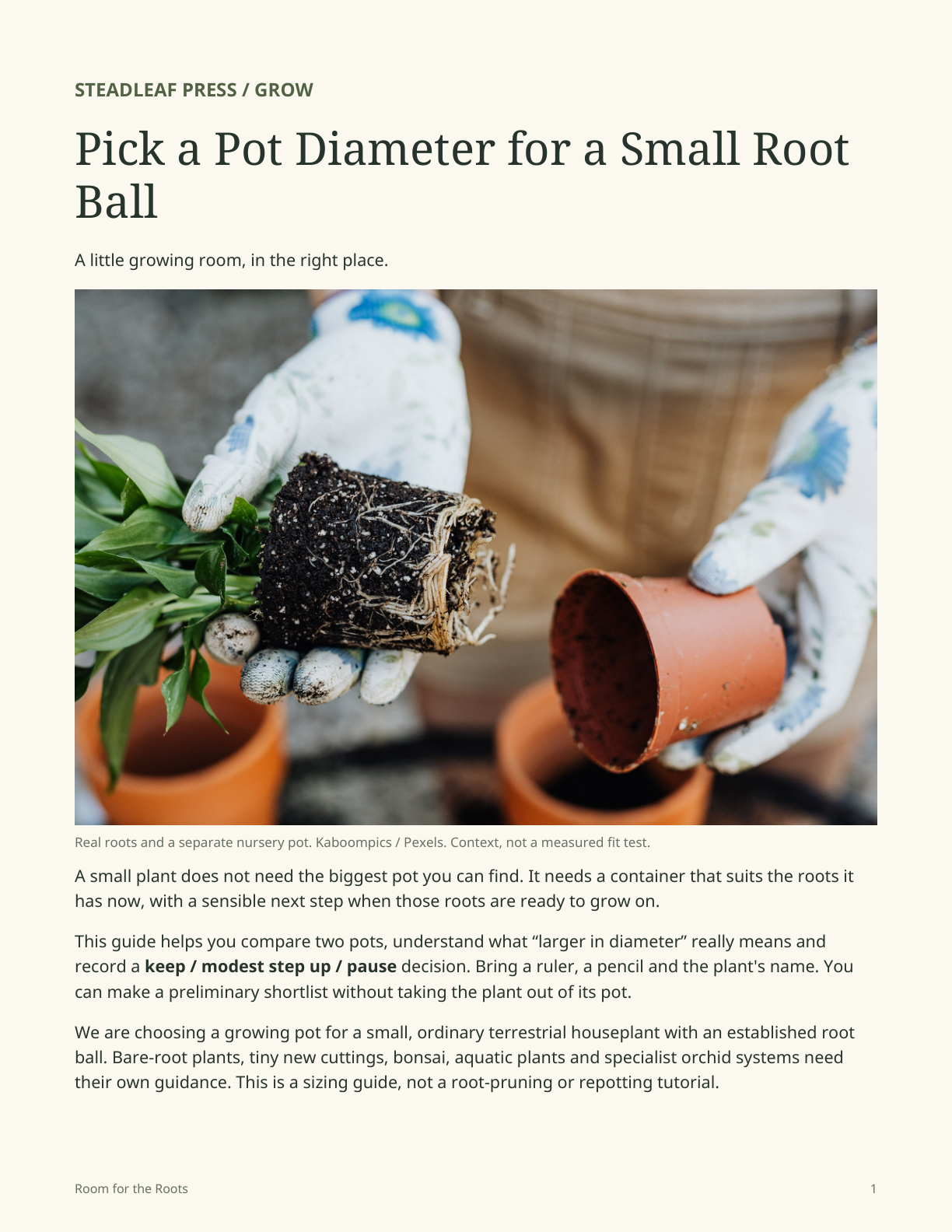
Compare actual inside width, taper and depth against root-ball information, distinguish diameter from per-side space, and choose keep, modest step up or pause.
View free guide →
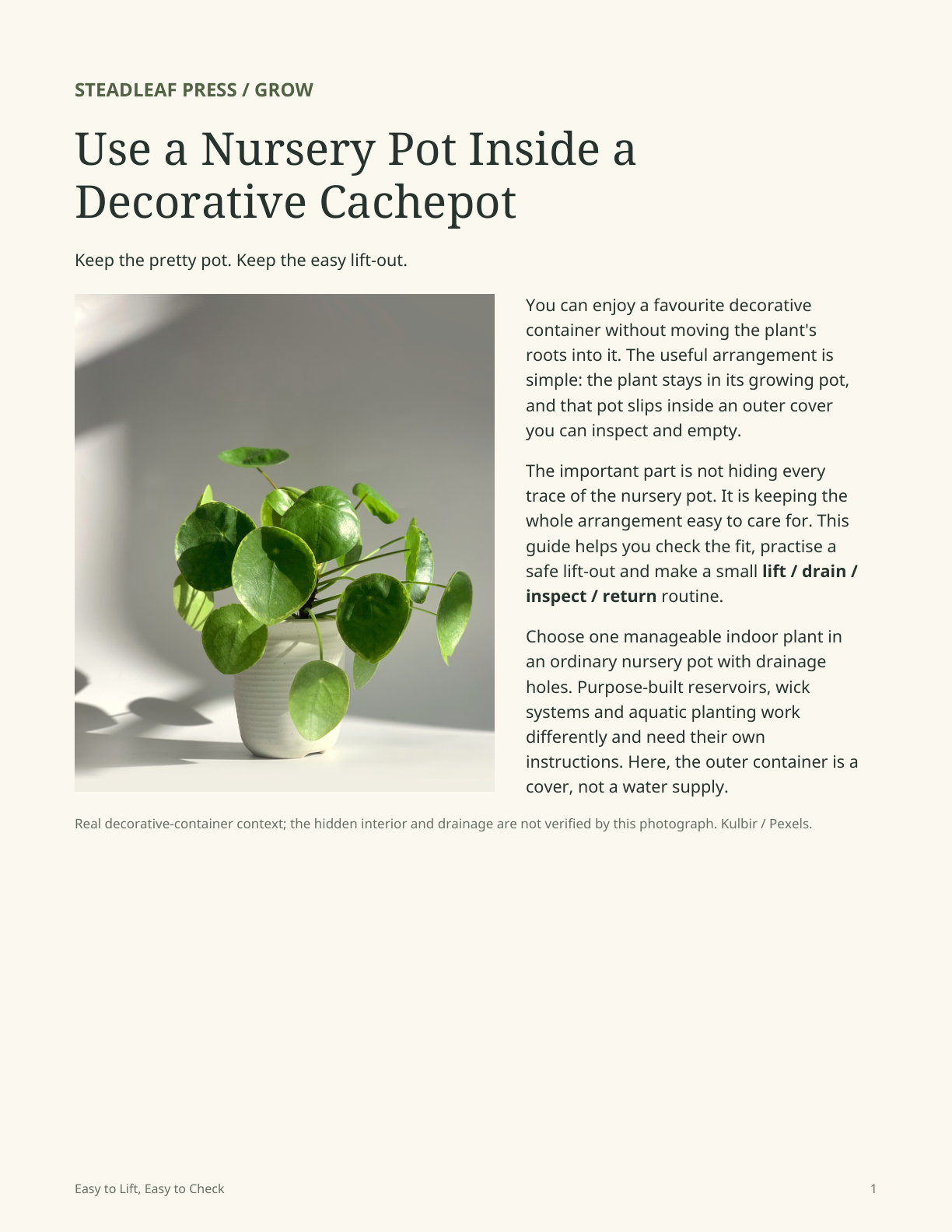
Choose an accessible two-pot fit and follow a lift-out, separate-drainage, outer-inspection and return routine without disturbing the roots.
View free guide →
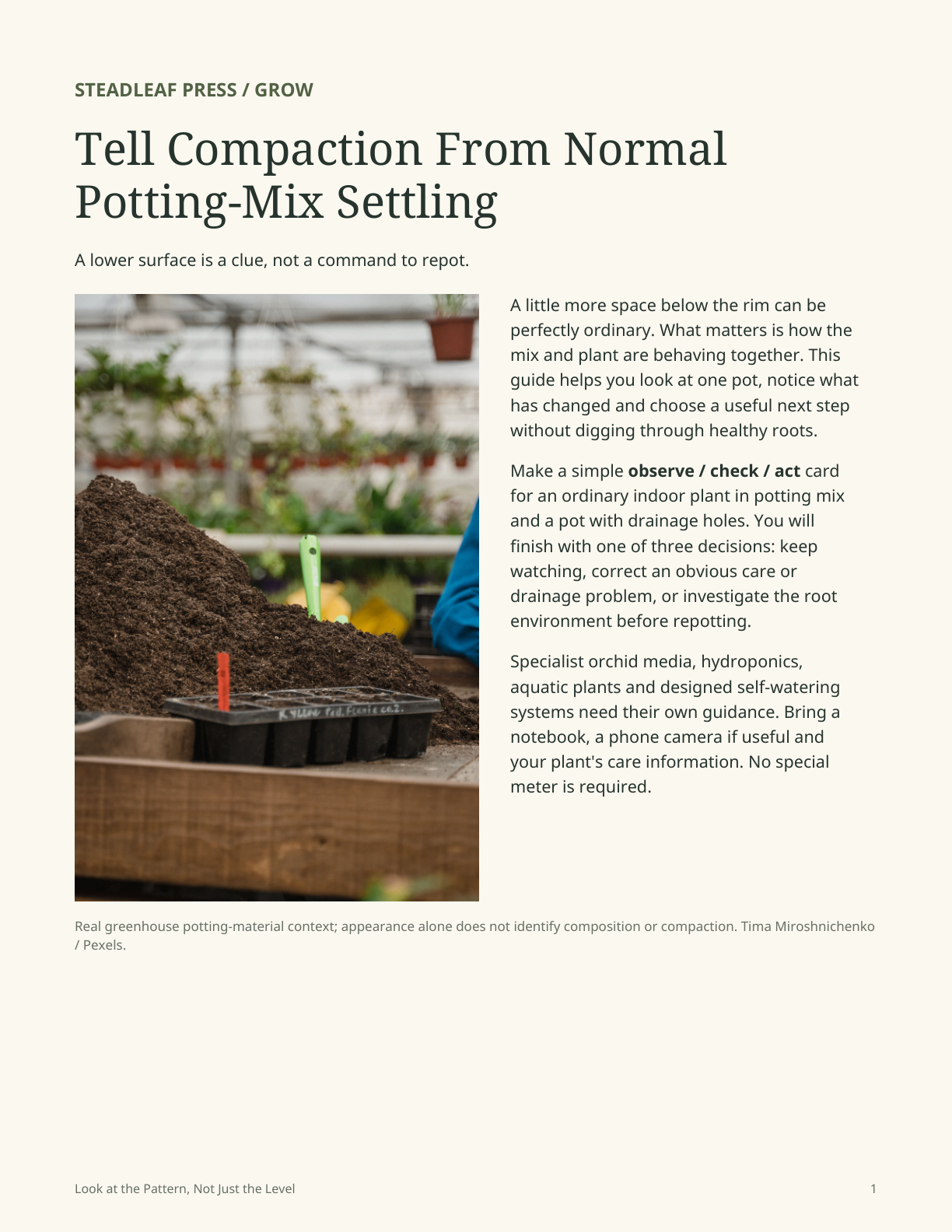
Learn how to tell ordinary settling from a potting-mix problem by checking both height and how the mix is functioning.
View free guide →
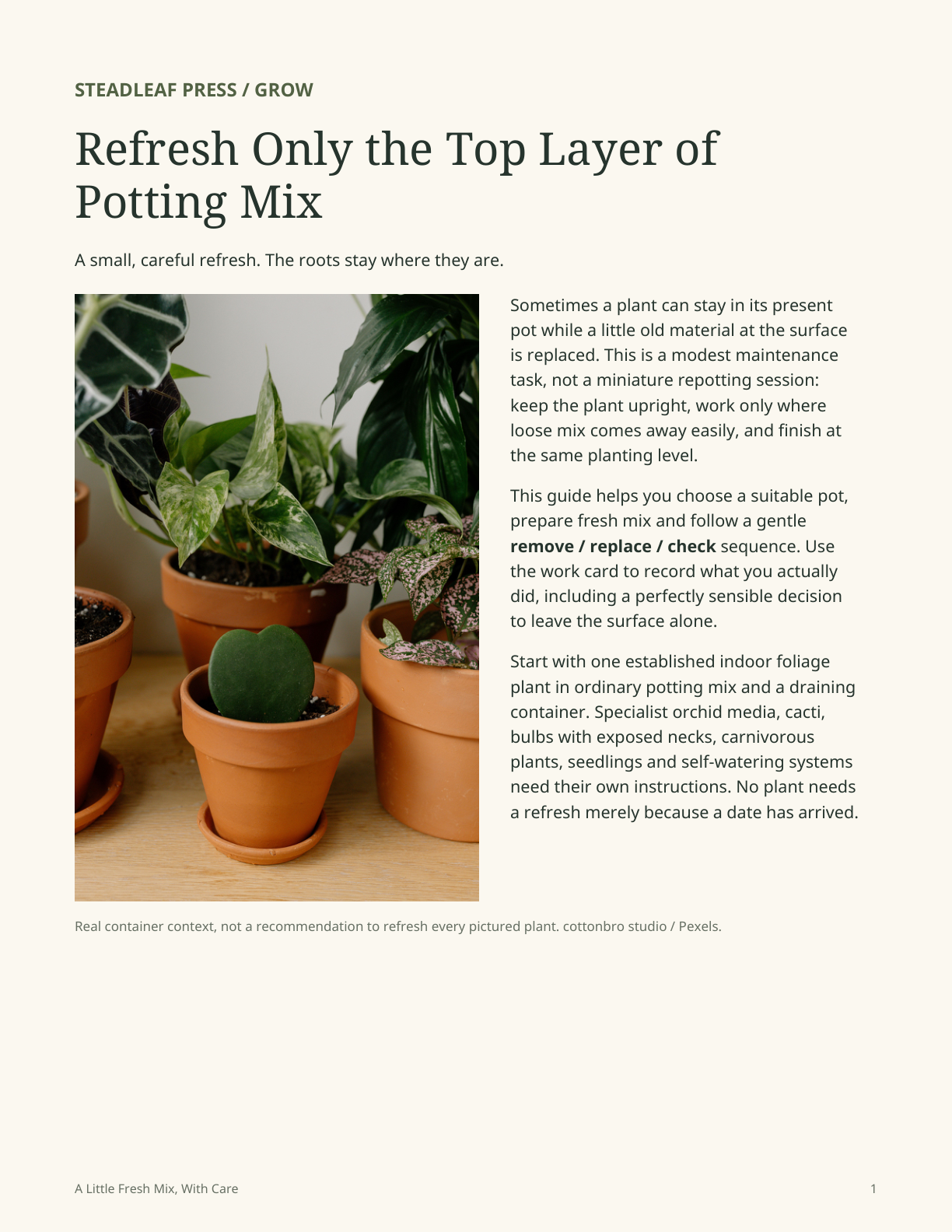
Choose refresh/leave/investigate, replace only accessible loose surface mix, preserve planting depth and record root-safe stopping limits.
View free guide →
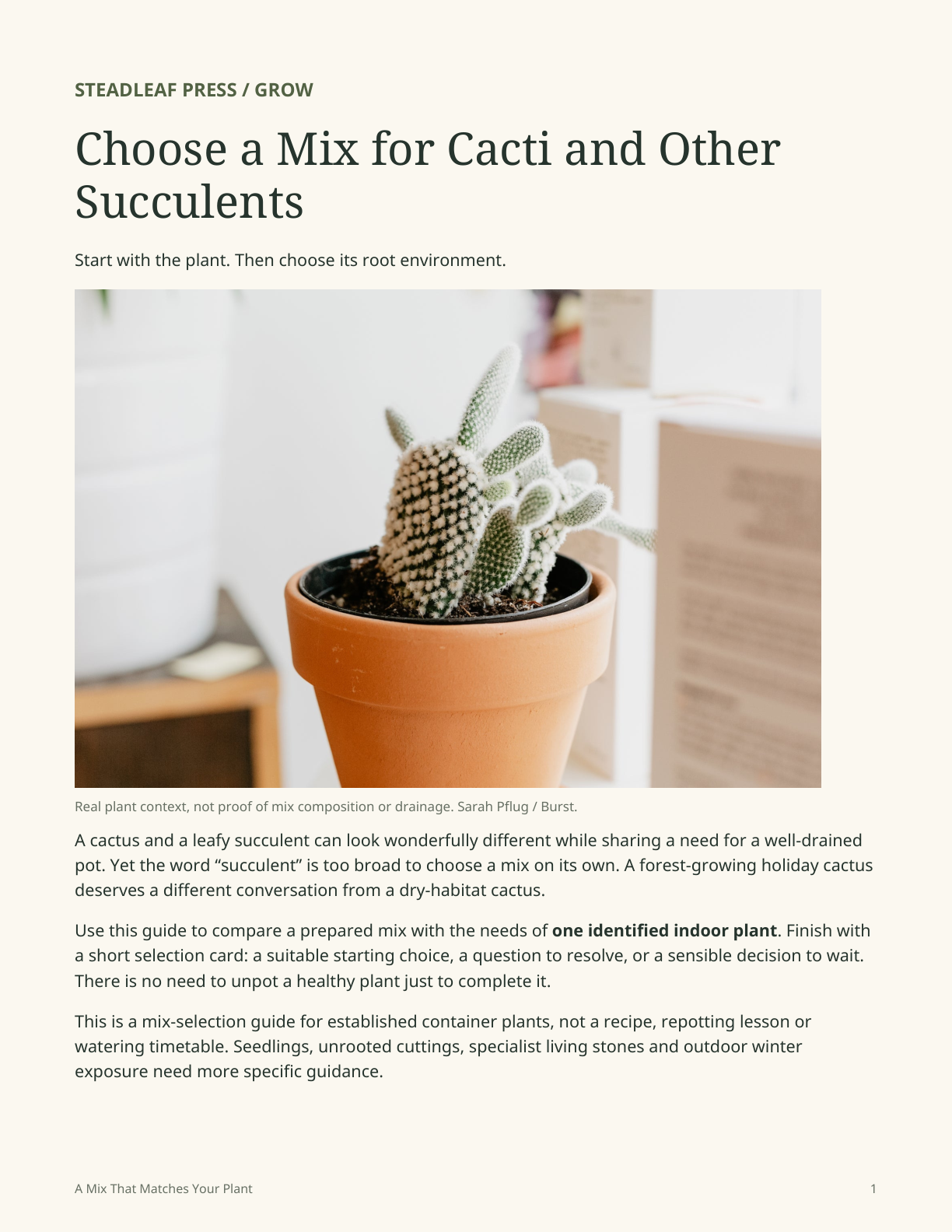
Identify the relevant plant group, compare drainage/aeration/water retention and choose, clarify or wait with a completed mix-selection card.
View free guide →
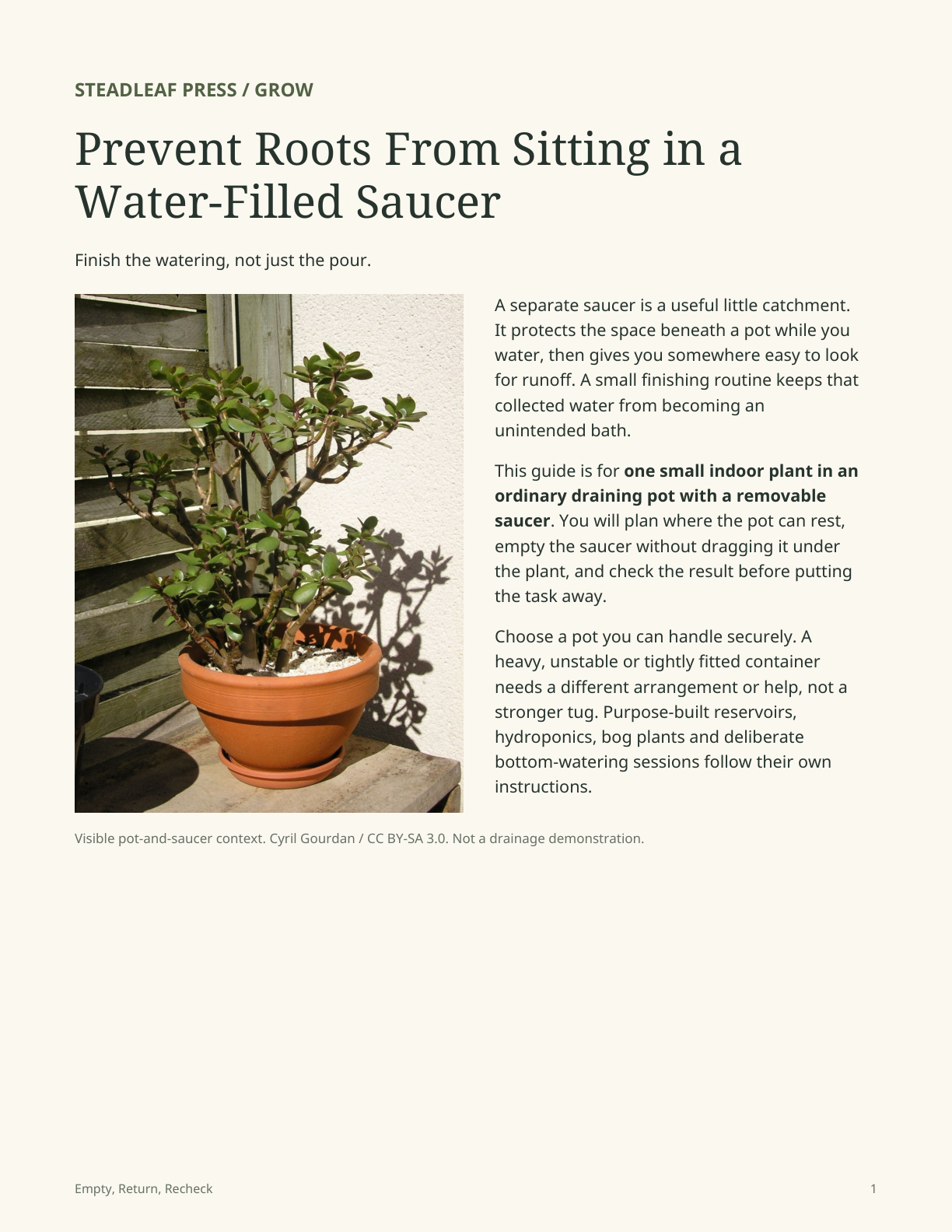
Plan three safe places, finish one actual watering event and record the empty-return-recheck outcome.
View free guide →
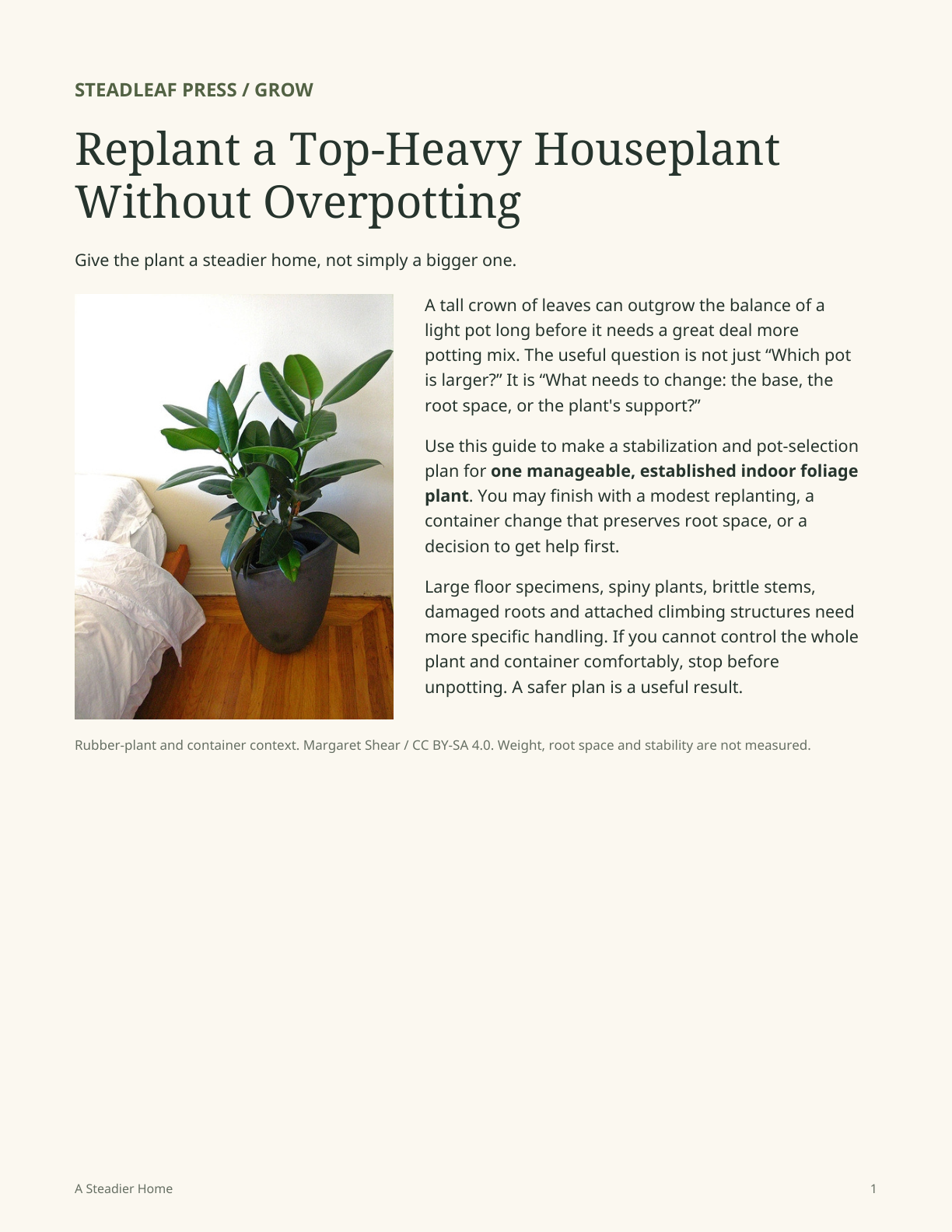
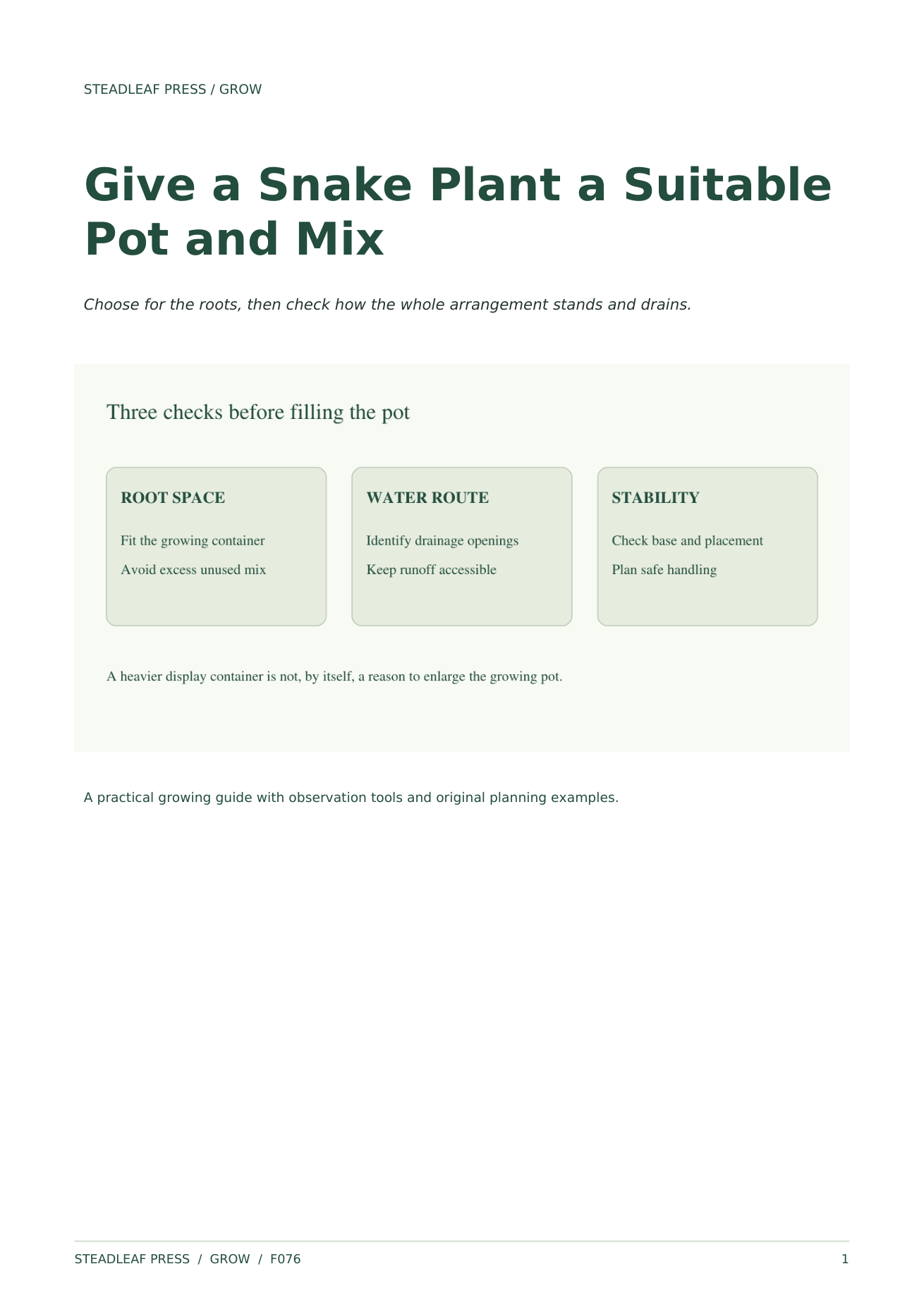
Separate base and support concerns from root-space need, compare suitable containers and choose a modest replanting, undisturbed-root option or help-first plan.
View free guide →
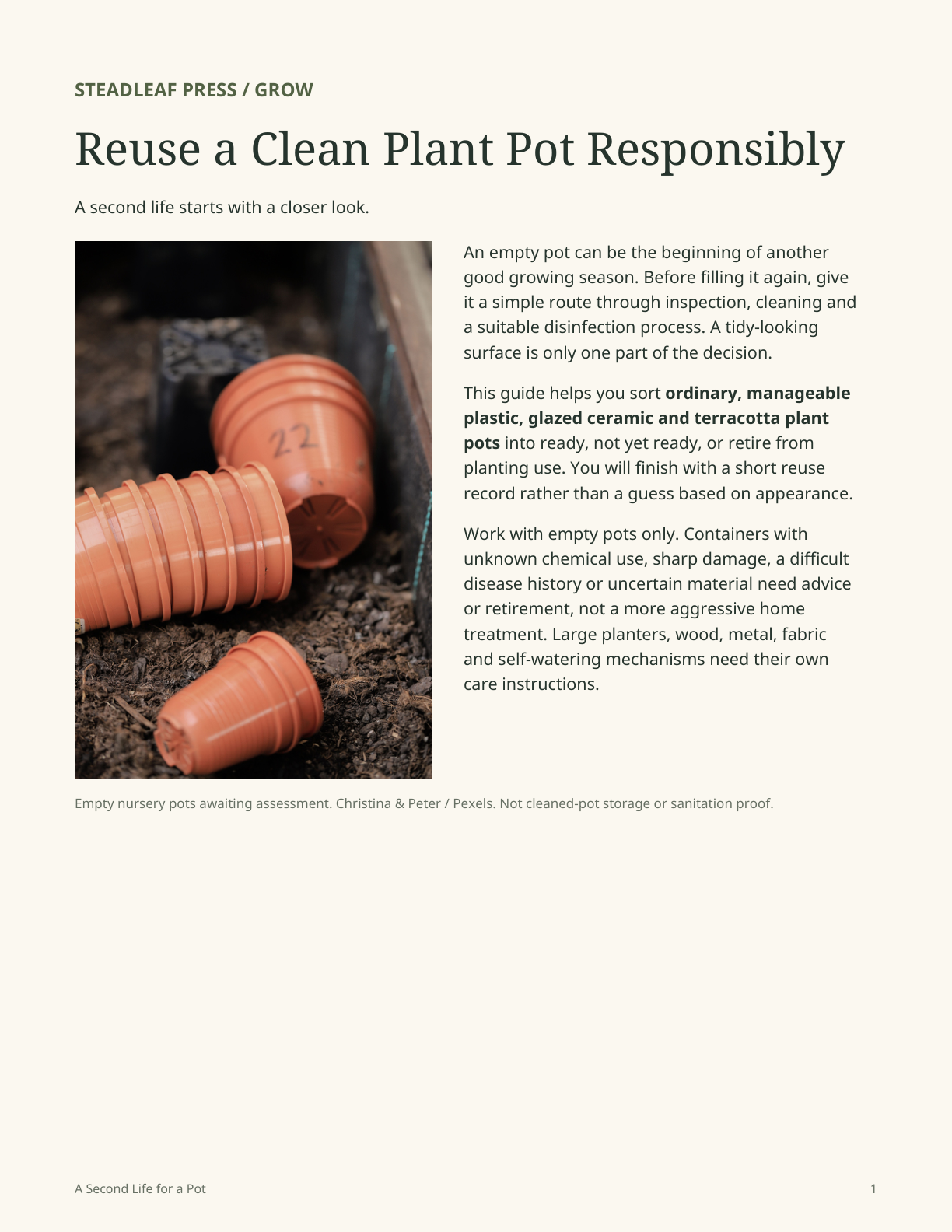
Inspect and clean an empty pot, match a suitable disinfection process and record washed-only, process-complete, hold or retirement status before reuse.
View free guide →
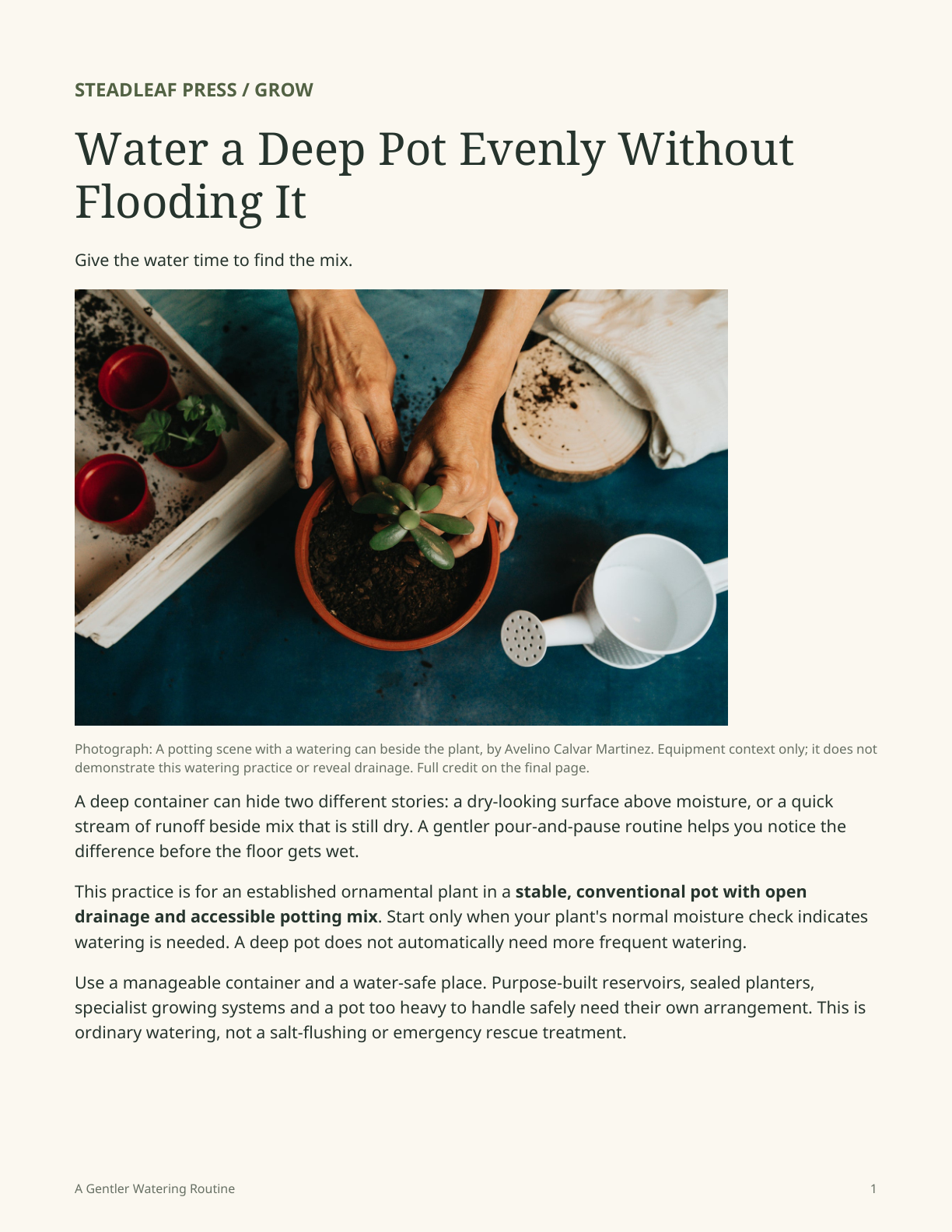
Water a deep container in gentle stages, watch how the surface and runoff respond, and know when to stop and recheck.
View free guide →
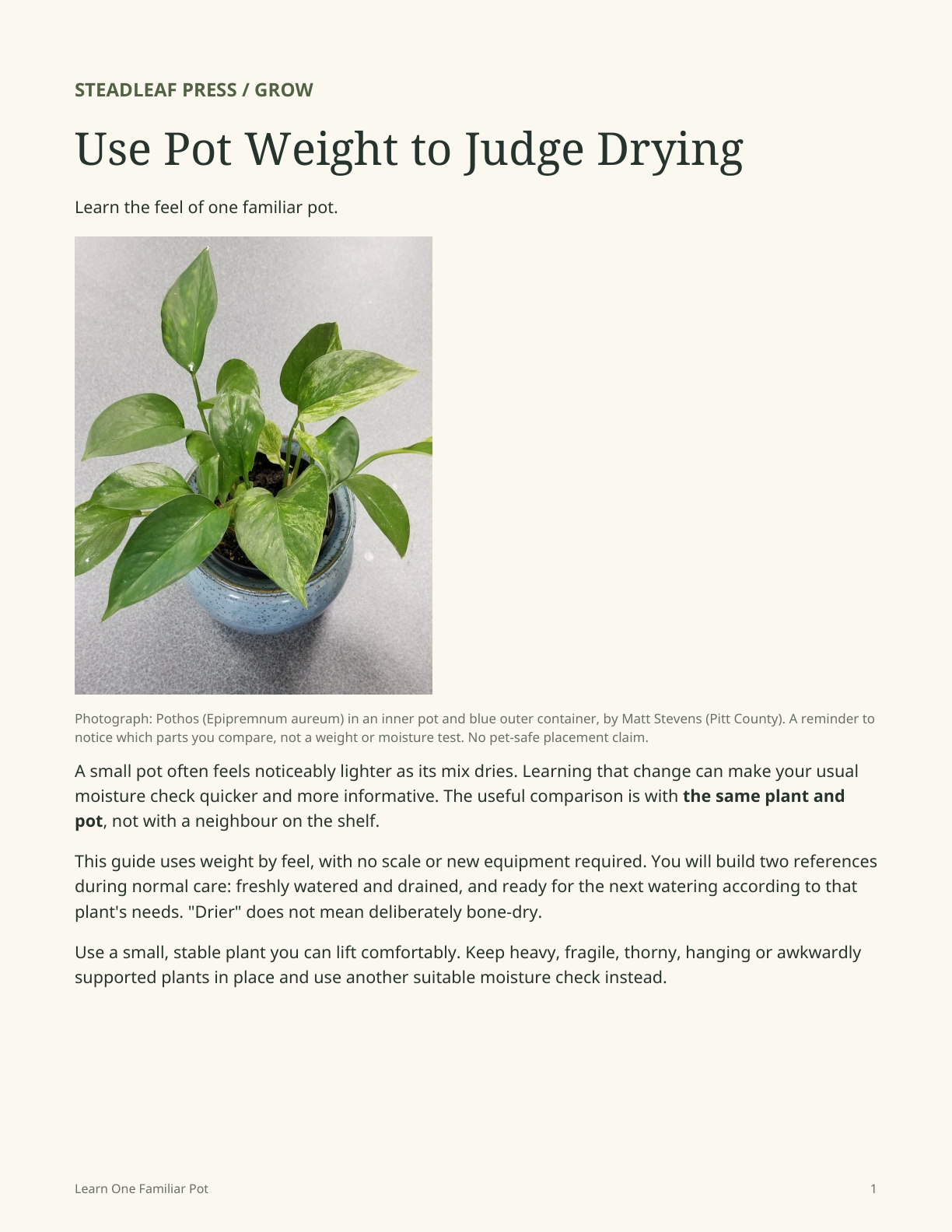
Establish watered-and-drained and independently confirmed ready-to-water references, compare a consistent assembly and record weight feel beside a separate mix cue.
View free guide →
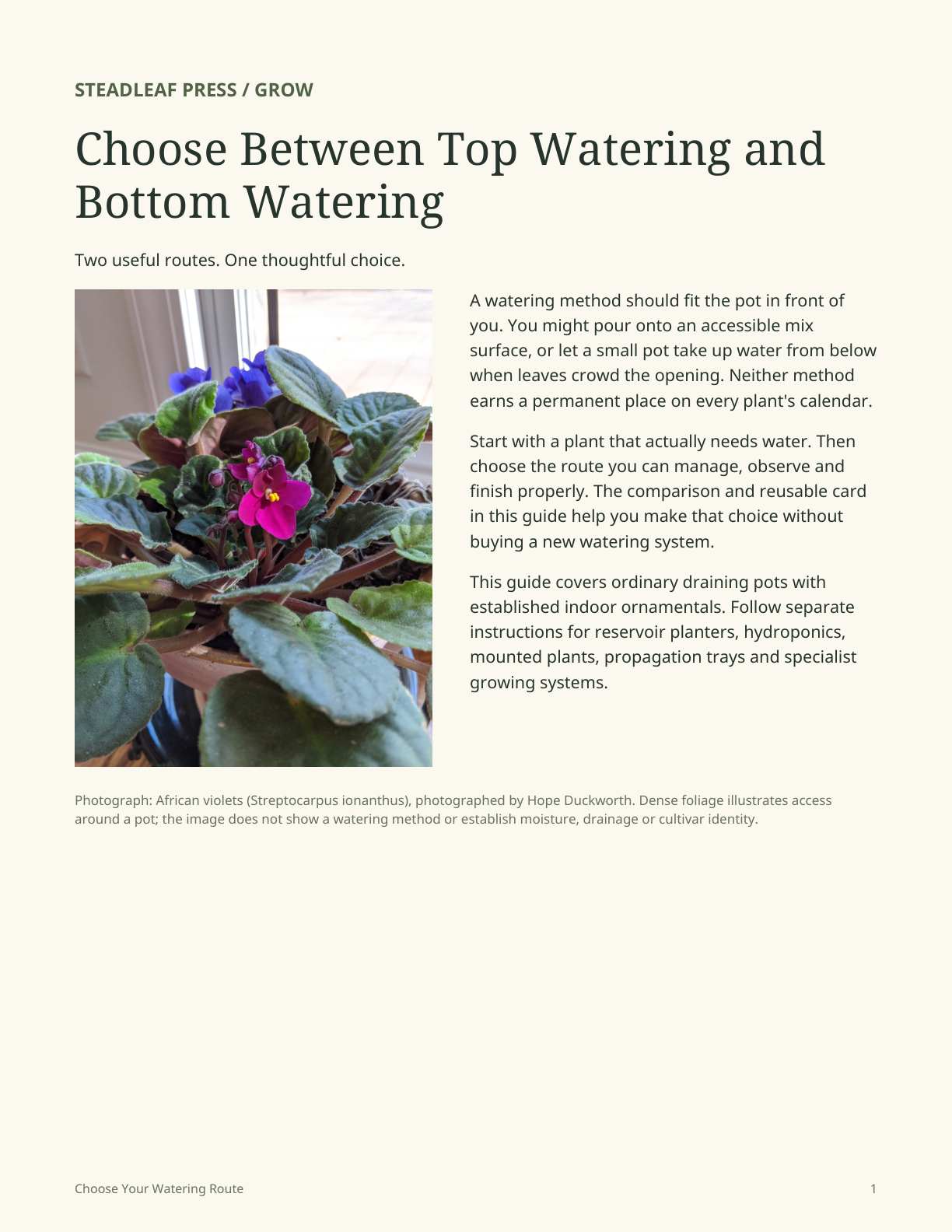
Choose top, bottom or defer using access, handling and pot condition; complete drainage and record a reasoned choice.
View free guide →
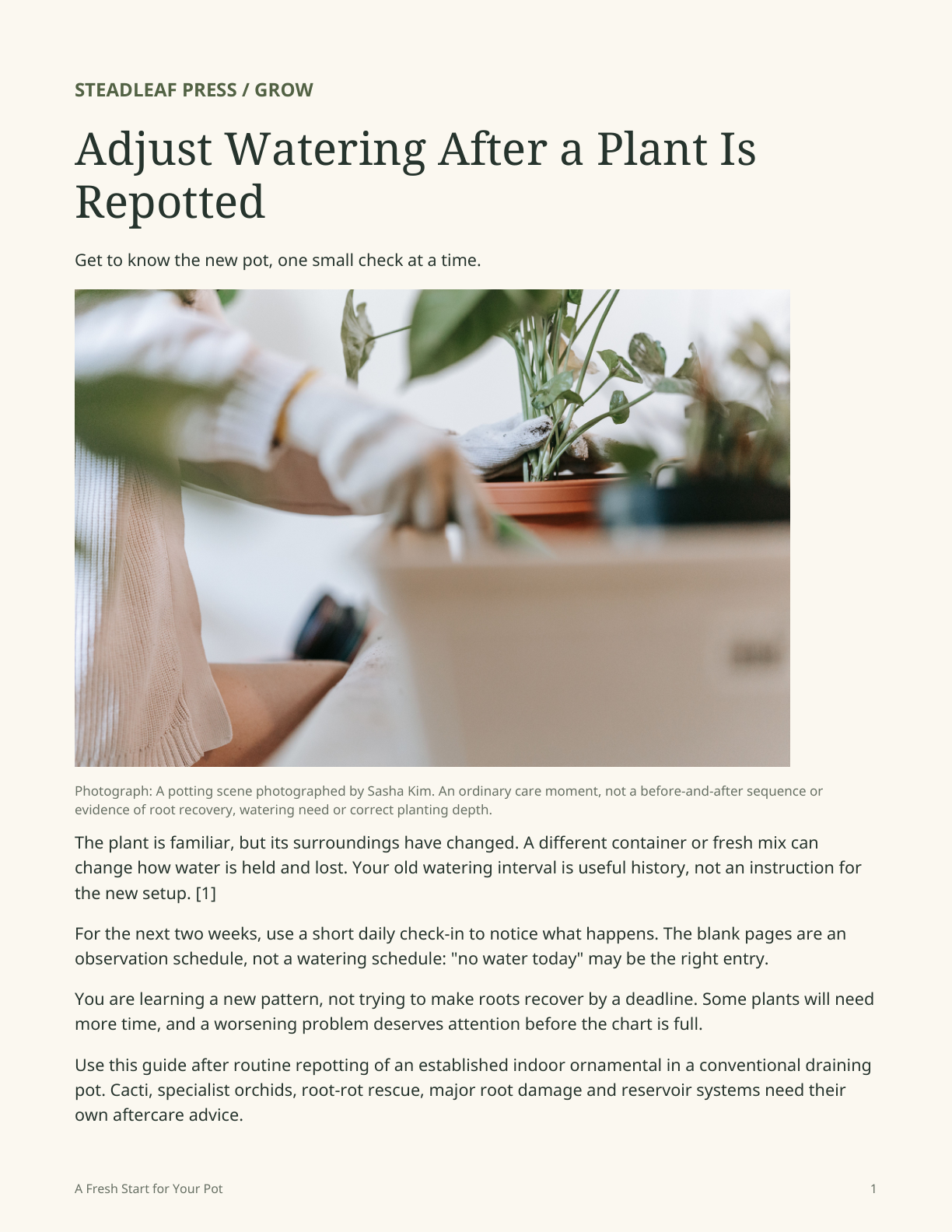
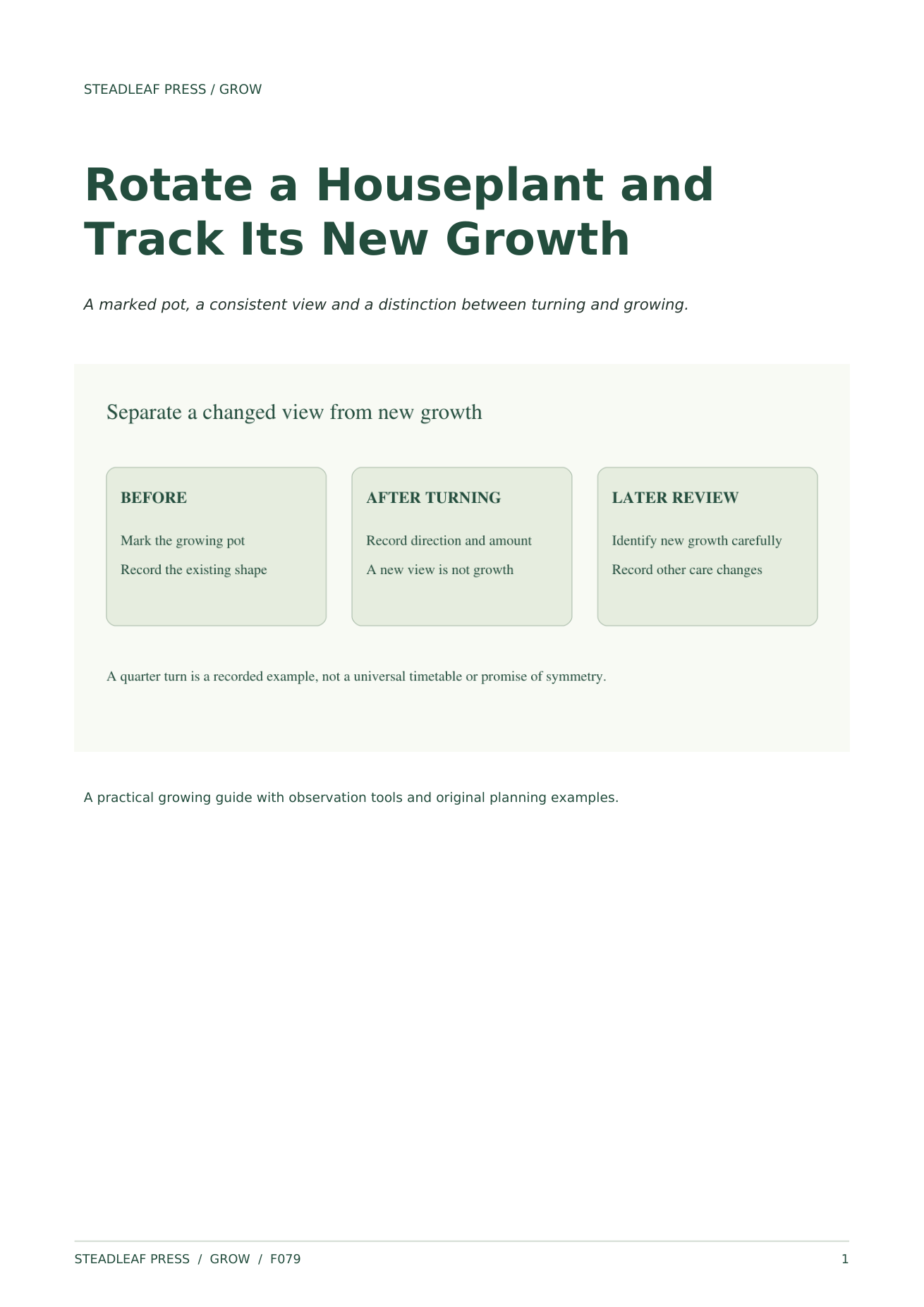
Record day-zero changes, choose condition-based actions and keep fourteen blank daily observations without treating them as a watering schedule or recovery deadline.
View free guide →
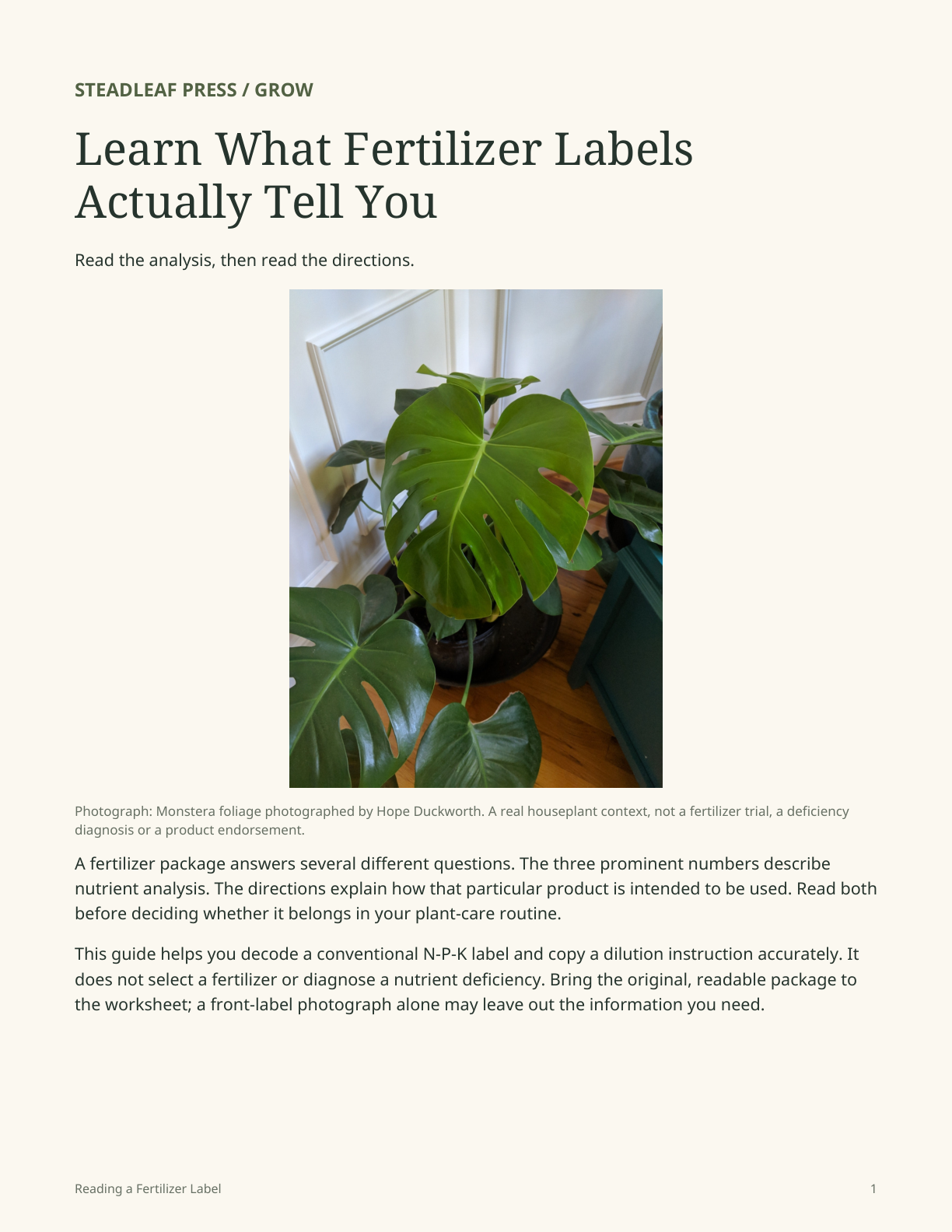
Read the N-P-K analysis and the actual directions on a fertilizer label without guessing what the label does not say.
View free guide →
Use five quick questions to decide whether a stressed plant needs feeding, a care correction or simply more observation.
View free guide →
Compare four symptom clues, apply six eligibility checks, use a bounded two-pass method only when appropriate, and record drainage and subsequent observations.
View free guide →
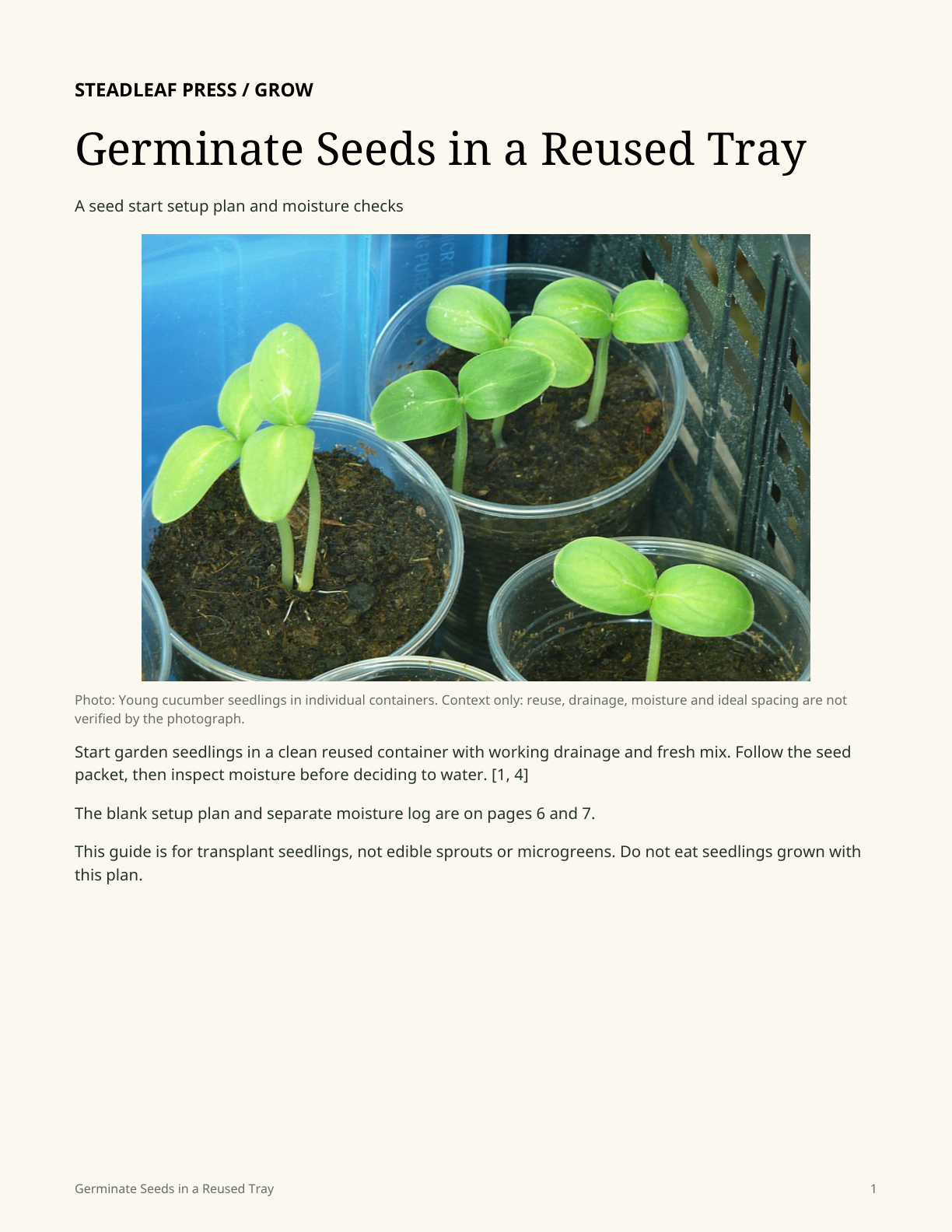
Choose and clean a suitable reused tray, record crop-specific seed requirements, sow into fresh mix and make moisture decisions before and after emergence using two printable tools.
View free guide →
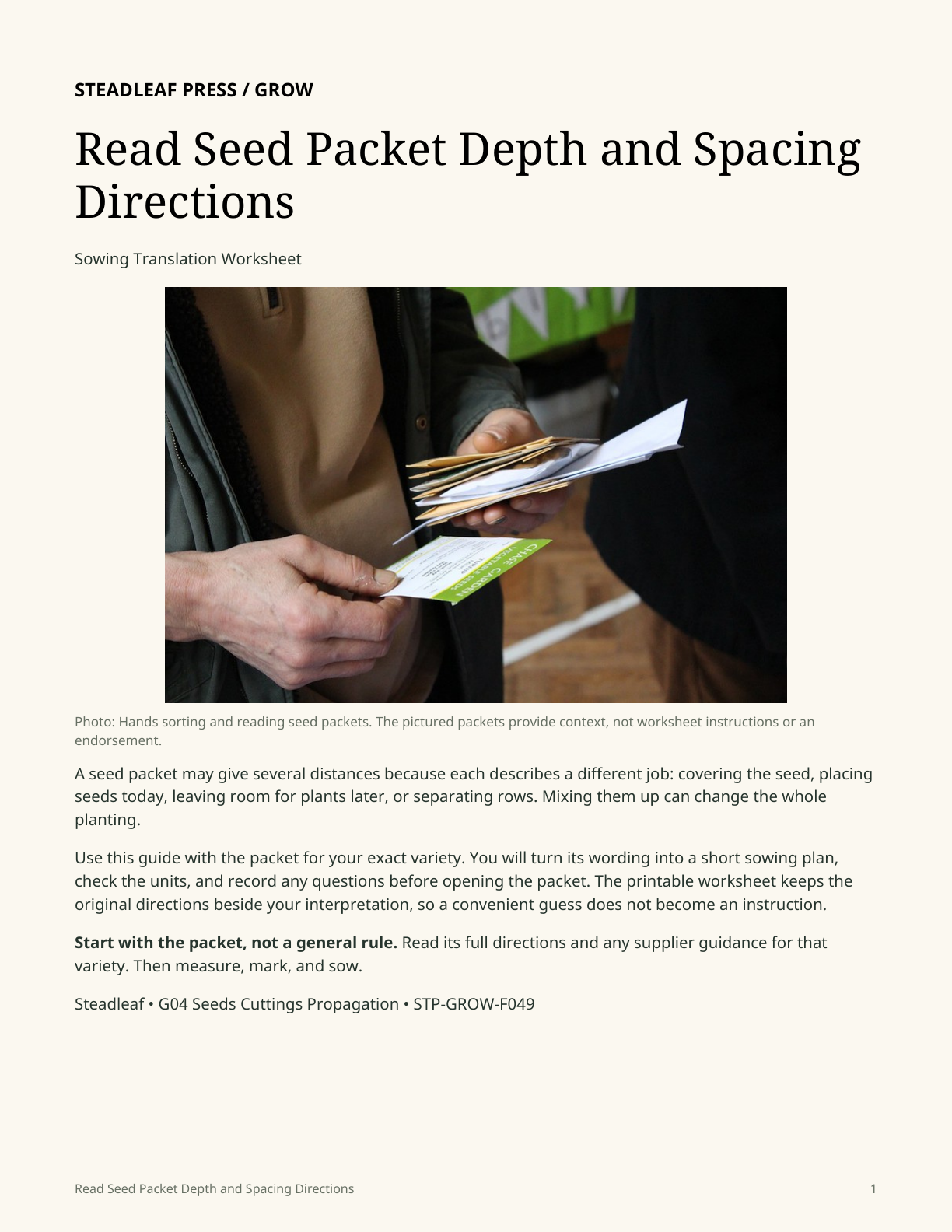
Preserve the packet wording, distinguish each measurement, verify units and local timing, and fill a practical sowing-translation worksheet before sowing.
View free guide →
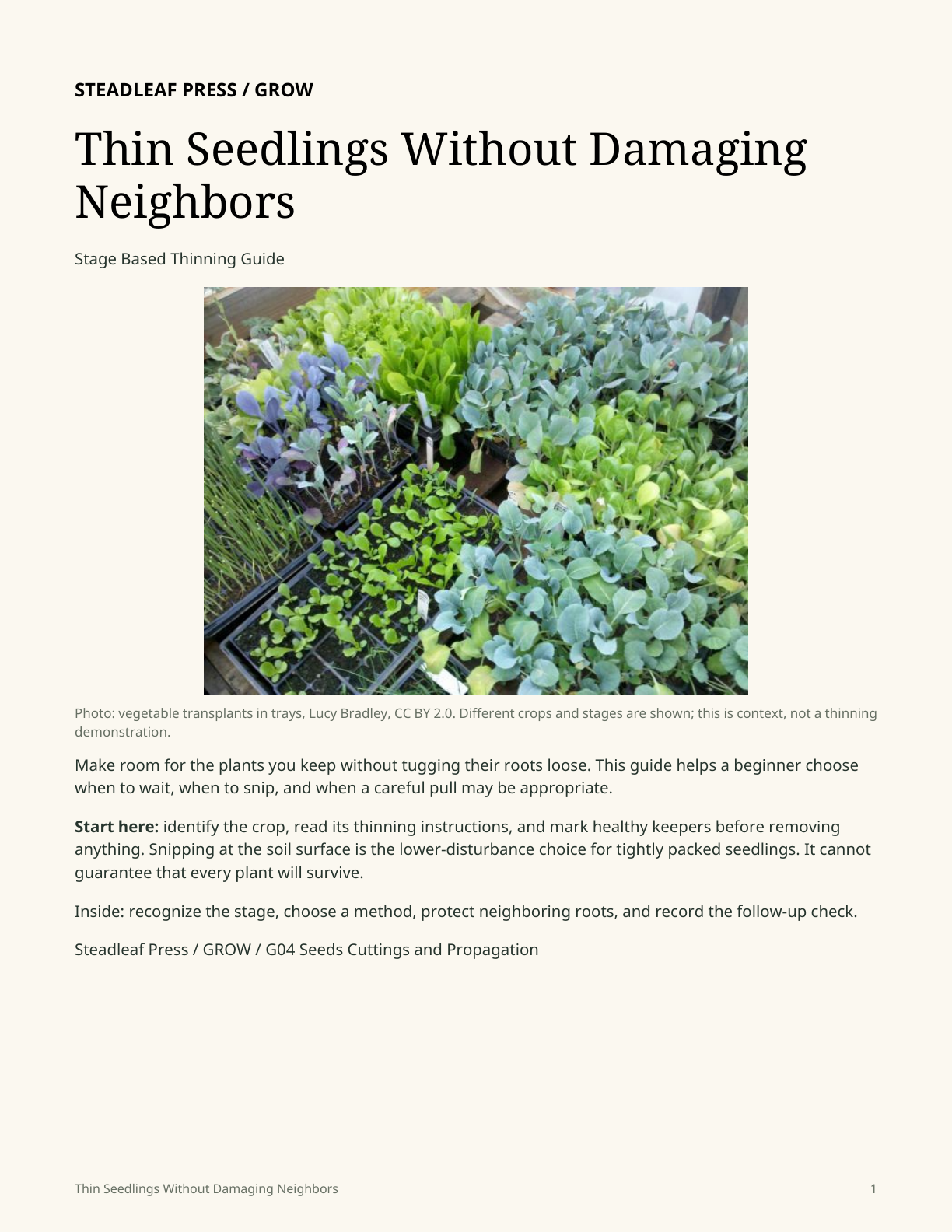
Recognize seedling stage, mark healthy keepers, choose snipping or a conditional gentle pull, and check root stress with an original printable follow-up record.
View free guide →
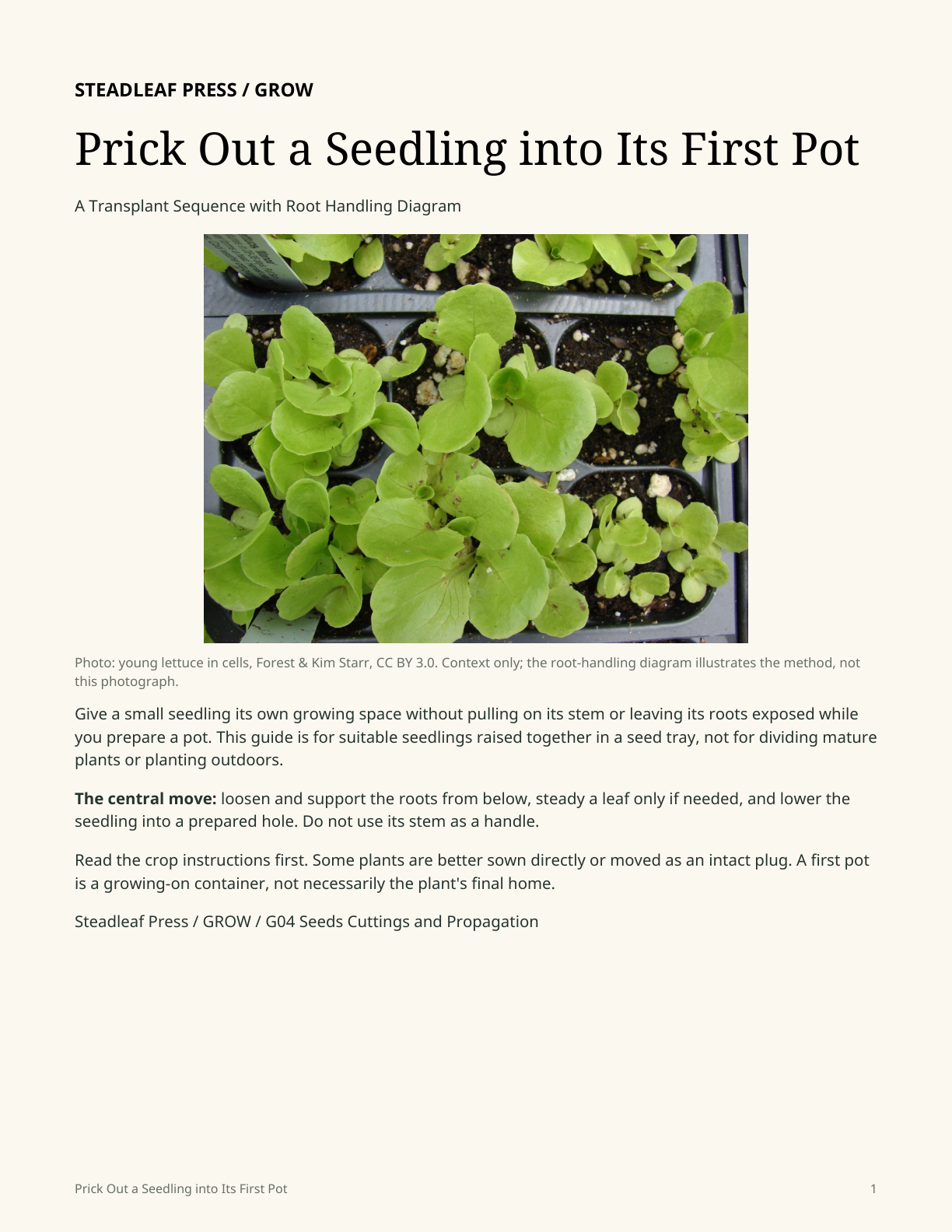
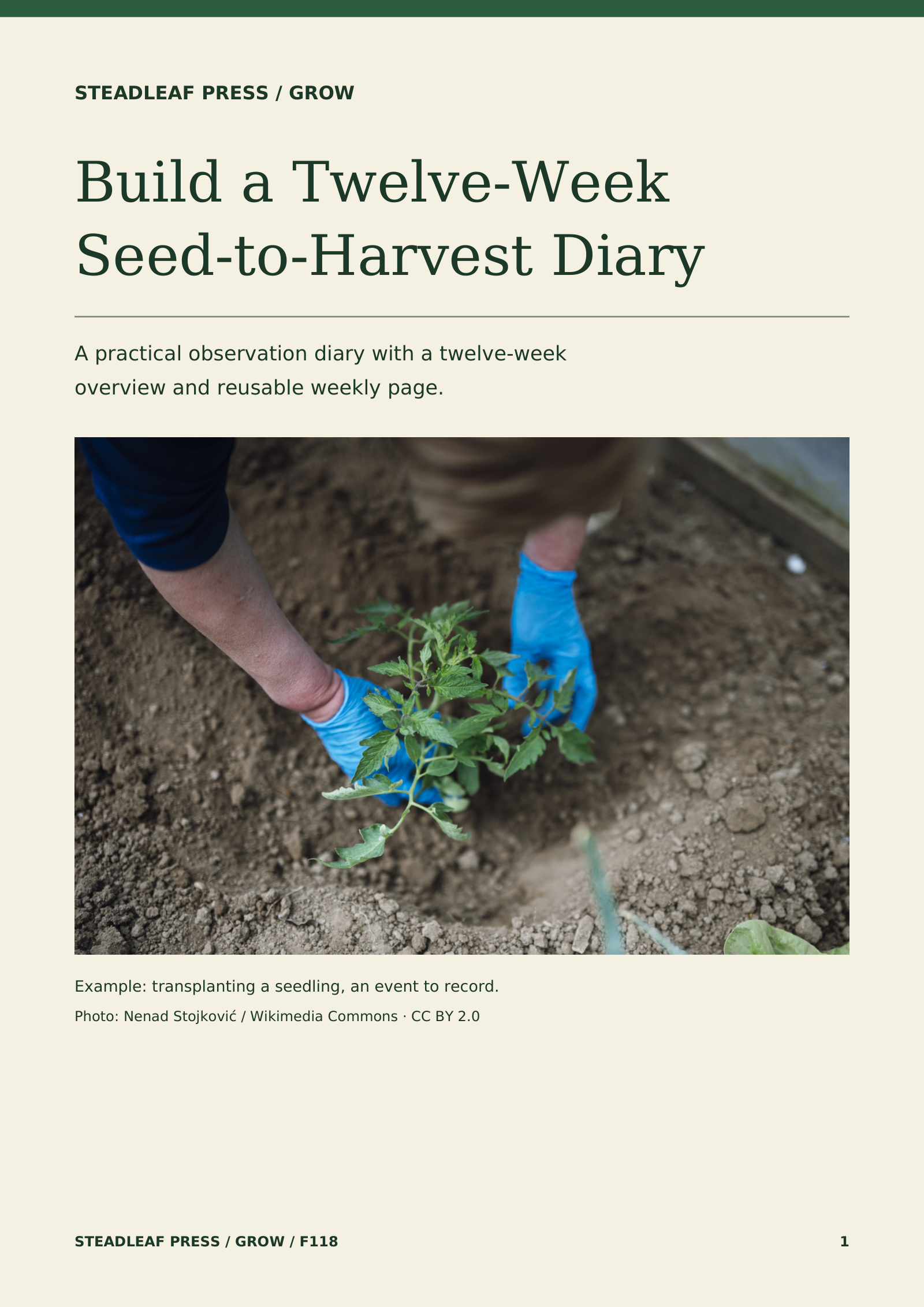
Prepare the receiving pot, support roots from below, steady a leaf without pulling, settle the seedling at the correct depth and observe recovery.
View free guide →
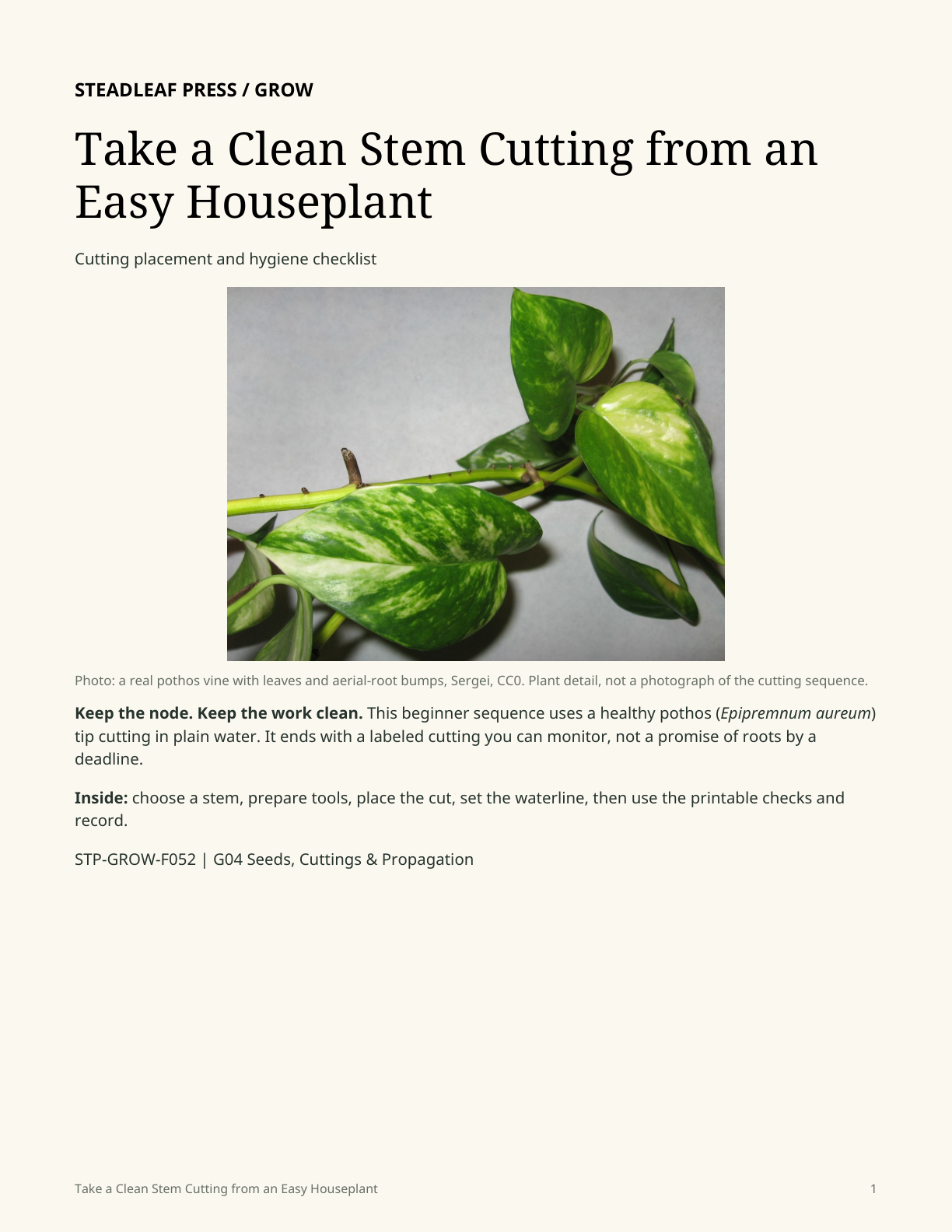
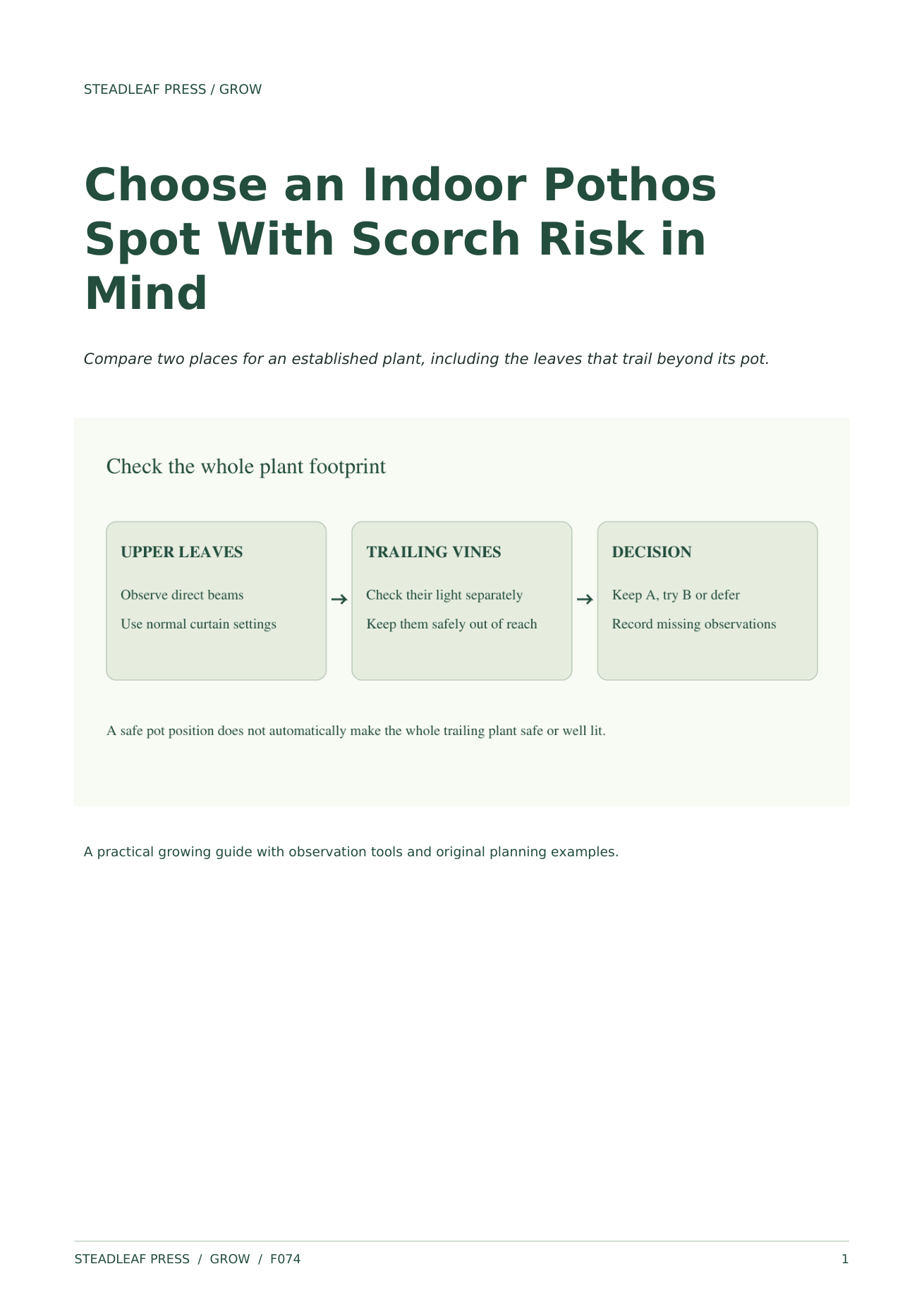
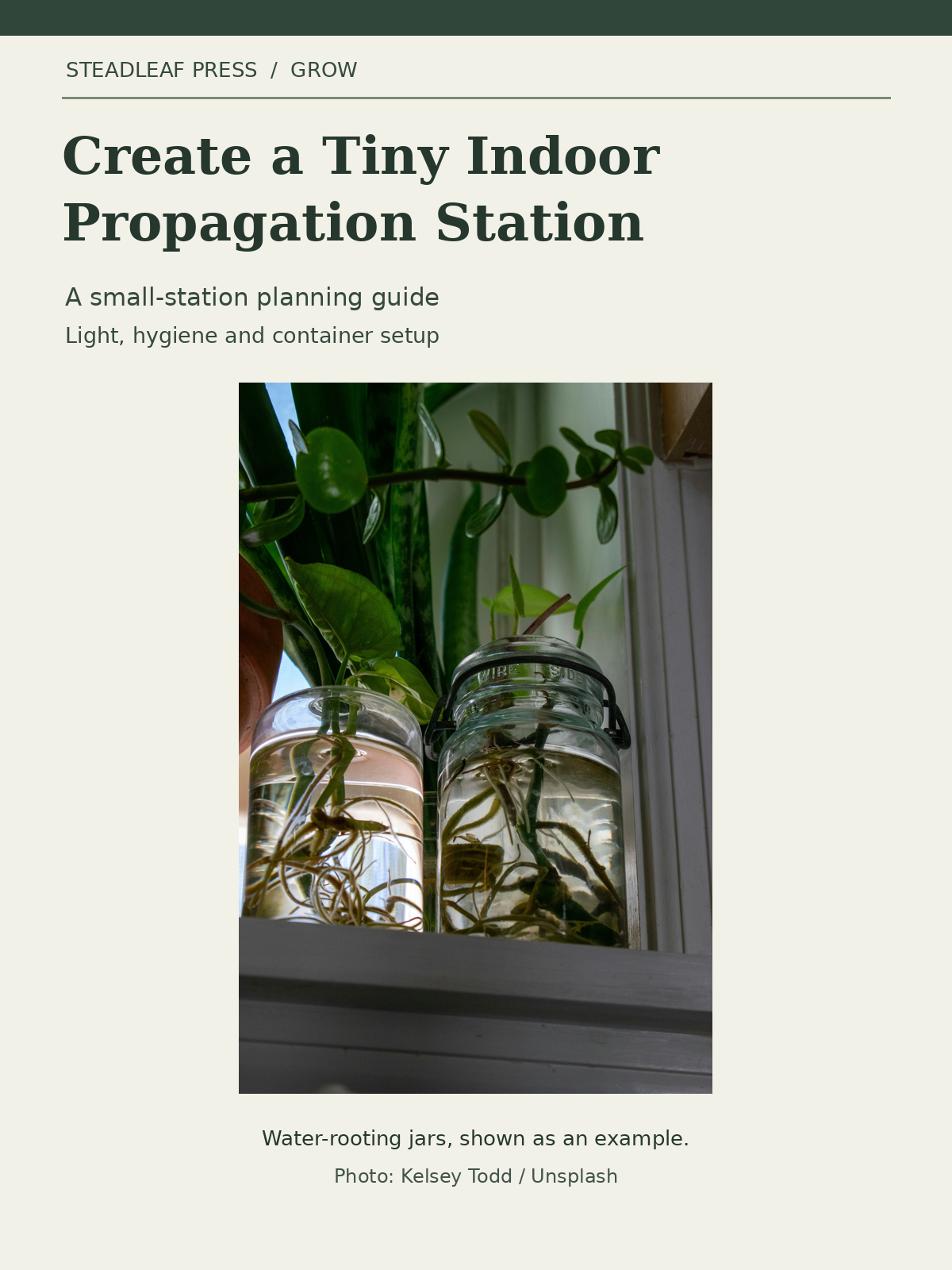
Identify a healthy pothos stem, retain its lower node, prepare clean tools and jar, set a leaf-free waterline and record follow-up observations.
View free guide →
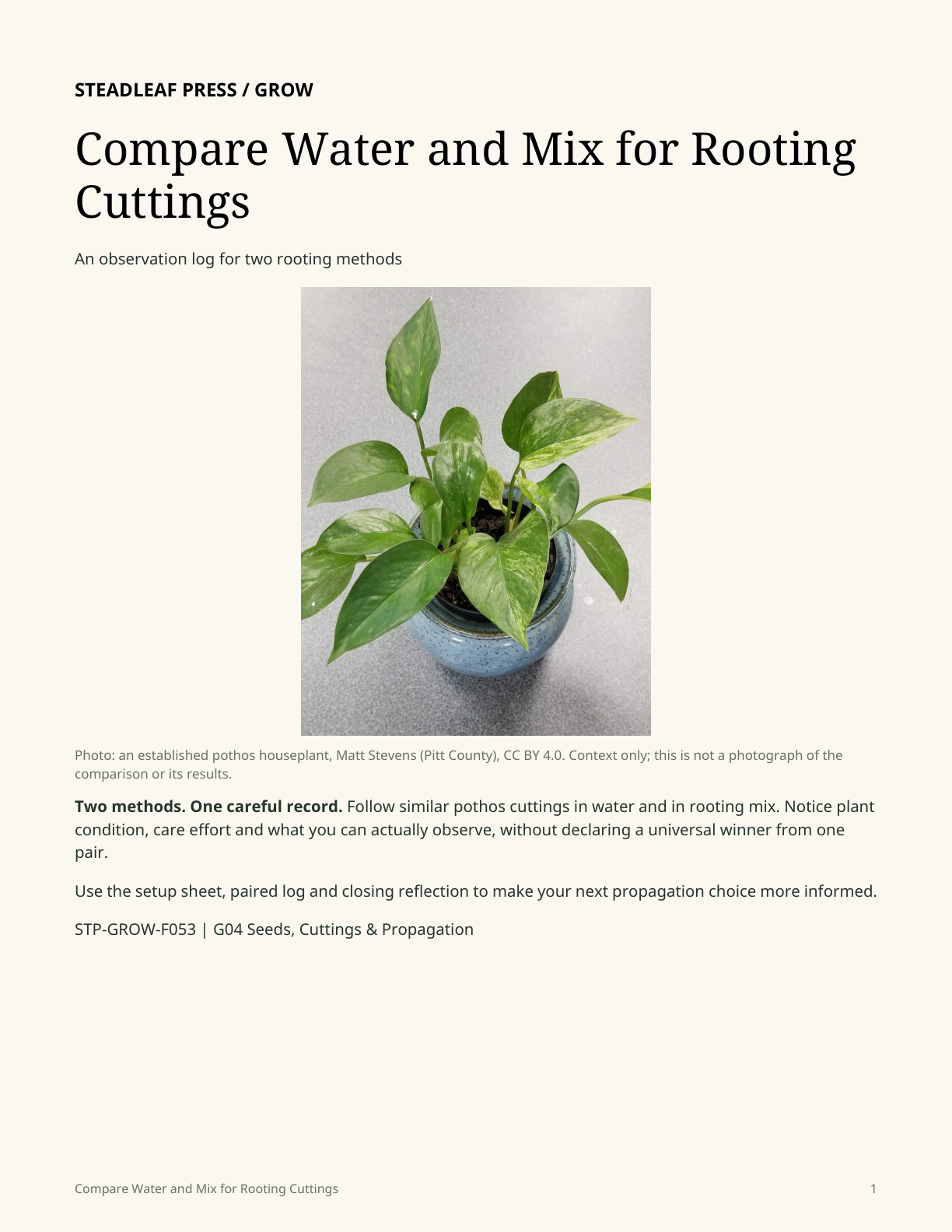
Compare water and potting mix side by side for pothos cuttings, record what happens, and avoid assuming one method always wins.
View free guide →
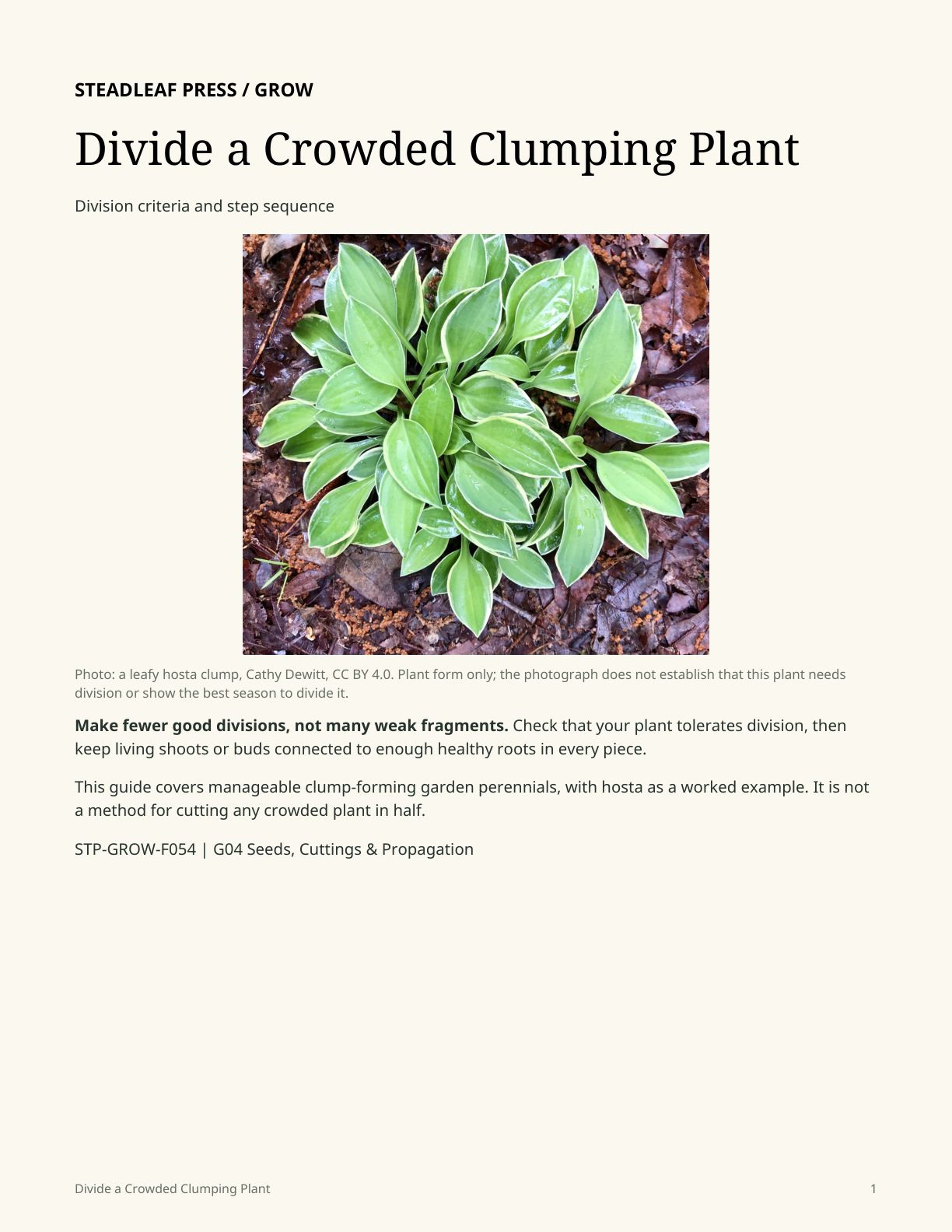
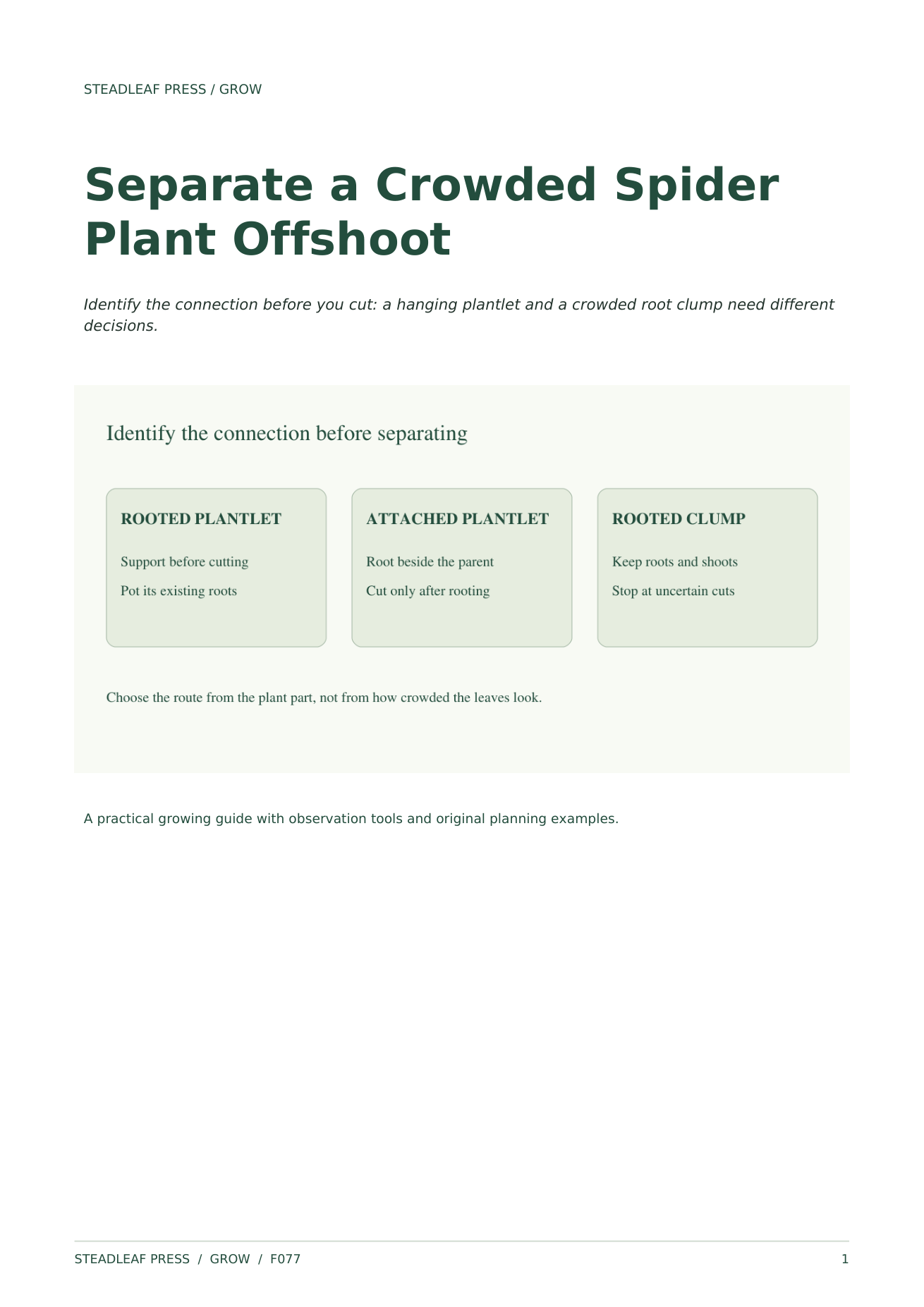
Decide whether division fits, prepare destinations, lift and separate viable rooted sections safely, replant at species-appropriate depth and record aftercare.
View free guide →
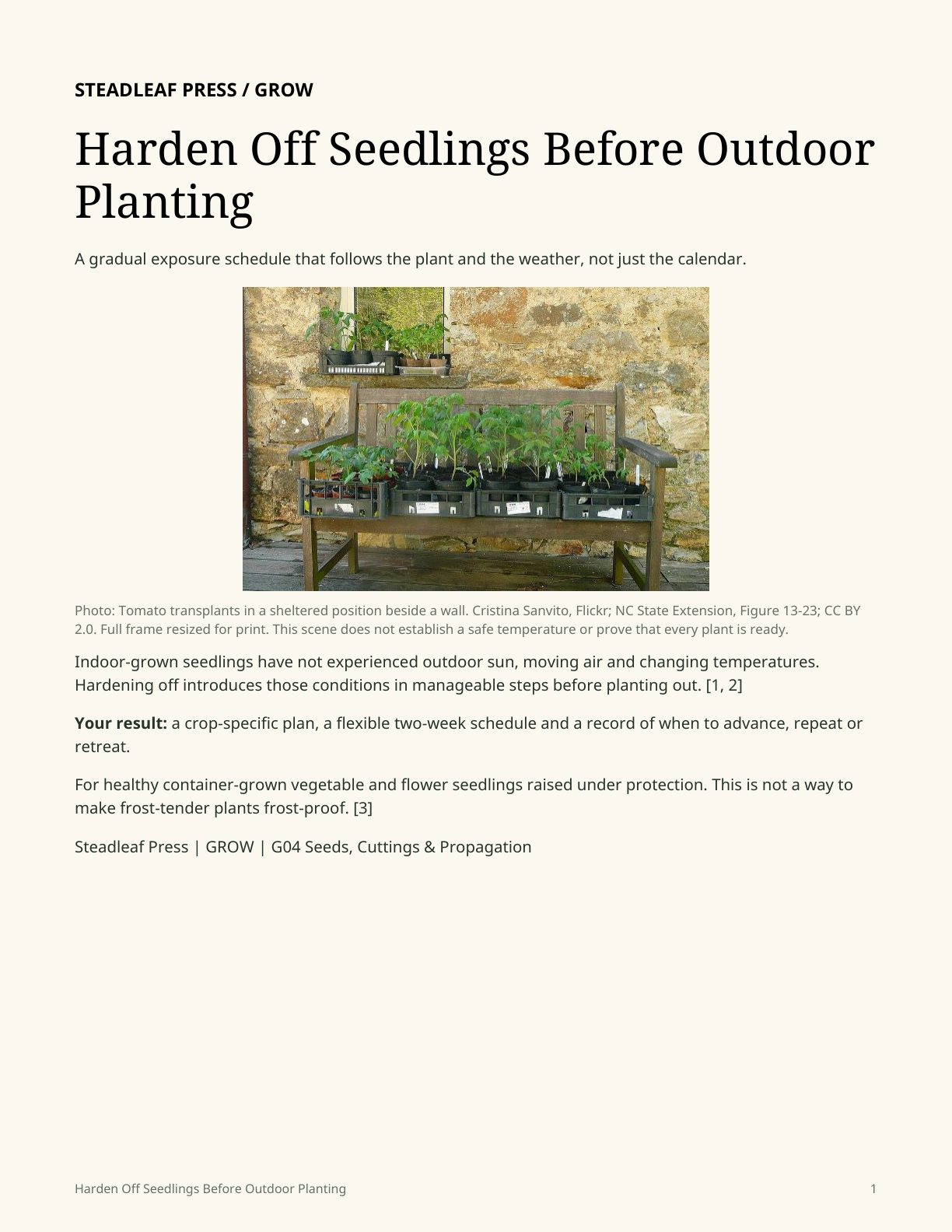
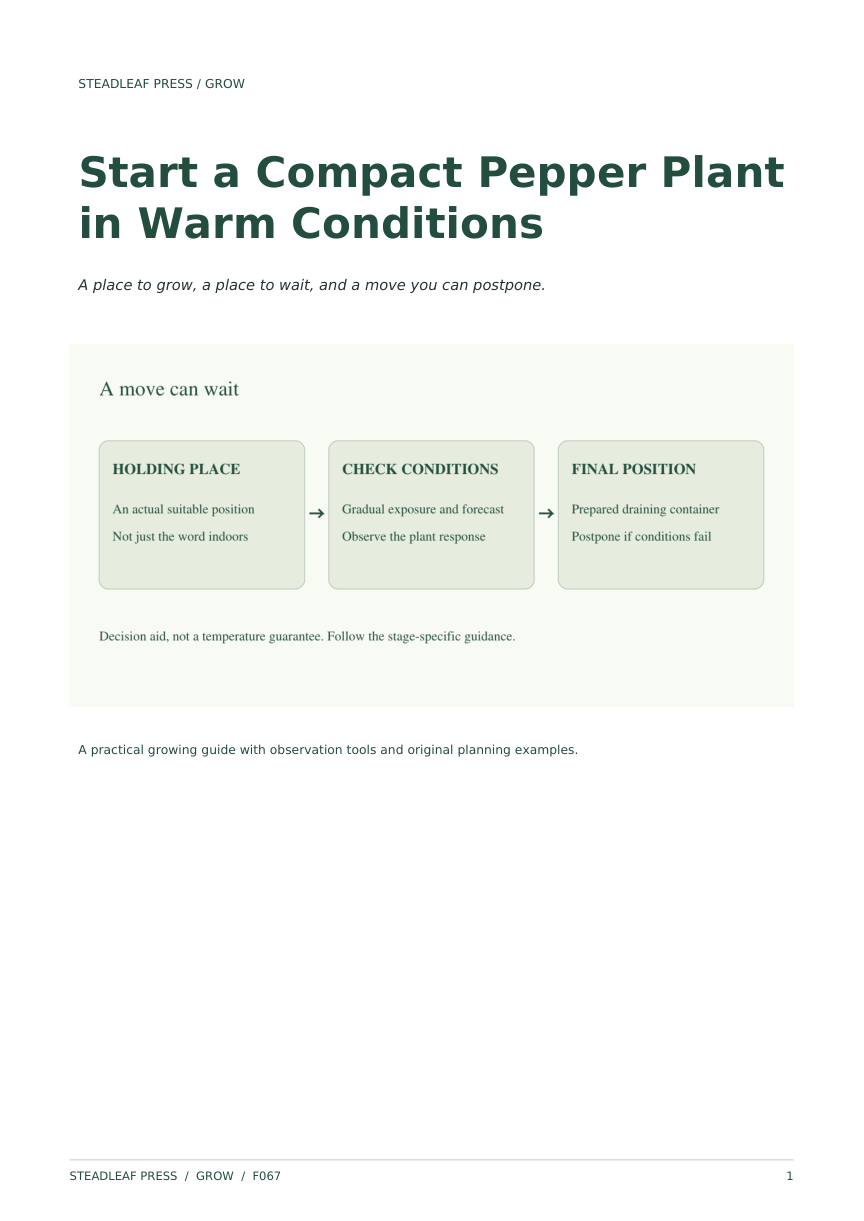
Plan crop-safe exposure, use a flexible staged schedule, record actual conditions and plant response, and decide when to advance, repeat, retreat or plant.
View free guide →
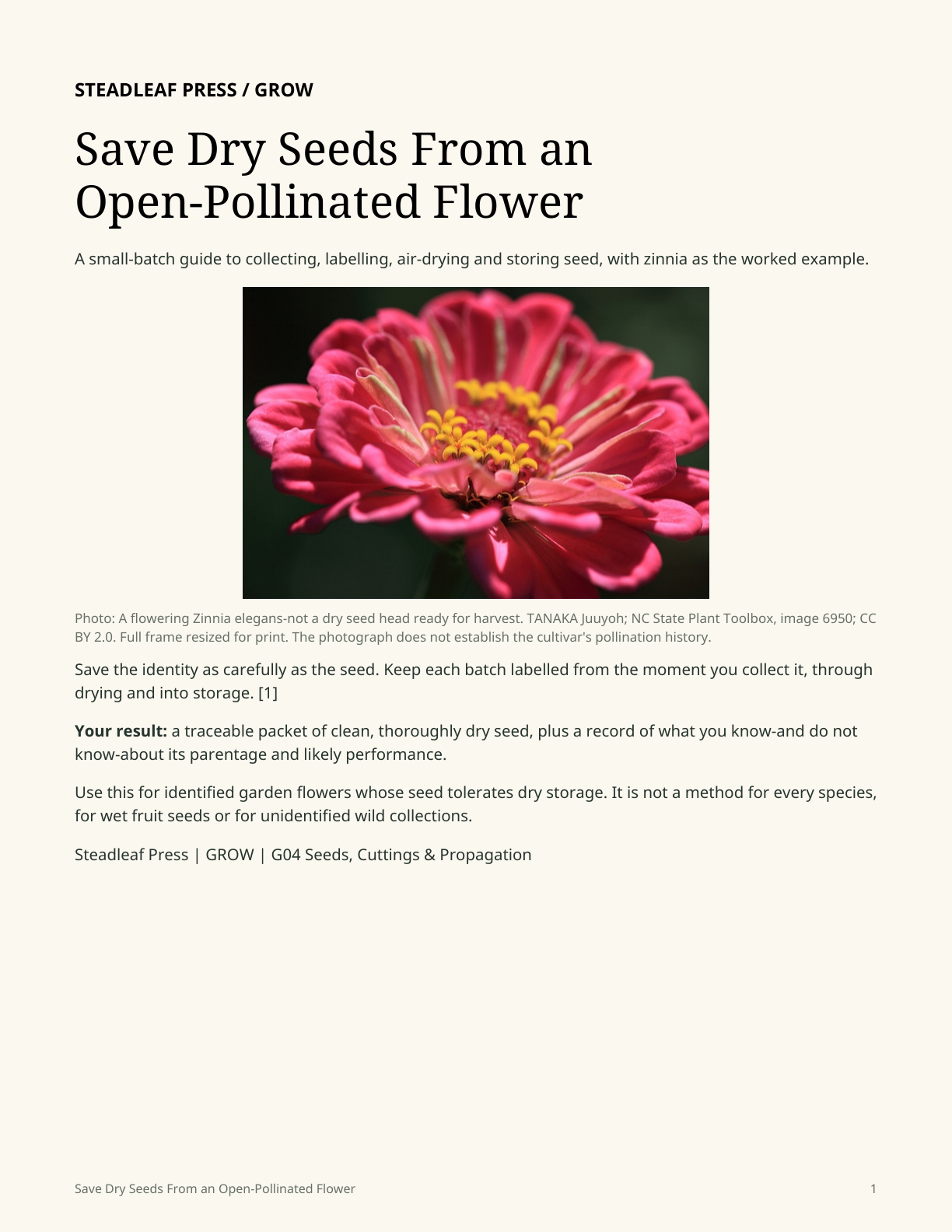
Choose a documented healthy parent, collect mature heads, clean and dry a labelled batch, pack only dry seed and preserve identity and crossing uncertainty through storage.
View free guide →
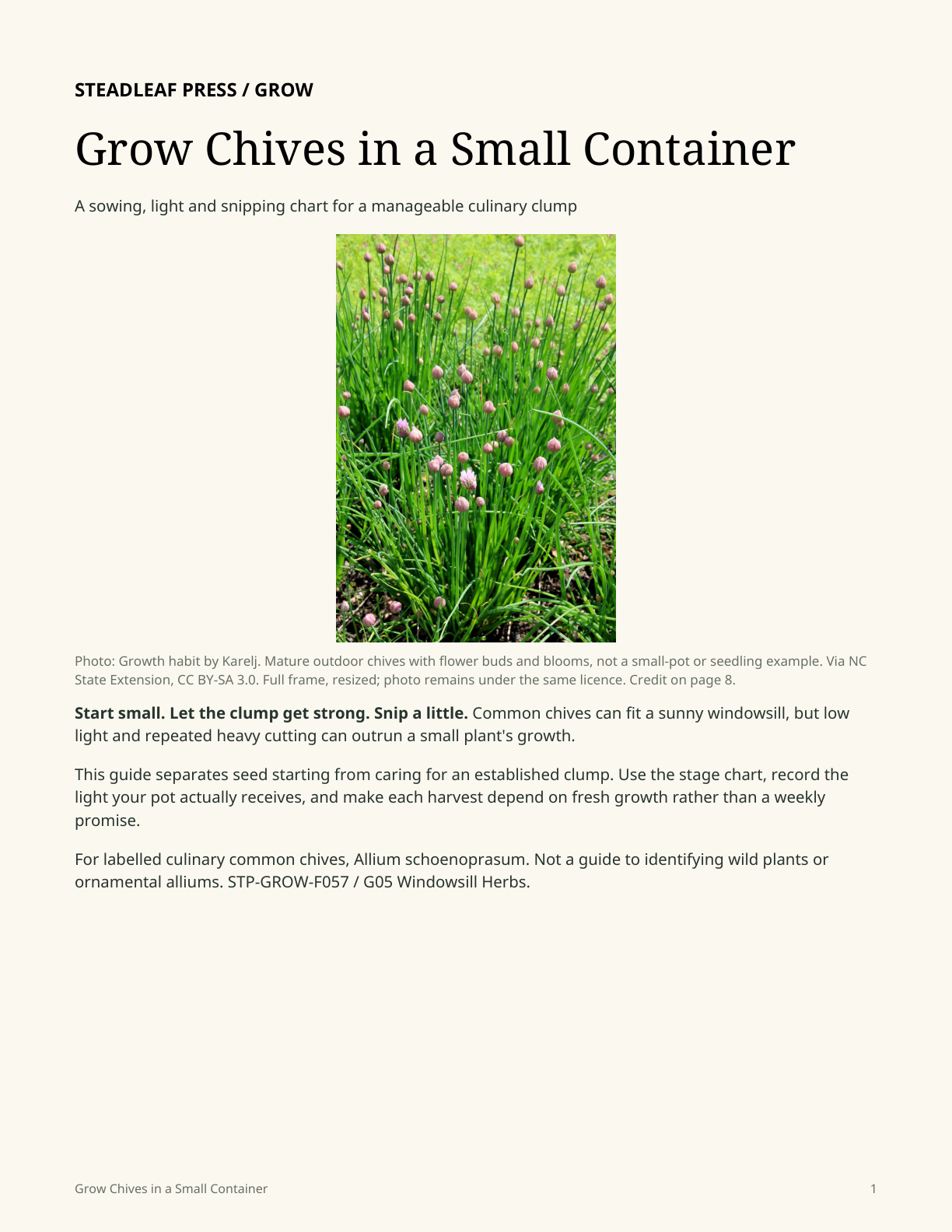
Follow a stage-based sowing, light and snipping chart, plan one manageable container and record growth before taking a small harvest.
View free guide →
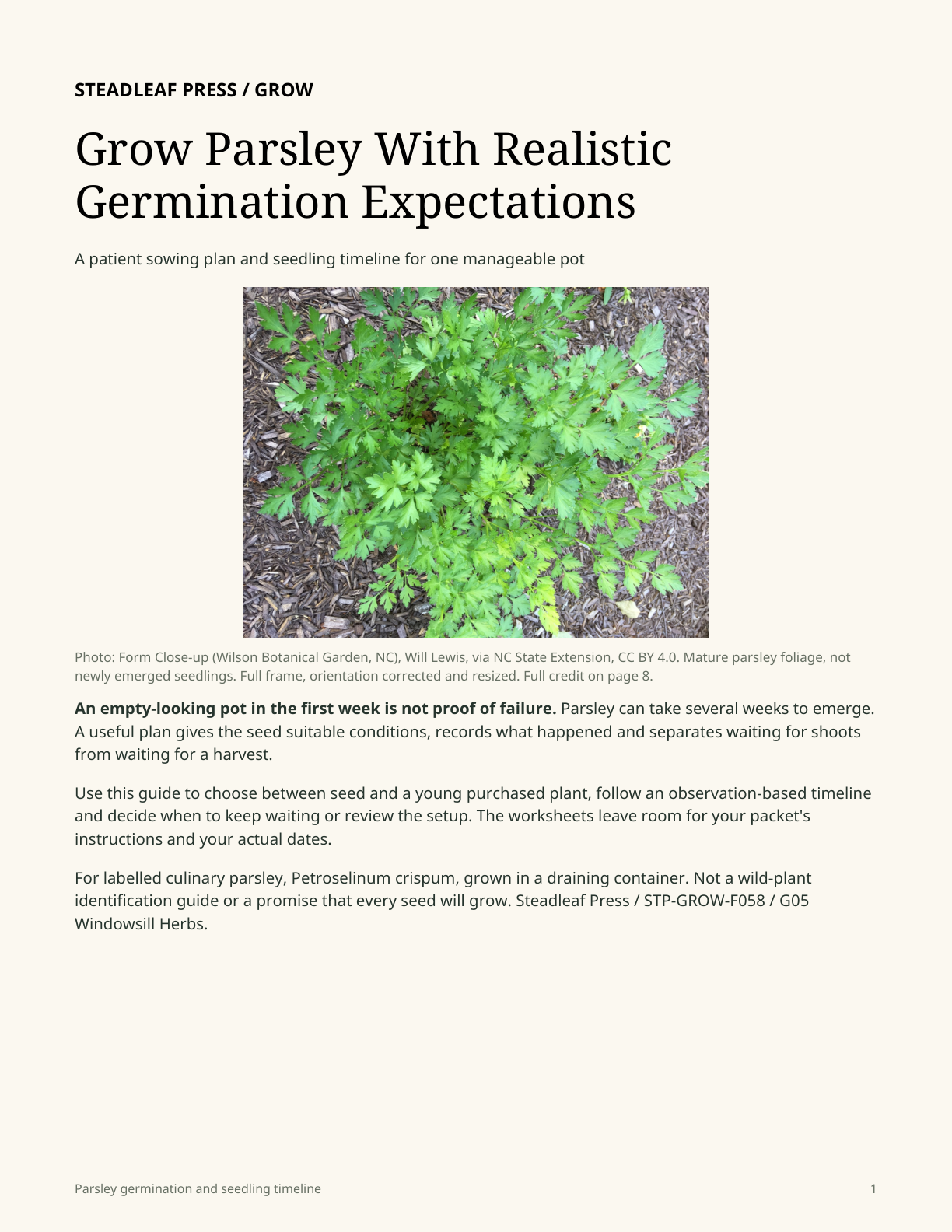
Use a realistic emergence window, choose seeds or a young plant, record conditions and separate seedling progress from harvest readiness.
View free guide →
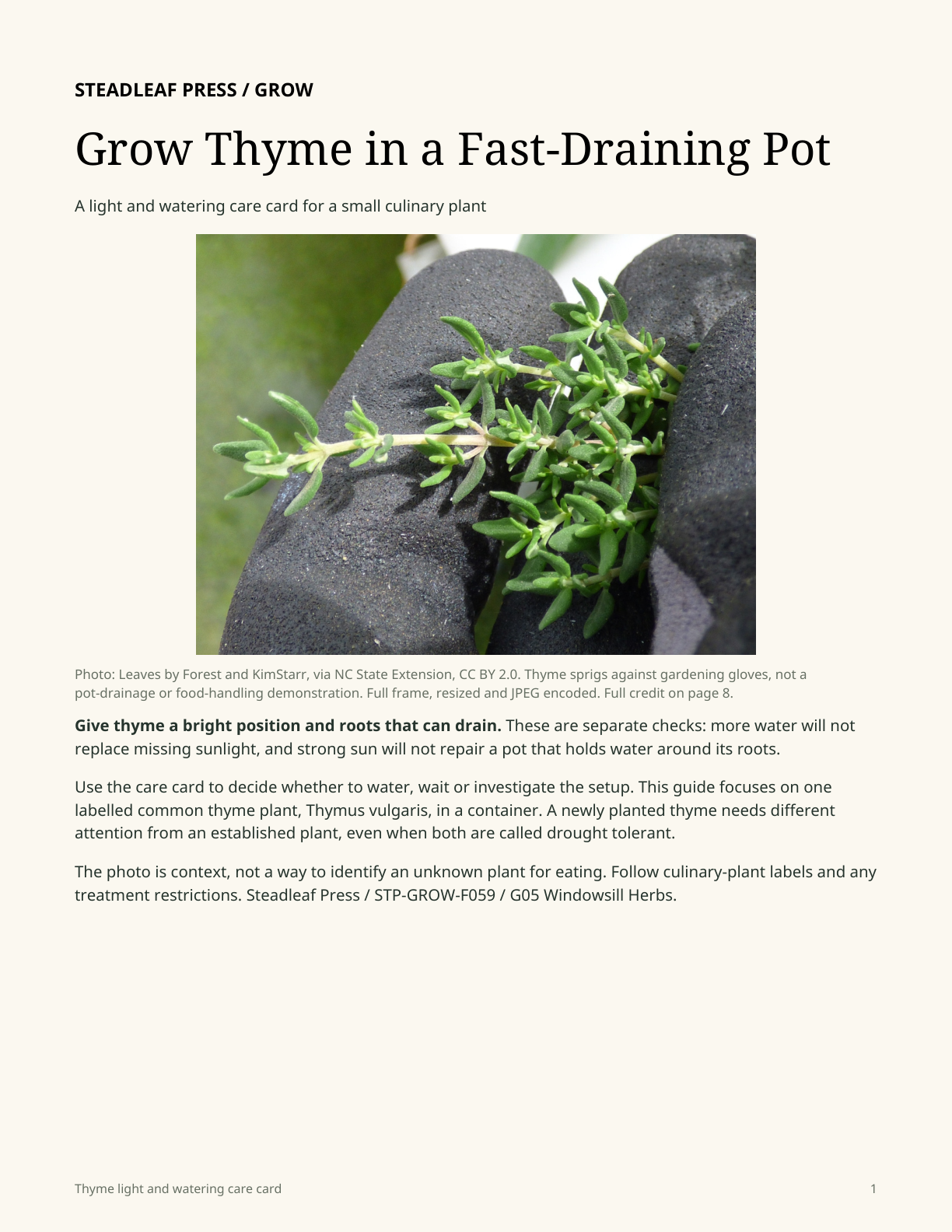
Separate light from watering decisions and use a care card, drainage checks and observation log for one culinary thyme plant.
View free guide →
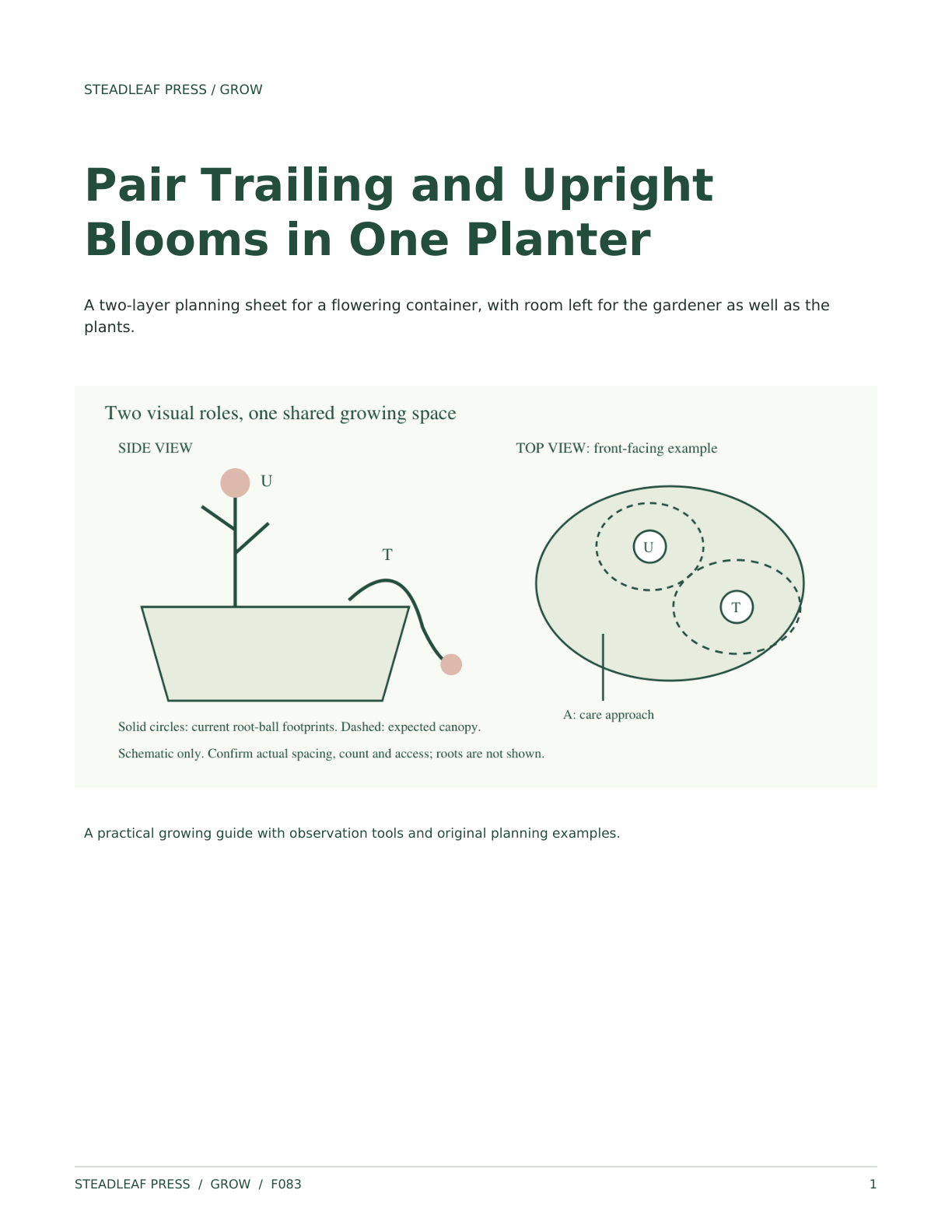
A two-layer planning sheet for a flowering container, with room left for the gardener as well as the plants.
View free guide →
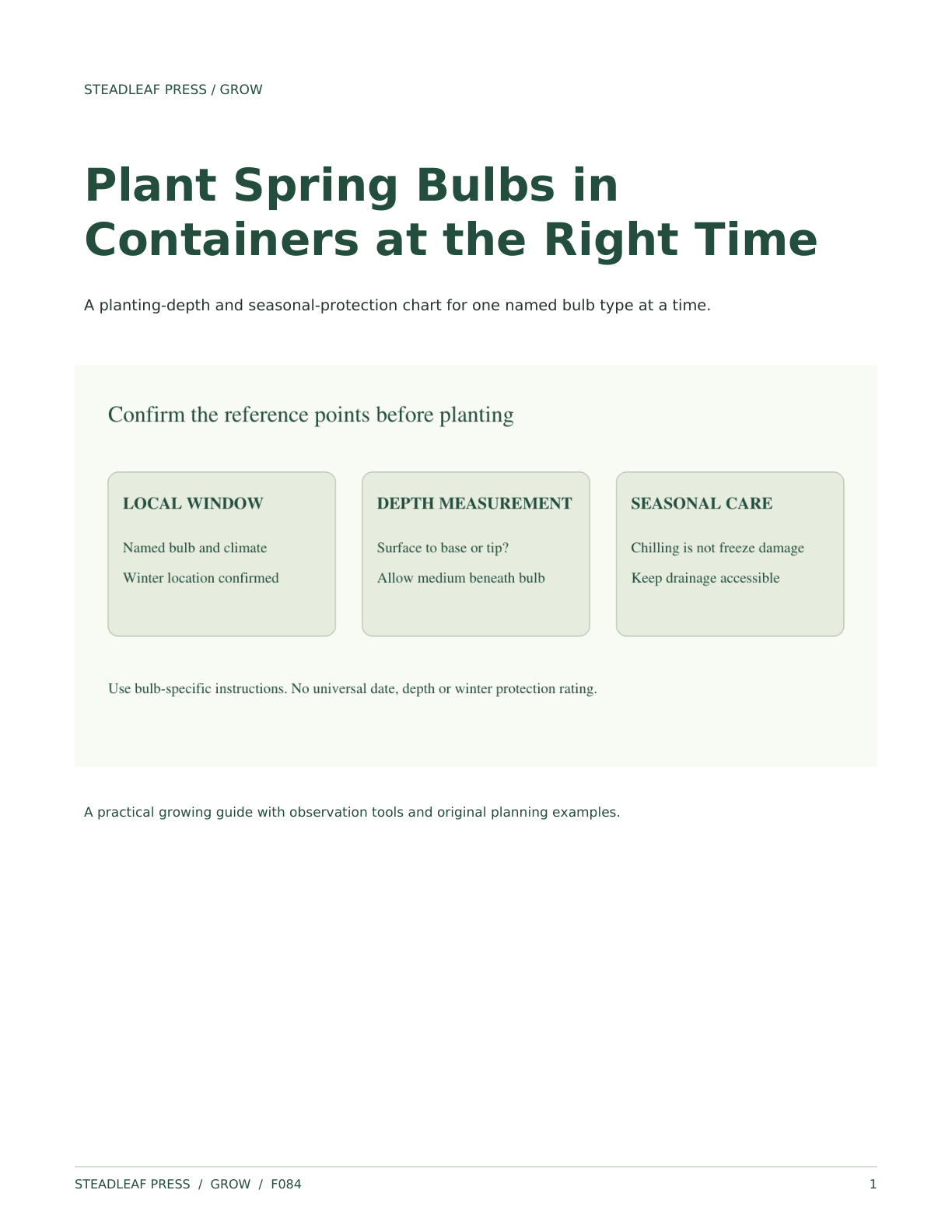
A planting-depth and seasonal-protection chart for one named bulb type at a time.
View free guide →
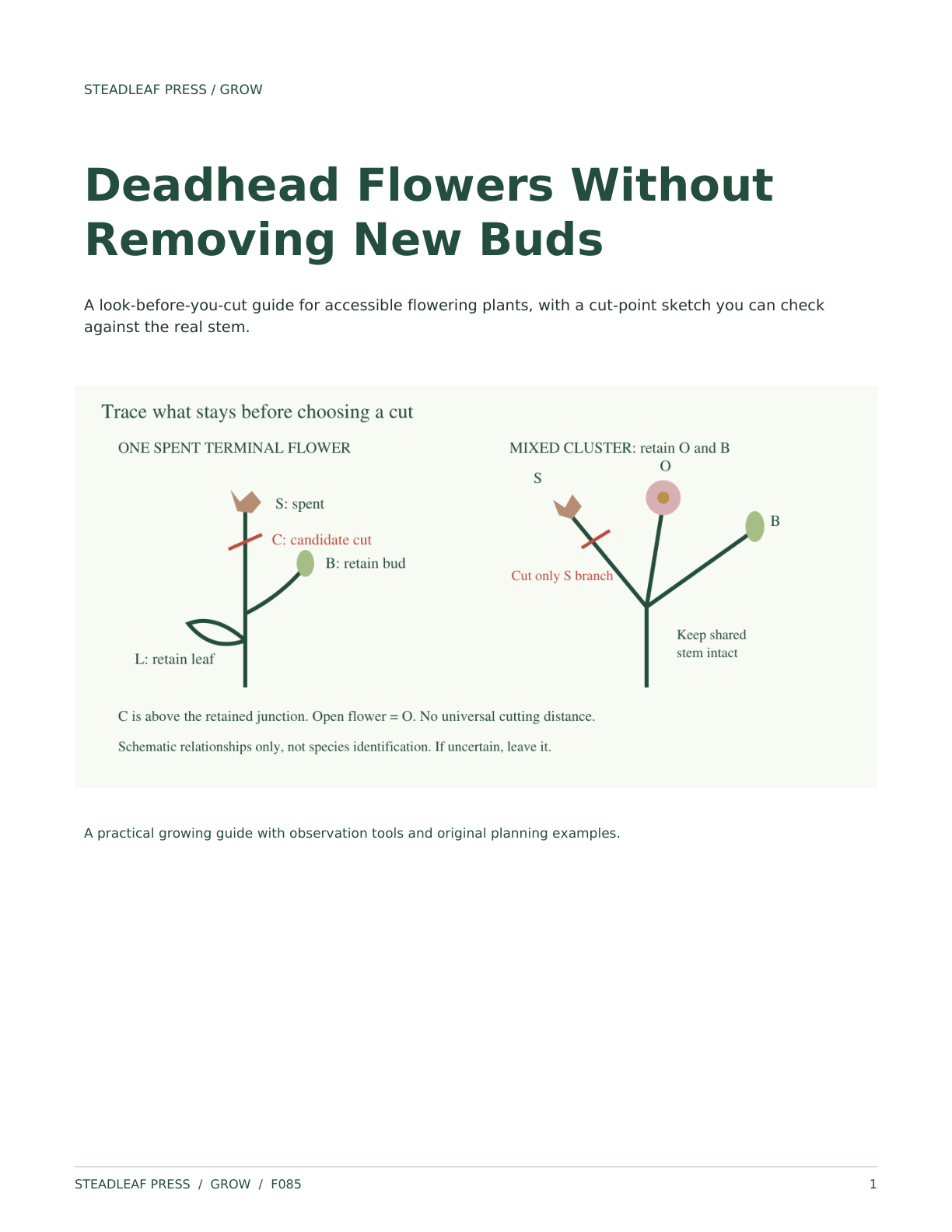
A look-before-you-cut guide for accessible flowering plants, with a cut-point sketch you can check against the real stem.
View free guide →
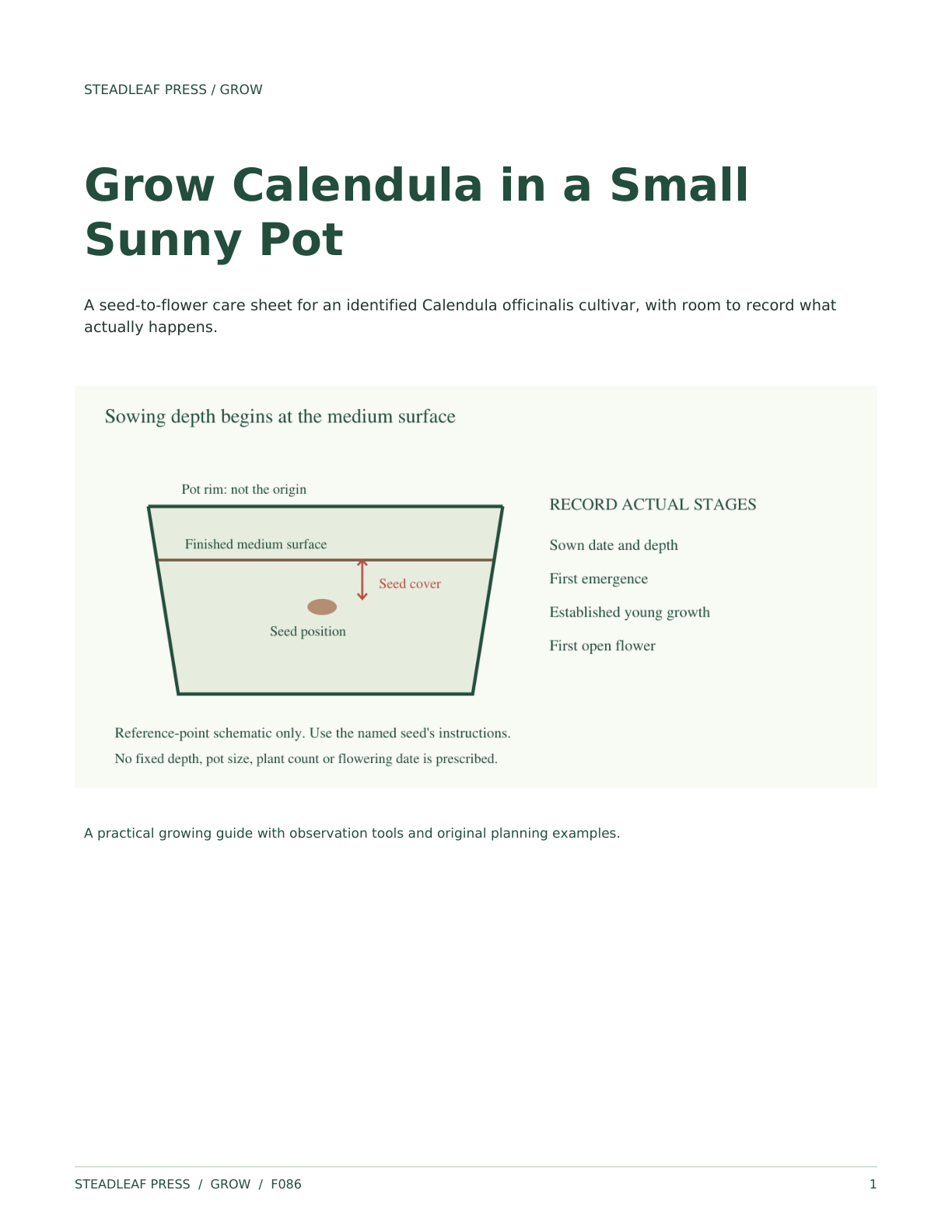
A seed-to-flower care sheet for an identified Calendula officinalis cultivar, with room to record what actually happens.
View free guide →
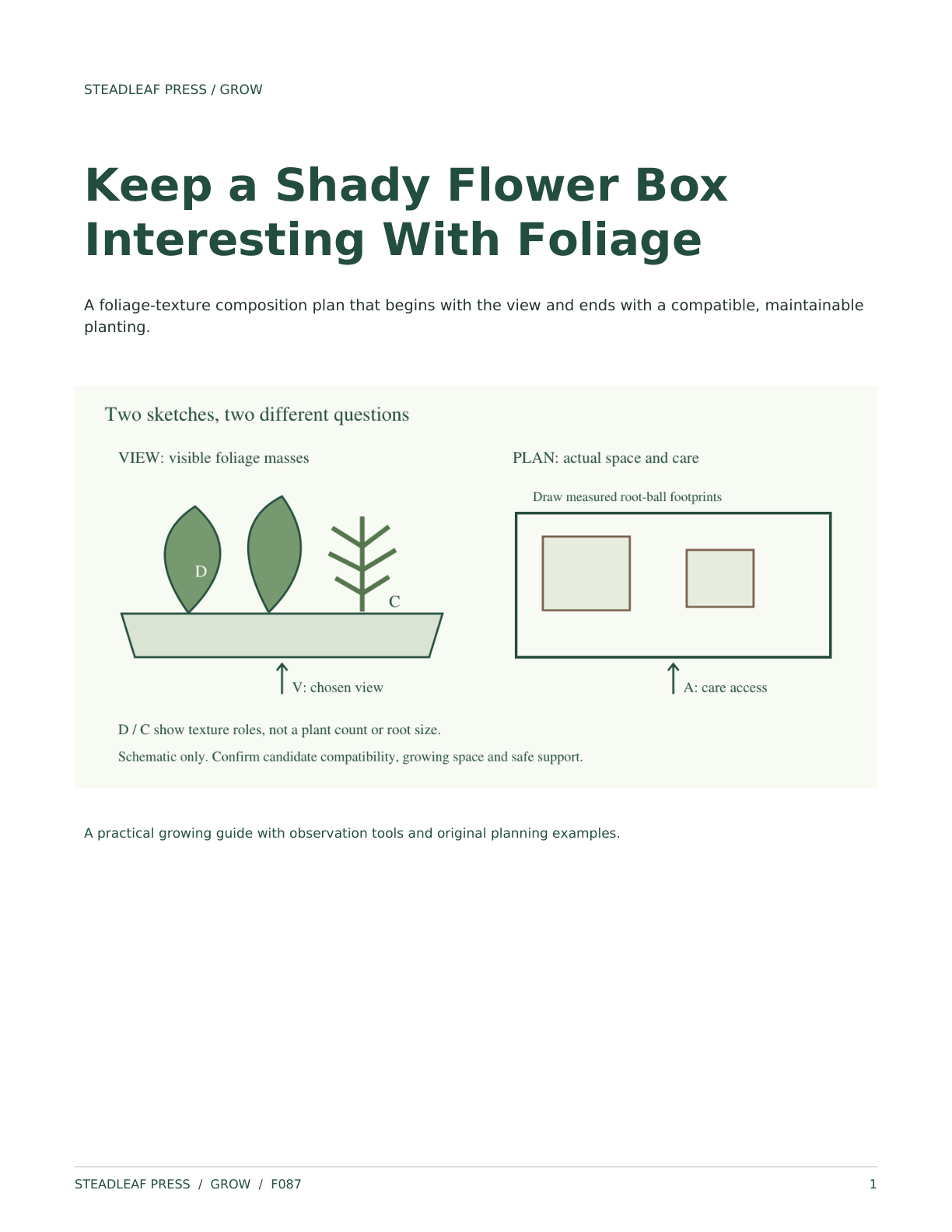
A foliage-texture composition plan that begins with the view and ends with a compatible, maintainable planting.
View free guide →
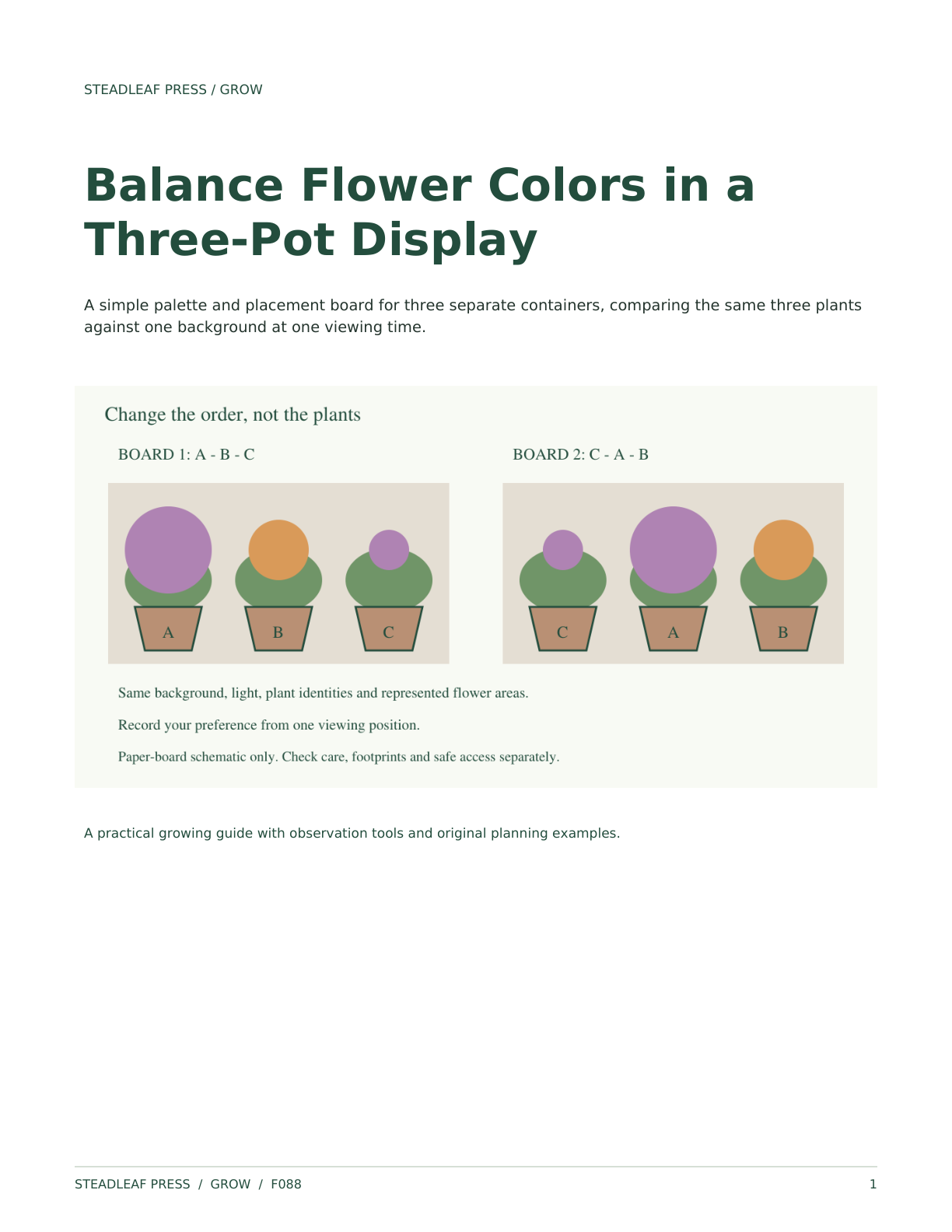
A simple palette and placement board for three separate containers, comparing the same three plants against one background at one viewing time.
View free guide →
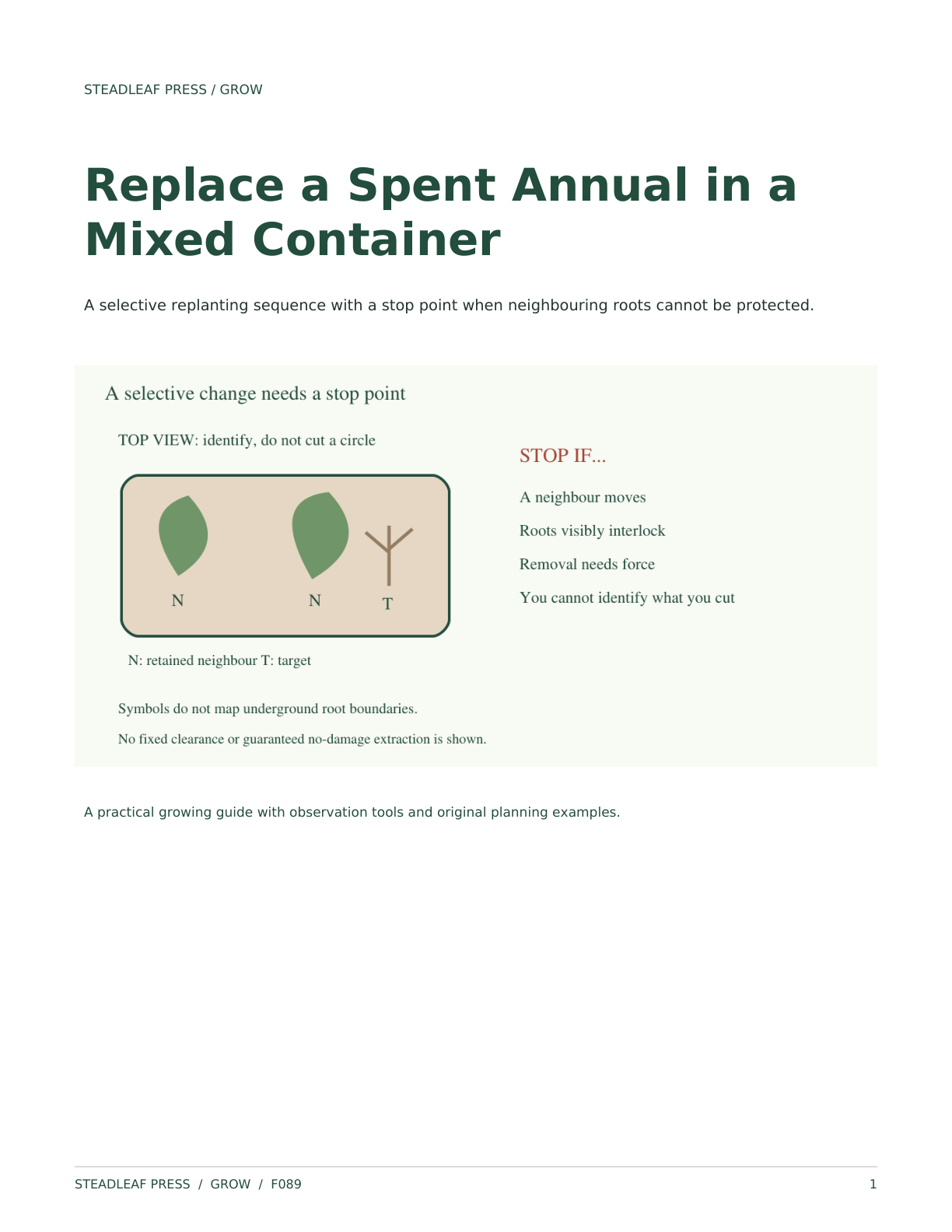
A selective replanting sequence with a stop point when neighbouring roots cannot be protected.
View free guide →
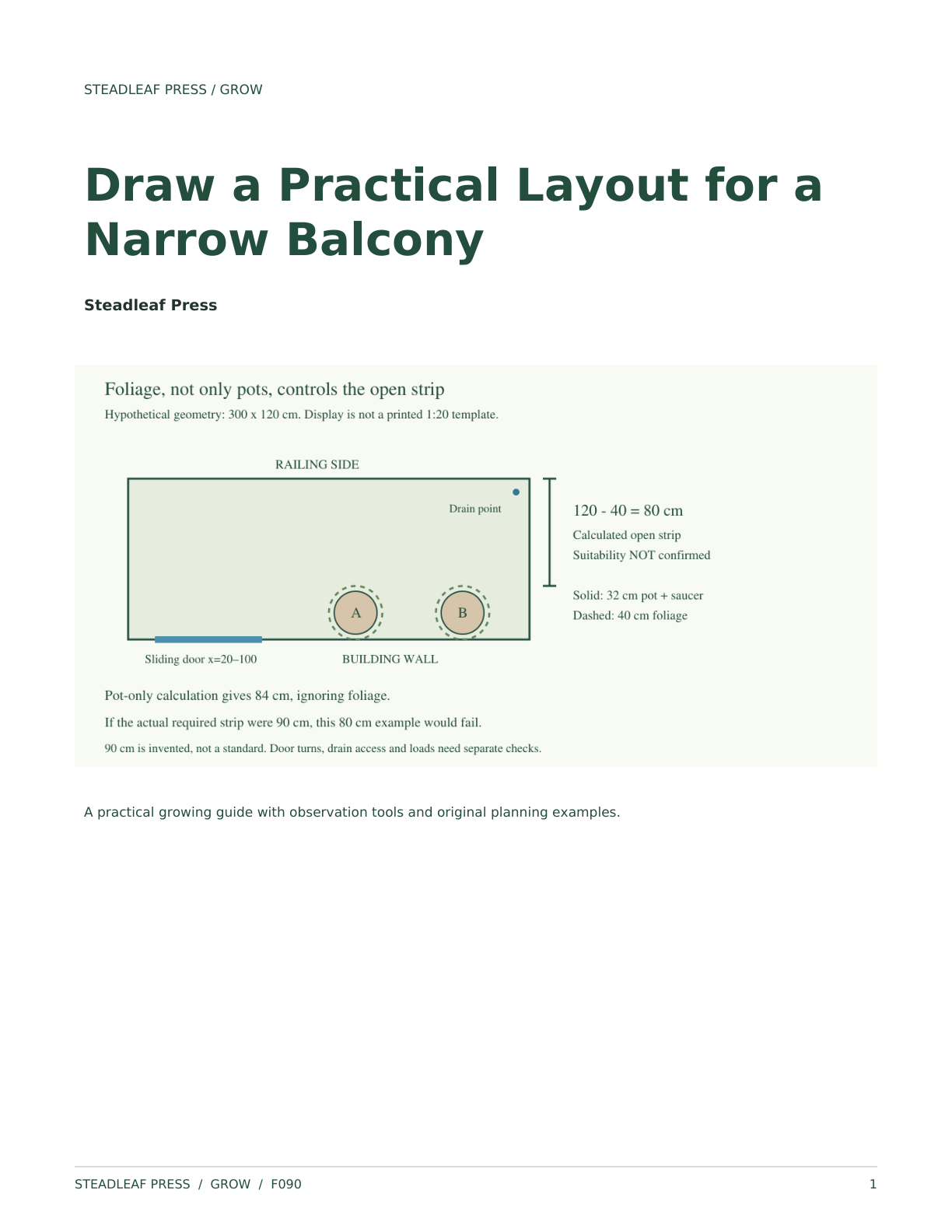
Turn the measurements of a narrow balcony into a simple scale plan that leaves room for people, plant growth, watering and drainage. The finished plan is a way to decide what fits before carrying out pots or buying furniture.
View free guide →
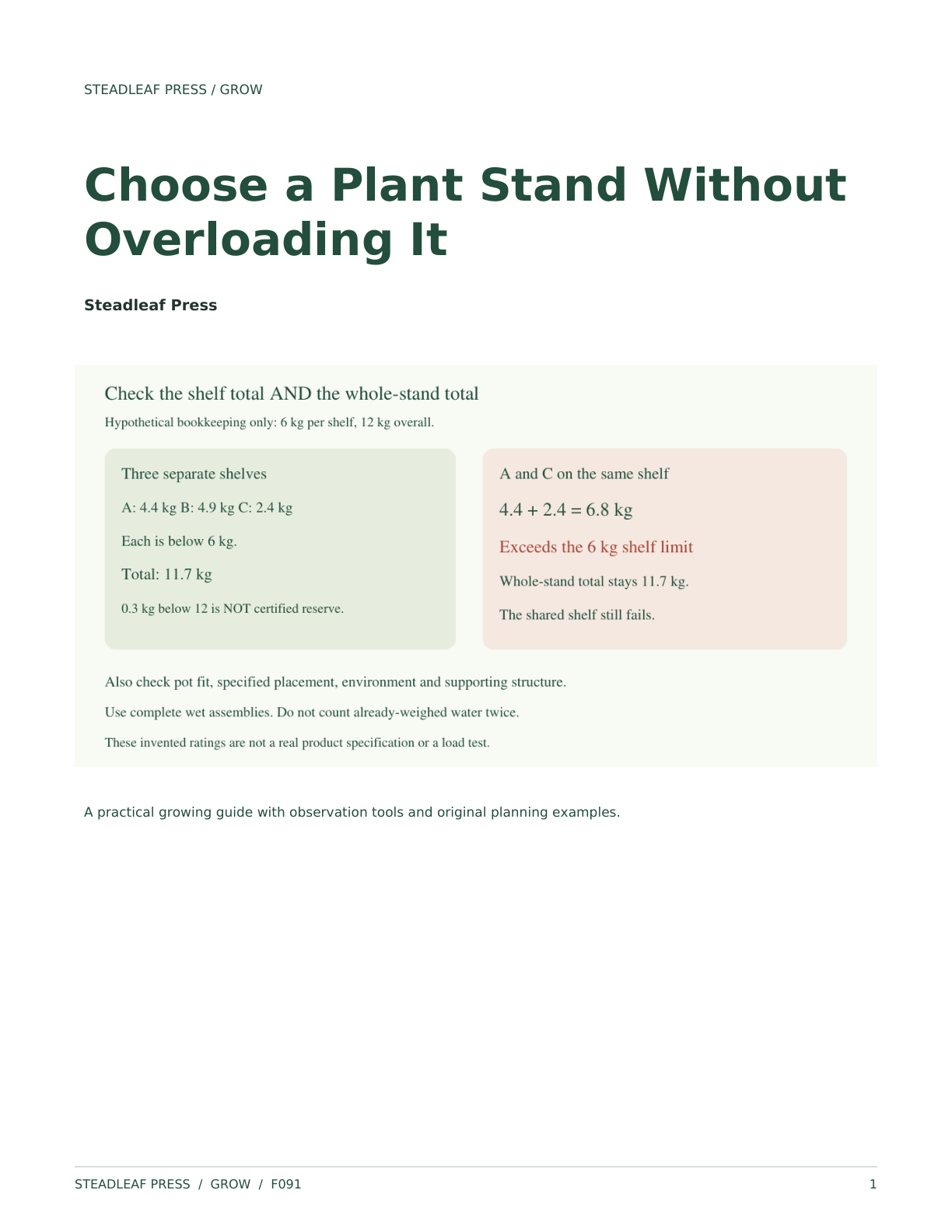
Choose a plant stand by its instructions, the complete wet weight of the pots and the conditions where it will be used. The finished checklist separates three questions: what the stand can support, whether the pots fit, and whether the location is suitable.
View free guide →
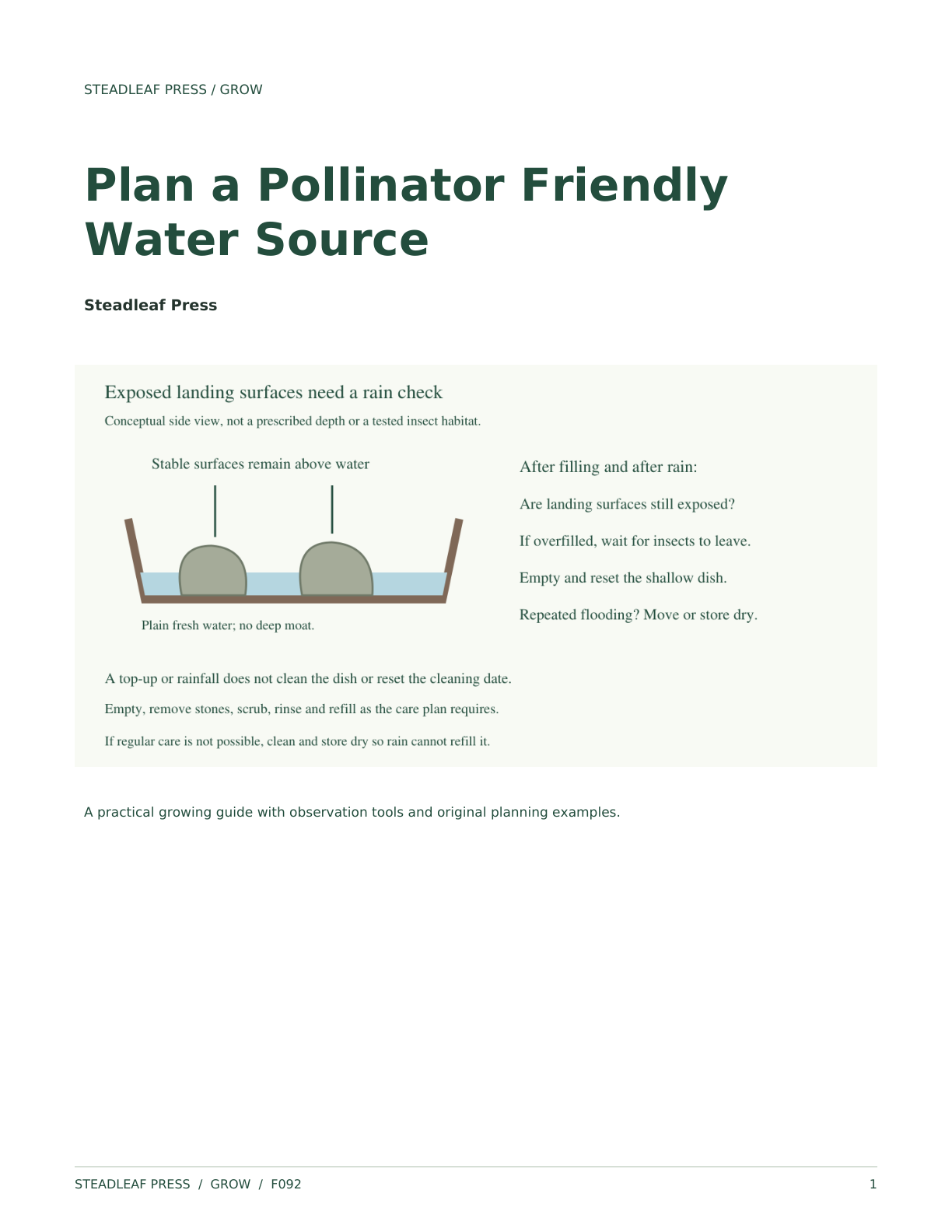
Plan one small, shallow water dish with accessible landing surfaces and a cleaning routine you can maintain. A well-kept dish may offer visiting insects a drinking place; it is an optional addition to a suitable planted space, not a substitute for flowers and habitat.
View free guide →
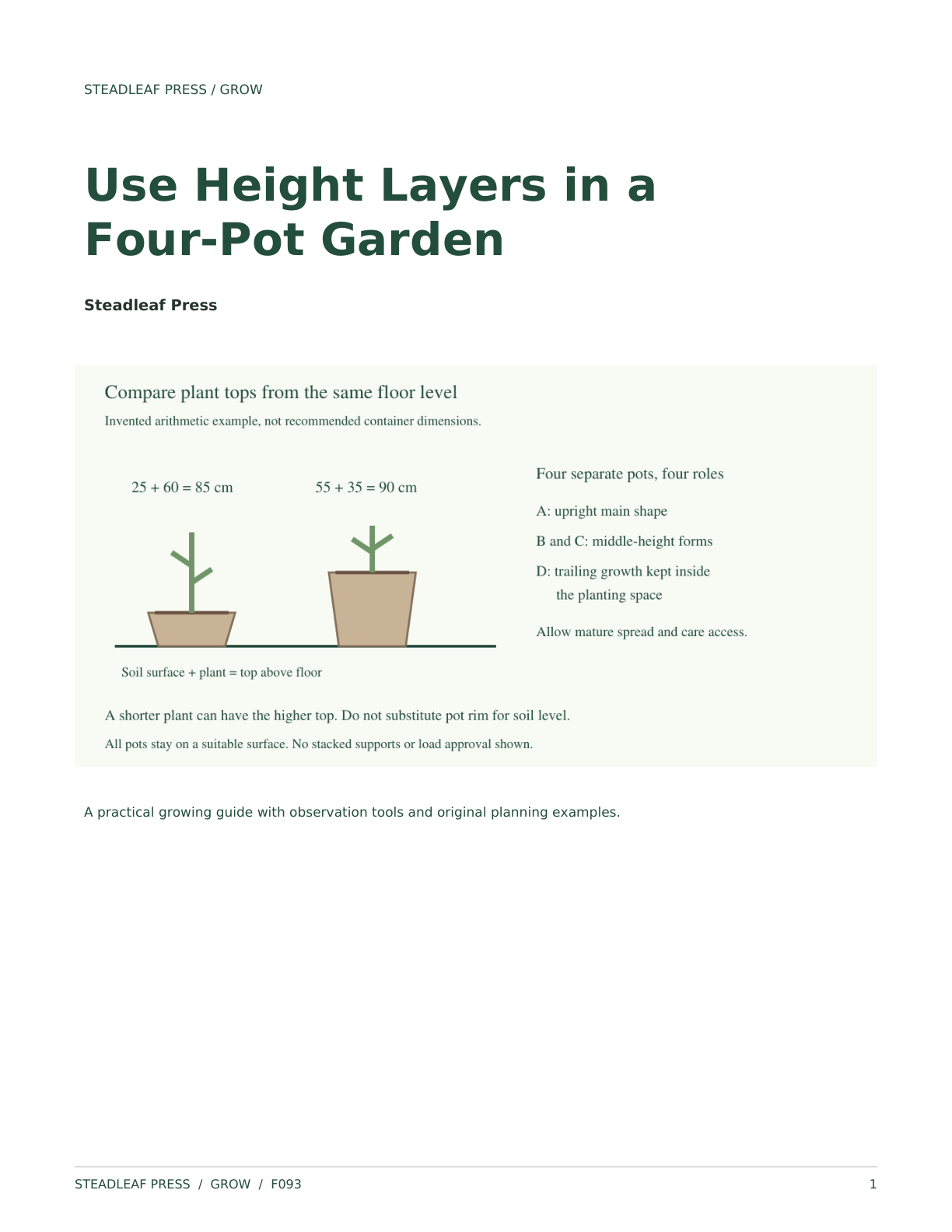
Four pots can make a small garden feel settled and generous without filling every available inch. A useful starting arrangement is one taller plant, two middle-height plants and one that softens a pot edge. Give each plant room to reach its expected size, then adjust the group around light, access and the way you use the space.
View free guide →
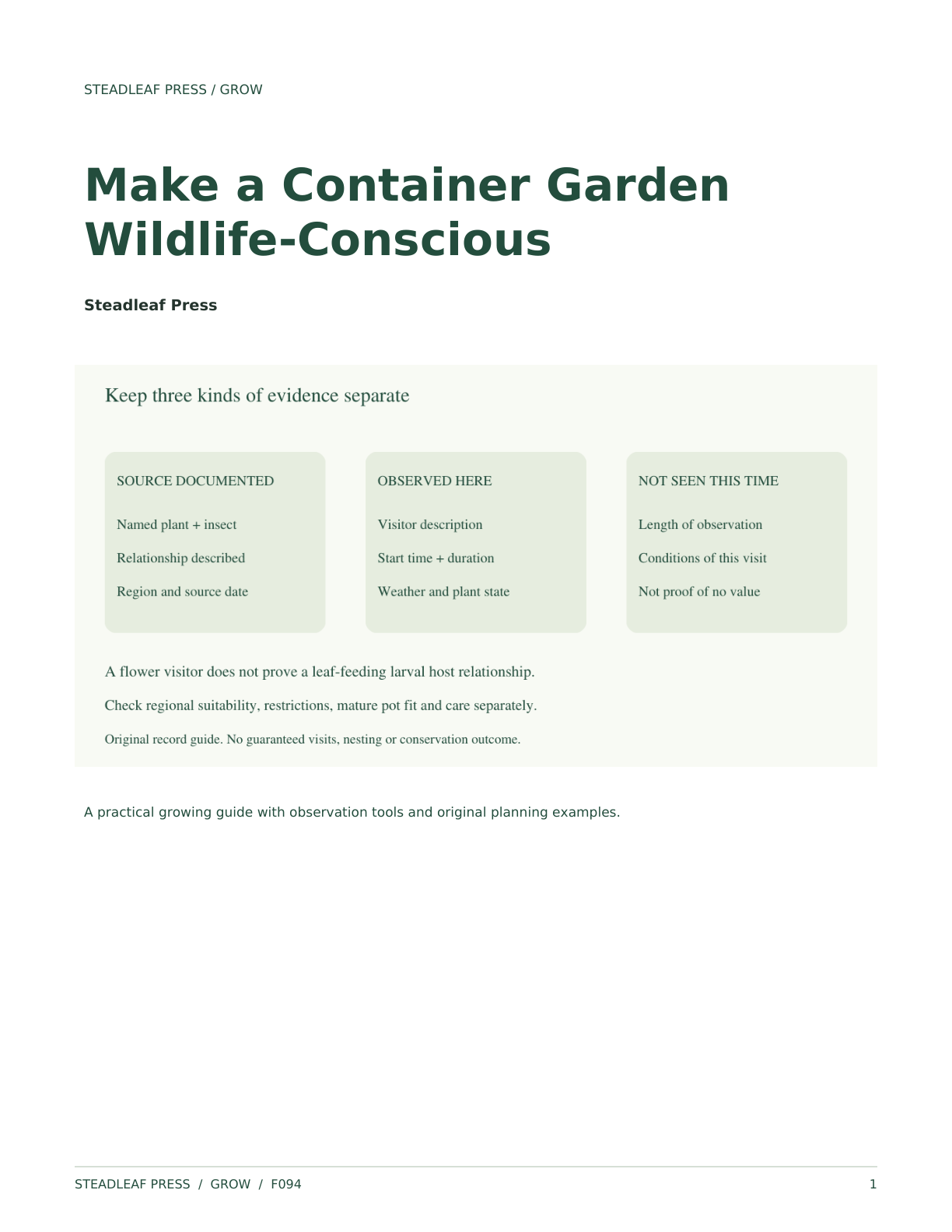
A container garden can offer flowers, foliage and sheltered places that wildlife may use. Start with plants that suit your region and your growing conditions, then make a small, manageable plan for their care. A healthy pot of appropriate plants is a sounder starting point than a crowded collection chosen only for a wildlife label.
View free guide →
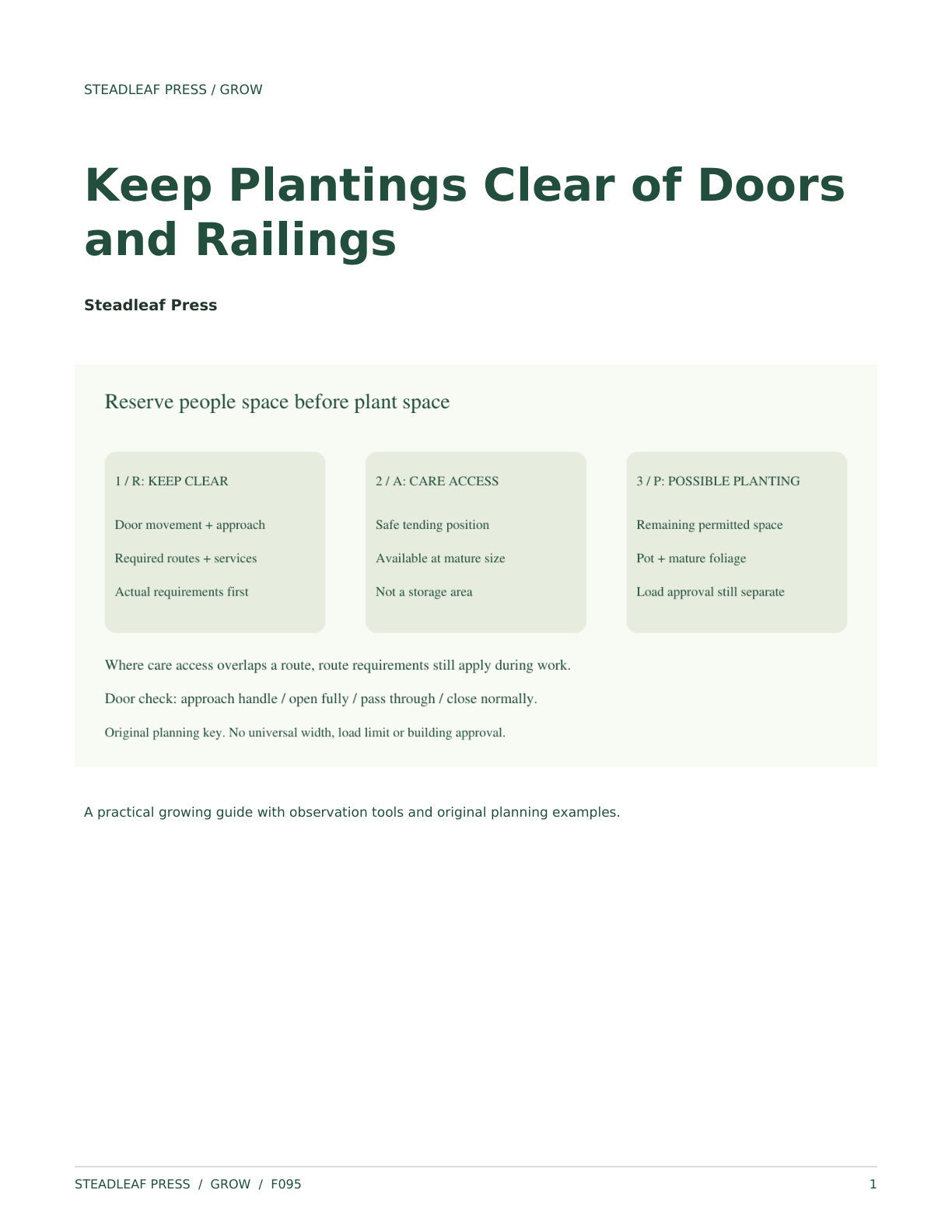
Plan the space people need before placing the plants. Doors and routes must remain clear, and railings must remain protective boundaries. This applies to the mature plant, its pot and saucer, and the equipment used to care for it.
View free guide →
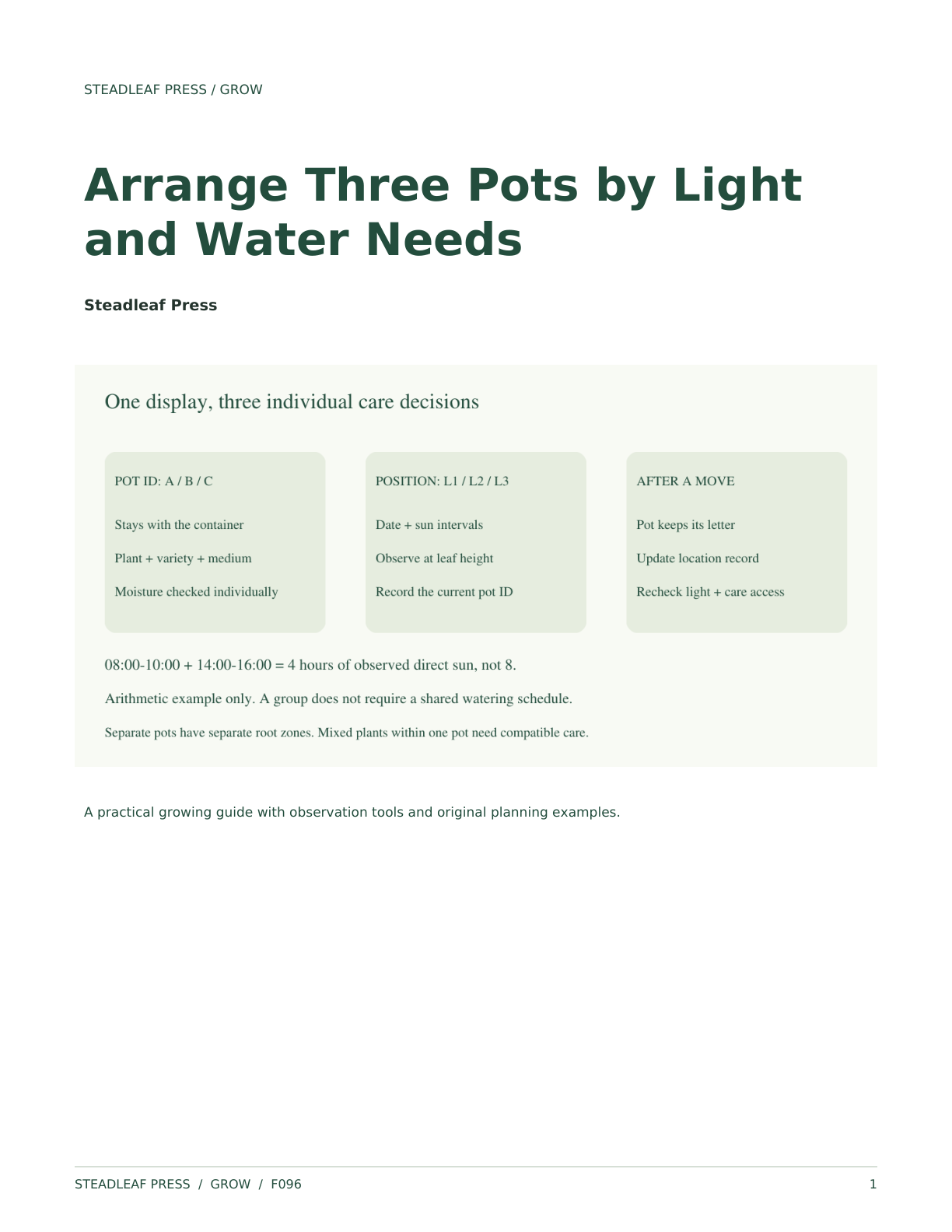
Three pots can look like one small garden while receiving different care. Start by finding a suitable place for each plant, then bring the arrangement together visually. A matching row is less useful if one plant sits in the wrong light or receives water simply because its neighbour needs a drink.
View free guide →
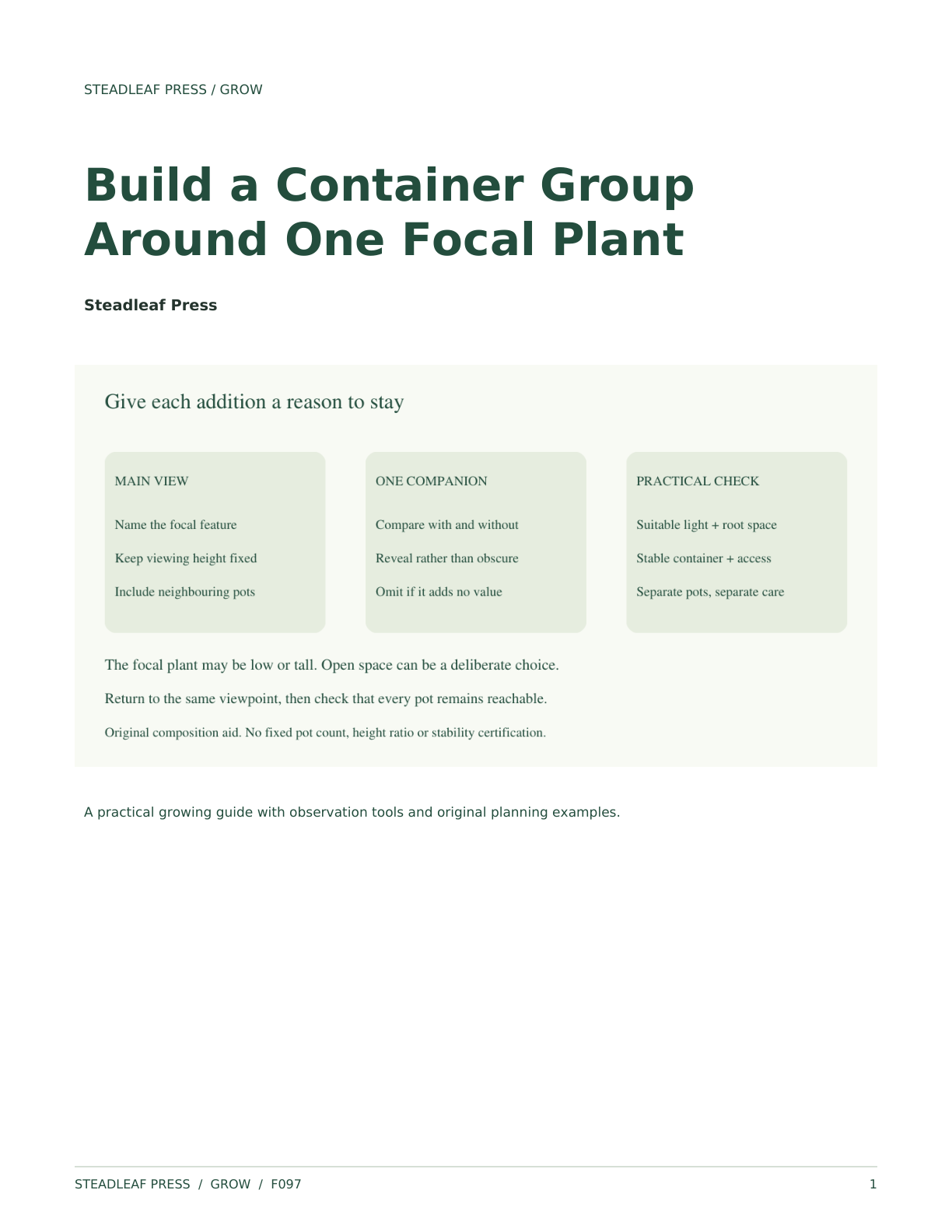
Begin with a plant you want to notice. It might have broad leaves, an attractive branching shape, a long flowering season or simply personal meaning. Give it a suitable place to grow, then arrange a few companions so that you can enjoy it clearly.
View free guide →
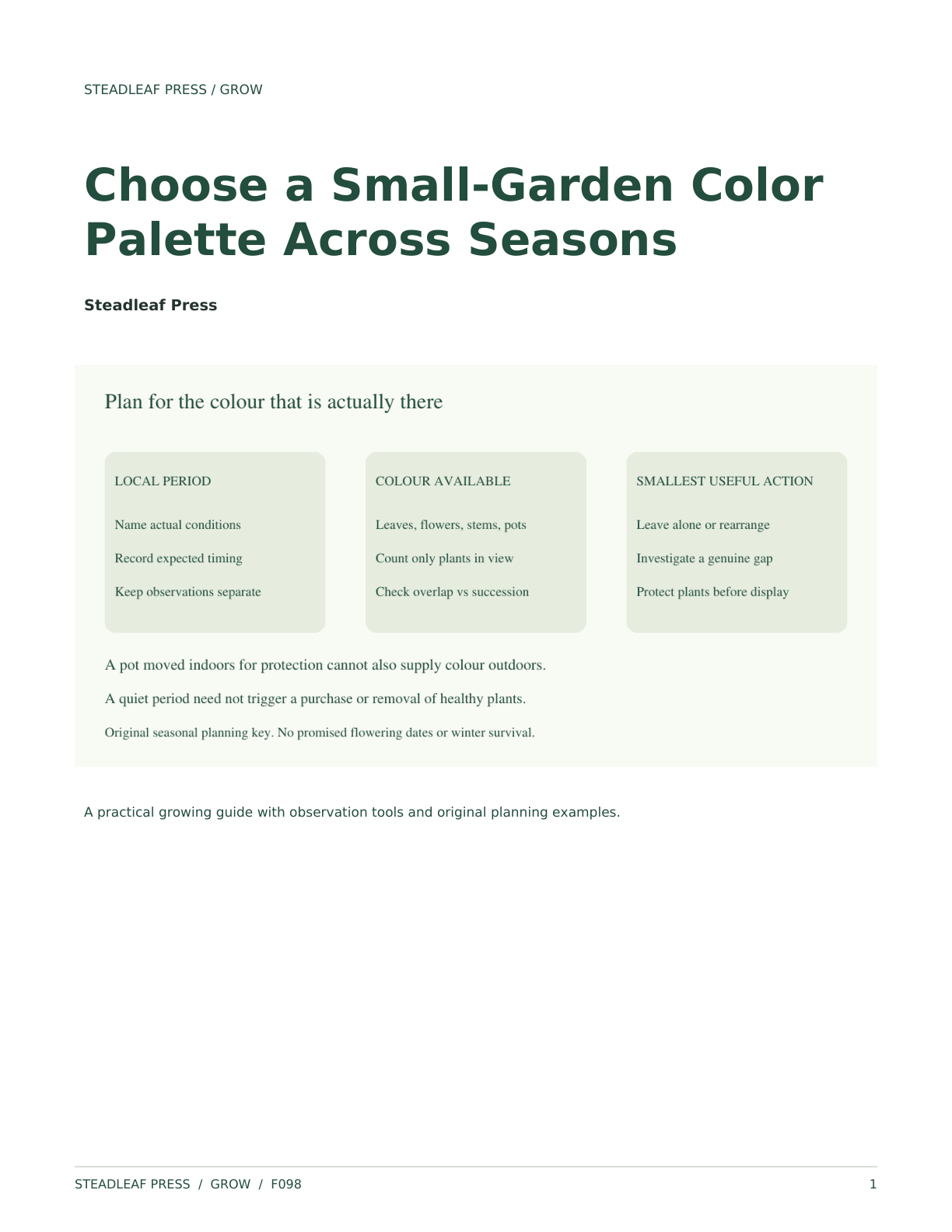
A small garden changes colour even when you buy nothing new. Leaves emerge, flowers open and fade, stems become visible, and the pots themselves take a larger part in the view. Planning across seasons helps you enjoy those changes without treating every quiet period as a shopping problem.
View free guide →
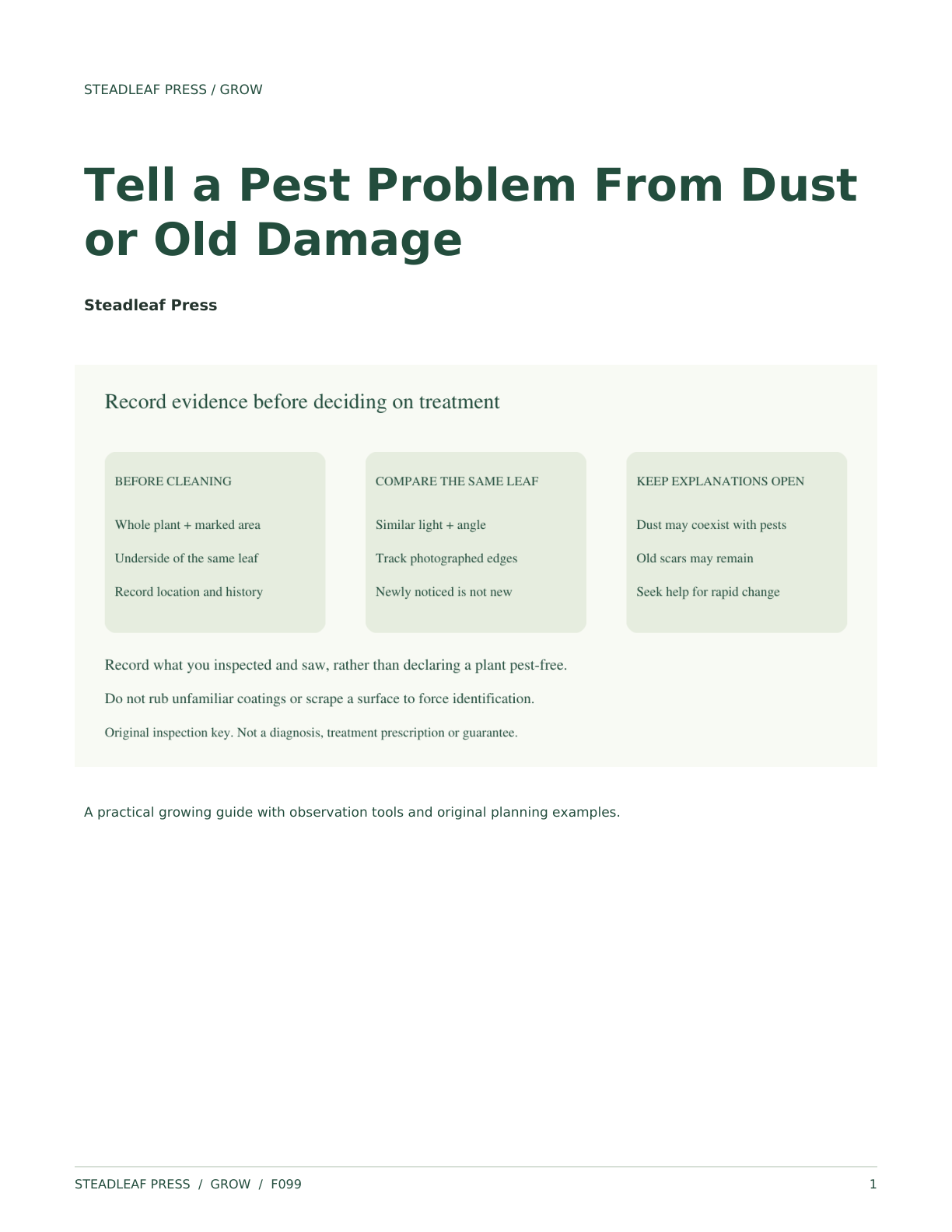
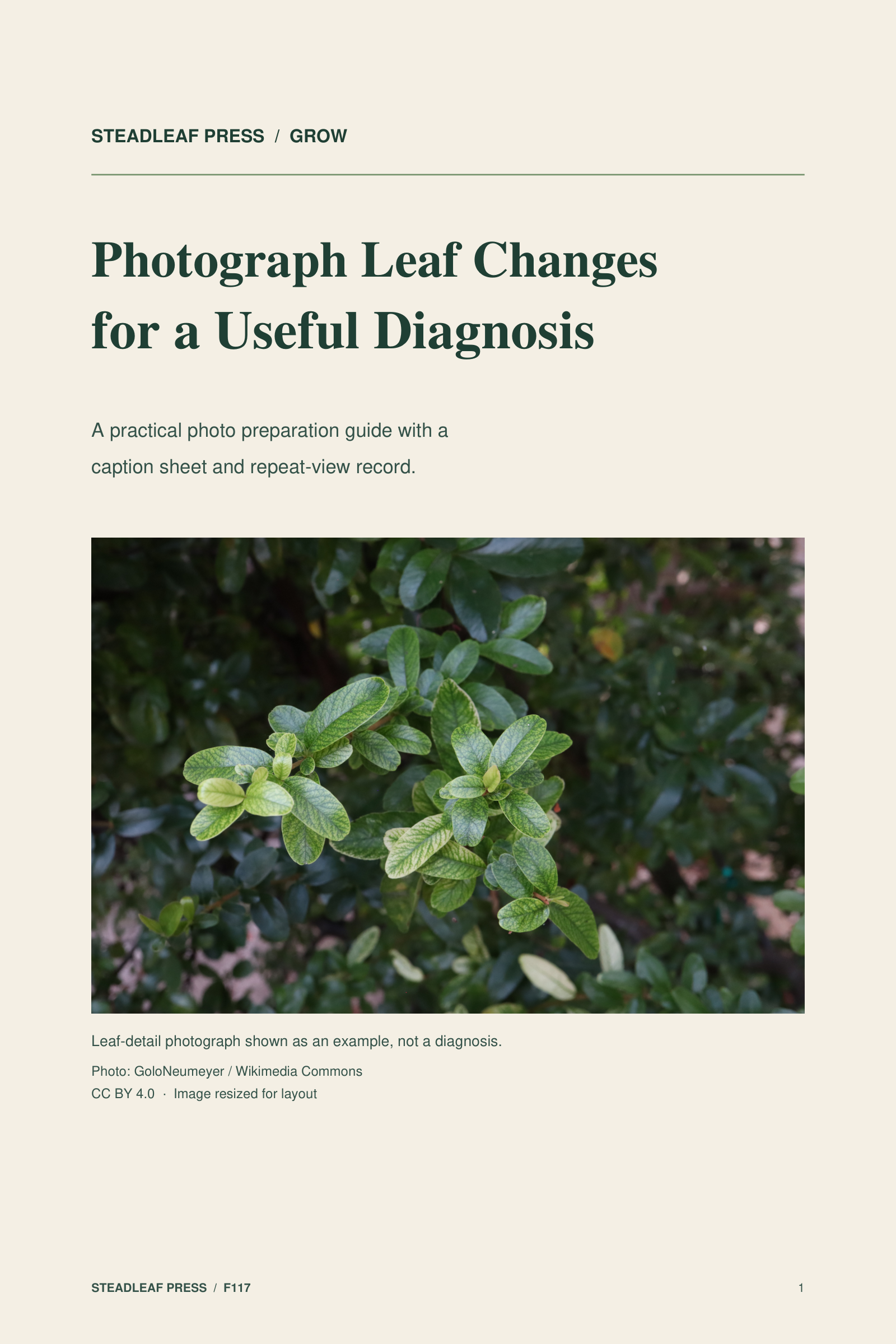
A pale speck, brown patch or fuzzy area deserves a closer look before treatment. Ask three questions: is it material sitting on the leaf, a normal part of the plant, or damage within the tissue? Then look for evidence that something is active now.
View free guide →
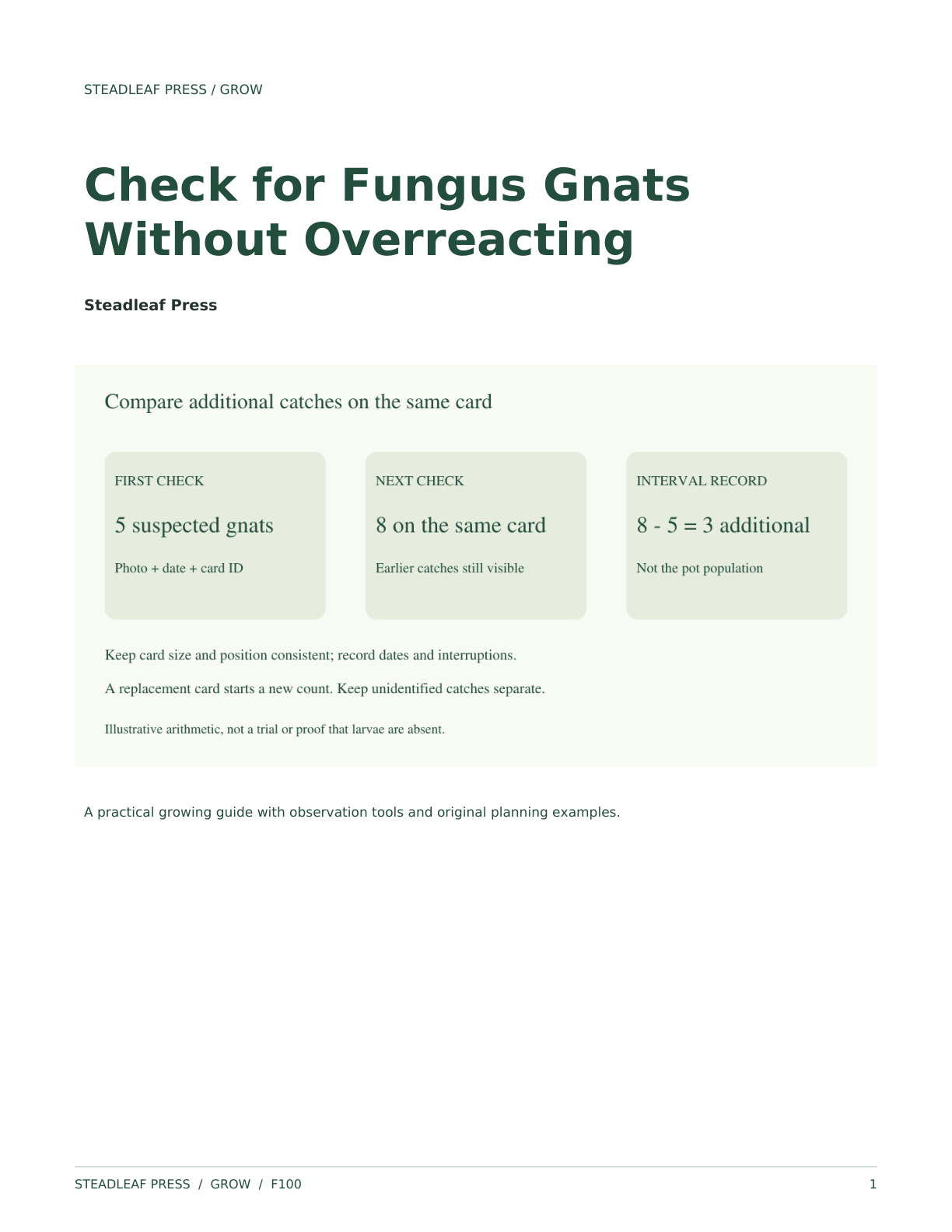
A small fly near a houseplant is a reason to look more closely, not a reason to empty every pot. Start by finding where the flies appear, checking the condition of the plants and looking for evidence that points to fungus gnats. A few clear observations will help you choose a proportionate next step.
View free guide →
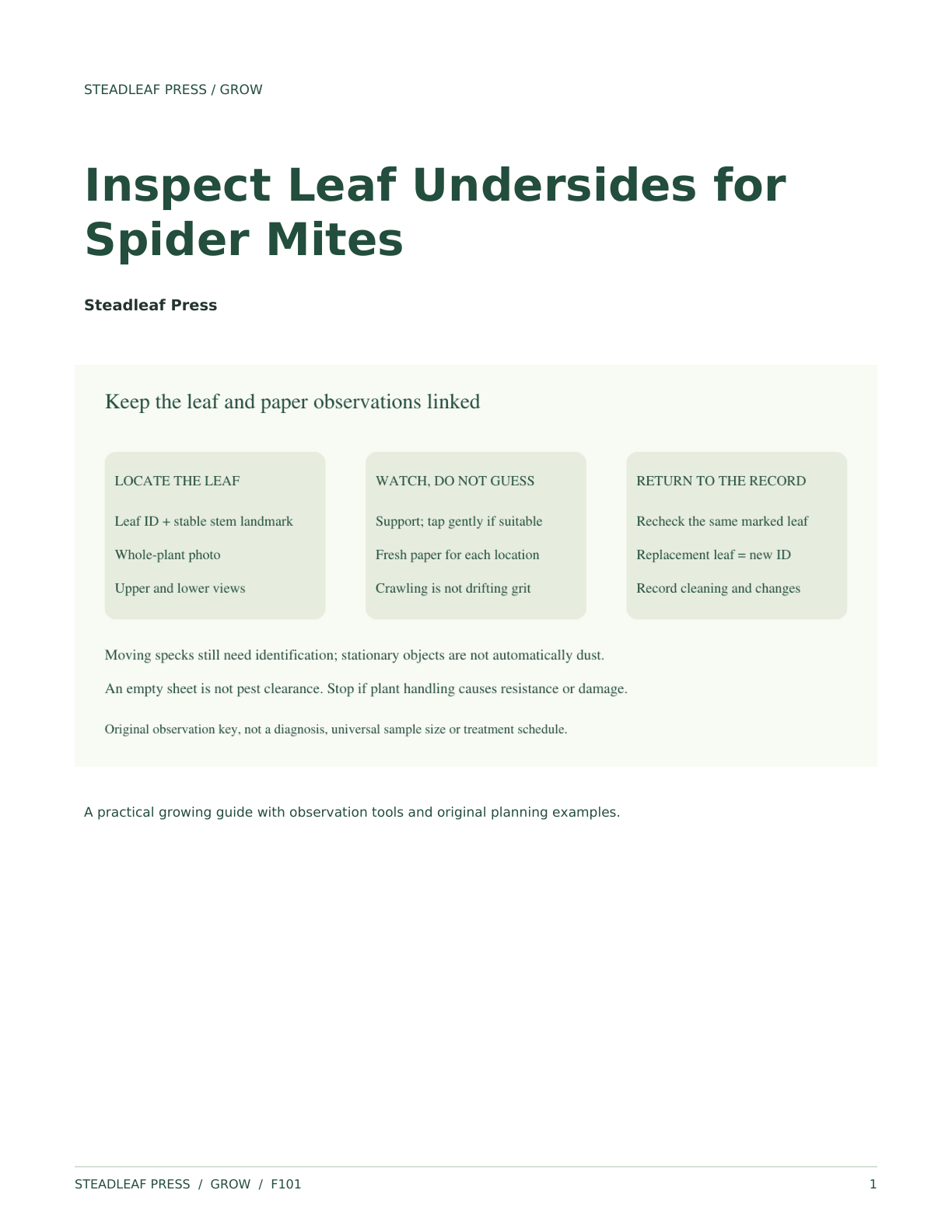
Fine speckling or a thread of webbing deserves a closer look, but neither is enough to identify spider mites on its own. Turn over several leaves, use magnification and record whether you can see moving organisms. A calm inspection can separate an active pest concern from dust, old damage or an ordinary spider's web.
View free guide →
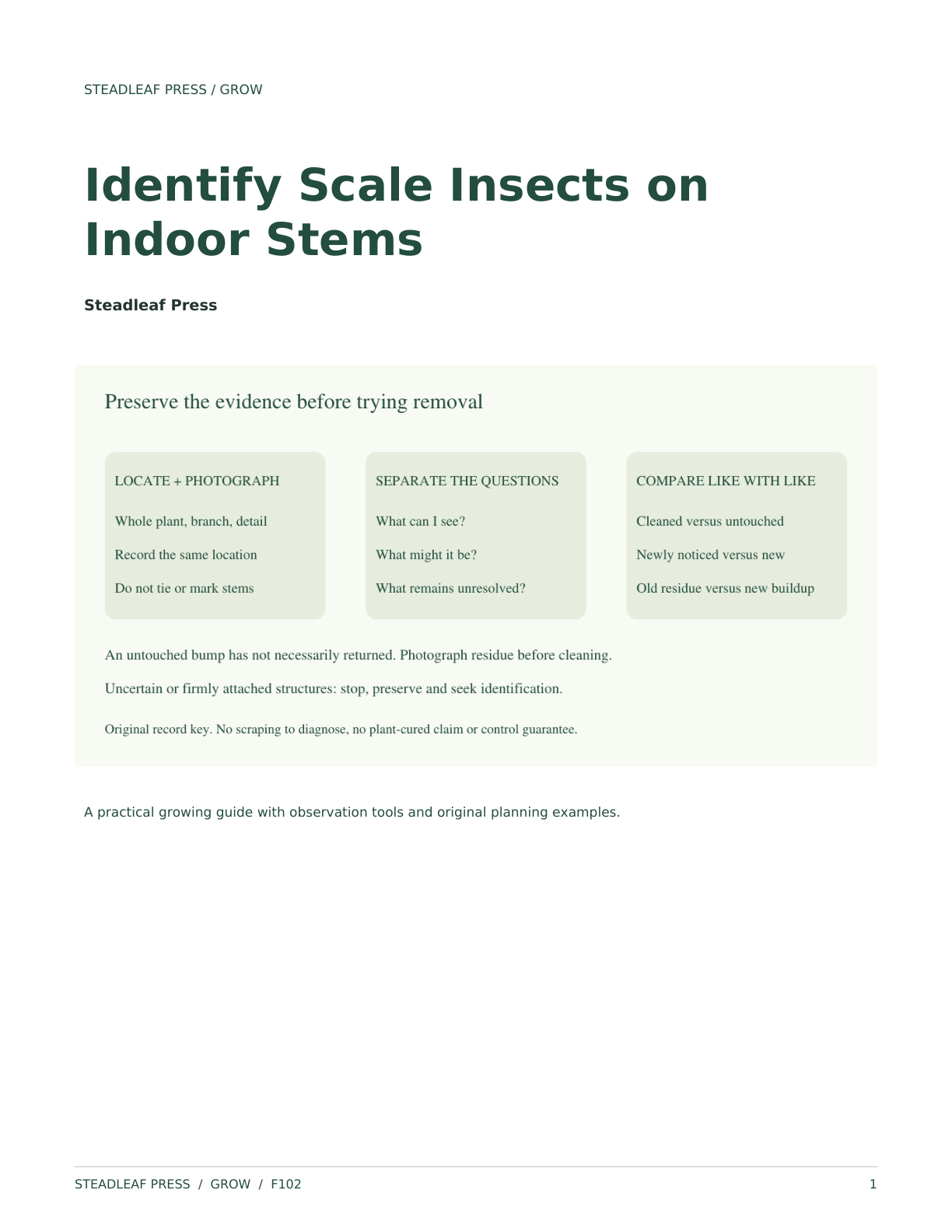
A row of brown bumps on a houseplant stem can be easy to overlook. It can also be easy to misread. Before rubbing, scraping or spraying anything, record where the bumps sit and look closely enough to decide whether you have a likely insect problem or an unanswered identification question.
View free guide →
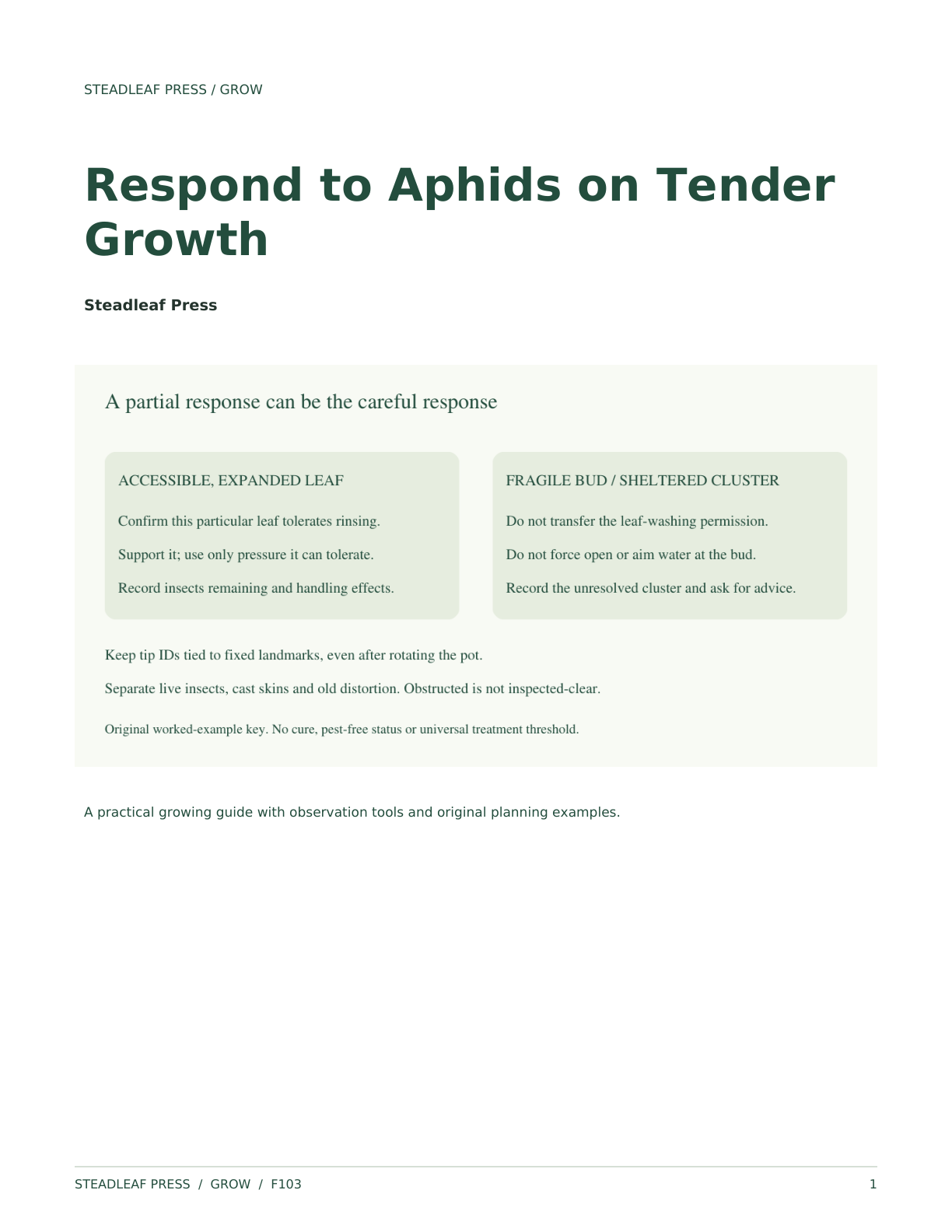
The first curled shoot on a plant can make you want to remove every imperfect leaf. Pause long enough to inspect the growth itself. A useful aphid response begins with finding the insects, seeing how much of the plant is involved and choosing a method the tender tissue can tolerate.
View free guide →
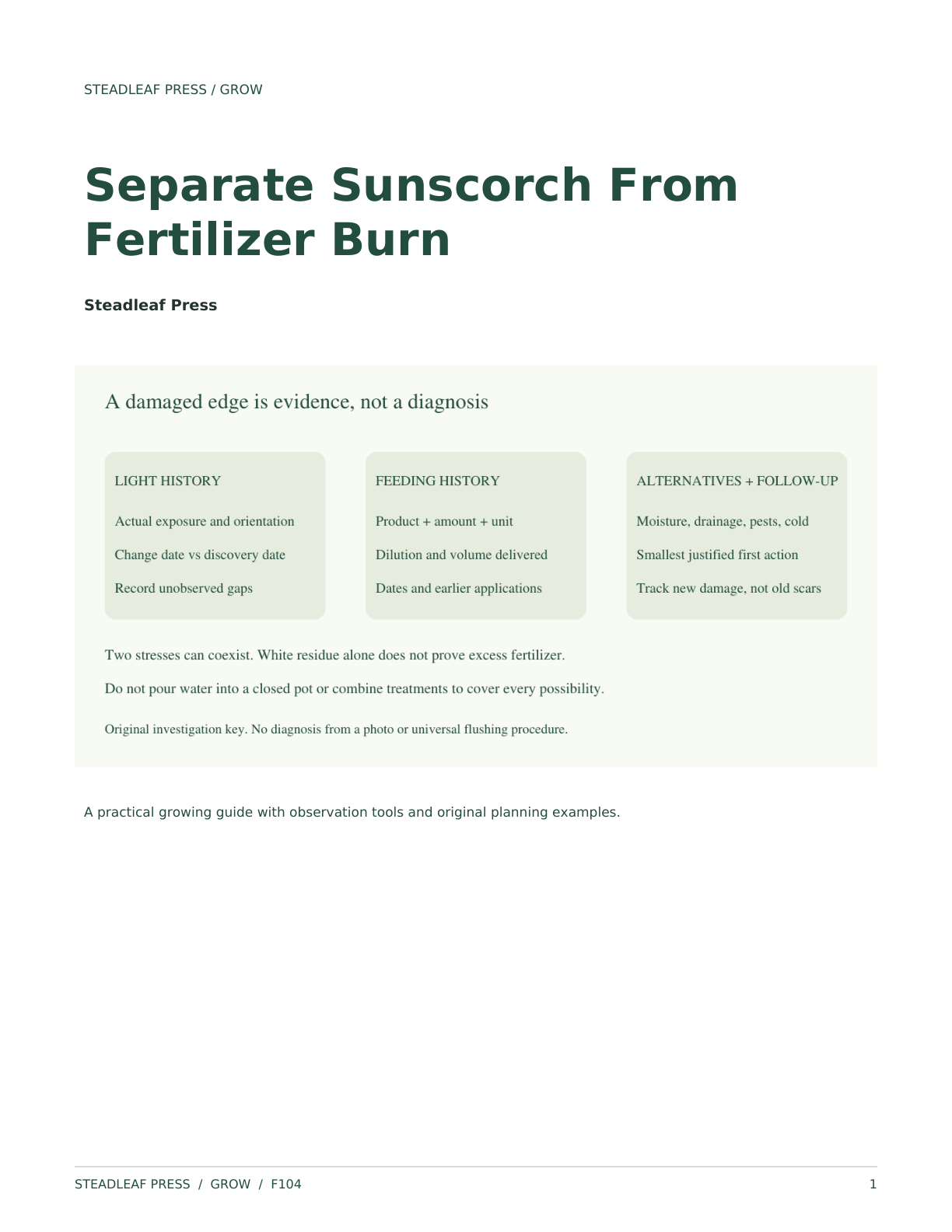
A brown leaf edge tells you that tissue has been damaged. It does not tell you why. A plant moved into stronger sunshine and a plant exposed to excess fertilizer salts can both develop unattractive leaves. Dry roots, persistently wet roots, cold and pests can complicate the picture.
View free guide →
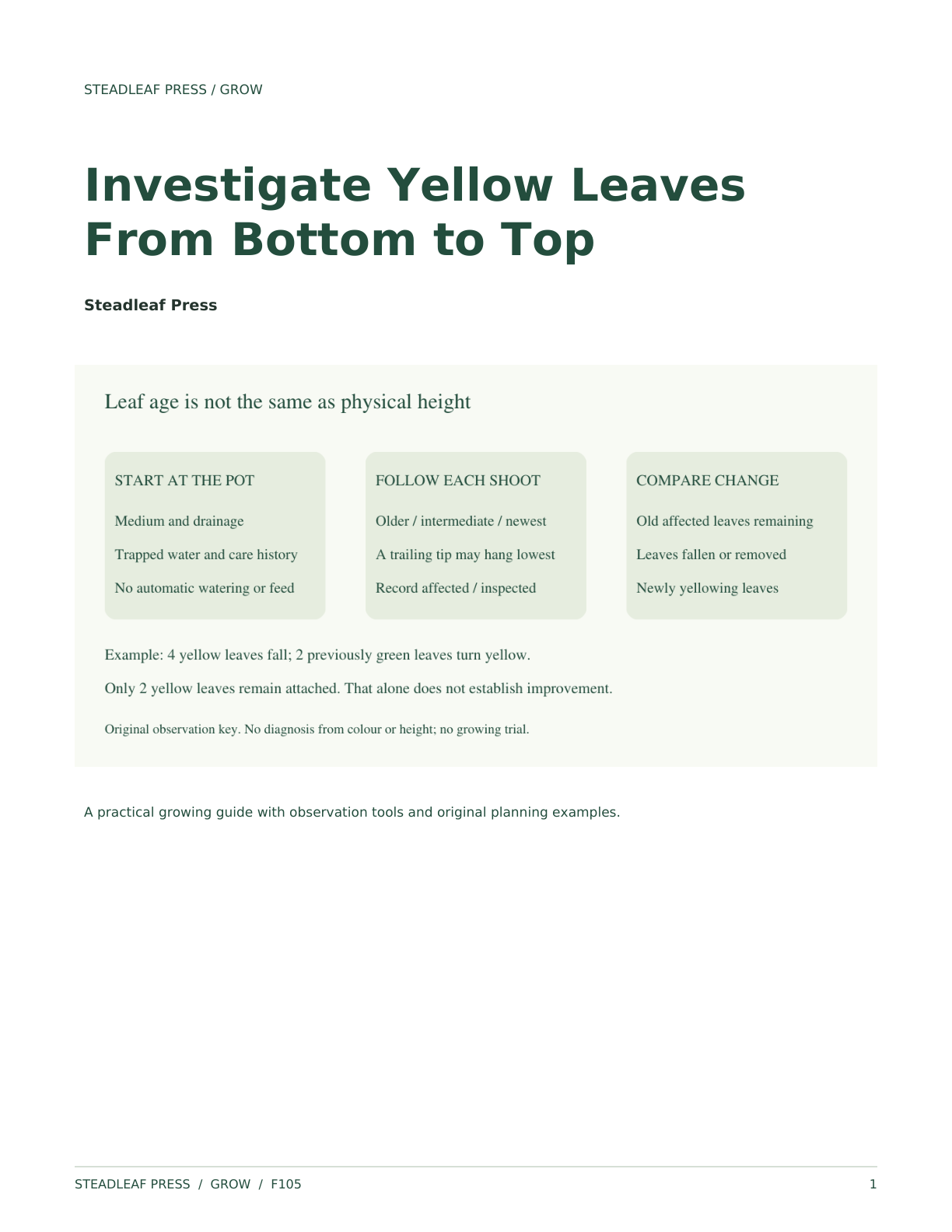
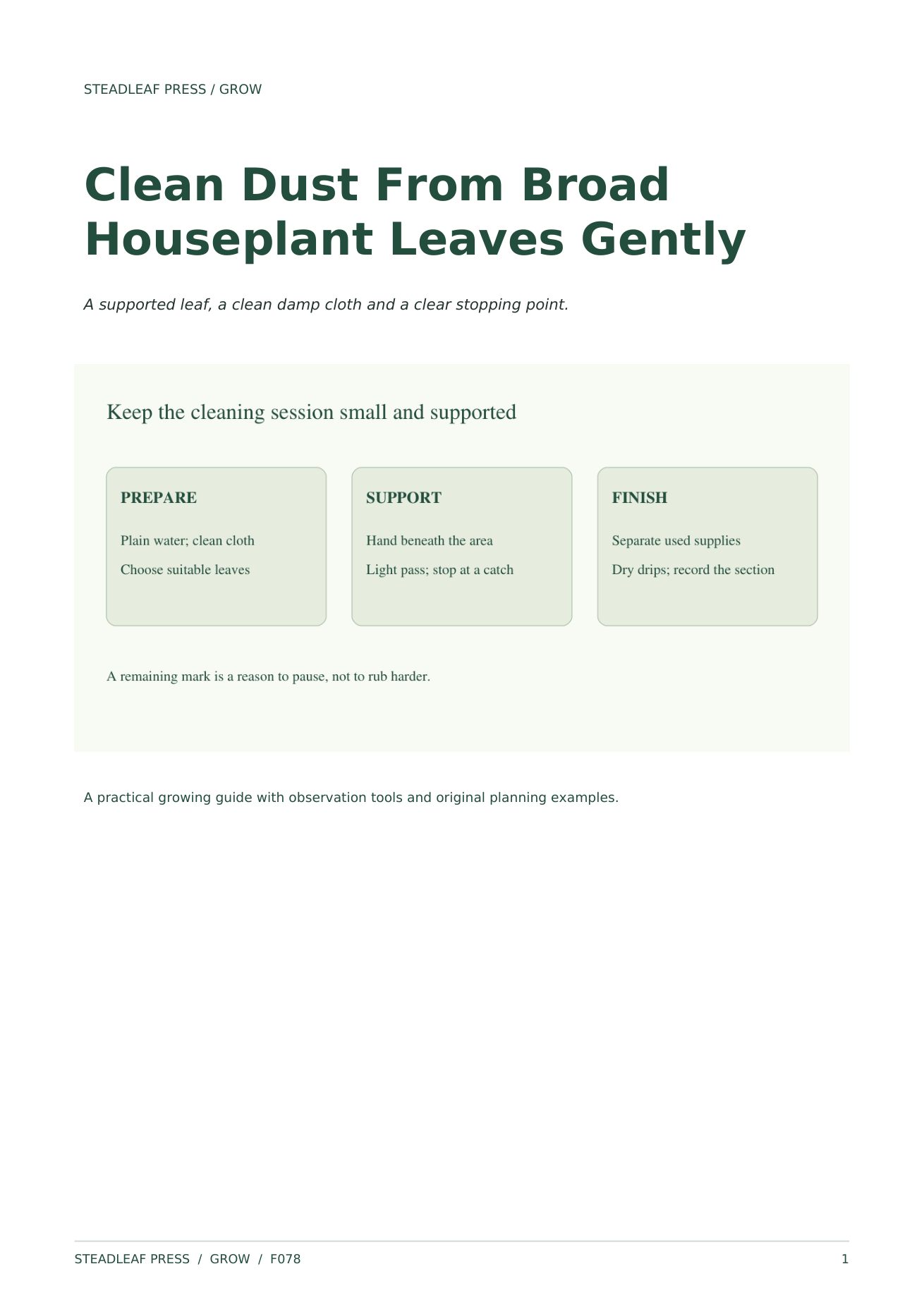
A yellow leaf is a place to begin looking. It is not an instruction to water, feed or repot immediately. The useful questions are which leaves changed first, how quickly the change is spreading and what else is happening around the plant.
View free guide →
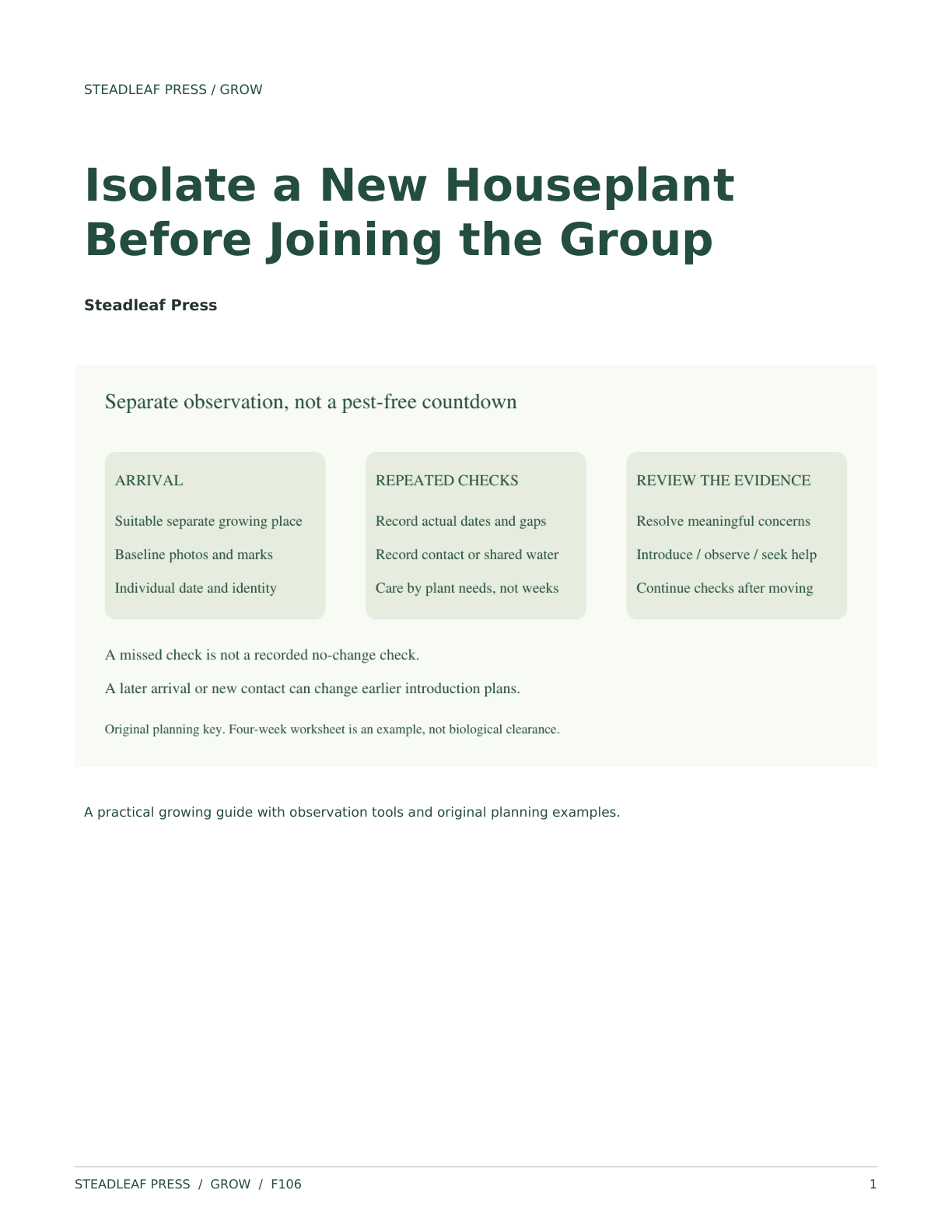
A new houseplant needs a suitable place to grow while you get to know it. Keeping it apart from established plants gives you time to notice pests or other problems that were not obvious at purchase.
View free guide →
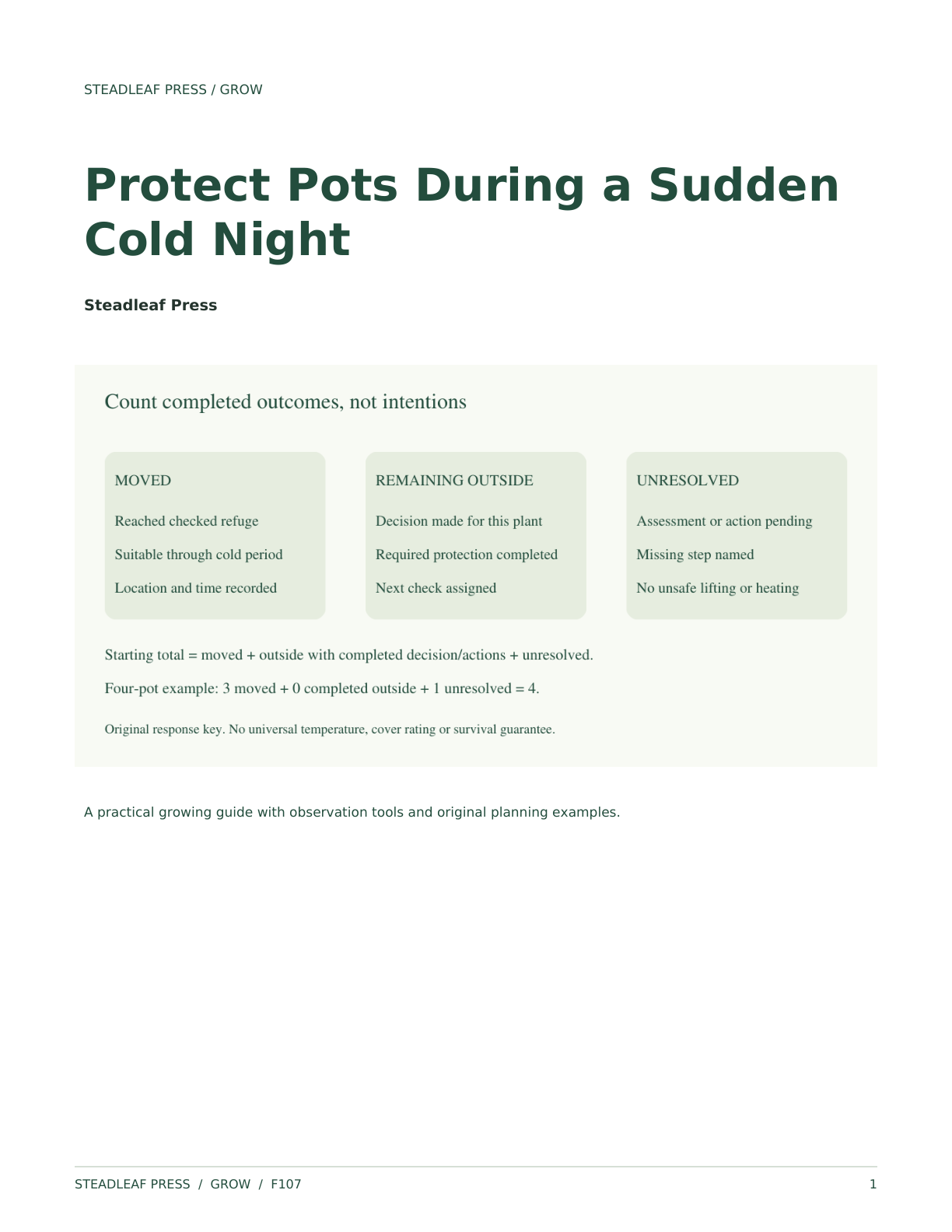
The forecast has changed, darkness is approaching and several pots are still outside. Start with the plants you can move safely. A short list of destinations and a completed count will help more than hurriedly covering everything you own.
View free guide →
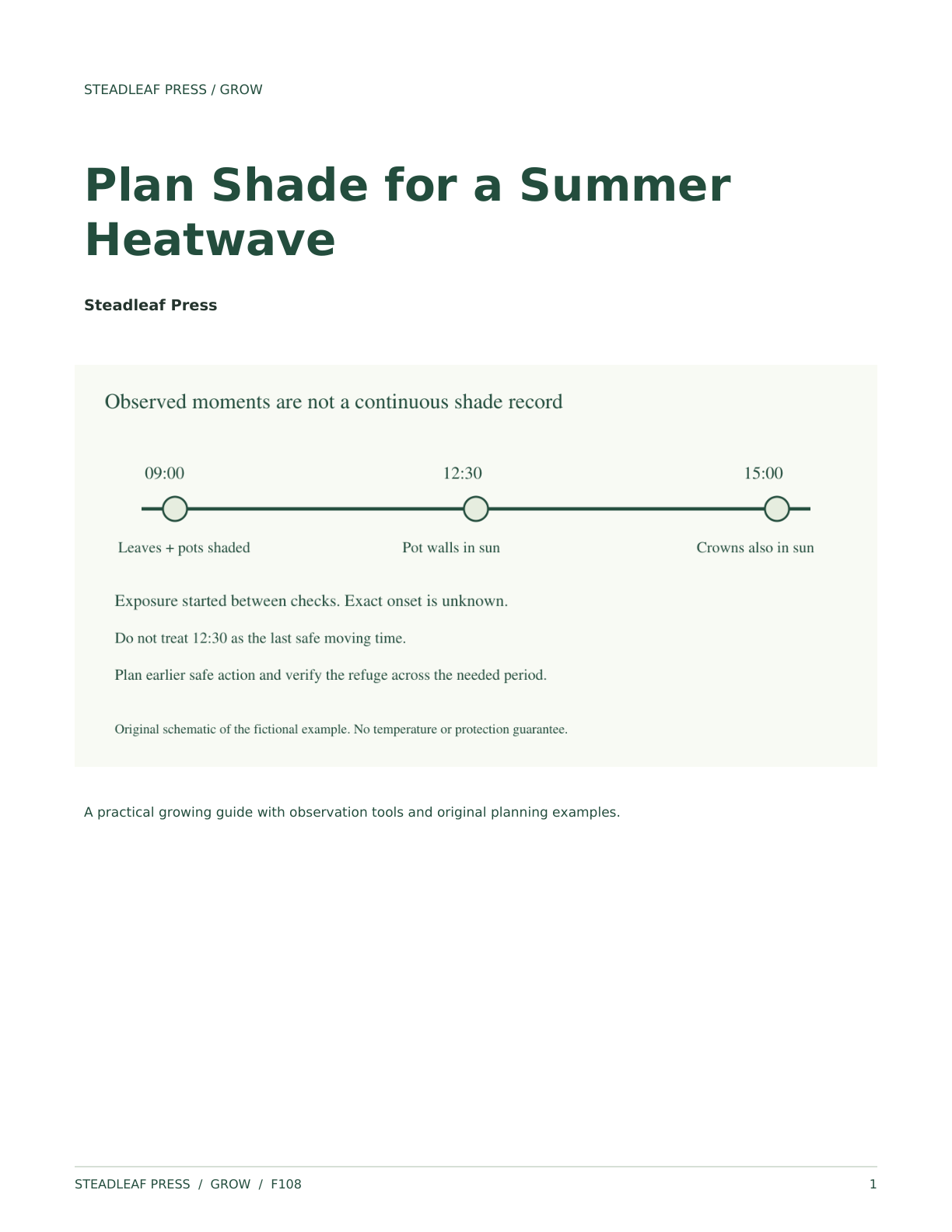
Shade moves during the day. A comfortable corner at breakfast may expose every leaf and the side of a dark pot by afternoon. Before a heatwave, work out when protection is needed and whether the place you have chosen still provides it then.
View free guide →
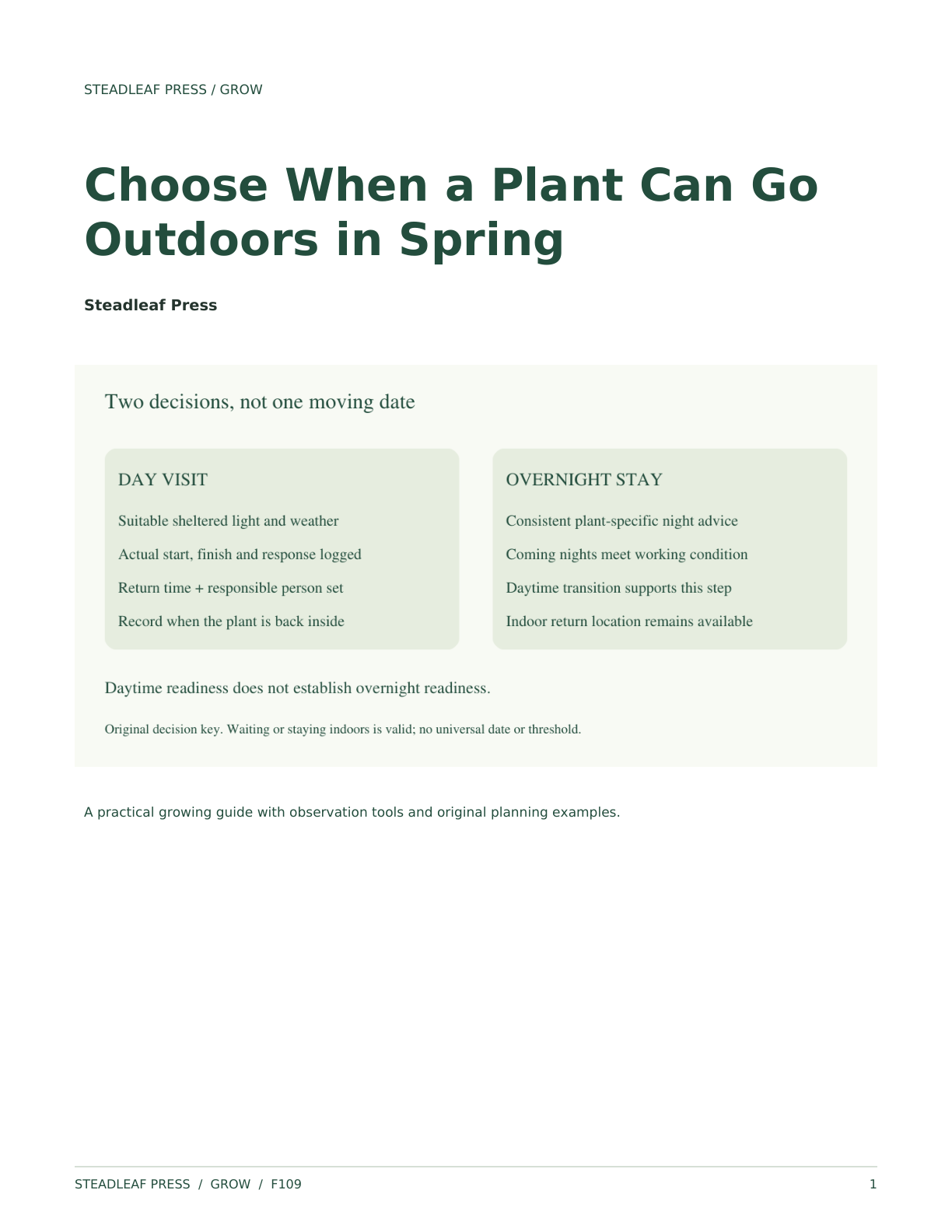
A warm spring afternoon is a chance to assess the outdoor growing space, not automatic permission to leave a houseplant there overnight. Established tender plants have spent months in relatively steady conditions. Their next location needs suitable nights as well as suitable daytime light.
View free guide →
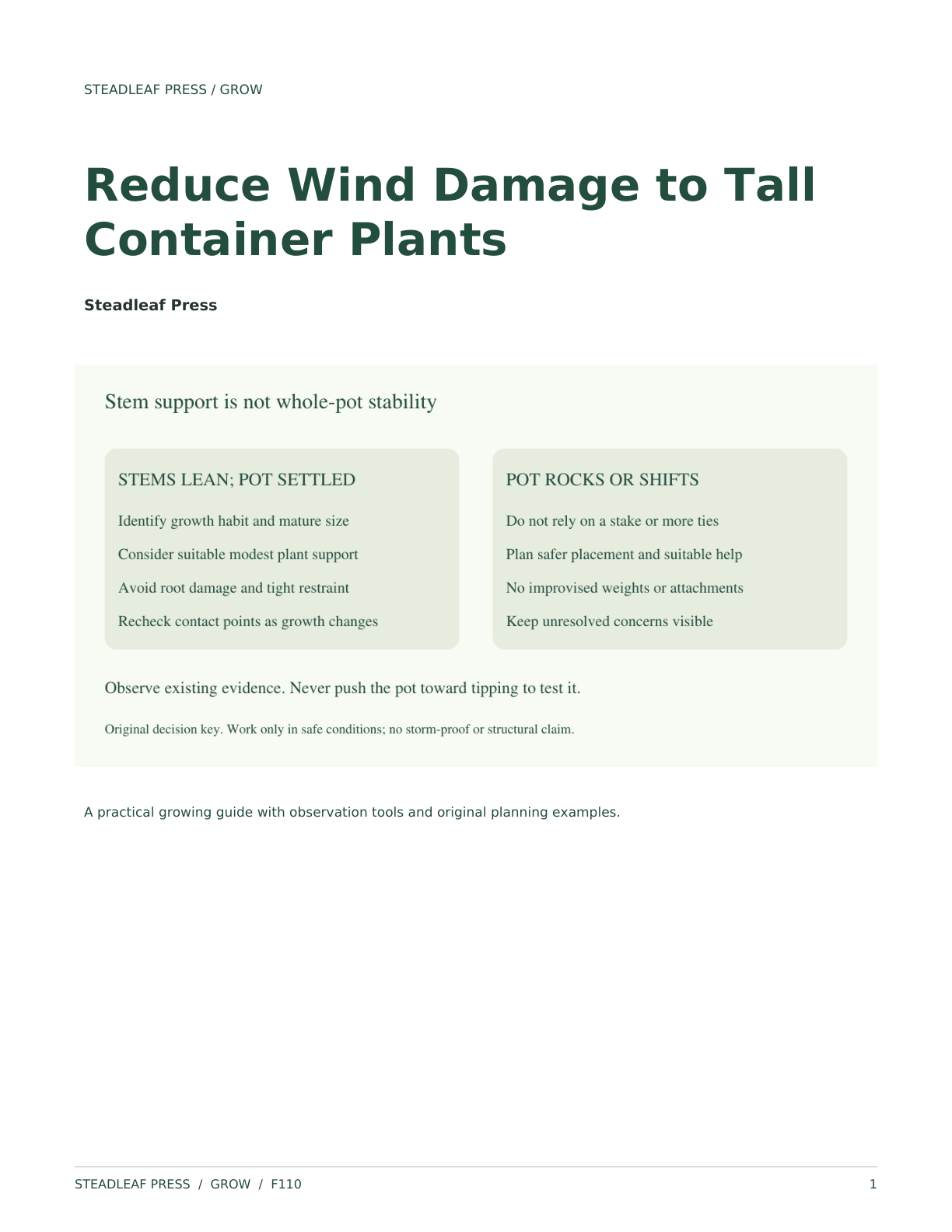
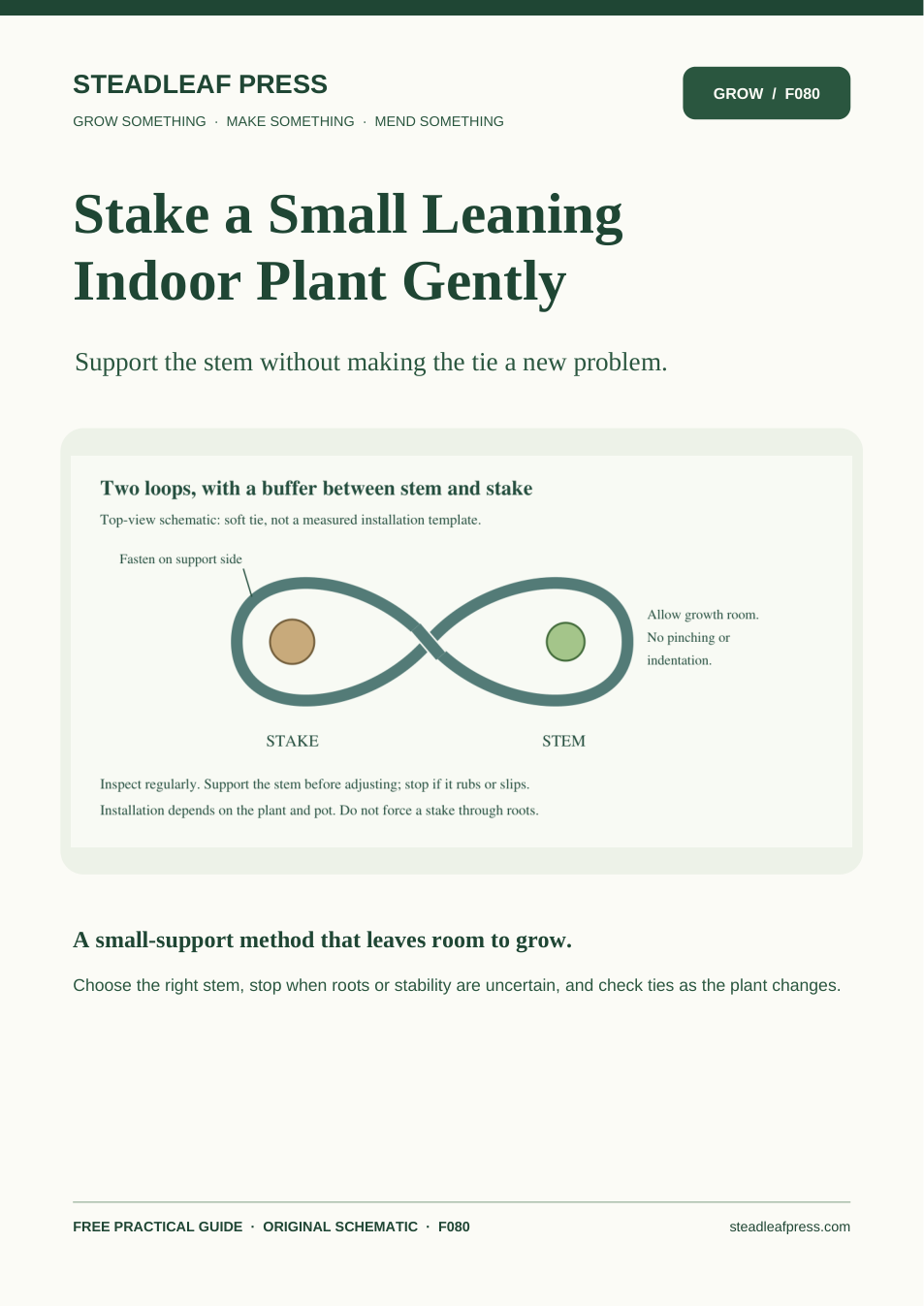
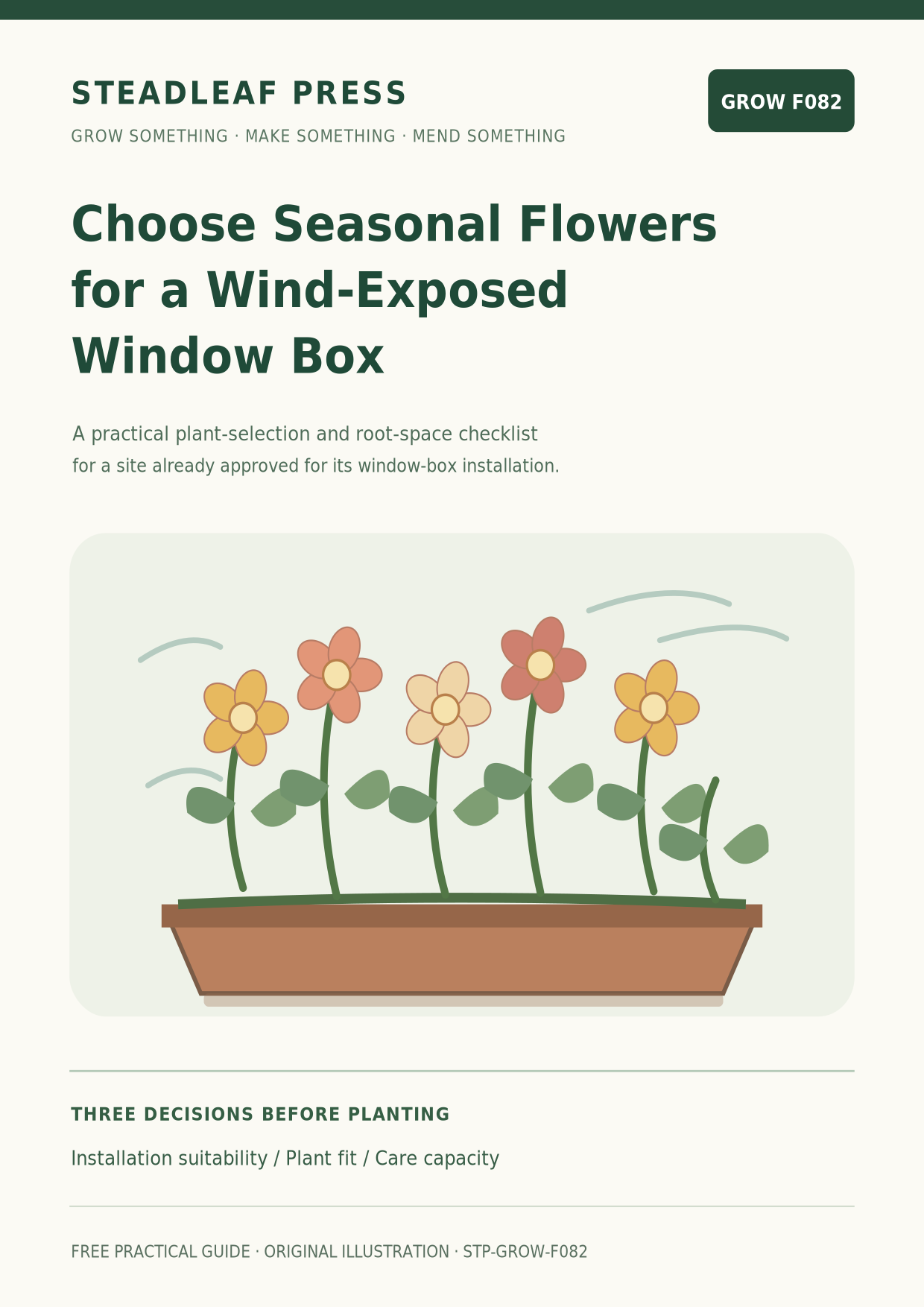
A tall container plant presents two different problems in wind. Its stems may bend or break, and the whole container may become unstable. A stake can help a stem without making the pot safe. Start by separating those questions.
View free guide →
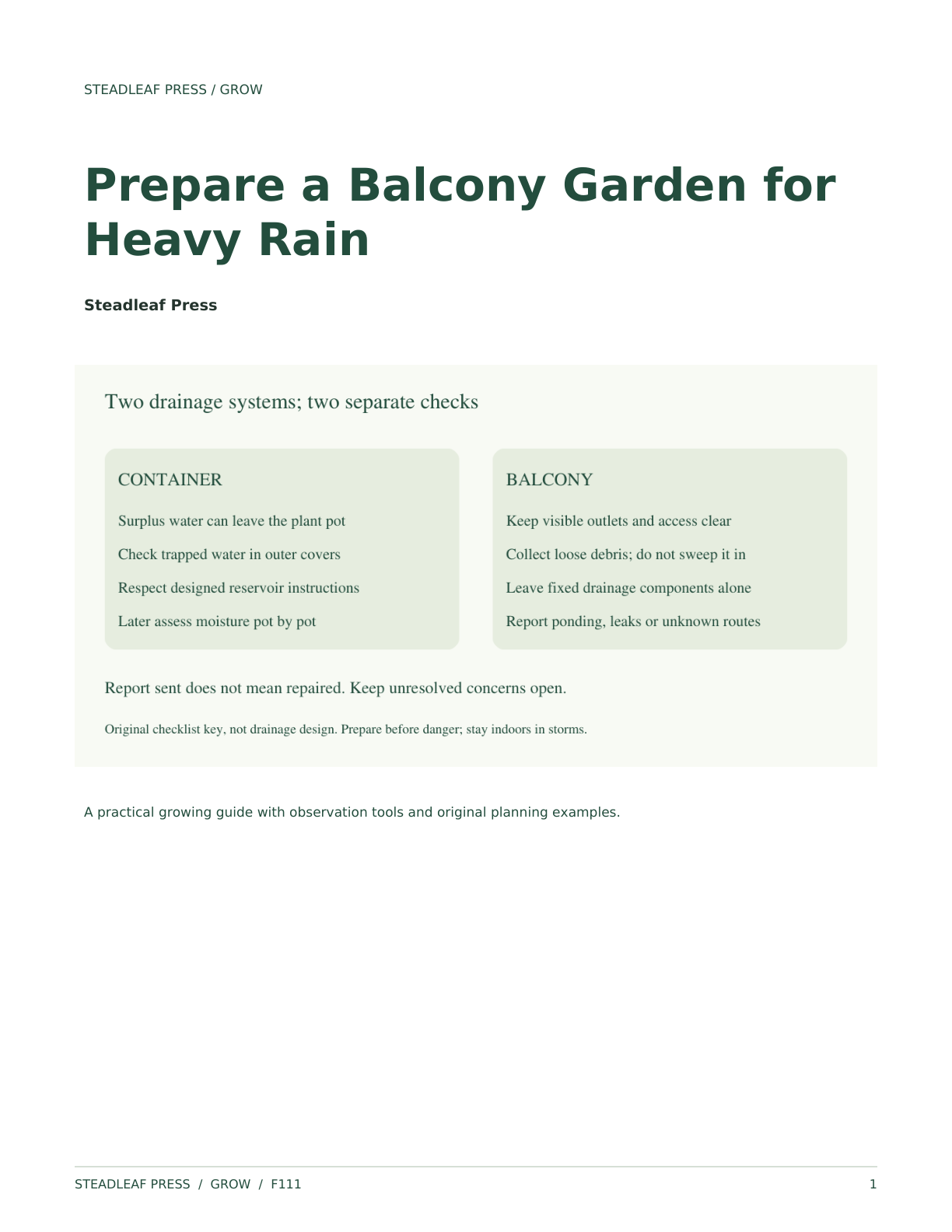
Heavy-rain preparation begins with the balcony, not with watering the plants. Keep drainage routes visible, put away loose gardening items and preserve safe access. Then decide which plants need a manageable change of position.
View free guide →
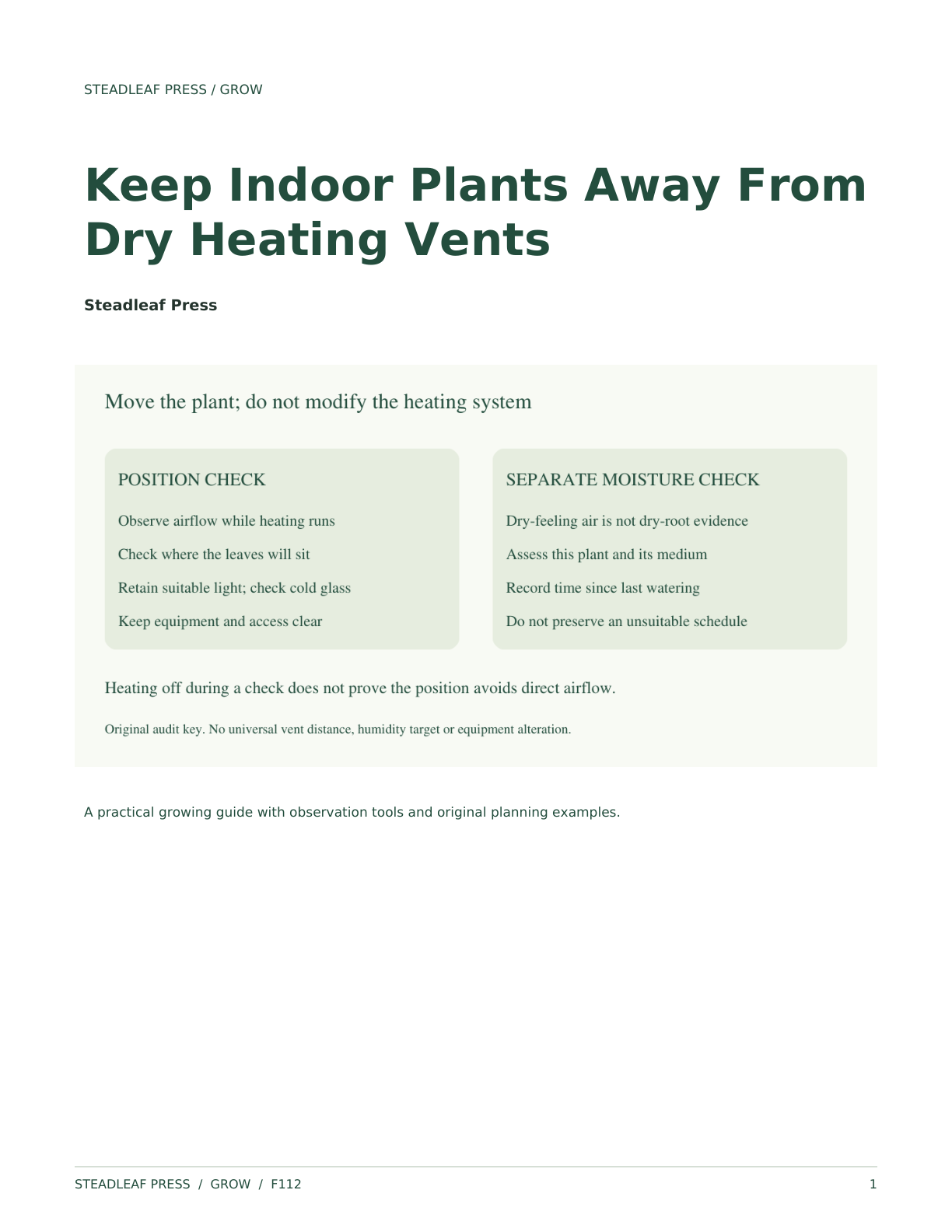
When the heating comes on, a familiar plant position can become a different growing environment. Warm air may blow across leaves, a radiator may heat the space beside a pot, and a window may be cold after dark. Moving the plant can help, but the new place must still provide suitable light.
View free guide →NOW AVAILABLE / FREE
31 original, complete free Grow guides.