GROW / FREE GUIDE
Create a Tiny Indoor Propagation Station
A small-station planning guide for light, hygiene and container setup
Download the complete free guide
Plan a compact propagation station using identified plant-specific methods, clean supplies, and a separate record for each attempt.
Includes complete illustrated instructions and any printable worksheets or templates.
Download free PDFRead the complete free guide online
The instructional text is below. For exact-size patterns, illustrations and printable records, use the complete free PDF above.
STEADLEAF PRESS / GROW Create a Tiny Indoor Propagation Station
A small-station planning guide Light, hygiene and container setup
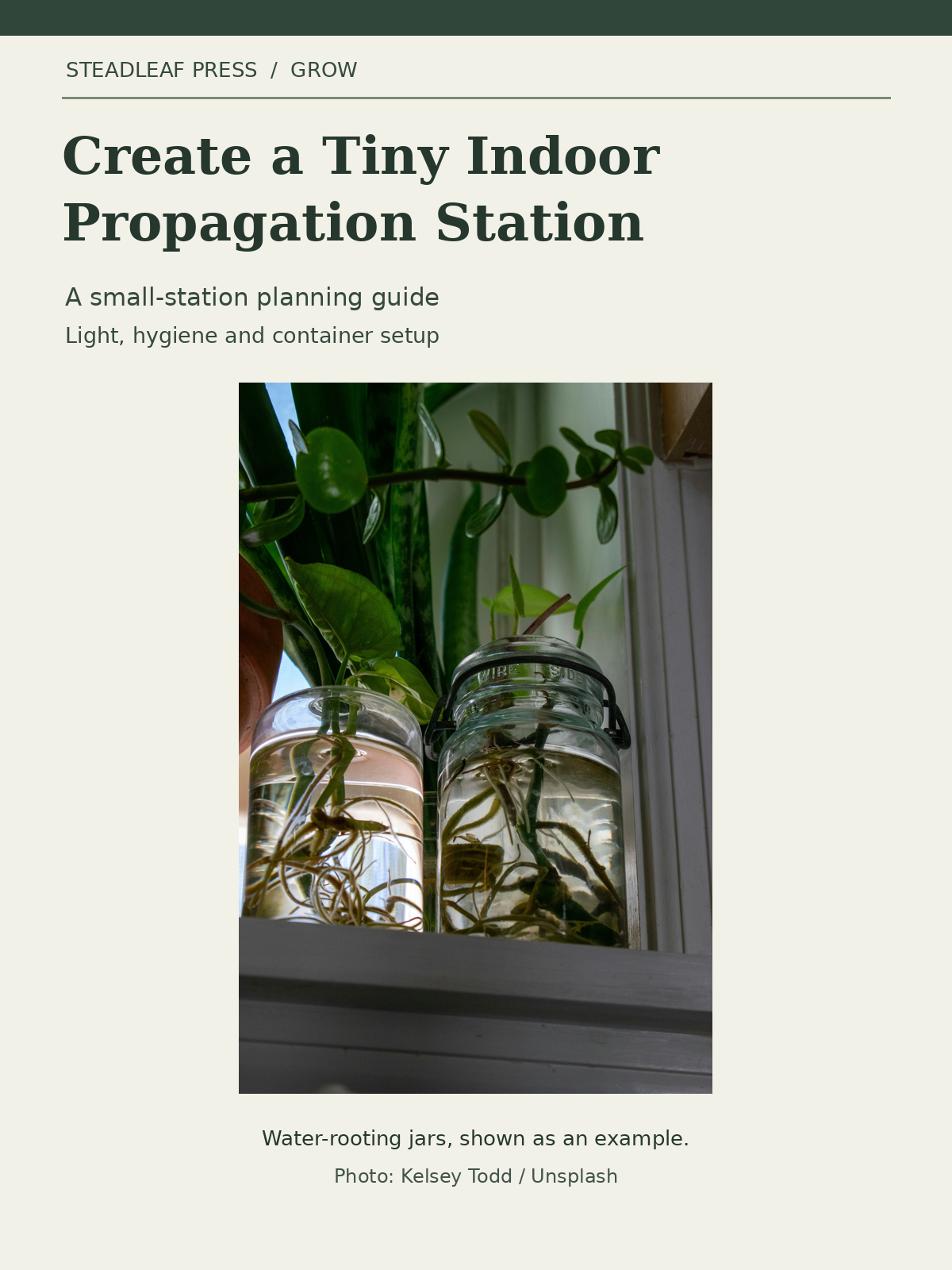
Water-rooting jars, shown as an example, not a setup or light recommendation. Photo: Kelsey Todd / Unsplash Unsplash License
STEADLEAF PRESS / GROW / F119 1
A propagation station can be a small tray holding two or three labelled containers. It does not need a wall of glass tubes or a new shelf. It needs a suitable place, a clean working method and enough room to inspect each attempt without knocking over the others.
Build the station around one plant and one verified propagation method first. A decorative arrangement of cut stems is not automatically a workable propagation setup, and a leaf that produces roots does not necessarily become a complete new plant.
Choose the plant and method before the container
Identify the parent plant and find a reliable propagation guide for that species. Check which part is used: stem cutting, leaf, plantlet, division or another method. Similar-looking pieces are not interchangeable.
Illinois Extension describes several cutting types and notes that rooting time varies by species. Consult an accessible, reliable guide for the identified plant and method rather than promising that every cutting will root within a week. Illinois Extension, Houseplant Cuttings
Select healthy material and inspect for pests or suspicious damage. Do not use the station to multiply an unidentified problem through the collection. The linked Illinois Extension houseplant-cuttings guidance advises choosing material free of visible insect and disease problems and distinguishes stem, leaf and other cutting types.
For the first attempt, write down the method, the source and the conditions it requires. If the guide calls for equipment or handling you cannot provide safely, choose a different appropriate project or wait.
STEADLEAF PRESS / GROW / F119 2
Check the parent plant's handling needs
Know whether the plant has irritating sap, spines or toxicity concerns before taking material. Keep the station and any discarded pieces inaccessible to children and pets as appropriate. Do not assume that a plant sold as a common houseplant is harmless to chew.
Use clean, suitable manual tools and the plant-specific cutting instructions. Prepare the station before cutting so material is not left on a dirty surface while you search for a pot. Do not take cuttings from someone else's plant without permission, and respect applicable propagation restrictions.
This guide does not provide universal cutting lengths, node counts or rooting-hormone doses. Copy those details from suitable instructions for the plant. If a product is required, follow its label and keep it in its original labelled container.
Find a position you can actually maintain
Assess the proposed location at different times of day. Check whether direct sun reaches it later, whether a heater blows across it and whether a cold window or draught changes conditions at night. A location that photographs well may still be difficult to use.
Choose a stable surface away from edges and household traffic. Leave space to lift a container straight up without catching leaves on a shelf above. Protect the surface with a suitable tray, and keep water away from sockets, chargers and other electrical equipment.
If your verified plant-specific method uses a humidity cover, keep the covered container out of direct sun. Illinois Extension places its bag-covered cuttings in bright light, not direct sunlight. A cover needs regular checks; do not seal a pot and forget it. Illinois Extension, Houseplant Cuttings
Do not improvise a heated enclosure or combine water with an improvised lighting installation. If supplemental equipment is necessary, use suitable products as directed, including electrical and moisture precautions. A simpler project in an existing suitable position is often easier to manage.
STEADLEAF PRESS / GROW / F119 3
Use a text layout before buying anything
The following arrangement is a planning example for a small tray, not a construction specification:
- Behind the tray: the plant-specific care card, readable without moving containers.
- Inside the tray, left: labelled attempt A, with clear access around it.
- Inside the tray, right: labelled attempt B, only if it fits without crowding.
- Beside the tray: a dry space for recording observations and temporarily setting down one container.
- Stored separately: sharp tools, cleaning products and any rooting products, safely secured.
The station should remain useful when a plant grows beyond its starting size. Leave room for new leaves and later inspection. If the only way to reach the rear container is to lift three others, reduce the number of attempts.
Measure the actual available footprint and compare it with the tray and containers you already own. Avoid filling every centimetre. Working space is part of the station, not unused decoration.
Choose containers for the method
For a rooting-medium method, use appropriate clean containers with drainage and a suitable propagation medium. Choose the medium specified by an accessible guide for the identified plant and method; do not substitute a different medium merely because it is available.
For a method specifically suited to water, choose a stable, clean vessel that lets you manage the cutting and later remove it without damaging roots. Avoid a narrow decorative neck that becomes a trap. Follow the species guidance for which plant parts remain above or below water and how the water is maintained.
Do not place all cuttings together merely to save space. Separate containers can make identity, observation and removal of a failed attempt easier. If sharing is appropriate under the chosen method, preserve a clear label for the group and avoid crowding.
Check that the tray can catch incidental drips without becoming a permanent reservoir around containers that should drain. Empty and clean it as needed. The tray protects the furniture; it does not determine the plant's moisture requirement.
STEADLEAF PRESS / GROW / F119 4
Establish a clean start
Clean the work surface, containers and tools using suitable methods for their materials. Where disinfection is needed, follow an appropriate product's label and the tool manufacturer's directions. Do not mix chemicals or improvise a stronger treatment.
Keep fresh medium and clean tools separate from used debris. Use a clean implement to prepare planting holes where the propagation instructions call for them, rather than forcing a delicate cutting through firm medium. Put each prepared cutting into its assigned container and label it immediately.
Record when the material was cut and when it was inserted into water or medium as separate dates when they differ. Illinois notes that some cutting types need a drying or healing period before insertion, so “cut and immediately submerge everything” is not a universal approach. When comparing progress with a guide, check which event starts its stated rooting interval rather than silently including or excluding the preparation period. Illinois Extension, Houseplant Cuttings
Wash hands and clear away loose plant pieces when finished. Store sharp tools and products safely before the tray becomes part of the ordinary room again.
STEADLEAF PRESS / GROW / F119 5
Give every attempt a small record
Use one label and one line of notes per attempt:
Identifier Plant and method Cut date / insertion Location and Observation and date required conditions next check
A ___ ___ ___ ___
B ___ ___ ___ ___
C, only if space ___ ___ ___ ___ permits
Put the same identifier in any photograph filename. Record the source of the parent material so a later identification question can be resolved. If one container holds several cuttings, record their starting number and distinguish the container label from individual outcomes. A vessel containing three cuttings is not three successful plants merely because one cutting roots; record what happened to each where distinguishable, or retain the uncertainty.
Choose a check routine suited to the method and conditions. At a check, look for changes, assess the required moisture arrangement and confirm that covers or containers remain safe. A reminder to inspect does not automatically mean adding more water.
Avoid repeatedly pulling a cutting out to see whether it has rooted. Use the method's appropriate signs and checking technique. Record what you can actually observe, and do not treat a new leaf alone as proof that a robust root system has formed.
STEADLEAF PRESS / GROW / F119 6
Plan the move out of the station
Before starting, know what you will do with a successful young plant. Have an appropriate potting plan and enough suitable growing space. A station that produces more plants than you can care for has exceeded its useful size.
Follow the species-specific guidance for potting on and adjusting to the next conditions. Do not move a newly rooted plant abruptly into a harsher environment because you want its container for another attempt. Record the transition date and keep its identifier. Separate “roots observed,” “potted on” and “established under the next care conditions” in your notes; moving the plant out of the station does not establish that the transition succeeded. Choose a follow-up check appropriate to the plant.
If an attempt deteriorates, remove it appropriately, clean the affected equipment and record the outcome without guessing the cause. Do not keep visibly decaying material indefinitely to maintain the appearance of a full display.
Review one small cycle before expanding
After the first attempts reach a clear outcome, ask whether the station was easy to inspect, clean and keep stable. Did the location remain suitable throughout the day? Was there room for the young plants afterward? Which part of the routine was inconvenient?
Change the layout before adding more containers. Two well-observed attempts can teach more than a crowded row whose labels and care histories are lost. The station is working when it supports appropriate propagation and a manageable next stage, not when every available space contains a cutting.
Sources and scope
Illinois Extension supports the distinctions between cutting types, selection of healthy material, healing exceptions, avoidance of direct sun, species-dependent rooting time and the need for both roots and shoots in leaf cuttings. The tray layout, records and capacity review are original planning tools. This is a station plan, not a universal propagation recipe or a guarantee of rooting success.