Reduce Wind Damage to Tall Container Plants
Steadleaf Press
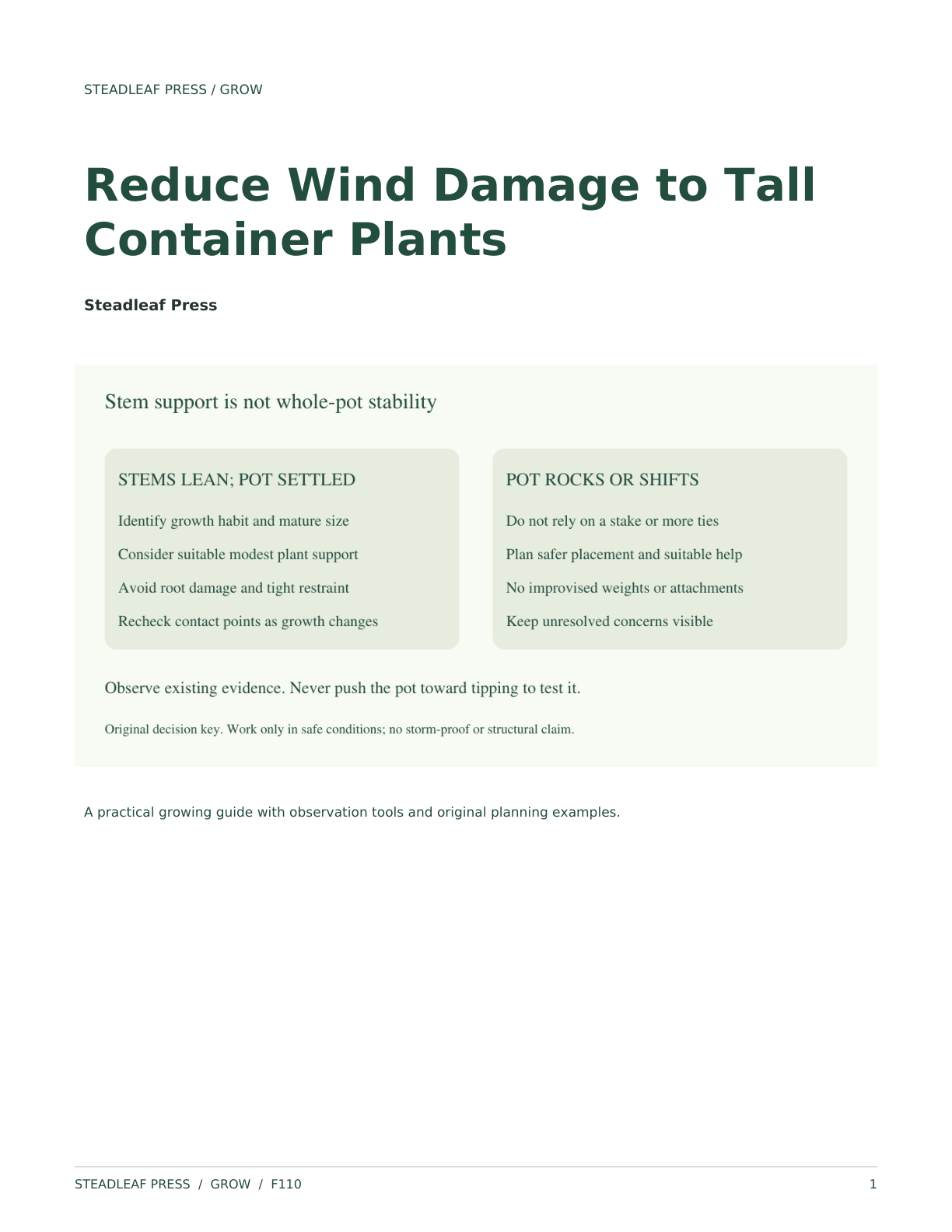
A tall container plant presents two different problems in wind. Its stems may bend or break, and the whole container may become unstable. A stake can help a stem without making the pot safe. Start by separating those questions.
FREE · No email or checkout
Read the complete free guide online
Read the instructional text here, or download the complete free PDF above for original diagrams, tables, worksheets and page layout. The original publication is unchanged.
STEADLEAF PRESS / GROW
Reduce Wind Damage to Tall Container Plants
Steadleaf Press
A practical growing guide with observation tools and original planning examples.
STEADLEAF PRESS / GROW / F110 1
A tall container plant presents two different problems in wind. Its stems may bend or break, and the whole container may become unstable. A stake can help a stem without making the pot safe. Start by separating those questions.
This plan covers ordinary placement and modest plant supports within a suitable container. It does not cover fixing anything to a building, calculating balcony loads or securing large plants against severe storms.
Make the assessment in calm conditions
Choose a dry, calm time when you can reach the plant safely. Do not wait for a gusty forecast to become a gusty afternoon. If hazardous weather is already present, stay in a safe place and leave the plants until conditions allow work.
Photograph the whole plant from its usual approach. Include the pot, any support and the surrounding route. Write down the plant's name, current height and expected mature size. Note any existing bent stems or rubbed patches in close-up photographs so that later checks can distinguish old damage from new damage. A support chosen for this week's growth may be inadequate later.
Look at where the plant stands. Is it raised above surrounding shelter? Do stems catch on a railing? Does a door strike the foliage? Does moving the pot to a less exposed place create a blocked route or put children within climbing reach of an edge?
These observations determine whether a support is useful at all. Sometimes the better answer is a more suitable location or a shorter plant.
STEADLEAF PRESS / GROW / F110 2
Distinguish stem movement from container movement
Use what you have already observed in ordinary weather. Do not push a pot toward tipping to see how far it will go, and do not leave it exposed just to run an experiment.
Observation Main question Sensible direction
Stems lean while the pot remains Does the plant need a suitable Examine growth habit and support settled stem support? options
The pot rocks or has shifted Is the whole arrangement Stop relying on a stake; arrange unstable? safer placement and advice
Support sways independently or Is the support suitable for the Reconsider the system rather than pulls loose container and mature growth? adding more ties
Leaves rub repeatedly on a wall or Is the location damaging the plant? Allow suitable space without rail obstructing access
A heavy pot cannot be moved Can this location be managed as Get suitable help and plan ahead safely conditions change?
Illinois Extension explains that container shape and volume affect stability as plants grow, and identifies exposed balconies, decks and rooftops as places needing particular attention. It also advises checking building weight limitations before adding heavy containers. Illinois Extension, Container Size
Do not solve a balcony stability concern by adding bricks, concrete or water-filled weights. Extra weight and an unverified attachment introduce questions this guide cannot assess. Consult the building manager and an appropriately qualified professional where needed.
STEADLEAF PRESS / GROW / F110 3
Try a better position before a bigger support
Identify a less exposed position that still meets the plant's light and temperature needs. Use existing shelter where suitable. Do not assume the wall-side corner is calmer without observing it; a building can change the direction and concentration of wind.
Make a simple position record:
- Current position and known problem:
- Candidate position:
- Light available there:
- Door, route and drainage clearance:
- Who can move the pot safely:
- Concern that remains after moving:
Move only containers you can handle safely, without reaching over an edge or lifting by stems. Plan help for awkward loads. A change of location should leave the pot standing securely on a suitable surface, not perched on improvised blocks.
Never use railings, fire escapes, drainpipes or window fixtures as assumed anchor points. If safe placement depends on a structural attachment, stop and obtain permission and qualified advice. A plant tie is not a building fastening.
STEADLEAF PRESS / GROW / F110 4
Choose support for the plant's growth habit
Look up the support normally used for the identified plant. An individual flowering stem, a bushy clump and a climbing vine need different arrangements. The University of New Hampshire's container-gardening guidance distinguishes supports for floppy plants from trellises for climbers. UNH Cooperative Extension, Container Gardening
For a modest container plant, possible options include a purpose-made ring support, a short suitable stake or a container trellis designed for the plant and pot. Read the product's intended use and dimensions. A decorative support is not automatically strong enough for mature growth.
Check the condition of anything reused. Set aside broken, sharply splintered, badly rusted or loose components. Avoid exposed sharp ends where someone may lean or bend. Use compatible protective caps where appropriate and follow the support manufacturer's instructions.
The RHS recommends matching supports to plant vigour and installing them before growth becomes difficult to handle. Its advice concerns border perennials; the same early-planning principle is useful in a container, but the pot still limits the support you can use. RHS, Perennials: staking
If the existing root ball leaves no safe way to fit a support, do not stab repeatedly through it. Seek plant-specific advice, choose a nonintrusive option where suitable, or revise the location. Avoid forcing a large support into a small pot simply because it is already available.
STEADLEAF PRESS / GROW / F110 5
Tie only where the plant can tolerate it
Use soft material intended for plant ties, fitted loosely enough to allow normal stem growth and movement. Do not use wire, fishing line or a tight cable tie against a living stem.
For a suitable individual stem and stake, a figure-of-eight tie can separate the stem from the support and reduce rubbing. Pass the tie around each with a crossing between them, without cinching the stem. RHS guidance specifically advises avoiding rigid restraint and describes this separation. RHS, Perennials: staking
Work from a position where you can see the attachment. Support the stem gently while fitting the tie. Do not pull a strongly bent stem straight with force or fasten across a tender growing tip.
The right number and position of ties depend on the plant and support. Follow species-specific guidance instead of adopting one spacing for every plant. If the whole structure still leans or works loose, more string is not a substitute for a suitable arrangement.
STEADLEAF PRESS / GROW / F110 6
Make a support and placement plan
Complete this before treating the work as finished:
Item My decision What would make me reconsider?
Plant and expected growth ___ ___
Container position ___ ___
Whole-pot stability concern Movement observed / none Rocking, sliding or other observed / not observed; date and movement conditions ___
Support type and intended use ___ ___
Tie material and locations ___ Tightening, rubbing or damaged tissue
Safe route around the plant ___ Growth or equipment blocking access
Poor-weather plan Action, person responsible and Forecast beyond this completion time ___ arrangement's intended use
Keep unresolved concerns visible. “Needs advice before staying here” is a useful plan entry. It is safer than calling an arrangement secure because it looks neat in still weather.
STEADLEAF PRESS / GROW / F110 7
Work through an ordinary example
A fictional gardener has a compact flowering perennial in a patio container. The pot has stayed settled, but outer stems lean into the walking route after windy weather. The gardener checks the plant's expected growth and finds a modest ring support appropriate for it.
They choose a suitable sheltered position without sacrificing the plant's needed light. In calm conditions, they fit the support gently, leaving the route clear. They record where the stems contact it and check those points as the plant grows. At the next check, the route remains clear and no new rubbing is visible. They also note that the intervening weather was calm: this shows the arrangement fits the space, not that it has performed better in wind.
If the pot had been rocking, the same ring would not answer that problem. The gardener would first reconsider the whole container and its location. That distinction prevents a small horticultural fix from being mistaken for protection against overturning.
STEADLEAF PRESS / GROW / F110 8
Recheck as growth changes
During normal care, inspect ties for constriction, stems for rubbing and supports for looseness. Check again after ordinary windy weather once it is safe to do so. Growth, flowers and rain can change how the plant sits within its support.
A damaged stem needs plant-specific pruning advice rather than forceful straightening. If the pot begins moving, remove the stability issue from routine plant care and arrange a safer solution.
For a severe forecast, follow local emergency guidance and the building's requirements. Put away manageable loose items well before conditions become dangerous. No small plant support makes a balcony arrangement storm-proof.
Sources and scope
The linked Illinois and New Hampshire extension guides support the distinction between container stability and plant support. RHS guidance supports early fitting, soft ties and avoiding rigid restraint. The worksheets and patio example are original planning aids. No load rating, attachment design, structural approval or severe-wind guarantee is supplied here.